Leidsid 33 sarnast õppematerjali, mis on seotud failiga "Pärnu esitlus. INGLISE KEELES". Need materjalid aitavad sul teemat sügavamalt mõista.
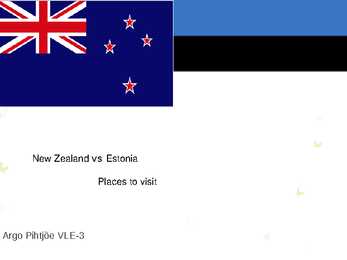
valgre, summer, ammende, raimond, medieval, during, period, beach, found, gate, built, monument, mailis, west, resort, established, traditions, held, heart, warming, years, former, host, 30th, days, festival, sunny, sandy, beaches, invite, come, amazing, nature, throughout, county, boasts, beginning, postal, road, swedish, 17th, century, almost, best2. Attractions 3. About Pärnu 4. Notable Residents 5. Citizens of Honuor 6. Pictures of Pärnu 1. History The people who chose to live at the river mouth thousands of years ago stayed here permanently. It is known that in 1154 the Arabian traveller and geographer Abu Abdallah Muhammed al-Idrisi serving the King of Sicily mentioned a river named Bernu. Embecke ("Emajõgi" in Estonian) is the same River Bernu referred to by al- Idrisi and later renamed as the River Pärnu. Pärnu's first period of prosperity was the time from the beginning of the 14th century up to the end of the 15th century while it was a port on the route to the Hanseatic City of Novgorod. 2. Attractions Places to visit: ● Rannapark (Beach Park) & Vallikäär ● Eliisabet Church was built 1747 and is now a popular location for concerts. It’s organ has a distinct, beautiful sound. ● Jekateriina Church is one of the most beautiful apostolic baroque churches in Estonia
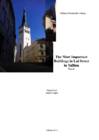
Kunda Ühisgümnaasium Tallin Old Town Report Student: Kristin Karu Teacher: Kristi Aron Kunda 2012 The Alexander Nevsky Cathedral The Alexander Nevsky Cathedral is an orthodox cathedral in the Tallinn Old Town,Estonia. It was built to a design by Mikhail Preobrazhensky in a typical Russian Revivalstyle between 1894 and 1900, during the period when the country was part of theRussian Empire. The Alexander Nevsky Cathedral is Tallinn's largest and grandest orthodox cupola cathedral. It is dedicated to Saint Alexander Nevsky who in 1242 won the Battle of the Ice on Lake Peipus, in the territorial waters of present-day Estonia. The late Russian patriarch, Alexis II, started his priestly ministry in the church. Interior of the Cathedral. The Alexander Nevsky Cathedral crowns the hill of Toompea where the Estonian folk hero
A wall was built to separate the Upper Town and the Lower Town. In 1285 Tallinn joined the Hanseatic league and became a junction of trade between East and West. Tallinn is said to be built on salt, as it was an important trading commodity. In the 16th century Tallinn had a population of about 7,000 8,000 making it one of the biggest cities in northern Europe. In 1629 Sweden took control of the whole of Estonia. Though hard times continued, the period that followed is known as the "good old Swedish era": foundations were laid for the Estonian school system, the privileges of the nobility were curtailed, local peasants were granted the right to own property, and so on. Peter the Great wanted to open a window onto Europe for Russia so he started the Northern War in 1700. Estonia remained under Russian rule and the Baltic-German nobility vowed allegiance to the Tsar; the barons were restored their former privileges.
Holidays, Festivals, Cultural events TALLINN - If you're looking for entertainment in Estonia this summer, you are really spoiled for choice. Festivals and events dedicated to the consumption of beer are a lot of fun, but if you want to get the true feel of the country, you need something a little more ethnic. Like a town fair. Just as July becomes August, the seaside town of Haapsalu will host a grand spectacle of rural Estonian entertainment. The White Lady Days is a summer celebration filled with amusement for all the family. Held in and around the remains of the Teutonic-knights-era castles, the fair combines enchanting medieval legends with modern countryside charm to create a comprehensive experience of Estonia beyond the big cities. But the legend of the White Lady of Haapsalu, which is at the heart of the festival, is perhaps the most famous tall tale of the many that are so abundant in Estonia's folklore.
Kunda Gymnasium Rait Türkel Old Tallinn Report Instructor:Teacher Kristi Aron Kunda 2012 Introduction Like most cities with an eight-hundred-year-old past, Tallinn is a patchwork of historic areas. The city's pride and joy is without a doubt its Medieval Old Town, but equally enchanting is the Kadriorg district, a throwback to the time when Estonia was ruled by the Russian Tsars. Tallinn is the capital and largest city of Estonia. It occupies an area of 159.2 km2 with a population of 416,470. It is situated on the northern coast of the country, on the shore of the Gulf of Finland, 80 km south of Helsinki, east of Stockholm and west of Saint Petersburg. Tallinn's Old Town is in the list of UNESCO World Heritage Sites
............................................... 11 47 Lai Street............................................................................ 12 50 Lai Street............................................................................ 13 Summary................................................................................. 15 References.............................................................................. 16 2 Introduction Pikk Street as the longest and also the main street from medieval times is well-known, but Lai Street that runs parallel to it is not. The aim of the report is to be helpful for the students of Tallinna Mustamäe College who study the history of Tallinn and would like to get additional information about Lai Street, as they need to pass the guide practice exam in form eleven. The report is divided into chapters so that each chapter deals with one of the important houses in Lai Street
the Hanseatic League in 1285. General Data l Country - Estonia l County - Harju County l First appeared on map - 1154 l Town rights - 1248 l Mayor - Edgar Savisaar l Aera - Total 159.2 km2 (61.5 sq mi) l Population - (1 Mar 2012) Total - 416,470 Denisty - 2,614.0/km2(6,766.6/sq mi) Tallinn Coat of arms Flag Top 5 Attractions 1. Kiek in de Kök Visitors to the museum will see examples of Medieval firepower, displays detailing how the city's system of walls and towers developed through the centuries and an exhibit on crime and punishment in Old Tallinn. 2. Kadriorg Palace - Kadriorg Art Museum A trip to Tallinn isn't a trip to Tallinn without a visit to this magnificent northern baroque palace, built by Peter the Great for his wife, Catherine I, in 1718. The grandiose palace with its surrounding manicured gardens is home to the foreign art collection of the Art Museum of Estonia.
shipyards. Interest in culture grew and Estonians became conscious of their national identity, dreams of independence gained ground. On 24 February 1918 Estonia was declared an independent country and Tallinn became the capital of the Republic of Estonia. During World War II Estonia was occupied by both German and Russian invaders and Tallinn suffered heavily. The bombing of the city by the Soviet air force on 9 March 1944 left over 20,000 people homeless. During the Russian occupation which followed attempts were made to Russify the local people. Estonia re-established its independence on 20 August 1991. Toompea Toompea is the oldest and the most respectable part of the city. For centuries there was only one means of access to Toompea Pikk Jalg Street. In the middle of the 15th century the Lower Town fenced itself off with these walls from the Upper Town because of the permanent contradictions between the noblemen of Toompea and the citizens of
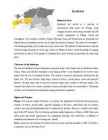
Project ESTONIA MAP OF ESTONIA Southern Viljandimaa The southern part of Viljandi county catches the eye with its sublime scenery. The area today lies in the very heart of the historical Mulgimaa the home of hills, deep valleys and lakes brought together by a beauty spot Halliste primeval valley. According to several folk tales, it is also in these valleys, woods and bogs that Old Nick found refuge.The great variety displayed in the nature is also reflected in the local cultural heritage. At the beginning of the 19th century growing linen spread and became the basis of the legendary wealth of Mulgi farms. The ancient barn-dwellings and decaying manor houses are the mute witnesses of those times. The riches and cultural heritage of Mulgimaa owe to the diligence and tenacity of the local people. Village handicraftsmen and masters have always been honoured
Estonia's land. After the Livonian War (1558-1583) the northern part of Estonia went under Swedish control, the southern part belonged to Poland and the islands to Denmark. Only in1629 the whole mainland Estonia became subject to Sweden. Under Swedish rule the University of Tartu was founded in 1632 and also the oldest school working on the same premises was founded in Tallinn (GAG).After the Northern War (1700-1721) Estonia became a province of Russia. During that period the gentry of Baltic-German origin prevailed in Estonia. They kept estates in Estonia until 1919. Under Russian rule the Palace of Kadriorg was built and the park was laid out. The National Awakening in the middle of the 19th century brought rapid advances in the Estonian education system, general living conditions and culture. The national epic "Kalevipoeg" was published, theatre and music societies appeared and the 1st Song Festival was held in Tartu in 1869
sound installations by Louis Dandrel.Eduard Tubin (1905-1982) was a versatile composer and conductor, one of the most recognized symphonists throughout history. He served as concert master and conductor at the Vanemuise Theatre. In 1944, when the theatre was destroyed, he left Estonia to Sweden. Monument to Gustav II Adolf In 1632, King Gustav II Adolf of Sweden, then at the war camp near Nürnburg, signed the charter to found Tartu University, which was also named Academia Gustaviana in his honour. The memorial statue to King Gustav II Adolf (1594-1632) stood next to the main building of the university from 1928, until 1950, when it was removed by the Soviet occupation forces. With Swedish assistance, it was repaired and re-mounted 42 years later, in 1992. The King of Sweden was present both at the original and the re-opening of the monument. Elisabeth Tebelius-Myren authored the restored work.
ancient strongholds in Valjala, Lihula and Soontagana. The churches in Muhu, Valjala, Mustjala, Karja and Kihelkonna are honorable and elderly because Straitland was the one to bring Christianity to Estonia. The castle of Kuressaare is still standing proudly, but in Lihula only ruins can be seen. The patterns of national dresses and the churches bring memories of secret sign cultures of Medieval Times. Good knowledge of singing and facility of speech of the people of Straitland have given Estonia a big number of writers and poets. Character of the landscape The area of Straitland contains Pärnumaa county and some of the islands such as Saaremaa, Muhu, Kihnu, Ruhnu and Abruka. Straitland is low-lying and flat. It was flooded by the sea for much longer than the rest of mainland Estonia. The climate is maritime and greatly influenced by the Baltic Sea
EISTLAND; to modern Scandinavians it is known as ESTLAND. Most contemporary languages use the Latin name ESTONIA. FLAG The Estonian blueblackandwhite national flag was originally the flag of the Estonian Student's Society, consecrated in Otepää Church in 1884. today there is a memorial plaque on the church wall commemorating the event. The Flag Museum attracts tourists who take an interest in the history of the flag. After about half a century, during which it was prohibited by the Soviet authorities, the flag was sen again in public for the first time in Tartu. Many elderly people were carrying the flags they had kept in secret hiding places durin the Soviet years; tears were rolling down their cheeks. On 24 February 1989, Estonia, still part of the Soviet Union, hoisted its tricolour on the tower of Pikk Hermann in Tallinn. Since then the flag has always been hoisted with
Saaremaa and Muhumaa are connected to each other with a bridge. The best- known smalles islands are Naissaar, Aegna, Ruhnu, Kihnu, Väike-Pakri, Suur-Pakri etc. 3. Relief Lying in the north-western part of the East-European Plain, Estonia is mostly flat with an average elevation of about 50 metres above sea level. South-eastern and eastern parts of Estonia are higher than the western parts. The relief of the present-day landscape was shaped during the Ice Age. Ice sheet has carried large boulders and limestone blocks here, not to mention that the hilly terrain in Estonia was also shaped by the continental ice and the melting water. The land is rising 25 cm every one hundred years. In folklore, many features of the relief are explained by the activities of giants such as the legendary national hero Kalevipoeg. The Haanja and Otepää Uplands are particularly rich in Hills. It is here
landscape. Mt Ruapehu is the largest volcano and last erupted in 1995 and 1996. A conical volcano called Mt Ngauruhoe is located next to Ruapehu and is the location for the Tongariro Crossing. Top ten places to visit in New Zealand Coromandel Peninsula the Coromandel is blessed with a superb climate coupled wih some of New Zealand's best beaches and coastline. A thermal beach called Hot Water Beach is one attraction worth seeing. Volcanic heat rises through the ground allowing you to create your own spa pool by simply digging a small hole in the sand and waiting for it to fill up with warm sea water. Kaikoura seaside town of Kaikoura overlooks majestic mountains which are snow capped for many months of the year. Kaikoura is one of the few places in the world where whales can be seen all year round.
could be deers trying to escape from the Danes, running down the Toompea hill Tallinn - the word origins from estonian language, could mean “taani-linn”, “tali-linn” or “talu- linn”; Reval was replaced when Estonia became independent Symbols Flag - blue black white tricolor; blue represents sky, black the soil, and white our freedom. Danneborg - red flag with a white cross fell from the sky during the battle in 1219. It is also set into the small coat of arms of Tallinn. Great coat of arms - three lions, a knight, and Danish queen; leaves around Old Thomas - quardian of Tallinn, put on top of the spire of Tallinn Town Hall in 1530; boy that excelled springtime contests thrown by Baltic German elite, because of his low-born status was unable to receive a prize, therefore was granted the position of town guard. Right now
Traveling Description Traveling is the movement of people or objects (conveyances) between relatively distant geographical locations. Travel may occur by human-powered transport such as walking or bycycling, or with vehicles, such as public transport, automobiles, trains and airplanes. Etymology The term "travel" originates from the Old French word travail. The term also covers all the activites performed during a travel (movement). A person who travels is spelled "traveler" in the United states, and "traveller" in the United Kingdom. Purpose and motivation Reason for traveling include recreation, tourism or vacationing, research travel for gathering information, for holiday to visit people, volunteer travel for charity, migration to begin life somewhere else, religious pilgrimages and mission trips, business travel, trade, commuting,
the Toompea church the cathedral of the Tallinn bishopric, which was formed in 1240, and subordinated to the archdiocese of Lund. The cathedral chapter was established at the cathedral consecrated to St. Mary the Virgin and a school was formed at the church in 1319 at the latest. The reconstruction of the initally one-nave and relatively modest church into a three- nave one started at the beginning of the 14 th century and lasted approximately a hundred years. This period includes another change of power, resulting in Tallinn's subordination to the order one more time. Although the main building of the church dates back to those times, the medieval cathedral was quite different from the present appearance. For example, the tower on the western side of the church was built only in the 18 th century, the annexes of the southern side date back to the 16 th -18th centuries and those on the northern side to the 15th century.
· In June, around mid-summer's day, when Estonia enjoys its white nights, Jõgeva town organises its "Helisev Suveöö" ("Sound of a Midsummer Night") festival, when music can be enjoyed all over the town, including in private gardens. · In July, the annual bikers reunion Jõgevatreff takes place this motorcycle and bikers event lasts for days and its culmination is a bike parade through the town. · The last Saturday in August completes the summer period with an annual garlic festival don't be intimidated by its name, there is plenty to see and do even if you are not a garlic enthusiast. Enjoy the fair and its concerts and buy local handicraft, home made gourmet food and hand made bread as souvenirs. · The festival year ends with the national poetry days, "Tähetund" (StarHour), dedicated to the Estonian poet, Betti Alver. Most Estonian actors say that Betti Alver
TALLINN UNIVERSITY OF TECHNOLOGY Department of International Relations CLOSING KALARAND FOR PUBLIC. Essay in Expository Writing Supervisor: Tallinn 2015 Kalarand is a part of Kalamaja district in Tallinn, it is a unique beach in the city centre, only few hundred meters from the Old Town. While being close to the city centre, it still has a remote area atmosphere to it where people could enjoy the seaside and views in a car-free environment. While not officially a public beach, the locals have still put in great effort into keeping it a clean and enjoyable public area (Klementi, 2011). In August 2015 historic Kalarand beach was fenced by Pro Kapital and public was denied access despite laws against such conduct
Estonia has many rivers but only nine of them are longer than 100km. The most important ones are Pärnu River and Emajõgi River Climate Estonia lies in the northern part of the temperate climate zone and in the transition zone between maritime and continental climate. Because Estonia is continuously warmed by the Gulf Stream it has a milder climate despite its northern latitude. Northern latitude means long summer daylight hours (the longest summer day stretches to 19 hours), and dark winters when daylight lasts sometimes only six hours. Being on the Baltic Sea the country is subjected to sea breezes and humidity. Estonia has a temperate climate, with four seasons of near-equal length. Summer is warm, while spring and autumn can be mild. Winter, which lasts from November to middel March, 4 can be very cold. The cold winter does not necessarily mean constant snow; in fact snowfalls
communities, both with their own interests and laws. Tallinn grew rapidly and had developed into a well-known trading centre by the 15th, century. A century later its population of 7,000-8,000 made it one of the biggest cities in northern Europe. Unfortunately, prosperity did not last long due to the weakening of the Hanseatic League, epidemics, hunger and wars. Sweden finally managed to take control of the whole of Estonia in 1629. Though hard times continued, the period that followed is known as the good old Swedish era': foundations were laid for the Estonian school system, the privileges of the nobility were curtailed, local peasants were granted the right to own property, and so on. Meanwhile, different countries fought for domination in the Baltic region. Russia started the Northern War in 1700. Peter the Great had made it his aim to conquer Estonia and `open a window onto Europe' Together with the Russian troops,
The exhibition there was opened on April 1, 1993. Art Museum of Estonia premanently closed down the exhibitions in that building in October 2005. At the end of the 1970s, in the 1980s the first branches of the Art Museum of Estonia were founded. Starting from the 1995 all the branches offer different educational programmes for children and young people. In 1996 the exhibition hall on the first floor of Rotermann Salt Storage was opened, this branch was closed in May 2005. In summer 2000 the restored Kadriorg Palace was opened, but not as the main building of the Art Museum of Estonia, but as a branch. Kadriorg Art Museum now exhibits the foreign art collection of the Art Museum of Estonia. At present there are five active branches of the Art Museum of Estonia: Kadriorg Art Museum (Kadriorg Palace and Mikkel Museum), Niguliste Museum, Adamson-Eric Museum, and Kumu Art Museum (the new main building of the Art Museum of Estonia)
CONTENTS ESTONIA AND THE ESTONIANS FOREWORD IN THE FOLD OF TSARIST RUSSIA. EMERGENCE AND FIRST STEPS ON THE CLASSICAL-ROMANTIC PATH. HISTORICAL INTRODUCTION I. MUSICAL LIFE IN TARTU AT THE TURN OF THE CENTURY. TRAILBLAZERS: ALEKSANDER LÄTE, RUDOLF TOBIAS, ARTUR KAPP. II. THE FIRST DECADE OF THE 20TH CENTURY. ARTUR LEMBA: THE BEGINNING OF ESTONIAN SYMPHONY AND OPERA. III. NEW DEVELOPMENTS IN CULTURAL AND MUSICAL LIFE: THE END OF THE TSARIST PERIOD. THE INDEPENDENT REPUBLIC OF ESTONIA: THE INTRODUCTION OF INNOVATIONS FROM WESTERN ART AND THE EVOLUTION OF NATIONALLY ORIENTED MUSICAL TRENDS. IV. THE TWENTIES. ARTUR KAPP: ROMANTICIST AND DRAMATIST. V. THE INFLUENCE OF NEW WESTERN MUSICAL TRENDS. HEINO ELLER: A PROGRAMME PAINTER. VI. THE THIRTIES. THE WIDENING OF NATIONAL SYMPHONISM. THE RISE OF ATTENTION TO HISTORY AND FOLKLORE: JUHAN AAVIK, EDUARD TUBIN, EUGEN KAPP. VII
Manus O'Cahan and Montrose fought a successful minor battle against the Covenant Army at Fyvie Castle on August 24th 1644. Following Victorian trends, the grounds and adjoining Loch Fyvie were landscaped in the 19th century. The American industrialist Alexander Leith bought the castle in 1885. It was sold to the National Trust for Scotland in 1984 by his descendants.The castle (like many Scottish castles) is said to be haunted. A story is told that in 1920 during renovation work the skeleton of a woman was discovered behind a bedroom wall. On the day the remains were laid to rest in Fyvie cemetery, the castle residents started to be plagued by strange noises and unexplained happenings. Fearing he had offended the dead woman, the Laird of the castle had the skeleton exhumed and replaced behind the bedroom wall, at which the haunting ceased.Today, the castle is open to tourists during the summer months.
Built in 1078, has been used as a fortress, Royal Palace, a prison, the home for Crown Jewels. The first prisoner was Ranulf Flambard in 1100. The only woman tortured in the Tower was Anne Askew. Guy Fawkes was prisoned 5 th November 1605, hung in 1607. Walter Raleigh was knighted, married without queen´s permission. Last prisoners were in the Tower in 1952. Rita: "Alexander Fleming" Was a pharmacologist, has graduated 6 schools, studied anti-bacterial agents, found Lysozyme accidentally in 1922 and penicillin, which changed the world, in 1928. Won Nobel Prize in 1945. Has been married twice, first wife was a trained nurse. He died in 1955 at home because of a heart attack. He had 1 child. Liis: "The Phantom of the Opera" A.L. Webber is knighted, started writing musicals in 1965, owns 7 theatres and has written 13 musicals. The story is based on a book. The musical was first staged at Sydmonton, at the home of A.L Webber
also Estonian fruit wines made of apples or different berries. Milk is also widely drunk by children as well as adults. Estonians are also proud of their vodka and other spirits, such as the herbal liquer Vana Tallinn. Two of Estonia's oldest breweries are A. Le Coq, founded in 1807, and Saku Brewery, founded in 1820. Other dairy products besides milk (Estonian: piim) include keefir and also hapupiim and pett, which are variations on the theme of buttermilk. Summer and Spring Traditionally in summer and spring, Estonians like to eat everything fresh - berries, herbs, vegetables and everything else that comes straight from the garden. Hunting and fishing were common in the history. Nowadays, they have remained as popular pastimes. It is popular to barbecue in the summer. Winter and Christmas During winter jams, preserves and pickles are brought to the table. During the past, when the economy was largely agricultural, the gathering and conserving of fruits, mushrooms and
and tacky commercialism. Packed in among thousands of other visitors, trying like crazy to see the city in three days and worrying about getting ripped off, it's not surprising, may think the city is overrated. Just relax, take a deep breath. While the city centre is a mélange of stunning architecture, from Gothic, Renaissance and baroque to neoclassical, art nouveau and cubist, beyond the medieval lanes of the Old Town and the Castle District, there's an entire other cosmopolitan city to explore. Search out the riverside parks, lively bars and beer gardens, music clubs, museums and art galleries. Harness Prague's excellent public-transport system to explore emerging suburbs such as Zizkov, Vinohrady, Smíchov and Holesovice. You'll be guaranteed cheaper prices, a more local ambience, and an assured escape from any more feelings of doubt..
Topic Sports Tallinn English College 8b form 2007 1. Introduction For some people sport plays a very important part in their lives. And to some, it is even a way of life. There are different kinds of sports. For instance, there are sports meant for playing indoors, some can be practised only at a certain time of year. There are winter and summer sports also. Skiing, figure-skating, sledding and snowboarding these four most popular are practised during winter. Good examples of summer sports are: swimming, badminton, roller skating and golf. 2. The ancient Olympic Games The first recorded Olympic Games took place in 776. B.C. at Olympia but the city may have functioned as a meeting place for worship and other political practices many years earlier. The city is located in western Greece. The games were held every four years
the Danes with the Anglo-Saxons, and invited Danish merchants to settle in the city. London prospered under Cnut, but on his death the city reverted to Anglo-Saxon control under Edward the Confessor. He built a wooden palace at Westminster, were the parliament met later. This is why Westminster became the seat of government not the city of London itself. Edward the Confessor also built Westminster Abbey. He ruled until his death in 1065, after which King Harold was crowned. Norman period( Medieval London) 1066 In 1066 in the Battle of Hastings the Normans were victorious and William was crowned King. William granted the citizens of London special privileges, but he also built a castle in the southeast corner of the city to keep them under control. This castle was expanded by later kings until it became the complex we now call the Tower of London. The Tower acted as royal residence, and it was not until later that it became famous as a prison.
............................................................ 5 Enlightenment and enlightened absolutism...................................................................... 6 18501918.............................................................................................................................. 8 The national awakening................................................................................................... 8 The russification period.................................................................................................... 9 Emergence of parties and the 1905 revolution............................................................... 11 The post-revolutionary situation and World War I (19071917)...................................... 14 Our opinion............................................................................................................................ 18 References...................
King John was in power when the bridge was finally completed, and it was King John who had the idea to build houses on the bridge itself. The history of the London Bridge goes on to reflect that scores of houses and shops quickly built up on the bridge. The number of people residing on the bridge eventually became so high that the bridge became its own district in London. Each side of the now stone bridge also had a stone gatehouse. The South gatehouse was the site of a more gruesome period in the history of the London Bridge. A tradition of displaying the severed heads of traitors, impaled on tall spikes, was begun sometime in the 16th century. Heads were dipped in tar to provide protection from the elements, and at some point a collection of at least 30 heads was collected at the South gatehouse. Everyone from William Wallace of Scotland to Thomas Cromwell was displayed in the gatehouse, until the practice stopped in 1660 when King Charles II took power
taste. What can compare with fresh pees or new potatoes just boiled and served with butter? Why drown spring lamb in wine or cream and spices, when with just one or two herbs it is absolutely delicious? If you ask foreigners to name some typically English dishes, they will probably say "Fish and chips" then stop. It is disappointing, but true that, there is no tradition in England of eating in restaurants, because the food doesn't lend itself to such preparation. English cooking is found at home. So it is difficult to a good English restaurant with a reasonable prices. In most cities in Britain you'll find Indian, Chinese, French and Italian restaurants. In London you'll also find Indonesian, Mexican, Greek... Cynics will say that this is because English have no "cuisine" themselves, but this is not quite the true. Vocabulary: to criticize - tasteless overcooked - ingredient - to invent - sauces - to disguise - spice herb - delicious - disappointing - to lend
 annaabi.ee