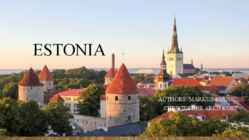
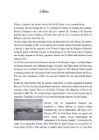
ESTONIA AUTHORS: MARKUS KUUSE, CHRISTOFHER ARKO KÖST FACTS ABOUT ESTONIA • Estonia is about 50% forest • Estonia has over 2000 islands • Estonia was the first country in the world to use online political voting. HISTORY • Humans settled in the region of Estonia near the end of the last glacial era • In the Middle Ages, Estonia became a battleground for centuries where Denmark, Germany, Russia, Sweden and Poland fought their many wars • Estonians declared their independence in February 1918 RECENT HISTORY • In 1940, the Soviet Union occupied Estonia • Nazi Germany occupied Estonia in 1941; later in World War II the Soviet Union reoccupied it (1944). GEOGRAPHY • The two largest islands are Saaremaa and Hiiumaa • The highest point in Estonia is Suur Munamägi ESTONIA CITIES • Capital: Tallinn • Tartu • Pärnu TALLINN • The capital of Estonia • Reval, Lindanise • Old town TARTU • Second larg...
Estonia lies on the eastern shores of the Baltic Sea on the level northwestern part of the rising east European platform. Estonia is a flat country covering 46 226 square kilometers.Estonian's neighbours are Finland, Sweden, Latvia and Russia. Estonia is rich in islands. The two largest are Saaremaa and Hiiumaa . Saaremaa is famous for its big meteorite crater called Kaali and Hiiumaa is famous for its nature and plants. The countries highest point Big Egg hill ( Suur- Munamägi) reaches 318 meters above sea level. Estonia has many uplands too. The uplands are: Pandivere upland, Otepää upland, Vooremaa upland, Karula upland Haanja upland, Sakala upland. Estonia is covered by about 18 000 square kilometers of forest. Estonia is also rich in lakes and rivers The largest lake is Peipsi and the second-largest lake is Võrtsjärv. The largest river is Võhandu whinch is 162 meters long. Estonia has many national parks. A national park is a p...
The most important key dates in Estonian history Every country has its history and some moments are more important than the others. Here are some of the most notable dates from Estonian history. 3rd millennium BC the Finno-Ugric tribes arrive in Estonia 1154 First written mention of Tallinn (by al-Idrisi) 13th century German and Danish invade Estonia. Estonians' numerous attempts to restore independence fail 1343 St. George's Night uprising 1558-1583 the Livonian War after which Northern Estonia is occupied by Sweden and Southern Estonia occupied by Poland 1632 Tartu University was founded 1860-1885 the era of national awakening, the foundation for Estonian journalism was laid, collection of folklore 1869 First all-Estonian Song Festival in Tartu 1884 The blue-black-and-white flag of Estonian Students' Society was consecrated ...
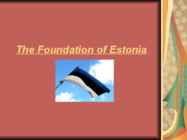
The Foundation of Estonia Estonia The history of Estonia The history of Estonia is a part of the history of Europe. Estonia was settled near the end of the last glacial era, beginning from around 8500 BC. Before the Germans invaded in the 13th century proto-Estonians of the Ancient Estonia worshipped the spirits of nature. Since the Northern Crusades Estonia became a battleground for centuries where Denmark, Germany, Russia, Sweden and Poland fought their many wars over controlling the important geographical position of the country as a gateway between East and West. Being conquered by Danes and Germans in 1227, Estonia was ruled initially by Denmark in the north, by the Livonian Order, an autonomous part of the Monastic state of the Teutonic Knights and Baltic German ecclesiastical states of the Holy Roman Empire. From 1418–1562 the whole of Estonia was part of the Livonian Confederation. A...
Tallinn The first traces of human settlement found in Tallinn's city center by archeologists are about 5000 years old. In 1050 the first fortress was built on Tallinn Toompea.[3] In 1285 the city became the northernmost member of the Hanseatic League. Medieval Tallinn enjoyed a strategic position at the crossroads of trade between Western and Northern Europe and Russia. On 24 February 1918, the Independence Manifesto was proclaimed in Tallinn, followed by Imperial German occupation and a war of independence with Russia. On 2 February 1920, the Tartu Peace Treaty was signed with Soviet Russia, wherein Russia acknowledged the independence of the Estonian Republic. Tallinn became the capital of an independent Estonia. After World War II started, Estonia was occupied by the Soviet Union (USSR) in 1940, and later occupied by Nazi Germany from 1941–44. After Nazi retreat in 1944, it was occupie...
Tallinn Tallinn is situated on the southern coast of the Gulf of Finland, in north-western Estonia. A limestone cliff runs through the city. It is exposed, for instance, at Toompea and Lasnamäe. However, Toompea is not a part of the cliff, but a separate hill. Coastline is 46 kilometres long.The highest point of Tallinn, at 64 meters above the sea level, is situated in the district of Nõmme, in the south-west of the city. The first human steps, that archeologists found, are about 5000 years old. Tallinn`s first fortress was built in Toompea, in 1050. As an important port for trade between Russia and Scandinavia, it became a target for the expansion of the Teutonic Knights and the Kingdom of Denmark during the period of Northern Crusades in the beginning of the 13th century when Christianity was forcibly imposed on the local population. Danish rule of Tallinn and Northern Estonia started in 1219. In 1285...
Tallinna Lillekyla Gymnasium Report Tallinn in the 20th century Student: ------------ Supervisor: --------------- Tallinn 2008 Table of Content Table of Content..........................................................................................................................2 Introduction .....................................................................................................................................................3 Beginning of 20th century...........................................................................................................4 Independent Estonia (1918-1940) ...............................................................................................................................................
Independence Day On 24 February, Independence Day is celebrated in the Rebublic of Estonia. This is the day that the Manifesto was declared in Tallinn 91 years ago. In responce to a period of Russification initiated by the Russian empire in the 1890's, Estonian nationalism took on more political tones, with intellectuals first calling for greater autonomy, and later, complete independence from the Russian empire. Following the Bolshevik takeover of power in Russia after the October Revolution of 1917 and German victories against the Russian army, between the Russian Red Army's retreat and the arrival of advancing German troops, the Committee of Elders of the Maapäev issued the Estonian Declaration of Independence in Pärnu on February 24, 1918. after winning the Estonian Liberation War against Soviet Russia and at the same time German Freekorps volunteers (the Tartu Peace Treaty was signed on 2 February 1920), Estonia maintai...
Latvia Capital city: Riga Total area: 65 000 km² Population: 2.3 million Language: Latvian Latvia, officially The Republic of Latvia, is a country in the Baltic region of the Nothen Europe. The country has a temperate seasonal climate. Latvia and Estonia share a long common history. As a consequence of the Soviet occupation both countries are home to a large number of ethnic Russians (26.9% in Latvia and 25.5% in Estonia). Latvia was found on 18th November 1918. However, its independence was interrupted at the outset of World War II. In 1940, the country was forcibly incorporated into the Soviet Union, invaded and occupied by Nazi Germany in 1941, and re-occupied by the Soviets in 1944 to form the Latvian for the next fifty years. The peaceful Singing Revolution, started in 1987. Lithuania Capital city: Vilnius Total area: 65 200 km² Population: 3.5 milion Language: Lithuanian Lithuania, officially The Republic of Lithuania, ...
Estonia Estonia, officially called the Republic of Estonia is a small country in Northern Europe. It has land borders with Latvia in the south and Russia in the east. It is separated from Finland in the north by the Gulf of Finland and from Sweden in the west by the Baltic Sea. The capital of Estonia is Tallinn, it's also the biggest city we have. The national flag of Estonia is a tricolour: horizontally blue, black and white, called "sinimustvalge". The President of Estonia is Toomas Hendrik Ilves and the Prime Minister is Andrus Ansip. Estonia has been occupied several times during its history. The last occupiesation happened 16 June 1940 and it was declared 20 August 1991. Republic of Estonia has only one offical language - the Estonian language. Estonia is a constitutional democracy, with a president elected by its parliament. The elections are held every four years. Estonia became a member of the European Union 1 May 2004 and NATO...
Estonia Where it is? Republic of Estonia is a state in the Baltic region of Northern Europe .It is bordered to the north by the Finland, to the west by the Baltic Sea, to the south by Latvia (343 km), and to the east by lake Peipus and Russia (338.6 km). Across the Baltic Sea lies Sweden in the west and Finland in the north. Towns Tallinn is the capital and the largest city of Estonia. It lies on the northern coast of Estonia, along the Gulf of Finland. There are 33 cities and several town-parish towns in the country. In total, there are 47 linna, with "linn" in English meaning both "cities" and "towns". More than 70% of the population lives in towns. History • Estonia was settled near the end of the last glacial era, beginning from around 8500 BC. Before the German invasions in the 13th century proto-Estonians of the Ancient Estonia worshipped the spirits of n...
Estonian presidents Estonia has only had 4 presidents, since it's been a republic for little time. Konstantin Päts (1874-1956) was the first president of Estonia. His reign as a president started in 1938 and ended in 1940. Päts' political career started early. He served as a municipal advisor in 1904 and had many political positions after that. With his speech during the War of Independence he put a basis to Estonian economy. Päts' position as a president ended when Soviet Union occupied Estonia in 1940. Päts was forced to leave his office and was deported to Leningrad with his family. In 1941, he was arrested. In time he ended up in psychiatric hospital, where he died in 1956. Konstantin Päts giving a speech in 1919. Lennart Meri (1929-2006). His reign as the second president of Estonia started in 1992 and ended in 2001. He started out as a writer and filmmaker. Through his political activeness he got the position of Foreign mi...
Education in Estonia { The beginning The history of formal education dates back to 1314th century crusades The first schools were built near churches The first primer was published in 1575 It was possible to learn reading & writing in various guilds during the 16th century 1617th century Education in the Estonian language started after the reformation by Martin Luther During Swedish era, on Gustav Adolf II's orders, the first school and university were built in 1631 GAG in Tallinn and in 1632 the University of Tartu After The Great Northern War, as Estonia was occupied by Russia, many admiralty schools were built 18th century During the reign of Russian empress Katarina II, many great improvements were made in peasant school system and girls started going to school Estonians were quite highly educated for that time, since at least half of the folk in a parish could read and a third write In 1739, the first bible w...
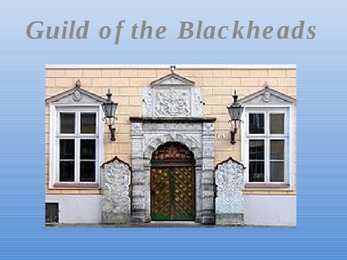
Guild o f the Blac khe ad s His to ry Mentioned in 1399 Origin of the name is not entirely clear St. Mauritius is depicted in the coat of arms of Blackheads Active only in Estonia and Latvia Left Tallinn in the 1940s They were merchants Were also in Tartu and Pärnu Main building was in Tallinn The Ho us e o f Bro the rho o d o f Blac khe ad s Located in the old town Is nearly the only preserved renaissance building in Tallinn When it's not occupied by concerts or other events it's open 10.00 19.00. Thank you for watching Kalev Gustav Lillepruun Sources : Wikipedia.org Tallinn.com Mustpeademaja.ee
TOOMPEA CASTLE Toompea Castle is a castle on Toompea hill Perched on a limestone cliff and towering over the rest of the city Time has been generous to Toompea castle -the well-protected fortress has been almost impregnable Location History Story of rulers and power in Estonia As times and rulers changed so did power and mentalities Today, we can find here buildings mostly dating from 3 periods: - the medieval order's stronghold with its impressive western wall and towers - the Russian-era government administration building with a facade representing classical styles and opening onto Castle Square - the building of the Riigikogu, which originates from the time of the First Republic of Estonia and is hidden behind the walls of the castle. Beginning Old legend - the hill of Toompea was heaped up, stone by stone, by Linda T...
Tartu Located in the South of Estonia, Tartu is one of Estonia's most beautiful cities. I chose to write about Tartu, because with its beautiful green parks and spectacular culture, it's the perfect holiday destination. There are many really beautiful buildings that have been restored after World War II. Most of them are in the heart of the city. There's also a place called the Dome Hill. It's a hill where you can see various monuments and there are also the ruins of the Dome Church. Currently, the building is occupied by a history museum and the visitors can use an observation platform on the roof and enjoy a picturesque view of the city. By the Dome Hill there's the main building of the University of Tartu. It's very big and beautiful. There are several museums, but also some theatres and cinemas. Tartu has many cafés in the centre of the city, for example café Pier...
Lennart Meri Lennart Meri was a writer, film director and statesman who served as the second President of Estonia. Meri was a leader of the Estonian independence movement. His lifestory: Lennart Georg Meri was born in Tallinn, 29 March 1929, a son of the Estonian diplomat and later translator Georg Meri, and Estonian Swedish Alice-Brigitta Engmann. Because his father was a diplomat, Lennart left Estonia at an early age and studied abroad, in nine different schools and in four different languages. In addition to his native Estonian, Lennart Meri fluently spoke five other languages: Finnish, French, German, English and Russian. The family was in Tallinn when Estonia was occupied by the armed forces of the Soviet Union in June 1940 and in 1941, the Meri family was deported to Siberia. They came back to Estonia 1945. In 1953, Lennart Meri graduated cum laude from t...
Estonia Topic Tallinn 2007 2 List of Contents page Facts and figures 3 Geography 3 Climate 3 Nature 4 History 5 Economy 6 Culture 6 Biggest towns 7 Language 8 3 Facts and figures The Republic of Estonia is a small country. Covering only 45, 228 sq km it is slightly bigger than Denmark, Belgium or Switzerland. Estonia's population is under 1.4 million. The official language is Estonian but since very many Russians live here Russian is also wide spread. The capital of Estonia is Tallinn. The currency used in Estonia is Eesti kroon. The Estonian national flag is blue-black-white. It was originally the flag of the Estonian Students' Society. The flag was first consecrated in Otepää Church in 1884. For a while, during the Soviet occupation, the flag was banned but it was again seen in p...
Lennart Meri Lennart Meri was a writer, a film director and a statesman who served as the second President of Estonia. Meri was a leader of the Estonian independence movement. His lifestory: Lennart Georg Meri was born in Tallinn, 29 March 1929, a son of the Estonian diplomat and later translator Georg Meri, and Estonian Swedish Alice-Brigitta Engmann. Because his father was a diplomat, Lennart left Estonia at an early age and studied abroad, in nine different schools and in four different languages. In addition to his native Estonian, Lennart Meri fluently spoke five other languages: Finnish, French, German, English and Russian. The family was in Tallinn when Estonia was occupied by the armed forces of the Soviet Union in June 1940 and in 1941, the Meri family was deported to Siberia. They came back to Estonia 1945. In 1953, Lennart Meri graduated cum laude fr...
Ajalugu August Rei Sisukord: Sisukord..........................................................................................................lk2 1 Elulugu............................................................................................................lk3 Eesti sotsiaaldemokraatliku mõtte algus.........................................................lk4 Eesti Vabariigi algusajad..............................................................................lk5-6 Tegevus paguluses.........................................................................................lk7 August Rei teosed...........................................................................................lk8 Tõlkinud..........................................................................................
Estonia Estonia is a small country in Northern Europe with an area of about 45 000 sq km. As a part of the East-European Plain, the country has a rather flat surface. The highest and most diverse region in Estonia is in the south-eastern part of the country. At 318 metres, Suur Munamägi is not only the highest point in Estonia, but of all the Baltic countries. There are about 1500 islands in Estonia, the biggest of which being Saaremaa and Hiiumaa. Sixty-four species of mammals have been recorded in Estonia, three of them have been introduced: the racoon dog, the American mink and the muskrat. A couple of species have been re-introduced The European beaver, who was hunted to extinction by the end of the 19th century. A vital population of them now exists in Estonia once again. Another re- introduced species is the red deer. An attempt has been made in Estonia in recent years to disperse the p...
Milestones in Estonian History The Estonians are a Finno-Ugric people who came from the area near the Urals and the Volga and Oka rivers. They migrated westward to the Baltic shores some 5, 000 years ago. In the ninth century A.D. Viking ships invaded Estonia and the country became a vital link in the sea-trade between East and West. By the 12th century, the Arabian geographer al-Idrisi had placed the city on his maps. In the 13th century, Tallinn joined the Hanseatic League, the union of European commercial towns that stretched from London to Novgorod. Pärnu, Viljandi and Tartu were also members. Estonia became a vital link in the sea-trade between East and West. The oldest preserved book written in Estonian, a catechism, dates from 1535. Tartu University was established in 1632, on orders from Sweden's King Gustav II Adolf. Literacy spread. The Bible was translated into Estonian in 1739(pole vaja teada). A period of wars began in...
Tallinn English College Topic Estonia Tallinn 2008 1. Introduction Estonia is a small country about the size of Switzerland, or New Hampshire and Massachussetts combined. Estonia is named after the people called "Ests" who lived in the region in the 1 st century AD. The Republic of Estonia is one of the three countries commonly known as the "Baltic States". The other Baltic States are Latvia and Lithuania. 2. Geographical position Estonia is situated in northeastern Europe. Estonia is bounded on the north by the Gulf of Finland, on the east by Russia, on the south by Latvia and on the west by the Baltic Sea. In the north it borders on Finland. The coastline of the Baltic Sea in Estonia is characterized by numerous gulfs and bays, the biggest of them being the Gulf of Finland, the Gulf of Riga and the Gulf of Pärnu. Bays include the Narva Bay, Matsalu Bay, Kolga Bay, Kunda Bay, Tallinn Bay etc....
Why was life better /worse in Estonia 50 years ago? If we go back in time 50 years, then we will find ourselves in the year 1958. Certainly it was not one the brightest periods in our lives, because all the Estonians were occupied by Russians and the governing power was also held by them. It was a time where we never even dreamed about life we are having nowadays. The way of life was very complicated, people had limited rights and all the things we nowadays have done by machines were all handmade. These are the major reasons, which made me think that life was worse 50 years ago than now. Why was it so? Firstly, nowadays we can speak about many comforts, which 50 years ago was not so. In 1950s' there were any conveniences at all everything had to be made by yourself and people were living a poor life. People did not have the chance to own expensive technics(as a matter of fact some of them were not invented yet or it jus...
THE DOMINICAN St. CATHERINE`S MONASTERY One of the best-kept secrets of Tallinn is to be found in the very center of the city. Located near Viru Street, between Müürivahe and Vene Streets, is a medieval Dominican monastery which reveals a fascinating dimension of the city's history. The Dominican Order was founded by a Spaniard, Saint Dominic Gusman, in 1216. Up to that moment only bishops were permitted to preach, but their performance was inadequate beause of the time they had to devote to the administrstion of their dioceses. The result was that many Christians heard the Word of God rarely if at all . Dominic envisioned the creation of a body of trained theologians who would scatter throughout Europe and proclaim the gospel in the most remote areas. The nordic countries appear very early on the Dominic anagenda. To reach Tallinn the friars followed the trade route along the southern coast of the Baltic Sea, and reached Estonia some 7...
My Town I live in Tallinn. It's the capital and main seaport of Estonia. Tallinn is a very beautiful city that lies on the Baltic Sea. It covers 158 square kilometres. The Mayor of Tallinn is Jüri Ratas. The population of our capital is about 400000 people. About 55% of them are Estonian, 37% Russians and the other 8% are from different nations. The people here are mostly engaged in industry- mainly the food industry (23%), trade (16%) and transport and communication (14%). History. Tallinn has a great history. It was first marked on a map of the world by the Arab geographer al-Idrisi in 1154, its name then being Kolyvan. In the 13 th- century chronicle of Henricus de Lettis the town was called Lyndanise. Then it was called Reval for some time and finally Estonians started to call the town Tallinn from Taanilinn (Danish town) after the Danish conquest in the 13th century. Th...
Tallinn English College English Sergo Vainumäe 9A TALLINN Report Supervisor: Inge Välja Tallinn 2006 Order of contents: 1.Introduction 2.Toompea 3.Lower Town 4.Kadriorg and Pirita 5.Museums 1. Introduction Tallinn, the capital of Estonia, lies on the Baltic Sea. It is on almost the same latitude east St. Petersburg in Russia, Stockholm in Sweden and Stavanger in Norway, and covers 158 sq km. Tallinn was first marked on a map of the world by the Arab geographer al-Idrisi in 1154, its name then being Kolyvan (probably derived from the name Kalev). In the 13th-century Chronicle of Henricus de Lettis the town was called Lyndanise. Later came Reval (presumably after the old county of Rävala), the name used by the Germans who ruled the country for seven centuries. Russians then modified Reval...
Kunda Gymnasium Rait Türkel Old Tallinn Report Instructor:Teacher Kristi Aron Kunda 2012 Introduction Like most cities with an eight-hundred-year-old past, Tallinn is a patchwork of historic areas. The city's pride and joy is without a doubt its Medieval Old Town, but equally enchanting is the Kadriorg district, a throwback to the time when Estonia was ruled by the Russian Tsars. Tallinn is the capital and largest city of Estonia. It occupies an area of 159.2 km2 with a population of 416,470. It is situated on the northern coast of the country, on the shore of the Gulf of Finland, 80 km south of Helsinki, east of Stockholm and west of Saint Petersburg. Tallinn's Old Town is in the list of UNESCO World Heritage Sites. It is ranked as a global city and has been listed among the top 10 digital cities in the world.The city was a European Capital of Culture for 2011, along with urku, Finland.T...
Introduction Tallinn, the capital city of the Republic of Estonia and of the Harju county, is a town in North Estonia on the coast of the Gulf of Finland. It has nearly half a million inhabitants and covers an area of almost 160 sqkm. It is also an important economic and cultural centre and one of the main ports in the Baltic States. Tallinn is one of the oldest cities on the Baltic Sea. It is unique for its well-preserved architecture from the 13-15 centuries. In contrast to the ancient town-walls and towers, Tallinn of today offers modern hotels, restaurants, sport and cultural centres. Every five years national song and folk dance festivals take place in Tallinn. The yachting regatta of the 1980 Moscow Olympic Games was held at Pirita. History Tallinn means in English "Danish town". The place is believed to have been settled by Finno-Ugric people about 2500 BC. It was first marked on a map of the world by the Arab geographer al-I...
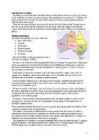
Introduction, Location Australia is a country between the Indian Ocean and the Pacific Ocean. It is the only country in the world that occupies an entire continent. The mainland covers an area of 7.7 million km² and it is about 3700 km from the most northern point to its most southern point and about 4000 km from east to west. There are also many different seas around Australia, like the Coral and the Tasman Seas in the west or the Timor and the Arafura Seas in the north, where the Indian and the Pacific Oceans meet. Because all seas and oceans near Australia are warm, surfing is a very popular hobby. Political subdivision Australia is divided into six states, which are: · New South Wales · Victoria · Queensland · South Australia · Western Australia · Tasmania New South Wales is the most populous state in Australia. Its capital is Sydney. Victoria is one of the most densely populated states in Australia. Its capit...
Tallinn Mustamäe College G2K Jaana-Kristiina Jõgevest The Four oldest churches of Tallinn Report Supervisor: Ingrid Teigar Tallinn 2009 The Dome Church The Danes began fortification of Toompea after the conquest of Tallinn in 1219 and probably also built the first church there. It was presumably a wooden building located at the site of the present cathedral. However, a serious conflict with the Order of the Brothers of the Sword broke out soon as the latter wanted to gain control of the entire Estonia. The order succeeded in subordinating Tallinn and the whole of North Estonia to its rule in 1227. The monks of the Dominican Order began the construction of a stone church in Toompea in 1229. The first written data on the cathedral date back to 1233, the date of a battle...
I Native Americans · Origin of Native Americans Origin is debatable Siberia->Alaska Crossed the land bridge around 14,000 years ago "ice-free corridor" Hunters, searching for fresh grounds · Different tribes and their way of life In tents, dark skin, hair is long, black and straight, women-agriculture, men- hunting. bands(chief. Travelled together) and tribes land was owned by the tribe that occupied it. 200 different tribes Apache- "enemy"- hunted buffalos, oil and natural gas from their land Cherokee- largest tribe Cheyenne- from Minnesota and S & N Dakota. High system of laws Northwest Ordinance of 1787 Signed in 1787 by Thomas Jefferson. The creation of the Northwest Territory as the first organized territory Ohio River was settled, 5 new states Advancement of education, maintenance of civil liberties, exclusion of slavery Promised not to invade or disturb Indians Northwest Indian War-> to stop white expropriation (sun...
Tallinna Mustamäe Humanitargümnaasium Valeria Jefremenkova ENGLISH AS A GLOBAL LANGUAGE INGLISE KEEL KUI ÜLEMAAILMNE KEEL Research work Supervisor: Jevgenija Kozlova Tallinn 2016 1 Table of Contents СONTENT…………………………………………………………………………………...2 INTRODUCTION…………………………………………………………………………...3 CHAPTER I……………………………………………………………………………….....5 1.1. A Brief History of the English Language…………………………………………...…..5 1.2. Origins of English as the Global Language……………………………………..……....6 1.3. Necessity of a Global Language...……………………………………………………....8 1.4. Criticism of a Global Language………………………………………………………....9 1.5. The Role of English Today……………………………………………………………..10 1.6. English Speaking Countries…………………………………………………………….11 1.7. Perspectives of English………………………………………………………………....13 CHAPTER I...
UNO SOOMERE ESTONIAN SYMPHONIC MUSIC. THE FIRST CENTURY 1896-1996. AN OVERVIEW With a Historical and Cultural Summary IN MEMORY OF THE GREAT ESTONIAN COMPOSERS CONTENTS ESTONIA AND THE ESTONIANS FOREWORD IN THE FOLD OF TSARIST RUSSIA. EMERGENCE AND FIRST STEPS ON THE CLASSICAL-ROMANTIC PATH. HISTORICAL INTRODUCTION I. MUSICAL LIFE IN TARTU AT THE TURN OF THE CENTURY. TRAILBLAZERS: ALEKSANDER LÄTE, RUDOLF TOBIAS, ARTUR KAPP. II. THE FIRST DECADE OF THE 20TH CENTURY. ARTUR LEMBA: THE BEGINNING OF ESTONIAN SYMPHONY AND OPERA. III. NEW DEVELOPMENTS IN CULTURAL AND MUSICAL LIFE: THE END OF THE TSARIST PERIOD. THE INDEPENDENT REPUBLIC OF ESTONIA: THE INTRODUCTION OF INNOVATIONS FROM WESTERN ART AND THE EVOLUTION OF NATIONALLY ORIENTED MUSICAL TRENDS. IV. THE TWENTIES. ARTUR KAPP: ROMANTICIST AND DRAMATIST. V. THE INFLUENCE OF NEW WESTERN MUSIC...
Public International Law is a system of law, different from domestic law. Why is this system unique? Usually law regulates relations between people, people and the state etc, PIL regulates relations between states. Thats why PIL is important for international relation students. PIL influences the life of everybody, it doesn't regulate people directly but indirectly (through the decisions of the states), because it's everywhere. It's like air. E.g. when you want to send a letter to Brazil, you put a stamp from your own country and send it from your post office and the letter gets delivered. Why is this so easy, because there are certain international conventions that regulate postal services. E.g. traffic signs are almost the same everywhere, why? Because of certain int conventions that require the states to have more or less unified traffic signs. States apply international regulations to national regulations and they ...
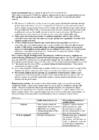
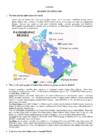
CANADA REVISION QUESTIONS 2010 1. The main physiographic regions of Canada. Canada may be divided into seven physiographic regions: Arctic Lowlands, Cordilleran Region, Interior Plains, Hudson Bay Lowlands, Canadian Shield (Forest Lands), St Lawrence Lowlands and Appalachian Region. Divisions are based on each area's relatively similar physical geography and landforms. Physiographic regionalization is defined here as the process by which regions with relatively homogeneous physical geography are determined 2. Who are the native people of Canada? Into which three groups can they be divided? Canada's constitution specifies three categories of aboriginal peoples: Indian (First Nations), Métis, Inuit. According to Canadian census 2011, 1.4 mln people of Aboriginal origin (4.3%): 852,000 First Nation...
Russian philology The meaning of the word "philology" is "love for word". This is love that unites teachers and researchers of modern and Classical languages and literature, interpreters and diplomats, journalists and publishers, writers and poets. Russian philologis are highly demanded in various spheres of scholarly research and education, in the mass media, in civil service at the Ministry of Foreign Affairs, in archives, libraries, museums, in travel agencies, as well as Russian and international companies. Curriculum within in philological faculty includes courses of Russian and European languages and literature, courses of Linguistics and Theory of Literature for students to familiarize themselves with various schools and trends of Russian and foreign philology. The core curriculum also includes a number of Liberal Arts courses (Philosophy, History, Psychology, Pedagogy), as well as courses of basic mathematics and compute...
Some of the things you will learn in THE CODEBREAKERS • How secret Japanese messages were decoded in Washington hours before Pearl Harbor. • How German codebreakers helped usher in the Russian Revolution. • How John F. Kennedy escaped capture in the Pacific because the Japanese failed to solve a simple cipher. • How codebreaking determined a presidential election, convicted an underworld syndicate head, won the battle of Midway, led to cruel Allied defeats in North Africa, and broke up a vast Nazi spy ring. • How one American became the world's most famous codebreaker, and another became the world's greatest. • How codes and codebreakers operate today within the secret agencies of the U.S. and Russia. • And incredibly much more. "For many evenings of gripping reading, no better choice can be made than this book." —Christian Science Monitor THE ...
EHITUSTEADUSKOND Eesti eluasemefondi puitkorterelamute ehitustehniline seisukord ning prognoositav eluiga Uuringu lõpparuanne Ehituskonstruktsioonid Ehitusfüüsika Tehnosüsteemid Sisekliima Energiatõhusus Tallinn 2011 EHITUSTEADUSKOND Eesti eluasemefondi puitkorterelamute ehitustehniline seisukord ning prognoositav eluiga Uuringu lõpparuanne Targo Kalamees, Endrik Arumägi, Alar Just, Urve Kallavus, Lauri Mikli, Martin Thalfeldt, Paul Klõšeiko, Tõnis Agasild, Eva Liho, Priit Haug, Kristo Tuurmann, Roode Liias, Karl Õiger, Priit Langeproon, Oliver Orro, Leele Välja, Maris Suits, Georg Kodi, Simo Ilomets, Üllar Alev, ...
 annaabi.ee