Leidsid 33 sarnast õppematerjali, mis on seotud failiga "Nobody can win a war". Need materjalid aitavad sul teemat sügavamalt mõista.
power, even, innocent, violence, getting, goal, money, revenge, deaths, hand, there, winners, other, advantage, same, loser, nobody, historically, reason, thought, worldwide, another, wanted, brings, hunger, illnesses, able, kill, allowed, wants, addition, sometimes, feel, spirit, disadvantages, millions, children, remember, conclusion, losers, thoseThe beginning of the 1910 (modernism starts ) · American naturalists: frank Norris ,,The Octopus", Stephan Crane ,,Red badge of courage" · Jack London (1876-1916) · Grew up in extreme poverty. From early age had to support himself with dangerous manual jobs. Experienced the trouble of survival. Outlooks were eclectic (combination of various philosophies). Was influenced by socialism by Karl Marx, on the other hand the dark views of Nietzche. Believed in the trimph of working man (marx), but at the same the in the necessity of of the survival of the strongest. Was attracted to the Nietzches theory of the superman- the true aristocrats. The rest are the slaves. Morality, conscious, christianity-are the inventions of the slaves. Because this is how slaves tried to control the masters. 27.02.13 1920-jazz, post war euphoria, people were more less
utilitarianism is considered here as the other possible option, rule-utilitarianism, does not provide exceptions to rules and if it would, then it would automatically have shifted to act-utilitarianism as the fact that the exceptions were admitted to, would mean they did so to contribute to the maximizing of happiness. 3 considering the aim of the torture (Twinning, 1973). Even when absolutely condemning the act of torture, it is still important to do this for the right reasons. There are enough legal and ethical grounds to do so. The most evident grounded reason is probably the fact that it harms the dignity of a human being. However, this argument convinces some more than others. The consequential idea that a small evil is allowed to avoid a bigger evil doesn't uphold any valid norms or values but emphasizes the justness of the outcome. This gives room
What is regulated? Relations between states Relations regulated by domestic law branches. Why it's international then? Because our world is a globalized world and even though its regulated by domestic branches, it's international because one has to decide which national law is applicable. (Also called
Paul is a compassionate and sensitive young man; before the war, he loved his family and wrote poetry. Because of the horror of the war and the anxiety it induces, Paul, like other soldiers, learns to disconnect his mind from his feelings, keeping his emotions at bay in order to preserve his sanity and survive. As a result, the compassionate young man becomes unable to mourn his dead comrades, unable to feel at home among his family, unable to express his feelings about the war or even talk about his experiences, unable to remember the past fully, and unable to conceive of a future without war. He also becomes a "human animal," capable of relying on animal instinct to kill and survive in battle. But because Paul is extremely sensitive, he is somewhat less able than many of the other soldiers to detach himself completely from his feelings, and there are several moments in the book (Kemmerich's death, Kat's death, the time that he spends with
Nobody can win a war. People started to make a war thousands years ago. During this time they had different purposes, but the final was the same a war caused a great deal of sorrow. But is it worth fighting? Are there any winners or losers in war? Firstly, both sides get bored with a feud. It makes much money, physical and moral strength. Not only soldiers civilian population gets tired of being in a danger and worrying about relatives and friends. Secondly, the consequences of a war are horrible. Terrible memories would not leave people. Every time they recall those events, they suffer again because no one is able to make somebody happy fighting. Thirdly, a lot of people die. Families lose their breadwinners and children become orphans.
natural resources by our colonial masters accorded us would be things of history. That is more than forty years ago. Unfortunately, the promise of independence has not been fulfilled. Today, Africa has become more desolate; there is more starvation, diseases and non-provision of essential services than when we got our independence. There are all kinds of wars in Africa than the rest of world put together. The majority of so-called Africans leaders want to stay in power until the day their bodies are put in the grave. Through buffoonery, utter mismanagement and downright stealing of the wealth of the masses, these leaders have so impoverished Africa that we are now nothing but a beggar continent. We beg for everything; we are more dependent on our colonial masters than when we received our independence from them. Africa owes the West more money than we and our generations to come can pay.
indwelling consciousness or spirit in every creature, every life-form, recognize it as one with their own essence and so love it as themselves. Until this happens, however, most humans see only the outer forms, unaware of the inner essence, just as they are unaware of their own essence and identify only with their own physical and psychological form. In the case of a flower, a crystal, precious stone, or bird, however, even someone with little or no Presence can occasionally sense that there is more than the mere physical existence of that form, without knowing that this is the reason why he or she is drawn toward it, feels an affinity with it. Because of its ethereal nature, its form obscures the indwelling spirit to a lesser degree than is the case with other life-forms. The exception to this are all newborn life-forms – babies, puppies, kittens, lambs, and so on. They are
Though Card is best-known for "Ender's Game", he has also written in a variety of other genres, including plays, short stories, books on writing, the Homecoming series, other science fiction books, and nonfiction, such as articles on computer technology. Orson Scott Card in 2008 and when he was younger. The Setting The novel starts off on Earth, with scenes at the school and the Wiggin home. Little attention is given to the details of this setting, not even the name of the city, and so it comes across as a standard American neighborhood. A shuttle is used as a background in the fourth chapter. It has small narrow corridors and the walls of the rooms were carpeted as floors. The importance of the shuttle is that Ender learned something about orientation in zero gravity and that knowledge helped him a lot later. Most of the time passes in Battle School, which is composed of army barracks with rows of
They treat others as themselves. Rousseau - people in the state of nature were neither good or bad. Man was like an animal not posessing any needs besides the primary ones. The bad habits of men are byproducts of ingaging in a civil society. All men are equal Sovereign Hobbes: can not be overthrown and can do whatever the fuck it wants. The best one is monarch. Locke: can be overthrown, if fails to do the job. Criticises monarch for haveing hereditary power. Prefers election for a term. Democracy? Rousseau: aristocracy, if not hereditary. (monarchy represents particular will) Authority in the social contract Hobbes: the sovereign Locke: The law over the sovereign Rousseau: The general will over the Law and over the sovereign Human life Hobbes: sovereign can take life Locke: life can only be taken to prevent from being killed and after that who takes the life is subjected to the judge. property
3. All stereotypes are true; the fact that you recognize a slur proves that it isn't. 4. Anything you're afraid is true is true. 5. Before most people get to the point of being able to tell their ass from a hole in the ground they're already assholes and it's too late. 6. Concentrating on something important can make you lose track of your soap opera. 7. Debunking the bunk is everyone's responsibility. 8. Don't ask me to pay for anyone else's mistakes. I make enough of my own. 9. Even those who possess real magic must beware of being misled by "magical thinking." 10. Everyone knows what shit tastes like. 11. Exclusive occupancy of a private room is a basic human right. 12. Fair compensation for genius is wealth. 13. God's not perfect, so it's a pretty good bet that you're not, either. 14. Good institutions help to overcome human moral inertia. 15. I am not one of your little friends. 16. If a dimension is anywhere it's everywhere. 17. If God's not crazy, why are you? 18
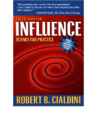
For instance, brain imaging research is presented, showing here are 5 good reasons! how the "Expensive = Good" heuristic o Updated coverage of social influence leads people to perceive more costly effects in popular culture, such as the items as better than (identical) less contagion of obesity among the young costly ones. and the contagion of violence in such tragedies as the Virginia Tech and North- o Enhanced coverage of "how to say no." New evidence is presented to ern Illinois mass killings. help readers identify their special e Added coverage of social influence vulnerabilities to various techniques effects in new technologies, such as of persuasion
The making of a new nation. The Enlightenment in America. The emergence of the notion of the American Dream. The great Enlighteners: Crèvecoeur, Jefferson, Paine, Franklin. The American Enlightenment is the intellectual thriving period in the United States in the midtolate 18th century (17151789), especially as it relates to American Revolution on the one hand and the European Enlightenment on the other. Influenced by the scientific revolution of the 17th century and the humanist period during the Renaissance, the Enlightenment took scientific reasoning and applied it to human nature, society, and religion. American Enlightenment a gradual but powerful awakening that established the ideals of democracy, liberty, and religious tolerance in the people of America.
However, Bill is not immune to the petty cruelty that characterizes Jake and Jake's circle of friends. Mike Campbell - A constantly drunk, bankrupt Scottish war veteran. Mike has a terrible temper, which most often manifests itself during his extremely frequent bouts of drunkenness. He has a great deal of trouble coping with Brett's sexual promiscuity, which provokes outbreaks of self-pity and anger in him, and seems insecure about her infidelity as well as his lack of money. Pedro Romero - A beautiful, nineteen-year-old bullfighter. Romero's talents in the ring charm both aficionados and newcomers to the sport alike. He serves as a foil (a character whose attitudes or emotions contrast with, and thereby accentuate, those of another character) for Jake and his friends in that he carries himself with dignity and confidence at all times. Moreover, his passion for bullfighting gives his life meaning and purpose
Why do we need morality? As an English philosopher Thomas Hobbes (1588-1679) said, all humans are made equal in mental and physical abilities. This does not mean that all of us are equally strong, smart or beautiful, but that everyone has the ability to damage or kill the other. The main goals, we all want to achieve, are having a shelter, security, power, wealth and enough food. This means that people are constantly competing with each other and that makes all of us (who desire the same things) enemies. Hobbes names the insecurity and fear people feel towards each other a "state of nature". In this state there are no moral rules or enforced laws, also no justice or injustice. People, being violent and arbitrary, will only follow their own interest. So without laws and boundaries, people would be in constant war - every man for himself. In
capacity for rational thought and moral judgment. Henry's shooting of the engineer for refusing to help free the car from the mud shocks the reader for two reasons: first, the violent outburst seems at odds with Henry's coolly detached character; second, the incident occurs in a setting that robs it of its moral import --the complicity of Henry's fellow soldiers legitimizes the killing. The murder of the engineer seems justifiable because it is an inevitable by-product of the spiraling violence and disorder of the war. Nevertheless, the novel cannot be said to condemn the war; A Farewell to Arms is hardly the work of a pacifist. Instead, just as the innocent engineer's death is an inevitability of war, so is war the inevitable outcome of a cruel, senseless world. Hemingway suggests that war is nothing more than the dark, murderous extension of a world that refuses to acknowledge, protect, or preserve true love.
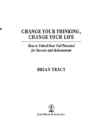
ment and personal success in the world. I know; I have sold over 82 million books aimed at helping people get the most out of themselves. Change Your Thinking, Change Your Life shows you how to dis- cover your extraordinary inner resources and tap your incredible powers.You will learn how to attract into your life all the people and resources you need to achieve any goal you can set for yourself. You will absolutely amaze yourself as you start to achieve new and better results by employing these concepts and ideas in every- thing you do. These are the same concepts used by all big-time win- ners, self-made millionaires, and leaders in every field. In this book, you will learn a step-by-step process to great suc- cess that you will eventually implement, easily and effortlessly. This
Jonathan Dekel-Chen lectures, Jews in the USSR, 1917-2000 1937 census didn't get published. 1939, pretty accurate for Js. 3.1 mill Js in pre- Molotov-Ribbentrop area. 1939, 2.2 mill. Js not shy about declaring Jewishness. Inherits 1.3 mill in Poland. Similar # annexed by Germ. 250,000 in Lithuania. 330,000 Bessarabia. Back to pre-1917 #s of Sov Jewry. 5 ½ mill of pre-war levels. Pre-mature deaths during famine of '21-'22, '31-'33, 7 years of war, emigration up to 1924 (vast majority to West, 3rd and 4th aliyahs). J pop growth still significant, high birth rates, but pop static. Grows more in SU than anywhere else few leaving, pop growth significant. Vast majority in W borderlands. Very few emigrate during year and a half from annexed areas. Germans occupied Leningrad-Moscow-Stalingrad, all and more of former Pale. 1939, started evacuating. Stalin thought 43-44, war
pay Divine honour to the Prince of Darkness; and, in return, receive from him preternatural powers. It was a folkloric belief that a Devil's Mark, like the brand on cattle, was placed upon a witch's skin by the devil to signify that this pact had been made. Witches were most often characterized as women. It was believed that a witch often joined a pact with the devil to gain powers to deal with infertility, immense fear for her children's well-being, or revenge against a lover. The long-term result of amalgamation of distinct types of magic-worker into one is the considerable present-day confusion as to what witches actually did, whether they harmed or healed, what role they had in the community, whether they can be identified with the "witches" of other cultures and even whether they existed as anything other than a projection. Present-day beliefs about
had built. This all is in connection with studying an evil. Many years ago for example in 17 century were very funny laws. About five year old boy had to carry knights weapon send him all the way to battle and had to be in battle itself. To me it is too unreasonable that so young boy has to see this awful killing and fighting and also learn this kind of thing. I really can not understand what these people were thinking. Many boys get even killed in battle and it is sad for me because they were too young for dieing. Those people had to be evil when they thought these little boys to kill and commanded them to go to the battle. Someway killing for me is Evil. Children had no choice to learn from killers how to kill enemy. But in some way I understand this teaching. Of course it was for protecting the country but they did not had to teach and put to suffer so young boys. So I have not anything more to say that he, who studies
Describe the British Parliament Works in a large building called the Palace of Westminster aka The Houses of Parliament. There are offices, committee rooms, restaurants, bars, libraries and even some places of residence. Two large rooms: The House of Lords meet in one and the House of Commons in the other. The British Parliament is divided into two houses, but the House of Commons is obviously more important and only they are considered to be the MPs. In the House of Commons there are just two rows of benches facing each other. On the left sit the members of the governing party and on the right sit the opposition. The Speaker sits between them and controls the action
should be aloud. Talkeing about the school. There has it's own determined rules, what students by all means have to detain. It is because of that: these rules are determined from school. In the old times I was steady pupil and kept on all rules. But now last times I have become much more lazier than I were. Maybe it is because of that I have not everything all right at home and it disturbes my studying at school. It is difficult to concentrate to my lessons at school and even at home. It takes me that I have no mood to learn and I start to keep aside from studies. But it is against the rules at school, because it is school duty to go orderly in lessons, listen to the lessons subjects and to do my homework. Along with school rules goes offcourse listening to the teachers talk too. Students are obliged to listen to the teachers talk correctly with attention in lesson. To say something against teacher's words is verboten at school
this tribal system is still in use. Their culture had almost no influence from the rest of the world. They evolved a culture endorsed by agriculture and hunting. Of course the Maori were warriors as well. They had inter-tribal battles, mostly over territory and the losers became slaves or food. Regardless of that they are historically not to be considered as cannibals. There was only one tribe that were, other tribes just kept the heads of their defeated to secure their mana or enemy's power. The Maori had a complex social structure of tribes, sub-tribes and clans and a concrete society made up of nobility, priestly and slave classes. The Maori believed in deities and personifications, such as Tane-mahuta, the lord of the forest, Tawhirimatea and Tangaroa, the Polynesian ocean god. Their villages were fortified with an open space in the centre were the whare hui or the meeting house was located.
6 been waiting, forgotten 3 Because although the pilots are prepared to give their lives in 4 There was once a wolf who used to 2B What's on the box? wander out every night in search of a page 12 the service of their country, their deaths are a result of Joe's lack of lamb for his dinner. But recently this 1 1 rubbish 8 as a sense of service to wider society. wolf has had been having difficulty 2 well-drawn 9 series 4 They were horrified by it. getting enough to eat because 3 story-lines 10 half 5 Both attack the `American the shepherds in the area were
because of being born there or because of being given them Penalty - a punishment for doing something that is against a law Government - the group of people who officially control a country System of courts - a set of connected positions which operate together to ensure ... ? To commit a crime to do sth that is forbidden by law Corruption - illegal, immoral or dishonest behaviour, especially by people in positions of power Fine (trahv) - an amount of money that has to be paid as a punishment for not obeying a rule or law Suspension - when a person is temporarily not allowed to work, go to school or take part in an activity, as a punishment Prosecution - to officially accuse someone of committing a crime in a court of law, or to try to prove that a person accused of committing a crime is guilty of that crime Injury bodily harm, damage Public opinion sth that most of the ppl in a society think of sth
its major trends, its great men, its errors made and lessons learned. I have tried in this book to write a serious history of cryptology. It is primarily a report to the public on the important role that cryptology has played, but it may also orient cryptology with regard to its past and alert historians to the sub rosa influence of cryptanalysis. The book seeks to cover the entire history of cryptology. My goal has been twofold: to narrate the development of the various methods of making and breaking codes and ciphers, and to tell how these methods have affected men. When I began this book, I, like other well-informed amateurs, knew about all that had been published on the history of cryptology in books on the subject. How little we really knew! Neither we nor any professionals realized that many valuable articles lurked in scholarly journals, or had induced any
of scale or pace or pattern that it introduces into human affairs. The railway did not introduce movement or transportation or wheel or road into human society, but it accelerated and enlarged the scale of previous human functions, creating totally new kinds of cities and new kinds of work and leisure. This happened whether the railway functioned in a tropical or a northern environment, and is quite independent of the freight or content of the railway medium. The airplane, on the other hand, by accelerating the rate of transportation, tends to dissolve the railway form of city, politics, and association, quite independently of what the airplane is used for. Let us return to the electric light. Whether the light is being used for brain surgery or night baseball is a matter of indifference. It could be argued that these activities are in some way the "content" of the electric light, since they could not exist without the electric light. This fact
He describes the darkness that is creeping up. In my opinion he is talking about USA, which is beginning to creep up on England or on Europe. And because of that England is becoming a less dominant and more isolated place. He is saying that intimacy is dying and that may represent the globalization. Another political poem I really enjoyed is ´´Homage To a Government´´. Larkin says that next year they are going to bring all the soldiers home, because they (citizens) want the money for them selves. And that their children do not know it's a different country, because they did not achieve anything in the war. But at least they can leave their children some money. I think that Larkin means that the troops are going to be brought home from Vietnam. At the end of almost every line in the first stanza is /And it is all right./ In his ironical way he is trying to say that the Vietnam War was pointless, because it did not bring any results. Another poem about the Vietnam War is
Foreword "I think that the Great Marquee had a sense of excitement: visitors would enter it expectantly, as if they were unwrapping a Christmas present." Head of Shows Development Bob Sweet Chelsea is, definitely, an event most gardeners love to visit and remember long afterwards. But why it is so? I have read lot about that Show. Everybody seems to be like this, even if there are lots of not so good things. First I thought it could be very nice way to spend day with family but Chelsea is not a family day out and they take care in targeting the garnering market. There is no discount for children, no family tickets, no children's play areas. Exhibitions want customers and our job is to manage the balance between the needs of exhibitors and those of the visitors. It's important to have the right number of exhibitors in each
Terrorism and fighting against it Terrorism is not new and even though it has been used since the beginning of recorded history it can be relatively hard to define. Terrorism has been described differently as both a tactic and strategy; a crime and a holy duty; a justified reaction to oppression and an unforgivable abomination. Obviously, a lot depends on whose point of view it is being represented. Terrorism has often been an effective tactic for the weaker side in a conflict.
the author who first builds up his life, then projects it into poetry. Although I will keep references to Larkin’s life in this study to a minimum, I am not suggesting that the biography must by definition be outside the scope of Larkin criticism. Discussing Larkin’s life is justifiable, since it helps us understand his poems, although in many cases it has also proven to be distorting or misleading. It is revealing that even those authors who overtly reject the methods of biographical criticism, such as John Osborne in Larkin, Ideology and Critical Violence in 2008, make use of the biography, at least to a certain extent. In the centre of the book edited by Regan one finds a hilariously subversive essay: Graham Holderness’s “Reading ‘Deceptions’”, a text balanced on the borderline between literary criticism and fiction. It offers four readings of Larkin’s “Deceptions”
The Main Economical Problem 6-8 Free riding Problem on Public Transport 9 References 10 2 The Political Problem A common example of a free rider problem is defense spending: no one person can be excluded from being defended by a state's military forces, and thoes free riders may refuse or avoid paying for being defended, even though they are still as well guarded as those who contribute to the state's efforts. Therefore, it is usual for governments to avoid relying on volunteer donations, using taxes and, in some countries, conscription instead. In the case of defense spending, alternative perspectives of the free rider problem also exist. A free rider may be an individual or group of military contractors, ideologues, government officials or lobbyists that inflate the risk of enemies, or even convinces the
and cared little about it. Government & Society. Language & Culture. Society was still based upon rank. At the top were dukes, earls & other lords. Below these were knights (most were not heavily armed fighters on horses, but ,,gentlemen farmers" or ,,landed gentry") who had increased their landholdings & improved farming methods. This class had grown in numbers. Edward I had ordered that all those with income of L20 a year must be made knights, so even some yeomen farmers became part of the ,,landed gentry", while many ,,esquires" who had served knights, now became knights themselves. Next to the gentlemen were ordinary freemen of the towns. By the end of the Middle Ages it was possible for a serf to become a freeman if he worked for 7 years in a town craft guild. Town offered to poor men to become rich & successful. At the same time many successful merchant families were obtaining farmland. In the beginning the
of supreme importance was my love of reading. I don't recall why, but by an early age, say age 9, I was a phenomenal reader of books, a habit that persisted all the way until college. Reading expands one's mind immensely. It fires the imagination, demonstrates grammar, teaches vocabulary, informs, challenges, helps one relax. In some cases it forces the mind to concentrate, as to understand. It can help build a moral or ethical framework, and help oneself form an individual worldview. Even an untraveled child, sitting at home, can be transported by a book into any place or time. Fantasy and facts weave together, but the result is almost an unmitigated improvement. If a bookworm grows up to be antisocial or worse, it is not because of too much reading, but because something else was lacking in the education or caregiving. Hands-on learning is another factor difficult to overrate. Imagine trying to learn to draw from listening to a lecture
 annaabi.ee