Leidsid 28 sarnast õppematerjali, mis on seotud failiga "Navajo people". Need materjalid aitavad sul teemat sügavamalt mõista.
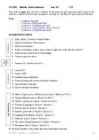
navajo, language, verb, nouns, jinÃ, languages, vowel, other, verbs, wine, them, peoples, north, southwest, states, southern, pronunciation, vowels, four, basic, qualities, these, occur, either, grammar, least, prefix, there, types, simple, knife, chil, english, translation, crazy, boys, working, hard, raised, having, filled, drink, backs, examples1. Be ready to explain the terms (lecture 1): language, linguistics, synchronic approach to language, diachronic approach to language, linguistic competence, linguistic performance, what is grammar?, prescriptive grammar vs. descriptive grammar; phonology, phonetics, phone, allophone, phoneme; morphology, morphemes (types of morphemes), morphs, allomorphs, types of affixes, derivational affixes, inflectional affixes; open vs closed class words; syntax. Language: a systematic, conventional use of sounds, signs or written symbols in a human society for communication and self-expression.
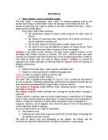
English lexicology 1. Size of English vocabulary Vocabulary is a sum total of words used in a language by speakers or for dictionary-making. Active and passive vocabulary. The Old English vocabulary was homogenous. There were about 50 000 – 60 000 words, 1/3 of which have survived. o About 450 loans from Latin o About 2000 from the Viking invasions. The Middle-English vocabulary became a heterogeneous hybrid of Germanic and Romanic languages. 100 000 to 125 000 words.
BASIC ENGLISH GRAMMAR Book 1 Book 1 Younger students at beginning to intermediate levels will greatly benefit from this step-by-step approach to English grammar basics. This is the ideal supplement to your language arts program whether your students are native English speakers or beginning English language learners. Skill-specific lessons make it easy to locate and prescribe instant reinforcement or intervention. · Illustrated lessons are tightly focused on core concepts of grammar · Nearly 70 practice exercises are included for ready reinforcement · A wealth of examples are provided on every topic · Concise explanations are bolstered by extra grammar tips and useful language notes Book 1 Anne Seaton · Y. H. Mew
One of the abts/the best was given by Jonathan Swift: ,,Proper words in proper places." In present- day english, the world style is used in about half a dozen basic meanings. 1. the characteristic manner in which a writer expresses his ideas. Some speak about the style of Hemingway, Dickens etc. 2. the manner of expressing ideas, characteristic of a literary movement or period. Style of symbolism, romanticism 3. the use of language to pick a literary genre-comedy, novel, drama, O.D (poetic form) etc. 4. the selective use of language that depends on spheres of human activity fiction, scientific prose, newspapers, official documents, business correspondenc etc. Style bears the stamp of indivual usage, that is every writer has a unique pattern/habit and abilities that form his style. This approach is best illustrated in the well-known victum of the french poet Georges-Louis
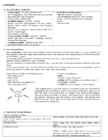
Gan was suppletive in Old English, past form: eode.Eode was supplanted by went (past form of wenden) at the end of the Middle English period.To wend has survived in Modern English in phrases such as to wend one's way, we wended homewards (ironic usage). Thus: suppletivity- suppletion different parts of one and the same paradigm come from what were originally different paradigms (different words with close meanings or words in different but close dialects).Suppletion embraces verbs, adjectives, nouns. Be was/were been (Old English beon/wesan) (am, art, is, are); in Old English some suppletive forms were used parallel to one another) Good better best Bad worse worst Much more most Little less least Estonian: hea parem (cf "paras" fitting, in Finnish "the best" - metonymical link), palju - rohkem Finnish: mennä (to go), lähteä (to leave) Estonian: minema, mine, lähen, läksin French: aller, je vais/nous allons, ira (future)
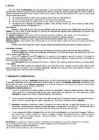
The term ,,stylistics"came into more common use in English only some 35 years ago. It was recorded much earlier; in 1882 as "the study of literary style, the study of stylistic features" Stylistics is a branch of linguistics that studies principles of selecting different linguistic means for passing on thoughts and emotions. It studies: · Different functional styles, styles of genres, individual styles · Expressive, emotional features of different language units Stylist--a writer or a speaker skilled in a literary style Stylistition--a scholar who studies stylistics The word "style" is applied to many things. A linguistic style is a variety of subsystem of lg with its peculiar vocabulary, phraseology, grammatical and phonetic features that are used selectively and purposefully to express ideas in a given situation. The stylistics of language studies different styles, including registers, stylistic devices and shades of meaning.
ancient people. Already in classical Latin the meaning was extended to denote the manner of expressing one's ideas in written or oral form. Jonathan Swift defined style as "proper words in proper places". In present day English the word "style" is used in about a dozen of principle meanings: 1. the characteristic manner in which a writer expresses his/her ideas (e.g. style of Byron) 2. the manner of expressing ideas, characteristic of a literary movement or period 3. the use of language typical of a literary genre (e.g. the style of a comedy, drama, novel). 4. the selective use of language that depends on spheres / areas of human activity (e.g. style of fiction, scientific prose, newspapers, business correspondence, etc.). STYLISTICS Stylistics is the study of style. The very term "stylistics" came in more common use in English only some 45 years ago.
gives a complete picture of voc. Practical value lies in using and appretiating the lg more conciously. There is diachronic (historical) L that studies origin and development; syncronic studies voc at a given historical period. There are general L (studies words disregarding particular features of any particular lg); special L (studies specific features of a separate lg, there is Engl that bases on general L); contrastive (compares vocabularys in different languages). 2. Connection of L with other linguistic disciplines a) the word performes a certain grammatical function (nt, he always misses the class, how many misses are there; the girl powders her nose, soliders face powder)In speech words are combined according to grammatical rules. The plural of nouns may carry a new meaning (nt, arms-weapons, looks-appearance, works-plant) b)connected with phonetics. The meaning of a word is expressed by sounds and it depends on the order of sounds(spoonerism)
About 450 Latin loans (Amosova) • 29,000 different words (incl. work, working, Viking invasions added 2,000 worked, which are counted here as separate 2) Middle English – 100,000 – 125,000 words) English becomes heterogeneous (Norman French, • 21,000 words English, Latin), hybrid of Germanic and Romance languages Norman French influence – about 10,000 words, 75 % are still in use (Baugh) Latin influence continues 3) Early Modern English – 200,000 – 250,000 English becomes a polycentric language; polyglot, cosmopolitan language 4) Modern English – 500,000 words (OED) At present at least 1 billion lexical units 2. Core and periphery Core vocabulary – often short (monosyllabic) words of Germanic and Old Norse origin = ie core vocabulary of
Ladusseva "Stylistic practice: Book I, Book II" - I. Ladusseva "A Guide to Punctuation" EXAMINATION TOPICS: 1. Style, stylistics, a survey of stylistic studies 2. Inherent connotations. Phonesthemes Use lecture notes 3. Adherent connotations 4. Stylistic morphology: articles, nouns, pronouns, adjectives, verbs, adverbs, number * 5. Expressiveness on the level of word-building 6. Phonetic expressive means Study independen tly 7. Phonetic SD ("Rhythm And Style") 8. Lexical SD* 9. Syntactic SD* Use lecture notes 10. Graphical means and devices 11
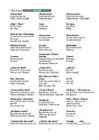
Congratulations! Good luck! Te toca a ti. ¡Callate! Te amo. teh toh-kah ah tee kah-yah-teh tay ah-moh It's your turn. (informal) Shut up! I love you. (informal and singular) Notice that Spanish has informal and formal ways of speaking. This is because there is more than one meaning to "you" in Spanish (as well as in many other languages.) The informal you is used when talking to close friends, relatives, animals or children. The formal you is used when talking to someone you just met, do not know well, or someone for whom you would like to show respect (a professor, for example.) Encantado, cansado, enfermo, and aburrido are the masculine forms of the words. If the words refer to a woman or are spoken by a woman, then the final o changes to a: encantada, cansada, enferma, and aburrida
Russian philology The meaning of the word "philology" is "love for word". This is love that unites teachers and researchers of modern and Classical languages and literature, interpreters and diplomats, journalists and publishers, writers and poets. Russian philologis are highly demanded in various spheres of scholarly research and education, in the mass media, in civil service at the Ministry of Foreign Affairs, in archives, libraries, museums, in travel agencies, as well as Russian and international companies. Curriculum within in philological faculty includes courses of Russian and European
histories give it but passing mention. Churchill's great history of World War II has been cleaned of every single reference to Allied communications intelligence except one (and that based on the American Pearl Harbor investigation), although Britain thought it vital enough to assign 30,000 people to the work. The intelligence history of World War II has never been written. All this gives a distorted view of why things happened. Furthermore, cryptology itself can benefit, like other spheres of human endeavor, from knowing its major trends, its great men, its errors made and lessons learned. I have tried in this book to write a serious history of cryptology. It is primarily a report to the public on the important role that cryptology has played, but it may also orient cryptology with regard to its past and alert historians to the sub rosa influence of cryptanalysis. The book seeks to cover the entire history of cryptology
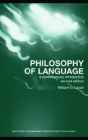
Philosophy of Language Philosophy of Language: a Contemporary Introduction introduces the student to the main issues and theories in twentieth and twenty-first-century phi- losophy of language, focusing specifically on linguistic phenomena. Topics are structured in four parts in the book. Part I, Reference and Referring, includes topics such as Russell's Theory of Descriptions, Donnellan's distinction, problems of anaphora, the description theory of proper names, Searle's cluster theory, and the causalhistorical theory. Part II, Theories of Meaning, surveys the competing theories of linguistic mean- ing and compares their various advantages and liabilities. Part III, Pragmatics
... Well, physically, I take after my mum, 12 say 13 don't / won't Challenge! Students' own answers I suppose. Our facial features are pretty similar same eyes, same-shaped 14 borrowed forehead. I've seen photos of her when 1E Phrasal verbs page 8 5 (possible answers) she was my age and apart from the 1 1 go ahead 5 come to eighties hairstyle we're the spitting 1 Well, you will go to bed late every night. 2 fall through 6 bring about image of each other! Some people
for a particular purpose. No warranty may be created or extended by sales representatives or written sales materials. The advice and strategies contained herein may not be suitable for your situation. The publisher is not engaged in rendering professional sevices, and you should consult with a professional where appropriate. Neither the publisher nor author shall be liable for any loss of profit or any other commercial damages, including but not limited to special, incidental, consequential, or other damages. For general information on our other products and services, please contact our Customer Care Department within the United States at (800) 762-2974, outside the United States at (317) 572-3993 or fax (317) 572-4002. Wiley also publishes its books in a variety of electronic formats. Some content that
CHAPTER 1 GETTING TO KNOW THE TOEFL WHAT IS THE TOEFL? The TOEFL is a comprehensive English language examination required by more than 3,000 colleges and universities in the United States, Canada, and other parts of the world. In addition, foreign born professionals frequently need a TOEFL score for certification to practice their profession in the United States or Canada. The TOEFL is a timed test that consists of the three sections listed here. THE TOEFL Section 1 Listening Comprehension 50 questions 35 minutes
Ultraendurance I: Going from 5K to 50K in 12 Weeks--Phase I Ultraendurance II: Going from 5K to 50K in 12 Weeks--Phase II GETTING STRONGER Effortless Superhuman: Breaking World Records with Barry Ross Eating the Elephant: How to Add 100 Pounds to Your Bench Press FROM SWIMMING TO SWINGING How I Learned to Swim Effortlessly in 10 Days The Architecture of Babe Ruth How to Hold Your Breath Longer Than Houdini ON LONGER AND BETTER LIFE Living Forever: Vaccines, Bleeding, and Other Fun CLOSING THOUGHTS Closing Thoughts: The Trojan Horse APPENDICES AND EXTRAS Helpful Measurements and Conversions Getting Tested--From Nutrients to Muscle Fibers Muscles of the Body (Partial) The Value of Self-Experimentation Spotting Bad Science 101: How Not to Trick Yourself Spotting Bad Science 102: So You Have a Pill ... The Slow-Carb Diet--194 People The Slow-Carb Diet--194 People Sex Machine II: Details and Dangers
do it, enabled us to make significant changes. His work has enabled us to gain significant competitive differentiation and advantage" -LAURENCE HOF, Vice President, Relationship Consulting, Advanta Corporation "This will help executives make better decisions and use their influence wisely ... Robert Cialdini has had a greater impact on my thinking on this topic than any other scientist." -CHARLES T. MUNGER, Vice Chairman, Berkshire Hathaway, Inc. If you're wondering why of Latin America, the Far East, and Central Europe. you should buy this new edition of Influence: o More neuroscience evidence of how the influence process works is inte-
AMBER AND RUSSET - LATE COLOUR CHANGE GENES Copyright 2014, Sarah Hartwell The ancestors of the domestic cat were nondescript black/brown striped tabbies. Over the centuries, mutation produced a wide array of colours based on 2 different pigments. Eumelanin gives the blacks, browns and blues while phaeomelanin gives the reds, fawns and creams. A few other genes give further variations on those colours such silvers, colourpoints and solids/selfs. Mutations continue to occur and unexpected colours also turn up due to inbreeding where recessive genes, hidden for generations, start showing up. AMBER AND LIGHT AMBER During the 1990s, some purebred Norwegian Forest Cats in Sweden produced chocolate/lilac and cinnamon/fawn offspring. However, those colours are not found in the purebred Norwegian Forest Cat gene pool
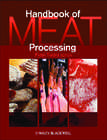
All brand names and product names used in this book are trade names, service marks, trademarks or registered trademarks of their respective owners. The publisher is not associated with any product or vendor men- tioned in this book. This publication is designed to provide accurate and authoritative information in regard to the subject matter covered. It is sold on the understanding that the publisher is not engaged in rendering professional services. If professional advice or other expert assistance is required, the services of a competent professional should be sought. Library of Congress Cataloging-in-Publication Data Handbook of meat processing / edited by Fidel Toldrá. p. cm. Includes bibliographical references and index. ISBN 978-0-8138-2182-5 (hardback : alk. paper) 1. Meat—Handbooks, manuals, etc. 2. Meat industry and trade—Handbooks, manuals, etc. I. Toldrá, Fidel. TS1960.H36 2010 664′.9—dc22
Disney company and as a teacher of story construction have been through a fresh battery of challenges in the real world that I hope have made them stronger. T h e new chapters of this book will, I hope, reflect some of the ideas that have continued to evolve around the Hero's Journey concept. T h e r e are new chapters on the life force operating in stories, on the mechanism o f polarity that rules in storytelling, on the wisdom of the body, catharsis, and other concepts that I have developed in recent years in my lectures and in practical work in H o l l y w o o d and in Europe. I have gathered together this new material near the end of the book, in an appendix following "Looking Back on the Journey." In the nine years since the last edition, I have traveled widely, applied my ideas to writing, publishing, and producing projects of my own, and done a few more "tours of duty" as it were for major H o l l y w o o d studios
for their independence, and in 1918 the Republic of Estonia was established and endured until 1940. In the summer of that year the Soviet Union occupied all three Baltic states. As a result of the deep inner crisis within the Soviet Empire it became possible to re-establish the Estonian Republic in August 1991. A month later Estonia joined the United Nations. In 1997 the population reached 1.462 million; from this Estonians total 65% (950,124) and other nationalities 35%. The capital Tallinn, mentioned for the first time in 1154, has a population of 434,800 (1995). Other important towns are Tartu, Kohtla-Järve, Narva and Pärnu. Estonia is a developed industrial and agricultural country. In industrial output: oil shale, electrical energy, mineral fertilisers, paper, chemicals, building material, and textile production are prominent. In agriculture: milk, milk products, meat, grain, potatoes, fruits and vegetables.
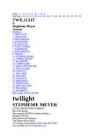
1. FIRST SIGHT My mother drove me to the airport with the windows rolled down. It was seventy-five degrees in Phoenix, the sky a perfect, cloudless blue. I was wearing my favorite shirt -- sleeveless, white eyelet lace; I was wearing it as a farewell gesture. My carry-on item was a parka. In the Olympic Peninsula of northwest Washington State, a small town named Forks exists under a near-constant cover of clouds. It rains on this inconsequential town more than any other place in the United States of America. It was from this town and its gloomy, omnipresent shade that my mother escaped with me when I was only a few months old. It was in this town that I'd been compelled to spend a month every summer until I was fourteen. That was the year I finally put my foot down; these past three summers, my dad, Charlie, vacationed with me in California for two weeks instead. It was to Forks that I now exiled myself-- an action that I took with great horror. I detested
166-175) W o r dL i s t( p p .1 7 6 - 1 8 1 ) Suggested AnswersSection(pp. 182-183) Tapescripts (pp. 184-186) presenttenses;adverbsof note-takin g; f lF comparetypesof houses; suggest - an advertisement frequency;stateveros statements;matching waysto makehousessafefor- - an informalletterdescribinq Phrasal verbs:BREAK, BRTNG speakers to children;rentinga house; a housefor rent statements expressingsympathy; requesting servrces pasttenses;usedto/would matchingspeakers to discuss
166-175) W o r dL i s t( p p .1 7 6 - 1 8 1 ) Suggested AnswersSection(pp. 182-183) Tapescripts (pp. 184-186) presenttenses;adverbsof note-takin g; f lF comparetypesof houses; suggest - an advertisement frequency;stateveros statements;matching waysto makehousessafefor- - an informalletterdescribinq Phrasal verbs:BREAK, BRTNG speakers to children;rentinga house; a housefor rent statements expressingsympathy; requesting servrces pasttenses;usedto/would matchingspeakers to discuss
166-175) W o r dL i s t( p p .1 7 6 - 1 8 1 ) Suggested AnswersSection(pp. 182-183) Tapescripts (pp. 184-186) presenttenses;adverbsof note-takin g; f lF comparetypesof houses; suggest - an advertisement frequency;stateveros statements;matching waysto makehousessafefor- - an informalletterdescribinq Phrasal verbs:BREAK, BRTNG speakers to children;rentinga house; a housefor rent statements expressingsympathy; requesting servrces pasttenses;usedto/would matchingspeakers to discuss
166-175) W o r dL i s t( p p .1 7 6 - 1 8 1 ) Suggested AnswersSection(pp. 182-183) Tapescripts (pp. 184-186) presenttenses;adverbsof note-takin g; f lF comparetypesof houses; suggest - an advertisement frequency;stateveros statements;matching waysto makehousessafefor- - an informalletterdescribinq Phrasal verbs:BREAK, BRTNG speakers to children;rentinga house; a housefor rent statements expressingsympathy; requesting servrces pasttenses;usedto/would matchingspeakers to discuss
 annaabi.ee