 100 punkti
Autor soovib selle materjali allalaadimise eest saada 100 punkti.
100 punkti
Autor soovib selle materjali allalaadimise eest saada 100 punkti.
 ~ 8 lehte
Lehekülgede arv dokumendis
~ 8 lehte
Lehekülgede arv dokumendis
 2011-05-27
Kuupäev, millal dokument üles laeti
2011-05-27
Kuupäev, millal dokument üles laeti
 4 laadimist
Kokku alla laetud
4 laadimist
Kokku alla laetud
 0 arvamust
Teiste kasutajate poolt lisatud kommentaarid
0 arvamust
Teiste kasutajate poolt lisatud kommentaarid
 Kelly Õun
Õppematerjali autor
Kelly Õun
Õppematerjali autor
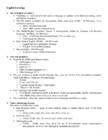
language" Prescriptive grammar vs. Descriptive garmmar: Descriptive grammar: the systematic study and description of a language. Descriptive grammar refers to the structure of a language as it is actually used by speakers and writers. Prescriptive grammar: a set of rules and examples dealing with the syntax and word structures of a language, usually intended as an aid to the learning of that language. Prescriptive grammar refers to the structure of a language as certain people think itshould be used. Phonology: the subfield of linguistics that studies the structure and systematic patterning of sounds in human language. Phonetics: of the acoustic detail of speech sounds and how they are articulated. Phone: [p] A phone is actual pronunciation of a phoneme. A phone is represented between brackets Allophone: e.g. pin spin Phoneme: /p/ - /iz/ `houses' /s/ voicless `cats' /z/ `boys' /t/ `learned' /id/ `wanted' A
2. Core and periphery. Origin of the 10,000 most frequent words: o Old English 31.8 % o French 45 % o Latin 16.7 % o Other Germanic languages 4.2 % o Other languages 2.3 % The core vocabulary is predominantly Germanic (the, I, you, etc.) Only 4 of the top-ranked one hundred words in the Brown Corpus are of foreign origin. o 64 state o 81 use v (Old French) o 93 people (Anglo-Norman, > Old French) o 100 just (> Old French) Core vocabulary and syllable structure: o 93 of the first one hundred words in the Brown Corpus are monosyllabic, and the remaining have two syllables (only, about, other, also, many even people) Core vocabulary – often short (monosyllabic) words of Germanic and Old Norse origin. 3. Native and foreign element. The native vocabulary has 3 strata
Printed in the United States of America 13 12 11 10 09 08 07 9 8 7 6 5 4 3 2 1 Introduction Grammar is a very old field of study. Did you know that the sentence was first divided into subject and verb by Plato, the famed philosopher from ancient Greece? That was about 2,400 years ago! Ever since then, students all over the world have found it worthwhile to study the structure of words and sentences. Why? Because skill in speaking and writing is the hallmark of all educated people. Lesson by lesson, this book provides basic instruction in the eight parts of speech--nouns, pronouns, verbs, adjectives, adverbs, prepositions, conjunctions, and interjections--as well as the standard patterns of English sentences. All students of English, be they native speakers or those who are studying English as a second language, will profit from the fundamental introduction and review of grammar provided by SADDLEBACK'S BASIC ENGLISH GRAMMAR 1 and 2. Helpful marginal notes throughout
positive or negative attitude), e.g famous (pos.) = notorious (neg.) 4 Järgnev on pikk näide erinevatest naise kohta käivatest väljenditest (girl, maiden, lass, lassy, baby, young lady), arvan et pole nii oluline, kuna näiteid on konspektis niigi palju, ei hakka üle pakkuma. Inherent connotation 1 IC may be secured by the very object, quality or notion that the word stands for. People appreciate certain notions, as either positive or negative. Negative notions Adj: dirty, nasty, vulgar, obscene, greedy Nouns: sin, fool, death, tragedy Verbs: destroy, offend, steal, ploth (sepitsema) Positive notions Adj: polite, refine, pure, noble, manly Nouns: virtue, beauty, love, bliss Verbs: worship, save, protect 2 This connotation depends on the thing the word stands by. IC may also depend on the structure of the words. Such words usually contain negative affixes, e
the metathetical *skep-, both with the basic meaning of "look, observe, examine". The first is behind Latin words that produced such English loans as spectacle, spectator, expect, inspect, perspective, etc. The second is behind the Greek word for "examine" with the derivatives sceptic, sceptical, scepticism (one who examines things inevitably becomes sceptical about them!). Metathesis, essentially in the same sense, is also a term used in psycholinguistics. People assemble whole words in the brain,before actually uttering them. Thus, it is not unusual for slips of the tongue to happen in which sounds of the same word change places e.g. "brake fluid" turns into "blake fruid" ,"past fashion" > "fast passion" The same principle applies to whole phrasesand even sentences, which shows that they, too, are largely preassembled in the mind before being uttered. On the sentence level
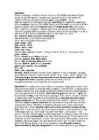
Connotation--additional shade of meaning, also called overtone, colouring Words may convey emotional or expressive overtones (gorgeous, okay), or tey may render evaluation (famous, notorious) Inherent connotation--we are dealing with inherent con. When the additional shade of meaning is always present when the word is used, it is a permanent part of the meaning of a word. Inherent connotation may: · Be secured by the very object or notion that the word expresses. People appreciate certain notions as rather positive or negative e.g. pos--pure, noble (adj.); love, beauty (noun); worship, adore (verb) e.g. neg--nasty, dirty; death, fool; steal, destroy · Depend on the structure of the word, mainly on the presence of negative prefixes and suffixes. It is purely linguistic e.g. heartless, impolite, abnormal
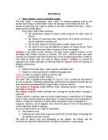
1. STYLE The term "style" is polysemantic (has many meanings): a Latin word "stilus" originally meant a writing instrument used by ancient people. Already in classical Latin the meaning was extended to denote the manner of expressing one's ideas in written or oral form. Jonathan Swift defined style as "proper words in proper places". In present day English the word "style" is used in about a dozen of principle meanings: 1. the characteristic manner in which a writer expresses his/her ideas (e.g. style of Byron) 2. the manner of expressing ideas, characteristic of a literary movement or period 3
a)phonetics- called sound imitation (onomatopoeia), (nt, murmur, bang, giggle, whistle). b)morphologial mot- the meaning of a word is motivated by the meaning of morphemes(separate elements), (nt, speak-er, ice-cream, beauty-ful) c)semantic mot is based on the coexistance of the direct and figurative meanings(nt, the nose of the boat) d)faded vs clear mot new words are always motivated. (nt, ööbik-nighttingale, knight ja singer). Time goes, motivation shanges. If motivation is not clear, people try to give their own explanation. Folk etymology-when motivation is not clear, people give their own explanation to a certain extent. It is folk etmymology. It happenes to borrowed words most often (nt, french etiquette quite the ticket, meaning proper, polite). To understand the mot of a word, we must know its history . 5. Morphemes, allomorphs. Types of morphemic segnetability. Morphemes are the smallest lexical units (can not divide). They make up words. Morphemes have a certain meaning
 annaabi.ee









Kõik kommentaarid