 50 punkti
Autor soovib selle materjali allalaadimise eest saada 50 punkti.
50 punkti
Autor soovib selle materjali allalaadimise eest saada 50 punkti.
 ~ 1 leht
Lehekülgede arv dokumendis
~ 1 leht
Lehekülgede arv dokumendis
 2013-01-09
Kuupäev, millal dokument üles laeti
2013-01-09
Kuupäev, millal dokument üles laeti
 7 laadimist
Kokku alla laetud
7 laadimist
Kokku alla laetud
 0 arvamust
Teiste kasutajate poolt lisatud kommentaarid
0 arvamust
Teiste kasutajate poolt lisatud kommentaarid
 maitroomus
Õppematerjali autor
maitroomus
Õppematerjali autor
these three companies were merged into the Nokia Corporation. This corporation involved in many sectors, producing at one time or another paper products, bicycle and car tires, footwear, personal computers, communications cables, televisions, aluminium, etc. The seeds of the current incarnation of Nokia were planted with the founding of the electronics section in the 1960s. In the 1970s, Nokia became more involved in the telecommunications industry. In 1981 Nokia invented the Nordic Mobile Telephony (NMT), which was the world's very first multinational cellular network. Soon after that Nokia started developing Global System for Mobile Communication (GSM) phones and became very successful at that time. As the years went Nokia became the largest manufacturer of mobile telephones and made its way to what it is today. PRESENT-DAY STATE Today Nokia is a well known corporation. In fact Nokia is currently the world's
a multi-touch interface. • The iPhone was notable for its use of a large touchscreen for direct finger input as its main means of interaction, instead of a stylus, keyboard, or keypad typical for smartphones at the time. POSITIVE SIDES • Wifi and internet • Front camera • Communication • Business development SMARTWATCH • A smartwatch is a computerized wristwatch with functionality that goes beyond timekeeping • Many run mobile apps, using a mobile operating system • Many run mobile apps, using a mobile operating system. Some smartwatches function as portable media players, with FM radio and playback of digital audio and video files via a Bluetooth or USB headset. Some models, also called 'watch phones', feature full mobile phone capability, and can make or answer phone calls or text messages. • Most have a rechargeable battery and many have a touchscreen. HISTORY OF SMARTWATCH
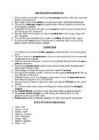
ADVANCES IN TECHNOLOGY 1. My new cellular phone allows me to send text messages anywhere within the country and abroad. (communications) 2. Don't forget to turn on the modem if you want to go-online. (information technology) 3. The advent of endoscopic surgery has greatly reduced the post-operative recovery time of most patiens. (medical) 4. Supermarkets of the future will make use of scanners to read the contents of your trolley and total up your bill. (electronics) 5
New Media Economy Social media information and data collection and security In this brief essay, i would like to focus on the social media platforms in our moren society. How people use them, what kind of information we give away, what companies will do with this. Information sharing and data protection has become very popular theme in the recent few years. People care more about their privacy and avoid „big brother“ foreshadowing. It is important to know what social media platforms promise and are they really going to keep it. Users should think about what they share and what kind of information they generate. Because it is all recorded and some info can be traced back to real people. Privacy and data protecion topics are becoming more and more important and the amouts of data generated is becoming larger
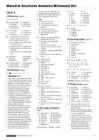
prove that GM food does us any harm. 3 completely Rosie I don't agree with that 4 totally argument, I'm afraid. There may be no 5 perfectly evidence right now, but it's the long- 6 wrong term effects that I'm concerned about. 7 virtually Leo Well any change has potential 8 highly consequences. You could make exactly the same argument against mobile 6 Students' own answers phones, or any new technology. Of course they may have harmful side 1G Describing an event effects but you have to weigh those up page 10 against their huge benefits. Rosie Like what? 1 1 like 4 as 7 as Leo For a start, it could help solve 2 like 5 as the world food crisis, by creating food 3 as if 6 as crops which can tolerate extreme agricultural conditions, like droughts
Unfortunately this technology has been relegated in a niche market due to several factors such as proprietary standards, high price tag, limited integration with existing telephony environments. However in the last couple of years the situation changed dramatically since some open source tools such as asterisk as well as low-cost VoIP telephone adapters and services become available. In fact, today it is quite common for internet providers to provide their customers VoIP calls at very low cost, if any, in addition to standard xDSL connectivity. The VoIP uses Internet protocol (IP) to send digitized voice traffic over the Internet or private networks. An IP packet consists of a train of digits containing a control header and a data payload. The header provides network navigation information for the packet, and the payload contains the compressed voice data.
down.It’sevenbecomerequiredreadinginalotofcourses,somethingI neverexpected. New readers from all over the world continue to tweet about things they’ve learned from it. I still keep hearing this story: “I gave it to my boss, hoping he’d finally understand what I’m talking about. He actually read it, and then he bought it for our whole team/department/company!” (I love that story.) People keep telling me that they got their job thanks in part to reading it or that it influenced their choice of a career. 2 2 I’menormouslypleasedandflattered,butIhavetoadmitthere’salwaysapartofmethat’sthinking“Yikes !Ihopeshewasn’tmeanttobeabrainsurgeon.WhathaveIdone?” But I know that eventually the aging effect is going to keep people from reading it, for the same reason that it was so hard to get my son to watch black and white movies when he was young, no matter how good they were.
purposes again. In the 16th and 17th century Europe fireworks displays using rockets became a very popular form of public entertainment. In the late 18th century the British army suffered two serious defeats at battles in Seringapatam, in India. The main reason for these defeats was that the Indian prince, Haidar Ali's army included a corps of rocket throwers. They used very large bamboo rockets which had a range of hundreds of metres. The British were determined to learn from their mistakes and a British officer, William Congrieve, began work on developing even bigger and better rockets. Within a few years Congrieve had developed 14 kg iron rockets that could be fired over 3200 m. These rockets were successfully used against Napoleon in the battle of Waterloo and during the US War of Independence. By the 1889s other applications for rockets were being developed. They were used for signalling, for whaling, and even for rescuing people from sinking ships
 annaabi.ee









Kõik kommentaarid