 5 punkti
Autor soovib selle materjali allalaadimise eest saada 5 punkti.
5 punkti
Autor soovib selle materjali allalaadimise eest saada 5 punkti.
 ~ 1 leht
Lehekülgede arv dokumendis
~ 1 leht
Lehekülgede arv dokumendis
 2014-05-25
Kuupäev, millal dokument üles laeti
2014-05-25
Kuupäev, millal dokument üles laeti
 1 laadimist
Kokku alla laetud
1 laadimist
Kokku alla laetud
 0 arvamust
Teiste kasutajate poolt lisatud kommentaarid
0 arvamust
Teiste kasutajate poolt lisatud kommentaarid
 MaNiisama
Õppematerjali autor
MaNiisama
Õppematerjali autor
Adventure Tourism Project Management Madli Tuvike There is no such thing as a totally sustainable tourism (Swarbrooke, 1999). Tourism as one of the leading industries in the world is contributing to sustainable development (Mintel, 2005). Tourism needs to cope with changing world and world order, also trends that are occurring. Sustainable tourism is one rising industry in tourism market. Swarbroke (1999) and David (2011) are suggesting that sustainable tourism and sustainability is taking wider part in tourism industry. Moreover, Mintel (2005) states that tourism contribution to sustainable development is being recognised increasingly by governments and international organisations. In addition, United Nations World Tourism Organization (UNWTO, a.i.) states that tourism nowadays takes full responsibility of impacts that it is making, such as current and future economic, social and environmental
Tourism-good or bad ? Nowadays in many countries, tourism is one of the fastest growing industries and it can bring enormous advantages to countries, especially poor ones. It may seem that tourism bring only benefits, but further consideration shows that it also has disadvantages. To start with, tourism offers many benefits. Tourists spend money on local goods and services ,so the area can get much money to develop the other essential public services, for example education and health. Also tourism services such as roads, bars, hotels, restaurants and other leisure facilities are built. Thanks to it, local people can get more jobs. Finally, tourism allows both the tourist and the local community a chance to experience other cultures.
Anthropology of Tourism Madli Tuvike Anthropology and Tourism Female Adventure Tourism This essay will explain what significance culture has in adventure tourism. There are five paragraphs in this essay, where definitions of adventure travel and human culture are given. First, paragraph will look and define what culture, anthropology and adventure tourism are. Second paragraph will examine how different cultures impact female adventure travel. Third paragraph will point out the problems in adventure tourism. The forth paragraph will give recommendations for the future and some of the possible future problems in female adventure tourism will be looked at. The last paragraph will be a summary of the key findings and recommendations. Tourism is one of the world’s largest industries (Tisdell, 2000, Swarbrooke et al. 2003, Buckley, 2003)
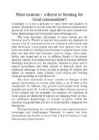
Mass tourism - a threat or blessing for local communities? Nowadays, it is not a problem to travel from one location to another. Hundreds of tourists visits the most famous and beautiful places all over the world every single day but mass tourism has many disadvantages and fortunately some advantages too. The most important advantages of mass tourism are the financial profits. Thanks to tourism local people are employed in various kind of companies which are connected with tourists and their attractions. Local people also get more options how to be more successful in making money because in popular tourist areas they can start their own business, such as, shops, cafes, pubs, hotels, tent camps and so on. In addition, thanks to the money spent by tourists, local authorities have funds to maintain different buildings and places like, for example, libraries or parks and to
Tourism Tourism is becoming one of the most attractive sectors in many countries in the world. It developes very quikly because people travel a lot and companies invest much money in tourism. It has many benefits but also much can be said against the tourism. Firstly, the main advantage of tourism is that it gives people places to work. For instance hotels, bars and museums. Due to that, the standards of living increases and unemployment decrease. Secondly, many countries depend on the money whick tourism brings. It can help developing countries to become stabled. By attracting people from almost everywhere, the area can get much money in order to develop the other public services such as hospitals and schools.
industry as many of the enterprises were oriented to the Soviet military industry and their products became unnecessary after Estonia regained its independence. The principal part of it is constituted by the export of petroleum products from Russia. Other Russian goods that have been transported through Estonia are grain and fertilizers. Another important area is passenger shipping which is directly linked to tourism. The Estonian national air company Estonian Air has also proven successful as it has managed to increase both cargo volumes and the number of passengers. A large part of freight transport is still done by road. Passenger transport is organised with buses for the most part, there are international lines to St Petersburg, Latvia, Lithuania, Poland, Germany and Scandinavia. During the recent years a lot of roads have been repaired and new ones have been constructed,
This is a post-refereeing final draft. When citing, please refer to the published version: Cohen, S.A. (2011). Lifestyle travellers: Backpacking as a way of life. Annals of Tourism Research, 38(4), 1535-1555. DOI: 10.1016/j.annals.2011.02.002 LIFESTYLE TRAVELLERS: Backpacking as a way of life Scott A. Cohena Bournemouth University, United Kingdom a corresponding author: School of Tourism, Dorset House, Talbot Campus, Poole, Dorset, BH12 5BB, United Kingdom. Tel: +44 1202 961261 Fax: +44 1202 515707 Email: [email protected] ABSTRACT Scholarship on backpackers speculates some individuals may extend backpacking to a way of life. This article empirically explores this proposition using lifestyle consumption as its framing concept and conceptualises individuals who style their lives around the enduring practice of backpacking as ‘lifestyle travellers’
A royal commission investigating the 1938 riots recommended an increase of economic development funds and a faster restoration of representative government for Jamaica. In 1944 universal adult suffrage was introduced, and a new constitution provided for a popularly elected house of representatives. Economy Jamaica is a mixed, free-market economy with state enterprises as well as private sector businesses. Major sectors of the Jamaican economy include agriculture, mining, manufacturing, tourism and financial and insurance services. Tourism and mining are the leading foreign exchange earners. Supported by multilateral financial institutions, Jamaica has, since the early 1980s, sought to implement structural reforms aimed at fostering private sector activity and increasing the role of market forces in resource allocation. Since 1991, the Government has followed a programme of economic liberalization and stabilization by removing exchange controls,
 annaabi.ee







Kõik kommentaarid