Leidsid 33 sarnast õppematerjali, mis on seotud failiga "London Eye Power Point esitlus". Need materjalid aitavad sul teemat sügavamalt mõista.
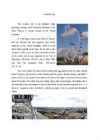
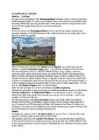
wheel, round, tall, ferris, river, thames, march, formal, back, ground, them, waterloo, known, situated, banks, british, europe, year, tonne, prime, tony, blair, june, since, critical, reception, richard, rogers, winner, architecture, prize, wrote, project, done, paris, symbol, climb, above, look, exists, category, function, lift, loop, started, accessLondon Eye The London Eye, at a height of 135 metres and a weight of 1,700 tonnes, is the biggest Ferris wheel in Europe. It´s known also as the Millennium Wheel. It was built between 1998 and 1999. The London Eye has become the most popular paid tourist attraction in the United Kingdom, visited by over three million people in one year. When it was erected it was the tallest Ferris wheel in the world, until it was surpassed by the Star of Nanchang 160 m in May 2006, and then the Singapore Flyer 165 m on 11 February 2008. The London Eye is located at the western end of Jubilee Gardens, on the South Bank of the River Thames in London, United Kingdom, between Westminster Bridge and Hungerford Bridge. The site is adjacent to that of the former Dome of Discovery, which was built for the Festival of Britain in 1951.
The London Eye is a giant Ferris wheel situated on the banks of the River Thames, in London, England. The entire structure is 135 metres (443 ft) tall and the wheel has a diameter of 120 metres It is the tallest Ferris wheel in Europe, and the most popular paid tourist attraction in the United Kingdom The London Eye is located at the western end of Jubilee Gardens, on the South Bank of the River Thames in the London Borough of Lambeth, between Westminster Bridge and Hungerford Bridge. Commonly known as the London Eye, or Millennium Wheel, formerly the Merlin Entertainments London Eye and before that, the British Airways London Eye. Since 20 January 2011, it has been officially known as the EDF Energy London Eye following a three- year sponsorship deal. The London Eye was formally opened by the then Prime Minister, Tony Blair, on 31
(although I did enjoy the vistas from the Tour Montparnasse in Paris more). The London Eye, also known as the Millennium Wheel, is an observation wheel that completed construction in 1999 and opened to the public in March, 2000. As of June 2007, it is the largest observation wheel in the world, although there are larger ferris wheels, such as The Star of Nanchang, and a contender for the title in the Singapore Flyer due for completion in 2007. The London Eye has become the most popular paid for UK visitor attraction, visited by over 3.5 million people a year.
political bodies in the UK and its territories. Its head is the Sovereign of the United Kingdom (currently Queen Elizabeth II) and its seat is the Palace of Westminster in the City of Westminster, one of the Boroughs of the British capital - London. Tower of London The Tower of London, officially Her Majesty's Royal Palace and Fortress of the Tower of London, is a historic castle located on the north bank of the River Thames in central London. It lies within the London Borough of Tower Hamlets, separated from the eastern edge of the square mile of the City of London by the open space known as Tower Hill. It was founded towards the end of 1066 as part of the Norman Conquest of England. St. Paul`s Cathedral St Paul's Cathedral, London, is an Anglican cathedral, the seat of the Bishop of London and the mother church of the Diocese of London.
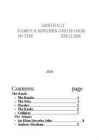
The Merlin Enterntaiments London Eye Table of contents Introduction 3 Information 4 History 5 Making The London Eye 7 Interesting Facts 9 Summary 11 References 12 Introduction I chose The Merlin Entertainments London Eye because it is the largest Ferris Wheel in Europe and it has become the most popular paid tourist attraction in the UK, visited by over three million people in one year. Information · Is known also as The Millennium Wheel. · It lies in the Western end of Jubilee Gardens, on the south Bank of the River Thames, in London. · It was constructed in 1998-1999. · Archidects: David Marks, Julia Barfield, Malcolm Cook, Mark Sparrowhawk, Steven Chilton, Nic Bailey. History
London Eye The London Eye is an extremely large passenger-carrying wheel situated on the banks of the River Thames in Central London in the United Kingdom. It is the largest observation wheel in Europe, and has become the most popular paid tourist attraction in the United Kingdom, visited by over three million people in one year. At the time it was erected, in 1999, it was the tallest observation wheel in the world, until it was surpassed by the Star of Nanchang (160 meters (524 ft 11 in)) in May 2006, and then the Singapore Flyer (165 meters (541 ft 4 in). The wheel carries 32 sealed and air-conditioned egg-shaped (each 10 tonne) capsule holds 25 people, who are free to walk around inside the capsule, though seating is provided. It rotates at 26 cm (10 in) per second (about 0.9 km/h or 0.6 mph) so that one revolution takes about 30 minutes
a number of major cities. It was founded by wax sculptor Marie Tussaud and was formerly known as "Madame Tussaud's". It displays waxworks of historical and royal figures, film stars, sports stars and famous murderers. · Millenium Bridge - The London Millennium Footbridge is a steel suspension bridge for pedestrians crossing the River Thames in London. The southern end of the bridge is near Globe Theatre, the Bankside Gallery and Tate Modern, the north end next to the City of London School below St Paul's Cathedral. The bridge has two river piers and is made of three main sections of 81 metres144 metres and 108 metres with a total structure length of 325 metresthe aluminium deck is 4 metres. Approximately 5,000 people can be on the bridge at one time.
London Topic Tallinn 2008 2 General information London is the capital of the United Kingdom. It covers the area of about 1000 square kilometres and its population is about 7 million. London is located on the river Thames. It is divided into 32 boroughs and the City. Currency used in London is British Pound. London is one of the most popular tourist destination in the world. It is also world's leading business, financial and cultural centre. Subway is commonly used to move around in London. Climate London has a temperate marine climate. It has daily high temperatures during summer. The warmest month is July. The coolest month is January. Winders are seldom below freezing.
or the clock tower as well. Big Ben is the largest four-faced chiming clock and the third-tallest free-standing clock tower in the world. It celebrated its 150th anniversarty in May 2009 (the clock itself first ticking on 31 May 1859), during which celebratory events took place. Another famos sightseeing is London Bridge. London Bridge is a bridge between the City of London and Southwark in London , England, over the River Thames. Situated between Cannon Street Railway Bridge and Tower Bridge , it forms the western end of the Pool of London . On the south side of the bridge are Soutwark Cathedral and London Bridge station on the north side are the Moment to the Grea Fire of London and Monument tube station. The Merlin Entertainments London Eye (known more simply as The London Eye, and also known as the Millennium Wheel), at a height of
Waltham Forest 12. Brent 29.Haringey 13. Ealing 30.Enfield 14. Hounslow 31.Barnet 15. Richmond 32.Harrow 16. Kingston 33.Hillingdon 17. Merton Details of London London is the capital city of England and the United Kingdom Located on the River Thames Romans called it Londinium Since at least the 19th century has this town called London The mayor of London is Boris Johnsonc, since 4 May 2008 London is a leading global city And also London has been described as a world cultural capital London has the third most international visitors in the world London's 43 universities form the largest concentration of higher education in Europe More than 300 languages are spoken within its boundaries
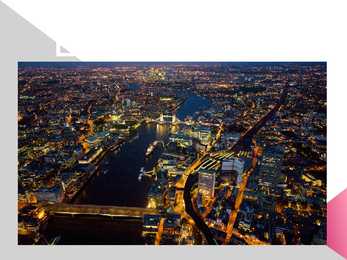
Anu Adamson The london eye Construction The tallest Ferris wheel in Europe It's 135 m tall, and 120 m diameter large 32 sealed glass capsules. It moves 26 cm per second, so it's always moving. History It was formally opened by Tony Blair on 31st December 1999, but sense it had some technical problems, it got opened to public on 9th March 2000. In 2007 Tussauds group bought the wheel. Somthing intresting Modelled on the original Chicago Ferris Wheel, it was 94 metres (308 ft) tall and was the first of over 200 Ferris wheels built by Australian engineers Adam Gaddelin and Gareth Watson. on 20th May 2005, the owners of part of the land wanted to quit the attraction because of a leaked letter. And wanted to increase the rent to 2,5 million, which operators refused pictures Click to edit Master text styles Second level Third level
London London is the capital of Great Britain. It is situated on the river Thames. The Thames is a river flowing through southern England and connecting London with the sea. The Thames has a length of 346 kilometres (215 miles). The first bridge was the tower bridge, built in the 12th century. The second bridge was built in the year 1750. .The river Thames divides London into the northern and the southern part. The port of London is one of the greatest trade centres in the world. The river Thames is certainly the most famous water body in London. London is also the seat of the government of Great Britain. It is one of the largest cities in the world with its population of about seven million. Before the great fire in 1666 there were many wooden houses and narrow crooked streets in the town but after the fire it became a well-planned city
How well do you know London? Form 10, February 2012 Welcome back to the tour of London! This is your second day (lesson) that you spend exploring the famous landmarks of the city. Again - follow the map so that you would not get lost and try to get streetwise in London. It is also wise to use Google Maps Street View simultaneously it gives you the wonderful feeling of strolling the streets and landmarks. Take the following questions with you, find answers to them and put them down for yourself in this MSWord document. Don't forget to "take" photos -
London History The Romans AD 43- AD 410 The Romans finally invaded Britain in AD 43 from Kent. The Romans lead by Julius Caesar attempted to invade Britain twice before that in 55 and 54 BC but the invasions were unsuccessful. They made their way to the river Thames and sailed up it. The Romans knew it was important to control a crossing point at the river Thames, so they decided to build a settlement on the north bank. Although small settlements had been built on the banks of the Thames, the Romans were the ones who built the first city. They called their city Londinium. The Roman engineers noticed that the point where the swampy river narrowed would make an ideal crossing point, they built London Bridge. Less than 20 years later the native Iceni tribe, led by Queen Boudicca, rose up against the Romans in revenge for mistreatment and burnt
London popultsion 1801 -- 959,300 1831 -- 1,655,000 1851 -- 2,363,000 1891 -- 5,572,012 1911 -- 7,160,525 4 TODAY LONDON At the turn of the 21st century, London hosted the much derided Millennium Dome at Greenwich, to mark the new century. Other Millennium projects were more successful. One was the largest observation wheel in the world, the "Millennium Wheel", or the London Eye, which was erected as a temporary structure, but soon became a fixture, and draws four million visitors a year. The National Lottery also released a flood of funds for major enhancements to existing attractions, for example the roofing of the Great Court at the British Museum.The London Plan, published by the Mayor of London in 2004, estimated that the population would reach 8.1 million by 2016, and continue to rise thereafter
It's creative and friendly. There are the colossal Living Wall and the beautifully refurbished spa and gym downstairs. There are also floor to ceiling windows, flat screen TV and complimentary mini bar soft drinks and snacks. Saturday At first we will go visit Buckingham Palace which is the official London residence and principal workplace of the British monarch. We would also like to see the nearby park where are a lot of birds and squirrels. Then we would like to see the river Thames and the Big Ben. Just a short walk from the Thames is situated Westminster Abbey which is a significant building in British history. This beautiful gothic church is a UNESCO World Heritage. Kings, Queens, statesmen, aristocrats, poets, priests, heroes and villains are all part of the church's fascinating history. Many of whom were buried at the Abbey including Charles Dickens, Geoffrey Chaucer, Dr. Samuel Johnson and Charles Darwin. There is a special Scientists corner at the church which
THE CITY OF LONDON History The City of London occupies one square mile in the middle of the capital. It once made up entire town of London, surrounded by the wall first built by Romans. The Romans also built a bridge over the Thames and there has been one in the same area ever since. The Roman Londinium grew up on the northern side of the bridge. In AD 61 the native Celtic tribe, led by Queen Boudicca, rose up against the Romans. They burnt down Londinium to the ground and killed most of its inhabitants. Roman armies eventually defeated Boudicca and Londinium was rebuilt. At the end of the fourth century AD the Roman Empire began to crumble and the Roman armies were recalled from Britain to defend Rome itself
and numerous iconic landmarks such as the Houses of Parliament, Towe Bridge, the Tower of London, Westminster Abbey and the London Eye. 2. History Although there is some evidence of a permanent settlement before the Romans came in 43 A.D., it is more accepted by historians that the Romans were the first. The settlement was called Londinium. The first London lasted for just seventeen years, for around AD 61, a tribe of Celts led by Queen Boudica stormed London, burning it to the ground. The next heavily-planned London prospered and surpassed Colchester (another major city at the time) as the capital of the Roman province of Britannia. At its height in the 2nd century, Roman London had a population of about 60,000. However, by the 3 rd century, the city fell into a decline due to trouble in the Roman Empire and by the 5th century, it was largely abandoned. But, under the control of various English kings, London once again prospered as an international trading centre.
midsummer sunrise and the midsummer sunset. That would have enabled people to keep a record of changing of seasons. Although it is still unclear who built it. Hadrian’s Wall is an ancient wall which was built in 2nd century by Hadrian, the emperor of Rome from AD 117 to 138, and it marked the northern border of the Roman Empire in Britain. The wall was 80 Roman miles (117 kilometres) long and it is situated in northern Great Britain and stretched from Solway Firth in the west to the Tyne River near Newcastle in the east. It was built to keep the Caledonians of Scotland out of England. Windsor Castle, which is one of the official residents of British monarch, is located in the English country of Berkshire. It is the largest in habited castle in the world and the oldest in continuous occupation, since it dates back to the time of William the Conqueror. The castle’s area is approximately 484,000 square feet (44, 955 square metres). The castle has been
statues one of these was destroyed. Some politicians are sometimes called after her. Rogen: "The Great Fire of London" Drought, narrow streets, wooden buildings, floors of straw, much gunpowder and oil in houses. 2 diarists, no fire department, water was against smaller fires, houses were demolished, water hose was very short. 1666 September 2 fire started from a bakery near midnight. Fire lasted for 4 days, 80% of London burnt down. People flee over Thames. Refugee camps were overloaded with crowds. Only a few people died (5-10), the plague ended, many famous buildings were destroyed. Sir Christopher Wren made the plans to rebuild the city. A monument. Siim: "Jane Austen" Born 16 December 1775 in South England. There were 8 children in the family, educated at home, she played piano, read books, wrote poems at the age of 11, 1802 she got proposed which she declined. She moved to Chawton, published novels, got Hodgkin´s
It once made up the entire town of London, surrounded by the wall first built by the Romans. The Roman Londinium grew up on the northern side of the "London Bridge" in the past. Products such as olive oil, wines and fruit were brought by ships from different parts of the Roman Empire and unloaded onto wooden quays along the river. In AD 61 the native Celtic Iceni tribe, led by Queen Boudicca, rose up against The Romans. They burnt Londinium to the ground but Roman armies eventually defeated Boudicca. The city was rebuilt and was gradually surrounded with a wall of stone and brick which lasted for many centuries. During the archeological excavations in 1954 the Roman Temple of Mithras was revealed. It was a pagan temple dedicated to the Persian Sun-god. The Temple was later reconstructed only a short way from its original site and the relics are displayed in the Museum of London in the Barbican.
3. The Roman conquest Julius Caesar's first raid was in 55 BC but the romans left. Ad 43- the Romans came to stay. The army established Roman rule in the south and SW of the country. The Romans started to introduce their laws to a new province of the Roman Empire and started to build good roads. Officials were appointed (governors, procurators to collect taxes, look after the estates and mines and se that the gold, silver, iron and lead were exported back to Rome). Introduced schools,a new language Latin, large farms (villas), baths. In AD 410 they had to leave . roman occupation lasted nearly 400 years. They left behind very little. Roman province of Britannia covered most of present-day England and Wales. 4. Latin influence on English *The influence of Latin is noticeable also in the names of European cities: the Latin noun colonia (settlement, colony) may be found in numerous place-names: Lincoln, Colchester, Cologne ; from
it has seats for only 437, so when there is something important to discuss it can beeome very crowded and MPs squeeze on to the benches or sit on the steps. The House of Commons has a chairman, called the Speaker, whose job is to keep the House in order, a little like a referee at a football match. He or she shouts 'Order! Order!' when MPs start shouting at eaeh other, or when the discussion gets out of control. The Speaker sits in the centre at the back, on a high chair, and ecn see the whole Chamber from this positian. The office of Speaker is neutral, i.e. he or she is not a voting member of a political party. There are red lines running along each side of the Chamber. This means that the Chamber is divided in two. Since Britain traditionally has two main political parties, the Conservative Party and the Labour Party, each party can have its own side! The party which is in government sits on the right
London is the capital of both England and the United Kingdom, and the largest metropolitan area in the European Union. An important settlement for two millennia, London's history goes back to its founding by the Romans. Since its foundation, London has been part of many movements and phenomena throughout history, including the English Renaissance, the Industrial Revolution, and the Gothic Revival.The city's core, the ancient City of London, still retains its limited medieval boundaries; but since at least the 19th century, the name "London" has also referred to the whole metropolis that has developed around it. Today the bulk of this conurbation forms the London region
College of Art and Curator of the Lahore Museum. Kipling was to be assistant editor of a small local newspaper, the Civil & Military Gazette. He sailed for India on 20 September 1882 and arrived in Bombay on 18 October 1882. This arrival changed Kipling, as he explains, "There were yet three or four days' rail to Lahore, where my people lived. After these, my English years fell away, nor ever, I think, came back in full strength". Travels & First writings During the summer of 1883, Kipling visited Simla (now Shimla), well-known hill station and summer capital of British India. By then it was established practice for the Viceroy of India and the government to move to Simla for six months and the town became a "centre of power as well as pleasure." Kipling's family became yearly visitors to Simla and Lockwood Kipling was asked to serve in the Christ Church there
The United Kingdom The United Kingdom consists of England, Scotland, Wales and North Ireland and it is situated in the Atlantic Ocean near the mainland of Europe. The population of the UK is 58.6 million and area is 244,110 sq km. Britain has a temperate humid climate. Its characteristic features are mild winters, warm summer, no temperature extremes, abundant rain all year round and frequent changes of weather. The mild climate is partly due to the warm Gulf Stream and partly to the south westerly winds. Occasional winds from the east in winter may bring cold and dry weather. The distribution of rainfall is influenced by the Atlantic Stream. The mountainous areas of the north and west have more rain than the lowlands of the south and east. Wales is located on a peninsula in central-west Britain. The entire area of Wales is about 20,779 km²
dark and artistically abrasive". In a review for A Rush of Blood to the Head, the songs were considered to contain "lush melodies and a heartbreak" and that they had a "newfound confidence." The music on X&Y has been considered to be "ruminations on Martin's doubts, fears, hopes,and loves." Coldplay acknowledge the Scottish alternative rock band, Travis, as a major influence on their earlier material.[ The Singers Sir Elton Hercules John, CBE, Kt (born Reginald Kenneth Dwight, 25 March 1947) is an English singer-songwriter, composer and pianist. He has worked with his songwriting partner Bernie Taupin since 1967; they have collaborated on more than 30 albums to date. In his four-decade career, John has sold more than 250 million records,] making him one of the most successful artists of all time. His single "Candle in the Wind 1997" has sold over 37 million copies, becoming the best selling single of all time. He has more than 50 Top 40 hits, including seven consecutive No
1. What advantages does television have? 2. What disadvantages does television have? 3. What did my friend find when his TV-set broke down? 4. What do they sometimes show? Vocabulary: entertainment -- to turn on -- passive -- to dominate -- to break down -- argument -- violence -- pop music -- ads (advertisemets) -- Sport in My School If you want to keep fit you must go in for one kind of sport or another. Sport is an essential part of my daily life. Every morning all the year round I do my morning exercises. Almost every day I do some training. In summer I go swimming or rowing. During my summer holidays I go on hikes. I usually spend my winter holidays in the country where I ski, skate or toboggan. I also go in for track-and-field (athletics) events. Different sports and games are popular with my classmates. All my friends go in for different kinds of sport, such as water polo, gymnastics, horse-racing, wrestling, fencing, weightlifting, boxing, ice-hockey, speed-
and animals lived under one roof. The old farmhouses and mansions can still be seen in many places in Southern Viljandimaa. As a result of the hard work and the tenacity of the local inhabitants, Mulgimaa developed into an area known as prosperous and rich by its cultural heritage. The masters working in the villages played an important role in the development. The local foods such as sauerkraut stew, curd cake and ,,kama" (a meal made with sour milk and a mixture of ground grains) are popular even nowadays. There is even a song that says: "It is good to live in Mulgimaa / The nature is beautiful and the land is fructuous/ There are glorious groves and large wealthy Estonian farms". As for now, the large-scale industry has become more and more dominating in agriculture. After thorough reforms in Estonian economy the people living in villages and small towns are searching for new possibilities for self-realisation and one of the outputs is tourism. This
extended throughout the whole coat, but being restricted to the skin of the extremities and to the eyes (for example in bay horses). This Norwegian Forest Cat was bred by Yve Hamilton Bruce from a silver mackerel tabby female (imported from Denmark) and a classic red tabby and white male. The result was 1 silver tabbies and 2 silver tabbies with white. At just over 3 months old, this silver and white tabby male developed a large patch of bright red hair on his back which continued to spread. Eventually the whole fur will become amber. The effect of amber during the colour-change stage depends on the original colour - solid black or blue, bicolour or tabby. The cat pictured is not a typical amber as it has the silver gene so the amber effect is overlaid on silver. A non-agouti amber Norwegian forest Cat resembles a silver tabby, but has a distinctive black nose and black paw-pads instead of the pink/reddish nose with black outlining found on
technological developments. A World Heritage bridge, like other properties, must meet the test of authenticity in design, materials, workmanship, or setting (the Committee has stressed that reconstruction is only acceptable if carried out on the basis of complete and detailed documentation of the original artefact and to no extent on conjecture). The criteria of authenticity may apply to Japanese bridges like the Kintaikyo spanning the Nishiki River in Iwakuni or Palladio's bridge over the River Brenta at Bassano a Grappa near Venice (Italy). In the same context, some bridges have been moved when unable to function at their original location. It is not unusual in the USA, for example, to relocate a metal truss bridge to a less travelled road when it can no longer handle the traffic; the same probably holds true for other countries. This is within the functional tradition of some bridge types and should
From the east by the Coral Sea and the Tasman Sea. Australia's coastline is about 37,000 km long. The Great Australian Bight washes the southern coast. The Gulf of Carpenteria and the Cape York Peninsula surround it in the south. 3. Relief Australia is the smallest continent in the world It is often called the island continent because is too big for an island but rather small for a continent. Australia is 1,800 miles from the mainland of Asia and almost half way round the world from Europe. More than 6,000 miles of ocean separate in from the America. Australia is the only continent except for Antarctica that lies all south of the equator. The natural zones of Australia are very various. There are deserts, semi deserts, grasslands, savannas, bushlands and rainforests. The wet forests occupy the narrow region in the east. Most of the animals, birds and insects live in that region, because there is enough food
succession of his daughter-in-law, Lady Jane Grey, and proclaimed her queen on July 10, the country supported Mary. As a Roman Catholic, Mary began her reign by sweeping away the religious innovations of her father and her brother. Henry VIII had separated England from the Church in Rome; Edward VI had replaced Roman Catholicism with a Protestant settlement. Mary restored the Mass and re-established the authority of the papacy, but, although she handed back Crown property to the Church, Parliament refused to restore Church lands seized by Henry VIII. Even with the help of Mary's cousin, Cardinal Reginald Pole, a return to the state of affairs that existed before the Dissolution of the Monasteries was impossible: there were too many legal and financial intricacies. Even more disastrous was Mary's marriage in 1554 to Philip II, King of Spain, which was conducted at Winchester Cathedral rather than in London, owing to Philip's unpopularity.
 annaabi.ee