Leidsid 33 sarnast õppematerjali, mis on seotud failiga "Kafka's Hunger Artist". Need materjalid aitavad sul teemat sügavamalt mõista.
kafka, hunger, desire, audience, wish, humans, through, final, fast, christ, suffer, finally, spiritual, death, find, these, fact, piece, presents, circus, material, days, there, between, symbol, both, goal, until, able, them, confirm, cage, answer, others, masterpiece, never, whom, interest, idea, while, wishes, spirals, looses, forms, honest, approval,,From whom the bell tolls" Hemingway. Spanish civil war. Franco vs the Republicans. Three days are described. Protagonist is Robert Jordan. American, but teaches Spanish, joins the Spanish guerillas-the spanish partisans, in the fight against the facist. He is wounded and left to die. We get this sense of betrayal-most powerful emotions. The bell tolls for everybody, the bell is symbolically the funeral bell, it conserns everybody. The message of the novel is presented through inner monologue. When jordan joins the war agains facist, he wants to fight all tyrannia and improve social conditions, he has all the typical features of Hemingway heroe, tough, competent, brave. Seems to be against all forms of governments, comes to conclusion that the republicans way is the best. He finds communism helpful. The question is wheter bloodshed is justified and humane. Unlike earlier hemingway heroes Jordan is an intellectual
and positivism. Opposition to abstract, untested theories &ideologies. Friedrich Nietzsche ,,God is dead"-through explaining and putting forward theories had killed Christian god. The essence of Freudian theory: the process in the human psyche Superego-society, conscience, morals, traditions, religion, a moral censor Ego-rational behavior, motivation, self-identification, conscious decisions Id-instincts, natural responses, the pleasure principle, aggressive instincts, the death wish Influence: In art and literature, Freud's theories influenced surrealism . Like psychoanalysis, surrealistic painting and writing explores the inner depths of the unconscious mind. Freudian ideas have provided subject matter for authors and artists. Critics often analyze art and literature in Freudian terms. 2. Literary Modernism and its sub-movements. The influence of Structuralism and psychoanalysis. Main characteristic features of Modernism. Denial of
especially by Thomas Paine in "The Age of Reason" and by Thomas Jefferson in his short Jefferson Bible from which all supernatural aspects were removed. Benjamin Franklin was influential in America, England, Scotland, and France, for his political activism and for his advances in physics. The American Dream is a national ethos of the United States, a set of ideals in which freedom includes the opportunity for prosperity and success, and an upward social mobility achieved through hard work. In the definition of the American Dream by James Truslow Adams in 1931, "life should be better and richer and fuller for everyone, with opportunity for each according to ability or achievement" regardless of social class or circumstances of birth. The idea of the American Dream is rooted in the United States Declaration of Independence which proclaims that "all men are created equal"
institutions. When a widow drops by to ask Stiva's help with a petition she's submitting to the government, Stiva helps her--not because he actually cares about the woman or her cause, but because he wants her to think well of him. We find out about Stiva's history: he was lazy in school but nevertheless used his connections to achieve a distinguished government career. Stiva represents the worst aspects of the social world, since he hasn't earned his way through life. On his way out of the house, Stiva almost forgets to apologize to Dolly. When he does so, she becomes furious with him, humiliated by his pity. She realizes she wants his love but can never have it. It is important to note here that Dolly and Stiva are the product of an arranged, "French," marriage, in which romance was not a major element. Their marriage, modeled on those of 18th and 19th century France, was arranged to augment the families' social status.
have remained rare and isolated phenomena, since conditions were most likely not yet favorable for a widespread flowering to occur. One day, however, a critical threshold was reached, and suddenly there would have been an explosion of color and scent all over the planet – if a perceiving consciousness had been there to witness it. Much later, those delicate and fragrant beings we call flowers would come to play an essential part in the evolution of consciousness of another species. Humans would increasingly be drawn to and fascinated by them. As the consciousness of human beings developed, flowers were most likely the first thing they came to value that had no utilitarian purpose for them, that is to say, was not linked in some way to survival. They provided inspiration to countless artists, poets, and mystics. Jesus tells us to contemplate the flowers and learn from then how to live. The Buddha is said to have given a “silent
we expect literature to be in some sense entertaining, or, to afford pleasure. WHAT IS IT THAT MAKES LITERATURE PLEASANT? A literary work seizes our interest and more or less at least for a moment makes the rest of the world fade and vanish. A work of art has this power to catch us up momentarily and to delight us. TRUTH IN LITERATURE Art offers truth as well as pleasure. What kind of truth? WALTER SAVAGE LANDOR (17751864) THERE IS A FLOWER I WISH TO WEAR, BUT NOT UNTIL FIRST WORN BY YOU HEART'S EASE OF ALL EARTH'S FLOWERS MOST RARE BRING IT, AND BRING ENOUGH FOR TWO. Is it true that the flower is the earth's rarest flower? If we want to know about flowers hadn't we better listen to botanists than poets? Isn't it apparent that whatever value Landor's poem has is not in its botany? THE NATURE OF LITERATURE: THE IMITATIVE THEORY Art is an imitation of something. Poetics Aristotle (384322B.C.):
THE PRE-RAPHAELITES The PRB was formed in 1848 in London and it was an association of painters, poets, critics, sculptors. It was founded by three Royal Academy students who wanted to brake free from the academic art and return to the moral and descriptive truthfulness that they felt was gone from art. (The Royal Academy of Arts is and institution with a purpose to promote the creation, enjoyment and appreciation of the visual arts through exhibitions, education and debate.). The founders were William Hunt, John Millais, Dante Rossetti. Because of the fact that they were all students they were also very young- the oldest one, Hunt, was 21. They were soon joined by William Rossetti(critic), James Collison(painter), Frederic Stephens (critic), Thomas Woolner(sculptor). The three youthful Pre-Raphaelites deliberately challenged the established view of art, drawing up a
Stanfrod talks friends about horses: problem: question is, what happens with the hooves while its moving, running. Bet, with eyes, can't settle this. Cannot ever see if the hooves touch the ground. Stanford has enough money, hires most famous photographer. Eadwerd muybridge, comes to usa. Tells him to settle this with photography. That time with photography you cannot get any informatio either. Started to install boxes, in each box, there was a camera. Does the hooves touch the ground or not? Fast shutter, can freeze the moment. Makes fast shutters, to record this. Finds solution, hooves are touching. The prerequisites for cinema: camera(edison and dickson), film stock that is flexible and stable to run through camera(kodak, celluloid film), projector, can show the image on a screen(1895-max skladanowsky, lumiere brothers) The lumiere brothers and cinematographe Father was a wealthy factory owner. Thomas edison-worked with moving images. They
Vogler's ongoing work on mythology's influence on stories, movies, and man himself. In revealing new material, he explores key principles like polarity and catharsis, plus: • A revised chapter which looks back at the Star Wars phenomenon and analyzes the six feature films as an epic on the theme of father-son relationships • New illustrations and diagrams that give additional depth to the mythic principles • A final chapter, "Trust the Path," an inspiring call to adventure for those who want to discover themselves through writing "This book is like having the smartest person in the story meeting come home with you and whisper what to do in your ear as you write a screenplay. Insightfor insight, step for step, Chris Vogler takes us through the process of connecting theme to story and making a script come alive. "
For electric light and power are separate from their uses, yet they eliminate time and space factors in human association exactly as do radio, telegraph, telephone, and TV, creating involvement in depth. A fairly complete handbook for studying the extensions of man could be made up from selections from Shakespeare. Some might quibble about whether or not he was referring to TV in these familiar lines from Romeo and Juliet: But soft! what light through yonder window breaks? It speaks, and yet says nothing. In Othello, which, as much as King Lear, is concerned with the torment of people transformed by illusions, there are these lines that bespeak Shakespeare's intuition of the transforming powers of new media: Is there not charms By which the property of youth and maidhood May be abus'd? Have you not read Roderigo, Of some such thing? In Shakespeare's Troilus and Cressida, which is almost completely devoted to both a psychic
Yet this quality of Kantorek arguably reflects the espousal of dated ideas by an older generation of leaders who betray their followers with manipulations, ignorance, and lies. "While they taught that duty to one's country is the greatest thing," Paul writes in Chapter One, "we already knew that death-throes are stronger." As schoolboys, Paul and his friends believed that Kantorek was an enlightened man whose authority derived from his wisdom; as soldiers, they quickly learn to see through Kantorek's rhetoric and grow to despise him, especially after the death of Joseph Behm. That Kantorek is eventually drafted and makes a terrible soldier reflects the uselessness of the ideals that he touts. Corporal Himmelstoss Like Kantorek, Himmelstoss does not figure heavily in the novel's plot, but his thematic importance makes him significant to the book as a whole. One of the themes of All Quiet on the Western Front is that war brings out a savagery and hunger for power that lie latent in
even more forceful and the death is also a victory. Using the old language of heroic poetry, The Cross represents itself as the loyal follower of a lord who inexplicably wills his own death. In a normal battle to obey your leader's command is to help defend his life, but for this follower it is to serve his lord's absolute will for death by remaining rigidly upright (to stand fast). The Cross speaks for the bewildered humanity of the dreamer, but also for the suffering humanity of Christ. The Cross himself participates in Christ's sufferings and it can also participate in his glory. After the Crucifixion he is first buried and then raised up and honored (like Christ). The vision has come full circle and now the dreamer can also hope to participate, as one ordinary tree has done, in that victory. The poem ends in a mood of confidence. Now the dreamer can bear solitude and the loss of friends on earth though he sees the way open to a `heavenly home'. 3. The Gen. Charst
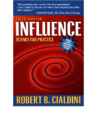
Polish neighborhood, in a historically German city (Milwaukee), in an otherwise rural state. Preface The initial version of Influence was designed for the popular reader, and as such, an attempt was made to write it in an engaging style. In the subsequent versions, that style is retained, but in addition, I present the research evidence for my statements, recommendations, and conclusions. Although they are dramatized and corrobo- rated through such devices as interviews, quotes, and systematic personal observa- tions, the conclusions of Influence are based on controlled, psychological research. This fact allows the reader to feel confident that the book is not "pop" psychology but represents work that is scientifically grounded. The subsequent versions also provide new and updated material, chapter summaries, and study questions to en- hance its utility.
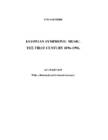
THE CREATIVE EVOLUTION OF ARVO PÄRT. XIX. THE SEVENTIES. STYLISTIC DIVERSIFICATION. THE MATURE STYLES OF HEINO JÜRISALU, ANTI MARGUSTE AND EINO TAMBERG. XX. ALO PÕLDMÄE: FULLNESS OF COLOURS AND MULTITUDE OF DETAILS. XXI. MATI KUULBERG: SPECTACLE, BRILLIANCE, LIGHTNESS. XXII. RAIMO KANGRO: ROCK, POP AND NEO-CLASSICISM. XXIII. LEPO SUMERA: DEEP NATIONAL SPIRIT, EVOCATIVE AND PHILOSOPHICAL THINKING. XXIV. ERKKI-SVEN TÜÜR: LYRICIST SEARCHING FOR HIS PATH THROUGH SYNTHESIS. XXV. THE EIGHTIES. SUMMARY OF THE OUTPUT OF THE SOVIET PERIOD. RIPENING OF THE PRESUMPTIONS FOR A NEW HISTORICAL TURN. THE RE-ESTABLISHED REPUBLIC OF ESTONIA. XXVI. THE NINETIES AND THE FIFTH GENERATION OF COMPOSERS. XXVII. THE SPECIFIC FEATURES AND TRENDS OF ESTONIAN NATIONAL SYMPHONISM. XXVIII. THE PERFORMANCES OF SYMPHONIC MUSIC: THE ORCHESTRAS OF TARTU AND TALLINN. XXIX. ESTONIAN SYMPHONISTS ABOUT CREATIVITY. CONCLUSION APPENDIXES
Explain why the idea was worth learning about in the text as a whole, using examples of visual and / or oral language features to support your ideas. In Slumdog Millionaire directed by Danny Boyle "Love conquers all" is an idea worth learning about. Boyle uses cinematography, dialogue & gesture and flashbacks to show this. Love conquers all is an idea worth learning about because you may come across it in many texts, it's a universal idea and it's appealing to us as an audience. Love conquers all is the common theme in the texts, especially those which feature young love. Other texts such as the well-known play Romeo and Juliet by William Shakespeare, to the novel feed by M.T Anderson and even music such as Right by my Side by Nicki Minaj featuring Chris Brown all include this common theme of Love conquers all. Love conquers all is also a universal theme. It can be used in any generation and any country and in different kinds of texts as I have listed
When the Venetians arrive in Cyprus, Iago immediately goes about planting doubt in Othello’s mind as to how loyal his wife is. A carefully planned fight between Roderigo and Cassio, the man who was promoted above Iago, results in Cassio’s demotion. Taking advantage of his saddened state, Iago advises Cassio to seek out Desdemona’s favor to speak on his behalf. Iago carefully maneuvers Othello and himself to arrive as Cassio is leaving Desdemona’s audience. Iago points out how Cassio seems to be avoiding Othello. Desdemona for her part immediately begs for Cassio’s pardon, as she has promised him from their meeting. This is all Iago needs to immediately begin planting seeds of doubt in Othello’s mind as to his wife’s fidelity. The ensuing scenes are all a carefully staged dance by Iago in which he finds a dropped handkerchief of Desdemona’s and convinces Othello of her improper actions. He stages yet another
were reenacted in Paris in the months just before the work was finished and put to exhibit." (Roberts, 1989, p.48, 49) Although, Brutus had a huge impact on the political side of the 18 th century, another important impact was on the fashion of the Revolution. Women started to dress like the daughters of Brutus and even the furniture was imitated .Furthermore, one of David's contemporaries saw the paintings to be even more influential than other sources of that time: "Through his Brutus as through his Horatii, David talks to the people more directly and more clearly than all the inflammatory writers whom the regime has confiscated and burned" (Friedlaender, 1952, p.18,19) In 1791, David was offered to do a panting about a very notable event in the course of the French Revolution: the oath of the tennis court. On the 20 th June of 1789 the freshly assembled Parliament was not able to enter the Versaille and therefore they gathered in a
them. Sir William and Lady Lucas are determined to go, merely on that account, for in general, you know, they visit no newcomers. Indeed you must go, for it will be impossible for us to visit him if you do not." "You are over-scrupulous, surely. I dare say Mr. Bingley will be very glad to see you; and I will send a few lines by you to assure him of my hearty consent to his marrying whichever he chooses of the girls; though I must throw in a good word for my little Lizzy." "I desire you will do no such thing. Lizzy is not a bit better than the others; and I am sure she is not half so handsome as Jane, nor half so good-humoured as Lydia. But you are always giving her the preference." "They have none of them much to recommend them," replied he; "they are all silly and ignorant like other girls; but Lizzy has something more of quickness than her sisters." "Mr. Bennet, how can you abuse your own children in such a way? You take delight in vexing me
order. Among his works, his reputation rests on his last work, The Divine Comedy. He began writing it somewhere between 1307-1314 and finished it only a short while before his death in 1321, while in exile. In this work, Dante introduces his invention of the terza rima, or three-line stanza as well as himself as a character. The Inferno is the first of three parts of Dante's epic poem, The Divine Comedy, which depicts an imaginary journey through Hell, Purgatory, and Paradise. Dante is the hero, who loses his way in the "dark woods" and journeys to nine regions arranged around the wall of a huge funnel in nine concentric circles representing Hell. He is led by the ghost of Virgil, the Roman poet, who has come to rescue Dante from the dark forest and lead him through the realms of the afterlife. The first circle they enter is Limbo, which consists of heathen and the unbaptized, who led decent lives. The second through the fifth circles
I tell you that my son did nothing wiser In all his life, than take this godly man Into his household; heaven sent him here, In your great need, to make you all repent; For your salvation, you must hearken to him; He censures nothing but deserves his censure. These visits, these assemblies, and these balls, Are all inventions of the evil spirit. You never hear a word of godliness At them--but idle cackle, nonsense, flimflam. Our neighbour often comes in for a share, The talk flies fast, and scandal fills the air; It makes a sober person's head go round, At these assemblies, just to hear the sound Of so much gab, with not a word to say; And as a learned man remarked one day Most aptly, 'tis the Tower of Babylon, Where all, beyond all limit, babble on. And just to tell you how this point came in . . . (To Cleante) So! Now the gentlemen must snicker, must he? Go find fools like yourself to make you laugh And don't . . . (To Elmire) Daughter, good-bye; not one word more.
, Hoboken, New Jersey. Published simultaneously in Canada. No part of this publication may be reproduced, stored in a retrieval system, or transmitted in any form or by any means, electronic, mechanical, photocopying, recording, scanning, or otherwise, except as permitted under Section 107 or 108 of the 1976 United States Copyright Act, without either the prior written permission of the Publisher, or authorization through payment of the appropriate per-copy fee to the Copyright Clearance Center, Inc., 222 Rosewood Drive, Danvers, MA 01923, (978) 750-8400, fax (978) 750-4470, or on the web at www.copyright.com. Requests to the Publisher for permission should be addressed to the Permissions Department, John Wiley & Sons, Inc., 111 River Street, Hoboken, NJ 07030, (201) 748-6011, fax (201) 748-6008, e-mail: [email protected].
In late-C18, these were almost entirely neglected. Guy painted city life, Birch painted the seascape. The "Peale formula" was adhered to: objects along tableware against a dark background. Also, trompe-l'oeil persisted via Charles Willson's Peale's sons. Artists: Ralph Earl, Francis Guy, Thomas Birch, James Peale, Raphaelle Peale. Mid-C19 Landscape. In C19, landscape painting became dominant and provided many unexplored subjects. The tradition of landscape art emerged in the 1820s through the work of the so-called Hudson River School. The school of "luminism" is also distinguished, it is interested in the phenomenon of light. Exemplary artists. Thomas Cole (early-C19). He painted more in the Romantic mold than his contemporaries. He was inspired by the valleys of Catskill Mountains. He depicted lonely wilderness and apocalyptic visions. Albert Bierstadt (late-C19). He painted the last frontier, the heroic landscape of the country. He compiled a
In late-C18, these were almost entirely neglected. Guy painted city life, Birch painted the seascape. The "Peale formula" was adhered to: objects along tableware against a dark background. Also, trompe-l'oeil persisted via Charles Willson's Peale's sons. Artists: Ralph Earl, Francis Guy, Thomas Birch, James Peale, Raphaelle Peale. Mid-C19 Landscape. In C19, landscape painting became dominant and provided many unexplored subjects. The tradition of landscape art emerged in the 1820s through the work of the so-called Hudson River School. The school of "luminism" is also distinguished, it is interested in the phenomenon of light. Exemplary artists. Thomas Cole (early-C19). He painted more in the Romantic mold than his contemporaries. He was inspired by the valleys of Catskill Mountains. He depicted lonely wilderness and apocalyptic visions. Albert Bierstadt (late-C19). He painted the last frontier, the heroic landscape of the country. He compiled a
word "because" or answer the question "why?" 1. Material cause: - what it is made of - why is the bridge strong? because made of steel 2. Formal cause: - what form, definition or property it has - why is this salt? because made of sodium and chloride 3. Efficient cause: - what initiated the change or movement - why did the baseball move? because someone hit it 4. Final cause: - what end or goal does it have? - why does he walk? because he wants to be healthy - also nature operates in terms of final causes - things don't happen spontaneously, every action that nature takes is for the sake of something, everything has a purpose - where a series has a completion, all the previous steps are done for the sake of that - art partly competes with and imitates nature - animals and plants do things for the sake of an end
reveals in the interpretation of God itself and morals of the Bible. He begins by offering explanation to the inequality of the human kind and why God wants such inequality to exist at all. Simple reciprocity is indicated by collating the rich and the poor as it follows: „soe that the riche and mighty should not eate upp the poore nor the poore and dispised rise upp against and shake off theire yoake” (Winthrop, 1996). These differences give humans the opportunity to manifest the work of the Spirit within them. The poor are recommended be loyal and honest in their worship to their betters and to authorities. The rich and powerful should honestly and loyally share justice and mercy to the poor. Because of that God’s ignition is to have these different types of people come together as one religious community that serves both God and one another through their different strengths.
For food and diet, to some enterprise That hath a stomach in't; which is no other— As it doth well appear unto our state— But to recover of us, by strong hand And terms compulsatory, those foresaid lands So by his father lost: and this, I take it, Is the main motive of our preparations, The source of this our watch and the chief head Of this post-haste and romage in the land. BERNARDO I think it be no other but e'en so: Well may it sort that this portentous figure Comes armed through our watch; so like the king That was and is the question of these wars. HORATIO A mote it is to trouble the mind's eye. In the most high and palmy state of Rome, A little ere the mightiest Julius fell, The graves stood tenantless and the sheeted dead Did squeak and gibber in the Roman streets: As stars with trains of fire and dews of blood, 10 Disasters in the sun; and the moist star Upon whose influence Neptune's empire stands
When looking at media imagery from prisons as Guantanamo Bay for example, it can be seen that the purpose of torture there is not simply to avoid future crimes, which takes away all justification, imagining it was there in the first place. Individual prevention can come to stand in 3 different ways; firstly by neutralizing the wrongdoer. This means that it will be made impossible for that person to commit any more crimes. Secondly, that person can be resocialized. In this way, the desire to commit crimes is taken away by moral reformation. Thirdly, the culprit can be deterred, where it is possible that the desire to commit crimes still exists but the fear of doing so would be too great because the possibility by a certain punishment is too intimidating (Twinning, 1973). The punishment has to be accompanied by as much disadvantage as advantage. It also has to correspond to the preventive considerations. The severity of the punishment must
That is more than forty years ago. Unfortunately, the promise of independence has not been fulfilled. Today, Africa has become more desolate; there is more starvation, diseases and non-provision of essential services than when we got our independence. There are all kinds of wars in Africa than the rest of world put together. The majority of so-called Africans leaders want to stay in power until the day their bodies are put in the grave. Through buffoonery, utter mismanagement and downright stealing of the wealth of the masses, these leaders have so impoverished Africa that we are now nothing but a beggar continent. We beg for everything; we are more dependent on our colonial masters than when we received our independence from them. Africa owes the West more money than we and our generations to come can pay. I arrived in America in December of 1967as an official of what we believed was going to be a dynamic
inadequacy. In many ways, Jake is a typical member of what poet Gertrude Stein called the "lost generation," the generation of men and women whose experiences in World War I undermined their belief in justice, morality, manhood, and love. Without these ideals to rely on, the Lost Generation lived an aimless, immoral existence, devoid of true emotion and characterized by casual interpersonal cruelty. Part of Jake's character represents the Lost Generation and its unfortunate position: he wanders through Paris, going from bar to bar and drinking heavily at each, his life filled with purposeless debauchery. He demonstrates the capacity to be extremely cruel, especially toward Cohn. His insecurities about his masculinity are typical of the anxieties that many members of the Lost Generation felt. Yet, in some important ways, Jake differs from those around him. He seems aware of the fruitlessness of the Lost Generation's way of life
41. Some of the worst warmongers are frustrated peacemakers. 42. Stuff that's "over your head" is only a problem if you don't look up. 43. Technology should be made idiot-proof but it should not thereby be made genius-proof. 44. The bullshit isn't all in one place. 45. The fact that there's demand for your stuff does not mean that it's true, beautiful, or ethical. 46. The heart must go out but it must not bleed. 47. The mind must be used to navigate through the complications of the mind. 48. The only animal in the forest that deserves to be hunted is the hunter. 49. The only real superpower is the power to pay attention. 50. The only thing wrong with strong epithets is their misapplication. 51. There's a stupid way of thinking that would make doing the right thing contingent on whether the right thing has been done in supposedly-analogous cases. It's simply irrelevant. You should do the right thing no matter what the rest of the world does
Philip Larkin’s Poetry: Themes, Form, Style, Imagery and Symbolism The aim of this work is to obtain some characteristics of the poetry of Philip Larkin, such us the origin of his themes, the way in which he writes his poems and the symbolism he uses (which is a very controversial topic because some assume that he does use it, while some others say that he uses it in an ironic way). In this work we tried to make a revision on the vision of Larkin through the studies that had been made on him, and on the basis of it we can say, that the voice of Larkin still clearly contemporary today. He is, in addition, acid, disagreeable, unpleasant, and we can catalogue these characteristics like the most appreciated by its followers. Larkin gives us through his poetry, a vision of middle-aged conservative, that in a politically incorrect way in our days, does not stand children, detests the life in family,
manner. Death of the king (charles I) XVII Convenant w/o the sword are but words" A nation will fight with another nation, but once there is peace they will fall back into fighting among themselves The state is mortal god *The soveregin can do no injury to the individual because he has delegated authoroty to him *The sovereign has the right to ban books in the intrest of peace *The sovereign has the right to make laws regarding property and reward or punish according to the law and act as a final arbiter *he can make war and raise taxes for it XIX The king has the right to kill you but has no right to make you kill yourself XXI *Nothing the soveregin can do can be considered injustice. *Individual freedom, considered as birth right, is a misguided notion of aristotle and Cicero *A person may protect his property by law but not if the soveregin demands it. *A soveregin is obligated to protect the people from disorder and can be removed only if he does not.
house. On his way towards London he stopped by the house of Mrs. Mann and saw his friend Dick, who appeared to be dying, out in the garden. The boys embrace, talk, and say their farewells to each other, and Oliver heads towards the city intent on running away from the Sowerberrys. Chapter 8: Òliver began his walk to London. He had very little food and had to beg for it on his way. He walked for seven days and had very little luck getting food or shelter from people in the towns he went through. He sat with bleeding feet on a doorstep one morning when a curious looking young gentleman around his age began talking to him. His name was Jack Dawkins He befriended Oliver and asked if he was going to London. Oliver told him he was and explained that he did not know where he would be staying. Mr. Dawkins told Oliver he could come with him and with his patronage stay with a gentleman he knew. So Oliver went with Jack and saw the filth of London for the first time in the middle of the night
 annaabi.ee