Leidsid 33 sarnast õppematerjali, mis on seotud failiga "Jane Eyre". Need materjalid aitavad sul teemat sügavamalt mõista.
film, jane, eyre, rochester, character, novel, there, however, consider, scene, analysis, author, relations, women, religious, faith, notion, characters, therefore, importance, conditions, cruel, cousin, instance, appears, sarah, fire, woman, strong, returns, ?jane, juhendaja, hermann, vigala, overview, 1847, brought, fame, charlotte, bronte, themesPlot introduction Jane Eyre is a first-person narrative of the title character. The novel goes through five distinct stages: Jane's childhood at Gateshead, where she is emotionally abused by her aunt and cousins; her education at Lowood School, where she acquires friends and role models but also suffers privations; her time as the governess of Thornfield Manor, where she falls in love with her Byronic employer, Edward Rochester; her time with the Rivers family at Marsh's End (or Moor House) and Morton, where her cold clergyman-cousin St John Rivers proposes to her;
Plot Overview Jane Eyre is a young orphan being raised by Mrs. Reed, her cruel, wealthy aunt. A servant named Bessie provides Jane with some of the few kindnesses she receives, telling her stories and singing songs to her. One day, as punishment for fighting with her bullying cousin John Reed, Jane’s aunt imprisons Jane in the red- room, the room in which Jane’s Uncle Reed died. While locked in, Jane, believing that she sees her uncle’s ghost, screams and faints. She wakes to find herself in the care of Bessie and the kindly apothecary Mr. Lloyd, who suggests to Mrs. Reed that Jane be sent away to school. To Jane’s delight, Mrs. Reed concurs. Once at the Lowood School, Jane finds that her life is far from idyllic. The school’s headmaster is Mr. Brocklehurst, a cruel, hypocritical, and abusive man. Brocklehurst preaches a doctrine of poverty and privation to his students while
Jane Eyre I decided to read the book Jane Eyre. Jane Eyre was an orphan who lived with Mrs. Reed, her cruel, wealthy aunt. Only a servant named Bessie was gind to Jane, who told her stories and sang songs to her. One day, Jane’s cousin John Reed bullied Jane and Jane got mad. They were caught fighting and Jane aunt, imprisoned Jane into the red room, were Jane’s uncle had died. Jane was really scared of that room because, she believed that her uncle’s ghost was still in there. In the room Jane was screaming and so scared that she fainted. When she waked up, Mrs. Reed decided to send Jane to the Lowood School, Jane was also happy to leave. When Jane arrived to the school she found out that her life was better in her aunt house than in that school. The school’s headmaster was Mr. Brocklehurst, a cruel, hypocritical, and abusive man, who treated the students really bad
Jane Eyre Dark Characters The famous novel by Charlotte Bronte is a classic that in my opinion all people should be familiar with. I personally have seen even several movies based on it and also enjoyed reading the book. The novel mainly talks about a girl named Jane and her life as a guverness in Thornfield. When Jane reaches adulthood, she decides to work for the wealthy Mr.Rochester and teach his child who he himself is not that fond of. Jane as a person is shy but doesn't let people take advantage of her and after some time manages to charm the other wise cold hearted Mr.Rochester with her out spoken mind. Despite catching Mr.Rochesters eye their love story developes slowly because besides being both from a completely different class, Mr.Rochester
stop it. Remembering her childhood, she was very frighten about her mom's betrayal and ran away in a long distance from home. And now, she was going home, she was beginning to believe that only her journey home would help her to bring her betrayal to an end...... Betrayal could happen so easily, that's why more and more people have extramarital relations recently. But, it's really hard to find something that good, and really easy to lose it. Just consider pro and con, and then keep what you really love. However, distance makes everything clearer; you can only see the whole when you are far enough. Take Alex for an example, as she had travelled ever further outwards, she found the answer. The Nature of Truth: Annie was a successful author and she met an old friend, Jane, on the train. Things change a lot, even if you had settled down. Jane had the boyfriend in collage and they soon got married after graduated. At first, they had a happy
Every man kills the thing he loves. The death of Wilde is the end of decadence in English literature. Late Victorian novel, Thomas Hardy. Modernism, James Joyce. Realism continued to flourish in England throughout the second half of the 19th century. Late Victorian novel. Took influence from continental Europe, e.g. Emile Zola. Concern for the social role of women – the heroines broke the conventional roles of Victorian women by supporting suffrage, smoking and adopting a more “rational” dress, also
Like psychoanalysis, surrealistic painting and writing explores the inner depths of the unconscious mind. Freudian ideas have provided subject matter for authors and artists. Critics often analyze art and literature in Freudian terms. 2. Literary Modernism and its sub-movements. The influence of Structuralism and psychoanalysis. Main characteristic features of Modernism. Denial of conventions, traditional structure, plot and presentation of character. The stream of consciousness. Allusiveness. Virginia Woolf's Modern Fiction as a theoretical platform for Modernism. Criticism of Realist literary method. Literary modernism: end of the 19th century-1920 (reached its height) and ended 1940s. A self- conscious break with traditional aesthetic forms. Rejecting the sentiment and discursiveness typical of Romanticism and Victorian literature for poetry that instead favored precision (täppis) of imagery and clear, sharp language
reclusive, publishing new work less frequently. Analysis of the book 1. Setting The story starts in the year 1950 when the novel's protagonist and narrator Holden starts telling a story from a hospital about the events of last year's winter. Most of the story takes place in winter of 1949 just over a couple of days in Pennsylvania and New York. 2. Characters · Holden Caulfield The main character of the book. He has been expelled from many schools due to his failure in fixing his grades and is expelled from his current school, Pencey Prep, right in the beginning of the story. Although he is intelligent, he fails almost every class, all except for English. He feels alone and sad, trying to find his place in the world, only finding support from his little sister Phoebe who he thinks is smarter than most of the adults.
sent her to school in Paris. In 1834, Dickens became a political journalist, reporting on parliamentary debate and traveling across Britain by stagecoach to cover election campaigns for the Morning Chronice. His journalism, in the form of sketches which appeared in periodicals from 1833, formed his first collection of pieces Sketches by Boz which were published in 1836 and led to the serialization of his first novel, The Pickwick Papers, in March 1836. On 2 April 1836, he married Catherine Thompson Hogarth (1816 1879), the daughter of George Hogarth, editor of the Evening Chronice. After a brief honeymoon in Chalk, Kent, they set up home in Bloomsbury, where they had ten children. On 9 June 1865, while returning from France with Ternan, Dickens was involved in the Staplehurst rail crash in which the first seven carriages of the train plunged off a cast iron bridge that was being repaired
any natural unbiased (completely natural) · Point of view: amoral-outside the category of morality, neither good or bad · Naturalist find it absurd to blame the wicked. These criminals are doing what nature, environment, their unconscious tells them to do. Naturalists do not judge their characters, they simply report. Try to describe facts like they are. Naturalists depict the lower, coarser forms of life. · Drab, squallid set of scene. Revolting, disgusting · Characters are people with strong animal desires · Neurotic characters unable to understand the forces that control them · By the end of the 18th century the naturalism depicts in europe, but stars to become the literature method no 1 in america · Naturalism appealed American authors because they found it very right to describe what was going on in the turn of century in America · They wanted something fresh, new
Jane Austen "Pride & Prejudice" Pride and Prejudice, first published on 28 January 1813, has consistently been Jane Austen's most popular novel. Austen sold the copyright for Pride and Prejudice to Thomas Egerton. Egerton published the first edition of Pride and Prejudice in three hardcover volumes in January. The tone is light and a little humoristic. Pride and Prejudice is a humorous story of love and life among English gentility. At first the book was called "First impressions" and this gives a better expression to the requests of the author, than the later heading. People meet, do not understand each other and
Taken at the Flood "There is a Tide" redirects here. "There is a Tide" is also the name of a short story by Larry Niven, set in the Known Space universe. Taken at the Flood is a work of detective fiction by British writer Agatha Christie, first published in the US by Dodd, Mead and Company in March 1948 under the title of There is a Tide...[1] and in the UK by the Collins Crime Club in the November of the same year under Christie's original title.[2] The US edition retailed at $2.50[1] and the UK edition at eight shillings and sixpence (8/6).[2] It features her famous Belgian detective, Hercule Poirot, and is set in 1946. 1 Plot summary In a flashback from late Spring to early Spring, Lynn Marchmont, newly demobilised from the Women's Royal Naval Service, finds difficulty settling into the village life of Warmsley Vale
Report Title: ,,Pride and Prejudice'' Author: Jane Austen Genre: Romantic novel Setting (time): 19th century Setting (place): England Tone: a bit depressed, satirical, vivid Themes: love, pride, prejudice, family, women and marriage Introduction Pride and Prejudice was first published on 28 January 1813 and it talks about love and marriage, personalities and misunderstanding, pride and prejudice. The book concentrates on the characters search of love, bafflements and feelings. The story is told from a third point of view. Characters
relates to American Revolution on the one hand and the European Enlightenment on the other. Influenced by the scientific revolution of the 17th century and the humanist period during the Renaissance, the Enlightenment took scientific reasoning and applied it to human nature, society, and religion. American Enlightenment a gradual but powerful awakening that established the ideals of democracy, liberty, and religious tolerance in the people of America. If there were just one development that directly caused the American Revolution and uplifted the intellectual culture of the continent while it was only a British colony, it would be the American Enlightenment. Broadly, the Enlightenment was an intellectual movement that changed the fundamental perspective of the masses, urging them to foster skepticism and apply scientific principles in matters of religion and morality. Its chief values were: Liberty, Democracy, Republicanism, Religious Tolerance
playwrights, fiction and non-fiction writers, scholars, and fans of pop culture all over the world. Discover a set of useful myth-inspired storytelling paradigms like "The Hero's Journey," and step-by-step guidelines to plot and • character development. Based on the work of Joseph Campbell, The Writers Journey is a must for all writers interested in further developing their craft. This updated and revised Third Edition provides new insights and observations from Vogler's ongoing work on mythology's influence on stories, movies, and man himself. In revealing new material, he explores key principles like polarity and catharsis, plus:
as books the way we understand the word today. Centuries went before paper replaced parchment and papyri. In the 15 th century Johann Gutenberg invented a mechanical process of duplicating texts, which we today call book printing. The first book was printed between 1444 and 1446, so these years can be considered as the beginning years of book printing. His most important preserved printings are the 40 copies of the Bible. By the end of the 15 th century there were about 1000 print-shops in Europe already. The oldest Estonian book dates back to 1535. Libraries form a vital part of education. They make available-through books, films, recordings and other media- knowledge that has been accumulated through the ages. People in all walks of life use libraries to get information for their work. Libraries also play an important role in preserving people's cultural heritage.
Oranges Are Not The Only Fruit - Jeanette Winterson Character Sketch – Louie Louie is a mother of Jeanette, the narrator of the novel. She plays an important role in the life of the main character. She was plump and pretty. Drunkards, she used to urge to join her at the church, called her the Jesus Belle. She was loved by men and attracted attention, many of drunkards stopped in the street when Jeanette’s mother walked past and raised their hats to her. She was very religious person. Louie considered church as her family more than her own family. “My mother stood up and said she believed this was right: that women had specific circumstances
); world dominion (British empire); Economy: Industrialization; urbanization (people moved to towns no agriculture & food); laissez- faire economy new type, where government has no control over economy; booming economy- needed new markets and endless supply of raw materials; 1845- potato famine in Ireland, 1846- Corn Laws (import of cheap corn to feed hungry people); Social life: religious doubts (Darwin's The Origin of Species 1859)- question raised: is there a God at all?; sexual liberation- changed people thoughts about sex (before men & women had different bedrooms); problems: alcoholism, prostitution, child workforce, primitive technology. · How did the class structure change? Highest class was aristocracy (the Church and the nobility); the middle class/the bourgeoisie (shopkeepers, merchants, lawyers, businessmen etc.) was the biggest class; and the lowest class "the working class" and
,,Pride and Prejudice" by Jane Austen Book Report Introduction: The book was written between 1796 and 1797 and it was first published on 28 January 1813. The setting takes place in England, mostly in places called Hertfordshire, Derbyshire and Kent. The genre of the book is the novel of manners: it shows the conflicts between two individuals and also the love growing between them. The main themes are love, and it shows very precisely the development of young people's character and morality. The main characters are Elizabeth Bennet- main female protagonist. Mr. Fitzwilliam Darcy- main male protagonist. Mr. Bennet - Elizabeth's father. Mrs. Bennet - wife of Mr.Bennet and mother of Elizabeth and her
The Project Gutenberg EBook of Pride and Prejudice, by Jane Austen This eBook is for the use of anyone anywhere at no cost and with almost no restrictions whatsoever. You may copy it, give it away or re-use it under the terms of the Project Gutenberg License included with this eBook or online at www.gutenberg.org Title: Pride and Prejudice Author: Jane Austen Release Date: August 26, 2008 [EBook #1342] [Last updated: August 11, 2011] Language: English Character set encoding: ASCII *** START OF THIS PROJECT GUTENBERG EBOOK PRIDE AND PREJUDICE *** Produced by Anonymous Volunteers, and David Widger PRIDE AND PREJUDICE By Jane Austen Contents Chapter 1 Chapter 22 Chapter 2 Chapter 23 Chapter 43
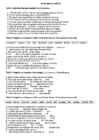
Entertainment and Art Task 1. Underline the most suitable word or phrase. a) I like this book, and I've read six capitals/chapters/prefaces already. b) It's not a proper drawing, only a rough/plan/sketch. c) The play is very long but there are three breaks/intervals/rests. d) At the cinema I don't like sitting too near the film/screen/stage. e) We heard a piece by Mozart performed by a German band/group/orchestra. f) Her second book was very popular and became a best buy/seller/volume. g) I like the painting but I can't stand its ugly border/frame/square. h) Robert's new book will be broadcast/published/typed in August. i) I liked the acting, and the costumes/dressing/outfits were good too.
She tries to win over substitute teacher Scott Delacorte (Justin Timberlake), who is also wealthy. Amy Squirrel (Lucy Punch), a dedicated teacher and colleague of Elizabeth, also pursues Scott while the school's gym teacher, Russell Gettis (Jason Segel), makes advances on Elizabeth which she rejects.[3] Elizabeth plans to get surgery to enlarge her breasts, believing she is being overlooked for women with larger chests. However, she cannot afford the $10,000 procedure. To make matters worse, Scott admits that he has a crush on Amy, only viewing Elizabeth as a friend. Elizabeth attempts to raise money for the surgery by participating in her 7th grade class car wash in provocative clothing and by manipulating parents to give her money for more school supplies and tutoring, but her efforts are not enough. Amy, acting on the growing resentment
......................................................................... ...... 6 · Language and style.................................................................................................................. 7 · More about the novel.............................................................................................................. 8 · Sources.............................................................................................................................. ....... 9 Page 2 About the author Douglas Noël Adams was and English writer (11 March 1952 11 May 2001). He borned in Cambridge
His sister Joanna married the local doctor, and both couples settled down in Lymstock. 1 The Moving Finger Agatha Christie Main characters: Jerry Burton: He is the 'I' character in the book, everything is described from his perspective. An injured pilot in his thirties. A great man, good looks, nice soul. He sincerely cared for everybody, his sister the most because he is the one who made her leave London. He was never mad at anybody, except himself after
How genre and narrative makes meaning in ``The Black Dahlia`` When analyzing a film, people understand the movie is much more complicated than it seems. To make a difference, to give a meaning to the film, film-makers have used different visual and thematic features. There are macro features (genre, narrative) as well as micro features (mise en scene, cinematography) and they are linked together in many ways. I have chosen to analyse the closing sequence of ``The Black Dahlia``, directed by Brian de Palma, and I will focus on macro features in this essay. Brian de Palma is well known director, who is focused on noir area through his career (he was once considered as a Hitchcock imitator) ``The Black Dahlia" can be classified as Film Noir. The genre is called Film Noir due to the `serie noir` books, which were
" ,,It is not in the stars to hold our destiny but in ourselves." ,,Words without thoughts never to heaven go." Sir Walter Scott 1771 1832 Suffered polio, which left him with a permanent limp Studied law and history Became interested in Scotland's rural habitants, collected folklore A writer and a poet, a born storyteller and master of dialogue, one of the greatest historical novelists, who especially loved to write about Scotland The creator of the modern historical novel A prominent figure in Edinburgh society, entertained famous people like Washington Irving and William Wordsworth First Englishlanguage author to have a truly international career in his lifetime Influenced writer such as J. F. Cooper, A. Dumas, A. Pushkin Famous titles include Ivanhoe, Rob Roy, The Lady of the Lake, Waverley, The Heart of Midlothian and The Bride of Lammermoor. "A sound head, an honest heart, and an humble spirit are the three best guides through time and to eternity"
problem. Situation: Aurelia foundered when talking about June but then her voice got stronger and she asked explained that June had nothing to come home to. a cairn (16) - a mound of rough stones built as a memorial or landmark, typically on a hilltop or skyline. Situation: Albertine was explaining that when she was young, her grandma seemed to her the same size as the rock cairns commemorating Indian defeats around there. to cut a figure (17) - present oneself or appear in a particular way. Situation: Albertine was telling that she adored June for adult confidences and for the figure she cut when she was talking. morosely (26) - not feeling very cheerful. (gloomily) situation: King was upset and sat morosely in the car with a beer. to cajole (36) - persuade (someone) to do something by sustained coaxing or flattery.
BOOK REPORT Title & author of the book: 'Anita and Me' by Meera Syal The setting of the book? The story resolves around Meena Syal, the daughter of the only Punjabi family in the Midlands' mining village of Tollington. The novel provides a vision of British childhood in the 1960s, a childhood caught between two cultures, each on the brink of enormous change. Meena is desperate to fit in with the other children in her neighbourhood while forever feeling like an outsider because she is "different". Eventhough the Punjabi family is well respected by the locals, there are still sutations when they have to deal with racism. Plot summary (NB! Use the present tenses)
"Anna Karenina" Lev Tolstoi Part 1 The novel opens with a scene introducing Prince Stepan Arkadyevitch Oblonsky, "Stiva", a Moscow aristocrat and civil servant who has been unfaithful to his wife Darya Alexandrovna, nicknamed "Dolly". Dolly has discovered his affair - with the family's governess - and the house and family are in turmoil. Stiva's affair and his reaction to his wife's distress shows an amorous personality that he cannot seem to suppress. In the midst of the turmoil, Stiva reminds the household that his married sister, Anna
The Review The twilight saga:Eclipse First of all I have to say that in order to understand this book you need to read the first two books also or at least watch the movies. The novel is set in a small Washington city called Forks. Since Eclipse is the third novel in Stephen Meyer's twilight series it carries on not long after the second book New Moon was left off. The love of Bella's life-Edward has left her and she is devastated .She finds comfort in Jacobs friendship ,what in time will become more affectionate .But it all ends when Edward comes back and they decide to be together again. Bella's high school graduation is approaching and she will soon be leaving Forks forever, to go
"The English Patient" is the most well-known book by Canadian writer, poet and academician. The main activity happens in 1930.-1940. Egipt and during the last days of World War II in one Italy nunnery which was changed after the war to sickbay. · Almásy is not English. He is Hungarian by birth. Almásy's manner is knowledgeable and reflective. Almásy is not a highly dynamic character, he is intriguing and mysterious figure. He is portrayed in a sympathetic light. He was part of a British archaeological group and also as afterwards reveals a spy. · Hana was a twenty-year-old Canadian Army nurse. She put all of her energy into caring for the English Patient. When the hospital was abandoned, Hana refused to leave and instead stayed with her patient. She sees Almásy as saint like and with the "hipbones of Christ"
murdered.[8] She is the only female on the Forbes top earning dead celebrities list.[9] Contents 1 Childhood 1.1 Family and early life 1.2 Foster homes 2 Career 2.1 Early years 2.2 Stardom 2.2.1 Playboy playmate 2.2.2 A-list actress 2.2.3 Marilyn Monroe Productions 2.3 Later years 3 Marriages and relationships 3.1 James Dougherty 3.2 Joe DiMaggio 3.3 Arthur Miller 4 The Kennedys 5 Death and aftermath 5.1 Administration of estate 6 Trivia 6.1 Pornographic film claims 7 Quotes 7.1 Quotes about Monroe 8 Filmography 9 Awards and nominations 10 Art (selection) 11 See also 12 Notes 13 References 14 External links Childhood Family and early life Main article: Childhood of Marilyn Monroe Marilyn Monroe was born in the charity ward of the Los Angeles County Hospital.[1][10] According to biographer Fred Lawrence Guiles, her grandmother, Della Monroe Grainger, had her baptized Norma Jeane Baker by Aimee Semple McPherson
White Fang is the title of a novel by American author Jack London. The novel was first serialized in The Outing Magazine in May to October 1906. It is the story of a wild wolfdog's journey toward becoming civilized in Yukon Territory, Canada, during the Klondike Gold Rush at the end of the 19th century. White Fang is a companion novel to London's best-known work, The Call of the Wild, which cares a kidnapped civilized dog turning into a wild animal.Much of the novel is written from the view-point of animals, subject to London to explore how animals view their world and how they view humans. White Fang explore the violent world of wild animals and the equally violent world of supposedly-civilized humans. The book also explores complex themes including morality and redemption.White Fang has been adapted for the screen numerous times, including a live-action Disney film in 1991 which starred Ethan Hawke. Plot
 annaabi.ee