Leidsid 33 sarnast õppematerjali, mis on seotud failiga "Internet has many uses in my life". Need materjalid aitavad sul teemat sügavamalt mõista.
teach, phone, subjects, than, different, languages, internet, studying, movies, smartphone, physical, science, chemistry, physics, geography, math, famous, tracking, weather, playing, games, watchingstening, mostly, convenient, carry, around, rather, prefer, makes, alot, easier, words, faster, bigger, nice, hours, times, sciences, mathematics, planetSo, the British ports are ice-free and its rivers are not frozen throughout the year. The weather on the British Isles has a bad reputation. It is very changeable and fickle. The British say that there is a climate in other countries, but we have just weather. If you don't like the weather in England, just wait a few minutes. It rains very often in all seasons in Great Britain. Autumn and winter are the wettest. The sky is usually grey and cold winds blow. On the average, Britain has more than 200 rainy days a year. The English say that they have 3 variants of weather: when it rains in the morning, when it rains in the afternoon, and when it rains all day long. Sometimes it rains so heavily, that they say «It's raining cats and dogs». Britain is known all over the world for its fogs. Sometimes fogs are so thick that it's impossible to see anything within a few meters. The winter fogs of London are, indeed, awful; they surpass all imagination
and artistic design. My speciality is artistic design, which is 120 weeks of study, which makes the course 3 years long. Kuressaare Reginal Training Centre is one of only two schools in Estonia, where elementary school graduates can come to acquire the artistic development of the specialty. Through the course and students spare time, many cultural events, narrow circle of performances and exhibitions are done in the area by the students. All subjects are very important starting with math and going up to advertising psychology. As any other high school, we also have the basic subjects as Estonian, Literature, Physics, Chemistry, Biology etc. Although we have them in a lesser extent, which makes us more space to have other subjects such as The world's cultural history, Art history, Advertising, Advertising Psychology, Perspective and Drawing, Advertising, Ceramics, Specialty composition, Computer design, Photography etc.
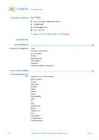
JOB APPLIED FOR WORK EXPERIENCE 16 June 201322 August 2013 Cook Tõru Hotel, Paide (Estonia) accommodation cooking customer service trade reception harvesting Chatting with people on the phone. EDUCATION AND TRAINING 01 September 200222 June 2011 Väätsa Basic school, Paide (Estonia) General subjects- Estonian mathematics geography biology chemistry physics physical training
Even though these three stages are not compulsory, every child must attend kindergarten for a year prior to primary school. 4 Primary education (Children begin school at the age of 6 or 7.) There are two stages: • 1st through 4th grade, being taught by one teacher per class that teaches every subject with the exception of foreign languages and Religion, with subjects such as Croatian, mathematics, visual art , nature and society, physical education, music education, and at least one foreign language (usually English, usually in the 1st grade and compulsory in the 4th grade). Religious education is an elective subject, and students can choose among Catholic, Orthodox and Islamic religious classes. The students stay in one classroom for the 4 years.
My languages I love different languages. I mean, I really, really love different languages. I also believe and have been told that I pick them up rather easily. That might be true, although I did not pick any Greek up in Greece but that might have been because they spoke so damn fast that I could not tell if it was a word or an entire sentence. The first foreign language I learned was Russian. Considering I was ten when Estonia became a Republic, it makes sense. We began studying Russian in first grade, though it was simplified –
Teacher's questions FAMILY, HOME AND EVERYDAY LIFE 1. What colours do you like? Why? I like many colours. Coloured things are more interesting than monochrome things. But I have got my favourite colour. My favourite colour is pink. I like yellow and orange too. These colours are quite womanly. I don't like dark colours. Dark colours are too dark for me. 2. What do you think of the colour scheme of your school? I think that my school is beautiful. My school has got quite good look. In the outside the school is light. But in the inside the schoolrooms are quite colourful. I don't like the gym colour scheme. I
It is also possible to be so ultra-sensitive that the result is disadvantageous. I expect no argument in asserting that a normal sensitivity is a healthy, indispensable ingredient for optimal education. Sensitivity can be heightened or blunted by education. It is intertwined with curiosity. An ideal education affords numerous and varied opportunities for students to touch, see, smell, listen, hear; to spark their curiosity. When I was a child the things that pleased me were largely other than the plants which have earned me a living as an adult. For example, I collected postage stamps, played basketball, was fond of listening to music, played all manner of games, but dealt only in a neutral, uninspired fashion with plants. The one thing that was constant and of supreme importance was my love of reading. I don't recall why, but by an early age, say age 9, I was a phenomenal reader of books, a habit that persisted all the way until college. Reading expands one's mind immensely
6 went five years The second photo also shows 7 hasn't had 5 had been running his own record students in a classroom. I reckon 8 Did she meet label since 2004 they are about 17 years old. It's a 9 was travelling 2 1 She had completed a physical mixed class of boys and girls. It's 10 was working training regime. difficult to tell what kind of lesson 11 started 2 She hadn't studied basic Nepalese. they're in. Their teacher is handing 12 had lived 3 She had obtained long-term a paper to one student. It could be 13 happened weather forecasts
The idea of using military rockets to launch a satellite was really an afterthought. In the 1950s the Soviet Union and the USA invested large amounts of money in their new space programmes. On 4 October 1957, an announcement by the Soviet Union took the world by surprise. `Sputnik', the first artificial satellite, which literally means "travelling companion" had been launched and was in orbit around the Earth. `Sputnik' was small, no bigger in fact than a football, and compared to today's technology, it was very primitive. All it could do was to bleep. But its impact was enormous. After its launch, things began to happen quickly. Less than a month later it was followed by `Sputnik 2' which carried a dog Laika into orbit. The USA sent its first satellite, `Explorer 1', into space early the next year. The next step, putting a man in space followed in 1961 when the Russian pilot called Yuri Gagarin orbited the Earth in `Vostok 1'
Waste paper Vanapaber Recycle Ümbertöötlema Leftovers Jäätmed Rubbish bin Prpgikast Scrap metal Vanapaber Packaging Pakend http://www.abiks.pri.ee Can plekkpurk Do you agree? Animals are much better than people. They never kill each other for no reason. All children should have pets. Working in the garden is really pleasant; it is more joy than work. I know recycling is important, but I find it boring if I have to think about it all the time. Hunting is a very good hobby. ABOUT ME 1. Where and when were you born? Where and when was your mother born? 2. What did you look like when you were 45 years old? Did you look like your mother? Your father? Some other relative? 3
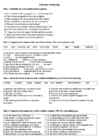
door watch gate egg window 11 Exercise 1 Underline the common nouns in these sentences. 1 There's a little bird in the garden. 2 Who is your teacher? 3 Don't eat that rotten apple. 4 Kate has a lovely doll. 5 I like reading stories. 6 My father is a doctor. 7 Every child has a dictionary. 8 Rudy hates bananas. 9 The phone is ringing. 10 Here's a book for you. Exercise 2 Here's a mixed bag of words. Put each word under its correct heading. swimmer snail fire engine clown letters flag river barber mountain fox hotel parrot granny taxi gardener camel People Animals Places Things
1 The film was very ________________________ and not at all boring. 2 The party was very ________________________. Nobody wore casual clothes. 3 Heavy metal music is so ________________________. Can't you listen to something quiet? 4 We bought a ________________________ pizza because the restaurant was expensive. 5 These trousers are too ________________________. I need some bigger ones! 6 He's a very _____________________ basketball player and so scores more points than the short ones. 7 The rest of the flat is neat but her room is very ________________________. 8 It was a ________________________ thing to do, but he isn't very clever. 9 This test is ________________________. I want a fair one! 10 Don't laugh. This matter is not ________________________. It's very serious. Marks: /10
Some of my friends have even said that majoring in English seems so boring and they constantly bombard me with questions about my future. That made me think about how exactly did I end up studying English? First of all, as a kid, I was so sure I would be a hairdresser or a teacher or a cook in the future. I am sure that almost every kid thinks the same, when all they have for inspiration are cartoons and toys to play with. When I started school, I was very interested in mathematics and other subjects that required logical thinking, because apparently I was smart in that area at the time. Up until 6th grade I was the best student in our class, winning mathematic competitions left and right and not only that. By that time I had also found out that I loved to write, specially poems and I used every opportunity to submit my works for competitions and I had the luck to win some of them. It felt good to be one of the best students in our class.
They are a vital essential in the world we live in. Without them the world would fall apart. It is impossible to imagine how people functioned in the old days when computers did not exist. Computers have become almost as smart as us. We use our computers daily. After a long day in school, we usually turn on our computers and use them for learning and studies. Computers provide a big variety of information which is available for us to search. And all the information is gathered in Internet. Internet is everyone's door to the world and to the vast knowledge of everything. Computers have significant advantages over people in a few select areas. They can store huge amounts of information that they will never forget, they can organize and retrieve that information very quickly, and they can do very complex calculations very quickly. The newest generation of computer applications for learning uses these computer advantages to help students do much more complex problems than they otherwise could
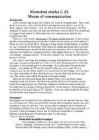
Introduction A few centuries ago people knew only a few kinds of communication. They could speak to each other, they could send their message from one place to another by smoke signals, they used mail. Later on, they also had some newspapers. The first expansion of media was when the radio and television were invented. The second and the biggest boom started in 1960s when the first communication satellite was launched into orbit. There are 4 main media: Newspapers, TV, Radio and the Internet. Today's people take this as an ordinary thing and we don't realise that we nearly can't live without it. Media are very important for us. They give us big amount of information, so big that we can't remember all that things. They help us to understand things and if you have lots of information you are able to make your own decisions. This is connected with education and media are very good teachers. They highly influence us. They can help other people making charities..
budget is made of:bills,food,transport money(gas money or buss tickets),electrisity,water budget income(payment.salary) taxes electricity internet+phones sewage food medicine(health) entertainment loans rent clothes land tax transport insurence heating pets i have 3 members in my family.we spend 50 euros or so every month on electricity because in our house we use electricity to make the water in our floors move n make heat. on food we spend about 150 euros every month.on phone we spend about 20 euros.on clothes we spend 200 euros every month.we got 1 dog and 1 cat and we spend about 40 euros every month on them.on entertainment we spend about 200 euros.we have our own forest so its cheaper for us.because we have older car we have to spend more money on car as we should because it gets broken all the time and it uses alot of fuel. homework/housework In my home i have to mow the lawn atleast once a week in summer and in winter i have to do snowworks
Golden Grammar rules 1. Don't use an with own. Sue needs her own room. (NOT Sue needs an own room.) I'd like a phone line of my own. (NOT ... an own phone line.) 2. Use or rather to correct yourself. She's German or rather, Austrian. (NOT She's German or better, Austrian.) I'll see you on Friday or rather, Saturday. 3. Use the simple present play(s), rain(s) etc to talk about habits and repeated actions. I play tennis every Saturday. (NOT I am playing tennis every Saturday.) It usually rains a lot in November. 4. Use will ..., not the present, for offers and promises. I'll cook you supper this evening
· Not so bad, thanks. / Can't complain, thanks. · So so, thanks. / So and so, thanks. · Not so good, actually 1 The English alphabet Spelling Work with your partner and spell out first your name and then some names of places. Write down each letter as you hear it, and then say the word. The English alphabet on the phone: You might find the following alphabet (used by international airlines) useful when trying to spell a word on the telephone. A Alpha O Oscar Ä Alpha-Echo Ö Oscar-Echo B Bravo P Papa C Charlie Q Quebec D Delta R Romeo E Echo S Sierra
Use each ending once. a) Joe was absent most of the time .4 1. so he didn't have any problems passing his exams. b) Sue wanted to do the experiment for herself 2. so he started talking in French after only a few days. c) James was a very gifted pupil 3. so she had to study for the entrance examinations. d) Lucy couldn't find a duster to clean the board 4. so his name was removed from the register. e) Dave could pick up languages very easily 5. so he didn't go out with his friends much during the week. f) Brenda wanted to leave space for corrections 6 .so she wrote her answers in the corner. g) Tony didn't pay attention in class 7. so she didn't have many friends of her own age. h) Helen was educated at home by her parents 8. so she wrote everything on alternate lines. i) Brian attended evening classes in photography 9. so she went to the science laboratory.
About Myself From the very start I should say that it is not an easy thing to speak about myself as it is hard to have a look at yourself from aside, but at the same time who knows you better than you yourself do? I am a girl of sixteen. When I look at myself in the mirror I see a blond girl with short straight hair, dark eyes and slander figure. As to my appearance I'm rather tall and slim. I have never thought I'm a beauty I whish I were more beautiful. I think that I'm even tempered, rather reserved, calm and modest. But sometimes I can lose my tempo and become either angry or sad. I like staying alone and sometimes I retire into my shell
" --Phil Town, New York Times bestselling author of Rule #1 "The 4-Hour Workweek is a new way of solving a very old problem: just how can we work to live and prevent our lives from being all about work? A world of in nite options awaits those who would read this book and be inspired by it!" --Michael E. Gerber, founder and chairman of E-Myth Worldwide and the world's #1 small business guru "Timothy has packed more lives into his 29 years than Steve Jobs has in his 51." --Tom Foremski, journalist and publisher of SiliconValleyWatcher.com "If you want to live life on your own terms, this is your blueprint." --Mike Maples, cofounder of Motive Communications (IPO to $260M market cap) and founding executive of Tivoli (sold to IBM for $750M) "Thanks to Tim Ferriss, I have more time in my life to travel, spend time with family, and write book blurbs. This is a dazzling and highly useful work." --A. J. Jacobs, editor-at-large of Esquire
Lessons for the future Education seems to be in government's, media's and people's spotlight all the time. Times change and education, as one of the most important areas of our society, needs constant reforming. Nowadays, the main focus seems to be on subjects like maths, physics, chemistry etc. because of current IT-era demands more knowledge in those regions than in humanities. I agree that Estonia's government's steps towards making maths and physics our school- system's top priority is quite right, but I think that there can be a lot more done to improve our educational structure. I find that Estonian schools should pay more attention to teaching our children current state in our political landscape. Kids, who go to school, are our future and soon-to-be full- right voters in national elections. They will become old and independent enough to be a part of deciding process over their country's future
seem to have travelled in the back of a lorry, presumably illegally. material for the listening tasks is on shapes into clay tablets to represent the Solutions MultiROM. the tokens. Now one tablet could 4 Students' own answers · Reading: Elicit strategies for contain more than one word. dealing with the true / false task. 5 See transcript Remind the students to identify Originally, these pictures simply represented whole concepts such as
were some points, where I could argue with him. Ken Robinson says noone knows how’ll the future be like. The future where our kid’s are going to have to live in. Still our education system wants us to prepare them for that. Prepare them for the mystery, for something we have no idea about how it’s going to be. If I had no younger relatives, I’d have to dissagree with him - I mean, when I was in secondary school I had to study mostly only those subjects I’d really need in the future. But I have some relatives younger than I am. The youngest is 9 right now. And when I look at what she must study, well, I studied it in 4th or 5th grade and I didn’t have to study that much with that heavy pressure. He also talks about talent and how we call it. We see a kid with a tremendous ability and we think right away that he or she is so talented. Actually, what I think is that kid had just
the contents and services, but also in physical layout and atmosphere. Library derives from the Latin word "liber" which means book. It shows that libraries were collections of books at first but now they have also a wide variety of other materials: magazines, newspapers, disc and cassette tape recordings, films and videos, computerized databases, maps etc. In addition to ordinary books libraries may have large-print books and Braille books for people with impaired vision. There are different kinds of libraries to meet the needs of people: university, research, school, medical, government libraries and other libraries. Public libraries serve a wider range of people than other libraries. They may range from big city libraries to small village libraries. Big city libraries' materials are usually organized into subject areas, such as history, science, sports, fiction etc. There may be specials sections also for children. Almost every library has a special reading room with
When TV first appeared its main purpose was to give official information to people. It was supported by the government. Now television plays a big role in every civilised society. Today television gives people a possibility to be well informed and enjoy "civilised pleasures." The programmes are various and people have a chance to select what they want to see. Television provides great opportunities for education. There are programmes devoted to specialised subjects. With the help of TV it is possible to learn foreign languages, to know a lot of wonderful things concerning the world flora and fauna. TV teaches the ideals of democracy and political argument. Watching television can be compared with reading books. It provides an outlet for creative talents. By the beginning of the 21-th century TV became a coloured world network. Numerous programmes people can receive by satellite or cable. The choice of the channels ranges from six to twenty.
It's really coming together now! Part Five--Playing 'The Midnight Special'. · A quick warm up. · Song sections 1, 2 and 3. Let's break it down Jamorama style! · Put it together and play along with our vocalist. Part Six--Play along with the Full Jamorama Band! · You can download a full version of the song that you are going to learn by clicking here! This mini-course will give you some basic guitar skills and get you playing a song, but I can't possibly teach you everything in just six emails. That's why I've put everything into my course, Jamorama the Ultimate Guitar Learning Kit! It's got so, so much more. It'spacked with cutting edge material to help you fast track your guitar learning. You'll learn how to play almost any song you hear by ear. Click on the link below to see exactly how you can learn to play guitar like a professional! www.jamorama.com Now, let's get into todays lesson. Getting into Position
The object is to investigate the premises of English being a single language in the world as well as to consider potential consequences. the aim of this paper is to explore Estonian students’ attitude to English being the world language. The purpose is to increase the authors’ and fellow students’ awareness of the latest linguistinc tendences in order to develop their understanding of the importance of learning languages, English in particular. 3 The theoretical part of the study relies upon the works of such scholars as David Cristal, Luke Mastin, David Graddol, etc. For the practical part, a survey has been conducted among the students of the 10th, 11th, 12th forms of Tallinn Mustamäe Gymnasium of the Humanities and other schools . The answers of 105 students to 23 questions of the survey
earned myself, or I have received for my birthdays, I use that for buying electronics or more expensive things. What do you argue about with your parents most? Sometimes I argue with them, usually it is related to my laziness not wanting to put dishes to the dishwasher, or not wanting to go to bed. How is school life for you? I like school because there I can communicate and talk to my friends. Studying and tests have never been a difficulty for me, but this year physics and math are getting hard. I don't like math, never have. What are the biggest pressures for teens in you city? Võru doesn't have pressure for teens because it is a small and a peaceful city, at least I can't feel any. Is there a difference in Estonia between the north and the south? No, there isn't a big difference, but when I went there and talked to some of my friends living in Tallinn, then I noticed that they don't recognize some of the words we use every day in Võru.
Into the lean and slippered pantaloon, With spectacles on nose and pouch on side; His youthful hose, well saved, a world too wide For his shrunk shank, and his big manly voice, Turning again toward childish treble, pipes And whistles in his sound. Last scene of all, That ends this strange eventful history, Is second childishness and mere oblivion, Sans teeth, sans eyes, sans taste, sans everything. (W. Shakespeare) There lie more answers beneath these poetical phrases than one could ever give when describing a textbook just like the actors, we seek for knowledge without really finding it until we've finished the play. Every written piece of paper is something precious it contains information that can either make our day or totally ruin the mood; that's the secret of all books. They have the power to change the world up-side down. The English textbook given to us this year is something we must carefully treasure after all,
Motivation Letter I have always known that I want to engage oneself with science. I am interested in how different things react with each other, their influence on human and realised that I can find all these in food science and nutrition. Nowadays people try to improve their food excesses, however, they do this incorrectly. People restrict themselves in food, but in such a manner they are depriving themselves of the important components necessary for the efficiency of the body. Personally, I faced with such diseases and it was hard enough to deal with this by myself
it may be very difficult for her to return to full-time work. 9.2 Clarification through "What" or "How" Questions inviting illustration or example. What's wrong with creating a few more jobs in the tourist industry? Think of all the money that's spent in the souvenir shops of these galleries and museums. What's wrong with mixed ability teaching? The reality is that people learn subjects such as languages and mathematics at different speeds. What do you mean? I mean that people's situations can be very different. Let's take the very extreme situation of a young woman who marries an old man as an example. What do you mean by unnecessary? Let me explain. Every morning, people go up and down motorways or cross from one side of town to the other in their cars, when they could quite easily take trains or buses.
Eat a variety of foods, especially fruits and vegetables. Without food, nothing can live. It gives us the energy to move and stay warm and keeps our bodies healthy. The three main kinds of human food are proteins, fats and carbohydrates. We also need certain minerals and vitamins. A balanced diet one that includes all those things is necessary for good health. You may have a favorite food, but the best choice is to eat a variety. If you eat different foods, you're more likely to get the nutrients your body needs. Taste new foods and old ones you haven't tried for a while. Some foods, such as green veggies, are more pleasing the older you get. Shoot for at least five servings of fruits and vegetables a day -- two fruits and three vegetables. Drink water and milk most often. When you're really thirsty, cold water is the No. 1 thirst-quencher. And there's a reason your school cafeteria offers free milk. You need
 annaabi.ee