Leidsid 33 sarnast õppematerjali, mis on seotud failiga "INGLISE KEELE GRAMATIKA". Need materjalid aitavad sul teemat sügavamalt mõista.
nimisõna, ainsusA kasutatakse kaashäälikuga algava sõna ees. AN kasutatakse reeglina siis, kui sõna algab täishäälikuga või kui hääldus algab täishäälikuga: an apple (üks) õun an MP (= Member of Parliament) (üks) parlamendiliige Kuna umbmäärane artikkel on tekkinud sõnast ONE (üks), saab seda kasutada ainult ainuses oleva loendatava nimisõna ees. Give me an apple. Anna mulle (üks) õun. (õun - loendatav sõna) Aga: I like tea. Mulle meeldib tee. (tee - loendamatu sõna) Määrav artikkel - THE Rääkides kuulajale teadaolevatest asjadest või olenditest, kasutatakse nimisõna ees artiklit THE, mis tähendab `see' või `need': Give me the apple. Anna mulle see (ainus) õun (mis siin/seal on).
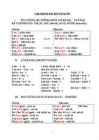
GRAMMAR REVISION I. TEGUSÕNA BE PÖÖRAMINE (VERB BE) OLEMA! BE VORMID ON: AM, IS, ARE (olevik), WAS, WERE (minevik). Olevik Minevik I am mina olen I was mina olin You are sina oled You were sina olid He is tema (m.) on ainsus He/ She/ It was tema/ see oli She is tema (n.) on It is see on We are meie oleme mitmus We were me olime You are teie olete You were te olite They are nemad on They were nemad olid II. LÜHENDID (SHORT FORMS) I am = I ´ m I (you/ they) have = I ´ ve You are = You ´ re she (he/ it) has = she ´ s
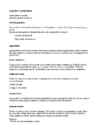
adjective + preposition omadussõna + eessõna proud of, good at, married to adverb particle Some verbs are followed by adverb particles. Examples are: put on, take off, give away, bring up, call in. Sometimes the particle is detached from the verb and put after the object. •He took his boots off. •They called the doctor in. apposition a grammatical construction in which two usually adjacent nouns having the same referent stand in the same syntactical relation to the rest of a sentence (as the poet and Burns in “a biography of the poet Burns”) back-reference In grammatical analysis, the term reference is often used to state a relationship of identity which exists between grammatical units, e.g. a pronoun 'refers' to a noun or noun phrase. When the reference is to an earlier part of the discourse, it may be called a 'back-reference' (or anaphora); collective noun Collective noun is the name we give to a group of nouns to refer to them as one entity. A crew
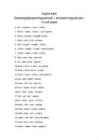
Inglise keel. Ebareeglipärased tegusõnad + tavalised tegusõnad + muud asjad. 1. Be was/were been - olema 2. Break broke broken katki tegema 3. Bring brought brought- tooma 4. Built built built - ehitama 5. Buy bought bought ostma 6. Catch caught caught kinni püüdma 7. Come came come - tulema 8. Dig dug dug - kaevama 9. Do did done - tegema 10.Draw drew drawn - joonistama 11.Drink drank drunk - jooma 12.Drive drove driven autot juhtima 13.Eat ate eaten - sööma 14.Feed fed fed - söötma 15.Find found found - leidma 16.Fly flew flown - lendama 17.Get got - got - saama 18.Go went gone - minema 19.Have had had - omama 20.Hear heard heard - kuulma 21.Hold held held - hoidma 22.Leave left left lahkuma, jätma 23.Lose lost lost kaotama 24.Make made made - tegema 25.Mee
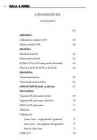
Modal Verbs Table of Contents Introduction ......................................................................... 2 Characteristics of Modal Verbs ............................................. 2 When to use the Modal Verbs ............................................... 3 Expressing permission.......................................................... 3 Expressing obligation ........................................................... 3 Making offers........................................................................ 5 Making requests ................................................................... 6 Expressing possibility/probability......................................... 7 Asking about possibilities ..................................................... 7 Infinitives ............................................................................. 8 Introduction Modal Verbs are can, could, may, might
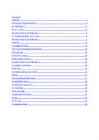
Contents Contents.................................................................................................................................. 1 # When the Tigers Broke Free................................................................................................ 2 # In The Flesh ?...................................................................................................................... 3 # The Thin Ice......................................................................................................................... 4 # Another Brick in the Wall part 1........................................................................................... 5 # The Happiest Days of our Lives........................................................................................... 6 # Another Brick in the Wall part 2........................................................................................... 7 # Mother..........................................................
Artikkel Artikkel on abisõna, mis kuulub nimisõna juurde. Inglise keeles on kaks artiklit: 1) umbmäärane artikkel umbmäärane artikkel on a, täishäälikuga algava nimisõna ees an 2) Määrav artikkel on the Umbmäärase artikli puudumine võib muuta nimisõna tähendust wood puit a wood mets fire tuli a fire lõke iron raud a iron triikraud He gave me the book. Ta andis mulle selle raamatu. He gave me a book. Ta andis mulle ühe raamatu. Umbmääran artikkel a (an) näitab, et tegemist on ühe asjaga või isikuga. Umbmäärane artikkel on tekkinud arvsõnast one (üks)
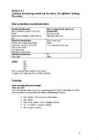
MODULE 1 Greeting. Introducing oneself and the others. The alphabet. Spelling. The tenses. How to introduce yourself and others Formal introductions How to respond and reply to an May I introduce myself? I am John introduction Smith. How do you do. Allow me to introduce John Smith to Pleased to meet you. you. Standard introduction Nice to meet you. I'd like you to meet John Smith. Hello. I want you to meet John Smith. I'm so pleased to meet you. This is Jane Smith. I'm Jane Smith. My name's John Smith. Informal introduction Hi. John. Jane. Hello. Titles: Mr Mrs Miss Ms Ms is a modern form of address for women. It replaces the traditional forms of Mrs and Miss. Greetings Good morning/afternoon/evening! 'How are you?' Very often people expect you to s
INGLISE KEELE PÕHITÕED C.K 2017 A – AN – SOME Singular: a or an Use some for things you can't count ◦ *a banana *a car *a monkey *a football ◦ *some milk *some water *some coffee ◦ *an egg*an accident *an umbrella *an *some sugar eagle ◦ *some tea *some juice*some money *some butter Plural: some Exercises: 1. http://www.english-4u.de/a_an_some_ex1.htm ◦ *some bananas *some cats *some monkeys *some 2. http://www.english-4u.de/a_an_some_ex3.htm balls ◦ *some eggs*some oranges *some umbrellas *some 3. http://www.english-4u.de/a_an_some_ex6.htm eagles We us the
Friends and Friendship I have several friends. But my best friend is Anette. Anette is a little younger than i am- 14. I first met Anette when i was 8 years old, but we didnt become friends at first. Our fathers used to work together, so we first met each other in my fathers office. We became friends about 3 years ago, when Anette came to my traning group. It had been 3 years since we last saw each other so i didnt recognize her at first, and Anette did not recognize me either. So we bacame true friends without knowing that we had known each other for many years already. We found out that our fathers are friends about two yeas ago, when they met each other in one of our competitons and later asked us if we knew that they used to work together. The thing I most like about Anette is her character. Our characters just fit together and we have almost nerver been in a fight. Anette is that kind of girl who tells you exactly what she thinks- honest. But she
the legs of the table the name of that book a photo of cats a friend of Tom Articles Artikkel Inglise keeles on kaks artiklit: umbmäärane artikkel a, an (the indefinite article) ja määrav artikkel the (the definite article). Loendatavad nimisõnad Loendamatud nimisõnad Ainsus Mitmus This is a cat. Umbmäärane artikkel There is a rose on the table. The cat is eating. The cats are Give me the milk. Määrav artikkel The rose is in the drinking milk.
Feelings and Opinions 1. Underline the most suitable word or phrase. a) When Dick saw his neighbour kick his dog he became angry/nervous. b) Sue wasn't really interested/interesting in the film. c) We were both afraid/anxious that we would miss the plane. d) I wish you wouldn't snap your fingers. It's very annoying/worrying. e) You're not scared/thrilled of spiders, are you? f) If we forget to do our homework, our teacher gets cross/terrifying. g) Tim completely lost his temper! He was absolutely furious/upset. h) Your written work is full of careless/naughty mistakes. 2. Replace the word(s) in italics with a suitable word from the box. Use each word once. confused fascinating scared depressed dull glad naughty upset a) I'm afraid the children have been very badly-behaved today. b) I felt a bit frightened when I went into the dark room. c) Jean was very unhappy when her kitten was run over. d) This f
H-Helen, J - Julia 1.Receiving a money order H: - Hello, I would like to cash a money order. J: - Hello! You should present your identity card. H: - But, you know, I'd like to receive money order for my sister. How do I go about it? J: - Your identity card and letter of attorney, please. H: - Here you are. J: - Well...Unfortunately, I can't cash your money order your signature is not witnessed. H: - Ok. Than, please, I'd like to cash my money order. J: - Take this form and fill it in. May I see your passport? H: - Yes. Please. So...Should I write my full name, my passport number and the sum of money that has been sent to me, right? J: - Certainly. How would you like the money? H: - I prefer one hundred rouble notes, if you don't mind. J: - Here is your money. H: - Thank you Getting a post-restante. H: - Hi, Julia! What are you doing here? J: - I'm getting post restante letter from Boris... H: -Ah, yeah, remember him. What is he saying? J: - Oh, well...He is asking to come to
People and Behaviour 1. Underline the most suitable word or phrase. a) Please don't push. It's very bad-tempered/rude/unsympathetic. b) Jack hates spending money. He's rather frank/greedy/mean. c) Our teacher is very proud/strict/tolerant and won't let us talk in class. d) Helen never does her homework. She is rather gentle/lazy'/reliable. e) I didn't talk to anyone at the party because I felt ambitious/lonely/shy. f) When Harry saw his girlfriend dancing with Paul he felt jealous/selfish/sentimental. g) I don't like people who are noisy and aggressive/courageous/sociable. h) Thanks for bringing us a present. It was very adorable/grateful/thoughtful of you. i) Teresa never gets angry with the children. She is very brave/patient/pleasant. j) Tom always pays for everyone when we go out. He's so cheerful/generous/honest. 2. Match the words in the box with the descriptions (a-l). Use each word once only. bad-tempered determine
Maturita Solutions Advanced Workbook Key stand bananas and coffee! It's a bit 3 1 to 8 of Unit 1 uncanny really. Is it something she's 2 about 9 century passed on to me genetically, or is it 3 like 10 assumed / 1A Memories page 3 learned behaviour? Who knows? 4 of thought / 1 See exercise 2 2 5 6 any fought
New P r e – I n t e r m e d i a t e FOURTH EDITION © Oxford University Press 2012 Unit 1 Test A 13 getting 1 6 2 Where were you born 2 amazed 3 Why are you here in Chicago 3 embarrassing 4 What are you studying 4 amazing 5 What did you do in India / What was your job in 5 embarrassed India 6 interested 6 How often do you go back to India 7 2 2 play 2 How much, a 3 go 3 How long, h 4 speak 4 Whose, d 5 does 5 How many, i 6 make 6 Which, f 7 buy 7
WORD FORMATION Exercise I 1. Chestnut honey provides quick and ............. relief.(EFFECT) 2. Come rain, wind or shine these snapdragons give a superb display over an ....................... long period. (EXCEPTION) 3. Dreaming of a beautiful home for your ........................... .(RETIRE)? Enjoy lifetime ownership of a luxury home for an ................. price.(AFFORD) 4. The post-war decline in beer ......................... was practically halted last year. (CONSUME) 5. Better is a dinner of herbs where love is, than a stalled ox and ..................therewith.(HATE) 6. In the first quarter of the 18th century people began to realise the ......................... of hygiene to public health.(IMPORTANT) 7. The ....................collapse of the Roman Empire lasted for nearly three hundred years before its final dissolution in AD 476.(GRADE) 8. Jamie's ....................of the night's events is hazy but the tabloids will refresh his memory. (RECOLLECT) 9. We are great ....
PASSIVE VOICE TEST FOR FORM 10 NAME: Task 1. Turn active voice sentences into passive voice. Only keep the agent (by phrase= where absolutely necessary. Please remember that tense form (tegusõna aeg) should remain the same when the sentence is transformed into passive. E.g. Chimps eat bananas (Present Simple Active) Bananas are eaten by chimps. (Present Simple Passive) They were playing the piano. (Past Continuous Active) Piano was being played. (Past Continuous Passive) 1. They will finish the house next month. 2. The house will be finished next month. 3. Susan has completed the essay. 4. The essay has been completed by Susan. 5. People should have left the bird alone. 6. The bird should have been left alone. 7. We cannot repair their car. 8. Their car cannot be repaired. 9. The owners had sent the money to a Swiss bank. 10. The money had been sent to a Swiss bank by the owners.
Present tenses : 1) Present simple regular actions and routines especially with frequency(kordumine ) adverbs(määrsõna) N: Do you go to school by car every day ? I don't often watch TV. 2)Present continuousbe + verb + ing. Actions happening now N; Look! It's snowing. I'm meeting Jane tonight. You're always losing things. 3)keep + ingto describe habitual actions which may be irritating. N: my uncle keeps making silly jokes. Present perfect: 1) Present perfect simple: have/has + past participle. N: I've been here for ten minutes .The phone has rung ten times today. Look at this cheque,'I've won first prize. They have made a new star wars film. I've just got home. How long have you been here ? Have you ever been to Paris? It's the best book I've ever read. It's the first time I have ever been abroad. 2)Present perfect continious : have/has + been + ing. N:I've been living in this flat since 2000. I've be
Edulugude võistlus Success-story competition „Small Town Inhabitants – Educated or Uneducated People“ To begin with, my childhood was quite ordinary, I spent a lot of time in my country home, spending most of my time playing. I have been raised by my mother. As I grew older, I got more and more interested in different things. At one point it occured to me that when I want to be successful in some field, then I really have to educate myself in that filed.When my friends have characterised me then they have mainly mentioned that I am an active person, who has been successful in different fields. I still do not think I am succesful because it is a really complicated definition, but I know that I have succeeded in doing several things. For me the key is my so called success has been that when dealing with a particular thing I have tried to delve into the subject as deep as possible. Firstly, when we are talking about success and asking the question who is a succesful person, we h
Tests Superstar 1 Luke Prodromou Test 1 Name____________________ Class_______ Use your English 1 Complete these sentences using the correct form (present simple or present continuous) of the verb in brackets. _ 1 She is in a band and she _________________________________ (record) a CD at the moment. _ 2 She is an actress and often _________________________________ (appear) on television. _ 3 At the moment she _________________________________ (have) a rest because she is tired. _ 4 Mike is a doctor and he _________________________________ (live) in Manchester. _ 5 I _________________________________ (start) work at 8.30 every morning. _ 6 He is a good cook but she _________________________________ (prefer) to eat out. _ 7 English tests _________________________________ (get) more and more interesting. _ 8 They _________________________________ (have) a party because it's her birthday. _ 9 I sometimes ____________
With Kellegi/millegi kaasas, ühes, abil Without Ilma 7 Kesksõnad 1. Oleviku kesksõna Moodustatakse ing abil. Seda kasutatakse kestvate ajavormide moodustamiseks. washing (pestes) writing (kirjutades) singing (lauldes) Oleviku kesksõna võib asendada siduvat asesõna ja tegusõna aktiivis. Do you know the girl who/that is wearing the blue pollover? Oleviku kesksõna võib mõnikord kasutada ka nimisõna ees, siis on sellel aktiivne tähendus: sleeping mice 2. Mineviku kesksõna Moodustatakse reeglipäraste tegusõnade puhul lõpuga ed. Ebareeglipäraste tegusõnade puhul tuleb need vormis lihtsalt ära õppida. Mineviku kesksõna abil moodustatakse Present Perfect, Past Perfect, samuti passiiv. washed (pesnud) written (kirjutanud) sung (laulnud) Mineviku kesksõnaga võib asendada siduvat asesõna ja tegusõna passiivis. The form which/that was filled out by the man was confusing.
With Kellegi/millegi kaasas, ühes, abil Without Ilma 8 Kesksõnad 1. Oleviku kesksõna Moodustatakse ing abil. Seda kasutatakse kestvate ajavormide moodustamiseks. washing (pestes) writing (kirjutades) singing (lauldes) Oleviku kesksõna võib asendada siduvat asesõna ja tegusõna aktiivis. Do you know the girl who/that is wearing the blue pollover? Oleviku kesksõna võib mõnikord kasutada ka nimisõna ees, siis on sellel aktiivne tähendus: sleeping mice 2. Mineviku kesksõna Moodustatakse reeglipäraste tegusõnade puhul lõpuga ed. Ebareeglipäraste tegusõnade puhul tuleb need vormis lihtsalt ära õppida. Mineviku kesksõna abil moodustatakse Present Perfect, Past Perfect, samuti passiiv. washed (pesnud) written (kirjutanud) sung (laulnud) Mineviku kesksõnaga võib asendada siduvat asesõna ja tegusõna passiivis. The form which/that was filled out by the man was confusing.
Mare Jõul Ülle Kurm I Love English 6 Workbook Studium Units 1-4 e-formaat Toimetatud Tartu Emajõe Koolis Toimetaja I. Tars Tartus, 2016 Elektroonilisse vormingusse kohandatud õpikus kasutatud märgised, mis aitavad otsingukäsu kasutamisel navigeerida * Tavakirjas leheküljenumbri ees on kolm järjestikust sidekriipsu, tühik ja vastava lehekülje number, näiteks, --- 5; * peatüki ette on kirjutatud kolm x-i, tühik ja vastava peatüki number, näiteks xxx 5; * visuaalne info on pandud kahekordsete ümarsulgude vahele. I Love English 6 töövihik sobib inglise keele õpetamiseks 8. klassis Töövihik vastab riiklikule õppekavale Retsenseerinud Piret Kärtner, Viive Latt, Ingrit Tera Toimetanud Viiu Menning, Nicola Fyfe, Tiina Helekivi Kujundanud ja küljendanud Eve Kurm Tehniliselt toimetanud Andero Kurm Illustreerinud Ülle Meister Esikaas: Boswell and Dr. Johnson (foto Scanpix). Vaata Unit 20. Autoriõigus: Mare Jõul, Ülle Kurm, 2009 Kirjastus Studium
· DIRECT · INDIRECT · Am, is, are · Was/were · Shall/will · Should/would · Can · Could · May · Might · Must · Have/has to · Ought to · Had to CHANGES OF ADVERB OF TIME & PLACE · DIRECT · INDIRECT · NOW · THEN · TOMORROW · THE FOLLOWING DAY · NEXT WEEK · THE FOLLOWING WEEK · TONIGHT · THAT NIGHT · TODAY · THAT DAY · YESTERDAY · THE DAY BEFORE · LAST NIGHT · THE NIGHT BEFORE · LAST WEEK · THE WEEK BEFORE · HERE · THERE · THIS · THAT · THESE · THOSE CHANGES OF TENSES · DIRECT · INDIRECT · SIMPLE PRESENT · SIMPLE PAST · SIMPLE PAST · PAST PERFECT · PRESENT PERFECT · PAST PERFECT · PRESENT · PAST CONTINUOUS CONTINUOUS · PAST PERFECT �
Golden Grammar rules 1. Don't use an with own. Sue needs her own room. (NOT Sue needs an own room.) I'd like a phone line of my own. (NOT ... an own phone line.) 2. Use or rather to correct yourself. She's German or rather, Austrian. (NOT She's German or better, Austrian.) I'll see you on Friday or rather, Saturday. 3. Use the simple present play(s), rain(s) etc to talk about habits and repeated actions. I play tennis every Saturday. (NOT I am playing tennis every Saturday.) It usually rains a lot in November. 4. Use will ..., not the present, for offers and promises. I'll cook you supper this evening. (NOT I cook you supper this evening.) I promise I'll phone you tomorrow. (NOT I promise I phone you tomorrow.) 5. Don't drop prepositions with passive verbs. I don't like to be shouted at. (NOT I don't like to be shouted.) This needs to be thought about some more. (NOT This needs to be thought some more.) 6. Don't use a present tense after It's time. It's t
Home and family Ex. 3 p. 31 a. When she was 15. Emma's behavior got worse. b. It's very hard for them it they have suddely leave and live out in the world on their own. c. Caroline was a real friend. d. She has friends, a boyfriend and a busy social life. e. I have to treat her like an adult and give her space. Ex. 4 1. Emma was unhappy. She was smoking and drinking. She kept missing school and getting terrible fights. She stayed out at night, wen clubs, often got into trouble with the police and even started taking drugs. 2. Caroline was fostered a lot of teenagers before. Caroline is kind and caring for Emma. She helped Emma to see that how important it was to go to school and live her life. 3. Emma decided to stay on at school, and worked hard for her exams. Emma was extremely lucky. Caroline want Emma to stay with them. Emma eas changes. She has a boyfriend and goes to university
Friendship Friends are a very important part of most people's lives. Research shows that having quality relationships increases your likelihood of being happy - so it's good for your happiness to be a great friend and to have a group of close friends surrounding you too. A good friend might be someone who's there to provide support when times are tough, or someone you can rely on to celebrate a special moment with you. Friends might come and go in our life, they might make us laugh and cry, but most importantly they love us for who we are. It doesn't matter what a person looks like or what kind of clothes they wear, but it's what's on the inside that counts. It's the actions they take, no matter how big or small, to show us how much of a good friend they are, and being there for us no matter what, even when things get rough. Friends are always there for us, to laugh with us in the happy times and to provide us with a shoulder, when we feel
MY FAMILY. FAMILY IS EXTREMELY IMPORTANT IN OUR LIFE. I N A WAY , OUR FAMILY IS OUR LIFE. A FAMILY IS NOT JUST A GROUP OF RELATIVES LIVING IN ONE APARTMENT OR HOUSE . A FAMILY CONSISTS OF THE CLOSEST AND DEAREST PEOPLE IN THE WORLD , ALWAYS READY TO LISTEN TO YOU , ALWAYS READY TO SHARE YOU JOY AND TO PROVIDE HELP IN NEED . OUR FAMILY IS NOT VERY LARGE: MY PARENTS , MY BROTHER, MY GRANDPARENTS AND I. SOMETIMES MY UNCLE AND AUNT VISIT WITH THEIR DAUGHTER AND SON, WHO ARE MY COUSINS . OUR FAMILY IS VERY FRIENDLY . ANY TIME, WE HAVE A CHANCE WE TRY TO DO SOMETHING TOGETHER , TO GO TO THE COUNTRY , PLAY SOME KIND OF GAME FOR ALL OR JUST SIT AT A TABLE AND TELL EACH OTHER FUNNY STORIES . I WILL START WITH MY PARENTS. M Y MOTHER AND FATHER MET AT THE UNIVERSITY. THEY GOT MARRIED ONE YEAR AFTER GRADUATION . THEY HAVE BEEN WIFE AND HUSBAND FOR 19 YEARS ALREADY . M Y MOTHER ' S NAME IS E MMA A USTEN . S HE IS FORTY -THREE YEARS OLD , ALTHOUGH SHE DOESN 'T LOOK HER AGE BECAUSE SHE LI
Maturita Solutions Upper-Intermediate Workbook Key Unit 1 2 members of the royal family, politicians, reality TV contestants, 4 1 2 had known had been waiting singers and TV presenters 3 had enjoyed/had been enjoying 1A Talking about people
UNIT 1 Writing in the Business World Writing gives structure and form to our ideas. In the business world this is done for a purpose: to persuade, recommend, offer advice, give an order, etc. The business text must therefore be easily and quickly read and its message must be understood exactly as intended. If you learn to recognize and avoid the more common errors of information control, grammar and style, you will achieve this aim. You will write more confidently and more correctly if you check everything you write. Pay particular attention to the following: · Appropriate Subject Heading Take care to prepare your reader by introducing the subject appropriately in your subject heading. · Carefully Organized Information If a reader needs to be persuaded or convinced, your information will need careful planning and organizing. · Correct Grammar and Spelling Train yourself to check for major gram
Libraries. We know a lot of things thanks to books, but we do not know exactly when and where they originated, and what should be considered the first book in the world. Ancient document, written on parchment, papyri and vellum can hardly be qualified as books the way we understand the word today. Centuries went before paper replaced parchment and papyri. In the 15 th century Johann Gutenberg invented a mechanical process of duplicating texts, which we today call book printing. The first book was printed between 1444 and 1446, so these years can be considered as the beginning years of book printing. His most important preserved printings are the 40 copies of the Bible. By the end of the 15 th century there were about 1000 print-shops in Europe already. The oldest Estonian book dates back to 1535. Libraries form a vital part of education. They make available-through books, films, recordings and other media- knowledge that h
Bad Habits Of Youth The gray shades of smokes appearing in the black darkness of midnight fascinate a lot. It even fascinates me as well, as I am also part of a youth. It is not important that only youth is attracted to such things even our elders are as you must have heard this line "Negative attracts more than positive". Now why am I focusing on youth only then? Because youth is the future of our country. It becomes our duty to remove the bad habits of youth. In the start I have given you the outline of the most common bad habit of youth. It is drug addiction of course, it could be smoking and drinking and then it leads a person to the extreme drug addiction. You loose your senses when you don't get proper dose of drugs on time, and time by time your body starts needing more drugs. Your brain starts needing it for keeping your emotions in control. There are several reasons of adopting this habit. Bad habits of youth only start here. The second I want to mention is the craze of drift
 annaabi.ee