Leidsid 33 sarnast õppematerjali, mis on seotud failiga "I LOVE ENGLISH TEST 8 ". Need materjalid aitavad sul teemat sügavamalt mõista.
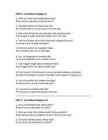
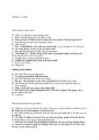
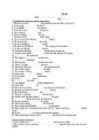
late, kevin, could, please, phone, surf, internet, film, father, piece, speak, switch, mobile, talk, helistama, call, back, later, nautima, enjoy, sõbrale, meili, saatma, send, email, friend, letters, necessary, went, police, mother, doctor, piano, years, dinner, apple, football, correct, paper, coke, coffee, soup, slice, pizza, honey, chocolate, glassTest 8 1 Translate. 1 Siin Kevin. Palun, kas ma saaksin Tinaga rääkida? This is Kevin. Could I speak to Tina, please? 2 mobiiltelefoni välja lülitama switch off the mobile phone 3 telefonisi rääkima talk over phone 4 hiljem tagasi helistama call back later 5 internetis surfama surf the Internet 6 nautima jututubades käimist enjoy visiting chat rooms 7 sõbrale meili saatma send an email to a friend 8 suurte tähtedega kirjutama write in capital letters 2 Write a/an or the where neccessary. 1 We travelled to Tallin by bus. 2 Tony is the tallest boy in our class. 3 We went to see a film yesterday. The film was called The Lord of the Rings. 4 My father is a police officer and my mother is a doctor. 5 I could play the piano when I was 6 years old.
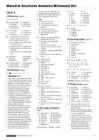
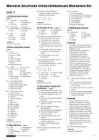
I Love English 5 Unit 8 Test Answers 1. Translate The phrases 1) This is Kevin. Could I speak to Tina, 5) Surf the internet please! 6) Enjoy visiting chat rooms 2) Switch off the mobile phone 7) Send an email to a friend 3) Be on the phone 8) Write in capital letters 4) Call back later 2. Write a / an or the were necessary 1) We travelled to Tallinn by – bus. 2) Tony is the tallest boy in our class. 3) We went to see a film yesterday. The film was called The Lord of the Rings 4) My father is a police officer and mother is a doctor. 5) I could play the piano when i was 6 years old. 6) Please don’t be late for – dinner 7) I’d like an apple please
· Not so bad, thanks. / Can't complain, thanks. · So so, thanks. / So and so, thanks. · Not so good, actually 1 The English alphabet Spelling Work with your partner and spell out first your name and then some names of places. Write down each letter as you hear it, and then say the word. The English alphabet on the phone: You might find the following alphabet (used by international airlines) useful when trying to spell a word on the telephone. A Alpha O Oscar Ä Alpha-Echo Ö Oscar-Echo B Bravo P Papa C Charlie Q Quebec D Delta R Romeo E Echo S Sierra
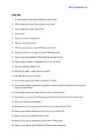
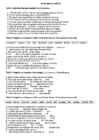
1 How do you usually start/are you usually starting your day? _____________________________________ 2 What time do you go/are you going to bed at weekends? _____________________________________ 3 This Girlzone CD is belonging/belongs to Alan. _____________________________________ 4 I understand/am understanding English, but not Spanish. _____________________________________ 5 Why does she run/is she running? Because she's late for work. __________________________________ 6 She doesn't enjoy/is not enjoying the film. _____________________________________ 7 This milk is tasting/tastes horrible. _____________________________________ 8 The Spice Girls are making/make a new CD at the moment. _____________________________________ 9 I am thinking/think it's a good idea for you to study biology. _____________________________________ 10 We want to go for a walk but it's raining/it rains outside
Kirjastus Studium Riia 15b, Tartu 51010 www.studium.ee Trükitud OÜ Greif trükikojas Lohkva, Luunja vald Tartumaa 62207 --- 3 xxx 1. The Big Apple 1. Write the verbs in the present continuous or the past continuous tense. Do you remember? am is are was were verb -ing 1 Sorry. I ... (write) a report at the moment. I can't come with you. 2 When Peter arrived, his friends ... (play) football. 3 I ... (sleep) when the alarm went off in my sister's room. 4 Dad's mobile phone is switched off because he ... (fly) to Paris. He's on the plane at the moment. 5 I ... (read) an interesting book. It's a collection of memories. 6 Leo was late again. He ... (step) out of his father's car when the bell rang. 7 Helen ... (lie) on the sofa when an ambulance stopped in front of the house. 8 I ... (give) this report from inside the school radio studio. Right now, the two teams ... (take) their places on the football field. 9 Mrs Watson ..
Golden Grammar rules 1. Don't use an with own. Sue needs her own room. (NOT Sue needs an own room.) I'd like a phone line of my own. (NOT ... an own phone line.) 2. Use or rather to correct yourself. She's German or rather, Austrian. (NOT She's German or better, Austrian.) I'll see you on Friday or rather, Saturday. 3. Use the simple present play(s), rain(s) etc to talk about habits and repeated actions. I play tennis every Saturday. (NOT I am playing tennis every Saturday.) It usually rains a lot in November. 4. Use will ..., not the present, for offers and promises. I'll cook you supper this evening
proficiency. 1 What is Grammar? 5 The Simple Past Tense 98 Regular and Irregular Verbs 99 Was and Were 104 2 The Capital Letter 6 The Past Progressive Tense 106 The Future Tense 108 Can and Could 112 May and Might 113 3 Nouns8 Do, Does and Did 115 Common Nouns 8 Would and Should 120 Proper Nouns 13 Singular Nouns 21 Plural Nouns 23 8 Subject-Verb Agreement 123 Collective Nouns 34 Masculine and Feminine Nouns 37
l just got your invitation to the company's event. l `m afraid I can't make it because I've a/ready made plans which l can "t change ... 3. Dear Sirs, I am writing to complain about the poor quality of the items which I received from your company. I have no other alternative but to cancel the order which 1 placed earlier this week ... 4. ... thus, I recommend that you accept this advice on the matter. I am pure that the suggestion offered is the best solution. Please let me know if this was helpful. Yours sincerely, Lee Jones 5. ... I would appreciate a reply at your earliest convenience. I look forward to meeting you to discuss employment opportunities. Yours faithfully, Nicole Porter Paragraph Plan for Letters · salutation · Paragraph 1 reasons for writing · Paragraphs 2, 3 development · Final paragraph closing remarks · Name
your pen". Nouns in English can also be uncountable. Uncountable nouns can be concepts, such as 'life', 'happiness' and so on, or materials and substances, such as 'coffee', or 'wood'. 2. Rule:Uncountable nouns don't use 'a' or 'an'. This is because you can't count them. For example, advice is an uncountable noun. You can't say "he gave me an advice", but you can say "he gave me some advice", or "he gave me a piece of advice". Some nouns can be both countable and uncountable. For example, we say "coffee" meaning the product, but we say "a coffee" when asking for one cup of coffee. 3. Rule:You can use 'the' to make general things specific. You can use 'the' with any type of noun - plural or singular, countable or uncountable. "Please pass me a pen" - any pen. "Please pass me the pen" - the one that we can both see. "Children grow up quickly" - children in general.
There were some people at the station. There was some sand on the building site. In extraordinary situations or when we want to emphasize something no article is used. Poor people cannot afford to live in beautiful houses. There were people inside the house on fire! There was sand on my plate! The Indefinite Article is used when referring to an indefinite object (just any of the kind). Could you lend me a pen? (Any pen would do, I just need something to write with.) I'll take a sandwich. (Any of those on the plate.) 3 The Definite Article is used when the context specifies which particular one(s) is (are) meant. Could you turn off the light, please? (the light in this room) I took a taxi to the airport. (the only airport in our town)
31. Do you know anybody who might become a good clown? What must a clown be good at? 32. Have you ever played sport regularly? What training classes do you go to and how often? What sport would you like to play and why? 33. Have you ever taken part in sport competitions? When, where and what were the results? 34. Are sports days held at your school? 35. What sports events do you watch on TV? 36. Do you read the sports page in a paper? Do you watch/listen to sports news? Could you tell us the latest sports news? 37. Who is the best athlete in your class? 38. Who is your favourite athlete? What do you know about him? 39. What sports events are popular in Estonia? How many Estonian Olympic gold medalists can you name? 40. Do you think it is necessary for children to play sport? Why? 41. Do you know any Estonian people who are known to everyone and liked by all? Are they politicians, writers, scientists, musicians? 42
.......................................................................... ...................................................................................................... ...................................................................................................... ...................................................................................................... ............................................................................. d) What could be Mary-Alice's reply? ...................................................................................................... ...................................................................................................... ...................................................................................................... ...................................................................................................... ..............................
Exercises 1. Use the Present Simple of the verb be or have. ( 10 points ) Mary........blue eyes and blond hair, but her brother ........dark hair. He ........in his late twenties. He........married and........two sons. I........short, but my sister........tall. We........a dog and a cat. Our uncle........two dogs. They........brown. 2. Choose the correct item. ( 5 points ) e.g. The residents were made...D....their homes by the authorities. A leave B leaving C left D to leave 1) Ann is my best friend! We........each other for years A know B knew C knows D have known
• the middle of ... • business • the end of May • the end (=finally) • time (= punctual, not • (the age of) 27 • time (=soon enough for late) • the moment sth / to do sth) • present • a week / three months’ • the same time time (=after the time of) • four weeks (during the time), etc In the middle of the meeting my mobile phone started ringing. The house was built in a month. I’ll be back in an hour. In the end, nobody knew why the war had started. Next week I will be away on business in France. John is on holiday this month. This bus never runs on time. He learned to read at an early age. The boss is not here at the moment, please, call back in half an hour. There are no vacancies in our company at present. 2
· You are learning English now. "Always" · You are not swimming now. · Are you sleeping? · I am sitting. · I am not standing. · Is he sitting or standing? · They are reading their books. Examples: · They are not watching television. · What are you doing? · She is always coming to class late. · Why aren't you doing your homework? · He is constantly talking. I wish he would shut up. USE 2 Longer Actions in Progress Now · I don't like them because they are always complaining. REMEMBER Non-Continuous Verbs/
5 Mõnikord sööme me laupäeviti väljas. We sometimes ate out on Saturdays. 6 Puu- ja köögiviljad on tervislik valik. Fruits and vegetables are a healthy choice. 7 Tädi Maggie räägib palju tervislikust toidust. Aunt Maggie talks a lot about healthy food. 8 Minu tüüpiline hommikusöök koosneb apelisinimahlast ja võileivast. My typical breakfast is consist of sandwich and a glass of orange juice. 9 Kas sa sooviksid tüki röstsaia moosiga? Would you like a piece of toast with jam? 10 Muuseum on avatud aasta läbi. The museum is opened throughout the year. _______________________________________________________________ UNIT 7: Töövihikust harjutus 10. 1 Mida sa tavaliselt peole selga paned? What do you usually wear to a party? 2 Millal sa viimati toitu ostmas käisid? Mida sa ostsid? When did you last go shopping for food? What did you buy? 3 Kas sulle meeldib riideid ostmas käia? Do tou like to go shopping for clothes?
H-Helen, J - Julia 1.Receiving a money order H: - Hello, I would like to cash a money order. J: - Hello! You should present your identity card. H: - But, you know, I'd like to receive money order for my sister. How do I go about it? J: - Your identity card and letter of attorney, please. H: - Here you are. J: - Well...Unfortunately, I can't cash your money order your signature is not witnessed. H: - Ok. Than, please, I'd like to cash my money order. J: - Take this form and fill it in. May I see your passport? H: - Yes. Please. So...Should I write my full name, my passport number and the sum of money that has been sent to me, right? J: - Certainly. How would you like the money? H: - I prefer one hundred rouble notes, if you don't mind. J: - Here is your money. H: - Thank you Getting a post-restante. H: - Hi, Julia! What are you doing here? J: - I'm getting post restante letter from Boris...
Name:............................................................ Mark:...................... 1.Complete the sentences with the prepositions . 1. The test consisted .................. two grammar exercises and a writing task. 2. I read a page .................. the book. 3. It is available .................. the internet. 4. Prices have risen .................. 10 percent. 5. I get a present .................. Jane. 6. Jane is standing ..................the car. 7. She likes a book .................. Mark Twain. 8. I go to school from Monday .................. Friday. 9. He was accused .................. the crime. 10. to carry somebody .................. board 11.He spent his childhood .................. the company of his brothers. 12. A man was fleeing .................. the ice. 13. He became obsessed ......
forehead. I've seen photos of her when 1E Phrasal verbs page 8 5 (possible answers) she was my age and apart from the 1 1 go ahead 5 come to eighties hairstyle we're the spitting 1 Well, you will go to bed late every night. 2 fall through 6 bring about image of each other! Some people 2 Well, you will refuse to wear a 3 tip off 7 go down with say that they can see a strong family coat. 4 mistake for 8 come up with
Must Should Would Ought to Excercises References How do we use modal verbs? Affirmative: Subject + modal + infinitive, Example: She should stay Negative: Subject + modal(n`t) + infinitive, Example: She shouln`t stay Interrogative: (Wh) Modal + Subject + Infinitive, Example: Why should she stay? Can Ability to do something in the present-I can speak English. Permission to do something in the present-Can I go to the cinema? Request - Can you wait a moment, please? Offer- I can lend you my car till tomorrow. Suggestion- Can we visit Grandma at the weekend? Possibility- It can get very hot in Arizona. Could Ability to do something in the past- I could speak English. Permission to do something in the past- I could go to the cinema. Polite question- Could I go to the cinema, please? Polite request- Could you wait a moment, please? Polite offer- I could lend you my car till tomorrow. Polite suggestion- Could we visit Grandma at the
rasher -- sausage -- mushroom -- in spite of -- strictly -- cereal -- honey -- substantial -- poultry -- beef -- mutton -- veal -- ham -- boiled -- fried -- chop -- steak -- cheap -- snack -- tea-spoonful -- tin -- apricot -- pear -- pineapple -- instant coffee -- disgusting -- roast -- lamb -- gravy -- delicious -- to conclude -- Computers Computer is an electronic device that can receive a set of instructions called program and then carry out them. The modern world of high technology could not be possible without computers. Different types and sizes of computers find uses throughout our society. They are used for the storage and handling of data, secret governmental files, information about banking transactions and so on. Computers have opened up a new era in manufacturing and they have enhanced modern communication systems. They are essential tools in almost every field of research, from constructing models of the universe to producing tomorrow's weather reports. Using of
2 been meaning 9 came 2 A 4 B 6 E old-fashioned-looking uniform, so 3 got 10 grew 5 1 at first hand 5 maiden voyage I would guess that it's a private 4 fell 11 were chatting 2 tuberculosis 6 mine school, but it could be a state 5 seen 12 walked school. It's hard to say. 6 were waiting 13 didn't admit 3 stewardess 7 retirement 7 was looking 4 wonderful 2 1 I reckon they are about 17 years old.
Entertainment and Art Task 1. Underline the most suitable word or phrase. a) I like this book, and I've read six capitals/chapters/prefaces already. b) It's not a proper drawing, only a rough/plan/sketch. c) The play is very long but there are three breaks/intervals/rests. d) At the cinema I don't like sitting too near the film/screen/stage. e) We heard a piece by Mozart performed by a German band/group/orchestra. f) Her second book was very popular and became a best buy/seller/volume. g) I like the painting but I can't stand its ugly border/frame/square. h) Robert's new book will be broadcast/published/typed in August. i) I liked the acting, and the costumes/dressing/outfits were good too. j) The best act/place/scene in the film is when Jack meets Kate. Task 2. Complete each sentence with a word from the box. Use each word once only.
3 arrived 5 bravely 4 walked 6 patiently 5 met 6 took 8 7 decided 2 badly 8 wanted 3 clearly 4 fast 2 5 late 2 Why did he leave England? 6 hard 3 When did you arrive at the camp? 7 completely 4 How far did you walk? 8 honestly 5 Where did she meet her companion? 9 well 6 What did she do before going to bed? 10 slowly 7 What did you decide to take on the trip? 8 Who did they want to meet? 9
They tell us whether the noun phrase is specific or general. Determiners are either specific or general Specific determiners: The specific determiners are: •the definite article: the •possessives: my, your, his, her, its; our, their, whose •demonstratives: this, that, these, those •interrogatives: which We use a specific determiner when we believe the listener/reader knows exactly what we are referring to: Can you pass me the salt please? Look at those lovely flowers. Thank you very much for your letter. Whose coat is this? General determiners: The general determiners are: •a; an; any; another; other; what When we are talking about things in general and the listener/reader does not know exactly what we are referring to, we can use an uncount noun or a plural noun with no determiner: Milk is very good for you. (= uncount noun) Health and education are very important. (= 2 uncount nouns)
Lamb to the Slaughter by Roald Dahl (1916-1990) The room was warm and clean, the curtains drawn, the two table lamps alight - hers and the one by the empty chair opposite. On the sideboard behind her, two tall glasses, soda water, whiskey. Fresh ice cubes in the Thermos bucket. Mary Maloney was waiting for her husband to come him (correction: home) from work. Now and again she would glance up at the clock, but without anxiety, merely to please herself with the thought that each minute gone by made it nearer the time when he would come. There was a slow smiling air about her, and about everything she did. The drop of a head as she bent over her sewing was curiously tranquil. Her skin - for this was her sixth month with child - had acquired a wonderful translucent quality, the mouth was soft, and the eyes, with their new placid look, seemed larger darker than before
Word of these new amazing weapons quickly spread around the world and soon rockets were being used in military operations in North Africa and Europe. During the 15 th and 16th centuries they were widely used in naval battles to set fire on enemy ships. Around this time they also started being used for more peaceful purposes again. In the 16th and 17th century Europe fireworks displays using rockets became a very popular form of public entertainment. In the late 18th century the British army suffered two serious defeats at battles in Seringapatam, in India. The main reason for these defeats was that the Indian prince, Haidar Ali's army included a corps of rocket throwers. They used very large bamboo rockets which had a range of hundreds of metres. The British were determined to learn from their mistakes and a British officer, William Congrieve, began work on developing even bigger and better rockets
I wanted to make a living based on my own merits and that meant an entry-level position. Starting the next morning, I would be the assistant to Mark Garrity at Waters Field & Leaman, one of the preeminent advertising agencies in the US. My stepfather, mega-financier Richard Stanton, had been annoyed when I took the job, pointing out that if I'd been less prideful I could've worked for a friend of his instead and reaped the benefits of that connection. "You're as stubborn as your father," he'd said. "It'll take him forever to pay off your student loans on a cop's salary." That had been a major fight, with my dad unwilling to back down. "Hell if another man's gonna pay for my daughter's education," Victor Reyes had said when Stanton made the offer. I respected that. I suspected Stanton did, too, although he would never admit it. I understood both men's sides, because I'd fought to pay off the loans myself...and lost. It was a point of pride for my father
budget is made of:bills,food,transport money(gas money or buss tickets),electrisity,water budget income(payment.salary) taxes electricity internet+phones sewage food medicine(health) entertainment loans rent clothes land tax transport insurence heating pets i have 3 members in my family.we spend 50 euros or so every month on electricity because in our house we use electricity to make the water in our floors move n make heat. on food we spend about 150 euros every month.on phone we spend about 20 euros.on clothes we spend 200 euros every month.we got 1 dog and 1 cat and we spend about 40 euros every month on them.on entertainment we spend about 200 euros.we have our own forest so its cheaper for us.because we have older car we have to spend more money on car as we should because it gets broken all the time and it uses alot of fuel. homework/housework In my home i have to mow the lawn atleast once a week in summer and in winter i have to do snowworks
Color-- -1- -2- -3- -4- -5- -6- -7- -8- -9- Text Size-- 10-- 11-- 12-- 13-- 14-- 15-- 16-- 17-- 18-- 19-- 20-- 21-- 22-- 23-- 24 TWILIGHT By Stephenie Meyer Contents PREFACE 1. FIRST SIGHT 2. OPEN BOOK 3. PHENOMENON 4. INVITATIONS 5. BLOOD TYPE 6. SCARY STORIES 7. NIGHTMARE 8. PORT ANGELES 9. THEORY 10. INTERROGATIONS 11. COMPLICATIONS 12. BALANCING 13. CONFESSIONS 14. MIND OVER MATTER 15. THE CULLENS 16. CARLISLE 17. THE GAME 18. THE HUNT 19. GOODBYES 20. IMPATIENCE 21. PHONE CALL 22. HIDE-AND-SEEK 23. THE ANGEL 24. AN IMPASSE EPILOGUE: AN OCCASION twilight STEPHENIE MEYER LITTLE, BROWN AND COMPANY New York Boston Text copyright © 2005 by Stephenie Meyer All rights reserved. Little, Brown and Company Time Warner Book Group 1271 Avenue of the Americas, New York, NY 10020 Visit our Web site at www.lb-teens.com First Edition: September 2005 The characters and events portrayed in this book are fictitious.
Greeting, name, position, opening formalities Good morning, ladies and gentlemen. Good afternoon, everyone. Good morning. My name's (...). I'm the new Finance Manager. Good morning. Let me start by saying just a few words about my own background. I started out in... Welcome to Standard Electronics. I know I've met some of you, but just for the benefit of those I haven't, my name's (...). It's very nice to see you all here today. I'm very pleased to be here. I'm glad you could all make it. Thanks for inviting me. Thank you (all) for coming. Title/Subject I'd like to talk (to you) today about ... I'm going to present the recent ... explain our position on ... introduce ... brief you on ... inform you about ... describe ... The subject of my talk focus presentation
I had been taught by Mary. Future simple Mary will teach me. I will be taught by Mary. Future cont. Mary will be teaching me. I will be taught by Mary. Future perf. Mary will have taught me. I will have been taught by Mary. Future perf. cont. Mary will have been teaching me. I will have been taught by Mary. Modals (can, could, may might etc) Modaalverbid Modaalverbid on can, could, may, might, must, ought to, shall, should, will, would. Nad väljendavad võimet, luba, soovi jne teha midagi. Kõiki modaale ei saa kasutada inglise keele kõikides aegades, seetõttu on olemas modaalide asemikud (substitutes). Modal Verb Substitute Example must to have to I must talk. = I have to talk.
Will she be at home tomorrow. Täisminevik The present perfect Äsja lõppenud tegevus. Seotud olevikuga.Just, today, this week, never, ever,yet. have / has + 3. pv We are tired. We have walked ten kilometers today. We haven't had lunch yet. Has he ever been to England? Enneminevik The past perfect Tegevus, mis toimus enne mingit teist tegevust minevikus. Seotug minevikuga. had + 3. pv We were tired. We had walked ten kilometers. We had seen this film so we didn't go to the cinema. Had you been abroad be 5 Ennetulevik Future perfect Tulevikus toimuma hakkav tegevus. Tomorrow, next week, next year, in 2020. Will + 3. pv Two more years and I hope I will pass my exams. I will go swimming with my sister next week. Will you help me with my homework tomorrow. Üldminevik Past tense Üldminevik väljendab inglise keeles minevikus aset leidnud lõpetatud tegevust.
 annaabi.ee