Leidsid 33 sarnast õppematerjali, mis on seotud failiga "I love English 3 WB.U 8.ex 6". Need materjalid aitavad sul teemat sügavamalt mõista.
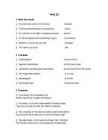
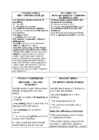
wasn, yesterday, weren, complete, sentences, ella, emily, both, granny, race, tired, grandfather, village, late, morning, unhappy, weekend, today, katie, room, tidy, things2) a / my / to / written / I / mother / already / letter / long / have 3) the / watch / often / they / TV / in / evening 4) the / gave / my / for / this / umbrella / is / that / Sally / me / my / birthday 5) particular / nothing / have / at / tell / you / to / moment / the 4. Give the comparative and the superlative of the following adjectives: ( 5 points ) e.g. tall taller the tallest lucky difficult soft good interesting 5. Put these sentences into the Reported Speech. ( 5 points ) e.g. She said:"I will call you from London." She said that she would call me from London. 1) Eric said:"Jack has gone out." 2) Frank said:"The car is waiting at the front door." 3) Tommy asked:"Is there anybody at home?" 4) I asked my friend:"Why do you come so late?" 5) Jane said:"Think before you answer!" 6. Use the correct Prepositions. ( 20 points ) 1) Jane started learning English two years........ 2) ......
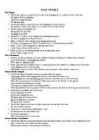
Juhendaja: Toomas Rähn Final Test Form 7 Name................. 1. Use the right tense. (15 p) 1) Look! She....................................(carry) a heavy bag. 2) Mrs. Brown...................................(play) the piano at the concert next week. 3) Mary is a good girl. My mother............................(meet) her every day since she and her father moved here. 4) Yesterday at two o`clock Tom ..............................(sing) and his sister ........................... (draw) a pictuture in the living room. 5) The wind ........................(be) very strong some days ago. 6) Where are the children? They ...................................... (play) with their ball in the garden. 7) He...............................(go) to work every day. 8) Mary................................(arrive) tomorrow. 9) Last year she...........................
publisher. ISBN 1-59905-201-6 Printed in the United States of America 13 12 11 10 09 08 07 9 8 7 6 5 4 3 2 1 Introduction Grammar is a very old field of study. Did you know that the sentence was first divided into subject and verb by Plato, the famed philosopher from ancient Greece? That was about 2,400 years ago! Ever since then, students all over the world have found it worthwhile to study the structure of words and sentences. Why? Because skill in speaking and writing is the hallmark of all educated people. Lesson by lesson, this book provides basic instruction in the eight parts of speech--nouns, pronouns, verbs, adjectives, adverbs, prepositions, conjunctions, and interjections--as well as the standard patterns of English sentences. All students of English, be they native speakers or those who are studying English as a second language, will profit from the fundamental introduction and review of
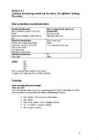
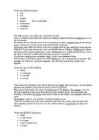
Tests Superstar 1 Luke Prodromou Test 1 Name____________________ Class_______ Use your English 1 Complete these sentences using the correct form (present simple or present continuous) of the verb in brackets. _ 1 She is in a band and she _________________________________ (record) a CD at the moment. _ 2 She is an actress and often _________________________________ (appear) on television. _ 3 At the moment she _________________________________ (have) a rest because she is tired. _ 4 Mike is a doctor and he _________________________________ (live) in Manchester.
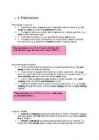
I've been learning English for five years. (NOT I've been learning English since three years.) We've been waiting for ages, since eight o'clock. 13. Don't separate the verb from the object. VERB OBJECT She speaks English very well . (NOT She speaks very well English.) Andy likes skiing very much. (NOT Andy likes very much skiing.) 14. Don't use the present perfect have/has seen, have/has gone etc with words that name a finished time. I saw him yesterday. (NOT I have seen him yesterday.) They went to Greece last summer. (NOT They have gone ... last summer.) 15. English (the language) normally has no article. You speak very good English. (NOT You speak a very good English.) 16. After look forward to, we use ing, not an infinitive. I look forward to seeing you. (NOT I look forward to see you.) We're looking forward to going on holiday. (NOT ... to go on holiday.) 17. Information is an uncountable noun. Can you give me some information
12. eitav lause 13. küsimus 14. Bob saw the film last month. (When) 15. He did not see the film last month. 16. When did he see the film? 17. Mother had her birthday party at the cafe. (Where) a. Mother did not have her birthday at the cafe b. Where did mother have her birthday? 18. They ate a lot of chocolate at Christmas time (What) a. They did not eat a lot of chocolate at Christmas time b. What did they eat a lot at Christmas time? 19. Granny took her cat to the vet yesterday. (Where) a. Granny did not take her cat to the vet yesterday b. Where did granny take her cat yesterday? 20. He went home at 7.15. (What time) a. He did not go home at 7.12 b. What time did he go home? 21. He got expensive presents on his birthday. (What) a. He did not get expensive presents on his birthday b. What presents did he get on his birthday? 22. Last year snow melted in February. (When) a
Kordamine inglise keele eksamiks A 1.1 Read the text and answer the questions below. Dear Mary-Alice, It's been ages since I last wrote to you, isn't it weird? Yes, so it is, but, I do have a certain reason. Do you remember Sir Thom of the Minquettes'? That fine young man with fascinating blue eyes... Oh, my sweet Mary, you will never guess what happened yesterday! It was about seven o'clock in the evening when Lillian called me out for a walk you know I can't say `no' to my little sis. Anyway we went to the forest near the Swan Lake and, believe it or not, got lost! Awful! I was so scared... We walked and walked, not even knowing the direction we were heading to, until we reached a huge mansion. And the garden around it was so extraordinary... That is something you just must see! But neither the trees nor flowers
I bought a new car. new car. Future Simple FutureinthePast He said (that) he would go to the I will go to the cinema. cinema. Present Perfect Past Perfect I've been to France three He said (that) he had been to times. France three times. Read the sentences and turn them in the indirect form. 1. Ralph said, "We have been in the mountains this summer." 2. "We were very happy to spend the weekend at the seaside," said Donald. 3. "We have left the school," said the children. 4. "In 1991 I entered Oxford University," said Henry. Modal Verbs can could I can swim under He said (that) he could water for two minutes. swim under water for two
.. (7 win) lots of prizes. She ... even ... (8 be) on TV. Kelly ... (9 break) her arm twice while doing a jump on the ice, but she's OK now. Last year she ... (10 travel) to Canada to practise in a training camp. I'm sure sometime in the future she ... (11 win) an Olympic medal. By that time, I ... (12 be) a famous author and she ... (13 ask) me to write a book about her way to the top. That's why I ... (14 start) taking notes of her and my other classmates' results. 3. Complete the exercise with the verbs in the past simple, the past continuous, or the past perfect tense. Do you remember? I went I was / we were going I had gone I couldn't wait for the first day of school to show off the new bike which I ... (1 get) as a birthday present. As I ... --- 5 (2 want) to look cool riding up to the front steps, I ... (3 put) on my new skirt. When I ... (4 reach) the school, I ... (5 make) a big mistake and ... (6 smile) at my friends instead of watching where I was going
1 Ema tahab, et ma kastaksin lilli. Mother wants me to water the flowers. 2 Ma tahan, et sa mind matemaatika kodutöös aitad. I want you to help me with my maths homework. 3 Kas sa tahad, et ma aitan sul seda rasket kotti kanda? Do you want me to help you to carry this heavy bag? 4 Õpetaja tahab, et me loeksime Roald Dahl´i Matilda´t. The teacher wants us to read Matilda by Ronald Dahl. 5 Mu väike õde tahab, et ma talle laulan. My little sister wants me to sing to her. 4 Write the sentences in reported speech. 1 Susan said, "I´m waiting for the bus." Susan said that she was waiting for the bus. 2 Mary said, "I have read kadri by SIlvia Rannamaa twice." Mary said she had read kadri by Silvia Rannamaa twice. 3 Tom´s mother said, "Your old shoes are too small for you." Tom´s mother said his old shoes were too small for him. 4 Our teacher said, "I usually go home for luch." Our teacher said she usually went home for lunch. 5 My friend said, "I enjoy reading adventure stories."
PAST TENSES Past Simple Used to talk about a completed past action which happened at a completed time in the past. We went to Tallinn yesterday. I saw him a long time ago. We met last week. Used to talk about a series of events that happened one after another. He walked to school, took off his coat, went to class and fell asleep. Used to report what people said. He said that he was tired. He asked to go home. Used after "It's time" (even though we're talking about now) It's time we talked about the past (now). After "I'd rather" (even though we're talking about now)
moment of speaking just now, Q: Is he speaking? Listen!, Look!, · action taking place only for a now, right now limited period of time · action arranged for the future Past Simple A: He spoke. · Finished action in the past yesterday, 2 N: He did not speak. minutes ago, in Q: Did he speak? · actions taking place one after 1990, last Friday another Past A: He was speaking. · action going on at a certain when, while Continuous N: He was not time in the past yesterday at 5 speaking.
p. cm. Summary: When seventeen-year-old Bella leaves Phoenix to live with her father in Forks, Washington, she meets an exquisitely handsome boy at school for whom she feels an overwhelming attraction and who she comes to realize is not wholly human. ISBN 0-316-16017-2 [1. Vampires -- Fiction. 2. High schools -- Fiction. 3. Schools -- Fiction. 4. Washington (State) -- Fiction.] I. Title. PZ7.M57188Tw2005 [Fic] --dc22 2004024730 Printed in the United States of America For my big sister, Emily, without whose enthusiasm this story might still be unfinished. But of the tree of the knowledge of good and evil, thou shalt not eat of it: for in the day that thou eatest thereof thou shalt surely die. Genesis 2:17 PREFACE I'd never given much thought to how I would die -- though I'd had reason enough in the last few months -- but even if I had, I would not have imagined it like this. I stared without breathing across the long room, into the dark eyes of the hunter, and he looked
FORM 8 REVISION UNITS 1-5 GRAMMAR 1) ´S- lõpuline omastav reeglid on TV lk 30 Exercise 1. 1) George has a new car. It is ........................ 2) Ken and Chris have a friend. This boy is...................... 3) Her children have a dog. It´s.......................... 4) These newspapers were published yesterday. This is .................. 5) His parents own this house. This is...................... 6) Ted and Nancy have a son whose name is Fred. Fred is ............... 7) The key belongs to my sister. It´s....................... 8) These skis belong to Uncle Thomas. They are....................... 9) This camera belongs to her parents. It´s.................. Answers: 1) George´s car 2) Ken and Chris`s friend 3) her children´s dog 4) yesterday´s
for me. It was the first thing my parents 5 Well, you would keep eating too noticed when I was born! 3 1 Laura was offered a place at much. Personality-wise, I've got a lot of my Manchester University but she dad's traits in me. We're both quite bubbly and friendly (or so people 1C The origins of English turned it down. page 5 2 Whilst some people are in favour say), and we share quite a laid-back of the monarchy, others think we approach to life
It does not matter whether something has been finished or not I have been painting the ceiling. Negative form: I haven't (have not) been learning Spanish very long. He hasn't (has not) been eating properly. Question form: Has it been snowing recently? How long have you been working on the computer? Signal words: for 2 hours, since..., all day, etc. PAST SIMPLE (lihtminevik) Form: 2nd form (-ed) Use: 1. A finished time in the past. We can ask when? I visited John yesterday. 2. Finished actions taking place one after another. I woke up, ate breakfast and went to work. Negative form: I didn't (did not) enjoy the film much. He didn't (did not) go to school yesterday. Question form: Did you watch the match yesterday? What did you do at the weekend? Signal words: yesterday, last..., ago, in 1979, the other day, etc. PAST CONTINUOUS/PROGRESSIVE (kestev minevik) Form: was/were + ing Use: 1. An action going on at a certain time in the past
Ermo Altmäe 011PK Time Prepositions Multiple Choice Exercise Correct! Well done. Your score is 60%. 1. Jane is arriving on January 26 at 2 o'clock in the afternoon. 2. It snows here every year in December. We always go outside and play in the snow on Christmas day. 3. Michael is leaving on Friday at noon. 4. Frankie started working for her law firm in 1995. 5. Franklin began working on the project NO PREP yesterday. 6. Normally, on New Year's Eve, it's tradition to kiss the one you love at midnight. 7 Don't be ridiculous; there were no telephones in the seventeenth century! The telephone was invented in the 1870s. 8. The plane leaves NO PREP tomorrow morning at 8:00 AM. 9. The hills here are covered with wildflowers in early spring. 10. We met at the restaurant at 6:30 and stayed until 10:30. Ermo Altmäe 011PK Time Prepositions 2 Multiple Choice Exercise Correct! Well done. Your score is 14%. 1
Word Order Table of Contents Types of Sentences ..................................................................................2 Parts of the Sentence ..............................................................................2 Word Order in Affirmative Sentences ...................................................3 Position of Adverbs of Frequency .........................................................5 Word Order in Negative Sentences......................................................6 Word Order in General Questions.........................................................7 Word Order in Special Questions ..........................................................8 Word Order in Subject Questions ................................................
your break just surfing on the Internet. Pupils' works are shown in the exhibition room and you can spend time in the reading room reading one of the 80 different periodicals that we have in our library. I love to go to the library in breaks, rest on the couches and read "Sporditäht". Famous libraries. The Library of Alexandria was one of the best-known libraries of the ancient world. It was built in 300 B.C. It had the most complete collection of books at that time. In about 650 A.D Alexandria surrendered in a war and all the books except the ones of Aristotle were used as fuel to heat the public baths. The Boston Public Library is the largest municipal public library in the United States and was established in 1848. It was the first publicly supported municipal library in the United States and the first public library to allow people to borrow books and other materials.
. My Opinion............................................................................................................................... Orson Scott Card He was born on the 24th of August, 1951 in Richland, Washington. Card's writing career began primarily as a poet, studying at Brigham Young University. During his studies as a theatre major, he began "doctoring" scripts, adapting fiction for theatre production, and finally writing his own one-act and full-length plays. Later he has worked both as a freelancer and a contracted writer. He first wrote the short story "Ender's Game" while working at the BYU press. Ender's Game and its sequel Speaker for the Dead were both awarded the Hugo Award and the Nebula Award, making Card the only author (as of 2008) to win both of science fiction's top prizes in consecutive years. Card continued the series with seven books, which divide into "Shadow" and "Speaker" series. He has also announced his plan to write two more novels: Shadows in
Prepositions Table of Contents Prepositions of Time – in, on & at ....................................................................... 2 Prepositions of Time – for & since ....................................................................... 3 Prepositions of Time – for & during ..................................................................... 3 Prepositions of Time – during & while ................................................................. 4 Prepositions of Time – by & by the time .............................................................. 4 Prepositions of Time – until & from ... till / to ... ................................................. 4 Prepositions of Time - ago................................................................................... 5 Prepositions of Place – in ...........................................................................
A NEW BEGINNING It was a dark and a silent night, when two young riders dressed within black rushed across the Devil`s Field. Suddenly one of them stopped and glanced at the moonless sky. His horse felt nervous, imitating the feelings of his rider. The other man seized his horse as well and looked at his companion in a curious way. After a minute or two spent in abnormal silence the first rider cried out as loud as he could: "Run!" The second man jumped off his horse and rushed to the forest that was waiting some meters ahead. But then he remembered about the other rider, but when he turned the Devil`s Field was empty. His companion was gone as well the horses. The man was seriously scared now, but since he was one of the Royal Solders fear was not allowed to be shown in public. So he drew his half-iron, half-silver sword and decided to go back to the field, but then he thought: "Alec told me to run...It means I mustn`t return to That place a
· He is constantly talking. I wish he would shut up. USE 2 Longer Actions in Progress Now · I don't like them because they are always complaining. REMEMBER Non-Continuous Verbs/ Mixed Verbs Examples: (All of these sentences can be said while Examples: eating dinner in a restaurant.) · She is loving this chocolate ice cream. Not · I am studying to become a doctor. Correct · I am not studying to become a dentist. · She loves this chocolate ice cream. Correct · I am reading the book Tom Sawyer. Simple Past [VERB+ed] or irregular verbs Examples:
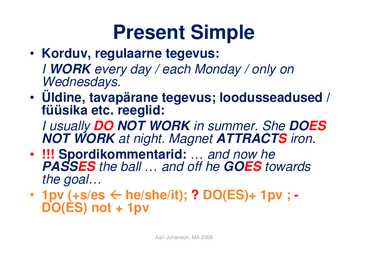
regret suppose seem surprise think* sound want* understand Aari Juhanson, MA 2008 weigh* Examples · What do you think about this idea? Turn the music down, please, I'm thinking. · Everyone has something to believe in. We were having a great time at the party yesterday. · They are really tired again. She's being really nasty to us. · Do you see that red car over there? I'm seeing a dentist tomorrow morning. / I'm afraid he's seeing things. · We hear something new each day. I thought I was hearing things when music suddenly began to play. · I consider him to be a very lucky man. I'm considering changing jobs. · Kids love visiting amusement parks. Kids are loving visiting the amusement park.
• we don't use an article: at night, at noon, every We don't usually use an article week, every day, every night, last morning, last • to talk about things in general. • before the names of countries, cities, towns and villages. week, all night, all day, tomorrow, yesterday,... • with plural nouns and uncountable nouns when talking about them • use the with in the morning, in the afternoon, generally. during the night, the winter, the summer, the day Examples: She has got long hair. He wears black shoes. after tomorrow,... • when talking about sports, people's first
They are crying they aren't crying are they crying? Present simple or Present continuous Present Simple Present Continuous My sister works in a bank today she's working at home. What do you usually wear to work? What are you wearing now? Unit 5 / Past Simpel + - ? I worked yesterday I didn't work yesterday did I work yesterday`? You worked yesterday you didn't work yesterday did you work yesterday? He/she/it worked yesterday he/she/it didn't work yesterday did he/she/it work yesterday? We worked yesterday we didn't work yesterday did we work yesterday? You worked yesterday you didn't work yesterday did you work yesterday?
FUTURE SIMPLE BE GOING TO Will + infinitive (will go) Am/is/are going to + infinitive (is going to rain) 1.A decision at the moment of 1.Future plans made before the speaking: moment of speaking: A: 'I'm cold'. A: 'We've run out of milk.' B: 'I'll close the window'. B: 'I know, I'm going to buy some.' 2.Prediction based on opinion: 2.Prediction based on present I think the Conservatives will win the evidence: next election. Look at those boys playing football! 3.A future fact: They're going to break the window. He will be ten next year. 4.Promises / requests / refusal / willingness: I'll help you with your homework. Will you give me a hand? 5.In the same way as the future continuous, but with state verbs: I'll be at the
When Jane and Elizabeth were alone, the former, who had been cautious in her praise of Mr. Bingley before, expressed to her sister just how very much she admired him. "He is just what a young man ought to be," said she, "sensible, good-humoured, lively; and I never saw such happy manners!--so much ease, with such perfect good breeding!" "He is also handsome," replied Elizabeth, "which a young man ought likewise to be, if he possibly can. His character is thereby complete." "I was very much flattered by his asking me to dance a second time. I did not expect such a compliment." "Did not you? I did for you. But that is one great difference between us. Compliments always take you by surprise, and me never. What could be more natural than his asking you again? He could not help seeing that you were about five times as pretty as every other woman in the room. No thanks to his gallantry for that. Well, he certainly is very agreeable,
· · Past tenses Past Simple is used for: Past actions which happened one immediately after the other. E.g. She stood up, went up to her and grabbed her wrists. Completed actions or events, which happened at a stated past time. E.g. I went to the cinema last night. Past habits or states. E.g. my grandfather always wore a hat. Complete actions not connected to the present with a stated or implied time reference. E.g. Beethoven created wonderful classical pieces. Time expressions used with Past Simple: yesterday, last week/month etc, ago, then, just, now, when, in 1991, etc Past continuous is used for: Actions in the middle of happening at a stated past time. E.g. She was flying to Paris this time last Monday. A past action in progress interrupted by another past action. The longer
I admire I. King Jordan because he is the first deaf president of Gallaudet. Besides that, I admire him because he is a great long distance runner. Furthermore, he is a dedicated family man. All in all, there ís not much to dislike about the man, except he is too perfect! Crystal likes camping in the mountains. Also, Crystal is an experienced hiker. Texas School for the Deaf is perfectly located. Moreover, it has a strong academic program. For example, the school has a preschool program where both deaf and hearing children learn together. Words that show CONCLUSION · finally · in conclusion · to conclude · to sum up There were a lot of problems discussed at the meeting. Finally, after a few hours, we were able to prioritize the problems in the order we want to solve the problems. Many parents and students have been complaining about the program. For example, scores on the end-of-grade tests have gone down from last year; teachers are not very motivated; and
Challenge! 4 The little boy was sobbing and Transcript Students' own answers pointing to his sister's ice cream. 5 The thief grabbed my bag and ran The photos are connected with the 1B Past and perfect tenses off. topic of school. Both photos show page 4 6 He dropped a leaf into the water students in class. In the first photo I imagine that 1 1 ate and watched it drift under the they're about 13 years old.
GRAMMAR REVISION I. TEGUSÕNA BE PÖÖRAMINE (VERB BE) OLEMA! BE VORMID ON: AM, IS, ARE (olevik), WAS, WERE (minevik). Olevik Minevik I am mina olen I was mina olin You are sina oled You were sina olid He is tema (m.) on ainsus He/ She/ It was tema/ see oli She is tema (n.) on It is see on We are meie oleme mitmus We were me olime You are teie olete You were te olite They are nemad on They were nemad olid II. LÜHENDID (SHORT FORMS) I am = I ´ m I (you/ they) have = I ´ ve You are = You ´ re she (he/ it) has = she ´ s He is = he ´ s is not = isn ´ t I will = I ´ll She is = she ´ s are not = aren ´ t will not = won ´t It is = it ´ s
slamming, the footsteps passing the window, the key turning in the lock. She laid aside her sewing, stood up, and went forward to kiss him as he came in. "Hullo darling," she said. "Hullo darling," he answered. She took his coat and hung it in the closer. Then she walked over and made the drinks, a strongish one for him, a weak one for herself; and soon she was back again in her chair with the sewing, and he in the other, opposite, holding the tall glass with both hands, rocking it so the ice cubes tinkled against the side. For her, this was always a blissful time of day. She knew he didn't want to speak much until the first drink was finished, and she, on her side, was content to sit quietly, enjoying his company after the long hours alone in the house. She loved to luxuriate in the presence of this man, and to feel - almost as a sunbather feels the sun - that warm male glow that came out of him to her when they were alone together
 annaabi.ee