Leidsid 33 sarnast õppematerjali, mis on seotud failiga "I love English 3". Need materjalid aitavad sul teemat sügavamalt mõista.
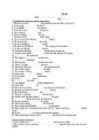
english, tõlgi, books, round, küsisõna, summer, lauses, coat, brown, mary, friend, going, speak, koostaja, uustal, juhendaja, rähn, ülivõrret, jäätis, sokolaad, good, põder, hirv, hani, kalkun, lambad, kask, mänd, tall, laused, drink, never, goes, sister, back, thick, võtmed, vannituba, külalised, tegusõna, lovely, twelve, years, happy, cathyInglise keele kontrolltöö 7. klassile Õpik: I love English 4 Kokkuvõte aasta jooksul õpitust. Koostaja: Gea Gutmann Viljandi Maagümnaasium Juhendaja: Toomas Rähn Final Test Form 7 Name................. 1. Use the right tense. (15 p) 1) Look! She....................................(carry) a heavy bag. 2) Mrs. Brown...................................(play) the piano at the concert next week. 3) Mary is a good girl. My mother............................(meet) her every day since she and her father moved here. 4) Yesterday at two o`clock Tom ..............................(sing) and his sister ........................... (draw) a pictuture in the living room. 5) The wind ........................(be) very strong some days ago. 6) Where are the children? They .....................................
Book 1 BASIC ENGLISH BASIC ENGLISH GRAMMAR GRAMMAR BASIC ENGLISH GRAMMAR Book 1 Book 1 Younger students at beginning to intermediate levels will greatly benefit from this step-by-step approach to English grammar basics. This is the ideal supplement to your language arts program whether your students are native
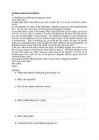
They say it's unimaginable, boring, tasteless, it's chips with everything and totally overcooked vegetables. The basic ingredients, when fresh, are so full of flavour that British haven't had to invent sauces to disguise their natural taste. What can compare with fresh pees or new potatoes just boiled and served with butter? Why drown spring lamb in wine or cream and spices, when with just one or two herbs it is absolutely delicious? If you ask foreigners to name some typically English dishes, they will probably say "Fish and chips" then stop. It is disappointing, but true that, there is no tradition in England of eating in restaurants, because the food doesn't lend itself to such preparation. English cooking is found at home. So it is difficult to a good English restaurant with a reasonable prices. In most cities in Britain you'll find Indian, Chinese, French and Italian restaurants. In London you'll also find Indonesian, Mexican, Greek..
Tests Superstar 1 Luke Prodromou Test 1 Name____________________ Class_______ Use your English 1 Complete these sentences using the correct form (present simple or present continuous) of the verb in brackets. _ 1 She is in a band and she _________________________________ (record) a CD at the moment. _ 2 She is an actress and often _________________________________ (appear) on television. _ 3 At the moment she _________________________________ (have) a rest because she is tired. _ 4 Mike is a doctor and he _________________________________ (live) in Manchester.
'How are you?' Very often people expect you to say something positive. Here's a breakdown of how you can express how you really are without complaining too much. · Fine, thanks. / On top of the world, thanks. · OK, thanks · Not so bad, thanks. / Can't complain, thanks. · So so, thanks. / So and so, thanks. · Not so good, actually 1 The English alphabet Spelling Work with your partner and spell out first your name and then some names of places. Write down each letter as you hear it, and then say the word. The English alphabet on the phone: You might find the following alphabet (used by international airlines) useful when trying to spell a word on the telephone. A Alpha O Oscar Ä Alpha-Echo Ö Oscar-Echo
Studium Units 1-4 e-formaat Toimetatud Tartu Emajõe Koolis Toimetaja I. Tars Tartus, 2016 Elektroonilisse vormingusse kohandatud õpikus kasutatud märgised, mis aitavad otsingukäsu kasutamisel navigeerida * Tavakirjas leheküljenumbri ees on kolm järjestikust sidekriipsu, tühik ja vastava lehekülje number, näiteks, --- 5; * peatüki ette on kirjutatud kolm x-i, tühik ja vastava peatüki number, näiteks xxx 5; * visuaalne info on pandud kahekordsete ümarsulgude vahele. I Love English 6 töövihik sobib inglise keele õpetamiseks 8. klassis Töövihik vastab riiklikule õppekavale Retsenseerinud Piret Kärtner, Viive Latt, Ingrit Tera Toimetanud Viiu Menning, Nicola Fyfe, Tiina Helekivi Kujundanud ja küljendanud Eve Kurm Tehniliselt toimetanud Andero Kurm Illustreerinud Ülle Meister Esikaas: Boswell and Dr. Johnson (foto Scanpix). Vaata Unit 20. Autoriõigus: Mare Jõul, Ülle Kurm, 2009 Kirjastus Studium, 2009 Kõik õigused on kaitstud
He/she/it has been going He/she/it has not been going Has he/she/it been going? We/you/they have been making We/you/they have not been making Have we/you/they been making? Kestev täisminevik väljendab: · Tegevust, mis on hiljuti või alles lõppenud, kuid mille algust ega lõppu pole teada. You are wet. Have you been running in the rain? They have been talking to Mary and they have decided... · Tegevust, mis algas enne kõnemomenti, kestab selleni või peale seda. Sel juhul rõhutakse tegevuse kestvusele (how long, for, since etc). How long have you been learning Italian? I have been drawing for almost two hours now. Past Continuous Kestva mineviku moodustamine Jaatav vorm Eitav vorm Küsiv vorm
• to talk about things in general. • before the names of countries, cities, towns and villages. week, all night, all day, tomorrow, yesterday,... • with plural nouns and uncountable nouns when talking about them • use the with in the morning, in the afternoon, generally. during the night, the winter, the summer, the day Examples: She has got long hair. He wears black shoes. after tomorrow,... • when talking about sports, people's first names, languages, names of • use a /an or the with whole and entire. shops, religions, meals, days, months and holidays. Examples: We spent a whole week in Madrid. I spent the whole day
the most common names 8 internetis on the Internet 2 Use the correct tense. 1 Last week my sister asked me to look after her dog Roy. I was worried first because I had never walked such a big dog before. (ask; never walk) 2 Whe I met her at the party on Friday she was wearing a black dress. (meet; wear) 3 Larry's not here, he is digging in the garden behind the house. (dig) 4 It's really hot today, I think there will be a thunderstorm soon. (be) 5 I think I will spend my next summer holidays at my granny's in Pärnu. (spend) 6 Jane always cathes a bus to school. (catch) 7 Jack is not at home. He has gone for a walk. He will return in an hour. (go; return) 8 I have known Mary for two years. She is my best friend now. 3 Make up sentences. 1 airport / at / Tom / arrived / the / two / at Tom arrived at the airport at two. 2 usually / home / husband / at / comes / her / six Her husbant usually comes home at six. 3 since / we / seen / other / each / haven't / August
wishes/Yours, Mike. 4. Remember that it is not necessary to write addresses in the exam. Style in formal and informal letters Formal letters Greeting: Dear Sir/Madam / Mr bobbins, Informal letters · impersonal style Greeting: Dear Julie, · complex sentence structure - frequent · personal, short, zappy style use of Passive Voice - single word · use of slang or colloquial English use of verbs - non-colloquial English -- formal idioms/phrasal verbs language · pronouns are often omitted · each paragraph develops one specific · chatty, wide use of descriptive adjectives topic · use of short forms · only facts, infrequent use of descriptive Best wishes / Love / Yours / Regards.
It's time you went home. (NOT It's time you go home.) It's time we invited Bill and Sonia. (NOT It's time we invite Bill and Sonia.) 7. Use was/were born to give dates of birth. I was born in 1975. (NOT I am born in 1975.) Shakespeare was born in 1564. 8. Police is a plural noun. The police are looking for him. (NOT The police is looking for him.) I called the police, but they were too busy to come. 9. Don't use the to talk about things in general. Books are expensive. (NOT The books are expensive.) I love music. (NOT I love the music.) 10. Use had better, not have better. I think you'd better see the doctor. (NOT I think you have better see the doctor.) We'd better ask John to help us. 11. Use the present progressive am playing, is raining etc to talk about things that are continuing at the time of speaking. I'm playing very badly today. (NOT I play very badly today.) Look! It's raining! (NOT Look! It rains!) 12. Use for with a period of time
interesting 5. Put these sentences into the Reported Speech. ( 5 points ) e.g. She said:"I will call you from London." She said that she would call me from London. 1) Eric said:"Jack has gone out." 2) Frank said:"The car is waiting at the front door." 3) Tommy asked:"Is there anybody at home?" 4) I asked my friend:"Why do you come so late?" 5) Jane said:"Think before you answer!" 6. Use the correct Prepositions. ( 20 points ) 1) Jane started learning English two years........ 2) ........Monday Steve asked me to dine with him 3) Mary was born........the second of May........1964. 4) We worked........ ten hours without stopping. 5) They left........seven o`clock........the evening. 6) The castle was built........the 16th century. 7) I think Ronald is ill. He wasn`t........work today. 8) We had to go........foot. 9) Yesterday we met Bob........the street. 10) Phone me tomorrow morning! I`ll be........home.
eighties hairstyle we're the spitting 1 Well, you will go to bed late every night. 2 fall through 6 bring about image of each other! Some people 2 Well, you will refuse to wear a 3 tip off 7 go down with say that they can see a strong family coat. 4 mistake for 8 come up with resemblance between my dad and me. I can't see it myself, not facially anyway 3 Well, she would keep driving too 2 1 bring about 5 go ahead although there are certain similarities fast in the town. 2 fall through 6 go down with in our physical build
38. Who is your favourite athlete? What do you know about him? 39. What sports events are popular in Estonia? How many Estonian Olympic gold medalists can you name? 40. Do you think it is necessary for children to play sport? Why? 41. Do you know any Estonian people who are known to everyone and liked by all? Are they politicians, writers, scientists, musicians? 42. Can you name some Estonian writers who are famous for their humour? Which of their books have you read? 43. What kind of books do you like to read? 44. When did you last read a poem? 45. Do you enjoy reading poems? http://www.abiks.pri.ee 46. Have you ever written a poem? When? What was it about? 47. Can you say a poem in English? 48. What books have you read lately? 49. When did you learn to read? Was it easy or difficult for you? 50. How much time do you spend on reading
Test Name:............................................................ Mark:...................... 1.Complete the sentences with the prepositions . 1. The test consisted .................. two grammar exercises and a writing task. 2. I read a page .................. the book. 3. It is available .................. the internet. 4. Prices have risen .................. 10 percent. 5. I get a present .................. Jane. 6. Jane is standing ..................the car. 7. She likes a book .................. Mark Twain. 8. I go to school from Monday .................. Friday. 9. He was accused .................. the crime. 10. to carry somebody .................. board 11.He spent his childhood .................. the company of his brothers. 12. A man was fleeing .................. the ice
........................................................5 Word Order in Negative Sentences......................................................6 Word Order in General Questions.........................................................7 Word Order in Special Questions ..........................................................8 Word Order in Subject Questions ..........................................................9 Types of Sentences There are four basic types of sentences in English. AFFIRMATIVE and NEGATIVE sentences both end with a full stop ( ) : . I live in Tallinn. I do not live in Tallinn. I never watch soap operas. INTERROGATIVE sentences end with a question mark ( ? ) : Do you live in Tallinn? Why do you never watch soap operas? EXCLAMATORY and IMPERATIVE sentences end with an exclamation mark ( ! ) : What a beautiful day! Do your homework at once! Parts of the Sentence The basic parts of the sentence are: THE SUBJECT (WHO? WHAT?) ,
Do you think I should see a doctor? Use • Must and have to both express strong obligation. Must is used to express an obligation that involves the speaker’s opinion. It is personal: I must get my hair cut. (This is me talking to me.) You must do your homework regularly. (A teacher talking to students) Must is also associated with a formal, written style: Candidates must answer four questions. (Instructions on an exam paper) Books must be returned on or before the date due. (Instructions in a library) 4 • Have to expresses a general obligation based on a law or rule, or based on the authority of another person: I can’t play tennis tomorrow. I have to go to the dentist. (I have an appointment.) Children have to go to school until they are 16. (A law) Mum says you have to tidy your room before you go out. (Mother’s order!)
Kordamine inglise keele eksamiks A 1.1 Read the text and answer the questions below. Dear Mary-Alice, It's been ages since I last wrote to you, isn't it weird? Yes, so it is, but, I do have a certain reason. Do you remember Sir Thom of the Minquettes'? That fine young man with fascinating blue eyes... Oh, my sweet Mary, you will never guess what happened yesterday! It was about seven o'clock in the evening when Lillian called me out for a walk you know I can't say `no' to my little sis. Anyway we went to the forest near the Swan Lake and, believe it or not, got lost! Awful! I was so scared... We walked and walked, not even knowing the direction we were heading to, until we reached a huge mansion. And the garden around it was so extraordinary... That is something you just must see
.............................................................................................................................................. 13 Ajavormid Present simple (The earth goes round the sun) Reeglid, absoluutsed tõed Rutiin ja harjumused Püsivad situatsioonid või olukorrad Tabelid, ajagraafikud Present continuous (She is driving to work) Käsil olev tegevus Ajutine tegevus; pooleli olev Ettekorraldatud tegevus tulevikus Ärritus Present perfect (He has lost his key) Sündmus minevikus, tagajärg olevikus Üksik või korduv tegevus, mille aeg ei ole oluline (I have been in the USA)
We had a very enthusiastic 2 d Much as 1 T A 3 F C 5 T D 7 T B science teacher and during one of our 3 e However 2 T B 4 T A 6 F A 8 T D field trips we were taken on a tour 4 b In spite of of a laser lab. I was fascinated and, 5 f whereas Use of English after talking to the head of the lab, I 6 a Nevertheless 1 pride 6 extinction was offered a summer job. I was lucky 2 remarkable 7 contamination to get funding to cover my expenses 2 Students' own notes 3 mountainous 8 illegal and my boss was an inspiring mentor.
Simple Present · · New York is a small city. It is not important that this fact is untrue. [VERB] + s/es in third person USE 3 Scheduled Events in the Near Examples: Future · You speak English. · Do you speak English? · You do not speak English. USE 1 Repeated Actions Examples: · The train leaves tonight at 6 PM. · The bus does not arrive at 11 AM, it arrives at 11 PM. · When do we board the plane?
English structure revision for the exam 1. Terms Language → A systematic, conventional (tavakohane) use of sounds, signs or written symbols in a human society for communication and self-expression. Human language at all levels is rule- or principle- governed (valitsema) meaning that language corresponds to the grammar. Natural language is usually spoken, while language can also be encoded into symbols (such as letters, morse etc) For example: Estonian, English. Linguistics → The scientific study of human natural language. Broadly, there are three aspects to the study which are Pragmatics (studies the use of language → interested in the gap between the sentence’s meaning and the speaker’s meaning). Semantics (concerned with the meaning of the language aspects and the way they change, also how objects and language and thinking and language are related).
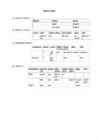
Word order: positive sentences subjects verb(s) object I speak English. I can speak English. Negative sentences subject verbs Indirect object Direct object place time I will not you the story at Tomorro tell school w. Subordinate Clauses conjunction subject verb(s) Indirec Direct place time
(not I want orange.) •Where is my bottle? (not Where is bottle?) When a countable noun is plural, we can use it alone: •I like oranges. •Bottles can break. We can use some and any with countable nouns: •I've got some dollars. •Have you got any pens? We can use a few and many with countable nouns: •I've got a few dollars. •I haven't got many pens. definite article The definite article the is the most frequent word in English. We use the definite article in front of a noun when we believe the hearer/reader knows exactly what we are referring to. • because there is only one: The Pope is visiting Russia. The moon is very bright tonight. The Shah of Iran was deposed in 1979. This is why we use the definite article with a superlative adjective: He is the tallest boy in the class. It is the oldest building in the town. • because there is only one in that place or in those surroundings:
How will it make a difference to you? Examples: Although I work two parttime jobs, I find it difficult to meet the financial demands of supporting myself and paying for an education. A scholarship will allow me to continue with school in the fall. My parents provide me with room and board, but because I have younger brothers and sisters, they cannot help me with my educational expenses. The money I earn at the car wash parttime is barely enough to cover my books and supplies. A scholarship would help a great deal. Receiving a scholarship would allow me to reduce the number of hours that I work at the daycare, which would then allow me more time to concentrate on my studies. 5. Conclusion · Wrap it up with a simple sentence or two. You can include how your education to date has made a difference to you. End with a "thank you for allowing me the opportunity to apply." WRITING YOUR ESSAY:
Lihttulevik The future simple Tulevikus toimuv tegevus, mis ei sõltu meie tahtest või mille suhtes teeme otsuse kõnelemise momendil. Next week, tomorrow, in two years time, in 2020. will + 1. pv (will not = won't) Maria will be thirteen next year. Maybe I won't go to the party tomorrow, I'm too tired. Will you help me with my homework tonight? Kestev olevik The present continuous Praegu toimuv tegevus. Now, at the present. am / is / are + -ing We are learning English. Is Mark reading or writing? Where is the teacher standing? 3 4 Kestev minevik The past continuous Minevikus teatud hetkel parajasti kestnud tegevus. Yesterday at 6, when she came, this time on Tuesday. was / were + -ing When the teacher came in, the pupils were talking. What were you doing when she opened the door? I was not talking, I was reading a book. Kestev tulevik The future conrinuous
Lihttulevik The future simple Tulevikus toimuv tegevus, mis ei sõltu meie tahtest või mille suhtes teeme otsuse kõnelemise momendil. Next week, tomorrow, in two years time, in 2020. will + 1. pv (will not = won't) Maria will be thirteen next year. Maybe I won't go to the party tomorrow, I'm too tired. Will you help me with my homework tonight? Kestev olevik The present continuous Praegu toimuv tegevus. Now, at the present. am / is / are + -ing We are learning English. Is Mark reading or writing? Where is the teacher standing? 3 Kestev minevik The past continuous Minevikus teatud hetkel parajasti kestnud tegevus. Yesterday at 6, when she came, this time on Tuesday. was / were + -ing When the teacher came in, the pupils were talking. What were you doing when she opened the door? I was not talking, I was reading a book. Kestev tulevik The future conrinuous
Being in Portugal has been amazing so far. Jeremy and I have seen so many wonderful things. We've been swimming almost every day. I have also enjoyed the vibrant night life they enjoy here, we went dancing last night. I only wish I could share more of it with you guys. I miss you all so much. Lots of love and kisses to everyone! Love Regina 3. Descriptions a) an object My bed in the dormitory is a bunk bed. It is a huge old light brown wooden piece of furniture. It squeaks when I switch sides or when I climb into it. I sleep on the second level and sometimes I am truly scared for my life. It is not as sturdy as I would like it to be. The bottom step on the ladder is loose and I know that one night I am going to fall thanks to that. It has carvings, but they are all scribbles made by previous sleepers. The mattress is worn out and needs to be replaced. It is stained beyond sense. At least it has not fallen apart, yet.
Into his household; heaven sent him here, In your great need, to make you all repent; For your salvation, you must hearken to him; He censures nothing but deserves his censure. These visits, these assemblies, and these balls, Are all inventions of the evil spirit. You never hear a word of godliness At them--but idle cackle, nonsense, flimflam. Our neighbour often comes in for a share, The talk flies fast, and scandal fills the air; It makes a sober person's head go round, At these assemblies, just to hear the sound Of so much gab, with not a word to say; And as a learned man remarked one day Most aptly, 'tis the Tower of Babylon, Where all, beyond all limit, babble on. And just to tell you how this point came in . . . (To Cleante) So! Now the gentlemen must snicker, must he? Go find fools like yourself to make you laugh And don't . . . (To Elmire) Daughter, good-bye; not one word more. As for this house, I leave the half unsaid;
Some Love Poems and English Phrases!!! 1. A kiss is just a kiss until you find the one you love. A hug is just a hug until you find the one you're thinking of. A dream is just a dream until it comes true. Love was just a word until the day I saw you. 2. You are my sun, my moon you're my words, my tune. My earth, my sky, my sea you're everything to me! You're my light in the darkness you're my peace and happiness. You're ma hope and you put my above you are my forever love. 3. Love is an energy, love is a mystery love is meant to be true. Love is a part of me, love is the harmony love is going to be me and you. Love is patient, love is kind. It always protects, always trusts, always hopes. That what you are (name)...My love! 4. There's only 1 thing 2 do 3 words 4 you. I LOVE YOU! 5. I wrote you're name in the sky the wind blew it away. I wrote you're
You are going to eat you aren't going to eat are you going to eat? They are going to eat they aren't going to eat are they going to eat? Plural of nouns nimisõnade mitmus - s a window windows a student students a key keys, a roof roofs -es sõna lõpulisetele ch, sh, s, ss, x, o A watch- watches, a bush- bushes, a bus buses, a class classes, a fox foxes, a potato potatoes, a tomato- tomatoes, a book books, a key keys, a box boxes, miss misses, wash-washes, mix-mixes, go-goes, do-does. -ies consonant +-y a country countries, a diary- diaries, a boy boys, a dictionary dictionaries, try tries, play-plaies. -ves lõpulistele f, -fe a leaf leaves , a wolf wolves, a knife knives, a life lives Irregular nouns a man men, a woman women, a child children, a person people, a sheep sheep, a tooth feet, a mouse mice, a goose geese Pronouns
That's good. I agree. And I want a double room with bathroom and balcony. J: - Sure! H: - And at what time I must leave your hotel? J: - You are expected to sign out at noon. H: - Good! And does your hotel runs laundry and a pressing ironing service? J: - Of course! Besides, we have a swimming-pool, a bar and a hairdressing saloon. H: - Great! And what about breakfast? J: - Breakfast is served from 7 till 10. H: - Perfect! Thank you! Good-bye! J: - Bye! See you! THE COST OF LIVING MRS. BROWN: Really, the cost of living seems to be going up all the time. MR. BROWN: Perhaps it'll soon begin to come down. MRS. BROWN: I don't think so. This week sugar and flour are up again. MR. BROWN: Never mind, dear. As long as you don't run into debt, I don't mind. MRS. BROWN: But I mind. The housekeeping money you give me isn't enough nowadays. I can't make both ends meet. You'll have to give me more. MR. BROWN: Why don't you economise? MRS.BROWN: Well, I'm as careful as I can be
Libraries. We know a lot of things thanks to books, but we do not know exactly when and where they originated, and what should be considered the first book in the world. Ancient document, written on parchment, papyri and vellum can hardly be qualified as books the way we understand the word today. Centuries went before paper replaced parchment and papyri. In the 15 th century Johann Gutenberg invented a mechanical process of duplicating texts, which we today call book printing. The first book was printed between 1444 and 1446, so these years can be considered as the beginning years of book printing. His most important preserved printings are the 40 copies of the Bible. By the end of the 15 th
 annaabi.ee