Leidsid 33 sarnast õppematerjali, mis on seotud failiga "General English Exam (task 1)". Need materjalid aitavad sul teemat sügavamalt mõista.
year, portugal, project, night, living, first, found, work, know, never, there, spain, doing, pyramids, built, ancient, disturb, proposal, playing, piano, door, flat, several, years, before, move, imagine, luxury, class, hotel, good, student, works, hard, sister, note, wife, away, friend, whole, evening, dance, sent, prison, than, glasses, find, themThe Project Gutenberg EBook of Pride and Prejudice, by Jane Austen This eBook is for the use of anyone anywhere at no cost and with almost no restrictions whatsoever. You may copy it, give it away or re-use it under the terms of the Project Gutenberg License included with this eBook or online at www.gutenberg.org Title: Pride and Prejudice Author: Jane Austen Release Date: August 26, 2008 [EBook #1342] [Last updated: August 11, 2011] Language: English Character set encoding: ASCII *** START OF THIS PROJECT GUTENBERG EBOOK PRIDE AND PREJUDICE *** Produced by Anonymous Volunteers, and David Widger PRIDE AND PREJUDICE By Jane Austen Contents
in brackets. _ 1 She is in a band and she _________________________________ (record) a CD at the moment. _ 2 She is an actress and often _________________________________ (appear) on television. _ 3 At the moment she _________________________________ (have) a rest because she is tired. _ 4 Mike is a doctor and he _________________________________ (live) in Manchester. _ 5 I _________________________________ (start) work at 8.30 every morning. _ 6 He is a good cook but she _________________________________ (prefer) to eat out. _ 7 English tests _________________________________ (get) more and more interesting. _ 8 They _________________________________ (have) a party because it's her birthday. _ 9 I sometimes _________________________________ (ride) my bicycle to school. 10_ She usually _________________________________ (go) to the gym on Friday evenings.
Here's a breakdown of how you can express how you really are without complaining too much. · Fine, thanks. / On top of the world, thanks. · OK, thanks · Not so bad, thanks. / Can't complain, thanks. · So so, thanks. / So and so, thanks. · Not so good, actually 1 The English alphabet Spelling Work with your partner and spell out first your name and then some names of places. Write down each letter as you hear it, and then say the word. The English alphabet on the phone: You might find the following alphabet (used by international airlines) useful when trying to spell a word on the telephone. A Alpha O Oscar Ä Alpha-Echo Ö Oscar-Echo B Bravo P Papa
5 The thief grabbed my bag and ran The photos are connected with the 1B Past and perfect tenses off. topic of school. Both photos show page 4 6 He dropped a leaf into the water students in class. In the first photo I imagine that 1 1 ate and watched it drift under the they're about 13 years old. 2 have/'ve met bridge. It looks like a science lesson 3 have/'ve caught 7 As she got older, her health
Color-- -1- -2- -3- -4- -5- -6- -7- -8- -9- Text Size-- 10-- 11-- 12-- 13-- 14-- 15-- 16-- 17-- 18-- 19-- 20-- 21-- 22-- 23-- 24 TWILIGHT By Stephenie Meyer Contents PREFACE 1. FIRST SIGHT 2. OPEN BOOK 3. PHENOMENON 4. INVITATIONS 5. BLOOD TYPE 6. SCARY STORIES 7. NIGHTMARE 8. PORT ANGELES 9. THEORY 10. INTERROGATIONS 11. COMPLICATIONS 12. BALANCING 13. CONFESSIONS 14. MIND OVER MATTER 15. THE CULLENS 16. CARLISLE 17. THE GAME 18. THE HUNT 19. GOODBYES 20. IMPATIENCE 21. PHONE CALL 22. HIDE-AND-SEEK 23. THE ANGEL 24. AN IMPASSE EPILOGUE: AN OCCASION twilight STEPHENIE MEYER LITTLE, BROWN AND COMPANY New York Boston Text copyright © 2005 by Stephenie Meyer
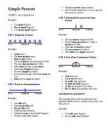
You have been walking. I have run. I have been running. Past Perfect You had walked. You had been walking. I had run. I had been running. Future Perfect You will have walked You will have been walking. I will have run. I will have been running. The Simple Present Tense Expresses a habit or often repeated action. Adverbs of frequency such as, often, seldom, sometimes, never, etc. are used with this tense. She goes to work everyday. They always eat lunch together. On your handout, write one sentence that reflects SIMPLE PRESENT: something you do often, sometimes, never, seldom The Simple Present Tense This tense also expresses general truths or facts that are timeless. Snow falls in the December in Minnesota. Water boils at 100 degrees Celsius. The Present Continuous
Copyright ©2007 by Saddleback Educational Publishing. All rights reserved. No part of this book may be reproduced in any form or by any means, electronic or mechanical, including photocopying, recording, or by any information storage and retrieval system, without the written permission of the publisher. ISBN 1-59905-201-6 Printed in the United States of America 13 12 11 10 09 08 07 9 8 7 6 5 4 3 2 1 Introduction Grammar is a very old field of study. Did you know that the sentence was first divided into subject and verb by Plato, the famed philosopher from ancient Greece? That was about 2,400 years ago! Ever since then, students all over the world have found it worthwhile to study the structure of words and sentences. Why? Because skill in speaking and writing is the hallmark of all educated people. Lesson by lesson, this book provides basic instruction in the eight parts of speech--nouns, pronouns, verbs,
· When does class begin tomorrow? · I play tennis. · She does not play tennis. USE 4 Now (Non-Continuous Verbs) · Does he play tennis? · The train leaves every morning at 8 AM. · The train does not leave at 9 AM. · When does the train usually leave? · She always forgets her purse. · He never forgets his wallet. Examples: · Every twelve months, the Earth circles the Sun. · I am here now. · Does the Sun circle the Earth? · She is not here now. · He needs help right now. USE 2 Facts or Generalizations · He does not need help now.
Some people are interested, but the majority don't care. (NOT ... but the majority doesn't care.) The majority of these people are very poor. (NOT The majority of these people is very poor.) 23. Use too much/many before (adjective +) noun; use too before an adjective with no noun. There's too much noise. I bought too much red paint. Those shoes are too expensive. (NOT Those shoes are too much expensive.) 24. Use that, not what, after all. I've told you all that I know. (NOT I've told you all what I know.) He gave her all that he had. 25. Don't say according to me to give your opinion. I think it's a good film. (NOT According to me, it's a good film.) In my opinion, you're making a serious mistake. (NOT According to me, you're making a serious mistake.) 26. Don't ask about possibilities with May you ...? etc. Do you think you'll go camping this summer? (NOT May you go camping this summer?) Is Joan likely to be here tomorrow? (NOT May Joan be here tomorrow?)
Kordamine inglise keele eksamiks A 1.1 Read the text and answer the questions below. Dear Mary-Alice, It's been ages since I last wrote to you, isn't it weird? Yes, so it is, but, I do have a certain reason. Do you remember Sir Thom of the Minquettes'? That fine young man with fascinating blue eyes... Oh, my sweet Mary, you will never guess what happened yesterday! It was about seven o'clock in the evening when Lillian called me out for a walk you know I can't say `no' to my little sis. Anyway we went to the forest near the Swan Lake and, believe it or not, got lost! Awful! I was so scared... We walked and walked, not even knowing the direction we were heading to, until we reached a huge mansion. And the garden around it was so extraordinary... That is something you just must see! But neither the trees nor flowers could be as wonderful as the owner himself! Sir Thom treated us tea and sandwiches, not
Sylvia Day Bared to You Sylvia Day Bared to You The first book in the Crossfire series, 2012 This one is for Dr. David Allen Goodwin. My love and gratitude are boundless. Thank you, Dave. You saved my life. Acknowledgments My deepest gratitude to my editor, Hilary Sares, who really dug into this story and made me work for it. Basically, she kicked my ass. By not pulling her punches or letting me shortchange the
6 widely time. 5 Personality-wise, I take after my 7 resolutely / staunchly mum. 8 strictly 5 unaffected inappropriate 9 gravely immobile disapproval 4 1 never used to irresponsible illogical 2 always used to 2 A France B USA C USA 6 1 self-employed 4 supersensitive 3 used to 3 1 A 2 C 3 C 4 A 5 B 2 undercooked 5 co-starred 4 would help / helped 6 C 7 B 8 A 9 C 10 A 3 anticlockwise 6 misheard 5 didn't use to 11 A 12 B
Ex. 3 p. 31 a. When she was 15. Emma's behavior got worse. b. It's very hard for them it they have suddely leave and live out in the world on their own. c. Caroline was a real friend. d. She has friends, a boyfriend and a busy social life. e. I have to treat her like an adult and give her space. Ex. 4 1. Emma was unhappy. She was smoking and drinking. She kept missing school and getting terrible fights. She stayed out at night, wen clubs, often got into trouble with the police and even started taking drugs. 2. Caroline was fostered a lot of teenagers before. Caroline is kind and caring for Emma. She helped Emma to see that how important it was to go to school and live her life. 3. Emma decided to stay on at school, and worked hard for her exams. Emma was extremely lucky. Caroline want Emma to stay with them. Emma eas changes. She has a boyfriend and goes to university.
Noah and Oliver went down to get breakfast with Charlotte. Mr. and Mrs. Sowerberry during their own breakfast decide that because Oliver was such a nice looking, though melancholy, boy, he should be a made a mute. Later in the morning, Mr. Bumble comes with news of a woman who has died and needs a coffin. Mr. Sowerberry takes Oliver to the home of the dead woman, and Oliver sees what the profession that Mr. Sowerberry and the state chose for him was. He attends his first funeral and burial and decides that he does not like it, but Mr. Sowerberry tells him that he will get used to it in time. Chapter 6: Noah took a joy in making Oliver cry, and one day in attempt to do so, asked Oliver about his mother. Since his mother was a very sensitive subject to him, Oliver became upset. Noah continued to taunt him and insult his mother until Oliver snapped and attacked Noah. Noah surprised screamed and called out to Charlotte and Mrs. Sowerberry
Tower, the Simpsons A – AN - THE Time Expressions • we don't use an article: at night, at noon, every We don't usually use an article week, every day, every night, last morning, last • to talk about things in general. • before the names of countries, cities, towns and villages. week, all night, all day, tomorrow, yesterday,... • with plural nouns and uncountable nouns when talking about them • use the with in the morning, in the afternoon, generally
BOOK REPORT Title of the book: The Catcher in the Rye Author: Jerome David Salinger (January 1, 1919 January 27, 2010) was an American writer who died at the age of 91. He was married three times and has two children. Some of his most notable works are The Catcher in the Rye, Nine Stories and Franny and Zooey. The Catcher in the Rye is by far the most famous and most critiqued book of his, selling over 250,000 copies every year. In total the book has sold over 65 million copies worldwide. The success of The Catcher in the Rye led to public attention: Salinger became reclusive, publishing new work less frequently. Analysis of the book 1. Setting The story starts in the year 1950 when the novel's protagonist and narrator Holden starts telling a story from a hospital about the events of last year's winter. Most of the
Words that ADD information · also · and · another · besides first, second, third, ... · furthermore · in addition · moreover The little girl put on her yellow shirt and brown overalls. Chris is on the basketball team this semester at Indiana School for the Deaf. In addition, he is on the soccer team. We will be here for one more week so we can finish up our work. Another reason we are staying longer is because we do not want to miss the Deaf Way conference. First of all, pour a half-cup of milk in the bowl; second, add two eggs; and third, stir the mixture. I admire I. King Jordan because he is the first deaf president of Gallaudet. Besides that, I admire him because he is a great long distance runner. Furthermore, he is a dedicated family man. All in all, there ís not much to dislike about the man, except he is too perfect!
FUTURE SIMPLE BE GOING TO Will + infinitive (will go) Am/is/are going to + infinitive (is going to rain) 1.A decision at the moment of 1.Future plans made before the speaking: moment of speaking: A: 'I'm cold'. A: 'We've run out of milk.' B: 'I'll close the window'. B: 'I know, I'm going to buy some.' 2.Prediction based on opinion: 2.Prediction based on present I think the Conservatives will win the evidence: next election. Look at those boys playing football! 3.A future fact: They're going to break the window. He will be ten next year. 4.Promises / requests / refusal / willingness: I'll help you with your homework. Will you give me a hand? 5.In the same way as the future
but shy aristocratic landowner who, unlike his Moscow friends, chooses to live in the country on his large estate. He discovers that Kitty is also being pursued by Count Alexei Kirillovich Vronsky, an army officer. At the railway station to meet Anna, Stiva bumps into Vronsky. Vronsky is there to meet his mother. It surmises that Anna and the Countess Vronskaya have travelled together in the same carriage and talked together. As the family members are reunited, and Vronsky sees Anna for the first time, a railway worker accidentally falls in front of a train and is killed. Anna interprets this as an "evil omen." Vronsky is infatuated with Anna. Anna, who is uneasy about leaving her young son, Seryozha, alone for the first time, talks openly and emotionally to Dolly about Stiva's affair and convinces Dolly that her husband still loves her, despite his infidelity. Dolly is moved by Anna's speeches and decides to forgive Stiva
.................................................... 8 Prepositional Phrases ......................................................................................... 8 Prepositions of Time – in, on & at • in is used with centuries, decades, years, seasons and months, parts of the day, periods of time • on is used with dates, special days, days of week, day of week + part of day, day + of ... • at is used with holidays, exact time, meals and with night in on at • the 20th century • the 29th of November • Christmas / Easter • the Middle ages /August the first • six o’clock / 7.30 • the 1980s • Christmas Day / New • midday / noon / • 2006 Year’s Eve / Easter midnight • winter / summer Sunday • the weekend /
.......dark hair. He ........in his late twenties. He........married and........two sons. I........short, but my sister........tall. We........a dog and a cat. Our uncle........two dogs. They........brown. 2. Choose the correct item. ( 5 points ) e.g. The residents were made...D....their homes by the authorities. A leave B leaving C left D to leave 1) Ann is my best friend! We........each other for years A know B knew C knows D have known 2) Nicky........to San Francisco when the accident happened. A flies B has flown C was flying D has been flying 3) Why don`t you let her........her story? A finish B to finish C finishing D have finished 4) Tim........in a cafe at present, but he has already applied for a new job A work B have worked C is working D worked 5) My father...
he does he goes he misses he watches he mixes · Verbid, mis lõpevad yga, mille ees on konsonant, muudavad y iks enne es lisamist. fly he flies carry he carries Võrdle: say he says Lihtolevik väljendab: · Antud momendil toimuvat tegevust, mis ei väljenda kestvat aega, näiteks see, hear, know. I see that man who you are pointing at. · Üldist, kogu aeg toimuvat või korduvat tegevust, pole oluline, kas tegevus toimub rääkimise hetkel. Teachers teach in schools. He usually goes to gym on Monday. · Tegevust mingil ajal. I go to school at 8 o´clock. You have to pay taxes once a month. · Kõigile tuntud fakte. Life passes by quickly. Present Continuous Kestva oleviku moodustamine
2. Present Simple [VERB] + s/es in third person. Tegevus on korduv või tavapärane. You speak English. I play tennis. Cats like milk. The train leaves tonight at 6 PM. I am here now. Active= Once a week, Tom cleans the car. Passive= Once a week, the car is cleaned by Tom. 3. Present Continuous [am/is/are + present participle]. Tegevus toimub/ei toimu praegusel hetkel. You are watching TV. You are learning English now. I am studying to become a doctor. I am meeting some friends after work. Active= Right now, Tom is writing the letter. Passive= Right now, the letter is being written by Tom. 4. Past Simple [VERB+ed] or irregular verbs. Tegevus algas/lõppes minevikus täpsel ajal. . You called Debbie. I saw a movie yesterday. I finished work, walked to the beach, and found a nice place to swim. I lived in Brazil for two years. I studied French when I was a child. Active = Tom repaired the car. Passive= The car was repaired by Tom. 5
icon,[4] pop icon and sex symbol. She is known for her comedic acting roles and screen presence. Monroe became one of the most popular movie stars of the 1950s and early 1960s. During the later stages of her career, she worked towards serious roles and her fame surpassed that of many entertainers of her time.[5] Her death at thirty six was classified as "probable suicide."[6] Many individuals including Jack Clemmons, the first LAPD Police officer to arrive at the death scene[7] believed that she was murdered.[8] She is the only female on the Forbes top earning dead celebrities list.[9] Contents 1 Childhood 1.1 Family and early life 1.2 Foster homes 2 Career 2.1 Early years 2.2 Stardom 2.2.1 Playboy playmate 2.2.2 A-list actress 2.2.3 Marilyn Monroe Productions 2.3 Later years 3 Marriages and relationships 3.1 James Dougherty 3.2 Joe DiMaggio 3.3 Arthur Miller 4 The Kennedys 5 Death and aftermath 5
Some of them ... (1 do) great things in sport. Lisa ... (2 win) nine swimming competitions since she was 13. John ... (3 be) the school's top runner for the last two years. Next spring he ... (4 run) the London Marathon. But my friend Kelly is the best. She ... (5 start) skating when she was four. She ... (6 have) the best results and she ... (7 win) lots of prizes. She ... even ... (8 be) on TV. Kelly ... (9 break) her arm twice while doing a jump on the ice, but she's OK now. Last year she ... (10 travel) to Canada to practise in a training camp. I'm sure sometime in the future she ... (11 win) an Olympic medal. By that time, I ... (12 be) a famous author and she ... (13 ask) me to write a book about her way to the top. That's why I ... (14 start) taking notes of her and my other classmates' results. 3. Complete the exercise with the verbs in the past simple, the past continuous, or the past perfect tense. Do you remember? I went I was / we were going I had gone
H-Helen, J - Julia 1.Receiving a money order H: - Hello, I would like to cash a money order. J: - Hello! You should present your identity card. H: - But, you know, I'd like to receive money order for my sister. How do I go about it? J: - Your identity card and letter of attorney, please. H: - Here you are. J: - Well...Unfortunately, I can't cash your money order your signature is not witnessed. H: - Ok. Than, please, I'd like to cash my money order. J: - Take this form and fill it in. May I see your passport? H: - Yes. Please. So...Should I write my full name, my passport number and the sum of money that has been sent to me, right? J: - Certainly
............................6 Word Order in General Questions.........................................................7 Word Order in Special Questions ..........................................................8 Word Order in Subject Questions ..........................................................9 Types of Sentences There are four basic types of sentences in English. AFFIRMATIVE and NEGATIVE sentences both end with a full stop ( ) : . I live in Tallinn. I do not live in Tallinn. I never watch soap operas. INTERROGATIVE sentences end with a question mark ( ? ) : Do you live in Tallinn? Why do you never watch soap operas? EXCLAMATORY and IMPERATIVE sentences end with an exclamation mark ( ! ) : What a beautiful day! Do your homework at once! Parts of the Sentence The basic parts of the sentence are: THE SUBJECT (WHO? WHAT?) , THE PREDICATE (does, is doing, has done, etc – action/statement), THE OBJECT (WHO/WHAT is the action/statement directed at?) :
Lamb to the Slaughter by Roald Dahl (1916-1990) The room was warm and clean, the curtains drawn, the two table lamps alight - hers and the one by the empty chair opposite. On the sideboard behind her, two tall glasses, soda water, whiskey. Fresh ice cubes in the Thermos bucket. Mary Maloney was waiting for her husband to come him (correction: home) from work. Now and again she would glance up at the clock, but without anxiety, merely to please herself with the thought that each minute gone by made it nearer the time when he would come. There was a slow smiling air about her, and about everything she did. The drop of a head as she bent over her sewing was curiously tranquil. Her skin - for this was her sixth month with child - had acquired a wonderful translucent quality, the mouth was soft, and the eyes, with their new placid look, seemed
Fill in IN, ON, AT: 1. Dave was born in September. 2. He was born on the 16th of May 3. We agreed to meet at half past four. 4. On Christmas we all went to see our grandmother. 5. Jennifer came to England in 1992. 6. It started to snow on New Year's Day. 7. The First World War ended in 1918. 8. She arrived in spring. 9. We met on Sunday afternoon last week. 10. Do you drive at night? 11. It's Bruce's birthday next Wednesday. 12. Dick and Mary got married in 1993 on the 10th of July. 13. At midnight we heard footsteps. 14. In the morning we went to school as usual. 15. This castle was built in the 15th century. 16. My brother is taking his driving test at 2 o'clock on the 4th of October. 17. Mr Froster doesn't go to office on Saturdays. 18. We'll see Ken tomorrow evening. 19. It happened last week. 20. Can you come to see me on Friday morning?
bought in advance. had to be bought in advance. may might I may call you. He said (that) he might call me. NOTE: modal verbs could, would, might and should do not change. Changes in reported speech now then /at that time /immediately at that moment today / tonight that day /that night here there this / these that / those tomorrow the following day /the next day the day after next week the following week /the next week the week after yesterday the previous day /the day before last week the previous week /the week before (a year) ago (a year) before /earlier the day before yesterday two days before /earlier
He speaks Australian English. 8 Eve lives in Ireland. She speaks English and Irish. 3 Write the sentences in reported speech. 1 Martin said, "We´re going on a class trip tomorrow." Martin said they were going on a class trip the next day. 2 Mary said to us, "I bought a book on big cats yesterday." Mary told us she had bought a book on big cats the day before. 3 Ben said to Brian, "You can wait for me here." Ben told Brian he could wait for him there. 4 Dad said, "I´ll finish work early today." Dad said he would finish work early that day. 5 My sister said to me, "This dress looks good on you." My sister told me that dress looked good on me. 6 Simon said, "I was in Springfield last week." Simon said he had been in Springfield the week before. 4 Complete the sentences. Use the word on the right to from a suitable noun or adjective. 1 Are there many immigrants in Finldand? IMMIGRATE
You do the opposite of my instructions; You've no respect for anything; each one Must have his say; it's perfect pandemonium. DORINE If . . . MADAME PERNELLE You're a servant wench, my girl, and much Too full of gab, and too impertinent And free with your advice on all occasions. DAMIS But . . . MADAME PERNELLE You're a fool, my boy--f, o, o, l Just spells your name. Let grandma tell you that I've said a hundred times to my poor son, Your father, that you'd never come to good Or give him anything but plague and torment. MARIANE I think . . . MADAME PERNELLE O dearie me, his little sister! You're all demureness, butter wouldn't melt In your mouth, one would think to look at you. Still waters, though, they say . . . you know the proverb; And I don't like your doings on the sly. ELMIRE But, mother . . . MADAME PERNELLE Daughter, by your leave, your conduct In everything is altogether wrong; You ought to set a good example for 'em;
TENSES. ACTIVE VOICE. 1. Present Simple (üldolevik) I (he, she, it s) he works Eitav,küsiv do (I, you, we, they) he does not work does (he, she, it) does he work? Verbidele, mis lõpevad infinitiivis ss, -sh, -ch, -x või o, lisatakse ainsuse 3. pöördes es he touches, she goes Verbidel, mis lõpevad y-ga, mille ees on konsonant, muutub y->ies carry - he carries Vrdl: play he plays 1. Harjumuspärane, korduv tegevus või seisund olevikus. Tom drinks tea every day. He lives in Brussels. 2. Üldtuntud tõed, loodusseadused The earth goes round the sun. 3. Tulevikus toimuv tegevus
 annaabi.ee