Leidsid 33 sarnast õppematerjali, mis on seotud failiga "Food-Restaurants and Cooking". Need materjalid aitavad sul teemat sügavamalt mõista.
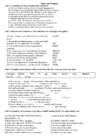
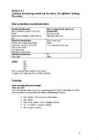
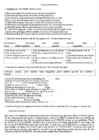
cook, task, them, dish, wait, suitable, please, restaurant, plate, fish, meat, course, boil, electric, recipe, spoon, keep, serve, vegetable, complete, away, makes, mean, eating, here, soft, cream, wash, electrical, appliance, phrase, could, salad, crude, ending, once, ready, dishes, there, warm, coffee, prefer, meal, finish, lunch, really, room, boughtShops and Shopping Task 1. Underline the most suitable word or phrase. a) That new clothes shop has a lot of very good bargains/sales. b) On Saturday morning the High Street is full of customers/shoppers. c) It costs £9, so give her £10, and she'll give you £1 change/rest. d) I don't go to that supermarket because it's a bit priced/pricey. e) You cannot return goods without the original recipe/receipt. f) Supasoft Soaps are for sale/on sale here. g) A carrier bag is free with each buyer/purchase over £10.
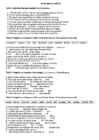
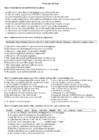
Alice, Tom, James, Kim, Snow White 4Use a capital letter for the names of places: National Museum, Bronx Zoo, London, Sacramento 4Use a capital letter for festivals, holidays, days of the week, months of the year: New Year's Day, Christmas, Labor Day, Mother's Day, Sunday, Monday, Friday, January, May, July, October Exercise 1 Circle the letters that should be CAPITALS. Then write the correct letter in the space above them. 1 peter and i are good friends. we are going to chicago during our summer 2 vacation. 3 there is an interesting football game on sunday. 4 jason lives on thomson avenue. 5 january is the first month of the year. Exercise 2 Look at the signs on the left. Can you find the mistakes? Write the names correctly. hopkins hotel lincoln school orchard street newton road botanic gardens national library shea stadium
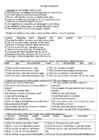
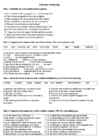
in brackets. _ 1 She is in a band and she _________________________________ (record) a CD at the moment. _ 2 She is an actress and often _________________________________ (appear) on television. _ 3 At the moment she _________________________________ (have) a rest because she is tired. _ 4 Mike is a doctor and he _________________________________ (live) in Manchester. _ 5 I _________________________________ (start) work at 8.30 every morning. _ 6 He is a good cook but she _________________________________ (prefer) to eat out. _ 7 English tests _________________________________ (get) more and more interesting. _ 8 They _________________________________ (have) a party because it's her birthday. _ 9 I sometimes _________________________________ (ride) my bicycle to school. 10_ She usually _________________________________ (go) to the gym on Friday evenings.
Entertainment and Art Task 1. Underline the most suitable word or phrase. a) I like this book, and I've read six capitals/chapters/prefaces already. b) It's not a proper drawing, only a rough/plan/sketch. c) The play is very long but there are three breaks/intervals/rests. d) At the cinema I don't like sitting too near the film/screen/stage. e) We heard a piece by Mozart performed by a German band/group/orchestra. f) Her second book was very popular and became a best buy/seller/volume.
l just got your invitation to the company's event. l `m afraid I can't make it because I've a/ready made plans which l can "t change ... 3. Dear Sirs, I am writing to complain about the poor quality of the items which I received from your company. I have no other alternative but to cancel the order which 1 placed earlier this week ... 4. ... thus, I recommend that you accept this advice on the matter. I am pure that the suggestion offered is the best solution. Please let me know if this was helpful. Yours sincerely, Lee Jones 5. ... I would appreciate a reply at your earliest convenience. I look forward to meeting you to discuss employment opportunities. Yours faithfully, Nicole Porter Paragraph Plan for Letters · salutation · Paragraph 1 reasons for writing · Paragraphs 2, 3 development · Final paragraph closing remarks · Name
Feelings and Opinions 1. Underline the most suitable word or phrase. a) When Dick saw his neighbour kick his dog he became angry/nervous. b) Sue wasn't really interested/interesting in the film. c) We were both afraid/anxious that we would miss the plane. d) I wish you wouldn't snap your fingers. It's very annoying/worrying. e) You're not scared/thrilled of spiders, are you? f) If we forget to do our homework, our teacher gets cross/terrifying. g) Tim completely lost his temper! He was absolutely furious/upset.
8 I (like) the weekends. 9 Mario (play) football twice a week. 10 They (eat out) on Sundays. 2. Exercises: put the correct tense (simple present or present continuous) 1 We (always start) at nine. 2 I (think) he's away. 3 She (usually stay) with Barbie when we go to Chicago. 4 While the butter (melt), you (take) three eggs and (break) them into a bowl. 5 Scientists (believe) the weather (change). 6 I (not see) what the problem is. 7 Why (you look) at me like that. 8 Now I (understand) what she (want). 5 3. Exercise: Read what Sharon says about a typical working day and write what she did or didn't do yesterday: I usually get up at 7.30 and have a big breakfast
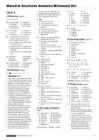
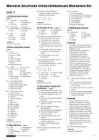
4 eye-catching 6 over 12 why 3 1 been seeing 5 opening 4 1 Because the planes they were 2 have gone 6 shoe-string flying had faulty parts which 3 looked 7 heart-throb caused them to crash. 4 forgotten 8 blockbusters 2 He says he did it for his family 5 was taking Challenge! Students' own answers and for Chris's future. 6 been waiting, forgotten 3 Because although the pilots are prepared to give their lives in 4 There was once a wolf who used to 2B What's on the box
Education and learning Task 1. Underline the most suitable word or phrase. a) Jack decided to take a course/lesson in hotel management. b) Sheila always got good marks/points in algebra. c) After leaving school, Ann studied/trained as a teacher. d) Peter decided not to go in/enter for the examination. e) My sister learned/taught me how to draw. f) I can't come to the cinema. I have to read/study for a test. g) In history we had to learn a lot of dates by hand/heart. h) I hope your work will improve by the end of course/term.
Ferriss, Timothy. The 4-hour body / Timothy Ferriss. -- 1st ed. Includes bibliographical references and index. 1. Health. 2. Physical fitness. 3. Weight loss. I. Title. II. Title: Four-hour body. RA775.F47 2010 613.7--dc22 2010018533 eISBN: 978-0-307-46365-4 All illustrations by Fred Haynes/Hadel Studio, unless otherwise noted in the Photo and Illustration Credits section Jacket front-flap photos: (top) (c) Mark Reifkind; (bottom) (c) Photos taken by Inge Cook, provided courtesy of Ellington Darden, PhD v3.1 For my parents, who taught a little hellion that marching to a different drummer was a good thing. I love you both and owe you everything. Mom, sorry about all the crazy experiments. Support good science-- 10% of all author royalties are donated to cure-driven research, including the excellent work of St. Jude Children's Research Hospital. LIST OF ILLUSTRATIONS GROUND ZERO--GETTING STARTED AND SWARAJ
People and Behaviour 1. Underline the most suitable word or phrase. a) Please don't push. It's very bad-tempered/rude/unsympathetic. b) Jack hates spending money. He's rather frank/greedy/mean. c) Our teacher is very proud/strict/tolerant and won't let us talk in class. d) Helen never does her homework. She is rather gentle/lazy'/reliable. e) I didn't talk to anyone at the party because I felt ambitious/lonely/shy. f) When Harry saw his girlfriend dancing with Paul he felt jealous/selfish/sentimental. g) I don't like people who are noisy and aggressive/courageous/sociable
Crime and the Law Task 1. Underline the most suitable word or phrase. a) Sally didn't realise that she had broken/countered/denied the law. b) The police have banned/cancelled/refused parking in this street. c) I must remember to get a/an agreement/licence/permission for my television. d) The president admitted that there had been a breakdown of law and crime/government/order. e) Jim's parents wouldn't agree/allow/let him go to the demonstration. f) Jake was arrested because he had entered the country falsely/illegally/wrongly.
I wish we are / had been / would be / could be together always! g) I'm sorry I missed your birthday party. I really wish I come / came / had come / would come. h) I like my new boss but I wish she gave / would give / could give me some more responsibility. i) Having a lovely time in Brighton. I wish you are / were / had been here. j) This car was a complete waste of money. If only I didn't buy /hadn't bought it. 2.- 3.- 4.- Choose the most suitable verb form in each sentence. a) A cheque is all right, but I'd rather you pay / paid me cash. b) Imagine you live / lived in New York. How would you feel? c) If only I have / had / would have a screwdriver with me. d) If you want to catch the last train, it's time you leave / left. e) I'd rather you don't / didn't tell anyone about our conversation. f) I've got a terrible headache. If only I didn't drink / hadn't drunk that wine.
6 have/'ve known interested and it looks as though shipwrecked three times. 7 walked they are working hard. Most of She was lucky because she survived 8 have you phoned them are looking at the experiment each of the three disasters. 2 1 written 8 was trying and working together. They are 4 1 D 3 F 5 G all wearing uniform it's quite an 2 been meaning 9 came
Health and the body 1) Underline the most suitable word or phrase. a) There were ten people waiting in the doctor's office/surgery/ward. b) After I ate the shellfish, I experienced/fell/happened ill. c) George's cut arm took over a week to cure/heal/look after. d) David fell down the steps and twisted his ankle/heel/toe. e) Everyone admired Lucy because she was tall and skinny/slim/thin. f) I've been digging the garden and now my back aches/pains/injuries. g) Whenever I travel by boat I start feeling hurt/sick/sore.
butter? Why drown spring lamb in wine or cream and spices, when with just one or two herbs it is absolutely delicious? If you ask foreigners to name some typically English dishes, they will probably say "Fish and chips" then stop. It is disappointing, but true that, there is no tradition in England of eating in restaurants, because the food doesn't lend itself to such preparation. English cooking is found at home. So it is difficult to a good English restaurant with a reasonable prices. In most cities in Britain you'll find Indian, Chinese, French and Italian restaurants. In London you'll also find Indonesian, Mexican, Greek... Cynics will say that this is because English have no "cuisine" themselves, but this is not quite the true. Vocabulary: to criticize - tasteless overcooked - ingredient - to invent - sauces - to disguise - spice herb - delicious - disappointing - to lend cuisine British Youth (2)
Among the middle class throughout India, spoons and forks are commonplace. · Hot food is served on banana leaves, the leaves add aroma and taste to the food. Eating habits: · The breaksfast is most importing. They generally prefer to drink tea or coffee with the first meal of the day. North Indian people prefer curd. Western India prefer milk. · Lunch in India usually consists of a main dish of rice. It typically includes two or three kinds of vegetables. Curd and two or three sweets are also included in the main course. · Indian families will gather for evening to talk, drink tea, and eat snacks. Dinner is considered the main meal of the day, and the whole family gathers for the occasion. · Over the years, Indians have used a vast range of different vegetables like spinach,
3 Antiquity The first known Italian food writer was a Greek Sicilian named Archestratus from Syracuse in the 4th century BCE. He wrote a poem that spoke of using "top quality and seasonal" ingredients. He said that flavors should not be masked by spices, herbs or other seasonings. He placed importance on simple preparation of fish. This style seemed to be forgotten during the 1st century CE when De re coquinaria was published with 470 recipes calling for heavy use of spices and herbs. The Romans employed Greek bakers to produce breads and imported cheeses from Sicily as the Sicilians had a reputation as the best cheese makers. The Romans reared goats for butchering, and grew artichokes and leeks. Middle Ages With culinary traditions from Rome and Athens, a cuisine developed in Sicily that some consider
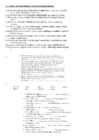
(NOT ... an own phone line.) 2. Use or rather to correct yourself. She's German or rather, Austrian. (NOT She's German or better, Austrian.) I'll see you on Friday or rather, Saturday. 3. Use the simple present play(s), rain(s) etc to talk about habits and repeated actions. I play tennis every Saturday. (NOT I am playing tennis every Saturday.) It usually rains a lot in November. 4. Use will ..., not the present, for offers and promises. I'll cook you supper this evening. (NOT I cook you supper this evening.) I promise I'll phone you tomorrow. (NOT I promise I phone you tomorrow.) 5. Don't drop prepositions with passive verbs. I don't like to be shouted at. (NOT I don't like to be shouted.) This needs to be thought about some more. (NOT This needs to be thought some more.) 6. Don't use a present tense after It's time. It's time you went home. (NOT It's time you go home.) It's time we invited Bill and Sonia
such an extent into the traditional diet that it is often assumed to be an indigenous plant. Popular foods in modern South Africa are chicken, limes, garlic, ginger, chili, tomatoes, onions and many spices. Settler cookery South Africa was settled from the seventeenth century by colonists from the Netherlands, Germany and France, and later by arrivals from the British Isles. These colonists brought European cookery styles with them. Cape Dutch Traditional cookery of South Africa is often refered to as "Cape Dutch". This cuisine is characterized by the use of spices such as nutmeg, allspice and hot peppers. The Cape Dutch cookery style owes at least as much to the cookery of the slaves brought by the Dutch East India Company to the Cape from Bengal, Java and Malaysia as it does to the European styles of cookery imported by settlers, and this is reflected in the
put in afterwards. What did the mother ghost tell the baby ghost when he ate too fast? Stop goblin your food. What do you get when you put three ducks in a box? A box of quackers. Why couldn't the sesame seed leave the gambling casino? Because he was on a roll. Why did the student eat his homework? The teacher told him it was a piece of cake. What did the hungry computer eat? Chips, one byte at a time. Why do fish avoid the computer? So they don't get caught in the Internet. What did the cannibal order for take-out? Pizza with everyone on it. How can you tell if an elephant has been in your refrigerator? Footprints in the cheesecake. I trained my dog not to beg at the table. How did you do that? I let him taste my cooking. What's in an astronaut's favorite sandwich? Launch meat. What do cats call mice on skateboards? "Meals on Wheels." Why do you eat so fast?
Language: a systematic, conventional use of sounds, signs or written symbols in a human society for communication and self-expression. - human language at all levels is rule- or principle-governed. Linguistics: the scientific study of human natural language Synchronic approach to language: Diachronic approach to language: Linguistic competence: Linguistic performance: What is grammar?: "The sounds and sound patterns, the basic units of meaning, such as words, and the rules to combine them to form new sentences constitute the grammar of a language" Prescriptive grammar vs. Descriptive garmmar: Descriptive grammar: the systematic study and description of a language. Descriptive grammar refers to the structure of a language as it is actually used by speakers and writers. Prescriptive grammar: a set of rules and examples dealing with the syntax and word structures of a language, usually intended as an aid to the learning of that language. Prescriptive grammar refers
Problems 1 Underline the most suitable word or phrase. a) Many people were injured when the building demolished/collapsed. b) The ship radioed to say that it was in difficulties/dangers. c) The government has announced plans to help the poor/poverty. d) There was a large demonstration/manifestation against nuclear power in Manchester yesterday. e) Everyone agrees that the environment/nature must be protected. f) There has been another increase/rising in the level of crime.
The Cold Table Flounder The first course in traditional Estonian cuisine is based on cold dishes - a selection of meats and sausages served with potato salad or Rosolje, an Estonian signature dishes based on beetroot, meat and herring . Small pastries called pirukad ("pirukas" in the singular) - a relative of the pirozhki - filled with meat, cabbage, carrots, rice and other fillings or mixtures are also popular, and are often served with bouillon. Herring is common among other fish as a part of the Estonian Cold Table. Smoked or marinated eel, crayfish dishes and imported crabs and shrimps are considered delicacies. One of Estonia's national dishes is räim (Baltic dwarf herring), along with sprats. Flounder, perch and pike-perch are also popular. Soups Soups are traditionally eaten before the main course and most often are made of meat or chicken stock mixed with a variety of vegetables. Soups are also blended with sour cream, milk and yogurt. The Main Course
Lamb to the Slaughter by Roald Dahl (1916-1990) The room was warm and clean, the curtains drawn, the two table lamps alight - hers and the one by the empty chair opposite. On the sideboard behind her, two tall glasses, soda water, whiskey. Fresh ice cubes in the Thermos bucket. Mary Maloney was waiting for her husband to come him (correction: home) from work. Now and again she would glance up at the clock, but without anxiety, merely to please herself with the thought that each minute gone by made it nearer the time when he would come. There was a slow smiling air about her, and about everything she did. The drop of a head as she bent over her sewing was curiously tranquil. Her skin - for this was her sixth month with child - had acquired a wonderful translucent quality, the mouth was soft, and the eyes, with their new placid look, seemed larger darker than before
After more than fifty years of television, it might seem only too obvious to conclude that it is (1) ....... to stay. There have been many objections to it during this time, of course, and on a variety of grounds. Did it cause eye- strain? Was the screen bombarding us with radioactivity? Did the advertisements contain subliminal (2)….. , persuading us to buy more or vote Republican? Did children turn to violence through watching it, either because so many programmes taught them how to shoot, rob, and kill, or because they had to do something to (3) ….. the hours they had spent (4) ….. to the tiny screen? Or did it simply create a vast passive audience, drugged by glamorous serials and inane situation comedies? On the other hand, did it increase anxiety by (5) ….. the news and (6) ….. our living rooms with war, famine and political unrest? 1) A around B there C ready D here
"This exceptional text fulfils two essential criteria of a good introduc- tory textbook in the philosophy of language: it covers a broad range of topics well, all of which are the basis of current active research, and does so in an accurate manner accessible to undergraduate students." Mike Harnish, University of Arizona ". . . an excellent textbook for teaching. The examples throughout are delightful and students will love them." Edwin Mares, Victoria University of Wellington William G. Lycan is William Rand Kenan Professor of Philosophy at the University of North Carolina. He is the author of over 150 articles as well as seven books. Routledge Contemporary Introductions to Philosophy Series Editor: Paul K. Moser Loyola University of Chicago This innovative, well-structured series is for students who have already done an introductory course in philosophy
abiks.pri.ee 46. Have you ever written a poem? When? What was it about? 47. Can you say a poem in English? 48. What books have you read lately? 49. When did you learn to read? Was it easy or difficult for you? 50. How much time do you spend on reading? Do you think it is enough? 51. Do you have a favourite book? / author? Why? Why not? 52. How do you choose a book to read? 53. Do you prefer to have books of your own or to borrow them from the library? 54. Do you think people will read more or fewer books in 20 years' time? Why? Male choir Meeskoor Female choir Naiskoor Children´s choir Lastekoor Boys´choir Poistekoor Mixed choir Segakoor Classical music Klassikaline muusika Folk music Rahvamuusika Rock music Rock muusika
ads and the subliminal presentation o Twice as many Reader's Reports- first-person accounts in which readers of odors. of previous editions describe how e Increased coverage of how compliance they've seen a principle work on principles work in other cultures. or for them. Reader's Reports have New insights are derived from the become the most popular feature of research findings, sayings, and customs the book. Boston. New York • San Francisco Mexico City • Montreal • Toronto • London • Madrid • Munich • Paris Hong Kong • Singapore • Tokyo • Cape Town • Sydney Acquisitions Editor: Michelle Limoges Editorial Assistant: Christina Manfroni Executive Marketing Manager: Wendy Gordon
or word lists on any TOEFL tests that you may have. TOEFL tests can be found in the TOEFL test kits available from the Educational Testing Service. LEARN THE WORDS IN THIS BOOK Include all of the words listed in this book on your cards and lists. These words have been carefully selected, and many will appear on the TOEFL. Pay special attention to the list of 450 words in Chapter 6. You should learn prefixes, suffixes, and word roots, For a list of them, see Chapter 4. Suggestions for studying word roots, suffixes, and pre-fixes can be found in that chapter. LEARN TO USE A THESAURUS Become familiar with a thesaurus. A thesaurus is a dictionary of synonyms. When you find a word that you don't know, look it up in the thesaurus. Note a synonym for the word on a card or a word list. If you find a synonym but still don't know the meaning of the word, look it up in an English language dictionary
# # C Gsus4 # And my eyes still grow damp to remember # # C # His Majesty signed with his own rubber stamp # # C G C # It was dark all around, there was frost on the ground # # G # When the Tigers broke free # # C # And no-one survived from the Royal Fusiliers, Company "C" # # G C G C # They were all left behind, most of them dead - the rest of them dying # # C G C # And that's how the high command took my daddy from me # # # In The Flesh ? # -- --- ----- - # # A D/A A D/A A Bm C#m E # # A D # So ya thought ya might like to go to the show # # A # To feel the warm thrill of confusion # # D # That space cadet glow # # A # Tell me is something eluding you sunshine? # # Bm E7
.. (lie) on the sofa when an ambulance stopped in front of the house. 8 I ... (give) this report from inside the school radio studio. Right now, the two teams ... (take) their places on the football field. 9 Mrs Watson ... (make) her speech when the girls rushed in. --- 4 2. Write the verbs in the past simple, the future simple, or the present perfect tense. Do you remember? I started I'll start I've started / she's started I'm not interested in sport, but lots of my classmates are. Some of them ... (1 do) great things in sport. Lisa ... (2 win) nine swimming competitions since she was 13. John ... (3 be) the school's top runner for the last two years. Next spring he ... (4 run) the London Marathon. But my friend Kelly is the best. She ... (5 start) skating when she was four. She ... (6 have) the best results and she ... (7 win) lots of prizes. She ... even ... (8 be) on TV. Kelly ... (9 break) her arm twice while doing a jump on the ice, but she's OK now. Last year she ... (10
¡Buenos días! ¡Buenas tardes! ¡Buenas noches! bway-nohs dee-ahs bway-nahs tard-ays bway-nahs noh-chays Hello! / Good morning! Good afternoon! Good evening! / Good night! ¡Hola! / ¡Chao! Adiós. Por favor. oh-lah / chow ah-dee-ohs por fah-bor Hi! / Bye! Good bye. Please. Hasta la vista / Hasta luego. Hasta pronto. Hasta mañana. ah-stah lah vees-tah / ah-stah ah-stah prohn-toh ah-stah mahn-yahn-ah loo-ay-go See you soon. See you tomorrow. See you / See you later. (Muchas) Gracias. De nada. Bienvenidos
 annaabi.ee