Leidsid 33 sarnast õppematerjali, mis on seotud failiga "English download B2 workbook lk 8 harjutus 2 vastused-Vocabulary 2". Need materjalid aitavad sul teemat sügavamalt mõista.
english, workbook, vocabulary, impress, direct, expressEnglish download B2 workbook lk 9 harjutus 1 vastused ( Use your english 2) 1. Have been doing 2. Plenty of 3. Are you aware 4. Have you stopped 5. Have been calling you 6. Was alone 7. Has a huge amount 8. Beware of the
English download B2 workbook lk 9 harjutus 2 vastused (Use your English 2) 1. Inappropriate 2. Indirect 3. Lonely 4. Unaccompanied 5. Immodest 6. Personal 7. Avoidable 8. Impersonal
English download B2 workbook lk 15 harjutus 1 vastused (Use your English 2) 1. Satisfied 2. Miscalculate 3. Respectful 4. Dissatisfied 5. Ashamed 6. Uncontrollable 7. Disrespectful 8. controllable
English download B2 workbook lk 15 harjutus 2 vastused (Use your English 2) 1. Bottle up 2. Would not ever stand 3. Got used with 4. Used to drive 5. Would not get up 6. Did not use to 7. Irrational fear 8. Am not used to working
English download B2 workbook lk 7 harjutus 2 vastused 1. Do 2. does 3. Are 4. Know 5. Is 6. Are 7. Do 8. is
English download B2 workbook lk 7 harjutus 1 vastused 1. Are planning 2. Want 3. grumpy 4. Feelings 5. Do 6. Visit 7. Are 8. Leave
English download B2 workbook lk 8 harjutus 1 vastused (Grammar 2) 1. Have you been hiding 2. Has just finished 3. Have you ever smiled 4. Has been biting 5. Have been waiting 6. Has expressed
English download B2 workbook lk 10 harjutus 1 vastused (Listening) 1. Frustrated 2. Symbols 3. Unclear 4. Stop using 5. Parents 6. Classes 7. Clues to the meaning of the word 8. Under five years old 9. Makaton-friendly
English download B2 workbook lk 16 harjutus 1 vastused (Listening) 1. Is being examined by modern scientists 2. Success in relationships 3. Generally speaking, it covers four different areas 4. People need to understand their own feelings 5. By communicating in different ways 6. May have been important to the survival of the species 7. Learn to develop their social intelligence
Available at http://ltprofessionals.com/journalpdfs/vol1no1/features/winter2000kahny.pdf accessed 27.12.2012 ESOL Teaching Skills TaskBook. Classroom dynamics: unit 1 a). Available at http://akoaotearoa.ac.nz/download/ng/file/group-4/n2431-esol-teaching-skills- taskbook-unit-1-a---classroom-dynamics.pdf accessed 27.12.2012 III Language teaching methods. · (Traditional: the grammar-translation method/ classical method.) · Traditional: the direct method Youtube: http://www.youtube.com/watch?v=XiQvG-fvzLM Kids lesson (direct method) Language is primarily speech Reading skills are developed through practice with speaking Realia is used to convey the meaning Demonstration instead of translation or explanation Complete sentences instead of vocabulary lists The purpose of language learning is communication Pronunciation Self correction The goals of the teacher are communication, demonstration instead of translation (the
1. STYLE The term "style" is polysemantic (has many meanings): a Latin word "stilus" originally meant a writing instrument used by ancient people. Already in classical Latin the meaning was extended to denote the manner of expressing one's ideas in written or oral form. Jonathan Swift defined style as "proper words in proper places". In present day English the word "style" is used in about a dozen of principle meanings: 1. the characteristic manner in which a writer expresses his/her ideas (e.g. style of Byron) 2. the manner of expressing ideas, characteristic of a literary movement or period 3. the use of language typical of a literary genre (e.g. the style of a comedy, drama, novel). 4. the selective use of language that depends on spheres / areas of human activity (e.g. style of fiction, scientific prose,
.. I am enclosing my curriculum vitae together with two references, I would be happy to provide any further information, if you wish me to attend an interview, I am available at any time, Thank you for considering my application. NB! I look forward to hearing from you. Sign-of Yours faithfully (if you don’t know the name) Yours sincerely (if you know the name) Register/vocabulary/grammar Language appropriate for the task, no contracted words, no slang, a wide range of vocabulary and grammatical structures, spelling and punctuation (a capital letter at the beginning of a sentence, a full stop to finish sentences, avoid exclamation marks), use of linking devices (but not the ones you would definitely use in an essay) Letter of complaint Salutation Dear Mr/Mrs/Ms… Dear Sir or Madam Paragraph 1 Reasons for writing: state the subject of your complaint CLEARLY in the first paragraph.
Use the questions given to help to plan your monologue. Some people think that all school-children should wear school uniforms. Why do you think they say that? Do you agree? Give reasons. ---------------------------------------------------------------------------------------------------------------- You are expected to structure your monologue and present it speaking fluently with appropriate pronunciation and intonation and only natural pauses. You are expected to express yourself confidently, clearly and politely. Interact naturally with appropriate openings, fillers and amplifications. Be logical and clear, paraphrase successfully. Your vocabulary should be precise and appropriate, as well as the register. Use a VARIETY of simple and complex grammatical structures as appropriate. Your monologue can be structured as following: 1. Introduction: state the topic (the conviction held). Recite the task. 2
CHAPTER 1 GETTING TO KNOW THE TOEFL WHAT IS THE TOEFL? The TOEFL is a comprehensive English language examination required by more than 3,000 colleges and universities in the United States, Canada, and other parts of the world. In addition, foreign born professionals frequently need a TOEFL score for certification to practice their profession in the United States or Canada. The TOEFL is a timed test that consists of the three sections listed here. THE TOEFL Section 1 Listening Comprehension 50 questions
wishes/Yours, Mike. 4. Remember that it is not necessary to write addresses in the exam. Style in formal and informal letters Formal letters Greeting: Dear Sir/Madam / Mr bobbins, Informal letters · impersonal style Greeting: Dear Julie, · complex sentence structure - frequent · personal, short, zappy style use of Passive Voice - single word · use of slang or colloquial English use of verbs - non-colloquial English -- formal idioms/phrasal verbs language · pronouns are often omitted · each paragraph develops one specific · chatty, wide use of descriptive adjectives topic · use of short forms · only facts, infrequent use of descriptive Best wishes / Love / Yours / Regards.
INVERSION INVERSION is emotional and expressive colouring may be conveyed by special word order. The violation of the accepted rules of word order is called inversion. COMPLETE INVERSION means the predicate or part of it comes before the subject and thus the misplaced part is emphasised. NT: Beautiful those days were. (normal: those days were beautiful) NT: Unhappy went he. NT: Satisfied he looked. NT: Go I must. PARTIAL INVERSION is when the direct object comes first in the sentence. NT: His love letters I returned to the detective. The adjective or several adjectives come after the noun they modify (gives a solem and little archaic touch). NT: I saw the first spring flowers, cold and shy and wintry. NT: In some places there are yellow tulips, slender, spicky and Chinese-looking. POOLELI LK 33 DETACHMENT DETACHMENT means a syntactic separation of a word or phrase from the rest of the sentence to emphasise the isolated part
English structure revision for the exam 1. Terms Language → A systematic, conventional (tavakohane) use of sounds, signs or written symbols in a human society for communication and self-expression. Human language at all levels is rule- or principle- governed (valitsema) meaning that language corresponds to the grammar. Natural language is usually spoken, while language can also be encoded into symbols (such as letters, morse etc) For example: Estonian, English. Linguistics → The scientific study of human natural language. Broadly, there are three aspects to the study which are Pragmatics (studies the use of language → interested in the gap between the sentence’s meaning and the speaker’s meaning). Semantics (concerned with the meaning of the language aspects and the way they change, also how objects and language and thinking and language are related).
5. Expressiveness on the level of word-building 6. Phonetic expressive means Study independen tly 7. Phonetic SD ("Rhythm And Style") 8. Lexical SD* 9. Syntactic SD* Use lecture notes 10. Graphical means and devices 11. Common literary and common colloquial vocabulary 12. Special literary vocabulary 13. Special colloquial vocabulary 14. Metre in English poetry. Modifications of metre ("Rhythm and Text") 15. Typically English stanzas ("Rhythm and Text") 16. Rhythm in poetry and in prose ("Rhythm and Text") Study independently 17. Varieties of language (I
Byron) · the manner of expressing ideas characteristic of a literary movement or period (symbolism, romanticism) · the use of lg. typical of a literary genre (comedy, drama, novel) · the selective use of lg that depends on spheres of human activity. These are called functional styles or registers (fiction, newspaper) Stylistics is the study of style. However, for some reason, English stylistics is less developed than French, German or Russian. The term ,,stylistics"came into more common use in English only some 35 years ago. It was recorded much earlier; in 1882 as "the study of literary style, the study of stylistic features" Stylistics is a branch of linguistics that studies principles of selecting different linguistic means for passing on thoughts and emotions. It studies: · Different functional styles, styles of genres, individual styles
and education. In 1973, the late Ellis Page and colleagues at the University of Connecticut programmed the first successful automated essay scoring engine, "Project Essay Grade (PEG)" (1973). The technology was foretold some six years earlier in a landmark Phi Delta Kappan article entitled, "The Imminence of Grading Essays by Computer" (Page, 1966). At the time the article was provocative and a bit outrageous, though in hindsight, it can only be deemed prophetic. As a former high school English teacher , Page was convinced that students would benefit greatly by having access to technology that would provide quick feedback on their writing. He also realized that the greatest hindrance to having secondary students write more was the requirement that, ultimately, a teacher had to review stacks of papers. While PEG produced impressive results, the technology of the time was too primitive to make it a practical application. Text had to be typed on IBM
Also people don’t read as much books if they get all the information from the internet. If students prefer internet to books, then schools would start using computers instead of books. Therefore students would not have any connections to books which could lead to people not interacting with themselves and again because of this people can’t interact with other people. It all comes down to one thing when we use social networking- ability to express yourself. In order to have the ability to express yourself I think that we should hold balance between real people and internet friends. Thank you for listening. 1. Browse- to look for or to look at information on a computer, especially on the Internet or a specific website 2. Distance learning- a system of education in which people study at home with the help of special Internet sites and television and radio programmes, and send or email work to their teachers 3
Also people don’t read as much books if they get all the information from the internet. If students prefer internet to books, then schools would start using computers instead of books. Therefore students would not have any connections to books which could lead to people not interacting with themselves and again because of this people can’t interact with other people. It all comes down to one thing when we use social networking- ability to express yourself. In order to have the ability to express yourself I think that we should hold balance between real people and internet friends. Thank you for listening. 1. Browse- to look for or to look at information on a computer, especially on the Internet or a specific website 2. Distance learning- a system of education in which people study at home with the help of special Internet sites and television and radio programmes, and send or email work to their teachers 3
1 Grammatical Terminology PRACTICAL ENGLISH GRAMMAR FLGR.01.042 Grammatical Terminology analytic analüütiline (= uninflected - grammar is focused in the sentence , e.g. English) synthetic sünteetiline (= inflected - grammar is focused in the word, e.g. Estonian, Latin, Russian, Old English) ending lõpp (käände- ja pöördelõpud)
9) a 1,000-piece puzzle 10) a 15-member team 3) PASSIVE VOICE AM/IS/ARE + III PÕHIVORM WAS/WERE + III PÕHIVORM Tee TV lk 36 h 8! Vastused: 1) was attended 2) are soaked 3) were damaged 4) should be baked 5) weren´t hurt 6) is meant 7) were flooded 8) can be booked 9) were surveyed, were published 10) can be hired EXERCISE PASSIVE VOICE Pane laused passiivi! 1) My great-grandfather built this house. 2) The policeman stopped the car. 3) In Canada people speak English and French. 4) The car killed his dog. 5) Robert took these photos. 6) Even the best pupils sometimes make this mistake. 7) Tailors make suits and overcoats. 8) The children do all the housework. 9) My boyfriend gave me this ring. 10) Ken saw the girls. 11) They clean the bedrooms every morning. Answers: 1) This house was built by my great-grandfather. 2) The car was stopped by the policeman. 3) English and French are spoken in Canada.
JOB ADVERTISEMENTS - vocabulary 1. as required – vastavalt nõudmistele 2. at least 2 years of administrating experience – vähemalt 2 aastane kogemus administratiivtöös 3. advanced / fluent English language skills (both verbal and written) – hea inglise keele oskus (nii suuline kui kirjalik) 4. willingness to work – valmisolek töötada 5. learn & grow in knowledge and career – täiendada teadmisi ja karjäärivõimalusi 6. is a huge bonus – on suureks eeliseks 7. will be considered as advantage – on eeliseks 8. Develop and implement a business plan and sales strategy – arendada ja rakendada äriplaani ja müügistrateegiat 9
English lexicology 1. Size of English vocabulary Vocabulary is a sum total of words used in a language by speakers or for dictionary-making. Active and passive vocabulary. The Old English vocabulary was homogenous. There were about 50 000 – 60 000 words, 1/3 of which have survived. o About 450 loans from Latin o About 2000 from the Viking invasions. The Middle-English vocabulary became a heterogeneous hybrid of Germanic and Romanic languages. 100 000 to 125 000 words. o About 10 000 loans from Norman French, 75% are still in use o Continuing Latin influence Early Modern English. 200 000 – 250 000 words o English becomes a pluricentric language. o Polyglot. Cosmopolitan language Modern English. 500 000 words o At present at least 1 billion lexical units 2
Academy, but I am yet to make up my mind concerning my future area of specialization. So, at the moment, I would like to take some time out of academics to have a different life experience, and to have time to calmly reflect on my future academic/professional orientation. To this end, I think spending a year abroad would be particularly interesting. My first language is, of course, Estonian, but I am also fluent in English. I started learning English in primary school at 3 grade and by watching movies I have improved my vocabulary a lot. I speak an intermediate level of Russian. I began learning it in fifth grade and all in all, I have learnt Russian for 6 years. I am nevertheless aware that learning a language within a classroom context is by itself, incomplete. So, in order to really be at ease in English, I feel that a cultural immersion would do me a lot of good. Through my language teachers, (whom are
aspekti 7. the sequence of negotiation, buying and selling- läbirääkimiste, ostmiste ja müümiste jada 8. the concern of physical distribution management- logistiline (transpordi) probleem 9. the function of this aspect of the channel- jaotuskanali selle aspekti funktsioon 10. chains of such intermediaries- selliste vahendajate ketid 11. the use of any intermediaries- igasuguste vahendajate kasutamine 12. some degree of loss of direct contact- otsese kontakti mõningane kadu 13. the costs of the contacts- kulutused kontaktidele MATCHING PRODUCTS AND MARKETS VOCABULARY: 1. solvency- maksevõimelisus, krediidivõime, solventsus 2. profitability- kasumlikkus, tasuvus, rentaablus 3. to run (an organisation)- juhtima 4. cost-effective- tulutoov, tulusus, rentaabel 5. cost-effectively- tulutoovalt 6. interdependent- vastastikku (üksteisest, teineteisest) sõltuv 7
vedanta. NASTIK: Buddhism, Jainism, Charvakaism VEDANTA has two branches: · ADVAITA (nondualism, Sankaracarya)& =denying God DVAITA (dual in the sense that Soul and the Lord are two) · DVAITA: acintya bheda abheda tattva (same and different Within Vedanta there are 3 primary sources of authority: SHRUTI ie Isopanishad it is heard from the direct source, the Lord - Vedas SMRITI ie Bhagavad Gita it elaborates and comments on SHRUTI. NYAYA ie Bhagavatam Vedanta Sutra Bhagavad Gita is actually Sruti and Smriti, because these are the words of God and at the same time it is the part of historical narration, Mahabharata. Vedas give universal and axiomatic wisdom, other 5 systems of philosophy interpret Vedas in the way that support their philosophy. Progression in SP-s books:
-a Õpetaja: Age Tamm Õppe- Teemad. Alateemad. Mõisted, faktid nädal 1. nädal Unit 1. What did you do last summer? Past Simple questions, statements 2. nädal Summer activities Did you...? Yes, I did / No, I didn't Alan's summer play ball / the violin My summer go swimming / ...ing Polite English. Saying hello and introducing 3. nädal Unit 2. A trip to England Past Simple 4. nädal Outdoor activities by bus / car / train / plane, on foot English Country School Ordinals (the first, the second, ...) The Tower of London Posessive pronouns Polite English. Excuse me... 5. nädal Unit 3. A trip to Estonia Past Simple
Style The term style is a polysemantic one. The latin word ,,stilus" meant a writing instrument used by the ancients for writing on waxed tablets. Already, in classical latin the meaning of style was extended to denote the manner of expressing one's ideas in written or oral form. One of the abts/the best was given by Jonathan Swift: ,,Proper words in proper places." In present- day english, the world style is used in about half a dozen basic meanings. 1. the characteristic manner in which a writer expresses his ideas. Some speak about the style of Hemingway, Dickens etc. 2. the manner of expressing ideas, characteristic of a literary movement or period. Style of symbolism, romanticism 3. the use of language to pick a literary genre-comedy, novel, drama, O.D (poetic form) etc. 4
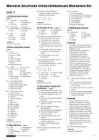
1 1 poll 5 commentators 3 Tick: belong, know, imagine, think, 2 public 6 celebrities understand Challenge! 3 Prime Minister 7 figures Students' own answers 4 votes Photocopiable © Oxford University Press 1 Maturita Solutions Upper-Intermediate Workbook Key 1G Magazine article page 10 1 1 Introduction: C 2 Background information: A 3 Main events: D 4 Conclusion: B 2 1 One afternoon, at the time, when I finally reached safety, after that day 2 and fast! The rock was now more than a kilometre out to sea! After that day, I always checked the times of the tides before I went swimming! I'd never been so exhausted in my life! 3 exhausted, fantastic 4 Only when I woke up ...
Kool Nimi klass IMPRESS Programmi tutvustus Juhendaja: õpetaja Antsla 2010 Sisukord Sissejuhatus..........................................................................................................................................3 1. OpenOffice.org Impress...................................................................................................................4 2. Esitluse käivitamine..........................................................................................................................5 3. Uue slaidi lisamine...........................................................................................................................7 4. Slaidi kustutamine....................................................................
 annaabi.ee