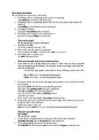
Present Simple and Continuous Table of Contents Present Simple ..................................................................... 2 The spelling of endings in the Present Simple ....................... 2 When to use the Present Simple ........................................... 3 The verb 'be' ......................................................................... 4 Present Continuous.............................................................. 5 The spelling of endings in the Present Continuous................ 5 When to use the Present Continuous.................................... 6 State verbs and event (action or dynamic) verbs ......
These verbs take what would normally be a Strong Verb past tense and transfer it to the present. They then build a Weak Verb paradigm upon that Strong Verb present tense. This sounds confusing, but makes sense when you see it applied to an actual verb. The basic idea is that preterite-present verbs are Strong Verbs that have their past tenses and present tenses swapped. STRONG NOUNS AND WEAK NOUNS Like adjectives and pronouns, Old English nouns are declined: different endings are attached to the stem of a word, and these endings indicate what case a word belongs to (and therefore, what grammatical function that word is fulfilling in a sentence. Old English nouns are divided into three main groups, strong, weak, and "minor," based on the noun's stem and the endings that each noun takes in different grammatical cases. A useful rule of thumb is that nouns whose stems end with a consonant are strong, while nouns whose stems end with a vowel (except for "u") are weak.
Past Simple and Continuous Table of Contents Past Simple .......................................................................... 2 The spelling of endings in the Past Simple ............................ 3 When to use the Past Simple ................................................ 3 Past Continuous .................................................................. 4 When to use the Past Continuous......................................... 4 Used to & would................................................................... 5 Unfulfilled past events.......................................................... 5 Past Simple
I think this film has a brilliant soundtrack that fits with the scenes perfectly and brings out the emotions of the moment. The acting was great as well and in my opinion the actors were chosen wisely. I think that the fact that the boy wasn't the best at singing was good because it made his preforance even more awkward. Lastly I would like to say that I enjoyed the film and I wouldn't mind watching it again. I would also recommend this film to anyone who likes heartwarming stories and happy endings. Jete Merila
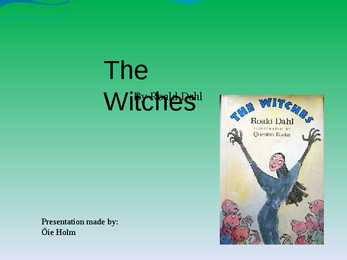
The Witches By Roald Dahl Presentation made by: Õie Holm About the author I read a book called ´The Witches` and the author was Roald Dahl. Roald Dahl was born in Born in north Cardiff, Wales, to Norwegian parents, he served in the Royal Air Force during the Second World War, in which he became a flying ace and intelligence agent. His short stories are known for their unexpected endings, and his children's books for their unsentimental, often very dark humour. Some of his better-known works include James and the Giant Peach, Charlie and the Chocolate Factory, Matilda and The Witches. About the book My book tells about a little boy whos parents died at a car axedent and he went to live at hes grandmothers. The grandmother was the boys only living relative, they got along very well and the boy was very happy. The
7. Dieses kleine Kind (n) spielt mit 16. Haben sie deutschen Wein (m)? schönen Puppen (pl). 8. Trinken Sie kalte Milch (f)? 17. Helfen Sie diesem alten Mann! (m) 9. Annegret spielt mit dem kleinen Kind (n). 18. Letzten Samstag (m) bin ich zwei Stunden gelaufen. G. Sätze schreiben. Now try to translate these sentences, using correct adjective endings where needed. 1. The happy students speak good German with their (pick an adjective) teacher. Die glücklichen (fröhlichen, frohen) Studenten sprechen gutes Deutsch mit ihrem alten Lehrer (mit ihrer jungen Lehrerin). 2. Old friends are the best (=best) friends. Alte Freunde sind die besten Freunde. 3. Our old dog ate the new shoes of our friendly father.
1. To talk about a completed action in the past, often with a time reference. Yesterday morning, the car broke down on the motorway. 2. To tell people about past events and to tell stories. We unlocked the door quietly, went into the room and began to look for clues. 3. With the past continuous to talk about an action which interrupted another. The bell rang while I was having dinner. !!!Watch out!!! We pronounce: 1. Regular past verb endings as /d/: Remembered screamed 2. Verbs ending in ded or ted as /did/ or /tid/: Landed started 3. verbs ending in ch, sh, x or ss as /t/ watched rushed fixed crossed Past continuous We use the past continuous: 1. to talk about an action which was going on at a particular time in the past. At three o'clock yesterday afternoon i was walking back home. 2. To 'set the scene' in a story.
after después too bad demasiado malo poorly mal 19 27. Conjugating Regular Verbs Verbs in Spanish end in -ar, -er or -ir. Before a verb is conjugated, it is called the infinitive. Removing the last two letters gives you the stem of the verb (cantar is the infinitive to sing, while cant- is the stem.) To conjugate regular verbs in the present tense, add these endings to the stems: -ar -er -ir o amos o emos o imos as áis es éis es ís a an e en e en Remember that verbs do not require the subject pronouns, so just canto means I sing. Here are some more regular verbs:
allusion, anachronism, dexterity Scientific (17.-18. century) o Nucleus, formula, vertebra, corpuscle, atomic, carnivorous, incubate, aqueous, molecule Latin abbreviations o i.e – id est – that is to say Latin adjectives for english nouns o Nasal, oral, solar, paternal, maternal, lithic, lunar, filial Actual inflected Latin verbs used as nouns o Audio, audit, caveat, video. Endings dropped or adapted, often through French o add, addition, additive, agent, agentive, aqueduct, candle, colo(u)r, colossal, consider, contemplate, decide, decision, erupt, eruption, general, generic, hono(u)r, hono(u)rable, honorary, igneous, ignite, ignition, ignoble, illiteracy, illiterate, immoral, immortality, ingenious, ingenuity, literacy, literate, literature, meditate, meditation, meditative,
· The violin; the guitar Academic subjects: · Biology; history Go to------ school, university, sea, bed, work, hospital: · - Nationalities: · Dutch; Spanish 4. Comparison of adjectives: Adjectives with one syllable: clean cleaner cleanest new newer newest cheap cheaper cheapest Adjectives with two syllables and the following endings: Adjectives with two syllables, ending in -y dirty dirtier dirtiest easy easier easiest happy happier happiest pretty prettier prettiest Adjectives with two syllables, ending in -er clever cleverer cleverest Adjectives with two syllables, ending in -le simple simpler simplest
Dear Sir/Madam-when u dont know the Lucy, Uncle Bill,Mum) Mrs Jones, ) name. Friendly, relaxed style (How Informal endings (Best wishes, Dear Mr/Mrs/Ms- when u know name. + full name ) For example_:(the item in question, are you? I ´d better go. which i received last week, was damaged A respectful tone
Bessner's surgical knives, thus, framing the doctor. Then it is revealed that Simon had married Linnet in order to inherit her money. Jacqueline planned the murder, as she knew if Simon did it himself, he would get caught, so they had to work together. The jewel thief is indeed Tim Allerton, but Poirot lets him replace the necklace and thus avoid prosecution so that he can marry Rosalie. This provided one of the few happy endings in Christie's books. 5. Libraries in Estonia The National Library of Estonia: The National Library of Estonia is the centre of Estonian literature and national bibliography, the most valuable information provider. It is a centre of library and information sciences, a site for the continuing education of librarians and a cultural centre. The library plays an important part in Estonian cultural life.
someone. * You break my heart into a thousand pieces and you say it's because i deserve better . * Some people come into our lives and quickly go. Some stay for a while, leave footprints on our hearts, and we are never, ever the same. * It's funny how someone can break your heart and you still love them with all the little pieces. * Real love stories never have happy endings, because the real love stories never end. *When life gives you a hundred reasons to cry, show life, that you have thousand reasons to smile. * If you were to ask how many times you run trough my mind, I'd only say: once, because you never even left. * Life is a journey and love is what makes the journey worthwhile. * The best and the most beautiful things in the world cannot be seen or even touched. They must be felt by heart.
9 Adverbs 127 4 Pronouns 44 Personal Pronouns 44 10 Prepositions 132 Reflexive Pronouns 47 Interrogative Pronouns 48 Demonstrative Pronouns 49 11 Conjunctions 135 5 Adjectives 52 12 Interjections 138 Adjective Endings 54 Kinds of Adjectives 58 Comparison of Adjectives 65 13 Sentences 139 What is a Sentence? 139 6 Determiners 71 Kinds of Sentences 140 The Imperative 141 The Articles 71 The Subject and the Object 143
Kitts last summer and it was great . It's a small, quiet island that hasn't been overrun by tourism yet so you can really get a feel for the local culture. You can hop over to other islands too, because there are boats leaving St. Kitts every few hours. If St. Kitts is too quiet, You can go and party in St. Martin. Happy to give you the number of my travel agent if you're interested. Give me a ring so we can have a chat about it. Love , Patricia TASK 4 Match the beginnings with the endings, then identify the type and style of each pair. BEGINNINGS 1 I am writing with regard to your recent correspondence. We regret to inform you that there are no places left on the accountancy course... 2 Thanks so much for your thoughtful gift. The jumper fits perfectly. It will really come in handy this winter when I go skiing ... 3 I just received your letter and I'm sorry to hear that you're having trouble ...
It is a single cell, with three subdivisions: the dendrites, the cell body, and the axon. Dendrites are usually branched. The axon may extend for a very long distance, and its end may fork out into several end branches. Impulses from other cells are received by the dendrites; the axon transmits the impulse to yet other neurons or to effector organs such as muscles and glands. Thus the dendrites are the receptive units of the neuron, while the axon endings may be regarded as its effector apparatus. Total number of neurons in the human nervous system has been estimated to be over a 100 billion. There is no way of getting more; once lost, a neuron can never be replaced. The gap between the axon terminals of one neuron and the dendrites and cell body of another is called the synapse; this is the gap the nerve impulse must cross for one neuron to stimulate the next. Such junctions often involve many more than two cells, especially in the brain.
Blends began to appear in the 14th century. Nowadays blends are popular in newspapers and advertisments. 14. Words from the historical point of view. Archaic words become archaic because there appears a new name for the object. Archaic words are used mainly in poetry to make the text more elevated and solemn. Lexical archaisms are first separate words(nt, behold, to see; stud, house; perchance, maybe). Grammatical archaisms are outdated gr endings(nt, thou knowest- you know). Althouhs arch words are not used widely, they may be used for the sake of humour or irony. Historisms are words that stand for objects that have dissapeared(nt, 3 names of wapons: sword-mõõk, coat of mail-soomusrüü; names of musical instruments: loot-lauto, lyra-lüüra). New words include neologisms and nonce words: neologisms are words that appear to
Kui tahad kohvi voodisse, eks maga siis köögis. Sa õpetasid mind armastama , äkki õpetad nüüd ka unustama ! Lase end õhku , õhus on armastust!!:P You know that I love you, why do you don't love me back? Poisi elus on armastus vaid peatükk , tüdruku elus, aga terve raamat. True love storyes never have endings! I'm not a complite idiot, some parts are missing. Kui hulluks lähen , võtan sinu küll kaasa ! Vabal ajal olen normaalne, aga vaba aega mul kahjuks ei ole. Ma ei käitu sinu pilli järgi, kuna sinu pill on häälest ära I rock , you suck. It's end of the story Mitu korda ma pean vett tõmbama, et sa ära kaoksid
longer spending my time running a sweet-stall, I will write a book about a soul." Sometimes, this tense is more polite and mild, e.g He can't meet you. He's not (he doesn't) feeling so good today. In the dialogue, we may come across ungrammatical phrases, such as I, he, we +ain't. I says, I ain't, times has changed, he done me harm (auxiliary missing). Such examples reflect the educational level of the speaker, his origin or his excited stage of mind. There are archaic verbal endings that are used to create the historical background or to make the narrative more elevated. E.g you lives, knowest, he, she, entereth, knoweth. Past tense: hadst, didst. 10 Expressiveness of word-building Words may become expressive due to their more morphological structure. Together with the adjectives, this suffix may produce words e.g brown-brownish, that denote a small degree of some quality
" Kui ei aita armastus, ei aita mitte miski. (Tammsaare) See on kunst, näha elu läbi oma südame armastus on kõik , mida me vajame ! Some people come into our lives and quickly go. Some stay for a while, leave footprints on our hearts, and we are never, ever the same. A tear falls forever inside a broken heart. It's funny how someone can break your heart and you still love them with all the little pieces. Real love stories never have happy endings, because the real love stories never end. Armastus on nagu kuu: kui ta ei kasva, siis ta kahaneb. You're my everything that i ever could dream of. u smile when everything is alright , u smile , when u're happy , u smile when people do everything to make you happy , but sometimes there are no reasons to smile , then you think about people who do you have , and you feel , that life isn't bad at all , so u smile again(: Just Smile And Everything Will Go Better - You'll See.
And it is growing. Last year alone we launched eleven such services helping people with particular preferences to find their perfect match. There is the `Green Singles' and `Salt 'n' Pepper' for vegetarians and seniors respectively, and `Love Wheels' for car lovers. It's a great chance for those who still haven't found their soulmate. But these sites can only work if the people are honest. And that we cannot guarantee ... Host But there are some happy endings as well, right? MP Oh yeah, dozens! For example, there was this lady ... Photocopiable © Oxford University Press 10 Maturita Solutions Advanced Workbook Key 3 1 constructive 7 slammed 2 1 laughed off, incident Unit 5 2 upsetting 8 raised 2 pronounced, dead
that act on neighboring cells, reaching their targets by diffusion over relatively short distances 3 Autokriinne signalisatsioon – secreted chemical also acts on the cells that secreted it Endokriinnääre – hormones are secreted into the blood by specialized glands – to act on various tissues around the body Sünaptiline signaliseerimine – nerve cells release chemicals at their endings to affect the cells they contact Autokriinne, parakriinne ja endokriinne regulatsioon. Parakriinne: signaalid “atakeerivad” neid rakke, mis asuvad lähedal. Nt: mast cells (тучные клетки, мастоциты)- rakudes, mis asuvad sidekudedes on palju sekretoorseid graanuleid, mis sisaldavad enndas histamiini, mis sekreteeritakse infektsiooni või vigastuse vastusena. Seedetraktis. Autokriinne: prostoglandiinid sekreteeritakse, et
g. "This idea of his!"). ADJECTIVES: expressing features of adjectives concern the degrees of comparison, especially when rules or norms are violated. We do not apply to relative adjectives a comparison, yet it is done for the sake of expressiveness. The ending er or est added to longer adjectives violates the norm and has different functions: to suggest excitement, humor, poor education ("She was the beautifulest woman."). For the sake of humor or for efficient advertising the endings er and est are added to "bad", "good", "many". Sometimes even double forms are used. VERBS: the Historical Present (present tense) in the author's narrative is used to render past events, creating the illusion of things happening at the present moment. Continuous tenses may express surprise, disbelief, indignation. Sometimes continuous tenses are more polite and mild. In the dialogue we may come across ungrammatical instances: I says; we says; times has changed
public taste. The Golden Age of crime fiction. The literature of `fair play'. Graham Greene. Realism and Existentialism. English Literature of the 1930s-1950s. Reception theory. Only the process of reading generates a meaning for a text. Reading connects reader and the text. A good degree of inderterminacy and gaps to make the connection possible. Gaps-places in a text- require reader's imagination, thinking ability. Allusions, symbols, metaphors, digression, rhetorical question, open endings. Balance is the key. Too many gaps in Modernist texts. Fiction as a way of finding order in chaotic world. Aggravating political and economic situation. A reflection of the general condition in Europe and America. 1929-stock market crash. 1930's-great depression. Mass unemployment in Britain, nazism in germany, fascism in italy, terror in stalinist russia. Fear of both fascism and stalinism. A turn in the mood, aesthetic programme, moral convictions and public taste.
10 I'll have a party if ______________________________________________________________________________ Marks: /10 Macmillan Publishers Limited 2001. This sheet may be photocopied for use in class. 19 3 Match the beginnings of the sentences in list A with the endings in list B. A B 1 When I approved of the plan _______ a it will go off. 2 When I'm tired, _______ b they'll get into trouble. 3 If you listened to music _______ c if he missed the plane. 4 If you're hungry, why don't you _______ d I'll have a shower and go to bed.
and Asia, influenced by all o f them but uniquely Australian, and humming with the mysterious energy of the land and the Aboriginal people. T h e y pointed out to me hidden cultural assumptions in my understanding of the Hero's Journey. W h i l e it is universal and timeless, and its workings can be found in every culture on earth, a West ern or American reading of it may carry subde biases. One instance is the Hollywood preference for happy endings and tidy resolutions, the tendency to show admirable, virtuous heroes overcoming evil by individual effort. M y Australian teachers helped me see that such elements might make good stories for the world market but may not reflect the views of all cultures. T h e y made me aware o f what assumptions were being carried by Hollywood-style films, and of what was not being expressed. xix THE WRITER'S JOURNEY ~ THIRD EDITION
Пахарь»] gives a powerful description of his time, and Geoffrey Chaucer (1340– 1400), a poet who has become much more famous: ‘The Canterbury Tales’ [«Кентерберийские рассказы»], etc. Middle English is Different But Middle English, the language of the fourteenth and the fifteenth centuries, was very different from Old English. Most of the inflections (endings) disappeared, and word order therefore became of prime importance, as it is in Modern English. The grammar remained Anglo-Saxon. At the same time, there was a massive transfer of French words into English (some estimates say over 10,000 words). Latin, however, remained the language of the Church and of education, and this mixing of Latin, French and native English is the reason why there are so many synonyms in the English language: e.g. English French Latin
Ma rkan koos pikesega ja mtlen sinust, lhen magama kuuga ja mtlen ikka sinust Aja jooksul muutuvad paljud asjad , kuid on ks, mis alatiseks jb see on minu armastus sinu vastu . "ra jta inimest keda armastad, inimese prast kes sulle meeldib, sest inimene kes sulle meeldib, vib su jtta inimese prast keda armastab " . real love stories have never happy endings, because real love stories never end of all the things i've lost, i miss my heart the most Politsei : Noorukid , kuhu te suitsud peitsite ? Nooruk : Mis see sinu asi on , ega ma sulle niikuinii ei anna , mul vhe ! When I saw you liked you, when I liked you I loved you, when I loved you I lost you Everyone in life is gonna hurt you, you just have to figure out which people are worth the pain If you love someone tell them... because hearts are often broken by words left unspoken
.. Should I smile because you are my friend or cry because that's all we'll ever be. I know you don't believe you mean this much to me, but I promise you: That you do. Sometimes the person you love just doesn't understand how much you love them. Love isn't funny thing when it is burning inside when all you think of is how you get through the night. Don't listen to your mind, listen to your heart because it can change your whole life. Real love stories never have happy endings, because the real love stories never end. Kui keegi on sulle väga lähedal, kui sa armastad kedagi, siis oled talle andunud võimaluse sind üheainsa sõnaga tappa. Armastus on see, kui keegi teeb sulle haiget ja sa saad vihaseks, aga sa ei taha karjuda, et mitte talle haiget teha. Armastus on nagu kuu: kui ta ei kasva, siis ta kahaneb. You're my everything that i ever could dream of. Kui inimest armastad, siis armastakse ka tema vigadega.
" "The house looked more stony than ever."). FGI 1081 Stylistics (I. Ladusseva) 8 The ending er or est added to longer adjectives violates the norm and has different functions: to suggest excitement, humor, poor education (e.g. "It is getting curiouser and curiouser." "She was the beautifulest woman."). For the sake of humor or for efficient advertising the endings er and est are added to "bad", "good", "many" (e.g. "She is the baddest listener"). Sometimes even double forms are used (e.g. ""She was getting worser and worser."). VERBS: The Historical Present (present tense) in the author's narrative is used to render past events, creating the illusion of things happening at the present moment. Continuous tenses may express surprise, disbelief, indignation (e.g. "One day, when I am no longer spending time
minuga minu südames . · Unenägu on pahatihti see, mille tõttu me ärkame hommikul suure pettumusega. · Usu armastusse esimesest silmapilgust. · My world was black and white until the day you walked trough my door and into my heart. · Everytime I think of you, I'm sad. Everytime I hear your name, I'm mad. But everytime I think of how you made me feel, I'm glad. · Real love stories never have happy endings, because the real love stories never end · Guys are like stars, there are millions of them but only one can make your dreams come true · Naer on kate, mille alla peidetakse suurimad mured ja valud · Sa ütlesid, et sa oled hea kaaslane, et sa ei reeda, ei peta, ei unusta, kuid sa unustasid mainida oma olulisema omaduse valetamise. · Pole olemas kättesaamatuid tüdrukuid, on vaid saamatud poisid, kes ei tea kuidas tüdrukut endale võita
* Love isn't love if you didn't hurt someone. * Armastus on nagu unenägu. See lõpeb alati parimal hetkel. * Armastus on lihtne, kui kohtad keerulist armastust on tegu võltsinguga. * Igaüks, kes on armastanud, teab, millist säravat tähendust sisaldab endas neljast tähest koosnev sõna TEMA. * It's funny how someone can break tour heart and you still love them with all the little pieces. * Real love stories never have happy endings, because the real love stories never end. * Pärast sõpruse sõlmimist tuleb usaldada ning enne sõpruse lõpetamist järele mõelda. * Millega uhkeldatakse või mida on piinlik tunnistada, seda ei saa pidada sõpruseks. * Maailmas on kolme liiki sõpru: sõbrad, kes teid armastavad, sõbrad, kes teist sugugi ei hooli, ning sõbrad, kes teid vihkavad. * Armastus on nagu palavik. Ta sünnib ning kustub, ilma et tahtel oleks sellega midagi pistmist.
Analüüsides spordi sisemist struktuuri pôhjalikumalt peame alustama eetilistest väärtustest. Erinevalt spetsiifilistest reeglitest igal spordialal eksisteerivad moraali maksiimid e. väärtusmudelid, millede eesmärgiks on reguleerida spordialast käitumist.Kôige iseloomulimumad sellised mudelid on näiteks fairplay, partnerlus, materiaalsete väärtuste puudumine tulemuste seisukohalt, vôrdsus ja avatud endings. Neid mudeleid vôib samuti vaadelda kui tüüpilisi motiive, mis determineerivad indiviidi käitumist spordis. Spordi moraalsed maksiimid ei lange kokku teiste üldiselt aktsepteeritud maksiimidega. Eriti tüüpiline on spordile , et tolerantsus, teistega arvestamine ja hoolitsus, mis on laialt aktsepteeritud printsiibid igapäevases elus, on sageli sobimatud vôistlusspordile
.. Should I smile because you are my friend or cry because that's all we'll ever be. I know you don't believe you mean this much to me, but I promise you: That you do. Sometimes the person you love just doesn't understand how much you love them. Love isn't funny thing when it is burning inside when all you think of is how you get through the night. Don't listen to your mind, listen to your heart because it can change your whole life. Real love stories never have happy endings, because the real love stories never end. Kui keegi on sulle väga lähedal, kui sa armastad kedagi, siis oled talle andunud võimaluse sind üheainsa sõnaga tappa. Armastus on see, kui keegi teeb sulle haiget ja sa saad vihaseks, aga sa ei taha karjuda, et mitte talle haiget teha. Armastus on nagu kuu: kui ta ei kasva, siis ta kahaneb. You're my everything that i ever could dream of. Kui inimest armastad, siis armastakse ka tema vigadega.
764. Sõprus on mäng, kus pole tähtis võit, vaid osavõtt. 765. Sõprus on ainus mäng, kus peaauhinna võidavad need, kellel on kõige rohkem kaotada. 766. Sõprus on see, kui mõistame teisi ja oleme ise mõistetavad. 767. Sõprus on vaikus enne, pärast ja keset tormi. 768. Sõprus on nagu soe vihm või nagu jahutav tuuleõhk 769. Pärast sõpruse sõlmimist tuleb usaldada ning enne sõpruse lõpetamist järele mõelda. 770. Real love stories never have happy endings, because the real love stories never end 771. Everybody wants to go to heaven, but nobody wants to die. 772. Surm sakutab mind kõrvast. "Ela," ütleb ta, "ma tulen varsti." 773. Ühe inimese surm on katastroof, miljoni inimese surm aga statistika 774. Inimese hing on surematu 775. Selleks, et olla surnud ei pea olema kadunud teiste südamest 776. Ma olen suremas kuid muidu läheb mul hästi. 777. Ära leina homset päeva, sest Sa ei tea, mis täna veel võib juhtuda 778
ADDING MUSCLE Building the Perfect Posterior (or Losing 100+ Pounds) Six-Minute Abs: Two Exercises That Actually Work From Geek to Freak: How to Gain 34 Pounds in 28 Days Occam's Protocol I: A Minimalist Approach to Mass Occam's Protocol II: The Finer Points IMPROVING SEX The 15-Minute Female Orgasm--Part Un The 15-Minute Female Orgasm--Part Deux Sex Machine I: Adventures in Tripling Testosterone Sex Machine I: Adventures in Tripling Testosterone Happy Endings and Doubling Sperm Count PERFECTING SLEEP Engineering the Perfect Night's Sleep Becoming Uberman: Sleeping Less with Polyphasic Sleep REVERSING INJURIES Reversing "Permanent" Injuries How to Pay for a Beach Vacation with One Hospital Visit Pre-Hab: Injury-Proofing the Body RUNNING FASTER AND FARTHER Hacking the NFL Combine I: Preliminaries--Jumping Higher Hacking the NFL Combine II: Running Faster Ultraendurance I: Going from 5K to 50K in 12 Weeks--Phase I
Yardley called the first code "Ja," the "J" for Japanese, the "a" a serial for the first solution. From 1919 to the spring of 1920 the Japanese introduced eleven different codes, having employed a Polish expert, Captain Kowalef-sky, to revise then" cryptologic systems. Kowalefsky taught the Japanese how to bi-, tri-, and tetrasect their messages: to divide them into two, three, or four parts, shuffle the parts, and then encipher them in transposed order to bury stereotyped beginnings and endings. Some of the codes contained 25,000 code groups. During the summer of 1921, the Black Chamber solved telegram 813 of July 5 from the Japanese ambassador in London to Tokyo. It contained the first hints of a conference for naval disarmament—an idea that powerfully gripped the imagination of a war-weary world. Another indication came when Japan suddenly introduced a new code, the YU, for their most secret messages. On solution, it was
When he drew on my clit with steady, rhythmic suction, I came again, crying out hoarsely. Then he had three fingers in me, twisting and opening me. "No." My head tossed from side to side, every inch of my skin tingling and burning. "No more." "Once more," he coaxed hoarsely. "Once more, then I'll fuck you." "I can't..." "You will." He blew a slow stream of air over my wet flesh, the coolness over fevered skin reawakening raw nerve endings. "I love watching you come, Eva. Love hearing the sounds you make, the way your body quivers..." He massaged a tender spot inside me and an orgasm pulsed through me in a slow, heated roll of delight, no less devastating for being gentler than the two before it. His weight and heat left me. In a distant corner of my dazed mind, I heard a drawer opening, followed swiftly by the sound of foil tearing. The mattress dipped as he returned, his hands rough
ll Explain thesentences belowin yourownwords. b. Underlinet h e w o r d sa n d p h r a s e tsh a t u s et h e sensesto makethe story interesting. Beginnings/Endings It takescourageto grow up and becomewho you really are. e e cummings (USpoet) 44 Read thebeginning of thestoryin Ex
ll Explain thesentences belowin yourownwords. b. Underlinet h e w o r d sa n d p h r a s e tsh a t u s et h e sensesto makethe story interesting. Beginnings/Endings It takescourageto grow up and becomewho you really are. e e cummings (USpoet) 44 Read thebeginning of thestoryin Ex
ll Explain thesentences belowin yourownwords. b. Underlinet h e w o r d sa n d p h r a s e tsh a t u s et h e sensesto makethe story interesting. Beginnings/Endings It takescourageto grow up and becomewho you really are. e e cummings (USpoet) 44 Read thebeginning of thestoryin Ex
ll Explain thesentences belowin yourownwords. b. Underlinet h e w o r d sa n d p h r a s e tsh a t u s et h e sensesto makethe story interesting. Beginnings/Endings It takescourageto grow up and becomewho you really are. e e cummings (USpoet) 44 Read thebeginning of thestoryin Ex
Tedeschi, J T., Schlenker, B. R., 8z Bonoma, T. V. (1971). Cognitive dissonance: Private rati- 0cination or public spectacle? American Psychologist, 26, 685-695. Teger, A 1. (1980). Too much invested to quit. Elmsford, NY: Pergamon. Tesser, A, Campbell, J, 8z Mickler, S. (1983). The role of social pressure, attention to the stimulus, and self-doubt in conformity. EuropeanJournal of Social Psychology, 13, 217- 233. Teuscher, U. (2005, May). The effects of time limits and approaching endings on emo- tional intensity. Paper presented at the meetings of the American Psychological Soci- ety' Los Angeles, CA Thompson, L. (1990). An examination of naive and experienced negotiators. Journal of Personality and Social Psychology, 59, 82-90. Tiger, L., 8z Fox, R. (1989). The imperial animal. New York: Holt. Todd, P. M., 8z Gergerenzer, G. (2007). Environments that make us smart. Current Direc- tions in Psychological Science, 16, 167-17l. Tormala, Z. L., 8z Petty, R. E. (2007)
 annaabi.ee