Leidsid 33 sarnast õppematerjali, mis on seotud failiga "E-book – the book of the future". Need materjalid aitavad sul teemat sügavamalt mõista.
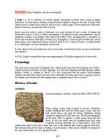
books, print, printed, there, advantage, year, paper, electronic, device, available, times, certainly, than, environmental, concerns, digital, other, both, cons, disadvantages, collection, contain, readable, even, thing, while, cheaper, purchased, reading, children, physical, work, require, lost, tech, theft, stolen, step, known, equivalent, hand, heldBOOKS (From Wikipedia, the free encyclopedia) A book is a set or collection of written, printed, illustrated, or blank sheets, made of paper, parchment, or other various material, usually fastened together to hinge at one side. A single sheet within a book is called a leaf, and each side of a leaf is called a page. A book produced in electronic format is known as an electronic book (e-book). Books may also refer to works of literature, or a main division of such a work. In library and information science, a book is called a monograph, to distinguish it from serial periodicals such as magazines, journals or newspaper. The body of all written works including books is literature. In novels and sometimes other types of books (e.g. biographies), a book may be divided into several large sections, also called books (Book 1, Book 2, Book 3, etc.)
Libraries. We know a lot of things thanks to books, but we do not know exactly when and where they originated, and what should be considered the first book in the world. Ancient document, written on parchment, papyri and vellum can hardly be qualified as books the way we understand the word today. Centuries went before paper replaced parchment and papyri. In the 15 th century Johann Gutenberg invented a mechanical process of duplicating texts, which we today call book printing. The first book was printed between 1444 and 1446, so these years can be considered as the beginning years of book printing. His most important preserved printings are the 40 copies of the Bible. By the end of the 15 th century there were about 1000 print-shops in Europe already. The oldest Estonian book dates back to 1535.
office: Mortimer House, 37-41 Mortimer Street, London W1T 3JH, UK Perspectives: Studies in Translatology Publication details, including instructions for authors and subscription information: http://www.tandfonline.com/loi/rmps20 When `we' are `the other'. Travel books on Romania as exercises in intercultural communication a Rodica Dimitriu a Department of English , Alexandru Ioan Cuza University of Iaþi , Romania Published online: 06 Aug 2012.
FGI 1811 Proseminar (Irina Ladusseva) 2.0 AP Kab. 420 03.09.2002. Writing a term paper (this spring) and graduation paper. To get a pass: one written task (part of introduction, thesis statement) Term paper should be printed (20-25 pages long). Graduation paper should be printed (50-60 pages long). First write term paper, and choose a topic right now (theme of term paper later will be developed into graduation paper). Rights: we have a right to have a supervisor. Supervisor writes on the front page "Lubatud kaitsmisele". You need time to: 1. read the theory 2. collect material 3. regularity (1-2 hours a day deal with your paper) The first draft of term paper should be ready by March. Supervisors are: 1. Suliko Liiv (country study, grammar, contrastive studies, methodology) 2. Liliana Skopinskaja (methodology) 3
Which will survive - a traditional paper book or an e-book? The e-book versus traditional paper book battle is becoming a hot topic nowadays. There are lots of arguments about the pros and cons of paper book and an e-book but which will survive? Firstly, a paper book is reasily portable and usually cheap. Also it does not harm your eyes that much. To read a paper book you will probably need a light source and obviously you are not carrying it always around. Furthermore you can not carry all your books with you all the time because they are just too heavy. Also paper books are not very environmental friendly. Secondly, an e-book has a lot of good qualities, for example, you can purchase a book every time you want in spite of going to the book store. Also, if you have a smartphone or a laptop you will always have
Topic Libraries Tallinn English College 8b form 2007 1. Introduction A library is a collection of books. Libraries are maintained by a public body such as an institution or an individual. These collections are used by people who choose not to (or cannot afford) purchase an extensive collection themselves or who need professional assistance with their research. However, with the collection of media other than books, many libraries are now also access points for maps, prints or other documents and artworks such as microfilm, audio tapes, CDs, cassettes and DVDs. So, modern libraries are being redifined as places to get access to information in many formats and from many sources. In addition to providing materials, they also provide the services of specialists who are experts in matters related to finding and organizing information, called librarians. 2. History
Entertainment and Art Task 1. Underline the most suitable word or phrase. a) I like this book, and I've read six capitals/chapters/prefaces already. b) It's not a proper drawing, only a rough/plan/sketch. c) The play is very long but there are three breaks/intervals/rests. d) At the cinema I don't like sitting too near the film/screen/stage. e) We heard a piece by Mozart performed by a German band/group/orchestra. f) Her second book was very popular and became a best buy/seller/volume. g) I like the painting but I can't stand its ugly border/frame/square. h) Robert's new book will be broadcast/published/typed in August. i) I liked the acting, and the costumes/dressing/outfits were good too.
REFERENCING STYLE The following recommendations have been taken from The Standing Committee on Publications of the British Psychological Society, Suggestions to Contributors, Leicester: BPS, 1979. You should always follow these recommendations in your written work. The BPS journals use the author-date method of citation, that is the surname of the author and the year of publication are inserted in the text at the appropriate point, for example: Rabbitt (1970) compared reaction times... Or In a recent study of reaction times, Rabbitt (1970) found... Or In 1970, Rabbitt compared.. These methods enable the reader to locate easily the citation in the reference list given at the end of the report. If a work has two authors, cite both names in the text every time, e.g. Smith & Jones (1974).
The basic ingredients, when fresh, are so full of flavour that British haven't had to invent sauces to disguise their natural taste. What can compare with fresh pees or new potatoes just boiled and served with butter? Why drown spring lamb in wine or cream and spices, when with just one or two herbs it is absolutely delicious? If you ask foreigners to name some typically English dishes, they will probably say "Fish and chips" then stop. It is disappointing, but true that, there is no tradition in England of eating in restaurants, because the food doesn't lend itself to such preparation. English cooking is found at home. So it is difficult to a good English restaurant with a reasonable prices. In most cities in Britain you'll find Indian, Chinese, French and Italian restaurants. In London you'll also find Indonesian, Mexican, Greek... Cynics will say that this is because English have no "cuisine" themselves, but this is not quite the true. Vocabulary:
Books Today and Tomorrow Why is it important to read books? Do people read less books than in the past? Will people read less in the future? Books have always played a great role in our lives and reading them is highly important. It increases knowledge and expands vocabulary, which integrates to writing. Reading books makes a person more intelligent and it gives a different perspective. Nowadays people tend to read less books than they used to. The main reason for this catastrophy is the development of technology. People would rather watch moving pictures in the television than pick up an old book covered in dust. In the past, when there were no television or computers to entertain people, books were basically the only amusement. On the other hand the lifestyle of ours has gotten tremendously busy and some do not find the time to just sit back and relax by reading.
"koška" instead of "kot", "medvešonok" instead of "medved", "saichik" etc. Did not make much sense and we mostly played some games in Russian (Tare-tareke etc). Learned as much playing outside, since we had Estonian-Russian kids around as well. Not that we played with them. It's sad to say but it was not a nice time to be a Russian kid. We were mean to them, and we did not even know why. I think that's the only time I've ever been part of bullying someone, but there was this kid everybody called Vene-Russ and we spent a lot of time playing mean tricks on him. Well, there's that. And I also learned a lot of Russian from my mother's lover who was a Russian military officer and pretty much my father figure at the time. I tried to teach him Estonian and learned some Russian instead. My Russian studies in school have always been very hectic and making very little sense. Teachers kept changing all the time, teaching methods kept changing as well and learning
Marner distinguishes between high profile and low profile games [Marner 2002]. A high profile game is endowed with massive development costs (perhaps US$5 million or more), a generous advertising budget, a large development staff, and a very visible presence for game retailers and magazines. To recoup the enormous upfront expenses, high profile games tend to utilise cutting-edge graphics (which require high hardware performance), and tie-ins with other media such as movies or books. A low profile game is aimed at a smaller market, and may be limited to a single platform, or user community. It may have been developed by a single person (or small group), and be advertised in specialized newsgroups and mailing lists, leading to a substantial reduction in costs. Low profile games may have less `polish', use less state-of the-art graphics, and place more emphasis on game design and characterization. 2. Java for Games
4. References 16 INTRODUCTION Philip Larkin is one of the most important English poets of the new Era, due to the interest of he owns, more and more readers get to know about the two Philip Larkin’s the man and the poet. Since the publication of the three most widely used sources (the Collected Poems in 1988, the Selected Letters in 1992, and Andrew Motion’s authorized biography in 1993) numerous further books, essays and articles have contributed to Larkin studies. These include publications of Larkin’s texts (such as Further Requirements in 2001, Trouble at Willow Gables in 2002, and Early Poems and Juvenilia in 2005), personal recollections (for instance, Maeve Brennan’s The Philip Larkin I Knew in 2002), another biography (Richard Bradford’s First Boredom, Then Fear in 2005), and critical studies (the latest being M. W. Rowe’s Philip Larkin: Art and Self in 2011). A. T.
Douglas Noël Adams was and English writer (11 March 1952 11 May 2001). He borned in Cambridge. When he was five years old, his parents got divorced and he moved to Bretnwood with his mother and sister. From 1959 until 1970 he studied at Brentwood School in Essex. In 1974 he decided to become a writer. But nothing didn't bring him success. He worked with Graham Chapman, John Lloyd, but mos of his projects fell flat. In 1977 he met Simon Brett from Radio 4 and they produced a radio show there. It was the birth of "The Hitchhiker's Guide to the Galaxy". He even wrote "The Hitchhiker's Guide to the Galaxy" into the novel in 1979. Adams wrote 4 books as a sequel and "Life, The Universe and Everything" is the 3rd book of the series. Books have been adapted into television series, stage plays, comic books. Over 15 miullions copies of books have been sold during his lifetime. In 2005, Garth Jennings even made a film "The Hitchhiker's Guide to the Galaxy".
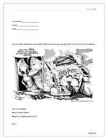
Page |1 Your Name:__________________ Grade:______________________ Date:_______________________ Do you often read books voluntarily? What books do you usually read? Discuss it with your neighbor. Ask your neighbor: Who is Harry Potter? What's so magical about him? Part I 1/9/2013 Page |2 Reading: Read through the text, look up unknown words by J. K. Rowling
Jakko Viilo, 11.c Books are not absolutely dead things Books have been our mates many centuries. They give you a lot of knowledge, they make you feel happy, but sometimes also sad too. If you have read any book through, one is certain your life is not the same anymore as it was. So, a question comes to my mind if books are material things, they can not speak, they can not do anything to you, they just lay on the table, then how they can influence your life sometimes so much? They are all written by humans. But the interesting thing actually is, that in his lifetime, human being is the smartest on this planet and can make big things, but this is all transient. Humans die. But if human creates something, for example, a book, then it may live centuries. Books are like the continuation of the book writers life
Cullen family back story - hopefully their characters might be developed further in future books. Bella herself is a well written and realistic character, shy and lacking in confidence, her sarcastic inner voice narrates the story for the reader. Twilight is simply and yet beautifully written. The descriptions of Forks leave you feeling like you can almost smell the damp air and hear the rain falling on the roof. The romance between Edward and Bella is both touching and compelling. There is a melancholic feel to their impossible love, yet at the same time they both are unwilling to give up hope that their relationship is not doomed. The book reaches a fever pitch of excitement as the romance between Bella and Edward turns into a frantic race to stay alive. I have heard Twilight described as "a vampire story for people who don't like vampire stories" and I think I would agree with that. This book really has something for everyone
1 Anne Seaton · Y. H. Mew Three Watson Irvine, CA 92618-2767 Web site: www.sdlback.com First published in the United States by Saddleback Educational Publishing, 3 Watson, Irvine, CA 92618 by arrangement with Learners Publishing Pte Ltd, Singapore Copyright ©2007 by Saddleback Educational Publishing. All rights reserved. No part of this book may be reproduced in any form or by any means, electronic or mechanical, including photocopying, recording, or by any information storage and retrieval system, without the written permission of the publisher. ISBN 1-59905-201-6 Printed in the United States of America 13 12 11 10 09 08 07 9 8 7 6 5 4 3 2 1 Introduction Grammar is a very old field of study. Did you know that the sentence was first divided into subject and verb by Plato, the famed philosopher from ancient Greece? That was about 2,400 years ago
The themes dealt with in a book are simply not relevant to young people today When we create a chart of things that young people like to do in their free time, reading would probably not be in the first three. Is it related to the themes discussed in books and are those themes irrelevant to young people today? Obligatory books in basic school and gymnasium, are mostly from the previous century or from even earlier. Those books are mainly discussing love, wars and relations having one but those books don't talk about everything. They have their confines and mainly concentrate on descriptions and less on the story. But young people want their own picture from the book, they don't need every detail described. When we think more about the themes disussed in obligatory books, then they are also hold in check. Here is the second problem, youngsters can't relate to those topics. For example,
MASS MEDIA By ''mass media '' we intend to those means of communication which can reach large or mass audiences. The most important are probably Television, Radio, the Press and Internet. The English-speaking peoples have always allowed more freedom of speech and of the press than most other countries. This gave them an advantage from the start in communications. The ground work for mass communications in the 20th century was laid in the 19th century by two inventions which allowed people to communicate by wire. These were the electric telegraph and the telephone. The telegraph was invented in Britain in 1837. They were being used in the Civil war. It allowed messages to be sent electrically over telegraph wires. This was much faster and more reliable than sending messages by horse messenger. the telephone
Mass Media What is Mass Media? Statistics show that there are few things which impact the human mind more than mass media. The advice of teachers, parents and relatives may fall on deaf ears, but the mass media influence holds us all spellbound! At this point, it becomes necessary to define mass media. Mass media may be defined as any form of communication which is meted out to the people at large, through the various forms of communication. What modes of communication are we talking about? Well there can be no static definition for the
of the book and, as a result, I never read through them, although Norman is supplying numerous - often valuable - commentaries to the main text in them. It's a shame the book wasn't read as a hard copy or Norman's daydreaming of hypertext (p.??) wasn't incorporated into the digital edition. This formatting decision I consider a shortcoming of the book too. DOET is about to be republished in a new, updated edition this year, and should this edition include major updates to sections pertaining anticipation of the future, a lot of portions in the present edition may be forgiven - it is quite uncomfortable to read Norman's musings and fears for how the future will deal with complexity of objects that he prophesizes to appear when they are already integral parts of our everyday life and amongst them there are definitely examples of
Nowadays, if you ask a person, when he or she has read last a book and what the book's title was, the person will not know what to answer. Nobody reads any more, or if they do it is on the internet and only a summary so as not to get tired too much. The Internet entertains superficially, as people do not gain too much by ''surfing'' it. Yes, maybe a new pair of glasses for spending so much time in front of a computer. I do not say there are no educating websites that are worth visiting, that really help, but their number is quite small. As not to get fat, while sitting on an arm-chair, people could instead go to a library, borrow a book and go to a park and start reading. Everybody will notice the difference. They will think so well of themselves while doing more things at once: reading and enjoying themselves in the middle of nature.
B R I A N T R AC Y JOHN WILEY & SONS, INC. ccc_tracy_fm_i-xviii.qxd 7/7/03 3:22 PM Page iv Copyright © 2003 by Brian Tracy. All rights reserved. Published by John Wiley & Sons, Inc., Hoboken, New Jersey. Published simultaneously in Canada. No part of this publication may be reproduced, stored in a retrieval system, or transmitted in any form or by any means, electronic, mechanical, photocopying, recording, scanning, or otherwise, except as permitted under Section 107 or 108 of the 1976 United States Copyright Act, without either the prior written permission of the Publisher, or authorization through payment of the appropriate per-copy fee to the Copyright Clearance Center, Inc., 222 Rosewood Drive, Danvers, MA 01923, (978) 750-8400, fax (978) 750-4470, or on the web at www.copyright.com
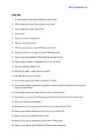
Why? 17. How old were you when you first went to see a puppet show? Do you remember what it was? 18. Who is your favourite actor/actress? 19. What performance or concert would you like to see if it were possible? Why? 20. Have you got a drama club at your school? Are you a member of it? 21. Have you ever worn a costume? When? Why? 22. Have you ever seen a rehearsal of a show? When? Which show? 23. Have you ever been to a zoo? Which zoo? What animals were there? http://www.abiks.pri.ee 24. Have you ever been to a funfair? Where? 25. Have you ever been to a circus? When? Where? 26. Have you ever seen a circus show on TV? 27. What did you see in the show? (an animal act? clowns? acrobats? jugglers?) 28. Are you good at juggling? What makes you think so? 29. Do you like aerobics? Are you good at it? Do you know anybody who is? 30. Would you like to perform in a circus?
When I was a child the things that pleased me were largely other than the plants which have earned me a living as an adult. For example, I collected postage stamps, played basketball, was fond of listening to music, played all manner of games, but dealt only in a neutral, uninspired fashion with plants. The one thing that was constant and of supreme importance was my love of reading. I don't recall why, but by an early age, say age 9, I was a phenomenal reader of books, a habit that persisted all the way until college. Reading expands one's mind immensely. It fires the imagination, demonstrates grammar, teaches vocabulary, informs, challenges, helps one relax. In some cases it forces the mind to concentrate, as to understand. It can help build a moral or ethical framework, and help oneself form an individual worldview. Even an untraveled child, sitting at home, can be transported by a book into any place or time
It's a 9 was travelling 2 1 She had completed a physical mixed class of boys and girls. It's 10 was working training regime. difficult to tell what kind of lesson 11 started 2 She hadn't studied basic Nepalese. they're in. Their teacher is handing 12 had lived 3 She had obtained long-term a paper to one student. It could be 13 happened weather forecasts. that they're in a maths lesson. These 14 didn't want 4 She had planned a route to the students aren't wearing uniform. It 15 insisted looks as if one of them is asleep. summit.
relates to American Revolution on the one hand and the European Enlightenment on the other. Influenced by the scientific revolution of the 17th century and the humanist period during the Renaissance, the Enlightenment took scientific reasoning and applied it to human nature, society, and religion. American Enlightenment a gradual but powerful awakening that established the ideals of democracy, liberty, and religious tolerance in the people of America. If there were just one development that directly caused the American Revolution and uplifted the intellectual culture of the continent while it was only a British colony, it would be the American Enlightenment. Broadly, the Enlightenment was an intellectual movement that changed the fundamental perspective of the masses, urging them to foster skepticism and apply scientific principles in matters of religion and morality. Its chief values were: Liberty, Democracy, Republicanism, Religious Tolerance
· Cats like milk. still, just, etc. · Birds do not like milk. · Do pigs like milk? Examples: · California is in America. · California is not in the United Kingdom. · You only speak English. · Windows are made of glass. · Do you only speak English? I am not reading any books right now. Present Continuous · · Are you working on any special projects at work? [am/is/are + present participle] · Aren't you teaching at the university now? Examples: USE 3 Near Future · You are watching TV. · Are you watching TV?
and remembered more. Therefore I would like to discribe the method thoroughly. Only in the past few hundred years has reading been the primary way of teaching religion. For centuries, religious education relied on hearing and seeing. Religious education can benefit by returning to the ages-old methods of hearing and seeing to complement reading. This method enables you to make the old learning way-seeing available for the students nowadays.It is about deepening our understanding of faith. In times past, when people could not read, it was through pictures that they came to realize the glory of God's world and the meaning of the Bible(http://books.google.ee/books/about/Beyond_the_Written_Word.html? id=wBXK1Y4BlTEC&redir_esc=y). Distribution and sources of this method Talking about art-based learning I am guided from the Maria Luisa Mazzarello article ,,Teaching religion through art
It is a truly modernist level in any sense, tries to imitate devices used by cinema. Late 1920's the cinema was already very popular and two great directiors-Griffith and Eisenstein. The greatest innovators of the cinema and they used the devices of montage and collage. He also uses a lot of fragmentation and rapid cutting. The novel is dominated by the high rise city, by the crowds, by the masses of people, passing by the skyscrapers, mechanisation and destructiveness. There is a multitude of characters. Two characters, ellen Thatcher-beatiful and talented Broadway actress and Jimmy Horf-newspaper reporter with and ambition to become a writer. Ellen is a success as an actress, while Jimmys main success in life is his marriage to Helen-their marriage is doomed, he fails as a writer. Ellen becomes the writer in the family, because he is succesful writer of womens magazine. Anti human values of the city. Sacco and Vanzetti-two Americans of
because so many programmes taught them how to shoot, rob, and kill, or because they had to do something to (3) ….. the hours they had spent (4) ….. to the tiny screen? Or did it simply create a vast passive audience, drugged by glamorous serials and inane situation comedies? On the other hand, did it increase anxiety by (5) ….. the news and (6) ….. our living rooms with war, famine and political unrest? 1) A around B there C ready D here 2) A information B messages C data D communications 3) A counteract B negate C offset D compensate 4) A attached B fixed C glued D adhered 5) A scandalising B hyping C dramatising D sensationalising
someone/something that has been mentioned before. We passed a beautiful house on our way to Birmingham. – Was the house for sale? I saw a man standing near the house. The man was well-dressed and looked like a businessman. In case of plural countable nouns and uncountable nouns, in ordinary situations, when something is mentioned for the first time, some is used. We passed some beautiful houses on our way to the beach. There were some people at the station. There was some sand on the building site. In extraordinary situations or when we want to emphasize something no article is used. Poor people cannot afford to live in beautiful houses. There were people inside the house on fire! There was sand on my plate! The Indefinite Article is used when referring to an indefinite object (just any of the kind). Could you lend me a pen
 annaabi.ee