Leidsid 33 sarnast õppematerjali, mis on seotud failiga "Discription of classmate". Need materjalid aitavad sul teemat sügavamalt mõista.
kristy, first, really, friend, thing, body, person, discription, since, holiday, camp, several, years, favourite, companion, notice, blue, eyes, nose, mouth, face, glance, blond, hair, look, amazing, rule, enjoys, characteristic, sense, rare, cheer, everybody, different, situations, moreover, soul, party, makes, claim, seem, quick, reality, deep, reasonPerson discription Ever since I first met my friend Lily on-holiday camp several years ago, she has been my best friend. The first thing you notice about her, are her blue eyes, small nose and mouth, which make her face very photogenic. At first glance you can also see her long, blond hair and she is thin. The most characteristic thing about Lily is her sense of humour. It is rare to cheer everybody up in different situations, yet she always manages to do it.She is the soul of a party, which makes her extremely sociable. Pointing our her tendency to be incredibly precise. Some people claim she may seem quick-tempered but in reality deep down, she isreally an amiable person. Lily has a very unpredictable lifestyle, for this reason she spends a lot of time exercising. In her spare time she goes either to a swimming pool or
Feelings and Opinions 1. Underline the most suitable word or phrase. a) When Dick saw his neighbour kick his dog he became angry/nervous. b) Sue wasn't really interested/interesting in the film. c) We were both afraid/anxious that we would miss the plane. d) I wish you wouldn't snap your fingers. It's very annoying/worrying. e) You're not scared/thrilled of spiders, are you? f) If we forget to do our homework, our teacher gets cross/terrifying. g) Tim completely lost his temper! He was absolutely furious/upset. h) Your written work is full of careless/naughty mistakes. 2. Replace the word(s) in italics with a suitable word from the box
Chapter 18 Chapter 39 Chapter 59 Chapter 19 Chapter 40 Chapter 60 Chapter 20 Chapter 41 Chapter 61 Chapter 21 Chapter 42 Chapter 1 It is a truth universally acknowledged, that a single man in possession of a good fortune, must be in want of a wife. However little known the feelings or views of such a man may be on his first entering a neighbourhood, this truth is so well fixed in the minds of the surrounding families, that he is considered the rightful property of some one or other of their daughters. "My dear Mr. Bennet," said his lady to him one day, "have you heard that Netherfield Park is let at last?" Mr. Bennet replied that he had not. "But it is," returned she; "for Mrs. Long has just been here, and she told me all about it." Mr. Bennet made no answer. "Do you not want to know who has taken it
Maturita Solutions Advanced Workbook Key stand bananas and coffee! It's a bit 3 1 to 8 of Unit 1 uncanny really. Is it something she's 2 about 9 century passed on to me genetically, or is it 3 like 10 assumed / 1A Memories page 3 learned behaviour? Who knows? 4 of thought / 1 See exercise 2 2 5
Words, words, words 4 Complete these sentences using the correct form of the words below. There is one extra word which you do not need to use. aggressive nervous dull funny easy-going ambitious expensive usual experienced successful practical 1 She told a very ________________________ joke and everyone laughed. 2 She's a very ________________________ person. She will do anything to become famous. 3 They didn't give him the job because he was ________________________. He had never done anything like that before. 4 This is a very ________________________ animal. I've never seen one like it before. 5 I get very ________________________ before an exam and when I go to the dentist. 6 It's a great jacket and quite ________________________ considering its quality. 7 He's always having fights with people. He's very ________________________.
I saw quite a few of familiar 2 Kirjapraktika Portfoolio 2013 faces. Lausanne is a beautiful and interesting place to visit. I would go back there in a heartbeat and I would recommend seeing it for yourself as it will amaze anyone who took the time to enjoy it. It will definitely take your breath away. c) a person The first time I met Kati was in 2010. I first met her on the eve of my university life as she arrived in my dormitory room quite late at night. I wasn't very fond of her at that moment. She has an oval face that is covered with freckles. Her complexion is very fair, she doesn't tan at all. She has blue eyes that match her blonde hair and complexion. She has a narrow nose, everything about her is slim. She is very thin and looks sometimes younger than she is, she's in her mid twenties.
Jay Gatsby is the one who fell for Daisy’s seductive and unforgettable character. To him, Daisy is the embodiment of perfection. Daisy and Jay were in a relationship long, long time ago when they were young and way before Jay left to go to fight in the war. Daisy promised to wait for him, but instead she married Tom who promised her a wealthy and otherwise great life. To Gatsby, Daisy is charming, sophisticated and all other great things but in reality she is a shallow person who is in love with money and materialistic things. The love of Daisy is actually what drove Jay to reinvent himself and acquire extreme wealth through criminal actions. They were careless people, Tom and Daisy — they smashed up things and creatures and then retreated back into their money or their vast carelessness, or whatever it was that kept them together, and let other people clean up the mess they had made. Liisa-Maria Pihlak, 12B
Friends and Friendship I have several friends. But my best friend is Anette. Anette is a little younger than i am- 14. I first met Anette when i was 8 years old, but we didnt become friends at first. Our fathers used to work together, so we first met each other in my fathers office. We became friends about 3 years ago, when Anette came to my traning group. It had been 3 years since we last saw each other so i didnt recognize her at first, and Anette did not recognize me either. So we bacame true friends without knowing that we had known each other for many years already. We found out that our fathers are friends about two yeas ago, when they met each other in one of our competitons and later asked us if we knew that they used to work together. The thing I most like about Anette is her character. Our characters just fit together and we have almost nerver been in a fight
Dolly has discovered his affair - with the family's governess - and the house and family are in turmoil. Stiva's affair and his reaction to his wife's distress shows an amorous personality that he cannot seem to suppress. In the midst of the turmoil, Stiva reminds the household that his married sister, Anna Arkadyevna Karenina is coming to visit from Saint Petersburg. Meanwhile, Stiva's childhood friend Konstantin Dmitrievich Levin ("Kostya") arrives in Moscow with the aim of proposing to Dolly's youngest sister Princess Ekaterina Alexandrovna Shcherbatskaya, "Kitty". Levin is a passionate, restless but shy aristocratic landowner who, unlike his Moscow friends, chooses to live in the country on his large estate. He discovers that Kitty is also being pursued by Count Alexei Kirillovich Vronsky, an army officer. At the railway station to meet Anna, Stiva bumps into Vronsky
39. Bravado was wearing off trots hakkas hajuma 40. Off limits sisenemine keelatud 41. Slouch off eemale lonkima, löntsima 42. Tumult that my mind shied away from lärm, millest mu mõistus püüdis eemale tõmbuda 43. Keep up his string of complaints jätkas oma kaebuste rodu 44. Groan in unison ühiselt, ühehäälselt oigama A bunch of opinions about ''Twilight''. From a single person, actually. I have read Stephenie Meyer's Twilight for three times already. The first time, I read it, I dug into it with little or no expectations, when it had just recently been published and had not yet become as immensely popular as it is right now, especially in Estonia, as it had not yet been translated. But the hype was already building up in American social networking sites, and since the book was already being referred to as the ´´next Harry Potter´´, I obviously had to read it
Home and family Ex. 3 p. 31 a. When she was 15. Emma's behavior got worse. b. It's very hard for them it they have suddely leave and live out in the world on their own. c. Caroline was a real friend. d. She has friends, a boyfriend and a busy social life. e. I have to treat her like an adult and give her space. Ex. 4 1. Emma was unhappy. She was smoking and drinking. She kept missing school and getting terrible fights. She stayed out at night, wen clubs, often got into trouble with the police and even started taking drugs. 2. Caroline was fostered a lot of teenagers before. Caroline is kind and caring for Emma
different now. Children have more freedom to make their own decisions. For example, children aged 13 may be employed part time in Great Britain. Age 15 is legally a "young person" not a "child". Age 16 is a school leaving age. They can leave home, drive a moped, marry with "parents' consent" buy beer. Age 17 can drive a car. Age 18 can vote, get married, drink in pubs. Education is a very important part in the life of British youth. One can't become an independent person without it. When time comes to enter a college a young Englishman chooses one far away from home. It is a necessary part of becoming adult. During the last 30 years there were a lot of different trends in youth movements. All of them were characterized by their own philosophy, way of life, style of dressing. Each tendency was born by the influence of economic and political changes in the society. Those trends are known as the "hippies" the "punks" the "rockers".
outsider because she is "different". She and her family are the only immigrants in the village. They are trying to work out how to fit into British society while attempting to maintain their own culture. Meena's house is always full of a constant stream of ethnic visitors and her parents seem to see no need to integrate futher. Namely, her parents considered every Indian immigrant in England as a friend or even as a part of the family. Meena's family are keen to see her keeping up the family's cultural tradition. Meena on the other hand, is caught between two cultures. She is having a difficult time adjusting to her surroundings, wishing she were blonde and carefree like her 14-year-old neighbor, Anita (Brewster). Meena idolizes Anita for her looks and free spirit, and in many ways wants to be very much like her, but the reality of her life keeps putting Meena back in her place, a place she
icon,[4] pop icon and sex symbol. She is known for her comedic acting roles and screen presence. Monroe became one of the most popular movie stars of the 1950s and early 1960s. During the later stages of her career, she worked towards serious roles and her fame surpassed that of many entertainers of her time.[5] Her death at thirty six was classified as "probable suicide."[6] Many individuals including Jack Clemmons, the first LAPD Police officer to arrive at the death scene[7] believed that she was murdered.[8] She is the only female on the Forbes top earning dead celebrities list.[9] Contents 1 Childhood 1.1 Family and early life 1.2 Foster homes 2 Career 2.1 Early years 2.2 Stardom 2.2.1 Playboy playmate 2.2.2 A-list actress 2.2.3 Marilyn Monroe Productions 2.3 Later years 3 Marriages and relationships 3.1 James Dougherty 3.2 Joe DiMaggio 3.3 Arthur Miller 4 The Kennedys 5 Death and aftermath 5
Libraries. We know a lot of things thanks to books, but we do not know exactly when and where they originated, and what should be considered the first book in the world. Ancient document, written on parchment, papyri and vellum can hardly be qualified as books the way we understand the word today. Centuries went before paper replaced parchment and papyri. In the 15 th century Johann Gutenberg invented a mechanical process of duplicating texts, which we today call book printing. The first book was printed between 1444 and 1446, so these years can be considered as the beginning years of book printing. His most
After that Satine collapses again and she could not make it to the Duke that night again. Zidler solves the problem and calms the Duke down by telling him that Satine is confessing. Satine tries to tell Christian that their reletionship is over but the man convinces her that they should be together by writing a secret song which he puts in the show. They are singing the song and the Duke is listening while one of the jelous actress is pointing out that the song and the whole play is really about Satine, Christian and the Duke. Duke gets mad and tells Zidler to change the ending, so the courtisan will choose maharajah. Satine insists that she spends the night with the Duke to discuss that decition. Her real plan is to sleep with the Duke so the play's ending would stay the same. That night the Duke offers Satine everything she has ever dreamed of but when she looks out of the window she sees Christian and she cannot go through with her plan to sleep with the Duke
5 The thief grabbed my bag and ran The photos are connected with the 1B Past and perfect tenses off. topic of school. Both photos show page 4 6 He dropped a leaf into the water students in class. In the first photo I imagine that 1 1 ate and watched it drift under the they're about 13 years old. 2 have/'ve met bridge. It looks like a science lesson 3 have/'ve caught 7 As she got older, her health
http://www.nytimes.com/2009/09/27/health/re search/27eye.html? pagewanted=1&_r=1&ref=technology A Burst of Technology, Helping the Blind to See Blindness first began creeping up on Barbara Campbell when she was a teenager, and by her late 30s, her eye disease had stolen what was left of her sight. Reliant on a talking computer for reading and a cane for navigating New York City, where she lives and works, Ms. Campbell, now 56, would have been thrilled to see something. Anything. Now, as part of a striking experiment, she can. So far, she can detect burners on her stove when
Color-- -1- -2- -3- -4- -5- -6- -7- -8- -9- Text Size-- 10-- 11-- 12-- 13-- 14-- 15-- 16-- 17-- 18-- 19-- 20-- 21-- 22-- 23-- 24 TWILIGHT By Stephenie Meyer Contents PREFACE 1. FIRST SIGHT 2. OPEN BOOK 3. PHENOMENON 4. INVITATIONS 5. BLOOD TYPE 6. SCARY STORIES 7. NIGHTMARE 8. PORT ANGELES 9. THEORY 10. INTERROGATIONS 11. COMPLICATIONS 12. BALANCING 13. CONFESSIONS 14. MIND OVER MATTER 15. THE CULLENS 16. CARLISLE 17. THE GAME 18. THE HUNT 19. GOODBYES 20. IMPATIENCE 21. PHONE CALL 22. HIDE-AND-SEEK 23. THE ANGEL 24. AN IMPASSE EPILOGUE: AN OCCASION twilight STEPHENIE MEYER LITTLE, BROWN AND COMPANY New York Boston Text copyright © 2005 by Stephenie Meyer
named Fullerton with my parents and nine siblings. As a child I was interested in many things like drawing, sports and music. I was very lively and cheerful, enjoyed cricket, horse riding and just hated cleanliness and restriction. As I grew up, I chose reading over sports and all of the wild games I used to like. Undoubtedly, I would now describe myself with the word naivety. I am very naïve and do not notice the most obvious things happening around me. I really hope that it is caused by the lack of experience and will eventually pass. In addition, I find myself a kind and caring person because I always want and agree to help people when needed. Furthermore, I really like reading. Sometimes I think that I read too much because I often mix fiction up with reality and in some cases it does not do me any good. As novels have such a great influence on me, I often misunderstand people in reality. Also, I quite often jump into conclusions
All rights reserved. No part of this book may be reproduced in any form or by any means, electronic or mechanical, including photocopying, recording, or by any information storage and retrieval system, without the written permission of the publisher. ISBN 1-59905-201-6 Printed in the United States of America 13 12 11 10 09 08 07 9 8 7 6 5 4 3 2 1 Introduction Grammar is a very old field of study. Did you know that the sentence was first divided into subject and verb by Plato, the famed philosopher from ancient Greece? That was about 2,400 years ago! Ever since then, students all over the world have found it worthwhile to study the structure of words and sentences. Why? Because skill in speaking and writing is the hallmark of all educated people. Lesson by lesson, this book provides basic instruction in the eight parts of speech--nouns, pronouns, verbs, adjectives, adverbs, prepositions, conjunctions, and
The origins of American literature The first Americans were explorers and settlers, adventurers and idealists who crossed the ocean in search of new opportunities or to escape the poverty and intolerance. Their writings were matter-of-fact accounts of life in America, which explained colonisation to Englishmen back in the homeland. An example of this form of writing is John Smith's A True Relation of Virginia, which is widely recognized to be the first example of Am lit. The early years of colonisation produced a mass of utilitarian writings including biographies, accounts of voyages, diaries, sermons, pamphlets. Much of the material addressed the problems of Church and State. There were few examples of fiction, poetry or drama. Anne Bradstreet of Massachusetts published some lyrical poems of high literary quality (1650) and Edward Taylor, who was born in England but lived in Boston,
A woman who would please her husband's eyes Alone, wants no such wealth of fineries. CLEANTE But, madam, after all . . . MADAME PERNELLE Sir, as for you, The lady's brother, I esteem you highly, Love and respect you. But, sir, all the same, If I were in my son's, her husband's, place, I'd urgently entreat you not to come Within our doors. You preach a way of living That decent people cannot tolerate. I'm rather frank with you; but that's my way-- I don't mince matters, when I mean a thing. DAMIS Mr. Tartuffe, your friend, is mighty lucky . . . MADAME PERNELLE He is a holy man, and must be heeded; I can't endure, with any show of patience, To hear a scatterbrains like you attack him. DAMIS What! Shall I let a bigot criticaster Come and usurp a tyrant's power here? And shall we never dare amuse ourselves Till this fine gentleman deigns to consent? DORINE If we must hark to him, and heed his maxims, There's not a thing we do but what's a crime;
Three days of love bring him back to life. Maria was raped by facists and her father was killed by facists, disturbed girl. Secondary characters are rememorable. Men and women act differently to war. Men are carried away by war propaganda, women are shown to be wised and appreciate life more than political parties. Men think on taking sides but women value life more. Jordan is an idealist. He is willing to give his life for this cause. But Maria's first loyalty is to her lover, jordan. She places love above war, politics. Pablo is another type, he is a moral coward, he is a defeatist, who wants to avoid personal danger and wants to save his life, he is mean and betrays his country men. Pilar, Pablo's woman, strong, courageous, patriot, never the less understands the importance of individual human happiness. Human independence and solitarity. Jordan dies, he is left to die. Maria problably is pregnant.
are structural. Nouns, main verbs, adjectives and adverbs are usually content words. Auxiliary verbs, pronouns, articles, and prepositions are usually grammatical words. Example ‘We flew over the mountains at dawn'. countable nouns Countable nouns are easy to recognize. They are things that we can count. For example: "pen". We can count pens. We can have one, two, three or more pens. Here are some more countable nouns: •dog, cat, animal, man, person •bottle, box, litre •coin, note, dollar •cup, plate, fork •table, chair, suitcase, bag Countable nouns can be singular or plural: •My dog is playing. •My dogs are hungry. We can use the indefinite article a/an with countable nouns: •A dog is an animal. When a countable noun is singular, we must use a word like a/the/my/this with it: •I want an orange. (not I want orange.) •Where is my bottle
And, now, finally, I can hear his singing!" "He's just opening the competition..." But the woman seemed very happy, so Alice decided not to ruin her mood and agreed to everything she talked about. Matrix finished all the preparations and went to Daemon, whom was drinking soda behind the stage and watching the crowd. "Lots of people, Daemon?" The questioned one smiled and said," Your sister has gotten quite grow-up, Mat." "Alice? Yea, even thought her character hasn't changed at all!" "Well, I first saw her nine years ago..." "Right, I remember! We were in form six then! It was the first afternoon you decided to create a bend!" "Can you believe it? I've known you for nine years...geez, how fast time flies..." And they started laughing. "Sorry to interrupt, but the competition is about to start now. Will you take your places, please?" said one of the stuff members. "Sure!" answered Matrix and they left the stage. In the meanwhile Alice had made a new friend Sheila
............................................................24 Identification with Things........................................................................25 The Lost Ring...........................................................................................26 The Illusion of Ownership........................................................................29 Wanting: The Need for More....................................................................31 Identification with the Body.....................................................................33 Feeling the Inner Body.............................................................................34 Forgetfulness of Being.............................................................................35 From Descartes's Error to Sartre's Insight...............................................36 The Peace that Passes All Understanding................................................37
As a port, Taganrog was surrounded on all sides by the landscapes of the Steppe and Chekhov's earliest stories reveal how intensely aware he was of his bond with the Don Steppe. Chekhov had always claimed that medicine was his wife and literature his mistress. Chekhov had lived for much of his career as a writer under the shadow of the great literary colossus of the age, Lev Tolstoy. The Seagull [Chaika] suffered one of the most disastrous first nights of any of Chekhov's plays when it opened in St Petersburg, in 1896, as a benefit night for a comic actress who had a huge, rowdy, popular following. Chekhov ran out of the theatre after the second act and roamed the streets, swearing never to write for the stage again. Exactly two years later, the fledgling Moscow Arts Theatre, under the guidance of Stanislavsky and Nemerovich-Danchenko, began the first of twenty-six rehearsals of The Seagull. The director, Vladimir
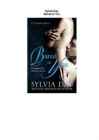
Sylvia Day Bared to You Sylvia Day Bared to You The first book in the Crossfire series, 2012 This one is for Dr. David Allen Goodwin. My love and gratitude are boundless. Thank you, Dave. You saved my life. Acknowledgments My deepest gratitude to my editor, Hilary Sares, who really dug into this story and made me work for it. Basically, she kicked my ass. By not pulling her punches or letting me shortchange the details, she made me work harder and because of that, this story is a much, much better book. BARED TO YOU wouldn't be what it is without you, Hilary. Thank you so much! To Martha Trachtenberg, copy editor extraordinaire. This book is an important one for me and she treated it that way. Thank you, Martha!
(NOT The books are expensive.) I love music. (NOT I love the music.) 10. Use had better, not have better. I think you'd better see the doctor. (NOT I think you have better see the doctor.) We'd better ask John to help us. 11. Use the present progressive am playing, is raining etc to talk about things that are continuing at the time of speaking. I'm playing very badly today. (NOT I play very badly today.) Look! It's raining! (NOT Look! It rains!) 12. Use for with a period of time. Use since with the beginning of the period. for the last two hours = since 9 o'clock for three days = since Monday for five years = since I left school I've been learning English for five years. (NOT I've been learning English since three years.) We've been waiting for ages, since eight o'clock. 13. Don't separate the verb from the object. VERB OBJECT She speaks English very well . (NOT She speaks very well English.) Andy likes skiing very much. (NOT Andy likes very much skiing.) 14
were alone together. She loved him for the way he sat loosely in a chair, for the way he came in a door, or moved slowly across the room with long strides. She loved intent, far look in his eyes when they rested in her, the funny shape of the mouth, and especially the way he remained silent about his tiredness, sitting still with himself until the whiskey had taken some of it away. "Tired darling?" "Yes," he said. "I'm tired," And as he spoke, he did an unusual thing. He lifted his glass and drained it in one swallow although there was still half of it, at least half of it left. She wasn't really watching him, but she knew what he had done because she heard the ice cubes falling back against the bottom of the empty glass when he lowered his arm. He paused a moment, leaning forward in the chair, then he got up and went slowly over to fetch himself another. "I'll get it!" she cried, jumping up. "Sit down," he said.
people, bringing in some new and radical ideas. Republicanism: The doctrine of republicanism asserts a system of a government that is elected by the people of the nation. The roots of this ideology go back to ancient Greece, when the concept of a democratic government was examined by philosophers such as Plato and Aristotle. Individual Liberty: "Life, Liberty, and the pursuit of Happiness" developed as the motto of this era, which forms the cornerstone of the U.S. Constitution today. Since the colonies had very few individual rights, they declared certain fundamental rights that they deemed "inalienable." Democracy: The colonies had no say in the formation of the government, and had no representation in the lawmaking process. Consequently, they were attracted to the idea of democracy, where the government is "of the people, by the people, for the people," as Lincoln later expressed in his Gettysburg Address
translations, if undertaken, may turn into complex exercises of intercultural communication in our global world, confronted with problems of identity and representation. The first section analyses in detail the cultural translations of Romania that the two authors provide for their (Western) readers. Consequently, it brings to the fore intricate acts of mediation and cultural filtering that are part
 annaabi.ee