Leidsid 33 sarnast õppematerjali, mis on seotud failiga "Cultural differences of experiencing hallucinations". Need materjalid aitavad sul teemat sügavamalt mõista.
voice, them, differ, experience, though, part, seem, cultural, described, patient, inter, other, difference, experiences, jake, spirit, there, relationship, cause, clinic, even, ghana, positive, negative, differences, seems, clinical, order, cultures, good, person, different, reported, disorder, sign, know, 2019, talk, related, such, mostly, rate, westspeech or language, but the balance between his intellectual abilities and emotional control had been destroyed. He became highly agitated and irrelevant, often impatient and rude. Study to his frontal lobe provided evidence that the brain affects personality and social behaviors. Discuss ethical considerations related to research studies at the biological level of analysis. In case studies for example, the researcher often obtains deeply personal information, which is not usually shared with other people. Any researcher conducting a case study must be very protective of the identities of the participants. The researcher should also have the professional competence to deal with the focus of the case study. Animal rights!! Explain one study related to localization of function of the brain. Gazzaniga & Sperry held experiments with monkeys, whose brains were `'split `' by cutting off the connection, the corpus colossum, between the two hemispheres of the brain
Visual and auditory hallucinations.(page 65) 5.Cord- pael, nöör A moment of silence as she fingered a long corded necklace.(page 66) 6.Mope- norutama, tusatsema You’ll get a lecture on moping around.(page 71) 7.Oxygen- hapnik Then I sat cross-legged on my bed, gulping oxygen.(pages 116 and 117) 8.Proverbial- üldtuntud I’d led the proverbial sheltered life.(page 117) 9.Disembodied- maisest kehast vabanenud, eemaldunud I’d seen a disembodied hand the second morning and heard a voice later that day. (page 157) 10.Impressionable- kergesti mõjutatav, mõjutatavad At school, I imagine girls won’t look at him twice and here he is, with a pretty girl, young, impressionable, trapped-(page 248) 11.Profanity- vandumine, vandumist He whispered an exasperated, ‘’Chloe!’’ after me, followed by a halfhearted string of profanity, as if he couldn’t work up the energy to even curse properly.(page 279) 12.Distinction- vahe, eristamine, esiletõstmine
It was believed that a witch often joined a pact with the devil to gain powers to deal with infertility, immense fear for her children's well-being, or revenge against a lover. The long-term result of amalgamation of distinct types of magic-worker into one is the considerable present-day confusion as to what witches actually did, whether they harmed or healed, what role they had in the community, whether they can be identified with the "witches" of other cultures and even whether they existed as anything other than a projection. Present-day beliefs about the witches of history attribute to them elements of the folklore witch, the charmer, the cunning man or wise woman, the diviner and the astrologer. Powers typically attributed to European witches include turning food poisonous or inedible, flying on broomsticks or pitchforks, casting spells, cursing people, making livestock ill and crops fail, and creating fear and local chaos.
do it, enabled us to make significant changes. His work has enabled us to gain significant competitive differentiation and advantage" -LAURENCE HOF, Vice President, Relationship Consulting, Advanta Corporation "This will help executives make better decisions and use their influence wisely ... Robert Cialdini has had a greater impact on my thinking on this topic than any other scientist." -CHARLES T. MUNGER, Vice Chairman, Berkshire Hathaway, Inc. If you're wondering why of Latin America, the Far East, and Central Europe. you should buy this new edition of Influence: o More neuroscience evidence of how the influence process works is inte-
cultural matrix within which the particular medium operates. The older unawareness of the psychic and social effects of media can be illustrated from almost any of the conventional pronouncements.-- In accepting an honorary degree from the University of Notre Dame a few years ago, General David Sarnoff made this statement: "We are too prone to make technological instruments the scapegoats for the sins of those who wield them. The products of modern science are not in themselves good or bad; it is the way they are used that determines their value." That is the voice of the current somnambulism. Suppose we were to say, "Apple pie is in itself neither good nor bad; it is the way it is used that determines its value." Or, "The smallpox virus is in itself neither good nor bad; it is the way it is used that determines its value." Again, "Firearms
.........................................................................14 The Urgency of Transformation...............................................................16 A New Heaven and a new Earth...............................................................18 Chapter Two Ego: The Current State of Humanity – 19 The Illusory Self......................................................................................20 The Voice in the Head.............................................................................22 Content and Structure of the Ego.............................................................24 Identification with Things........................................................................25 The Lost Ring...........................................................................................26 The Illusion of Ownership........................................................................29
(Received 24 July 2011; final version received 16 March 2012) Downloaded by [KU Leuven University Library] at 06:11 02 June 2015 It is, in a sense, paradoxical to translate travel narratives for the target readers who actually inhabit the cultural and geographical spaces that these books deal with. However, through the analysis of two such accounts on Romania, Dervla Murphy's Transylvania and Beyond (1992) and Eva Hoffman's (ample chapter on Romania in) Exit into History (1999) this paper aims to show that such
backpacking. Backpacking is instead extended to an ongoing lifestyle practice that on a micro level provides both a unique sense of self to its practitioners and on a macro level comprises a distinct and recognisable social identity. Lifestyle travel in a broader sense can take on different forms, whether, for instance, through backpacking, ocean yacht cruising (Macbeth, 2000) or caravanning (White & White, 2004). What these forms of travel have in common that distinguishes them from many other lifestyle choices is sustained physical mobility. Whilst social scientists dispute just how ‘new’ mobilities are to our lives (Creswell, 2010; Sheller & Urry, 2006), less disputable is that globalisation, with mobility as a crucial characteristic, is leading to different ways of understanding identities and relating to place. As such, the current paper not only contributes the first empirical material to advance past
education more people went to universities. profound change in morals: · No universal value and perspective on things · Multiple truths, multiple perspectives · Nothing has inherent (kaasasündinud, sisemist) importance · Life lacks purpose Science: Albert Einstein-general theory of relativity had a huge impact on culture as well. Everything is relative. Philosophy: Henri Bergson (French) came to challenge the immediate experience ad intuition are more significant than rationalism and science for understanding reality. Opposition to materialism and positivism. Opposition to abstract, untested theories &ideologies. Friedrich Nietzsche ,,God is dead"-through explaining and putting forward theories had killed Christian god. The essence of Freudian theory: the process in the human psyche Superego-society, conscience, morals, traditions, religion, a moral censor
This behavior often illustrates discomfort or dishonesty. Conversely, the person who maintains good eye contact is displaying sincerity, attention, and respect. How can you practice and learn good eye contact? The only way to cultivate good eye contact is to practice doing it each and every time you speak. Here are some tricks for doing that: · Be aggressive. When speaking, pick out a specific pair of eyes in the audience and bore right into them, for just a few seconds. Then move over to another set; do the same, and on and on. · Don't allow your eyes to jump around helterskelter. Do it with purpose. Look left. Make a statement. Look center. Make a statement. Look right. Make a statement. Look at eyes in the back of the room. Make a statement. · Each time your eyes move, pretend to yourself that you are talking only to that individual.
for a particular purpose. No warranty may be created or extended by sales representatives or written sales materials. The advice and strategies contained herein may not be suitable for your situation. The publisher is not engaged in rendering professional sevices, and you should consult with a professional where appropriate. Neither the publisher nor author shall be liable for any loss of profit or any other commercial damages, including but not limited to special, incidental, consequential, or other damages. For general information on our other products and services, please contact our Customer Care Department within the United States at (800) 762-2974, outside the United States at (317) 572-3993 or fax (317) 572-4002. Wiley also publishes its books in a variety of electronic formats. Some content that
village of Tollington in the Midlands in the 1960s. The book follows Meena during her pre-teen years as she is desperate to fit in with the other children in her neighbourhood while forever feeling like an outsider because she is "different". She and her family are the only immigrants in the village. They are trying to work out how to fit into British society while attempting to maintain their own culture. Meena's house is always full of a constant stream of ethnic visitors and her parents seem to see no need to integrate futher. Namely, her parents considered every Indian immigrant in England as a friend or even as a part of the family. Meena's family are keen to see her keeping up the family's cultural tradition. Meena on the other hand, is caught between two cultures. She is having a difficult time adjusting to her surroundings, wishing she were blonde and carefree like her 14-year-old neighbor, Anita (Brewster)
feelings. His account of the war is a bitter invective against sentimental, romantic ideals of warfare. Read an in-depth analysis of Paul Bäumer. Stanislaus Katczinsky - A soldier belonging to Paul's company and Paul's best friend in the army. Kat, as he is known, is forty years old at the beginning of the novel and has a family at home. He is a resourceful, inventive man and always finds food, clothing, and blankets whenever he and his friends need them. Albert Kropp - One of Paul's classmates who serves with Paul in the Second Company. An intelligent, speculative young man, Kropp is one of Paul's closest friends during the war. His interest in analyzing the causes of the war leads to many of the most critical antiwar sentiments in the novel. Müller - One of Paul's classmates. Müller is a hardheaded, practical young man, and he plies his friends in the Second Company with questions about their postwar plans.
religion. American Enlightenment a gradual but powerful awakening that established the ideals of democracy, liberty, and religious tolerance in the people of America. If there were just one development that directly caused the American Revolution and uplifted the intellectual culture of the continent while it was only a British colony, it would be the American Enlightenment. Broadly, the Enlightenment was an intellectual movement that changed the fundamental perspective of the masses, urging them to foster skepticism and apply scientific principles in matters of religion and morality. Its chief values were: Liberty, Democracy, Republicanism, Religious Tolerance. The movement gained momentum with the publication of landmark texts like Thomas Paine's The Age of Reason, and the Jefferson Bible, but the most influential thinker was undoubtedly John Locke, whose ideas spread to the colonies and across Europe
and smell. They are able to recognize and remember many diferent sheep and humans for several years or more and appear to have some capacity for forming mental images of the faces of absent individuals. The precence of such social cognition abilities in this species means that we must pay careful attention to welfare factors such as the composition and stability of their social environment as well as the nature of our own interactions with them. To many humans sheep are regarded as being as close to an automaton and amindless animal species as can be imagined and any serious consideration of their cognitive, social and general mental faculties deemed futile. I can give example about sheep memory. Every summer, just about time when apples are cooked, my mothers sheep flock goes to find appletrees. They could go there every season and after winter in barn it would be obvious that they wouldnt even remeber but they do.
and "Speaker" series. He has also announced his plan to write two more novels: Shadows in Flight, a book that connects the "Shadow" series and "Speaker" series together, and Ender in Exile, a book that takes place after Ender's game and before Speaker for the Dead. Furthermore, Card recently announced that Ender's Game will soon be made into a movie. Though Card is best-known for "Ender's Game", he has also written in a variety of other genres, including plays, short stories, books on writing, the Homecoming series, other science fiction books, and nonfiction, such as articles on computer technology. Orson Scott Card in 2008 and when he was younger. The Setting The novel starts off on Earth, with scenes at the school and the Wiggin home. Little attention is given to the details of this setting, not even the name of the city, and so it comes across as a standard American neighborhood.
"Anna Karenina" Lev Tolstoi Part 1 The novel opens with a scene introducing Prince Stepan Arkadyevitch Oblonsky, "Stiva", a Moscow aristocrat and civil servant who has been unfaithful to his wife Darya Alexandrovna, nicknamed "Dolly". Dolly has discovered his affair - with the family's governess - and the house and family are in turmoil. Stiva's affair and his reaction to his wife's distress shows an amorous personality that he cannot seem to suppress. In the midst of the turmoil, Stiva reminds the household that his married sister, Anna Arkadyevna Karenina is coming to visit from Saint Petersburg. Meanwhile, Stiva's childhood friend Konstantin Dmitrievich Levin ("Kostya") arrives in Moscow with the aim of proposing to Dolly's youngest sister Princess Ekaterina Alexandrovna Shcherbatskaya, "Kitty". Levin is a passionate, restless
2003, Buckley, 2003). According to UNWTO, international tourist arrivals have reached 1,087 million in 2013. Nash (1995) noted that any human subject of such magnitude should be analysed by anthropological studies, rather than economical. Anthropology is human studies – that investigates the past, the present and the future, culture differences and similarities. Haviland, (1999). Nash (1996) also describes that tourism, including adventure tourism, is a part of socio- cultural anthropology studies. These studies are using the term of culture to refer to various activities as tourism does not take place in a vacuum. Nash (1996) highlights, that anthropology of tourism includes in itself linkages or shortcomings between social life and culture. Taylor (1871) defines culture as a whole complex, which includes knowledge, belief, art, law, 1
AMBER AND RUSSET - LATE COLOUR CHANGE GENES Copyright 2014, Sarah Hartwell The ancestors of the domestic cat were nondescript black/brown striped tabbies. Over the centuries, mutation produced a wide array of colours based on 2 different pigments. Eumelanin gives the blacks, browns and blues while phaeomelanin gives the reds, fawns and creams. A few other genes give further variations on those colours such silvers, colourpoints and solids/selfs. Mutations continue to occur and unexpected colours also turn up due to inbreeding where recessive genes, hidden for generations, start showing up. AMBER AND LIGHT AMBER During the 1990s, some purebred Norwegian Forest Cats in Sweden produced chocolate/lilac and cinnamon/fawn offspring. However, those colours are not found in the purebred Norwegian Forest Cat gene pool
· Hereditary · Naturalists tried to apply in fiction the processes of natural sciences · Writers task is to record facts, systems of behaviour, living conditions, never revealing any natural unbiased (completely natural) · Point of view: amoral-outside the category of morality, neither good or bad · Naturalist find it absurd to blame the wicked. These criminals are doing what nature, environment, their unconscious tells them to do. Naturalists do not judge their characters, they simply report. Try to describe facts like they are. Naturalists depict the lower, coarser forms of life. · Drab, squallid set of scene. Revolting, disgusting · Characters are people with strong animal desires · Neurotic characters unable to understand the forces that control them · By the end of the 18th century the naturalism depicts in europe, but stars to become
Chapter 21 Chapter 42 Chapter 1 It is a truth universally acknowledged, that a single man in possession of a good fortune, must be in want of a wife. However little known the feelings or views of such a man may be on his first entering a neighbourhood, this truth is so well fixed in the minds of the surrounding families, that he is considered the rightful property of some one or other of their daughters. "My dear Mr. Bennet," said his lady to him one day, "have you heard that Netherfield Park is let at last?" Mr. Bennet replied that he had not. "But it is," returned she; "for Mrs. Long has just been here, and she told me all about it." Mr. Bennet made no answer. "Do you not want to know who has taken it?" cried his wife impatiently. "You want to tell me, and I have no objection to hearing it." This was invitation enough. "Why, my dear, you must know, Mrs
Appendix – page 11-14 2 Introduction I selected this theme because it was the most interesting one for me. Aborigines have interested me for a long time now so doing this essay is really fun for me. Australian Aboriginal culture is one of the world's longest surviving cultures. Australian Aborigines, also known as Indigenous Australians , are the native people of Australia . Many of them suffered when white people from Britain arrived in Australia, because of disease, the loss of their hunting lands, and unfair laws. Australian Aborigines are those people regarded as indigenous to the Australian continent. In the High Court of Australia, Australian Aborigines have been specifically identified as a group of people who share, in common, biological ancestry back to the original occupants of the continent. History
Psychology Gleitman Blood flow in the brain during different activities: the rate of blood flow is measured by special radiation counters that are placed at various points of the skull and that monitor radiation from mildly radioactive gas injected into the bloodstream. Blood flow pattern depends on what the patient does ( different pattern is found when person is reading aloud, yet another when he watches a moving light and so on). Ambiguous sights and sounds: The way ambiguous figures are perceived often depends on what we have seen just before. For example, if we are first shown an unambiguous figure of a rat, the ambiguous picture will be seen as a rat. If we are first exposed to an unambiguous face, we see the ambiguous figure as a face. What holds for visual patterns also holds for language
Education Education is so multifaceted that it is difficult for me to know where to begin discussing it, or how to prioritize the many factors. Relaying my own experience is easy: I had a standard classroom approach, supplemented by inordinate reading. In only the briefest and least memorable instances did I receive any individual tutoring. Education is commonly thought of as the job of schools. Adults cry "educate our children!" Everyone has opinions about the best way to do the job. It is of urgent importance, and all the numerous factors are much studied, debated, and new (or old) ideas continually tested or retested. Some people say "it's as simple as .
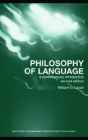
Philosophy of Language Philosophy of Language: a Contemporary Introduction introduces the student to the main issues and theories in twentieth and twenty-first-century phi- losophy of language, focusing specifically on linguistic phenomena. Topics are structured in four parts in the book. Part I, Reference and Referring, includes topics such as Russell's Theory of Descriptions, Donnellan's distinction, problems of anaphora, the description theory of proper names, Searle's cluster theory, and the causalhistorical theory. Part II, Theories of Meaning, surveys the competing theories of linguistic mean- ing and compares their various advantages and liabilities. Part III, Pragmatics and Speech Acts, introduces the basic concepts of linguistic pragmatics,
further knowledge on the prevention and treatment of coronary artery disease. In this investigation I will study two similar prospective studies on plant based diets and cardiovascular diseases, mainly coronary artery disease, to find out if the outcomes of one have anything common with the other. I want to find out whether the outcomes of these studies are reasonable and have any evidence from other studies to support them. My sources include a wide variety of medical journals, studies and webpages. The Californian Seventh-day Adventists study found vegetarian men to have significantly lower risk of coronary artery disease compared to non-vegetarians whereas vegetarian women were at the highest risk. The Oxford vegetarian study, on the other hand, found all vegans and vegetarians to have lower mortality rates when it came to coronary artery disease
friends, he is prone to petty cruelty toward Cohn. Jake Barnes The key events in the formation of Jake's character occur long before the novel's action begins. As a soldier in World War I, Jake is wounded. Although he does not say so directly, there are numerous moments in the novel when he implies that, as a result of his injury, he has lost the ability to have sex. Jake's narration is characterized by subtlety and implication. He prefers to hint at things rather than state them outright, especially when they concern the war or his injury. Early in the novel, for example one must read the text very closely to grasp the true nature of Jake's wound; it is only later, when Jake goes fishing with Bill, that he speaks more openly about his impotence. Jake's physical malady has profound psychological consequences. He seems quite insecure about his masculinity. The fact that Brett, the love of his life, refuses to enter into a relationship with him compounds this problem
recommendation you wish to make. This requires an ability to emphasise certain facts and 'bury' others. However, all facts need to be linked to give a logical flow. This unit will give you language practice in this important aspect of producing written documents. Evaluation Exercise 1 Connectives Study the following two versions of the same text and decide which do you find easier to read and why? what is the difference between them? When the ICN equipment was first introduced, it was found to provide a flexible and advanced system. Its speed of operation was greater than comparable hardware then available. In recent months major faults have developed in the equipment. The local agent appears incapable of providing a reliable repair service. The system is regularly out of order for several days at a time. The makers have agreed to replace the system free of charge
Finally, the Cadle Primary School in Swansea has been used as a case study to investigate the potential change in attitudes in children after the school placed the UNCRC at the heart of its ethos and curriculum across all areas of the school. The primary goal is to critically analyse the commitment of the Cadle towards children`s participation within school and explore the possible spaces created for children that allow them to actively engage with meaningful discussions on the matters that concern them. 3 Introduction Children have `somewhat tenuous relationship to citizenship` as a number of authors interested in children`s citizenship have noted.1 Historically, they have not been considered as subjects of rights, but rather as objects of social concern or citizens-in-making. Children have
There are all kinds of wars in Africa than the rest of world put together. The majority of so-called Africans leaders want to stay in power until the day their bodies are put in the grave. Through buffoonery, utter mismanagement and downright stealing of the wealth of the masses, these leaders have so impoverished Africa that we are now nothing but a beggar continent. We beg for everything; we are more dependent on our colonial masters than when we received our independence from them. Africa owes the West more money than we and our generations to come can pay. I arrived in America in December of 1967as an official of what we believed was going to be a dynamic African nation – the young Republic of Biafra. But Biafra was defeated and Nigeria remained one, as a giant of Africa. In the last 32 years, I have watched with horror and outright helplessness as the downward slide of the African race continues to escalate. But rather than address the problems, we
Digitalization has also brought us many new platforms and more possibilities for media to reach even more people. The internet is allowing anyone to share information instantly to all over the world. It might be thought that with all these new developments, problems like controlling of the media and deceiving people are gone, but it seems that things are not that clear. When the first newspapers appeared, they were just a part of small businesses, whose goal was to make money by selling the reports of recent events. People bought the papers to stay up to date or read something interesting about a distant occurrence. However the businesses soon changed into not only covering the recent news, but also politics and viewpoints of different people. The newspaper publishers had changed from selling news to being dealers of public opinion. (Habermas, 1991). The readers had no doubt to question the content of
consistent person or group that you are able to connect with daily," said Ms. Berger, a musician and piano teacher who has been renting a room from another young woman in an apartment in Park Slope. "And I'd rather have a lot of people to share my day with." The impetus for the group home or collective they hope to form is less about finances -- though it is true that pooling resources yields better real estate -- and more about community building. Indeed, Ms. Berger and others seem to share the ideals of the old- fashioned communes of yore, except that their groups are tiny, urban-centric and linked to outside interests like fixing bikes or, here in New York City, membership in the Park Slope food co-op. And like communes, many collectives give themselves names: The House of Tiny Egos (a name that's decidedly more evocative than, say, Findhorn, that of the hoary Scottish commune) is a five-person collective in a century-old brick bungalow
No other species has ever wielded such power, and no species could. The technology behind the atomic bomb only exists because of a cooperative hive mind: hundreds of scientists and engineers working together. The same unique intelligence and cooperation also underlies more positive advances, such as modern medicine. But is that all that defines us? In recent years, many traits once believed to be uniquely human, from morality to culture, have been found in the animal kingdom (see part one in this two-part series). So, what exactly makes us special? The list might be smaller than it once was, but there are some traits of ours that no other creature on Earth can match. No animal can get close to the devastation humans can cause (Credit: Thinkstock) No animal can get close to the devastation humans can cause (Credit: Thinkstock) Ever since we learned to write, we have documented how special we are. The philosopher Aristotle marked out our differences over 2,000 years ago
 annaabi.ee