 50 punkti
Autor soovib selle materjali allalaadimise eest saada 50 punkti.
50 punkti
Autor soovib selle materjali allalaadimise eest saada 50 punkti.
 ~ 1 leht
Lehekülgede arv dokumendis
~ 1 leht
Lehekülgede arv dokumendis
 2009-05-17
Kuupäev, millal dokument üles laeti
2009-05-17
Kuupäev, millal dokument üles laeti
 29 laadimist
Kokku alla laetud
29 laadimist
Kokku alla laetud
 1 arvamus
Teiste kasutajate poolt lisatud kommentaarid
1 arvamus
Teiste kasutajate poolt lisatud kommentaarid
 ClickOnMe
Õppematerjali autor
ClickOnMe
Õppematerjali autor
crime control strategies. The classical approach holds people to choose freely among alternatives in behaviour. In this view, the perpetrator plans his or her actions before carrying them out. The social environment in which the person is amidst of, is a key factor in causes of criminal behaviour, with weak or broken bonds to family, school, and religion being the catalyst of criminal behaviour. They may not see the benefits of adhering to conventional social values and believe crime is a way to improve their social conditions. Personal choice weighs over and dominates the reasons of individual actions. Through rational conscious thoughts one may select the temptations of preference. One may think of the consequences of one's actions or think that one is too smart to get caught. Regardless of what is coming into us from external sources, we choose what we want and what seems most appealing. People balance the risks and costs involved in doing a certain act. Upon
The trend was started by Raivo Roosna and Aleks Lepajõe who robbed the Tillander store in Helsinki in 1985. In December 2006, it was estimated that Estonian criminals were responsible for 140 robberies of jewellery and watch stores in Finland, the Netherlands, Portugal, Italy, Spain, France, Germany, the United Kingdom, Denmark, and Sweden during the last three years. The value of the lost property is estimated to be 25 million Euros.[1] Today transnational Estonian organised crime is predominantly about smuggling drugs, alcohol, and other illegal or high-tax goods from Russia to Finland, Sweden, and elsewhere in the Baltic Sea. Estonia is a relatively safe country, although there are some situations, where people should be more careful crime has been increased lately. We could count different type of crimes, but most common are smuggling and robberies. Many people like something, what do not belong to them. On the one hand, news are
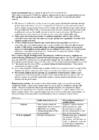
not courts. The clear distinction between legislature and judiciary has weakened in many counties as the courts are able to challenge the legality of a law made by parliament. Lawmakers were often influenced by the canon law. Canon law had a stronger influence in countries with less secular ideology. 5. Civil law Civil law – the part of the legal system that relates to personal matters, such as marriage and property, rather than crime Public law – the area of law that deals with the relationship between the government and other organizations or between the government and the public Private law – the area of law that deals with disagreements between people or companies Family law – an area of the law that deals with matrimonial matters and domestic relations Plaintiff – someone who makes a legal complaint against someone else in court
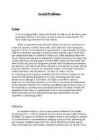
Social Problems Crime In the sociological field, crime is the breach of a rule or law for which some governing authority or force may ultimately prescribe a punishment. The word crime originates from the Latin crimen. When society deems informal relationships and sanctions insufficient to create and maintain a desired social order, there may result more formalized systems of social control imposed by a government, or more broadly, by a State. With the institutional and legal machinery at their disposal, agents of the State can compel individuals to conform to behavioural codes and punish those that do not
descriptive law (kirjeldav õigus) - laws which simply describe how people or even natural phenomenas usually behave nation (riik) - country with its own goverment citizen (kodanik) - person native of a country; realationship between country and a person stranger (välismaalne) - person who is unfamiliar, from another country penalty (karistus) - punishment fixed by law, as for a crime or from any soical groups goverment (valitsus) - organization which controlls a stre or community System of Courts (kohtusüsteem) - organization applying law in the name of states to commit a crime (kuritegu läbi viima) - breaking a law, usually given out by the goverment fine (trahv) - certain sum of money person pays for breaking a law corruption (korruptsioon) - dishonest or unethincal conduct by a person entrusted with a position of authority
Public International Law is a system of law, different from domestic law. Why is this system unique? Usually law regulates relations between people, people and the state etc, PIL regulates relations between states. Thats why PIL is important for international relation students. PIL influences the life of everybody, it doesn't regulate people directly but indirectly (through the decisions of the states), because it's everywhere. It's like air. E.g. when you want to send a letter to Brazil, you put a stamp from your own country and send it from your post office and the letter gets delivered. Why is this so easy, because there are certain international conventions that regulate postal services. E.g. traffic signs are almost the same everywhere, why? Because of certain int conventions that require the states to have more or less unified traffic signs. States apply international regulations to national regulations and they have to be in accordance with each other, the s
Harsher punishments will reduce the amount of crime. Is it safe to live your life nowadays? Unfortunately it does not seem like that. Almost everyone can say that they have had some contact with crimes, it can vary from a minor offence to even a murder. But how can we reduce the amount of crime? Are harsher punishments the solution? Firstly I think that if the punishments are as weak as they are now, it won't make the criminals think. They get punished and still commit crimes. Probably the biggest punishment for a petty theft is community service which isn't much of a punishment. It gives the feeling that a person can do what he wants, live like he wants and nothing happens. Furthermore I think that the life in prison is actually quite good. A place
commit crimes is taken away by moral reformation. Thirdly, the culprit can be deterred, where it is possible that the desire to commit crimes still exists but the fear of doing so would be too great because the possibility by a certain punishment is too intimidating (Twinning, 1973). The punishment has to be accompanied by as much disadvantage as advantage. It also has to correspond to the preventive considerations. The severity of the punishment must be proportional to the damage the crime caused (Ibid.). Alan Dershowitz' (2002) vision states that the simple cost-efficiency analysis for resorting to illegal torture seems overbalanced: it is certainly better to inflict illegal pain to one guilty terrorist who is illegally holding back important information that could help us avoid a terrorist act than to allow a big amount of innocent people to die. Pain is a lesser and repairable damage than death; and the lives of a thousand innocent people
 annaabi.ee








Kõik kommentaarid