Leidsid 33 sarnast õppematerjali, mis on seotud failiga "Buying on credit is an alternative way". Need materjalid aitavad sul teemat sügavamalt mõista.
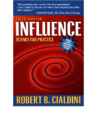
credit, know, alternative, repay, borrow, money, later, monologue, introduction, body, first, offer, useful, term, bill, month, travelling, purchase, however, before, important, able, back, exist, anyway, easy, often, peole, live, things, haven, enough, conclusion, methodIn a re- lated vein, the book might be seen as a way to demonstrate that, properly presented, what often seems like dry science can actually prove to be lively, useful, and relevant to all readers' personal lives. Comment on the Fifth Edition of Influence: Science and Practice It has been some time since Influence was last published. In the interim, some things have happened that deserve a place in this new edition. First, we now know more about the influence process than before. The study of persuasion, compli- ance, and change has advanced, and the pages that follow have been adapted to re- flect that progress. In addition to an overall update of the material, I have devoted special attention to updated coverage of popular culture and new technology, as well as to research on cross-cultural social influence-how the influence process works similarly or differently in various human cultures. I have also expanded a fea-
New Media Economy Social media information and data collection and security In this brief essay, i would like to focus on the social media platforms in our moren society. How people use them, what kind of information we give away, what companies will do with this. Information sharing and data protection has become very popular theme in the recent few years. People care more about their privacy and avoid „big brother“ foreshadowing. It is important to know what social media platforms promise and are they really going to keep it. Users should think about what they share and what kind of information they generate. Because it is all recorded and some info can be traced back to real people. Privacy and data protecion topics are becoming more and more important and the amouts of data generated is becoming larger. When wrongly access this kind of data, a lot damage could be done by criminals
1. Dear Mr Miller, I received your kind invitation to the reception. Unfortunately, owing to other commitments. I will be unable to attend ... 2. Dear Ralph, l just got your invitation to the company's event. l `m afraid I can't make it because I've a/ready made plans which l can "t change ... 3. Dear Sirs, I am writing to complain about the poor quality of the items which I received from your company. I have no other alternative but to cancel the order which 1 placed earlier this week ... 4. ... thus, I recommend that you accept this advice on the matter. I am pure that the suggestion offered is the best solution. Please let me know if this was helpful. Yours sincerely, Lee Jones 5. ... I would appreciate a reply at your earliest convenience. I look forward to meeting you to discuss employment opportunities. Yours faithfully, Nicole Porter Paragraph Plan for Letters
14 didn't want 4 She had planned a route to the students aren't wearing uniform. It 15 insisted looks as if one of them is asleep. summit. It's clear that the girl in the front Challenge! 5 She hadn't got to know the other desk isn't interested in the lesson Students' own answers climbers in the group. or perhaps she doesn't understand 6 She had spent a week at high
Performing the presentation Introducing yourself and your talk Greeting, name, position, opening formalities Good morning, ladies and gentlemen. Good afternoon, everyone. Good morning. My name's (...). I'm the new Finance Manager. Good morning. Let me start by saying just a few words about my own background. I started out in... Welcome to Standard Electronics. I know I've met some of you, but just for the benefit of those I haven't, my name's (...). It's very nice to see you all here today. I'm very pleased to be here. I'm glad you could all make it. Thanks for inviting me. Thank you (all) for coming. Title/Subject I'd like to talk (to you) today about ... I'm going to present the recent ... explain our position on ... introduce ... brief you on ...
H-Helen, J - Julia 1.Receiving a money order H: - Hello, I would like to cash a money order. J: - Hello! You should present your identity card. H: - But, you know, I'd like to receive money order for my sister. How do I go about it? J: - Your identity card and letter of attorney, please. H: - Here you are. J: - Well...Unfortunately, I can't cash your money order your signature is not witnessed. H: - Ok. Than, please, I'd like to cash my money order. J: - Take this form and fill it in. May I see your passport? H: - Yes. Please. So...Should I write my full name, my passport number and the sum of money that has been sent to me, right? J: - Certainly. How would you like the money? H: - I prefer one hundred rouble notes, if you don't mind. J: - Here is your money. H: - Thank you Getting a post-restante. H: - Hi, Julia! What are you doing here? J: - I'm getting post restante letter from Boris... H: -Ah, yeah, remember him
Money in our everyday life Money plays a quite important role in our everyday life First of all, nowadays mostly everything circles around money and how much people can afford things. Secondly, every adult has to work so they could get the paycheck at the end of the month they need to pay the bills, buy food and to pay for any other expences. On the other hand, money is not the only thing in the world and money does not give you everything. You can't buy a family and friends. In conclusion, even if people work every day in order to pay for their expences, money is not the only thing in the world that makes people happy and satisfied with their life Advertising on TV Advertising on TV is a very popular way that companies use to advertise their products. First of all, advertisements on TV are called commercials and to get air time on Tv is very expencive and not every company can offord it.
Neanderthals (left) didn't fare as well as we did (Credit: SPL) Neanderthals (left) didn't fare as well as we did (Credit: SPL) Humans and chimpanzees diverged from our common ancestor more than six million years ago. Fossil evidence points to the ways which we have gradually changed. We left the trees, started walking and began to live in larger groups. And then our brains got bigger. Physically we are another primate, but our bigger brains are unusual. We don't know exactly what led to our brains becoming the size they are today, but we seem to owe our complex reasoning abilities to it. It is likely that we have our big brain to thank that we exist at all. When we Homo sapiens first appeared about 200,000 years ago we weren't alone. We shared the planet at least four other upright cousins; Neanderthals, Denisovans, the "hobbit" Homo floresiensis and a mysterious fourth group. The human brain is advantageously big (Credit: Thinkstock)
............................................................24 Identification with Things........................................................................25 The Lost Ring...........................................................................................26 The Illusion of Ownership........................................................................29 Wanting: The Need for More....................................................................31 Identification with the Body.....................................................................33 Feeling the Inner Body.............................................................................34 Forgetfulness of Being.............................................................................35 From Descartes's Error to Sartre's Insight...............................................36 The Peace that Passes All Understanding................................................37
Where’s Anna? – I’m not sure. She may be at work. (= possibility) • Modal Verbs express our attitudes, opinions and judgements of events. Who’s that knocking on the door? - It’s James. (This is a fact.) - It could/may/might/should/can’t/’ll be James. (These all express our attitude or opinion.) Expressing permission Can, may and be allowed to are used to express permission. Can is more informal and usually spoken. You can borrow my bike, but you can’t have the car. I need it. May I smoke in here? You can’t come in here in those muddy shoes! You’re allowed to get married when you’re 16. Are we allowed to use Power Point at the exam? Expressing obligation Have to, must and should are used to express obligation. Positive negative and interrogative forms of ‘have to’ I You have to We don’t have to work hard to
7 ___________________________________________________________________________________________ They usually go to bed at about midnight. 2 Macmillan Publishers Limited 2001. This sheet may be photocopied for use in class. 8 ____________________________________________________________________________________________ Yes, we own a BMW. 9 ____________________________________________________________________________________________ I don't know what the word means. Look it up in a dictionary. 10 ____________________________________________________________________________________________ No, I don't like the Spice Girls. Marks: /10 Words, words, words 4 Complete these sentences using the correct form of the words below. There is one extra word which you do not need to use.
of world put together. The majority of so-called Africans leaders want to stay in power until the day their bodies are put in the grave. Through buffoonery, utter mismanagement and downright stealing of the wealth of the masses, these leaders have so impoverished Africa that we are now nothing but a beggar continent. We beg for everything; we are more dependent on our colonial masters than when we received our independence from them. Africa owes the West more money than we and our generations to come can pay. I arrived in America in December of 1967as an official of what we believed was going to be a dynamic African nation – the young Republic of Biafra. But Biafra was defeated and Nigeria remained one, as a giant of Africa. In the last 32 years, I have watched with horror and outright helplessness as the downward slide of the African race continues to escalate. But rather than address the problems, we
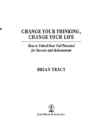
the last great frontier, and the first—your mind! You are about to have a wonderful experience. MARK VICTOR HANSEN Author, Chicken Soup for the Soul ccc_tracy_fm_i-xviii.qxd 7/7/03 3:22 PM Page ix Contents Acknowledgments xi Introduction xiii Chapter 1 Change Your Thinking 1 Chapter 2 Change Your Life 18 Chapter 3 Dream Big Dreams 40 Chapter 4 Decide to Become Rich 52 Chapter 5 Take Charge of Your Life 77 Chapter 6 Commit to Excellence 90 Chapter 7 Put People First 118
14. Good institutions help to overcome human moral inertia. 15. I am not one of your little friends. 16. If a dimension is anywhere it's everywhere. 17. If God's not crazy, why are you? 18. If one makes a promise one shouldn't have made it cannot stand against the obligation to do the right thing. 19. If you odn't give a certain amount of attention to filtering distractions, every distraction is a catastrophe. 20. If you don't know what your duty is, your duty is to find out. 21. If you're not an animal, then you must be a vegetable. 22. If you want to get along you have to get along with those who don't want to get along. 23. If you whine whenever anybody messes with your crutches you can't claim not to be crippled. 24. I hate an unfair fight, so I need to be ganged up on. 25. Inattention is not O.K. 26. Injustice in your vicinity is your business--particularly your own. 27
6 drop me off A. So there you are ... problem solved! 7 to lay off Rosie Yeah, these are good 8 turned up intentions, but not if we end up poisoning people in the long run. I 1F Discussion page 9 don't know, I just find the whole thing unnatural. I don't think we have a right 1 1 laboratory 5 crops to `play God' in this way. 2 controversy 6 harmful Leo I see what you mean. But to be 3 discredited 7 term honest with you, people have been 4 campaign 8 crisis crossing breeds for hundreds of years.
Also this assignment is provided with the SWOT analysis, where strengths, weaknesses, opportunities and threats are examined. Mini Mini was at first manufactured by the Austin Motor Company Ltd. In 1957 Alec Issigonis was commissioned to develop a new type of small car. At the same year were the first sketches of Mini made and after that the Mini model is been created from wood and also the most important mechanical parts for Mini has been developed. Four years later the Mini hits the streets. In 1965 the first Mini with an automatic transmission enters the market and in 1969 Mini gets itself an own badge. In 1971 Mini was the best-selling British car in the world. 1994 BMW group bought the Mini and year after that Mini was voted as the best car of the century by the car magazine readers in the UK and four years later Mini earned the same award in Europe. In 1998 the Mini was listed in the Guinness Book of Records as the Britain's most successful car
MODULE 1 Greeting. Introducing oneself and the others. The alphabet. Spelling. The tenses. How to introduce yourself and others Formal introductions How to respond and reply to an May I introduce myself? I am John introduction Smith. How do you do. Allow me to introduce John Smith to Pleased to meet you. you. Standard introduction Nice to meet you. I'd like you to meet John Smith. Hello. I want you to meet John Smith. I'm so pleased to meet you. This is Jane Smith. I'm Jane Smith. My name's John Smith. Informal introduction Hi. John. Jane. Hello. Titles: Mr Mrs Miss Ms Ms is a modern form of address for women. It replaces the traditional forms of Mrs and Miss.
worse than you do. ' · I'm tired of waiting for you. I want to leave, but something about you keeps pulling me back in. · The difference between physical attraction & love is the ability to see the same person at their best and at their worst. · If it's not meant to be... then just turn around, leave, & move on. It may not be what you want, but this shit is not what you deserve. · If you love somebody and you want to be with them, then go get them. Deal with the mess later. · Dear haters, for God's sake, breathe that fucking air and live your own life! · I'm the type of girl who will try her best to get over you, but I just end up falling even harder. · Don't think too much. Just stop, close your eyes, and follow your heart. I guarantee you it knows the way. · Life is a bitch, pain is a whore, and problems are the motherfuckers who won't leave me alone. · It's either you love me, or you don't. So make up your mind.
Education Education is so multifaceted that it is difficult for me to know where to begin discussing it, or how to prioritize the many factors. Relaying my own experience is easy: I had a standard classroom approach, supplemented by inordinate reading. In only the briefest and least memorable instances did I receive any individual tutoring. Education is commonly thought of as the job of schools. Adults cry "educate our children!" Everyone has opinions about the best way to do the job. It is of urgent importance, and all the
A common example of a free rider problem is defense spending: no one person can be excluded from being defended by a state's military forces, and thoes free riders may refuse or avoid paying for being defended, even though they are still as well guarded as those who contribute to the state's efforts. Therefore, it is usual for governments to avoid relying on volunteer donations, using taxes and, in some countries, conscription instead. In the case of defense spending, alternative perspectives of the free rider problem also exist. A free rider may be an individual or group of military contractors, ideologues, government officials or lobbyists that inflate the risk of enemies, or even convinces the state to launch an unnecessary and expensive war, in order to sell more arms and consolidate their power. In this example, the free riders avoid all of the personal risks of war while enjoying the benefit of tax dollars spent under the false popular perception of
What is the real meaning of life? Why prefer one thing to another? Can we trust observation? It’s raining outside - how do you know it is? I can see it’s raining. How to convince yourself its raining? A good reason to doubt - 49 other peaople have the same opinion. Falsifiable → possible; not falsified World disappeared in 2012 and got recreated 3 secs later → unfalsifiable - cannot prove it’s true/wrong, cannot provide any tests to prove it. Or - one or another but not both → exclusive - one or another (both) → inclusive (Invited those who are managers or specialists - both) Arguments valid or not - logic is a science where to decide it Different arguments lead to different methods. 1 - Recognizing arguments What is an argument?
I will talk about the different types of identity theft, the most common way they take place and what consequences they might have. I will also talk about some of the examples and point out actions everyone can take to minimize the chance of becoming a victim of an identity theft. What is Identity theft Identity theft is defined as the deliberate use of someone else's identity, usually as a method to gain a financial advantage or obtain credit and other benefits in the other person's name, and perhaps to the other person's disadvantage or loss. The person whose identity has been assumed may suffer adverse consequences if they are held responsible for the perpetrator's actions. Identity theft occurs when someone uses another's personally identifying information, like their name, identifying number, or credit card number, without their permission, to commit fraud or other crimes
And free with your advice on all occasions. DAMIS But . . . MADAME PERNELLE You're a fool, my boy--f, o, o, l Just spells your name. Let grandma tell you that I've said a hundred times to my poor son, Your father, that you'd never come to good Or give him anything but plague and torment. MARIANE I think . . . MADAME PERNELLE O dearie me, his little sister! You're all demureness, butter wouldn't melt In your mouth, one would think to look at you. Still waters, though, they say . . . you know the proverb; And I don't like your doings on the sly. ELMIRE But, mother . . . MADAME PERNELLE Daughter, by your leave, your conduct In everything is altogether wrong; You ought to set a good example for 'em; Their dear departed mother did much better. You are extravagant; and it offends me, To see you always decked out like a princess. A woman who would please her husband's eyes Alone, wants no such wealth of fineries. CLEANTE But, madam, after all . . . MADAME PERNELLE Sir, as for you,
Owning a credit card can be a very great thing. Whether buying things online, booking tickets or a hotel room or just needing some emergency cash, having a credit card can be really helpful. However, getting a credit card is also a huge responsibility and if you do not keep an eye on your spendings, you may get into some serious trouble. That raises a question- are credit cards a blessing or a curse? On one hand, credit cards are comfortable and easy to use and they can make buying things much less stressful, because you do not have to carry along huge amounts of cash. Besides, credit cards are really useful in situations where you have an emergency in which you need to buy something, but you just do not have cash with you at the moment. By using a credit card, you can get the thing you need and do not have to worry about money until later.
Buying on credit A credit card is a great way to cover one`s expenses when the next paycheck hasn`t arrived yet. Such kind of activity is the most popular in the Unites States of America. Advertisers always praise how buying on credit is beneficial but people also need to get familiar with it`s disadvantages. First of the various utilities is space savings. It is very easy to carry on credit card in a purse because it takes less room than a bundle of dollar bills. Secondly, when we lose cash then it´s permanently gone but in case of missing credit card it is possible to cancel the bank account. Another important benefit is ability to handle expenses that might be out of one´s reach. In case of an emergency, such as car breakdown or illness, it is very useful. Despite of great advantages, people should keep in mind it`s downsides. A credit card leads
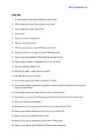
8. Have you ever been to an openair concert? What was it like? 9. Do you sing at family parties? Where else Estonians like to sing? 10. Have you got a collection of cassettes, CD´s or LP´s at home? 11. Have you watched a ballet on TV? 12. Which do you prefer ballet, drama or musical? 13. How often do you go to the theatre? 14. Do you prefer going to the theatre or watching TV? Why? 15. Do you prefer buying a cheap ticket and getting a seat at the back or spending more money and sitting in the front? Why? 16. Do you prefer going to the theatre with your family or friends? Why? 17. How old were you when you first went to see a puppet show? Do you remember what it was? 18. Who is your favourite actor/actress? 19. What performance or concert would you like to see if it were possible? Why? 20. Have you got a drama club at your school? Are you a member of it? 21. Have you ever worn a costume? When? Why? 22. Have you ever seen a rehearsal of a show? When
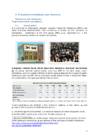
5. Financial Institutions and Services Objectives and Outcomes To give overview of main players. 5.1. Introduction It is common to distinguish between monetary financial institutions (MFIs) and other financial intermediaries. The distinction is based on the functions of institutions institutions in the first group (MFIs) play important role in the process of money creation in modern economies. European Central Bank (ECB) describes Monetary financial institutions as including national central banks (and also ECB in the euro area), credit institutions and non-credit institutions which receive deposits from general public (individuals and non-MFI firms) and grant credit and/or invest in securities. Major non-credit MFIs in Europe are money market funds. Credit institutions are defined in the directive 1 relating to the taking up and
CA 92618 by arrangement with Learners Publishing Pte Ltd, Singapore Copyright ©2007 by Saddleback Educational Publishing. All rights reserved. No part of this book may be reproduced in any form or by any means, electronic or mechanical, including photocopying, recording, or by any information storage and retrieval system, without the written permission of the publisher. ISBN 1-59905-201-6 Printed in the United States of America 13 12 11 10 09 08 07 9 8 7 6 5 4 3 2 1 Introduction Grammar is a very old field of study. Did you know that the sentence was first divided into subject and verb by Plato, the famed philosopher from ancient Greece? That was about 2,400 years ago! Ever since then, students all over the world have found it worthwhile to study the structure of words and sentences. Why? Because skill in speaking and writing is the hallmark of all educated people. Lesson by lesson, this book provides basic instruction
Make references to other sources (Police officials believe that…) Give examples, not personal thoughts (expressive intake of alcohol can damage liver) if you use statistics, be sure of the source! Avoid clichéd introductions, make it more original (hook) Consistent personal pronoun use (if you use “we” or “you”, do it throughout the essay) Punctuation (NB! When joining 2 simple sentences, use “;”, NO COMMA BEFORE “THAT” Paragraph 1: introduction Hook (question, interesting observation, unique scenario, quote and surprising statistics) to capture the reader’s interest. Connecting information Clear thesis statement (the points/point of view that you will discuss/explain in length in the later paragraphs) In other words, the reader, having read the introduction, should know exactly what to expect in the body of the essay. DO NOT bring in any new thoughts later! Paragraph 5: Conclusion
Some people are interested, but the majority don't care. (NOT ... but the majority doesn't care.) The majority of these people are very poor. (NOT The majority of these people is very poor.) 23. Use too much/many before (adjective +) noun; use too before an adjective with no noun. There's too much noise. I bought too much red paint. Those shoes are too expensive. (NOT Those shoes are too much expensive.) 24. Use that, not what, after all. I've told you all that I know. (NOT I've told you all what I know.) He gave her all that he had. 25. Don't say according to me to give your opinion. I think it's a good film. (NOT According to me, it's a good film.) In my opinion, you're making a serious mistake. (NOT According to me, you're making a serious mistake.) 26. Don't ask about possibilities with May you ...? etc. Do you think you'll go camping this summer? (NOT May you go camping this summer?) Is Joan likely to be here tomorrow? (NOT May Joan be here tomorrow?)
HOW COMPANIES ADVERTISE 1. Word-of-mouth advertising - is when people tell (in a good way) their family or/and friends about products or services that they have bought and used. 2. Institutional or prestige advertising - tries to develop goodwill for a company rather than to sell a specific product. 3. Advertising agencies - agencies which are working on planning, creating and handling advertising for companies 4. An account - advertising contract 5. An advertising budget - amount of money that company is ready to give for advertising 6. A brief - list or statement of the objectives of the advertising 7. An advertising campaign - series of advertisements of a one product of company 8. Media planners - people who decide on which media to place ads, how many people they need and want to reach and so on 9. The threshold effect - the high point of advertising when it becomes effective and starts to give a result 10
"Outsourcing is no longer just for Fortune 500 companies. Small and mid-sized rms, as well as busy professionals, can outsource their work to increase their productivity and free time for more important commitments. It's time for the world to take advantage of this revolution." -- Vivek Kulkarni, CEO of Brickwork India and former IT secretary of Bangalore; credited as the "techno-bureaucrat" who helped make Bangalore an IT destination in India "Tim is the master! I should know. I followed his rags to riches path and watched him transform himself from competitive ghter to entrepreneur. He tears apart conventional assumptions until he nds a better way." --Dan Partland, Emmy Awardwinning producer of American High and Welcome to the Dollhouse "The 4-Hour Workweek is an absolute necessity for those adventurous souls who want to live life to its fullest. Buy it and read it before you sacri ce any more!" --John Lusk, group product manager at Microsoft World Headquarters
rainforest, which is home to many us don't cut It is mostly endangered species. If this cutting continues, down trees caused by cars these species will be wiped off the planet. and pollute the and factories. So how can we fight this? One way is to hire air on purpose So what can supervisors that keep an eye out on unlegal but we are all we do? A very loggers. This way we get to know who they slowly good idea is to are and who hired them and finally we can destroying our use more fine or even put to jail these criminals. planet with public Our world is facing a problem that unawereness. transport directly affects our living standards. It is We just don't instead of water pollution. Water pollution causes the death of many species of fish and water
 annaabi.ee