Leidsid 33 sarnast õppematerjali, mis on seotud failiga "Batman". Need materjalid aitavad sul teemat sügavamalt mõista.
batman, hero, super, finger, character, comic, origin, kane, wings, mask, night, became, again, call, even, first, original, eyes, come, dark, joker, once, other, though, sullivan, film, crime, wayne, woman, weapon, begins, creation, bill, important, something, himself, image, drawing, similar, upon, look, found, simple, cape, later, idea, another, bruce"Trapped in the Closet"), sexuality ("The Death Camp of Tolerance"), drugs ("My Future Self n' Me", "Up the Down Steroid"), and global warming ("Two Days Before the Day After Tomorrow"). Beginning South Park began in 1992 when Trey Parker and Matt Stone, at the time students at the University of Colorado, met in a film class and created an animated short called Jesus vs. Frosty. The low-budget crudely made film featured prototypes of the main characters of South Park, including a character resembling Cartman but named "Kenny", an unnamed character resembling what is today Kenny, and two near-identical unnamed characters who would resemble Stan and Kyle. FOX executive Brian Graden saw the film and in 1995 commissioned Parker and Stone to create a second short film that he could send to his friends as a video Christmas card. Titled Jesus vs. Santa, it resembled the style of the later series more closely, and featured a martial
to the colony, where she writes a history of the war. Peter The oldest of the Wiggin children, Peter uses threats and violence in order to control those around him. Despite having tortured a squirrel in the woods, he admits that he fears becoming evil, and takes on the identity of Locke in order to influence events. When the bugger war ends, he ends the fighting on Earth through the Locke Proposal, and becomes Hegemon, basically ruling the world. Graff Although the character appears only at the beginning of the chapters and occasionally in the chapters as well, he is the main adult character in the novel. It is Graff who decides what will be done to Ender in order to shape him into a commander, and although he knows that this will put Ender through a lot of difficult situations, he says that, in the end, he will be Ender's friend. Mazer Rackham A fleet commander during the second invasion. He won surprisingly to everyone and is
vernacular literature is saved, since most of it was transmitted orally. Anglo-Saxon gradually evolved into ME. Several poems had survived, `Orrmulum' verse translation of parts of the Gospels, `the Owl and the Nightingale'- the first example of debate opposed positions, use every argument to attack and defend. Owl- monastic, strict; nightingale free, amorous spirit. Agree only in admiring the man, who is to judge between them. One of the first comic poems. England itself is shown for the first time. 6. Chivalry. In it narrow sense denotes collectively all those warriors who had formally and ceremonially taken up Knighthood. Wider the obligations, estate and style of life of those entitled, from their childhood, to reach the knighthood, but who may or not be knights in fact, The classic virtues of good knighthood are honour, courage, hardiness, truthfulness, loyalty, generosity. Later, as the warrior rose on
He had traveled throughout New England and its coastal region before claiming his new identity, however, and before seriously embarking upon his life as a farmer in Orange County, New York, in 1778, Crevecoeur traveled extensively inland through the Ohio Valley and on to the banks of the Mississippi. Drawing upon his travel experiences and his life as a farmer, Crevecoeur was the first to seriously attempt a definition of American character with his Letters. The key word for Crevecoeur was "new," which separated and distinguished Americans from things European. In Letters, Crevecoeur thus blended his collection of facts and observations into a fictional portrait of an industrious farmer, one whose natural response to the land became identified with the general character of a new American people. Yet while Crevecoeur echoed Jefferson, Thomas's agrarian ideals, his letters also acknowledged
way to give your brain a breather from the intricate psychological pinball. Several scenes involve jaw dropping special effects that leave you wanting to see them again. Including a train barrelling down a busy city street, and then in probably the most stunning Gordon- Levitt's Arthur does battle in an anti gravity hotel hall way spinning, flying, and running sideways down the wall. After the amazing achievement of Nolan's super hero epic The Dark Knight, the bar was set high for whatever project he decided to unveil as his follow up, and what Nolan has done with Inception has even raised the bar higher. The picture perfect cast, the ground-breaking visuals, the classic score by Hans Zimmer, and the confidence of Nolan as a master storyteller make Inception not only the best film of the year so far, but what may be a celebrated film for years and years to come. Hats off to Nolan for daring to dream
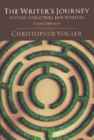
playwrights, fiction and non-fiction writers, scholars, and fans of pop culture all over the world. Discover a set of useful myth-inspired storytelling paradigms like "The Hero's Journey," and step-by-step guidelines to plot and • character development. Based on the work of Joseph Campbell, The Writers Journey is a must for all writers interested in further developing their craft. This updated and revised Third Edition provides new insights and observations from Vogler's ongoing work on mythology's influence on stories, movies, and man himself. In revealing new material, he explores key principles like polarity and catharsis, plus:
He is also very sensitive young man and wants to be a musician. He and Chris Field desert the army. Andrews hides with a French girl and starts writing a symphony and is arrested later. War is hostile to the artist. And destructive of his art. This novel is written in more or less anti war. ,,Manhattan transfer"- truly modernist novel. Ruinous effect of capitalism on human lives. The scene of action is New York. The city itself becomes the central character, the whole novel is an attempt to show the complex nature of the novel metropolis-huge city. It is a truly modernist level in any sense, tries to imitate devices used by cinema. Late 1920's the cinema was already very popular and two great directiors-Griffith and Eisenstein. The greatest innovators of the cinema and they used the devices of montage and collage. He also uses a lot of fragmentation and rapid cutting. The novel is dominated by the high rise city, by the crowds, by the masses of
Modern hero People have always looked up to heroes, talked, written and made movies or plays about them. They have given people hope and dreams and aspirations to become better, stronger and braver. The need for a hero has always existed but the definition and the purposes of a hero have changed. Centuries ago a hero was reckoned to be someone with super human courage, abnormal powers or with abilities to use magic items. A hero used to be somebody who fought magical creatures of evil and conniving kings or lords. A past hero usually saved the world from being ruled by evil forces (Eragon) or a clan from being destroyed (Beowulf killed Grendel and his mother to help the village). A hero like that was respected by the elderly people and always glorified by his family (in case they were still alive at the end of the story). It used to take a
world today, include A Red, Red Rose, A Man's A Man for A' That, Ae Fond Kiss and Tam o' Shanter. Lord Byron 1788 1824 One of the greatest British poets and a leading figure in the romantic movement, he remains widely read and influential His bestknown works are the lengthy narrative poems ,,Don Juan" and ,,Childe Harold's Pilgrimage "and the short lyric "She Walks in Beauty". He travelled to fight the Ottomans in the Greek War of Independence, for which Greeks revere him as a national hero died at 36 years in Greece Lived as a true aristrocrat, had huge debts, numerous love affairs, there were rumors of a scandalous incestuous romance with his halfsister and selfimposed exile It has been speculated that he suffered from bipolar disorder and was bisexual The Byronic hero The Byronic hero is a variant of the Romantic hero as a type of character, named after Lord Byron. Both Byron's life and writings have been considered in different ways to exemplify the type
Vronsky can't stop staring at her, and Anna does not appear to be aware of the pain she is causing Kitty. After all, Anna isn't exactly pushing Vronsky away--she is sparkling, bejeweled, and positively enticing. Tolstoy notes there is something "terrible and cruel in her charm." She is a sexual, seductive being. Chapters 23-27 Levin is described as a plain, simple man, defined by his religion and his duty to the country. He is the true hero of the novel. Levin, who becomes depressed over Kitty's rejection, goes to visit his brother Nicholas, who is ill. He begins to realize, after seeing his brother, that Nicholas has always been a victim of ills, including both sickness and poverty. Levin begins to regret getting caught up in his own passions, because he realizes he should be more concerned with his brother's problems. He finds his brother living with Masha, who is not a legitimate wife, but who acts as one
paint. With the dilute modifier, blue becomes caramel, lilac becomes taupe (brownish grey) and red becomes apricot. In practice, these colours may only be visually distinguishable from each other by knowing the cat's genetics. Some find caramel cats resemble golden series cats and suggest that a theoretical hypostatic (hidden) silver/golden gene is showing through, especially in the lighter colours where there is nothing to mask a hidden silver/golden colour. In the past, the Dilute Modifier has also been called “double dilution” and “caramelising”. Some people are still not convinced about caramel because almost identical colours can result from blue + caramel and from lavender/lilac + caramel. With a modifier gene, it is possible to get the same end colour (visually) from 2 different base colours (genetically). It depends on
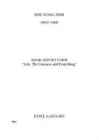
The Moving Finger Agatha Christie The Moving Finger Agatha Christie Plot summary: Brother and sister Jerry and Joanna Burton bought a country house in an idyllic English town called Lymstock so that Jerry could recover from injuries received in a wartime plane crash. They had been living in London their whole life and thus were excited but intimidated to go. Lymstock was much like any other English village, no more than 300 people. Those that live
At the same time he was active as a music critic and one of the pioneers of Estonian chamber music. His most fruitful years were between 1900 and 1907. The output of the composer indicates a transition, after a long formative process, from following German patterns to a more crisp expression. His first attempt in symphonic music was the overture Kalevala (1897, completed in 1900), the term-work at the Dresden Conservatoire, depicting the Finnish national epic in sound. The hero of this programmatic work is Väinämöinen, coming from the ocean and ordained to work and fight on Earth. Kalevala was composed for twofold instrumental scoring, also used by Tobias, Kapp and other contemporaries. The form was conventional: an introduction, sonata-allegro form, and coda. The main theme (Väinämöinen) is not especially vigorous, it is somewhat mild and static. There is a soft and lyrical subsidiary theme expressing the hero’s love for the Northern
are published by The New American Library, Inc., 1301 Avenue of the Americas, New York, New York 10019 FIRST PRINTING, FEBRUARY, 1973 PRINTED IN THE UNITED STATES OF AMERICA To my Parents and my Grandmother Contents A Note on the Abridged Version Preface A Few Words 1. One Day of Magic: I 2. One Day of Magic: II 3. The First 3,000 Years 4. The Rise of the West 5. On the Origin of a Species 6. The Era of the Black Chambers 7. The Contribution of the Dilettantes 8. Room 40 9. A War of Intercepts 10. Two Americans 11. Secrecy for Sale 12. Duel in the Ether: I 13. Duel in the Ether: II 14. Censors, Scramblers, and Spies 15. The Scrutable Orientals 16. PYCCKAJI Kranrojioras 17. N.S.A. 18. Heterogeneous Impulses 19. Ciphers in the Past Tense 20. The Anatomy of Cryptology Suggestions for Further Reading Index A Note on the Abridged Version
Brian de Palma is well known director, who is focused on noir area through his career (he was once considered as a Hitchcock imitator) ``The Black Dahlia" can be classified as Film Noir. The genre is called Film Noir due to the `serie noir` books, which were publised in France (bethween 1940s and 1950s). These books were translations of American novels by authors like Dashiel Hammet, Raimond Chandler and James M. Cain. The novels usually talked about a strong, violent hero (anti-hero?) who moves through a corrupt dangerous world. ``The Black Dahlia`` is based on a novel by James Ellroy and not on a true Black Dahlia (murder) case. The theme of murder/crime/violence is one of the most important themes in Film Noir. In Film Noir morality is less clear (than in Western, for example, where there are simply to sides: good vs evil). There exists a feeling of paranoia about society, as we can clearly see in this film. At first, there is not
Himmelstoss is just such a figure: an unthreatening postman before the war, he evolves into the "terror of Klosterberg," the most feared disciplinarian in the training camps. Himmelstoss is extremely cruel to his recruits, forcing them to obey ridiculous and dangerous orders simply because he enjoys bullying them. Himmelstoss forces his men to stand outside with no gloves on during a hard frost, risking frostbite that could lead to the amputation of a finger or the loss of a hand. His idea of a cure for Tjaden's bed-wetting--making him share a bunk with Kindervater, another bed wetter--is vicious, especially since the bed-wetting results from a medical condition and is not under Tjaden's control. At this stage of the novel, Himmelstoss represents the meanest, pettiest, most loathsome aspects of humanity that war draws out. But when he is sent to fight at the front, Himmelstoss experiences the same terror and trauma as the other soldiers, and he
" "But I hope you will get over it, and live to see many young men of four thousand a year come into the neighbourhood." "It will be no use to us, if twenty such should come, since you will not visit them." "Depend upon it, my dear, that when there are twenty, I will visit them all." Mr. Bennet was so odd a mixture of quick parts, sarcastic humour, reserve, and caprice, that the experience of three-and-twenty years had been insufficient to make his wife understand his character. Her mind was less difficult to develop. She was a woman of mean understanding, little information, and uncertain temper. When she was discontented, she fancied herself nervous. The business of her life was to get her daughters married; its solace was visiting and news. Chapter 2 Mr. Bennet was among the earliest of those who waited on Mr. Bingley. He had always
If X is less than the cost of a recall, then we don't recall." He is unhappy with his job and is suffering from depression and insomnia. · Tyler Durden He works at nights, having multiple part-time and short-term jobs like a waiter or a freelance projectionist, sabotaging the companies he Works for. He introduces himself to the main character as a soap salesman, which is also one of his jobs, saying he makes and sells soap. In the end of the story, the main character's and Tyler's paths part and Tyler turns on him. · Marla Singer The main character meets Marla in one of the support groups he goes to. Just like he, Marla is also a faker. She joins many support groups, including all of which the narrator goes to. Marla is described as a very dark
Color-- -1- -2- -3- -4- -5- -6- -7- -8- -9- Text Size-- 10-- 11-- 12-- 13-- 14-- 15-- 16-- 17-- 18-- 19-- 20-- 21-- 22-- 23-- 24 TWILIGHT By Stephenie Meyer Contents PREFACE 1. FIRST SIGHT 2. OPEN BOOK 3. PHENOMENON 4. INVITATIONS 5. BLOOD TYPE 6. SCARY STORIES 7. NIGHTMARE 8. PORT ANGELES 9. THEORY 10. INTERROGATIONS 11. COMPLICATIONS 12. BALANCING 13. CONFESSIONS 14. MIND OVER MATTER 15. THE CULLENS 16. CARLISLE 17. THE GAME 18. THE HUNT 19. GOODBYES 20. IMPATIENCE 21. PHONE CALL 22. HIDE-AND-SEEK 23. THE ANGEL 24. AN IMPASSE EPILOGUE: AN OCCASION twilight STEPHENIE MEYER LITTLE, BROWN AND COMPANY New York Boston Text copyright © 2005 by Stephenie Meyer All rights reserved. Little, Brown and Company Time Warner Book Group 1271 Avenue of the Americas, New York, NY 10020 Visit our Web site at www.lb-teens.com First Edition: September 2005 The characters and events portrayed in this book are fictitious. Any similarity to real persons, living or dead, is coincidental and not intende
Party in a countryside. Two love-traingles. The jealosy of the love-intoxicated men will lead to murder. Seems like a comedy. Everybody is running around, chasing each other. Portrays a cynical society in a state of decomposition that ultimately does not value human life anymore. The renoir style: deep focus photography, long takes. Mise en scene-on location shooting, improvised performances, occasionally: work with non-professional actors. Multpile layers of action. Orson Welles Insane after Kane? Megalomaniac, smart, tricky. Succesful broad-way director and radio star. ,,war of the worlds"fake news cast. 1940 deal with RKO pictures: six film contract with complete control.1941 Citizen Kane released, Welles only 25 years old. 1940's: career as an actor. Influences on Welles. German Kammerspielfilm, expressionst cinema, chiaroscuro lightning (Lang), fluid camera (Murnau), baroque mise e scene, french poetic realism, john ford, theatre, radio
Like psychoanalysis, surrealistic painting and writing explores the inner depths of the unconscious mind. Freudian ideas have provided subject matter for authors and artists. Critics often analyze art and literature in Freudian terms. 2. Literary Modernism and its sub-movements. The influence of Structuralism and psychoanalysis. Main characteristic features of Modernism. Denial of conventions, traditional structure, plot and presentation of character. The stream of consciousness. Allusiveness. Virginia Woolf's Modern Fiction as a theoretical platform for Modernism. Criticism of Realist literary method. Literary modernism: end of the 19th century-1920 (reached its height) and ended 1940s. A self- conscious break with traditional aesthetic forms. Rejecting the sentiment and discursiveness typical of Romanticism and Victorian literature for poetry that instead favored precision (täppis) of imagery and clear, sharp language
Praying of Daniel the Immured. Hagiographies (Russian: , zhitiya svyatykh, "lives of the saints") formed a popular genre of the Old Russian literature. Life of Alexander Nevsky offers a well-known example. Other Russian literary monuments include Zadonschina, Physiologist, Synopsis and A Journey Beyond the Three Seas. Bylinas oral folk epics fused Christian and pagan traditions. Medieval Russian literature had an overwhelmingly religious character and used an adapted form of the Church Slavonic language with many South Slavic elements. The first work in colloquial Russian, the autobiography of the archpriest Avvakum, emerged only in the mid-17th century. After taking the throne at the end of the 17th century, Peter the Great's influence on the Russian culture would extend far into the 18th century. Peter's reign during the beginning of the 18th century initiated a series of modernizing changes in Russian literature. The reforms
Chapter1: An unknown woman was found lying in the street and brought into the workhouse. She delivered a sickly child who had trouble breathing. The woman, without a word of who she was, died and left her new born boy, Oliver, to the drunken nurse that stood by. Chapter2: The State gave Oliver to Mrs. Mann who housed a number of orphaned children. Mrs. Mann took a large portion of the money given to her by the authorities for each child's food so Oliver grew up small and malnourished. On his ninth birthday, the town beadle, Mr. Bumble, came to collect Oliver and take him to the board for an interview. They told him he was to live with other wards of the state to become educated and learn a trade. Oliver did not mind this, but soon after he arrived, the state decided to implement a plan that would save money by feeding the people very little. After a time on this diet, the boys at the table chose Oliver to go ask the head cook for more gruel. Oliver did this, and was taken away. A flye
But nothing didn't bring him success. He worked with Graham Chapman, John Lloyd, but mos of his projects fell flat. In 1977 he met Simon Brett from Radio 4 and they produced a radio show there. It was the birth of "The Hitchhiker's Guide to the Galaxy". He even wrote "The Hitchhiker's Guide to the Galaxy" into the novel in 1979. Adams wrote 4 books as a sequel and "Life, The Universe and Everything" is the 3rd book of the series. Books have been adapted into television series, stage plays, comic books. Over 15 miullions copies of books have been sold during his lifetime. In 2005, Garth Jennings even made a film "The Hitchhiker's Guide to the Galaxy". Adams has also written "Dirk Gently's Holistic Detective Agency" (1987), "The Long Dark Tea-Tme of the Soul" (1988), "Last Chance to See" (1990) and even stories for television series "Doctor Who". After his death in 2001, a collection of his work was published in a book "The Salmon of Doubt" (2002).
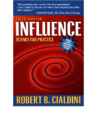
More praise for Influence: Science and Practice! "We've known for years that people buy based on emotions and justify their buying decision based on logic. Dr. Cialdini was able, in a lucid and cogent manner, to tell us why this happens." --MARK BLACKBURN, Sr. Vice President, Director of Insurance Operations, State Auto Insurance Companies "Dr. Cialdini's ability to relate his material directly to the specifics of what we do with our customers and how we do it, enabled us to make significant changes. His work has enabled us to gain significant competitive differentiation and advantage" -LAURENCE HOF, Vice President, Relationship Consulting, Advanta Corporation "This will help executives make better decisions and use their influence wisely ... Robert Cialdini has had a greater impact on my thinking on this topic than any other scientist." -CHARLES T. MUNGER, Vice Chairman, Berkshire Hathaway, Inc.
was of his bond with the Don Steppe. Chekhov had always claimed that medicine was his wife and literature his mistress. Chekhov had lived for much of his career as a writer under the shadow of the great literary colossus of the age, Lev Tolstoy. The Seagull [Chaika] suffered one of the most disastrous first nights of any of Chekhov's plays when it opened in St Petersburg, in 1896, as a benefit night for a comic actress who had a huge, rowdy, popular following. Chekhov ran out of the theatre after the second act and roamed the streets, swearing never to write for the stage again. Exactly two years later, the fledgling Moscow Arts Theatre, under the guidance of Stanislavsky and Nemerovich-Danchenko, began the first of twenty-six rehearsals of The Seagull. The director, Vladimir Nemirovich-Danchenko, had recognised the potential of Chekhov's innovative
The climate is suitable for developing agriculture. Cattle, sheep and wheat are grown. The farms are profitable business. Melbourne is the second largest city in Australia. It is considered to be the financial capital of the country. In 1901 Melbourne was the capital city and was made the capital of the country's federal government. In 1927 the capital was transferred to Canberra. The history of Melbourne began in 1835 when a fellow called John Batman bought about 600000 acres of land from a band of Aborigines. He decided to build a town there. Settlers began to move in and in 1851 gold was found. Goldseekers poured in and the town grew rapidly. The city developed into a major port and commercial centre. The landmarks to be mentioned in Melbourne are the City hall, Olympic park and Royal Botanic gardens. New South Wales. It is a picturesque state. It's got everything from the Blue Mountains to beautiful stretches of golden beaches
novels of the nineteenth century. The book was written in a second-story storefront-apartment in Warrensburg, New York, just north of where most of the book's plot takes place. Washington Irving Washington Irving was born in New York City (near present-day Wall Street) at the end of the Revolutionary War on April 3, 1783. His parents, Scottish-English immigrants, were great admirers of General George Washington, and named their son after their hero. Irving had many interests including writing, architecture and landscape design, traveling, and diplomacy. He is best known, however, as the first American to make a living solely from writing. Initially, he wrote under pen names; one was "Diedrich Knickerbocker." In 1809, using this pen name, Irving wrote A History of New-York that describes and pokes fun at the lives of the early Dutch settlers of Manhattan. Letters of Jonathan Oldstyle 1802 Salmagundi 1807-1808 A History of New York 1809
Best wishes, Anne C. Questions: a) Under what branch of literacy the given text goes to? ...................................................................................................... ............................................................ b) Who is the storyteller? ...................................................................................................... ............................................................. c) Describe her character with tree sentences. ...................................................................................................... ...................................................................................................... ...................................................................................................... ...................................................................................................... ................................
So the greatest of all reversals occurred with electricity, that ended sequence by making things instant. With instant speed the causes of things be an to emerge to awareness again, as they had not done with things in sequence and in concatenation accordingly. Instead of asking which came first, the chicken or the egg, it suddenly seemed that a chicken was an egg's idea for getting more eggs. Just before an airplane breaks the sound barrier, sound waves become visible on the wings of the plane. The sudden visibility of sound just as sound ends is an apt instance of that great pattern of being that reveals new and opposite forms just as the earlier forms reach their peak performance. Mechanization was never so vividly fragmented or sequential as in the birth of the movies, the moment that translated us beyond mechanism into the world of growth and organic interrelation. The movie, by sheer speeding up the mechanical, carried us from the
English literature is one of the oldest literatures in Europe; dates back to the 6th century AD. Oral literature, i.e. not written down, spread from person to person. In 449 AD Anglo-‐Saxon tribes invaded England – beginning of the Anglo-‐Saxon period in English literature. The first form of literature was folklore, carried by scops and gleemen, who sang in alliterative verse (a kind of simple poetry). Prose developed much later. The first form of recorded English literature was the epic Beowulf, which was produced sometime near the end of the 7th and beginning �
In 787 AD came the Vikings from Scandinavia, who set up their own state Danelaw. Had their own religion, however their rituals did not demand sacrifices. Introduced new words (1800). Placenames withe suffixes -by and -dale. They had their own customs and laws, which we know due to sagas (oral history). They had no written language. Beowulf Beowulf is an epic or a long poem describing the adventures of an hero. It belongs to the Anglo-Saxon period, when they were still living on the mainland and then brought to Greta Britain . It was made up in the 3rd or 4th century. I was spread orally until it was written down in the 10th century. The author is unknown and the manuscript is kept in the British Museum (near Trafalgar Square). The story is very important as it allows us to lear about the way of life in the 4th century. The characters can be divided into two groups fictitious and historical.
a number of Italian dialects to create a new national language. In 1310 he writes De Monarchia presenting Dante's case for a one-ruler world order. Among his works, his reputation rests on his last work, The Divine Comedy. He began writing it somewhere between 1307-1314 and finished it only a short while before his death in 1321, while in exile. In this work, Dante introduces his invention of the terza rima, or three-line stanza as well as himself as a character. The Inferno is the first of three parts of Dante's epic poem, The Divine Comedy, which depicts an imaginary journey through Hell, Purgatory, and Paradise. Dante is the hero, who loses his way in the "dark woods" and journeys to nine regions arranged around the wall of a huge funnel in nine concentric circles representing Hell. He is led by the ghost of Virgil, the Roman poet, who has come to rescue Dante from the dark forest and lead him through the realms of the afterlife. The
 annaabi.ee