Leidsid 33 sarnast õppematerjali, mis on seotud failiga "Arctic Ground Squirrel". Need materjalid aitavad sul teemat sügavamalt mõista.
arctic, squirrel, ground, babies, leave, eyes, males, begin, days, northernlaska, back, earsroundverage, than, plants, seeds, leaves, store, grow, female, between, hair, open, live, colony, geographic, found, regions, canada, circle, british, columbia, southern, border, siberia, physical, description, coat, face, dark, tail, strong, front, length2. Where is prairie, pampas, steppe, and veldt situated? EurasiaSteppe, North America-Prairie, South AmericaPampa, South AfricaVeldt 3. Using the climate diagram describe the climate of the region. Temperate deciduous forest -Well-defined seasons with a distinct winter characterize this forest biome. Moderate climate and a growing season of 140-200 days during 4-6 frost-free months distinguish temperate forests. Temperature varies from -15° C to 25° C. Precipitation (750-1500 mm) is distributed evenly throughout the year. Temperate grassland- Semiarid, continental climates of the middle latitudes typically have between 25 cm and 50 cm of precipitation a year. Much of this falls as snow, serving as reservoir of moisture for the beginning of the growing season. Warm to hot summers are experienced, depending on latitude
Tundra Tundra is the world's youngest biome. It was formed 10 000 years ago. Located at latitudes 55° to 70° North. Almost all tundras are located in the Northern Hemisphere, encircling arctic desert and extending south to the coniferous forests of the taiga. The ecotone (ecological boundary region) between the tundra and the forest is known as the tree line or timberline. Tundra comes from the Finnish word tunturi, meaning treeless plain. It is noted for its frost-moulded landscapes, extremely low temperatures, little precipitation, poor nutrients, and short growing seasons. Dead organic material functions as a nutrient pool. The two major nutrients are nitrogen and phosphorus
When it looks like there is nothing to eat on the winter tundra, reindeer will scrape the snow away with their wide feet or antlers and eat lichens, dried sedges and small shrubs. In the summer they the will eat leaves of willows, sedges, flowering plants, mushrooms. Reindeer are social animals and live in huge herds, which will often have several thousand animals in it. Males are often loners, until its time to mate. They will migrate more than 650-800 kilometres to reach winter or summer feeding grounds, and can travel up to 80 kilometres a day. Their leg tendons make crackling sounds while walking, which would make a migrating herd a noisy bunch indeed. Females will give birth to a single calf. Most females don't breed until they are 28 months old, and will give birth every year.
other three seasons. DesertDeserts cover about one fifth of the Earth's land surface. Deserts temperature ranges from 20 to 25° C. The extreme maximum temperature ranges from 43.5 to 49°. Hot and Dry Deserts usually have very little rainfall and concentrated rainfall in short periods between long rainless periods. Most Hot and Dry Deserts don't have very many plants. The only animals they have that can survive have the ability to burrow under ground. They only come out in the night when it is a little cooler. SavannaA savanna is a rolling grassland scattered with shrubs and isolated trees, which can be found between a tropical rainforest and desert biome. Savannas are also known as tropical grasslands. Savannas have warm temperature year round. There are two very different seasons in a savanna; a very long dry season(winter) and a very wet season. In the dry season only an average of about 4 inches of rain falls
Canada. Canada is a very big country in the continent of North America. It is about 10 million square kilometres and that makes it the second largest country in the world after Russia. Quebec (the province) is six times as big as the UK. Canada borders the Atlantic Ocean, the Pacific Ocean, the Arctic Ocean and the USA. The capital of Canada is Ottawa and other main cities are Toronto, Montreal and Vancouver. It is a very developed country. Montreal is the largest city and it is called the Paris of North America because most of the people there speak French. The population of Canada is 28 million people. It is a very multicultural country. People from many different countries have come to live there. The natives are Eskimos and Indians
Topic Canada Tallinn English College 2006 1. Introduction If you had to use two words to describe Canada, they might be large and diverse. Canada is the second largest country in the world with a territory of about 10 million square kilometers and it is bordered by three oceans: the Arctic, the Pacific and the Atlantic Oceans. The population of Canada is about 31 million people. About 77% of the people live in cities which lie in a band about 100 miles wide above the border of the United States. The capital of Canada is Ottawa. Other large cities are Montreal, Toronto, Vancouver, Winnipeg and Quebec. 2. Geographical position Canada is a huge country in the continent of North America. It is bordered with the Atlantic
Tallinna Inglise Kolledz Canada. The land of diversity. Tallinn 2006 Canada. If you had to use two words to describe Canada, they might be large and diverse. Canada is the second largest country in the world with a territory of about 10 million square kilometers and it is bordered by three oceans: the Arctic, the Pacific and the Atlantic Oceans. The population of Canada is about 31 million people. About 77% of the people live in cities which lie in a band about 100 miles wide above the border of the United States. The capital of Canada is Ottawa. Other large cities are Montreal, Toronto, Vancouver, Winnipeg and Quebec. Canada has two official languages English and French. It's interesting to know that about 61% of Canadians name English and 24% French their mother tongue
across the country, Canadians experience many different landscapes from rolling plains and mountains to the cold tundra of the north. Despite Canada's great size, it is one of the world's most sparsely populated countries. This fact, coupled with the grandeur of the landscape, has been central to the sense of Canadian national identity. 2. Geographical position Canada is the second largest country in the world after Russia. In the Arctic, Canada reaches almost as far north as Greenland. To the south it extends to the same latitude as southern France. The distance from Canada's west coast, the Pacific Ocean, to its east coast, the Atlantic Ocean, is farther than from North America to Europe. Canada's total land area includes thousands of adjacent islands, notably Newfoundland in the east and those of the Arctic Archipelago in the north. In longitude Canada extends from approximately 52° to 141° W, a distance that spans
Inuit Culture, Traditions, and History Traditional Inuit way of life was influenced by the harsh climate and stark landscapes of the Arctic tundra from beliefs inspired by stories of the aurora to practicalities like homes made of snow. Inuit invented tools, gear, and methods to help them survive in this environment. Read on to learn more about traditional Inuit ways of life, and how Inuit culture has been changed over the past century. Geography Inuit communities are found in the Arctic, in the Northwest Territories, Labrador and Quebec in Canada, above tree line in Alaska (where people are called the Inupiat and Yupik), and in Russia (where people are called the Yupik people). In some areas, Inuit people are called "Eskimos" however many Inuit find this term offensive. The word "Inuit" means "the people" in the Inuktitut language. Inuit Homes In the tundra, where Inuit communities are found, there are not many building materials. No trees
CANADA Canada is a vast country, second largest country of the world after Russia. It stretches from the Atlantic Ocean in the east to the Pacific Ocean in the west and to the Arctic Ocean in the North. Canada Covers most of the northern part of North America and its geography is very diverse. Canada's area is about 10 million square kilometers and its population is 31 000 000. Its capital is Ottowa and other main cities are Toronto, Montreal and Vancouver. Almost 75 % of canadians lives within 300 kilometer of the USA border, because the climate is softer in the South. 89 % of Canada is almost unhabited.
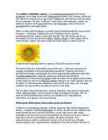
Additionally, the stem of a dead sunflower can dry out open wounds.[citation needed] For farmers not intending to grow it, the sunflower is considered a noxious weed. The wild variety will grow unwanted in corn and soybean fields which can have a negative impact on yields. Diseases Main article: List of sunflower diseases Greek myth In Greek mythology, a girl named Clytie fell in love with the sun god Apollo, and would do nothing but watch his chariot move across the sky. After nine days, she was transformed into a sunflower. However, the word "sunflower" and its cognates existed long before Helianthus annuus was brought to Europe, and it is thought that the myth (which is mentioned in Ovid's poem Metamorphoses) actually refers to heliotrope or marigold. Trivia · The sunflower is the state flower of the U.S. state of Kansas, and one of the city flowers of Kitakyushu, Japan. · The Jerusalem artichoke (Helianthus tuberosa) is related to the sunflower
represented by lizards and snakes; and birds such as burrowing owls and the California thrasher. The animals living in coastal deserts are: insects, mammals (coyote and badger), amphibians (toads), birds (great horned owl, golden eagle and the bald eagle), and reptiles (lizards and snakes). Widely distributed animals in cold deserts are jack rabbits, kangaroo rats, kangaroo mice, pocket mice, grasshopper mice, and antelope ground squirrels. The burrowing habit also applies to carnivores like the badger, kit fox, and coyote. Several lizards do some burrowing and moving of soil. Deer are found only in the winter. Something characteristic Desert biome is the driest of all the biomes. In fact, the most important characteristic of a desert is that it receives very little rainfall. Most deserts receive less than 300 mm a year. The temperature in the desert can change drastically from day to
● Adults – white all over ● Young birds – greyish with a pinkish bill ● Shorter neck, variable bill pattern ● Showing more black than yellow ● Bill is more yellow than black ● Europe, Asia, North America ● Resambles more of a goose than swan ● Estonia – one of the main transit regions for migrating ● Most numerous migratory swan in Estonia Mute swan (kühmnokk-luik) ● Large swan typically range from 140 to 160 cm ● Males larger than females and have a larger knob on their bill ● One of the heaviest flying bird ● Young birds, called cygnest, are not the bright whiteof mature adults, and their bill is dull greyish-black (not orange for the first year) Mute swan Finding food underwater Behaviour ● Nest on large mounds ● Monogamous, reuse the same nest each year ● Food commonly includes agricultural crop plant – oilseed rape, wheat
is 7 hours behind Greenwich Time, Pacific Standard Time. Alaska and Hawaii have their own time zones: Alaska Standard Time and Hawaii Standard Time. Geographical Position The USA lies in the Northern Hemisphere in North America. It covers a big part of the continent and is also the third largest country in the world. The country consists of 50 states, but two of them lie separately. One of them is Alaska, which is near the Arctic Circle. And the other state is Hawaii, which is a group of island is the Pacific Ocean. The USA shares the border with Canada in the north and Mexico in the south. In the east the coast is washed by the Atlantic Ocean and in the west by the Pacific Ocean. In the south there is the Gulf of Mexico. The highest mountain in the country is Mount McKinley, which is in Alaska. It's about 6 km high. But the lowest point is in Death Valley and its 89 m below sea level. Relief
10 million square kilometres, but is one of the most sparsely populated, with only about 34 million inhabitants. The majority of them live within 300 kilometres of Canada's southern border. Much of the rest of Canada is uninhabited or thinly populated, because the country has a rugged terrain and severe climate. Canada extends across the continent of North America, from Newfoundland on the Atlantic coast to British Columbia on the Pacific coast and northward into the Arctic Ocean. Canada shares land borders with the United States to the south and north-west. Canada is a land of great variety. Towering mountains, crystal-clear lakes, and lush, green forests make Canada's far west a beautiful region. Farther inland, fields of wheat and other grains cover Canada's vast prairies. Thes fertile farmlands contrast vividly with the Arctic wastelands to the north. Most of the largest towns and industrial areas lie near the Great Lakes and the St
Finland's climate is the country's geographical position between the 60th and 70th northern parallels in the Eurasian continent's coastal zone, which shows characteristics of both a maritime and a continental climate, depending on the direction of air flow. Finland is near enough to the Atlantic Ocean to be continuously warmed by the Gulf Stream, which explains the unusually warm climate considering the absolute latitude. A quarter of Finland's territory lies above the Arctic Circle, and as a consequence the midnight sun can be experienced for more days, the farther north one travels. At Finland's northernmost point, the sun does not set for 73 consecutive days during summer, and does not rise at all for 51 days during winter.(www.wikipedia.org) 3 Flora and fauna All terrestrial life in Finland was completely wiped out during the last ice age that
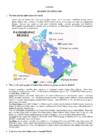
CANADA REVISION QUESTIONS 2010 1. The main physiographic regions of Canada. Canada may be divided into seven physiographic regions: Arctic Lowlands, Cordilleran Region, Interior Plains, Hudson Bay Lowlands, Canadian Shield (Forest Lands), St Lawrence Lowlands and Appalachian Region. Divisions are based on each area's relatively similar physical geography and landforms. Physiographic regionalization is defined here as the process by which regions with relatively homogeneous physical geography are determined 2. Who are the native people of Canada? Into which three groups can they be divided?
in organised drainage. The Australians can get most of their underground water from the Great Artesian Basin, which is the largest and deepest artesian basin in the world. Iti is near Lake Eyre, the Great Dividing Range and the Simpson Desert. An artesian well is a confined aquifer containing groundwater that will flow upwards through a well without the need for pumping. Water may even spurt out of the ground if the natural pressure is high enough. An aquifer provides the water for an artesian well. An aquifer is a layer of soft rock, like limestone or sandstone that absorbs water from an inlet path. Porous stone is confined between impermeable rocks or clay. This keeps the pressure high, so when the water finds an outlet, it overcomes gravity and goes up instead of down. Natural zones: Although most of Australia is barren and arid or covered with deserts, there are five
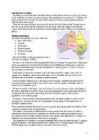
Natural Zones and Flora. There are five distinguishable natural zones in Australia. In the very east there are wet forests (1.) that occupy the space between the Great Dividing Range and the eastern coast. Westward from the Great Dividing Range the wet forests give place to beautiful grasslands with some trees . These grasslands are called the savannas (2.). Farther west the trees disappear and the bushlands (3.) begin. The real desert (4.) occupies the centre of the Western Plateau. In the very southwest there are thin forests of evergreen trees (5.). Most of Australian trees are kinds of eucalyptus trees (or gum trees to Australians) and acacia ( wattle to Australians). Eucalyptus trees are found everywhere in Australia. There are many kinds of them and they greatly differ in size. One kind, the great mountain ash, can grow to 120 metres and it grows in the wet forests in the eastern part of the continent
Of course, new roads, railways and cities were established. In 1900 the British Parliament passed an act, which permitted the federation of Australian states to form into one commonwealth. On January 1st 1901, all six states became one nation. At the end of the 1920's Australia was badly affected from the world economy, which was in depression. About a third of Australia's work force was unemployed. During the WWII Australia was an important war ground for the USA and Japan. Landforms Australia is the lowest continent in the world with an average elevation of 330 m. The land is quite low, but far from featureless. The mountains are represented by the Australian Alps, which run along the southeast coast. The highest mountain is Mt Kosciusko (2228m), but the most attracting are the world's biggest monolith Uluru and the beehive mountains of the "Bungle Bungles". Of course, the Great Dividing Range that runs along the Pacific
very often to happen. Because the trees and shrubs do not lose their leaves in winter, but grow throughout the year. But when the dry leaves and branches fall down, then there is a lot of dry material and theat helps busfires to burn. Animals Scientists estimate that the continent is home to more that one million animal and plant species. Many of these are found nowhere else on the planet. Among these animals are kangaroos, wombats and koalas. They carry their babies in pouches. There are platypuses and tiny anteaters (echidnas)too, which are the only mammals in the worls that lay eggs. Among the birds are emus, lyrebirds and black swans. When a platypus specimen first reached to Europe people thought it was a fake, sewn together from birds and other animals. The platypus, the strangest of Australia's animals, is a living reminder of ancient, exctinct creatures. The best known animal that lives in Australia is the kangaroo ofcourse.
Because the trees and shrubs do not lose their leaves in winter, but grow throughout the year. But when the dry leaves and branches fall down, then there is a lot of dry material and that helps bushfires to burn. 5 Animals Scientists estimate that the continent is home to more than one million plant and animal species. Many of these are found nowhere else on the planet. Among these animals are kangaroos, wombats, koalas. They carry their babies in pouches. There are platypuses and tiny anteaters (echidna) too, which are the only mammals in the world that lay eggs. Among the birds are emus, lyrebirds and black swans. When a platypus specimen first reached to Europe people thought it was a fake, sewn together from bits of other animals. The platypus, the strangest of Australia’s animals, is a living reminder of ancient, extinct creatures. The best known animal that lives in Australia is the kangaroo of course
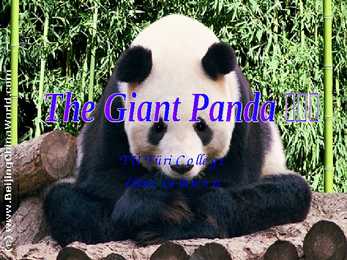
T Ü T üri C o lle g e Liina Le inm e ts Introduction · Panda (Ailuropoda melanoleuca) is a mammal classified in the bear family, native to centralwestern and southwestern China. It is easily recognized by its large, distinctive black patches around the eyes, over the ears, and across its round body. · The Giant Panda lives in a few mountain ranges in central China. · It once lived in lowland areas, but farming, forest clearing, and other development now restrict the Giant Panda to the mountains. In the wild · The Giant Panda is a · Pandas communicate terrestrial animal and through vocalization primarily spends its life and scent marking such
individuals. Mountain lions apparently existed at very low numbers between 1925 and 1940. They maintain a secretive profile in the Yellowstone region. Although the cougar population numbered in the hundreds during the early 1900s, controlled hunts between 1904 and 1925 decimated the population. Today, twenty to thirty-five mountain lions reportedly inhabit Yellowstone Park, but sightings are rare. Shy and elusive, mountain lions live solitary lives and practice mutual avoidance. Males and females interact for breeding when females are about 2 1/2 years old. Giving birth throughout the year, females can have litters of up to four kittens, but usually only one or two survive. Born spotted, the kittens stay with their mothers for about 18 months, after which time they will leave in search of their own home range. The Mountain Lion is capable stalk-and-ambush predator; the cougar pursues a wide variety of prey
Fishing, shipping and farming are the most important activities in this region. This region was the first part of Canada to be founded by the Vikings in AD 985. The North The North region includes the Yukon Territory, the Northwest Territories and the Nunavut territory. The North is the biggest region in Canada. The North has the most coldest climate in Canada. Because of that only 85 000 people live in this region. The North is home to Canada's indigenous people who are called as the Inuits. Ground is permanently frozen in this region throughout the year. The most common animals in The North are caribou and polar bear. Climate Average temperatures in Canada ranges from -35*C (Nunavut Territories) to 25*C ( Quebec). The amplitude of temperature in generally high in Canada. Canadian winters are usually harsh and cold. Because of the differences in climate throughout Canada there are many different ecozones in Canada
Remarkably, the plants in the grasslands have adapted to the wildfires that come through, and actually need them to keep healthy and grow new vegetation in the spring 7. How are plants adapted to life in temperate grassland? (vt. ka õpik lk 61) During a fire, while above-ground portions of grasses may perish, the root portions survive to sprout again. Some prairie trees have thick bark to resist fire. Prairie shrubs readily resprout after fire. Roots of prairie grasses extend deep into the ground to absorb as much moisture as they can Extensive root systems prevent grazing animals from pulling roots out of the ground. Prairie grasses have narrow leaves which lose less water than broad leaves. Grasses grow from near their base, not from tip, thus are not permanently damaged from grazing animals or fire. Many grasses take advantage of exposed, windy conditions and are wind pollinated. Soft stems enable prairie grasses to bend in the wind
Temperate deciduous forests, woodlands and shrub Tartu 2008 Location: Temperate forests are typical of all European continent, the Eastern region of Asia (in special, Chinese and Japan) and North America. Also are finded in tempered areas of South America. Climate: The average temperature in temperate forests is 50° F. Summers are mild, and average about 70° F, while winter temperatures are often well blow freezing. The average yearly precipitation is 30-60 inches. This precipitation falls throughout the year, but in the winter it falls as snow. There are four seasons in this biome, with warm summers and cold winters, often snowy. In autumn, the leaves change color and fall from the trees. The leaves decay on the forest floor, so the soil is very rich. Because of this, and because of the long growing season, many deciduous forests have been cut down for farming purposes. Plants: Trees of this biome include hardwoods such as maple, oak, hickory, and beech. There
summit. Uluru, also known as Ayers Rock, is a large sandstone rock formation in central Australia, in the Northern Territory. It is located in UluruKata Tjuta National Park. Uluru is 346 metres high, more than 8 km (5 miles) around with a hard exterior compared to most other large rock formations which has prevented formation of scree slopes, resulting in the unusual steep faces down to ground level. It is the greatest tourist attraction in the Northen Territory but it also is and awe inspiring, huge monolith, 862,5 metres above sea level, rising out of the desert in the centre of Australia. The local Pitjantjatjara people call the landmark Uluru and the local Aborigines regarded it as a sacred place. Ayers Rock was created a national park in 1950. Uluru is also famous for its rock paintings. Reef
The outback is flat and hot centre of Australia. The nearest neighbor may be a hundred kilometers away. The nearest city may be more than one thousand kilometers away. Many people in this area live on sheep stations which are enormous farms. Uluru One of the most beautiful things in Australia is Uluru (Ayers Rock) in the outback. It is an enormous rock alone in the middle of the desert. It is three kilometers long and 348 metres high. There is another 2000 meters under the ground. Uluru is 600 000 000 years old and it is the largest rock in the world. The Great Barrier Reef. One of the natural wonders of the modern world is the Great Barrier Reef. It is located off the northeast coast of Australia. It is the biggest coral reef in the world extending 2000 kilometers along the coast of Queensland. It consists of more than 600 coral islands. Some of them are true coral islands, other are the tops of submerged mountain ranges covered with lush tropical growth
numbers since it offered many stimulating opportunities. The Aborigines were cruelly suppressed, and it is only recently that white Australians have begun to acknowlege Aborigines' rights to their sacred lands. The settlers soon discovered that many of the animals as well as the plants of Australia were unlike those that were found anywhere else. Among te animals were kangaroos and wombats and koalas. They carry their babies in pouches. There were platypuses and spiny anteaters, too the only mammals in the world that lay eggs. Among the strange birds were emus, lyrebirds, and black swans. The early settlers on the coast were suht in between the mountains and the sea. For years they couldn't make their way across the mountains. When they did, they found great streches of grassland. Some of the early settlers had been sheepmen in Britain. They saw that the grasslands
Despite its dangerous appearance and its name it is one of the least aggressive reptiles. Thorny lizards are heliotherm, meaning they need sunlight to warm themselves up, and their body temperature and agility depends on the outside temperature. Thorny devils only grow about 20 cm in size (including the tail). They are thought to live up to 20 years. V slaid The Lumholtz Tree Kangaroo is found only in Queensland. They stay in trees for the majority of their life. They do venture to the ground to find another tree to inhabit. The Tree Kangaroo can leap up to 15 metres to another tree. They feeds on leaves, fruits and other such food sources. They have the ability to jump from tree to tree, and stick to trees very well with the help of their cushioned feet. VI slaid These amazing little animals are native to Australia, and have taken their name from their ability to glide through the air and their love of sweet things such as sugar. These creatures are found along eastern and
Most of the chickens are reared in the South. California and states in the South and Southwest produce almost all of the country's cotton. Farmers in other areas also produce poultry, eggs, fruit, vegetables, nuts and many other crops. The use of modern machinery and agricultural methods has helped make U.S. farms to be one of the most efficient in the world but it has also increased production costs. Many farmers who have been unable to meet these rising costs, have been forced to leave farming and sell their land. Since 1925, the number of farms has decreased to about 2 million. But at the same time, average farm size has increased about 30%. Climate The climate of the U.S.A differs greatly from one part of the country to another. It is colder in the north and warmer in the south. The main part of the country lies in the temperate and the subtropical belts. The south of Florida lies in the tropical belt and Alaska
They are now called Amber and Light Amber. The Amber effect is due to the extension gene (also called red factor) which controls the production of red and black pigment. The dominant version of the gene produces normal black pigment in the coat while the recessive version produces red pigment. The name comes from the effect of black or brown pigment not being extended throughout the whole coat, but being restricted to the skin of the extremities and to the eyes (for example in bay horses). This Norwegian Forest Cat was bred by Yve Hamilton Bruce from a silver mackerel tabby female (imported from Denmark) and a classic red tabby and white male. The result was 1 silver tabbies and 2 silver tabbies with white. At just over 3 months old, this silver and white tabby male developed a large patch of bright red hair on his back which continued to spread. Eventually the whole fur will become amber. The effect of amber during the colour-change
 annaabi.ee