Leidsid 33 sarnast õppematerjali, mis on seotud failiga "Almond Blossoms by Vincent Van Gogh". Need materjalid aitavad sul teemat sügavamalt mõista.
blossom, almond, trees, japanese, willem, flower, early, making, subject, work, brother, famous, mental, them, symbol, paintings, influence, print, though, represent, close, dutch, impressionist, painter, influential, figures, western, march, 1853, southern, netherlands, suicide, years, illness, july, done, canvas, blue, favourite, subjects, springand his mother was a housewife. Vincent was the eldest of six children • He became a painter at age of 27. Before that he tried many professions, such as teacher, preacher, art salesman, working in a bookstore etc • He struggled with a mental health disorder throughout his lifetime • He died in France in 1890 when he committed a suicide (while being only 37 years old) Art • Van Gogh's first paintings were mostly of poor people. The colors in his early paintings are dark and brown (muddy). The feelings portrayed were of sadness • In his later paintings Van Gogh started to lighten his colors and paint in short brushstrokes. His paintings started to look much happier, brighter and more colorful • His paintings include portraits, self portraits, landscapes, still lifes, olive trees, wheat fields and sunflowers • In 10 years Vincent van Gogh painted almost 900 paintings • During his lifetime Van Gogh was never famous as a
Rossetti(critic), James Collison(painter), Frederic Stephens (critic), Thomas Woolner(sculptor). The three youthful Pre-Raphaelites deliberately challenged the established view of art, drawing up a manifesto of their intentions and publishing them in the four issues of a periodical called "The Germ". They would paint direct from nature, with objective truthfulness and genuine ideas in sympathy with what was direct and heartfelt in the art of the past. The brotherhoods techniques came from the early Flemish art- especially Van Eyck. To imitate the work of great Italian artists the PRB-s studied the colours in nature. To have the effect of glowing colours they invented a new method called "wet white". It was very difficult and wasn't used a lot (except Hunt). The technique was to apply colour on a wet brilliant white ground. For inspiration the brotherhood turned to the bible because they wanted to portray significant themes.
Guy painted city life, Birch painted the seascape. The "Peale formula" was adhered to: objects along tableware against a dark background. Also, trompe-l'oeil persisted via Charles Willson's Peale's sons. Artists: Ralph Earl, Francis Guy, Thomas Birch, James Peale, Raphaelle Peale. Mid-C19 Landscape. In C19, landscape painting became dominant and provided many unexplored subjects. The tradition of landscape art emerged in the 1820s through the work of the so-called Hudson River School. The school of "luminism" is also distinguished, it is interested in the phenomenon of light. Exemplary artists. Thomas Cole (early-C19). He painted more in the Romantic mold than his contemporaries. He was inspired by the valleys of Catskill Mountains. He depicted lonely wilderness and apocalyptic visions. Albert Bierstadt (late-C19). He painted the last frontier, the heroic landscape of the country. He compiled a
Guy painted city life, Birch painted the seascape. The "Peale formula" was adhered to: objects along tableware against a dark background. Also, trompe-l'oeil persisted via Charles Willson's Peale's sons. Artists: Ralph Earl, Francis Guy, Thomas Birch, James Peale, Raphaelle Peale. Mid-C19 Landscape. In C19, landscape painting became dominant and provided many unexplored subjects. The tradition of landscape art emerged in the 1820s through the work of the so-called Hudson River School. The school of "luminism" is also distinguished, it is interested in the phenomenon of light. Exemplary artists. Thomas Cole (early-C19). He painted more in the Romantic mold than his contemporaries. He was inspired by the valleys of Catskill Mountains. He depicted lonely wilderness and apocalyptic visions. Albert Bierstadt (late-C19). He painted the last frontier, the heroic landscape of the country. He compiled a
õppis École des Beaux-Arts kunstikoolis (18971899). Aastatel 19021904 õppis Pariisis Academie Humbert'is. Georges Braque teenis Esimese maailmasõjas Prantsuse sõjaväes ja sai raskelt haavata. Ta kasutas maalis esimesena kirjatähti, imiteeris puu ja marmori faktuuri ning leiutas kollaazitehnika Robert Delaunay Robert Delaunay (12 April 1885, Paris 25 October 1941) was a French artist who used Orphism, which is similar to abstract art, abstraction and cubism in his work. Delaunay concentrated on Orphism, while his later works were more abstract, reminiscent of Paul Klee. His key influence related to bold use of colour, and a clear love of experimentation of both depth and tone. While he was a child, Delaunay's parents divorced, and he was raised by his uncle, in La Ronchère (near Bourges). He took up painting at an early age and, by 1903, he was producing mature imagery in a confident, impressionistic style.
(Friedlaender, 1952, p.17) The message of the Horatii was very much favored by the Academy for its heroic and instructive story. However, controversially David saw Horatii as a protest against the bureaucratic institution of the Academy. (Roberts, 1989, p.18) Roberts (1989) comments on the attentions of Jacques-Louis David: "Yet the Horatii has long been regarded as subversive, or to use the term that has gained recent currency, it is seen in some quarters as prerevolutionary. To see the work as prerevolutionary is different than seeing it as "fully republican" as critics once did. L.D. Ettlinger repudiated that idea in 1967, when he explained that David was neither political nor republican when he painted the Horatii."(Roberts, 1989, p.18) Moreover, in 1978 Thomas crow, an American art historian, published an article which revived the historical dispute about David's intentions with his Horatii. Crow claimed that
wildlife has had little time to develop since the last glacial period. The high level of urbanisation on the island has contributed to a species extinction rate that is about 100 times greater than the background species extinction rate. 2 The History of the Great Britain The island was first inhabited by people who crossed over the land bridge from the European mainland. Traces of early humans have been found (at Boxgrove Quarry, Sussex) from some 500,000 years ago and modern humans from about 30,000 years ago. Until about 10,000 years ago, Great Britain was joined to Ireland, and as recently as 8,000 years ago it was joined to the continent by a strip of low marsh to what is now Denmark and the Netherlands. Britain in the reign of Elizabeth 3
The Great Wave off Kanagawa The Great Wave off Kanagawa , also known as The Great Wave or simply The Wave, is a woodblock print by theJapanese artist Hokusai. An example of ukiyo-e art, it was published sometime between 1830 and 1833[1] (during the Edo Period) as the first in Hokusai's series Thirty-six Views of Mount Fuji(Fugaku sanjrokkei (?)), and is his most famous work. This particular woodblock is one of the most recognized works of Japanese art in the world. It depicts an enormous wavethreatening boats near the Japanese prefecture of Kanagawa. While sometimes assumed to be a tsunami, the wave is, as the picture's title notes, more likely to be a large okinami literally "wave of the open sea." As in all the prints in the series, it depicts the area around Mount Fuji under particular conditions, and the mountain itself appears in the background. COPIES
especially by Thomas Paine in "The Age of Reason" and by Thomas Jefferson in his short Jefferson Bible from which all supernatural aspects were removed. Benjamin Franklin was influential in America, England, Scotland, and France, for his political activism and for his advances in physics. The American Dream is a national ethos of the United States, a set of ideals in which freedom includes the opportunity for prosperity and success, and an upward social mobility achieved through hard work. In the definition of the American Dream by James Truslow Adams in 1931, "life should be better and richer and fuller for everyone, with opportunity for each according to ability or achievement" regardless of social class or circumstances of birth. The idea of the American Dream is rooted in the United States Declaration of Independence which proclaims that "all men are created equal"
Stiva's infidelity and says she could never love a man who betrayed her. In St. Petersburg, Anna begins to spend more time with the fashionable socialite and gossip Princess Betsy and her circle, in order to meet Vronsky, Betsy's cousin. Vronsky continues to pursue Anna. Although Anna initially tries to reject him, she eventually succumbs to his attentions. Karenin warns Anna of the impropriety of paying too much attention to Vronsky in public, which is becoming a subject of society gossip. He is concerned about his and his wife's public image, although he believes that Anna is above suspicion. Vronsky, a keen horseman, takes part in a steeplechase event, during which he rides his mare Frou-Frou too hard and she falls and breaks her back. Vronsky escapes with minimal injuries but is devastated that his mare must be shot. Anna tells him that she is pregnant with his child, and is unable to hide her distress when Vronsky falls from the racehorse
· Naturalists show man as a small figure in deterministic system which ignores him · Man is a huge machine · Lot of these novels end in tragedy · For 20 years naturalism remained dominant method. The beginning of the 1910 (modernism starts ) · American naturalists: frank Norris ,,The Octopus", Stephan Crane ,,Red badge of courage" · Jack London (1876-1916) · Grew up in extreme poverty. From early age had to support himself with dangerous manual jobs. Experienced the trouble of survival. Outlooks were eclectic (combination of various philosophies). Was influenced by socialism by Karl Marx, on the other hand the dark views of Nietzche. Believed in the trimph of working man (marx), but at the same the in the necessity of of the survival of the strongest. Was attracted to the Nietzches theory of the superman- the true aristocrats
Mona Lisa is probably the most famous painting ever painted. It is a portrait of the young wife of a Florentine silk merchant. It shows a young woman with her famous smile sitting on a balcony high above a landscape . Slideshare The Renaissance was a cultural movement that started in Italy and spread all over Europe. It is considered to be the division between the Middle Ages and the Modern era The thinkers of this period, also called humanists, believe that the man should be the subject of study , and not God, as the Church had taught during the medieval period. Based on that, they began to investigate fields such as astronomy, anatomy, science and many others which had never been given much attention. English Renaissance Like most of northern Europe, England saw little of these developments until more than a century later. The beginning of the English Renaissance is often taken, as a convenience, to be
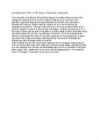
Palazzo Farnese in Rome PIETA The Pietà by Michelangelo is a marble sculpture in St. Peter's Basilica in Vatican City, the first of a number of works of the same theme by the artist. The statue was commissioned for the French cardinal Jean de Billheres, who was a representative in Rome. The statue was made for the cardinal's funeral monument, but was moved to its current location, the first chapel on the right as one enters the basilica, in the 18th century. This famous work of art depicts the body of Jesus on the lap of his mother Mary after the Crucifixion. The theme is of Northern origin, popular in France but not yet in Italy. It is an important work as it balances the Renaissance ideals of classical beauty with naturalism. The statue is one of the most highly finished works by Michelangelo The structure is pyramidal, and the vertex coincides with Mary's head. The statue widens
3) JAMES WATT He was born in the small port of Greenock on the river Clyde in Scotland in 1736. His father was a mathematical-instrument maker and also kept a shop to supply ships with goods for their voyages. James was a delicate boy and often suffered from headaches. That is why he could not go to school at the age when other children did. His mother taught him to read and his father taught him writing and arithmetic. He had very good memory and a natural love of work. He liked mathematics and was also fond of designing and making things. James was an observant and thoughtful boy. When James was able to go to school, he was sent to a private school. He learnt many subjects there. In his spare time James began to make experiments. He built a small electrical apparatus with which he gave his friends shocks that made them jump. When James was 18 he decided to become a professional instrument- maker. He could not find anyone to teach him, so he went to London
"Shepherd Girl" soft colours, the girl probably wasn´t a sheperdiss. "Emma, Lady Hamilton" the painter´s most frequent sitter, the most famous work. Thomas Gainsborough. Born in Suffolk, studied under van Dyck, moved to London, one of the founders of the Royal Academy. His art was at the beginning naive, unskilful, strict. "The Blue Boy" a friend of the artist, the most famous painting. "Mr and Mrs Andrews" right after marriage, masterpiece of his early years. "Mrs Burroughs" painter´s aunt, the headmaster of his boyhood school. He painted landscapes and portraits, used bright colours. Kadri Keernik: "The Swinging Sixties" Fashion, young people, pantyhose, baby pills, Volkswagen bus, flower power, anti-war movement, hippies, psychedelic drugs, Summer of Love, Woodstock festival. Art was also psychedelic and created under the effect of LSD or other drugs. Civil rights, free speech,
well as a vigorous social campaigner. Considered one of the English language's greatest writers, he was acclaimed for his rich storytelling and memorable characters, and achieved massive worldwide popularity in his lifetime. Charles Dickens was born in Landport, Portsmouth in Hampshire, the second of eight children to John Dickens n 7 February 1812. The 12-year-old Dickens began working ten hour days in a Warren's boot-blacking factory. In May 1827, Dickens began work in the office of Ellis and Blackmore as a law clerk. At the age of seventeen, he became a court stenographer and, in 1830, met his first love, Maria Beadnell. Maria's parents disapproved of the courtship and effectively ended the relationship when they sent her to school in Paris. In 1834, Dickens became a political journalist, reporting on parliamentary debate and traveling across Britain by stagecoach to cover election campaigns for the Morning Chronice.
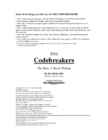
Some of the things you will learn in THE CODEBREAKERS • How secret Japanese messages were decoded in Washington hours before Pearl Harbor. • How German codebreakers helped usher in the Russian Revolution. • How John F. Kennedy escaped capture in the Pacific because the Japanese failed to solve a simple cipher. • How codebreaking determined a presidential election, convicted an underworld syndicate head, won the battle of Midway, led to cruel Allied defeats in North Africa, and broke up a vast Nazi spy ring. • How one American became the world's most famous codebreaker, and another became the world's greatest. • How codes and codebreakers operate today within the secret agencies of the U.S. and Russia. • And incredibly much more.
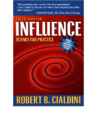
"We've known for years that people buy based on emotions and justify their buying decision based on logic. Dr. Cialdini was able, in a lucid and cogent manner, to tell us why this happens." --MARK BLACKBURN, Sr. Vice President, Director of Insurance Operations, State Auto Insurance Companies "Dr. Cialdini's ability to relate his material directly to the specifics of what we do with our customers and how we do it, enabled us to make significant changes. His work has enabled us to gain significant competitive differentiation and advantage" -LAURENCE HOF, Vice President, Relationship Consulting, Advanta Corporation "This will help executives make better decisions and use their influence wisely ... Robert Cialdini has had a greater impact on my thinking on this topic than any other scientist." -CHARLES T. MUNGER, Vice Chairman, Berkshire Hathaway, Inc.
kool Research work Styles in interior design nimi TALLINN2010 Interior design is a multifaceted profession in which creative and technical solutions are applied within a structure to achieve a built interior environment. The interior design process follows a systematic and coordinated methodology, including
Some festivals have their roots in Chinese festivals but have undergone dramatic changes as they mixed with local customs. Some are so different that they do not even remotely resemble the original festival despite sharing the same name and date. There are also various local festivals (e.g. Tobata Gion) that are mostly unknown outside a given prefecture. It is commonly said that you will always find a festival somewhere in Japan. Matsuri is the Japanese word for a festival or holiday. In Japan, festivals are usually sponsored by a local shrine or temple, though they can be secular. There is no specific matsuri days for all of Japan; dates vary from area to area, and even within a specific area, but festival days do tend to cluster around traditional holidays such as Setsubun or Obon. Almost every locale has at least one matsuri in late summer/early autumn, usually related to the rice harvest.
In 1882, he joined former classmate George Budd as his partner at a medical practice in Plymouth, but their relationship proved difficult, and Conan Doyle soon left to set up an independent practice. Arriving in Portsmouth in June of that year with less than £10 to his name, he set up a medical practice at 1 Bush Villas in Elm Grove, Southsea. The practice was initially not very successful; while waiting for patients, he again began writing stories. His first significant work was A Study in Scarlet, which appeared in Beeton's Christmas Annual for 1887 and featured the first appearance of Sherlock Holmes, who was partially modelled after his former university professor, Joseph Bell. Future short stories featuring Sherlock Holmes were published in the English Strand Magazine. Interestingly, Rudyard Kipling congratulated Conan Doyle on his success, asking "Could this be my old friend, Dr. Joe?" Sherlock Holmes, however, was even more closely
All rights reserved. No part of this book may be reproduced in any form or by any means, electronic or mechanical, including photocopying, recording, or by any information storage and retrieval system, without the written permission of the publisher. ISBN 1-59905-201-6 Printed in the United States of America 13 12 11 10 09 08 07 9 8 7 6 5 4 3 2 1 Introduction Grammar is a very old field of study. Did you know that the sentence was first divided into subject and verb by Plato, the famed philosopher from ancient Greece? That was about 2,400 years ago! Ever since then, students all over the world have found it worthwhile to study the structure of words and sentences. Why? Because skill in speaking and writing is the hallmark of all educated people. Lesson by lesson, this book provides basic instruction in the eight parts of speech--nouns, pronouns, verbs, adjectives, adverbs, prepositions, conjunctions, and
The picture of Dorian Gray The Picture of Dorian Gray is a philosophical novel by Oscar Wilde, first published complete in the July 1890. We meet our three central characters at the beginning of the book, when painter Basil Hallward and his close friend, Lord Henry Wotton, are discussing the subject of Basil's newest painting, about handsome young man named Dorian Gray. Henry told Basil that it's his best work yet and should it sent to the best art gallery in London. Basil refuses to send, because he has pu too much of himself into it. Lord Henry wants to meet this mysterious boy, but Basil doesn't want him to because he's afraid that Henry will change and influence Dorian by his clever words. However, Lord Henry gets his wish--Dorian shows up that very afternoon. The both men thinks that Dorian is very good-looking man with his bright blue eyes and gold hair. Also he had an open,
in brackets. _ 1 She is in a band and she _________________________________ (record) a CD at the moment. _ 2 She is an actress and often _________________________________ (appear) on television. _ 3 At the moment she _________________________________ (have) a rest because she is tired. _ 4 Mike is a doctor and he _________________________________ (live) in Manchester. _ 5 I _________________________________ (start) work at 8.30 every morning. _ 6 He is a good cook but she _________________________________ (prefer) to eat out. _ 7 English tests _________________________________ (get) more and more interesting. _ 8 They _________________________________ (have) a party because it's her birthday. _ 9 I sometimes _________________________________ (ride) my bicycle to school. 10_ She usually _________________________________ (go) to the gym on Friday evenings.
Filmikunsti ajalugu 31.01.12 The age of pioneers: the early history of film How the horses helped to ivent the cinema. Cinema was invented by accident. 1872, west coast: leland standford, party, rich people, end of the 19 century, bored. Stanfrod talks friends about horses: problem: question is, what happens with the hooves while its moving, running. Bet, with eyes, can't settle this. Cannot ever see if the hooves touch the ground. Stanford has enough money, hires most famous photographer. Eadwerd muybridge, comes to usa
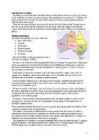
People Today Australians are mostly white, but before the first fleet reached Australia in 1788, there were only black people. Most of them live near coasts as the climate there is more fertile and human-friendly. Still there are people who like to live in the country, as there is much land and peace. However, because schools are thousands of kilometers away, children have to learn using special programs on the TV and radio. People living in big cities do not all use cars for moving. Getting to work with a bicycle or with even a sailing boat is not strange in Australia. Aborigines are described in the History topic History Aborigines Anthropologists say that the Aborigines were the first humans in the world. Even the word "aboriginal" means "the first" or "earliest known". It is confirmed that people lived in Australia about 40000 years ago. At that time, which is called the last great Ice Age, Australia was joined with New Guinea.
Natural zones: Although most of Australia is barren and arid or covered with deserts, there are five distinguishable natural zones in Australia. The winds from the oceans bring rains to the western and eastern coast of Australia. So, the rainforests occupy the space between the Great Dividing Range and the eastern coast and also the northern coast. In the west they give place to beautiful grasslands with some trees called the savannas. Further west the trees disappear and the savannas are replaced by the bush lands. The real desert occupies the centre of the Western Plateau and in the very south- west there are thin forests of evergreen trees. Most of the Austrian trees are various kinds of eucalyptus and acacia. Some eucalyptuses are small bushes in the semi deserts, some are the main trees in the savannas, but the biggest eucalyptuses grow as tall as hundred metres. Eucalyptuses give the people timber and eucalyptus oil.
Viktoria Gumennaja 2018 INTRODUCTION "The city's the best gallery I could imagine." — JR I choose the topic for writing an essay - street art. Why did I choose this genre? Because for me it is something magical and special, not at all similar to those works that are in museums, at exhibitions and so on. Think for yourself, because street art began with the graffiti, and now we can see on the streets of our city just a work of art. I think graffiti, by the way, is also a great and invaluable work. Trends are changing. Now, young artists are moving from an endless unthinking tagging to a more conceptual and rich sense, abstract and volumetric work. Street art has become popular among the general public, because it is more accessible to him both in content and in location: for art, now you do not need to go to a museum or gallery, and the meaning of the work is often clear at a glance
Pushkin revolutionized Russian literature by rejecting archaic grammar and vocabulary (so-called -- "high style") in favor of grammar and vocabulary found in the spoken language of the time. Even modern readers of younger age may only experience slight difficulties understanding some words in Pushkin's texts, since relatively few words used by Pushkin have become archaic or changed meaning. In fact, many expressions used by Russian writers of the early 19th century, in particular Pushkin, Mikhail Lermontov ( ), Nikolai Gogol ( ), Aleksander Griboyedov ( ), became proverbs or sayings which can be frequently found even in modern Russian colloquial speech. The political upheavals of the early 20th century and the wholesale changes of political ideology gave written Russian its modern appearance after the spelling reform of 1918. Political circumstances and Soviet accomplishments in military, scientific and technological
Superego-society, conscience, morals, traditions, religion, a moral censor Ego-rational behavior, motivation, self-identification, conscious decisions Id-instincts, natural responses, the pleasure principle, aggressive instincts, the death wish Influence: In art and literature, Freud's theories influenced surrealism . Like psychoanalysis, surrealistic painting and writing explores the inner depths of the unconscious mind. Freudian ideas have provided subject matter for authors and artists. Critics often analyze art and literature in Freudian terms. 2. Literary Modernism and its sub-movements. The influence of Structuralism and psychoanalysis. Main characteristic features of Modernism. Denial of conventions, traditional structure, plot and presentation of character. The stream of consciousness. Allusiveness. Virginia Woolf's Modern Fiction as a theoretical platform for Modernism. Criticism of Realist literary method.
He is the most widely known performer of reggae music. A faithful Rastafari, Marley is regarded by many as a prophet of the religion.[1] Marley is best known for his reggae songs, which include the hits "I Shot the Sheriff", "No Woman, No Cry", "Three Little Birds", "Exodus", "Could You Be Loved", "Jammin'", "Redemption Song", and "One Love".[2] His posthumous compilation album Legend (1984) is the best-selling reggae album ever, with sales of more than 12 million copies.[2] Early life and career Marley was born in the small village of Nine Mile in Saint Ann Parish, Jamaica. His father, Norval Sinclair Marley, (born in 1895), was a Jamaican of English descent, with parents from Sussex. Norval was a Marine officer and captain, as well as a plantation overseer, when he married Cedella Booker, a black Jamaican then eighteen years old. Norval provided financial support for his wife and child, but seldom saw them, as he was often away on trips. Marley
languages, especially popular in 19th century. The book is authors imiginary conversation with Raphael Hythody who was a traveller. I part describes what R.H. thought of England and points to vices that he had seen. Enclosure and after effects. II part H. visits an unknown land called Utopia and he states that Utopia is an ideal republic because: 1. The Government is elected 2. No private property- everybody gets as much they need 3. Everybody works 4. After work people enjoy music, art and sport. 5. The most difficult vwork is done by slaves 6. All schooling is free 7. Old peaple are honoured and the oldest becomes the governor 8. Utopians think that a man must be healthy and wise but not rich William Shakespeare 23. April 1574- 23. April 1616. Born in Stratford-Upon-Avon. His father was a merchant and for some time was one of the leading citizens of the town. S.-s mother
The origins of American literature The first Americans were explorers and settlers, adventurers and idealists who crossed the ocean in search of new opportunities or to escape the poverty and intolerance. Their writings were matter-of-fact accounts of life in America, which explained colonisation to Englishmen back in the homeland. An example of this form of writing is John Smith's A True Relation of Virginia, which is widely recognized to be the first example of Am lit. The early years of colonisation produced a mass of utilitarian writings including biographies, accounts of voyages, diaries, sermons, pamphlets. Much of the material addressed the problems of Church and State. There were few examples of fiction, poetry or drama. Anne Bradstreet of Massachusetts published some lyrical poems of high literary quality (1650) and Edward Taylor, who was born in England but lived in Boston, wrote some poetry in the style of John Donne and the metaphysical poets. All 17 th cent
 annaabi.ee