Leidsid 33 sarnast õppematerjali, mis on seotud failiga "Adjectives". Need materjalid aitavad sul teemat sügavamalt mõista.
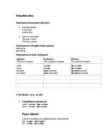
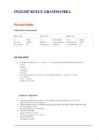
omadussõna, omadussõnad, algvõrre, clever, narrow, keskvõrre, adjectives, võrdlusastmed, positive, comparative, longer, longest, easy, easier, good, best, worse, lausesOmadussõna Omadussõna kasutatakse kahel moel: · nimisõna täiend a smart girl a pretty boy · verbi be öeldistäide The girl is smart. The boy is pretty. Omadussõnal ei ole inglise keeles mitmust. smart girls pretty boys Omadussõnal on kolm võrdlusastet: Algvõrre Keskvõrre Ülivõrre The positive degree The comparative degree The superlative degree small smaller the smallest funny funnier the funniest beautiful more beautiful the most beautiful reasonable more reasonable the most reasonable 1. Võrdlemine er ja est abil · Ühesilbilised omadussõnad small - smaller the smallest
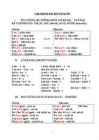
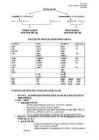
Languages: · English; Chinese Ballgames: · volleyball Of- forms: · The Republic of Estonia Meals: · Lunch; dinner Air, sky, earth, moon: · The moon Musical instruments: · The violin; the guitar Academic subjects: · Biology; history Go to------ school, university, sea, bed, work, hospital: · - Nationalities: · Dutch; Spanish 4. Comparison of adjectives: Adjectives with one syllable: clean cleaner cleanest new newer newest cheap cheaper cheapest Adjectives with two syllables and the following endings: Adjectives with two syllables, ending in -y dirty dirtier dirtiest easy easier easiest happy happier happiest
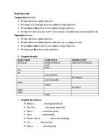
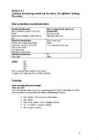
Read the rules Comparative(keskvõrre) We add err to one-syllable adjectives We change y to i and add er in two-syllable or longer adjectives We put more or less in front of two-syllable on longer adjectives For adjectives that end in one vowel + one consonant, we double final consonant and add er Superlative(ülivõrre) We add est to one-syllable adjectives We add est to two-syllable adjectives that end in y (-y changes to iest) We put most or least in front on two-syllable or longer adjectives We always put the in front on the superlative 1. Complete the table BASE FORM COPRATIVE SUPERLATIVE POPULAR MORE POPULAR THE MOST POPULAR worse better thin big
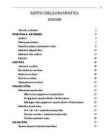
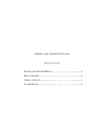
Degrees of Comparison Table of Contents Degrees of Comparison ......................................................... 2 Formation of comparatives and superlatives from adjectives and adverbs:......................................................................... 2 Adjectives ................................................................. 2 Adverbs .................................................................... 4 Types of comparisons ........................................................... 4 Degrees of Comparison Degrees of Comparison are used to compare things (living beings, actions, phenomena, etc). We use the comparative degree to compare two things: She’s shorter than me. John works harder than Jim.
Tell mother that I will be late today. Ütle emale, et ma jään täna hiljaks. Adjective Omadussõna Omadussõna kasutatakse kahel moel: · nimisõna täiend a smart girl a pretty boy · verbi be öeldistäide The girl is smart. The boy is pretty. Omadussõnal ei ole inglise keeles mitmust. smart girls pretty boys Omadussõnal on kolm võrdlusastet: Algvõrre Keskvõrre Ülivõrre The positive degree The comparative degree The superlative degree small smaller the smallest funny funnier the funniest beautiful more beautiful the most beautiful
Second cond. ebatõenäolised sündm. Third cond. miski, mis oleks võinud minevikus toimuda, aga ei toimunud. if-clause main clause 0 present simple + present simple 1 present simple + will future 2 past simple + would (could, might) ja I.pv. 3 past perfect + would (could,...) ja present perfect VII. TAG QUESTIONS. ____________main clause_____ , ___tag ___ . Positive verbs turn to negative and negative verbs change to positive!!! Names change to pronouns! EXAMPLES: You are going to Spain, aren´t you? She isn´t pretty, is she? It is a nice day, isn´t it? I am seeing you tomorrow, aren´t I ? AM AREN ` T !!! I´m late, aren´t I? !!! David can´t go out tonight, can he? She can spell, can´t she? Jane has finished her homework, hasn´t she? You haven´t got a car, have you? Bill and Tom don´t work very hard, do they? You like chocolate, don´t you? They don´t like us, do they?
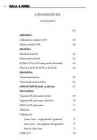
Collective Nouns 34 Masculine and Feminine Nouns 37 9 Adverbs 127 4 Pronouns 44 Personal Pronouns 44 10 Prepositions 132 Reflexive Pronouns 47 Interrogative Pronouns 48 Demonstrative Pronouns 49 11 Conjunctions 135 5 Adjectives 52 12 Interjections 138 Adjective Endings 54 Kinds of Adjectives 58 Comparison of Adjectives 65 13 Sentences 139 What is a Sentence? 139 6 Determiners 71 Kinds of Sentences 140
Kaudkõne Reported speech 11 Kaudküsimused Reported questions 12 Passiiv Passive voice 12 Loendatavad nimisõnad Countable nouns 12 Loendamatud nimisõnad Uncountable nouns. 13 Mitmuse moodustamine 13 Siduvad asesõnad 14 Omastav kääne 14 Käskiv kõneviis 15 Omadussõnad 15 Viisimäärsõnad 16 Tingimuslaused 16 2 Ajavormid Tense vorms Lihtolevik The present simple Korduv, harjumuspärane tegevus. Every day, twice a week, usually, sometimes, often, always. 1. pv (-s) do/does + 1. pv I get up at 7 every day. He always works hard. What time do you go to school?
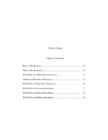
...............................................................................................13 Siduvad asesõnad..........................................................................................................14 Omastav kääne..............................................................................................................14 Käskiv kõneviis.............................................................................................................15 Omadussõnad................................................................................................................15 Viisimäärsõnad............................................................................................................. 16 Tingimuslaused.............................................................................................................16 2
I'm so pleased to meet you. This is Jane Smith. I'm Jane Smith. My name's John Smith. Informal introduction Hi. John. Jane. Hello. Titles: Mr Mrs Miss Ms Ms is a modern form of address for women. It replaces the traditional forms of Mrs and Miss. Greetings Good morning/afternoon/evening! 'How are you?' Very often people expect you to say something positive. Here's a breakdown of how you can express how you really are without complaining too much. · Fine, thanks. / On top of the world, thanks. · OK, thanks · Not so bad, thanks. / Can't complain, thanks. · So so, thanks. / So and so, thanks. · Not so good, actually 1 The English alphabet Spelling
It will definitely take your breath away. c) a person The first time I met Kati was in 2010. I first met her on the eve of my university life as she arrived in my dormitory room quite late at night. I wasn't very fond of her at that moment. She has an oval face that is covered with freckles. Her complexion is very fair, she doesn't tan at all. She has blue eyes that match her blonde hair and complexion. She has a narrow nose, everything about her is slim. She is very thin and looks sometimes younger than she is, she's in her mid twenties. She has one of the most peculiar personalities I know. She is sometimes very quiet and completely shuts me out and then she can be very chatty. Her views of the world could be categorized as pessimistic, but I know she secretly harbours a lot of positivity. She often second guesses herself and that makes her kind of a perfectionist
grammatical shape of the word, the meaning of the word stays the same. For example: consider, considered, considers. Open class words (content words) → These are the word classes that take in new words, for example by adding affixes to them or borrowing words from other languages. In English these words are most commonly nouns, verbs (not auxiliaries), adjectives and adverbs. Closed class words (function words) → These are words that do not take in any new words. In English the word classes are prepositions, pronouns, determiners and conjunctions. Syntax is the study of how sentences are formed in a language. For example what is the word order ( in English it’s usually subject, verb object) or how words relate to
aktsiaselts, OÜ osaühing, EM-võistlused Euroopa meistrivõistlused). Võõrkeelsete sõnaühendite puhul kasutatakse kas lähtekeelset või tõlgitud lühendit (nt: USA United States of America (Ameerika Ühendriigid), HIV human immunodeficiency virus (inimese immuunpuudulikkuse viirus)). Mõningaid sõnana väljaloetavaid lühendeid võib kirjutada ka sõnana (nt: AIDS ~aids, UFO ~ ufo). 6. Omadussõna võrdlusastmed Algvõrre väljendab omadust; tunnus puudub (nt: tõsine) Keskvõrre kirjeldataval olendil, asjal või nähtusel on omadust suuremal määral kui kellelgi/millelgi teisel (nt: tõsisem). Tunnuseks on alati m, mis liitub algvõrde omastava käände tüvele (nt: nim-tõsine; om-tõsise; tõsise+m=tõsisem). Kui algvõrde omastav lõpeb a- või u-ga, muutub see keskvõrdes sageli e-ks. Nt: nim-vana, om-vana; keskvõrre: vanem
ASESÕNA 18 Isikulised asesõnad 18 Enesekohased asesõnad 19 Näitavad asesõnad 19 Küsivad asesõnad 20 Umbmäärased asesõnad 21 OMADUSSÕNA 22 Määramata omadussõna 22 Mõned ebareeglipärased omadussõnad 22 Reeglipäraste omadussõnade võrdlusastmed 23 Mõningate ebareeglipäraste omadussõnade võrdlusastmed 24 Määratud omadussõna 25 Den / det / de + määratud omadussõna 25 Omastav asesõna + määratud omadussõna 25
ainsus mitmus Üldkääne man - mees men - mehed Omastav kääne man's - mehe men's - meeste LISTEN & REPEAT REPEAT 67 OMADUSSÕNA kesk- ja ülivõrre Omadussõnade võrdlusastmete moodustamiseks on 2 viisi: 1) -ER (keskvõrre) ja -EST (ülivõrre) lisamisel omadussõna lõppu, mida kasutatakse: 1-silbiliste omadussõnade puhul cheap cheaper cheapest odav odavam kõige odavam 2-silbiliste omadussõnade puhul, easy easier easiest mille lõpus on -y, kusjuures -y kerge kergem kõige kergem muutub -i 2) MORE (keskvõrre) ja MOST (ülivõrre) lisamisel omadussõna ette, mida kasutatakse: ülejäänud omadus- interesting more interesting most interesting
5 Match the words in list A with the correct definitions in list B. A B 1 intelligent a in a hurry to do things 2 stubborn b giving things to other people 3 shy c believing in yourself 4 popular d being very clever 5 pessimistic e not very good at talking to other people 6 friendly f wanting to know the answer to things 7 impatient g easy to talk to and nice 8 generous h not changing your mind easily 9 curious i thinking things are bad or are getting worse
........... 4 Yet, still, already ....................................................................................... 6 Adverbs and Adverbial Phrases An adverb describes a verb, an adjective, another adverb or a whole sentence. Adverbs can be divided according to the information that they give. Types of Adverbs 1. Some adverbs tell us how somebody does something or how something happens. These are called Adverbs of Manner. Please speak quietly. Tom drove carefully along the narrow road. 2. Some adverbs tell us where. These are called Adverbs of Place: She put the book on the table. 3. Some adverbs tell us when. These are called Adverbs of Time. We met them at five o´clock. 4. Some adverbs tell us how often. These are called Adverbs of Frequency. E.g. always, sometimes, often, never, usually, seldom, hardly ever, and rarely: She never comes on time. They usually work on Saturday mornings.
) = notorious (neg.) 4 Järgnev on pikk näide erinevatest naise kohta käivatest väljenditest (girl, maiden, lass, lassy, baby, young lady), arvan et pole nii oluline, kuna näiteid on konspektis niigi palju, ei hakka üle pakkuma. Inherent connotation 1 IC may be secured by the very object, quality or notion that the word stands for. People appreciate certain notions, as either positive or negative. Negative notions Adj: dirty, nasty, vulgar, obscene, greedy Nouns: sin, fool, death, tragedy Verbs: destroy, offend, steal, ploth (sepitsema) Positive notions Adj: polite, refine, pure, noble, manly Nouns: virtue, beauty, love, bliss Verbs: worship, save, protect 2 This connotation depends on the thing the word stands by. IC may also depend on the structure of the words. Such words usually contain negative affixes, e.g abnormal, heartless, unpopular, illegal, injustice.
perspective.) Globalization is a challenge to state structures widely understood as structured human consociation in space and time, rather than in a legalistic or in a specific sense such as the modern European nation state ; it does not make them obsolete, but rather more necessary than they ever were, because some form of institution must structure and make habitable the environment created as a "spill-over effect" by Globalization. But even if we take a more narrow definition of state, if the 1990s have shown anything, it is the remarkable resilience of the state. Indeed, since 1989, we have more states than ever; the breakup of the Soviet Union and Yugoslavia, as well as of Czechoslovakia, are striking European examples. What one thus has seen, at least in part, is the re-emergence not only of statehood, but even of the nation state. Moreover, the EU, paradigm for times to come in all of Europe, is a state structure, constitutional crisis or not
languages of Southeast Asia and the Philippines, and it is also found in some Native American languages. circumfixes morphemes that are attached to a root or stem morpheme both initially and finally. Morphs: the concrete realisation of a morpheme (`was' be, past, singular) Allomorphs: a/an Types of affixes: Derivational and infelctional Derivational affixes: Derivational affixes may change the grammatical class of the root verbs into nouns, nouns into adjectives (boy, boyish), and so on. Derivation is a lexical process which actually forms a new word out of an existing one by adding affixes to stems or roots. consideration, considerate, inconsiderate, inconsiderateness Inflectional affixes: Inflectional affixes may be described as `relational markers' that fit words for use in a sentence (express a syntactic relation). Inflections do not change the grammatical class of a given item or produce new lexemes, just different word forms.
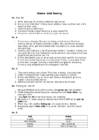
Home and family Ex. 3 p. 31 a. When she was 15. Emma's behavior got worse. b. It's very hard for them it they have suddely leave and live out in the world on their own. c. Caroline was a real friend. d. She has friends, a boyfriend and a busy social life. e. I have to treat her like an adult and give her space. Ex. 4 1. Emma was unhappy. She was smoking and drinking. She kept missing school and getting terrible fights. She stayed out at night, wen clubs, often got into trouble with the police and even started taking drugs. 2. Caroline was fostered a lot of teenagers before. Caroline is kind and caring for Emma. She helped Emma to see that how important it was to go to school and live her life. 3. Emma decided to stay on at school, and worked hard for her exams. Emma was extremely lucky. Caroline want Emma to stay with them. Emma eas changes. She has a boyfriend and goes to university
PRAISE FOR The 4-Hour Workweek "This is a whole new ball game. Highly recommended." --Dr. Stewart D. Friedman, adviser to Jack Welch and former director of the Work/Life Integration Program at the Wharton School, University of Pennsylvania "It's about time this book was written. It is a long-overdue manifesto for the mobile lifestyle, and Tim Ferriss is the ideal ambassador. This will be huge." --Jack Can eld, cocreator of Chicken Soup for the Soul®, 100+ million copies sold "Stunning and amazing. From mini-retirements to outsourcing your life, it's all here. Whether you're a wage slave or a Fortune 500 CEO, this book will change your life!" --Phil Town, New York Times bestselling author of Rule #1 "The 4-Hour Workweek is a new way of solving a very old problem: just how can we work to live and prevent our lives from being all about work? A world of in nite options awaits those who would read this book an
change the chemical composition of your blood, and help you to sleep or keep you awake at night. Your thoughts can make you happy or sad, sometimes in an instant. They can make you alert and aware, or distracted and de- ccc_tracy_fm_i-xviii.qxd 7/7/03 3:23 PM Page xv Introduction ➤ xv pressed. They can make you popular or unpopular, confident or insecure, positive or negative. Your thoughts can make you feel powerful or powerless, a victim or a victor, a hero or a coward. In your material life, your thoughts can make you a success or a failure, prosperous or poverty-stricken, respected or ignored. Your thoughts, and the actions that they trigger, determine your whole life. And the best news of all is that they are completely under your own control.
Liitsõnad uus tähendus Südametunnistus, vanaisa Nimisõnad, kui... ...esimene sõna vastab Mootorpaat, puhkusereis, küsimusele mis liiki? nahkmööbel, juhtnöör missugune? ...esimene sõna on lühenenud Purskkaev, võõrkeel, inimhääl Nimisõna või omadussõna ...kui tekib uus mõiste Lumivalge, helesinine järgneva omadussõnaga... Käändsõna järgneva ne- ja Mäekõrgune, suurejooneline, line-liitelise omadussõnaga tuhandeaastane, poistevaheline Sidekriipsuga number, täht, 13-aastane, T-kujuline, Elva-
(NOT I have big respect for her ideas.) We had great difficulty in understanding him. (NOT We had big difficulty in understanding him.) 33. Don't use the with a superlative when you are not comparing one person or thing with another. Compare: She's the nicest of the three teachers. She's nicest when she's working with small children. This is the best wine I've got. This wine is best when it's three or four years old. 34. Put enough after, not before, adjectives. This soup isn't hot enough. (NOT This soup isn't enough hot.) She's old enough to walk to school by herself. 35. Don't use a structure with that ... after want or would like. My parents want me to go to university. (NOT My parents want that I go to university.) I'd like everybody to leave. (NOT I'd like that everybody leaves.) 36. After link verbs like be, seem, feel, look, smell, sound, taste, we use adjectives, not adverbs. I feel happy today. (NOT I feel happily today.)
Introduction (slide 2) In this presentation I'd like to give a brief overview of clay bricks. I'll speak about 15min to allow time for questions at the end. Firstly clay bricks are known for centuries as one of the most solid and reliable structural elements is set to play a role in reducing global warming. Apart form the many benefits obtained from using clay bricks in construction, such as their durability, insulation properties and aesthetic qualities, recent findings show that they also produce less carbon emissions than any other masonry material. History (slide 3) In more detail the earliest bricks were dried bricks, meaning they were formed from clay- bearing earth or mud and dried usually in the sun until they were strong enough for use. The oldest discovered bricks, originally made from shaped mud and dating before 10000 BC, were found in Mesopotamia related to the first known cities. Ceramic or fired bricks were first introduced by the Romans. These were mainly flat, broad
Character analysis Lord Emsworth: Quotes: 1) "Beach," said Lord Emsworth. "M'lord?" "I've been swindled. This dashed thing doesn't work." "Your lordship cannot see clearly?" "I can't see at all, dash it. It's all black." The butler was an observant man. "Perhaps if I were to remove the cap at the extremity of the instrument, m'lord, more satisfactory results might be obtained." "Eh? Cap? Is there a cap? So there is. Take it off, Beach." "Very good, m'lord." "Ah!" 2) "It's Aggie. My wife, you know." "Well?" "She's left me." "Left you!" "Absolutely flat." 3) "Why did you let him go? You must have known I would want to see him." "What good would that have done?" "I could at least have assured him of my sympathy," said Lady Constance stiffly. "Yes, I suppose you could," said Lord Emsworth, having considered the point. "Not that he deserves any sy
· And when you begin to miss me, dont forget it was you who let me go. · There is an end to things no matter how much we want to hold into them. · Otsisin keset seda pimedust, sind ja loodetud vabadust,kui mu käed su poole, tegid alguse loole, printsessist ja printsist, ühest kaunist kandist, kus oleme meie kaks, kus lõbutseme, kuni otsas jaks. Sa ei pea muinasmaad looma, sa ei pea tähti taevast tooma. Ole vaid minu kõrval, kui tõuseb päike. Ole vaid mu kõrval kui mind piinab meeleheide. Ole mu kõrval, kui kumab kuu, kui su nime hüüab mu suu, ära tõota mulle, et armastad mind, kui ei ole valmis ohverdama end. Luba, et printsess jääb printsiga, kuni nad veel siin ilmas elavad. Unustame hetkeks kõik muu me, tunnetame üksteise kiireid südamelööke, kas tunned, kuidas süda jätab lööke vahele, see kõik on midagi uut, meile kahele. · Women are stronger than men, because they can walk in a 12 cm stilettos without showing t
Ladusseva "Stylistic practice: Book I, Book II" - I. Ladusseva "A Guide to Punctuation" EXAMINATION TOPICS: 1. Style, stylistics, a survey of stylistic studies 2. Inherent connotations. Phonesthemes Use lecture notes 3. Adherent connotations 4. Stylistic morphology: articles, nouns, pronouns, adjectives, verbs, adverbs, number * 5. Expressiveness on the level of word-building 6. Phonetic expressive means Study independen tly 7. Phonetic SD ("Rhythm And Style") 8. Lexical SD* 9. Syntactic SD* Use lecture notes 10. Graphical means and devices 11
Gan was suppletive in Old English, past form: eode.Eode was supplanted by went (past form of wenden) at the end of the Middle English period.To wend has survived in Modern English in phrases such as to wend one's way, we wended homewards (ironic usage). Thus: suppletivity- suppletion different parts of one and the same paradigm come from what were originally different paradigms (different words with close meanings or words in different but close dialects).Suppletion embraces verbs, adjectives, nouns. Be was/were been (Old English beon/wesan) (am, art, is, are); in Old English some suppletive forms were used parallel to one another) Good better best Bad worse worst Much more most Little less least Estonian: hea parem (cf "paras" fitting, in Finnish "the best" - metonymical link), palju - rohkem Finnish: mennä (to go), lähteä (to leave) Estonian: minema, mine, lähen, läksin French: aller, je vais/nous allons, ira (future)
) has a boy-friend (who?). She (who?) likes to read books (what?). The earth (what?) is a planet (what?). Besides, there are: THE ATTRIBUTE (WHAT?/WHAT KIND?) and THE ADVERBIAL (WHEN? - adverbial modifier of time/WHERE? – adverbial modifier of place/ HOW? – adverbial modifier of manner) Attributes modify nouns and stand in front of them. Adverbials modify verbs and usually stand behind them: This girl has a beautiful smile. This girl smiles beautifully. Attributes are usually adjectives but sometimes nouns as well: This is an interesting (adjective) story. The kitchen ( noun) door is locked. 2 Word Order in Affirmative Sentences In English the word order is not as flexible as in many other languages. The basic structure of an affirmative sentence is SUBJECT (Who?/What?) – PREDICATE (Action/State) – OBJECT (What?): Monkeys like bananas. Mary has a little lamb. All the world is a stage. The teacher is explaining the rule
successful car. For now Mini has three different types of models: hatch, clubman and convertible. Mini is still owned by BMW Group. (www.mini.co.uk A) External marketing evironment analysis Socio-cultural Socio-cultural factors Socio-cultural factors take into account the views and trends of society. It is essential for companies to take into account socio-cultural factors, because they need to know what their customers are looking for. In the UK where the streets are narrow and everybody is parking on the roadside; it is much comfortable to own a small car then a big one. Vehicles generally have been considered to be more a men's subject. Although over the years more women have started to use a car, but the change between male and female car users have still persisted. Females have started to make working-career by themselves and the need for transportation has increased; one of the comfortable ways to get to a work would definitely be a car
foto (photo). Words that end in -a are generally feminine, with a few exceptions: el mapa (map), el problema (problem). Other feminine words end in -ción, -tad, -dad, or -tud. Use the ese forms to mean that when what you are talking about is near the person you are addressing. Use the aquel forms when what you are talking about is far from both you and the person you are addressing. Esto and eso are the neuter forms of this and that. They can be used in general and abstract ways. Demonstrative adjectives (listed above) are used before a noun; if you want to use the demonstrative pronouns, which are used before a verb, add an accent on all of the first e's: éste, ésta, éstos, éstas, ése, ésa, ésos, ésas, aquél, aquélla, aquéllos, aquéllas. 5. Subject Pronouns nosotros / noh-soh-trohs / yo yoh I we
 annaabi.ee