Desert Island How I will get in there?! · At first i will go to the plane that should get me in Africa. In half way something happens to the plane and it crashed. I was the only survived people. With me there was a parrot who survive to. Island · Suddenly I was in some creepy island.I didn't know what to do, and I began to look for other people.But there wasn't any people just one annoying parrot and many other kind of animals. Weather · The weather was very stormy. I was looking for shelter. I didn't found anything besides a large tree. I sat under a tree and waited until the storm subsides. There was cold and wet. I was scared. Shelter · Under that big three i built my own shelter. I picked up twigs and fallen trees. I found some rope at the aircraft.And so I built my shelter.I was lookin...
Australia and New Zealand Triin Tens Tartu Veeriku School 2016 General facts about Australia · Commonwealth of Australia · Capital: Canberra · Population: 21 507 717 (2011) · Area: 7 692 024 km² · Anthem: Advance Australia Fair · Currency: Australian dollar · Language: English Location · Bigger cities: Sydney, Melbourne, Brisbane · Regions · Geography History of Australia · Aborigines: 50 000 years ago · Dutch explorers: 1600s · Captain James Cook: 1770 · The British settlers: 1788 · 26 January Australia day · Free settles from Europe (19 th century) Gold Rush · Edward Hammond Hargraves · 1851 · Blue Mountains, New South Wales · Rushing to Australia · Population growth · The end of the prison Natural sites in Australia · Kangaroo Island Third-largest island Many animals · Bungle Bungles Purnululu National Park Last unexplored lands · Simpson Desert Red sand Largest sand dune desert C...
Ursula Potivar Geography of Madagascar Topography Madagascar is an island in the Indian Ocean off the eastern coast of southern Africa, east of Mozambique. At 587,000 square kilometres, Madagascar is the world's 46th-largest country and the fourth- largest island. Madagascar can be divided into five geographical regions: the east coast, the Tsaratanana Massif, the central highlands, the west coast, and the southwest. The east coast The east coast consists of a narrow band of lowlands, formed from the sedimentation of alluvial soils and zone, composed of steep bluffs, alternating with ravines bordering an escarpment of about 500 meters in elevation. The coastline is straight, with the exception of the bay. The east coast is considered dangerous for swimmers and sailors because of the large number of sharks that frequent the shoreline. The Tsaratanana Massif region The is...
Strange and mysticals places on Earth Eye of africa - Mauritania Eye of africa- Mauritania · The Richat structure (Sahara, Mauritania) appears as a large dome at least 40 km in diameter within a Late Proterozoic to Or- dovician sequence. · This natural phenomenon is actually a Richat structure caused by the dome shaped symmetrical uplifting of underlying geology now made visible by millennia of erosion. Socotra island · is a small archipelago of four islands in the India Ocean. The largest island, also called Socotra, is about 95% of the landmass of the archipelago. It lies some 240 kilometres (150 mi) east of the Horn of Africa and 380 kilometres (240 mi) south of the Arabian Peninsula. The island is very isolated and through the process of speciation, a third of its plant life is found nowhere else on the planet. It has been described as the most alien- looking place on Earth. So...
Test 19 1 Translate. 1 Hollandi maadeuurijad kaardistasid Austraalia lääneranniku. Dutch explorers mapped the western coast of Australia. 2 Britannia saatis tuhandeid süüdimõistetuid Austraaliasse. Britain sent thousands of convicts to Australia. 3 Eukalüpt ja akaatsia on kõige tavalisemad taimeliigid. The Eucalyptus and the Acacia are the most common types of flora. 4 Känguru saad on umbes saja kilomeetri kaugusel lõunarannikust. Kangaruu Island is about 100km off the southern coast. 5 Austraalia taimestik on värvirikas. The flora of Australia is colorful. 6 Kängurud ja koaalad on kukkurloomad. The kangaroos and koalas are marsupials. 2 Complete the sentences with the where n...
Famous people of England Quiz. nimi 2014 1. Name the English mathematician who devised a mechanical calculating machine in 1834 which was the forerunner of modem computers. 2. With what do you associate the names of Mary Read and Anne Bonny, who lived during the eighteenth .century? 3. She was an English heroine who, with her father rescued the crew of the ship Forfarshire which was wrecked on the Fame Islands on the northeast coast of England in 1838. Who was she? 4. What was Casanova's occupation at the time of his death? 5. What was the name of the Hunchback of Notre Dame 6. Which broadcaster, who died in 1985, is most remembered for presenting Desert Island Discs? Vastused: 1. Charles Babbage 2. Piracy 3. Grace Darling 4. Librarian 5. Quasimodo 6. Roy Plomley
Australia Katrin Aibast General · Australia is the sixth largest country in the world after Russia, Canada, China, USA and Brazil. · The mainland is the largest island and the smallest, flattest and driest continent on Earth. · The Australian federation consists of six States and two Territories. · The largest State, Western Australia, is about the same size as Western Europe. · Australia was the second country to give women the vote. Great victoria desert Click to edit Master text styles Second level Third level Fourth level Fifth level Highest peak Click to edit Master text styles Second level Third level Fourth level Fifth...
Topic Australia Introduction Many people know Australia as the land down under because it is the only continent except for Antarctica that is all on the southern hemisphere. Its name means ,,Southland". The official name of the country is the Commonwealth of Australia. It's capital is Canberra. Australia is the sixth largest country in the world but the smallest continent. Australia has 6 states and 2 territories (New South Wales, Victoria, Tasmania, Queensland, Western Australia , South Australia, The Australian Capital Territory and the Northern Territory). The Australian people are culturally the same as the Anglo Americans. There also live aborigines. Aborigines are the ancestors of the people. Like the US and Canada, Australia was an English speaking colony of Great Britain. Today Australia is a modern developed country with a diversified economy. Australia is an island continent of 7.7 million square kilometres, which ma...
Australia Australia is the world driest continent. More than two-thirds of country is desert or dry bushland. The climate is tensely hot. Australia is relatively flat country with mountainous only in the eastern regions. Most Australians live in the southern part of the country, where winters are wild and the summers are sunny and warm. The Great Barrier Reef is Chain of 500 island and coral reefs 2000 km long, near the coast of the north-east Queensland. It is one of the natural wonders of the world. There are some 150 million sheep in Australia. This is one-fifth of the total number of sheep in the world. Dingers are wild dogs of the outback, believed to have been brought to Australia by the Aboriginats tohusand of years ago. They are expert hunters. In the hot climate of north Australia, most houses are built with verandas which provide shade. The country is divided into six self-governing sta...
New Zealand has an exceptionally long coastline compared to the size of the country (over 15,000 km) which makes it almost the same size as the mainland USA's coastline. Even though New Zealand is only about the same size as Colorado, the large coastline is possible because it is extremely iregular and indented. New Zealand's coastline is packed with deep coves, bays, intricate harbours, long sounds, and steep fiords. Its territorial waters stretch from the sub-tropical through to the sub-antarctic. Both islands tend to have better swimming beaches on their eastern coasts and the further north you go. The west coasts of both islands are quite rugged with cliffs and more unsettled weather. There are however some suitable swimming and bathing beaches here, with iron (volcanic) sand beaches (black sand) being common on the North Island. The longest beach in New Zealand is the 90 mile beach, which is actually about 60 miles long. This beach...
Why do we need morality? As an English philosopher Thomas Hobbes (1588-1679) said, all humans are made equal in mental and physical abilities. This does not mean that all of us are equally strong, smart or beautiful, but that everyone has the ability to damage or kill the other. The main goals, we all want to achieve, are having a shelter, security, power, wealth and enough food. This means that people are constantly competing with each other and that makes all of us (who desire the same things) enemies. Hobbes names the insecurity and fear people feel towards each other a "state of nature". In this state there are no moral rules or enforced laws, also no justice or injustice. People, being violent and arbitrary, will only follow their own interest. So without laws and boundaries, people would be in constant war - every man for himself. In this kind of society there is no time for cultural or industrial develo...
Only one country in the world fills a whole continent. That country is Australia. The continent it fills is Australia, too . Its full name is Commonwealth of Australia . Australia is the only continent except Antarctica that is all south of the equator . Its name is ´´´southland´´. Since it is south of equator, its seasons are just the opposite of ours . Sometimes Australia is called the island continent . Two hundred years ago there were no white people in Australia . The only inhabitants were dark-skinned people who were still living in a Stone Age . Their only weapons were stone knives, simple spears, and boomerangs . For food they hunted and fished and gathered wild fruits and nuts . Dutch sailors stopped at several places on the northern and western coasts in the 1600s . They brought back word that the land was ´´ of very little use ´´ . There is a great desert in Australia, and comes down to the sea on the western and southe...
AUSTRALIA Tallinn 2008 Only one country in the world fills a whole continent. That country is Australia. The continent it fills is Australia, too. Australia, then, is both a country and a continent. Australia is one only continent except Antartctica that is all south of the equator. Since it is south of the equator, its seasons are just the opposite of ours. It has summer while we have winter, and the other way round. Sometimes Australia is called the island continent. There is a good reason why. It is an island. It is 1800 miles from the mainland of Asia and almost half way round the world from Europe. More than 6000 miles of ocean separate it from the America. Australia is the world's smallest, flattest and driest continent. It is also the oldest some of the rocks are more than 3,000 million years old. It is the 6th largest country. Its territory is 7 700 000 km2. Australia is...
Australia History & Geography Rakke Gymnasium X class Katre Pohlak, Alari Uudla April 2011 Key Facts Australia is the sixth largest country in the world. Australia is an island, surrounded by water. It is located on the smallest continent in the world. Key Facts Population: 17.5 million Geographic size: 2.97 million square miles Capital: Canberra Major cities and population: Brisbane, Sydney, Perth, Melbourne and Adelaide. Geographic Landmarks Australia has a very dramatic landscape. Australia is famous for its "outback," the remote lands of the interior. The desert outback covers most of the interior. It is too hot, dry and barren to support many people. Geographic Landmarks Australia also has some ...
Australia Australia is a country and also a continent. If someone wants to make clear, that he is speaking of the country, he may call it by its full name of Commonwealth of Australia. Australia's name means "southland."It is south of the equator. Sometimes it is also called the island continent because it is an island. There are about twenty million people in Australia.It is 1,800 miles from the mainland of Asia and almost half way round the world from Europe. More than 600 miles of ocean separate it from Americas. Since Australia is south of the equator, its seasons are just the opposite of ours. It has summer while we have winter, and the other way round. States and Territories. Australia consists of six states, two territories and eight external territories. The six states are: Western Australia (capital Perth), South Australia (capital Adelaide), Queenslnd (capital Brisbane), New South W...
THE NO ARTICLE · Names in the plural = countries: the Nether- * Names of countries / towns (also with an es- lands, the USA; the West Indies ablished modifier): (South) Estonia, Tartu · Names of the countries, and towns with a * Expressions from North to South etc. characteristing / spacifying modifer: the Tartu of th 19th century * Names of streets, bridges, airports, parks, squares, buildings, railway stations, shops, · Names of rivers, channels / canals, seas, addresses: Fleet Street, Tower Bridge, oceans, streams, straits: the Danube; the Suez Kennedy Airport, Hyde Park, Trafalgar Canal; the Baltic Sea; the Pacific Ocean; the Square, Buckingham Palace, Victoria Station, Bering...
Topic Australia Tallinn English College 2006 Australia 1 . Introduction The name Australia is derived from the Latin Australis, meaning of the south. In land area, Australia is the sixth largest nation, its territory is 7,686,850 sq km and its population reaches today over 20,5 million people. It is the only nation to govern an entire continent and its outlying islands. Australia's capital is Canberra, the only city with its own territory. It was built in the early 1900s just to be the capital. The official language is English and the official name of Australia is the Commonwealth of Australia. Australia is located on the Southern Hemisphere (because of that Australia is also called "A land down under"). 2 . Geographical position Australia is an island continent and ...
Australia Fact file: Australia comprises a land area of 7 686 850 square kilometres. Its population is about 21,3 million people. Australia's capital is Canberra. The national language is English. The official name of it is the Commonwealth of Australia. It's divided into six states and two territories: New South Wales, Queensland, South Australia, Western Australia, Tasmania, Victoria, Australian Capital Territory (ACT) and Northern Territory. Symbols: Australia had the British flag as their official flag until 1901, when the Commonwealth of Australia was formed. Over 30 000 entries attracted the official competition. Five of them, which contained almost identical designs, were placed equally first. The Australian flag symbolises Australia's historical links with Britain, because it has British flag on it, and Australia's location in the southern hemisphere...
Problems 1 Underline the most suitable word or phrase. a) Many people were injured when the building demolished/collapsed. b) The ship radioed to say that it was in difficulties/dangers. c) The government has announced plans to help the poor/poverty. d) There was a large demonstration/manifestation against nuclear power in Manchester yesterday. e) Everyone agrees that the environment/nature must be protected. f) There has been another increase/rising in the level of crime. g) There are few jobs here and many people are away from work/unemployed. h) The train was in a/an accident/collision with a bus on a level crossing. i) The driver of the bus admitted that he had done/made an error. j) No ships are sailing today because of the high/storm winds. 2 Complete each sentence with a word from the box. Use each word once only. disaster emergency hooliganism li...
Republic of Chile Republic of Chile is a country in South America occupying a long and narrow coastal strip wedged between the Andes mountains and the Pacific Ocean. Chile's unusual, ribbon-like shape -- 4,300 kilometres long and on average 175 kilometres wide -- has given it a hugely varied climate, ranging from the world's driest desert -- the Atacama -- in the north, through a Mediterranean climate in the centre, to a snow-prone Alpine climate in the south, with glaciers, fjords and lakes. The Pacific forms the country's entire western border, with a coastline that stretches over 6,435 kilometres. Chile expanded in the late 19th century, when it incorporated its northern and southern regions. Southern Chile is rich in forests and grazing lands and features a string of volcanoes and lakes. The southern coast is a labyrinth of fjords, inlets, canals, twisting peninsulas, and islands. Prior to the com...
Retelling the Aboriginal people 1. The formation of the continent Australia, a continent of geographic and biological diversity (mitmekesisus), has an amazing range of animal and plant life, as well as one of the world's oldest ethnic groups. After the last Ice age, when sea rose considerably (märkimisväärselt kasvanud), Australia and its largest island Tasmania, became isolated form the rest of Asia. 2. The earliest inhabitants The earliest humans living in Australia are called Aborigines and they are descended (pärinevad) from among the earliest humans in the world. For thousands of years Aborigines lived as hunter-gatherers along the coast and in the inland desert areas, following the same lifestyle as their ancestors. 3. Finding food and water Aboriginal tribes obtained water from trees and roots and even squeezed water out of the bodies of frogs. Women collected anything that grew or moved,...
Malestrom Major Rivers N am e Continent Out fl o w T o tal Lengt h (mi.) Nile Africa Mediterran ean Sea 4,1 60 Am azo n South Am erica Atlantic Oce an 4,000 Ch ang (Yangtze) Asia East China Sea 3,964 M ississippi-M iss o u ri N o rt h Am eri ca Gul f of Mexico 3,710 Major Deserts Name ...
Australia Australia , officially the Commonwealth of Australia, is a country in the Southern Hemisphere comprising the mainland of the Australian continent, the island of Tasmania and numerous smaller islands in the Indian and Pacific Oceans. Australia flag Australia coat of arms. Australia is a cloudless dark blue sky, the bright sun, multikilometer beaches with snowwhite sand and ocean up to horizon. Australia's landmass of 7,617,930 square kilometers is on the IndoAustralian Plate. Surrounded by the Indian and Pacific oceans, it is separated from Asia by the Arafura and Timor seas. It the sixth largest country in area after Russia, Canada, China, the United States and Brazil. It is the flattest and (after Antarctica) the driest of continents, yet it has extremes of There are r...
Geography The name Australia means ,,southland". It is both a country and a continent, with an area of 7,617,930 square kilometres and it is also an island, separated from Asia by the Arafura and Timor seas. But Australia is also surrounded by the Indian and Pacific oceans. The Great Barrier Reef is the world's largest coral reef. It lies off the north-eastern coast and extends for over 2000 kilometres. The famous mountain range in the eastern part of Australia is the Great Diving Range and it's highest peak is Mount Kasciusco's 2230m. In the continental part, there are the Macdonnell ranges. Other smaller mountain ranges are the Musgrave Mountains, the Hammessley Mountains and the Darling Mountains. The continental part of Australia is mostly covered with deserts and these deserts are the Great Sandy Desert in the north-western part, the Great Victoria dessert in the southern part and Gibson desert and the Simpson desert. The Murr...
The United States of America (The U.S.A) Geography The main part of the United states extends from the Atlantic Ocean in the east to the Pacific Ocean in the west. It covers the middle of the North American continent. This area is called ,,the continental United states". The continental United States is bounded to the North by Canada and to the South by Mexico. The border with Canada is often called ,,the longest unguarded border in the world". The United States and Canada are good friends and they have very few problems in managing the border. The borded with Mexico is different. Immigrants are constantly crossing the border illegally. Every day about 2,000 of them are captured and sent back, but may others get through. There are also two states that are not connected to the continental United States. They are Alaska and Hawaii. There are two mountain ranges in ...
Australia. Kadri Rampe 2012 Position in the world. Australia, officially the Commonwealth of Australia, is a country comprising the mainland of the Australia continent, the island of Tasmania and numerous smaller islands. Its the world`s sixthlargest country by total area. On 1 January 1901, the six colonies federated,forming a Commonwealth of Australia, since Federation, Australia has maintaned a stable liberal democratic political system. The population of 22,7 million is highly urbanised and heavily concentrated in eastern states due to geography and climate. A highly developed country, Australia is the world's 12th largest economy and has the world's fifthhighest per capita income. Enviroment. Although most of Australia is semiarid or desert, it includes a diverse range of habitats from alpine heaths to tropical rainforests. Australian forests are mostly made up of evergreen species, particularly eucalyptus ...
- no preposition in the ocean at the beach in the morning/evening/afternoon in the desert in time in the mountains - last Saturday/week/month etc at a ski resort on Friday/Thursday etc in Telluride/Tallinn/London etc in the middle in southwest Colorado in the post office by the time (selleks ajaks, kui...) on Delancy Street at night on the corner in a minute (minuti pärast) in the street haven’t talked to them for over a on Ridgeback Mountain month in the woods/forest - next weekend/month/day a small house on a lake on the first day ...
Australia Australia is the smallest continent in the world. It is 7.6 million square kilometres big. It is often called the island continent because it is rather small for a continent and very big for an island. There are only five countries bigger than Australia in the World. There are five states in the mainland. Tasmania is also considered as a state so there are six states. The Northern Territory and Canberra are also independent but they are not states. Canberra is the capital of Australia and it is situated between Sydney and Melbourne because both of these cities wanted to be the capital. The population is about 19 million people and growing. New South Wales is the most populated state and Victoria is the most densely populated state. The national language is English. It is English because British settlers came to live in Australia in the past and they brought conv...
Tallinna Inglise Kolledz Australia Topic Alice Tärk, 8b. Tallinn 2007 Table of contents: Factfile............................................................................................. ................................. Symbols.......................................................................................... ....................................Head of State................................................................................................ ................... Government....................................................................................... ............................... History............................................................................................. .................................. Relief..................................................................................................
Topic The USA The USA is situated in the central part of the North American continent. Its western coast is washed by the Pacific Ocean and its eastern coast by the Atlantic Ocean an the Gulf of Mexico. It borders on Canada in the north and on Mexico in the south. The USA consists of fifty-one states and the District of Columbia. The state of Alaska is separated from the rest of the USA by Canada. Hawaii, which became the fiftieth state in 1959, is in the Pacific Ocean, halfway between the continents of America and Asia. The USA is one of the largest countries in the world. Its area is over 9 million square kilometers. Symbols of the United States include the American flag and the Great Seal. The name, "United States Of America", is usually shortened to "The United States", "America", or simply "The US" or "USA". America has over 270 000 000 people and th...
Tallinn English College Report of Canada 8a Teacher: Merike Sisask Composer: Kärt Kalvet 2010 Canada, Kärt Kalvet 8a Canada General Information Canada is in North America. It's area is 9220970 sq km. Canada's population is 313.612.000 people. Canada is divided into 10 provinces and 3 territories. The capital of Canada is Ottawa. Canada has constitutional monarchy. The head of state in Canada's government is the Queen of England. There are two main languages in Canada: English and French. Canada's curreny is Canadian dollar (1 dollar=100 cents[Can$]). The highest peak of Canada is Mount Logan, 5959 metres. The lowest point is sea level. The longest river is the Mackenzie. The climate and geography of Canada vary greatly from temperate in the south to arctic in the north and from islands and plains in the east to mountains in the west. Location...
Tallinna Inglise Kolledž Australia Referaat Tallinn Table of contents: Introduction.....................................................................................................................3 Geographical Position.....................................................................................................3 Relief...............................................................................................................................4 Climate & Time Zones....................................................................................................5 Plants...............................................................................................................................5 Animals...........................................................................................................................6 Population........................................
Australia Topic Koostas: Aineõpetaja: Tallinn 2011 Location Only one country in the world fills a whole continent. That country is Australia. The continent it fills is Australia, too. Australia, then, is both a country and a continent. If someone wants to make clear that he is speaking of the country, he may call it by its full name of Commonwealth of Australia. Sixty million years ago Australia and its nearby islands were separated from the rest of the world by a great upheaval. They were cut off from Asia by the ocean. Very few people and almost no animals visited Australia before English colonists began to settle there in 1788. During all those 60 million years the native Australian mammals developed by themselves, undisturbed by the animals developing elsewhere. Australia is the only continent except Antarctica that is all sout...
Natural Zones and Flora. There are five distinguishable natural zones in Australia. In the very east there are wet forests (1.) that occupy the space between the Great Dividing Range and the eastern coast. Westward from the Great Dividing Range the wet forests give place to beautiful grasslands with some trees . These grasslands are called the savannas (2.). Farther west the trees disappear and the bushlands (3.) begin. The real desert (4.) occupies the centre of the Western Plateau. In the very southwest there are thin forests of evergreen trees (5.). Most of Australian trees are kinds of eucalyptus trees (or gum trees to Australians) and acacia ( wattle to Australians). Eucalyptus trees are found everywhere in Australia. There are many kinds of them and they greatly differ in size. One kind, the great mountain ash, can grow to 120 metres and it grows in the wet forests in the eastern part of the continent.These strong trees do not d...
Australia Australia is surrounded by the Indian and Pacific oceans, it is separated from Asia by the Arafura and Timor seas. Australia presents an enormous range of climatic conditions, since it covers thirty degrees of latitude. It is mostly temperate, but one third of the continent is tropical, and there are large desert areas. The two largest cities are Sydney and Melbourne. The capital of Australia is Canberra. It is a small city and was built in the early 1900s. History. Two hundred years ago there were no white people in Australia. The only inhabitants were dark-skinned people who were still living in a Stone Age. Their only weapons were stone knives and boomerangs. But their tribes had very well-worked- out customs. A few aborigines still live in the emptier part of the continent. In 1770, the British explorer Captain Cook raised the British flag. Cook found there a pleasan...
Alberta The capital of Alberta is Edmonton. The population is 3.7 million people and there are many nationalities. Besides English and French there are also immigrants from Scotland, Ireland, Wales, Germany, Ukraine and Scandinavia. In Edmonton and Calgary there are also historic Chinatowns, and Calgary has Canada's third largest Chinese community. Geographical features Alberta covers an area of 661,848 square kilometres, an area about 5% smaller than Texas or 20% larger than France. This makes it the fourth largest province after Quebec, Ontario, and British Columbia. To the south, the province borders on the 49th parallel north, separating it from the U.S. state of Montana, while on the north the 60th parallel north divides it from the Northwest Territories. To the east the 110th meridian west separates it from the province of Saskatchewan, while on the west its boundary with British Columbia follows the 120th meridian west south fro...
Scotland ! Scotland (Gaelic: Alba) is a country in northwest Europe that occupies the northern third of the island of Great Britain. It is part of the United Kingdom, and shares a land border to the south with England. It is bounded by the North Sea to the east, the Atlantic Ocean to the north and west, and the North Channel and Irish Sea to the southwest. In addition to the mainland, Scotland consists of over 790 islands including the Northern Isles and the Hebrides. Edinburgh, the country's capital and second largest city, is one of Europe's largest financial centres. It was the hub of the Scottish Enlightenment of the 18th century, which saw Scotland become one of the commercial, intellectual and industrial powerhouses of Europe. Scotland's largest city is Glasgow, which was once one of the world's leading industrial metropolises, and now lies at the centre of the Greater Glasgow conurbation which dominates the Scottish Low...
Ermo Altmäe 011PK Time Prepositions Multiple Choice Exercise Correct! Well done. Your score is 60%. 1. Jane is arriving on January 26 at 2 o'clock in the afternoon. 2. It snows here every year in December. We always go outside and play in the snow on Christmas day. 3. Michael is leaving on Friday at noon. 4. Frankie started working for her law firm in 1995. 5. Franklin began working on the project NO PREP yesterday. 6. Normally, on New Year's Eve, it's tradition to kiss the one you love at midnight. 7 Don't be ridiculous; there were no telephones in the seventeenth century! The telephone was invented in the 1870s. 8. The plane leaves NO PREP tomorrow morning at 8:00 AM. 9. The hills here are covered with wildflowers in early spring. 10. We met at the restaurant at 6:30 and stayed until 10:30. Ermo Altmäe 011PK Time Prepositions 2 Multiple Choice Exercise Correct! Well done. Your score is 14%. 1. She always gets up early ...
Table of contents 1. Introduction 2. Geographical position 3. Mountains, lowlands 4. Rivers, lakes 5. The territories and provinces 6. Towns, economy, agriculture 7. Climate 8. Animals, plantlife 9. Population 10. Sports 11. Culture 12. History 13. Political system, symbols 14. Conclusion 15. Materials 1. Introduction If you had to use two words to describe Canada, they might be large and diverse. Canada is the second largest country in the world, bordered by three oceans, and across the country, Canadians experience many different landscapes from rolling plains and mountains to the cold tundra of the north. Despite Canada's great size, it is one of the world's most sparsely populated countries. This fact, coupled with the grandeur of the landscape, has been central to the sense of Canadian national identity. 2. Geographical position Canada is the second largest country in the world after Russia. In the Arctic,...
I Native Americans · Origin of Native Americans Origin is debatable Siberia->Alaska Crossed the land bridge around 14,000 years ago "ice-free corridor" Hunters, searching for fresh grounds · Different tribes and their way of life In tents, dark skin, hair is long, black and straight, women-agriculture, men- hunting. bands(chief. Travelled together) and tribes land was owned by the tribe that occupied it. 200 different tribes Apache- "enemy"- hunted buffalos, oil and natural gas from their land Cherokee- largest tribe Cheyenne- from Minnesota and S & N Dakota. High system of laws Northwest Ordinance of 1787 Signed in 1787 by Thomas Jefferson. The creation of the Northwest Territory as the first organized territory Ohio River was settled, 5 new states Advancement of education, maintenance of civil liberties, exclusion of slavery Promised not to invade or disturb Indians Northwest Indian War-> to stop white expropriation (sun...
Tallinna Inglise Kolledz Canada. The land of diversity. Tallinn 2006 Canada. If you had to use two words to describe Canada, they might be large and diverse. Canada is the second largest country in the world with a territory of about 10 million square kilometers and it is bordered by three oceans: the Arctic, the Pacific and the Atlantic Oceans. The population of Canada is about 31 million people. About 77% of the people live in cities which lie in a band about 100 miles wide above the border of the United States. The capital of Canada is Ottawa. Other large cities are Montreal, Toronto, Vancouver, Winnipeg and Quebec. Canada has two official languages English and French. It's interesting to know that about 61% of Canadians name English and 24% French their mother tongue. There are also many other languages spoken in Canada such as: Italian, Chinese, German, Polish,...
Table of contents Table of contents.........................................................................................................................1 Introduction.................................................................................................................................2 ................................................................................................................................................2 The climate of the United States of America..............................................................................7 The people of the United States of America...............................................................................8 Famous Americans......................................................................................................................9 Economy..............................................................
I. Portugal ABOUT Photo Location of Portugal (dark green) Portugal (Portuguese: Portugal, IPA: [putua]; officially the Portuguese Republic, Portuguese: República Portuguesa) is a country located in Southwestern Europe, on the Iberian Peninsula. It is the westernmost country of mainland Europe, and is bordered by the Atlantic Ocean to the west and south and by Spain to the north and east. The Atlantic archipelagos of the Azores and Madeira are Portuguese territory as well. The country is named after its second largest city, Porto, whose Latin name wa...
Tallinn English College Topic The United States of America Form Tallinn 2005 Introduction The United States of America is a very big country. Its territory is about 9.4 million square kilometres and its population is more than 260 million people, 12% of them are the Afro-Americans. It is the world's third-largest country by size and by population. The population density is about 27 people per square kilometre. Most of the people live in towns. There are 50 states in America. The biggest of the state is Texas, next by size are California, Alaska and Montana. Six states - Maine, Vermont, New Hampshire, Connecticut ,Rhode Island and Massachusetts are called New England. They are all small states in the U.S. that lie in the north-east. The first colony of immigrants settled down in Virginia, in the eastern part of the U.S.A. The...
ID Customer ID Product ID Quantity Paid Pre Order 5 44 6 2 Yes No 6 136 6 1 Yes Yes 48 86 6 3 Yes Yes 19 78 8 1 Yes No 63 37 8 1 Yes Yes 13 139 10 1 Yes Yes 9 47 12 1 Yes No 39 106 12 1 Yes Yes 22 176 13 1 Yes No 5 44 14 1 Yes No 5 44 14 1 Yes No 20 153 14 2 Yes No 27 125 14 1 Yes Yes 39 106 14 3 Yes Yes 50 188 14 1 No No 5 44 15 2 Yes No 5 44 16 3 Yes No 11 92 16 1 Yes Yes ...
LEXICOLOGY 1. Size of English vocabulary 1) Old English – 50,000 to 60,000 words Vocabulary of Shakespeare OE – homogeneous; 1/3 of the vocabulary has survived • 884,647 words of running text About 450 Latin loans (Amosova) • 29,000 different words (incl. work, working, Viking invasions added 2,000 worked, which are counted here as separate 2) Middle English – 100,000 – 125,000 words) English becomes heterogeneous (Norman French, • 21,000 words English, Latin), hybrid of Germanic and Romance languages Norman French influence – about 10,000 words, 75 % are still in use (Baugh) Latin influence continues 3) Early Modern English – 200,000 – 250,000 English becomes a polycentric language; polyglot, cosmopolitan lang...
English lexicology 1. Size of English vocabulary Vocabulary is a sum total of words used in a language by speakers or for dictionary-making. Active and passive vocabulary. The Old English vocabulary was homogenous. There were about 50 000 – 60 000 words, 1/3 of which have survived. o About 450 loans from Latin o About 2000 from the Viking invasions. The Middle-English vocabulary became a heterogeneous hybrid of Germanic and Romanic languages. 100 000 to 125 000 words. o About 10 000 loans from Norman French, 75% are still in use o Continuing Latin influence Early Modern English. 200 000 – 250 000 words o English becomes a pluricentric language. o Polyglot. Cosmopolitan language Modern English. 500 000 words o At present at least 1 billion lexical units 2....
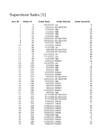
Superstore Sales [1] Row ID Order ID Order Date Order Priority Order Quantity 1 3 10/13/2010 Low 6 2 6 2/20/2012 Not Specified 2 3 32 7/15/2011 High 26 4 32 7/15/2011 High 24 5 32 7/15/2011 High 23 6 32 7/15/2011 High 15 7 35 10/22/2011 Not Specified 30 8 35 10/22/2011 Not Specified 14 9 36 11/2/2011 Critical 46 10 65 3/17/2011 Critical 32 11 66 1/19/2009 Low 41 12 69 6/3/2009 Not Specified ...
Foreword Bridging rivers, gorges, narrows, straits, and valleys always has played an important role in the history of human settlement. Since ancient times, bridges have been the most visible testimony of the noble craft of engineers. A bridge can be defined in many ways, but Andrea Palladio, the great 16th century Italian architect and engineer, hit on the essence of bridge building when he said "...bridges should befit the spirit of the community by exhibiting commodiousness, firmness, and delight." In more practical terms, he went on to explain that the way to avoid having the bridge carried away by the violence of water was to make the bridge without fixing any posts in the water. Since the beginning of time, the goal of bridge builders has been to create as wide a span as possible which is commodious, firm, and occasionally delightful. Spanning greater distances is a distinct measure ...
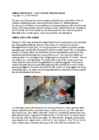
AMBER AND RUSSET - LATE COLOUR CHANGE GENES Copyright 2014, Sarah Hartwell The ancestors of the domestic cat were nondescript black/brown striped tabbies. Over the centuries, mutation produced a wide array of colours based on 2 different pigments. Eumelanin gives the blacks, browns and blues while phaeomelanin gives the reds, fawns and creams. A few other genes give further variations on those colours such silvers, colourpoints and solids/selfs. Mutations continue to occur and unexpected colours also turn up due to inbreeding where recessive genes, hidden for generations, start showing up. AMBER AND LIGHT AMBER During the 1990s, some purebred Norwegian Forest Cats in Sweden produced chocolate/lilac and cinnamon/fawn offspring. However, those colours are not found in the purebred Norwegian Forest Cat gene pool. Had the gene pool become polluted by someone, perhaps generations ago, breeding their Norwegian Forest Cat to another breed? ...
 annaabi.ee