Leidsid 33 sarnast õppematerjali, mis on seotud failiga "What are the Advantages and Disadvantages of Tourism". Need materjalid aitavad sul teemat sügavamalt mõista.
tourism, locals, tourist, today, part, economy, still, negative, increase, important, disadvantages, although, became, income, couple, branch, started, developing, half, century, money, sources, than, before, importance, such, egypt, greece, spain, employment, service, opportunity, goods, related, helped, build, regions, struggling, poverty, countryAdventure Tourism Project Management Madli Tuvike There is no such thing as a totally sustainable tourism (Swarbrooke, 1999). Tourism as one of the leading industries in the world is contributing to sustainable development (Mintel, 2005). Tourism needs to cope with changing world and world order, also trends that are occurring. Sustainable tourism is one rising industry in tourism market. Swarbroke (1999) and David (2011) are suggesting that sustainable tourism and sustainability is taking wider part in tourism industry. Moreover, Mintel (2005) states that tourism contribution to sustainable development is being recognised increasingly by governments and international organisations. In addition, United Nations World Tourism Organization (UNWTO, a.i.) states that tourism nowadays takes full responsibility of impacts that it is making, such as current and future economic, social and environmental
Economy of Estonia The economic growth during the recent years has been very fast. The Estonian economy is diverse industry and transport, as well as commerce and different branches of services are all equally important. Due to the available natural resources Estonian economy largely relies on the branches related to the forest; Estonian energy sector is based on oil shale. Finland and Sweden are the most important trade partners. The Estonian economy profits significantly from the business generated by more than 2 million tourists a year. The important sectors of the Estonian economy are the processing, transport, warehousing and communications, commerce and estate, rental and letting, as well as business services, agriculture, construction and government, education and health care. In order to be able to import all the products and services, something must be exported, that's
Anthropology of Tourism Madli Tuvike Anthropology and Tourism Female Adventure Tourism This essay will explain what significance culture has in adventure tourism. There are five paragraphs in this essay, where definitions of adventure travel and human culture are given. First, paragraph will look and define what culture, anthropology and adventure tourism are. Second paragraph will examine how different cultures impact female adventure travel. Third paragraph will point out the problems in adventure tourism. The forth paragraph will give recommendations for the future and some of the possible future problems in female adventure tourism will be looked at. The last paragraph will be a summary of the key findings and recommendations. Tourism is one of the world’s largest industries (Tisdell, 2000, Swarbrooke et al. 2003, Buckley, 2003)
dependence on sugar exports. A new constitution in 1884 marked the initial revival of local autonomy for Jamaica. Despite labor and other reforms, black riots recurred, notably those of 1938, which were caused mainly by unemployment and resentment against British racial policies. Jamaican blacks had been considerably influenced by the theories of black nationalism promulgated by the American expatriate Marcus Garvey. A royal commission investigating the 1938 riots recommended an increase of economic development funds and a faster restoration of representative government for Jamaica. In 1944 universal adult suffrage was introduced, and a new constitution provided for a popularly elected house of representatives. Economy Jamaica is a mixed, free-market economy with state enterprises as well as private sector businesses. Major sectors of the Jamaican economy include agriculture, mining, manufacturing, tourism and financial and insurance services. Tourism and mining are the
Life in Estonia through the eyes of an economics student With a population of 1 313 271 people, Estonia is one of the least populous member states of the European Union. However, according to the IMF, it is a developed country with an advanced and high-income economy. Estonia follows market economy system which ensures the little government intervention and the determination of prices of goods and services in a free price system. Therefore, economic decisions are guided solely by the aggregate interactions of a country's citizens and businesses. In addition to mentioned afore, Estonia tends to perform favourably in measurements of civil liberties, education, and press freedom. Living in Estonia has many of its good sides, for instance it is a secure place from nature
Australia presents an enormous range of climatic conditions, since it covers thirty degrees of latitude. It is mostly temperate, but one third of the continent is tropical, and there are large desert areas. The two largest cities are Sydney and Melbourne. The capital of Australia is Canberra. It is a small city and was built in the early 1900s. History. Two hundred years ago there were no white people in Australia. The only inhabitants were dark-skinned people who were still living in a Stone Age. Their only weapons were stone knives and boomerangs. But their tribes had very well-worked- out customs. A few aborigines still live in the emptier part of the continent. In 1770, the British explorer Captain Cook raised the British flag. Cook found there a pleasant climate and beautiful forests. The British initially used Australia as a gigantic prison camp for convicts from Britain. Then other people from Britain began to settle there as well. The
This is a post-refereeing final draft. When citing, please refer to the published version: Cohen, S.A. (2011). Lifestyle travellers: Backpacking as a way of life. Annals of Tourism Research, 38(4), 1535-1555. DOI: 10.1016/j.annals.2011.02.002 LIFESTYLE TRAVELLERS: Backpacking as a way of life Scott A. Cohena Bournemouth University, United Kingdom a corresponding author: School of Tourism, Dorset House, Talbot Campus, Poole, Dorset, BH12 5BB, United Kingdom. Tel: +44 1202 961261 Fax: +44 1202 515707 Email: [email protected] ABSTRACT Scholarship on backpackers speculates some individuals may extend backpacking to a way of life. This article empirically explores this proposition using lifestyle consumption as its framing concept and conceptualises individuals who style their lives around the enduring practice of backpacking as ‘lifestyle travellers’
out. Especially in matters of peace-keeping and international politics, it requires a complex, often slow, process of consensus-building that must take into account national sovereignty as well as global needs. The organization won the 2001 Nobel Peace Prize, and a number of its officers and agencies have also been awarded the prize. Other evaluations of the UN's effectiveness have been mixed. Some commentators believe the organization to be an important force for peace and human development, while others have called the organization ineffective, corrupt, or biased. 2. General knowledge on your delegation COUNTRY: Syrian Arab Republic POPULATION: Over 13 million LANGUAGE: Arabic (official); French; English RELIGION: Islam, Christianity, Druze, Judaism, Baha'i Syrian Arab Republic, more commonly known as Syria. The fertile land of Syria lies at the crossroads of great trade routes between the East and West
........................................................ 4 1. UKRAINE ...................................................................................................................... 5 1.1. General information ..................................................................................................... 5 1.1.1. Country Profile ..................................................................................................... 5 1.1.2. Post-Independent Ukraine. Economy and politics ............................................... 6 1.1.3. Key Macroeconomic indicators ......................................................................... 14 1.1.4. Foreign Direct Investments ................................................................................ 16 1.1.5. Demographics and labor force .......................................................................... 17 1.1.6. New emerging industry................................
1) 1.Racism 2. Crime 3. Unemployment 4. Alcohol/Drug abuse 5. Economic recession 6. Poverty 7. Riots 2) Racism is a common problem in many countries and in Englad it is present because there are many immigrants from all over the world. As it is a widespread social problem it's also one of the worst ones, because the hatred directed to different races or even nationalities makes the foreign people feel bad and also to hate the locals. This brings up many conflicts like the bombings in 2005 (when 4 islamic suicide bombers killed thmeselves and 52 civilians), but usually the conflicts are smaller, like brawls between different ethnic groups or mockery and insults. 3)In 1999 was the biggest racism related crime in the last 3 decades, when a Neo-Nazi David Copeland placed homemade nailbombs at public places directed to african and bangladeshian communities and killing 13 and injuring 139 people.,
covert anti-semitism. Jews were allowed to leave Russia for Israel, but many had the US as their real goal. Most had no knowledge of Yiddish or Hebrew or the Jewish religion. Immigration after 1985: the Soviet government under Mikhail Gorbachev allowed anyone to leave the Soviet Union. The major group of post-Soviet immigrants were the political refugees, persons who claim persecution or reasonable fear of persecution in Russia. Largest Russian communities today are in New York, California and Florida. 5. From where did the Indians come to America? *Native Americans aka. Indians, Red Indians, Redskins, American Indians, Amerindians, Namerind, First Nations people (Canada) *Origins of N-Am, theories = Bering Land Bridge theory = North American Indians are the people whose ancestors were living in North America when the Europeans discovered the Western Hemisphere. They often are called red men, or redskins, and they were named
Project ESTONIA MAP OF ESTONIA Southern Viljandimaa The southern part of Viljandi county catches the eye with its sublime scenery. The area today lies in the very heart of the historical Mulgimaa the home of hills, deep valleys and lakes brought together by a beauty spot Halliste primeval valley. According to several folk tales, it is also in these valleys, woods and bogs that Old Nick found refuge.The great variety displayed in the nature is also reflected in the local cultural heritage
Snowdonia and include Snowdon, which at 1085 m (3,560 ft) is the highest peak in Wales. Welsh flag has a red dragon on a white and green background. It is not represented on the Union Jack. England is 130 000 square kilometres. Its capital is London. The population is about 50 million people and growing because of immigration. England is bordered to the north by Scotland and to the west by Wales. It is closer to continental Europe than any other part of Britain, divided from France only by a 38 km sea gap. The Channel Tunnel, near Folkestone, directly links England to the European mainland. The English/French border is halfway along the tunnel. London is by far the largest English city and one of the largest and busiest cities in the world. Birmingham is the second largest. A number of other cities, mainly in central and northern England, are of substantial size and influence. These
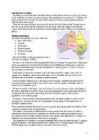
· New South Wales · Victoria · Queensland · South Australia · Western Australia · Tasmania New South Wales is the most populous state in Australia. Its capital is Sydney. Victoria is one of the most densely populated states in Australia. Its capital city is Melbourne and it was named after the British Prime Minister Lord Melbourne. Melbourne is said to be the heart of Australian finance and the headquarters of industry giants. Victoria is more an industry than a tourist state. Queensland is known for its natural riches like huge coalfields, copper, silver, lead. Its capital city is Brisbane, which is the third largest city in Australia. Because it lies in the Northeast part of Australia, its climate is mainly tropical. South Australia is famous as it is the region of fruit farming, vineyards and olive groves. Only the southern coast is fertile, most of the state is arid. Its capital is Adelaide, which is known for the Adelaide circuit.
There are many aspects influencing our decision making process and thereby our consumer behavior. Attitudes, perceptions, image, roles, motivations, determinants etc. encourage us to buy or not to buy a product or service. (Cooper & Gilbert, 2008, p. 43) There are many different definitions about consumer behavior. Emphasizing the most important ones and referring to the decision making models I will try to find the background of my own decision to visit Lapland in 2010 Christmas. Defining consumer behavior Consumer behavior refers to the process of acquiring and organizing information in the direction of a purchase decision and of using and evaluating products and services (Moutinho, Ballantyne & Rate, 2011, p. 83)
He walked to school, read books instead of watching TV, played the trumpet instead of Guitar Hero, and turned off the lights anytime he left a room. Then one evening, there was a power outage. The lights went out, the TV turned off, and everything became very quiet. Jules became very upset, and quite scared. She couldn't do anything that she wanted to do. She didn't think she could survive. Meanwhile, Les didn't seem to mind at all. He was able to light a few candles and he could still read his books, practice his trumpet, and hang out and play cards with his family. The two friends then realized that there was a big difference in their lifestyles and the amount of energy they used. So Jules decided she should figure out how much energy Les used and then compare her energy consumption to how much she really needed. To do this, they figured out how much energy Jules was using for entertainment, light, heating and
Since 1989 Bill Hayden has been the Governor General Government Australia is constitutional monarchy, based on liberal democratic tradition. In practice Australia is parliamentary democracy. The power in the country is put to life by Parliament. Parliament is consists of The House Of Representatives and The Senat. The House of Representatives consists of 150 members. The party with the majority provides the Prime Minister, who also forms the Government. Today the power is divided by three parties: The Australian Labour Party, the Liberal Party and National Party. The Senat's membership is wider, it comprises 12 senators from each state and 2 from each territory. Senators are elected for six year terms. The Executive power in Australia is in the hands of the Commonwealth Government lead by the Prime Minister. Today the Prime Minister is John Howard, the leader of the Liberal Party. History
being the Gulf of Finland, the Gulf of Riga and the Gulf of Pärnu. Bays include the Narva Bay, Matsalu Bay, Kolga Bay, Kunda Bay, Tallinn Bay etc. Estonia has over 1500 islands, the largest being Saaremaa and Hiiumaa, Muhu and Vormsi. Saaremaa and Muhumaa are connected to each other with a bridge. The best- known smalles islands are Naissaar, Aegna, Ruhnu, Kihnu, Väike-Pakri, Suur-Pakri etc. 3. Relief Lying in the north-western part of the East-European Plain, Estonia is mostly flat with an average elevation of about 50 metres above sea level. South-eastern and eastern parts of Estonia are higher than the western parts. The relief of the present-day landscape was shaped during the Ice Age. Ice sheet has carried large boulders and limestone blocks here, not to mention that the hilly terrain in Estonia was also shaped by the continental ice and the melting water. The land is rising 25 cm every one hundred years
TALLINNA ÜLIKOOL POLITICAL SCIENCE AND GOVERNMENT INSTITUTE ANNELI PALM CRITISIM ABOUT IMF AND WORLD BANK INTERNATIONAL POLITICAL ECONOMY (RIR6032/RIR6004) ESSAY 2014 Contents TALLINNA ÜLIKOOL.............................................................................................. 1 Introduction............................................................................................................ 3 Basic of liberalism.................................................................................................. 4 International Monetary Fund and World Bank............
communities, they are the present English-speaking countries (USA, Australia, Canada, New Zealand) Trading Empire (dependencies) mainly ESL countries; British people were seen more as a small ruling class (India, Africa) 5. Australia, The USA, Canada, Sri Lanka, India & Pakistan, Irish Free State, Newfoundland, New Zealand, South Africa were the British colonies that became dominions. They were given "responsible government" and became part of the Commonwealth. The Head of State was the British monarch. Nowadays, the word "dominion" is not used. 6. The British Commonwealth of Nations freely unites Britain and its former colonies. Ireland 1. The first inhabitants were hunters and fishers from the European mainland in 6000 BC. In 200 BC, the Celts arrived. 2. Christianity was established during the 5th century by Saint Patrick, who is also Ireland's patron saint
Canada is a major exporter of energy and fuels. In 1998, natural gas was the main export with 34.2 percent of total, petroleum was next at 28.6 percent, hydroelectricity at 20.7 percent, coal at 11.4 percent, and atomic energy at 5.1 percent. The United States has traditionally been Canada's largest market for energy exports, purchasing 90 percent of the nation's fuel and energy exports. Energy production accounts for 8 percent of the nation's economy. Approximately 65 percent of energy production is in Alberta, which is also the home of the nation's oil industry. The number-two producer was British Columbia at 13 percent, followed by Saskatchewan at 8 percent, and Quebec at 5 percent. The atomic industry is centered in Quebec. Economy Canada has the seventh-largest economy in the world. Most of the businesses are privately- owned, although the government does play a major role in the health-care system and operates
annually between 1820 and 1824. The population in 1834 was 371 070 of whom 15 000 were white, 5 000 free black, 40 000 coloured or mixed race, and 311 070 slaves. Strong economic growth, averaging approximately 6% per annum, marked the first ten years of independence under conservative goverments which were led successively by Prime Ministers Alexander Bustamante, Donald Sangster and Hugh Shearer. The growth was fueled by strong investments in bauxite/alumina, tourism, manufacturing industry and, to a lesser extent, the agricultural sector. Economix deterioration continued into the mid-1980s; The first and third largest alumina producers, Alpart and Alcoa, Henry Morgan was a famous closed and there was a significant Caribbean pirate and privateer reduction in production by the second who had arrived in the West
........................................................................................................6 Population.......................................................................................................................6 The Native Australians....................................................................................................6 The Biggest cities............................................................................................................7 Economy.........................................................................................................................8 Sports..............................................................................................................................9 Culture.............................................................................................................................9 History..............................................................................................
Tallinn University School of Governance, Law and Society Coca-Cola Company's role in IPE Final paper Tallinn 2018 Brief overview The Coca-Cola Company is an American corporation founded in 1892 and today engaged primarily in the manufacture and sale of syrup and concentrate for Coca-Cola, a sweetened carbonated beverage that is a cultural institution in the United States and a global symbol of American tastes, headquartered in Atlanta, Georgia (Encyclopædia Britannica). Coca-Cola is the world's largest beverage company, refreshing consumers with more than 500 sparkling and still brands and nearly 3,900 beverage choices. Led by Coca-Cola, one of the
Estonian Economy Estonians earn about half of the average European income, despite the fact that the economic growth during the recent years has been very fast and the differences have been diminishing. Although the extremely vigorous period of economic reforms is now over, the changes that Estonia is presently going through are far more extensive than those in the developed countries. The Estonian economy is diverse industry and transport, as well as commerce and different branches of services are all equally important. Due to the available natural resources Estonian economy largely relies on the branches related to the forest; Estonian energy sector is based on oil shale, a resource quite rare elsewhere in the world. Finland and Sweden are the most important trade partners. The Estonian economy profits significantly from the business generated by more than 2 million tourists a year, most of
Palm oil Palm oil is a type of edible vegetable oil that is derived from the palm fruit, grown on the African oil palm tree. Oil palms are originally from Western Africa, but can flourish wherever heat and rainfall are abundant. Today, palm oil is grown throughout Africa, Asia, North America, and South America, with 85% of all palm oil globally produced and exported from Indonesia and Malaysia; but most of the time not using sustainable measures. The industry is linked to major issues such as deforestation, habitat degradation, climate change, animal cruelty and indigenous rights abuses in the countries where it is produced, as the land and forests must be cleared for the development of the oil palm plantations
Eivissa is the official Catalan name (Catalan pronunciation:, locally. The name in Spanish is Ibiza . In British English, the name is usually pronounced in an approximation of the Spanish while in American English the pronunciation is more anglicized The island is well-known for its summer club parties which attract large numbers of tourists, but the island and the Spanish Tourist Office have been working to shed the prevailing "sex-and-alcohol" image in order to promote more family- oriented tourism. Noted clubs include Space, Pacha, Privilege (ex Ku), Amnesia, DC10, Eden, El Divino, Es Paradis, and Café del Mar.It is also home to the 'West End' party district of Sant Antoni, a popular stop for many tourists. History In 654 BC Phoenician settlers founded a port in the Balearic
Then began a long chain of occupation and control by foreign powers. In the 1200s the German crusaders converted Estonia into a Christianity by force and took control over South Estonia. In 1219 Denmark conquered Northern Estonia. About a century later, in 1346 Denmark sold its territory to Germany. By the 1500s German nobles owned much of Estonia's land. After the Livonian War (1558-1583) the northern part of Estonia went under Swedish control, the southern part belonged to Poland and the islands to Denmark. Only in1629 the whole mainland Estonia became subject to Sweden. Under Swedish rule the University of Tartu was founded in 1632 and also the oldest school working on the same premises was founded in Tallinn (GAG).After the Northern War (1700-1721) Estonia became a province of Russia. During that period the gentry of Baltic-German origin prevailed in Estonia. They kept estates in Estonia until 1919.
........................................................4 What is nuclear fission?...................................................................................................................4 What is radioactive decay?..............................................................................................................5 History of nuclear power......................................................................................................................6 Nuclear power today.............................................................................................................................7 The future of nuclear power.................................................................................................................9 Advantages and disadvantages on Nuclear power.............................................................................10 Advantages of nuclear power generation:.................................................................
Rotuma is located 400 kilometres north of the group, 670 km from Suva, 12° 30 south of the equator. Fiji consists of 322 islands (of which 106 are inhabited) and 522 smaller islets. The two most important islands are Viti Levu and Vanua Levu. The islands are mountainous, with peaks up to 1,300 metres (4,250 ft), and covered with thick tropical forests. Viti Levu hosts the capital city of Suva, and is home to nearly three quarters of the population. Other important towns include Nadi (the location of the international airport), and the second city -Lautoka (the location of a large sugar mill and a seaport). The main towns on Vanua Levu are Labasa and Savusavu. Other islands and island groups include Taveuni and Kadavu (the third and fourth largest islands respectively), the Mamanuca Group (just outside Nadi) and Yasawa Group, which are popular tourist destinations, the Lomaiviti Group, outside of Suva, and the remote Lau Group. Rotuma,
generators. The table shows an overview of costs of various renewable energy technologies. For comparison with the prices in the table, electricity production from a conventional coal-fired plant costs about 4¢/kWh. Though in some G8 nations the cost can be significantly higher at 7.88p (~15¢/kWh).Achieving further cost reductions as indicated in the table below requires further technology development, market deployment, an increase in production capacities to mass production levels,and of the establishment of an emissions trading scheme and/or carbon tax which would attribute a cost to each unit of carbon emitted; thus reflecting the true cost of energy production by fossil fuels which then could be used to lower the cost/kWh of these renewable energies. Type 2001 energy costs
2 Country Specs 2.1 Finland 2.1.1 Background Finland was a province and then a grand duchy under Sweden from the 12th to the 19th centuries, and an autonomous grand duchy of Russia after 1809. It won its complete independence in 1917. During World War II, it was able to successfully defend its freedom and resist invasions by the Soviet Union albeit with some loss of territory. In the subsequent half century, the Finns made a remarkable transformation from a farm/forest economy to a diversified modern industrial economy; per capita income is now among the highest in Western Europe. A member of the European Union since 1995, Finland was the only Nordic state to join the euro system at its initiation in January 1999. In the 21st century, the key features of Finland's modern welfare state are a high standard of education, equality promotion, and national social security system
There are also the Atlantic Ocean, the Pacific Ocean and the Gulf of Mexico surrounding the big country. There are 50 states in America. Most of the people live in towns. The biggest state is Alaska; next by size are California, Alaska and Montana. Six states - Maine, Vermont, New Hampshire, Connecticut, Rhode Island and Massachusetts are called New England. They are all small states in the USA that lie in the north- east. The first colony of immigrants settled down in Virginia, in the eastern part of the USA. 3. Relief The USA is situated in the central part of the North American continent. Its western coast is washed by the Pacific Ocean and its eastern coast is washed by the Atlantic Ocean and in the south its coast is washed by the Gulf of Mexico. The coastline is even. There are no big islands belonging to the USA except the Hawaiian Islands which lie halfway the continents of America and Asia. The biggest peninsulas are the Florida Peninsula and Alaska. 4. Land Regions Mountains
 annaabi.ee