Leidsid 33 sarnast õppematerjali, mis on seotud failiga "Unit 1 TEST I love english 7". Need materjalid aitavad sul teemat sügavamalt mõista.
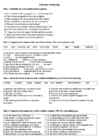
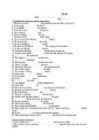
teach, taught, unit, everybody, alex, beliefs, broke, first, sources, check, cathy, ears, rolled, nobody, wanted, fight, took, lots, famous, temple, travel, stories, painted, wrapped, done, parking, space, slow, service, closed, morning, rude, staff, receptionist______________________________ 7 My mum was taking/took a picture when she dropped the camera. ______________________________ 8 Hippies lived/were living in the 1960s and 1970s. ______________________________ 9 The plane arrived/was arriving in Madrid on time. ______________________________ 10 I played/was playing football when I broke my leg. ______________________________ Marks: /10 3 Rewrite these questions correcting the mistakes. 1 What clothes she wore at the party? ____________________________________________________________________________________________ 2 What time it started to rain?
Margaret started English Literature this term, and I am afraid that her (1) introduction to INTRODUCE the subject has not been entirely (2) She has not shown much enthusiasm, and does not SUCCESS always pay (3) in class. Her assignments are often (4), because she is so untidy, and ATTEND; READ FAIL; REVISE because of her (5) to check her work thoroughly. She failed to do any (6) before the end of MISTAKE term test, and had poor results. She seems to have the (7) idea that she can succeed ABSENT without studying. She has also had many (8) and has frequently arrived late for class. This PUNISH; GIFT has resulted in several (9) Although Margaret is a (10) student in some respects, she has
* visuaalne info on pandud kahekordsete ümarsulgude vahele. I Love English 6 töövihik sobib inglise keele õpetamiseks 8. klassis Töövihik vastab riiklikule õppekavale Retsenseerinud Piret Kärtner, Viive Latt, Ingrit Tera Toimetanud Viiu Menning, Nicola Fyfe, Tiina Helekivi Kujundanud ja küljendanud Eve Kurm Tehniliselt toimetanud Andero Kurm Illustreerinud Ülle Meister Esikaas: Boswell and Dr. Johnson (foto Scanpix). Vaata Unit 20. Autoriõigus: Mare Jõul, Ülle Kurm, 2009 Kirjastus Studium, 2009 Kõik õigused on kaitstud. Ilma autoriõiguse omaniku eelneva kirjaliku loata pole lubatud ühtki selle töövihiku osa paljundada ei elektroonilisel, mehaanilisel ega muul viisil. Töövihik on kooskõlas 2009. a uuendatud õppekomplektiga I Love English 6. Tartu, 2014 ISBN 978-9949-436-59-0 Kirjastus Studium Riia 15b, Tartu 51010 www.studium.ee Trükitud OÜ Greif trükikojas Lohkva, Luunja vald Tartumaa 62207
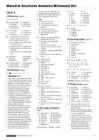
1D Sporting origins page 67 2 She recognised him at once. 2 Phobias can be genetically 3 He's working at his father's shop inherited. 1 1 staunchly / resolutely for the time being. 3 When it comes to politics, 2 By and large 4 They'll be here any moment now. Edward and his dad have a lot in 3 swiftly 5 Everybody makes mistakes once common. 4 loosely in a while. 4 Luke is the spitting image of Matt 5 categorically 6 My brother was still a baby at the Damon. 6 widely time. 5 Personality-wise, I take after my 7 resolutely / staunchly mum
5 The thief grabbed my bag and ran The photos are connected with the 1B Past and perfect tenses off. topic of school. Both photos show page 4 6 He dropped a leaf into the water students in class. In the first photo I imagine that 1 1 ate and watched it drift under the they're about 13 years old. 2 have/'ve met bridge. It looks like a science lesson 3 have/'ve caught 7 As she got older, her health
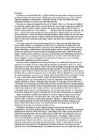
interests of students. But certainly the most numerous is the Scout Association, founded in 1908 for boys and in 1910 for girls by Lord Baden-Powel. The Scout movement is to encourage a sense of adventure and of responsibility for others among young people. The programme of training is planned to develop intelligence and practical skills, to promote health and a sense of service. Scout training is complementary to the ordinary education. Scouts train in mapping, signalling, first aid and all the skills that arise from camping and similar outdoor activities. British scouts take part in international scout meetings, which are held approximately every four years. The membership in this or that youth organization is not compulsory in Great Britain. But everyone can find the activity he likes most. Climate in Great Britain The British Isles which are surrounded by the ocean have an insular climate.
Color-- -1- -2- -3- -4- -5- -6- -7- -8- -9- Text Size-- 10-- 11-- 12-- 13-- 14-- 15-- 16-- 17-- 18-- 19-- 20-- 21-- 22-- 23-- 24 TWILIGHT By Stephenie Meyer Contents PREFACE 1. FIRST SIGHT 2. OPEN BOOK 3. PHENOMENON 4. INVITATIONS 5. BLOOD TYPE 6. SCARY STORIES 7. NIGHTMARE 8. PORT ANGELES 9. THEORY 10. INTERROGATIONS 11. COMPLICATIONS 12. BALANCING 13. CONFESSIONS 14. MIND OVER MATTER 15. THE CULLENS 16. CARLISLE 17. THE GAME 18. THE HUNT 19. GOODBYES 20. IMPATIENCE 21. PHONE CALL 22. HIDE-AND-SEEK 23. THE ANGEL 24. AN IMPASSE EPILOGUE: AN OCCASION twilight STEPHENIE MEYER LITTLE, BROWN AND COMPANY New York Boston Text copyright © 2005 by Stephenie Meyer
you can express how you really are without complaining too much. · Fine, thanks. / On top of the world, thanks. · OK, thanks · Not so bad, thanks. / Can't complain, thanks. · So so, thanks. / So and so, thanks. · Not so good, actually 1 The English alphabet Spelling Work with your partner and spell out first your name and then some names of places. Write down each letter as you hear it, and then say the word. The English alphabet on the phone: You might find the following alphabet (used by international airlines) useful when trying to spell a word on the telephone. A Alpha O Oscar Ä Alpha-Echo Ö Oscar-Echo B Bravo P Papa
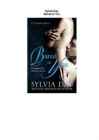
Sylvia Day Bared to You Sylvia Day Bared to You The first book in the Crossfire series, 2012 This one is for Dr. David Allen Goodwin. My love and gratitude are boundless. Thank you, Dave. You saved my life. Acknowledgments My deepest gratitude to my editor, Hilary Sares, who really dug into this story and made me work for it. Basically, she kicked my ass. By not pulling her punches or letting me shortchange the
Some of the things you will learn in THE CODEBREAKERS • How secret Japanese messages were decoded in Washington hours before Pearl Harbor. • How German codebreakers helped usher in the Russian Revolution. • How John F. Kennedy escaped capture in the Pacific because the Japanese failed to solve a simple cipher. • How codebreaking determined a presidential election, convicted an underworld syndicate head, won the battle of Midway, led to cruel Allied defeats in North Africa, and broke up a vast Nazi spy ring. • How one American became the world's most famous codebreaker, and another became the world's greatest. • How codes and codebreakers operate today within the secret agencies of the U.S. and Russia. • And incredibly much more. "For many evenings of gripping reading, no better choice can be made than this book." —Christian Science Monitor THE Codebreakers
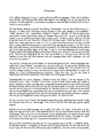
Two kinds of football is played in Great Britain. One of them, which is called association football, is played all over Europe. The other kind: rugby football is also very popular in New Zealand, France, and some other European countries. English boys play it at school, and in public parks. When they grow up, they play as members of important amateur teams or as a professional in teams competing in football ,,leagues". Professional football is as much a business as a sport. Rugby football was first played in 1823. In rugby every player is allowed to carry the ball. The ball is oval, not round. Each team contains 15 players. The oldest game of football in England is probably the football match which takes place at Ashburn on Shrove Tuesday every year. The game starts in the centre of the town, and the distance between two goals is two miles. The only rule is not to use motorcycles, cars and lorries in the game. In 1958 one team buried the ball. The other team didn't know and ran after them
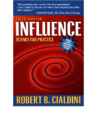
In a re- lated vein, the book might be seen as a way to demonstrate that, properly presented, what often seems like dry science can actually prove to be lively, useful, and relevant to all readers' personal lives. Comment on the Fifth Edition of Influence: Science and Practice It has been some time since Influence was last published. In the interim, some things have happened that deserve a place in this new edition. First, we now know more about the influence process than before. The study of persuasion, compli- ance, and change has advanced, and the pages that follow have been adapted to re- flect that progress. In addition to an overall update of the material, I have devoted special attention to updated coverage of popular culture and new technology, as well as to research on cross-cultural social influence-how the influence process works similarly or differently in various human cultures
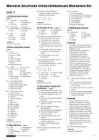
3 3 I was quietly watching TV at home / I was 1 saw watching TV at home quietly, when I heard a 2 was lying, flew really loud explosion. 3 didn’t go, was 4 I just got back from holiday tonight. 4 was having, heard 5 First check your work carefully for mistakes. 5 stole, was waiting 6 Does he ever drive fast? 6 lost, stood up, started 7 I’m only eighteen years old and I already earn $100,000 a year. 4 2 got 10 3 disappeared 2 the nineteenth of September, September the
All rights reserved. No part of this book may be reproduced in any form or by any means, electronic or mechanical, including photocopying, recording, or by any information storage and retrieval system, without the written permission of the publisher. ISBN 1-59905-201-6 Printed in the United States of America 13 12 11 10 09 08 07 9 8 7 6 5 4 3 2 1 Introduction Grammar is a very old field of study. Did you know that the sentence was first divided into subject and verb by Plato, the famed philosopher from ancient Greece? That was about 2,400 years ago! Ever since then, students all over the world have found it worthwhile to study the structure of words and sentences. Why? Because skill in speaking and writing is the hallmark of all educated people. Lesson by lesson, this book provides basic instruction in the eight parts of speech--nouns, pronouns, verbs, adjectives, adverbs, prepositions, conjunctions, and
Introduction xiii Chapter 1 Change Your Thinking 1 Chapter 2 Change Your Life 18 Chapter 3 Dream Big Dreams 40 Chapter 4 Decide to Become Rich 52 Chapter 5 Take Charge of Your Life 77 Chapter 6 Commit to Excellence 90 Chapter 7 Put People First 118 Chapter 8 Think Like a Genius 136 Chapter 9 Unleash Your Mental Powers 154 Chapter 10 Supercharge Your Thinking 179 Chapter 11 Create Your Own Future 201 Chapter 12 Live A Great Life 222 Summary and Conclusions 249 ix ccc_tracy_fm_i-xviii.qxd 7/7/03 3:22 PM Page x
Many of them suffered when white people from Britain arrived in Australia, because of disease, the loss of their hunting lands, and unfair laws. Australian Aborigines are those people regarded as indigenous to the Australian continent. In the High Court of Australia, Australian Aborigines have been specifically identified as a group of people who share, in common, biological ancestry back to the original occupants of the continent. History The first people of Australia were nomadic people who came to Australia from south-east Asia. Scientists don't know exactly when they arrived but it is somewhere between 40000 and 60000 years ago. When British came to Australia in 1788, they called these native people “aboriginals”, meaning people who had lived there since the earliest times. Captain James Cook set the colonization of Australia into motion by exploring and mapping the
reasons for doing some activities.... 10. Offer feedback after oral or written assignments or pair-, group work. 1 References: Kahny, Jim. Classroom dynamics: An interview with Jill Hadfield. Available at http://ltprofessionals.com/journalpdfs/vol1no1/features/winter2000kahny.pdf accessed 27.12.2012 ESOL Teaching Skills TaskBook. Classroom dynamics: unit 1 a). Available at http://akoaotearoa.ac.nz/download/ng/file/group-4/n2431-esol-teaching-skills- taskbook-unit-1-a---classroom-dynamics.pdf accessed 27.12.2012 III Language teaching methods. · (Traditional: the grammar-translation method/ classical method.) · Traditional: the direct method Youtube: http://www.youtube.com/watch?v=XiQvG-fvzLM Kids lesson (direct method) Language is primarily speech Reading skills are developed through practice with speaking
Abstract: Children inherently have had a rather tenuous relationship with citizenship. Similarly to how women were once viewed, children have not been considered as subjects of rights due to their perceived incompetence and irrationality. Currently, children are not considered as being rational and capable of exercising responsibility until the age of majority, the age of 18. However, the adoption of the U.N Convention of the Rights of the Child (UNCRC) in 1989 granted for the first time the recognition for children as worthy individuals with rights of their own. The UNCRC laid the foundation for the potential re-evaluation of our traditional understanding of childhood and the perception of children as primarily objects of the adult world. Since, then the UNCRC has attracted significant scholarly interest from various disciplines and as such a high degree of research has been published in this area already. The
fly he flies carry he carries Võrdle: say he says Lihtolevik väljendab: · Antud momendil toimuvat tegevust, mis ei väljenda kestvat aega, näiteks see, hear, know. I see that man who you are pointing at. · Üldist, kogu aeg toimuvat või korduvat tegevust, pole oluline, kas tegevus toimub rääkimise hetkel. Teachers teach in schools. He usually goes to gym on Monday. · Tegevust mingil ajal. I go to school at 8 o´clock. You have to pay taxes once a month. · Kõigile tuntud fakte. Life passes by quickly. Present Continuous Kestva oleviku moodustamine Jaatav vorm Eitav vorm Küsiv vorm I am speaking I am not speaking Am I speaking?
retested. Some people say "it's as simple as . . . " and then name their pet peeve or passion. My view is not of an education specialist, but of one who loves sharing what I learn, and owes much to educators. Since I don't have an educational theory neatly worked-out, nor an outline of my perceptions, my intent is to address each educational ingredient that comes to my mind. After I've said what I think about each topic, readers may have a fair comprehension of my philosophy. First comes sensitivity. If a person be insensitive, be it from numbing cold, exhaustion, drugs, genetic makeup, or upbringing, then the process of education is bogged down, and results come only after great efforts. Sensitivity in my integrated meaning is broad, covering literally the senses, so that deaf and blind people are less sensitive, as well as people whose senses work perfectly, but whose receptivity or thought processes are blunted for whatever reason
My languages I love different languages. I mean, I really, really love different languages. I also believe and have been told that I pick them up rather easily. That might be true, although I did not pick any Greek up in Greece but that might have been because they spoke so damn fast that I could not tell if it was a word or an entire sentence. The first foreign language I learned was Russian. Considering I was ten when Estonia became a Republic, it makes sense. We began studying Russian in first grade, though it was simplified – "koška" instead of "kot", "medvešonok" instead of "medved", "saichik" etc. Did not make much sense and we mostly played some games in Russian (Tare-tareke etc). Learned as much playing outside, since we had Estonian-Russian kids around as well. Not that we played with them. It's sad
It ............................................................................ soon.(RAIN) 15. The car ...................................................................................... by Sam.(REPAIR) 16. I ...................................................................................... for my girlfriend for two hours. (WAIT) 17. Since 2003 they ................................................................................ their son every year. (VISIT) 18. The first fast food restaurants ................................................................. in the USA in 1916.(OPEN) 19. The party ...........................................................................................................(START) 20. The grapes ............................................................................................. in California. (GROW) 3.Reported Speech 1. Andrew: "Clean the blue bike!" Andrew ...................................................................
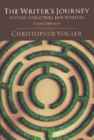
Trickster 77 BOOK T W O : Stages of the Journey 81 Ordinary W o r l d 83 Call to Adventure 99 Refusal of the Call 107 Meeting with the M e n t o r 117 Crossing the First Threshold 127 Tests, Allies, Enemies 135 Approach to the Inmost Cave 143 T h e Ordeal 155 Reward 175 T h e R o a d Back 187 T h e Resurrection 197
Charles Darwin's theory of evolution. Evolutionary psychology is grounded on the principle that as genes mutate, those that are advantageous are passed down through natural selection. One example of evolutionary research is the study of emotions. Fessler has carried out research on disgust. He argues that the emotion of disgust allowed our ancestors to survive long enough to produce offspring, who in turn passed the same sensitivities to us. He investigated nausea experienced by women in their first trimester of pregnancy. During this period, certain hormones lower the level of the mother's immune system, so the body will not fight the new foreign genetic material in her womb. Fessler hypnotized that the nausea response helps to compensate the suppressed immune system. He gathered almost 500 healthy pregnant women and asked them to consider potentially stomach-turning scenarios. He found that women in the early trimester scored much higher across the board in disgust sensitivity than
-- 1st ed. Includes bibliographical references and index. 1. Health. 2. Physical fitness. 3. Weight loss. I. Title. II. Title: Four-hour body. RA775.F47 2010 613.7--dc22 2010018533 eISBN: 978-0-307-46365-4 All illustrations by Fred Haynes/Hadel Studio, unless otherwise noted in the Photo and Illustration Credits section Jacket front-flap photos: (top) (c) Mark Reifkind; (bottom) (c) Photos taken by Inge Cook, provided courtesy of Ellington Darden, PhD v3.1 For my parents, who taught a little hellion that marching to a different drummer was a good thing. I love you both and owe you everything. Mom, sorry about all the crazy experiments. Support good science-- 10% of all author royalties are donated to cure-driven research, including the excellent work of St. Jude Children's Research Hospital. LIST OF ILLUSTRATIONS GROUND ZERO--GETTING STARTED AND SWARAJ Comparison of Methods for Estimating % Bodyfat Male Examples--Bodyfat
thousands of mostly young Js. Couldn't go S, Czechoslovakia annexed, Romania fascist and anti-Semitic, sea lanes closed, mostly E. SU identifies as suspect, could be a spy. J identity very different from SU J, more use of Yiddish, more traditional, state of mind diff. Germs had dumped Js on the border, green border policy. Registered as they came over the border, porous. 6 mill SU citizens deported internally, 1920-1952, policy for suspect groups. What about everybody else? Sovietization mostly on urban centers, more keenly felt than on periphery. Farmers in Bessarabia, barely felt Sovietization, have a talk, mainly to get wine, gratice. 60,000 Polish Js removed, 39-41. 150,000 Js from annexed territories arrive in unoccupied parts. Birobidzhan? Political theater. Where to resettle millions of Js? Esp Ger, Romanian, Pol Js. No thought to SU Js. Birobidzhan bubbled up, some infrastructure, autonomous region to 36, benign. JDC, presence,
Reading reflection 12/19/06 Title: The Way Home Writer: Sue Leather This book is about eight journeys which change lives forever. Every story is touched and helps me think more about the meanings of life. The Way Home: Alex had a nice husband she went on many trips from time to time. In one of her journeys, she bumped into an attractive man, Stefano. After a nice talk, he asked her to stay at the same hotel and the same room. At the time she agreed, it just began her betrayal and she didn't know how to stop it. Remembering her childhood, she was very frighten about her mom's betrayal and ran away in a long distance from home. And now, she was going
He used to wear his old coat. 4. Kasutatakse kõneldes inimeste elust, kes on nüüdseks surnud. Marylin Monroe starred in many films. Ajamäärused yesterday, last week/month/year, 3 days/2 weeks ago, then, when, in 1992 Past Simple 1. tegevus, mis toimus minevikus ja millel ei ole seost olevikuga 2. tegevus, mis toimus kindlal ajahetkel, mis on kas lauses märgitud, vihjatud või mis on eelnevalt teada 3. tegevus, mis algas ja lõppes minevikus Mr Clark taught math for 20 years (now he´s retired) 4. tegevus, mis lõppes minevikus ja mida ei saa korrata Mike won more than 20 medals when he was an athlete (he´s no longer an athlete and cannot win another medal) 5. tegevus, mis toimus kindlal ajaperioodil mis nüüdseks on lõppenud I wrote 3 letters this morning. (now is evening) 6. tegevus, mille teostajad on nüüdseks surnud Charles Dickens wrote "Oliver Twist" Present Perfect 1
5. Once again, I cant tell you how awful I feel about missing your birthday party. 6 I am writing to complain about the products I received from your company. 7 I look forward to receiving your advice on this matter. 8 Looking forward to seeing you and catching up on all your news. 9 Your thoughtful gift was greatly appreciated. Once again. , thank you for your generosity. 10 I am very sorry but unfortunately you won't be able to use my summer house during the first week of August. 11 I'm so happy for you! Write back soon and tell me all about your new job. 12 Hope this advice helps. Informal (friendly) letters Giving News TASK 6 Read the following questions then listen to the dialogue and answer them. a) Why hasn't Steve written earlier? b) What does he think of Hong Kong? c) What is the weather like? d) What happened to him recently? e) What does he say about his new colleagues?
Kordamine inglise keele eksamiks A 1.1 Read the text and answer the questions below. Dear Mary-Alice, It's been ages since I last wrote to you, isn't it weird? Yes, so it is, but, I do have a certain reason. Do you remember Sir Thom of the Minquettes'? That fine young man with fascinating blue eyes... Oh, my sweet Mary, you will never guess what happened yesterday! It was about seven o'clock in the evening when Lillian called me out for a walk you know I can't say `no' to my little sis. Anyway we went to the forest near the Swan Lake and, believe it or not, got lost! Awful! I was so scared... We walked and walked, not even knowing the direction we were heading to, until we reached a huge mansion. And the garden around it was so extraordinary... That is something you just must see! But neither the trees nor flowers could be as wonderful as the owner himself! Sir Thom treated us tea and sandwiches, not forgetting to show us way back to the village. He was so kind, don't you think?
.........183 The New Earth Is No Utopia.....................................................................184 Notes...........................................................................................................186 About the Author........................................................................................189 CHAPTER ONE THE FLOWERING OF HUMAN CONSCIOUSNESS EVOCATION Earth, 114 million years ago, one morning just after sunrise: The first flower ever to appear on the planet opens up to receive the rays of the sun. Prior to this momentous event that heralds an evolutionary transformation in the life of plants, the planet had already been covered in vegetation for millions of years. The first flower probably did not survive for long, and flowers must have remained rare and isolated phenomena, since conditions were most likely not yet favorable for a widespread flowering to occur. One day,
Chapter 18 Chapter 39 Chapter 59 Chapter 19 Chapter 40 Chapter 60 Chapter 20 Chapter 41 Chapter 61 Chapter 21 Chapter 42 Chapter 1 It is a truth universally acknowledged, that a single man in possession of a good fortune, must be in want of a wife. However little known the feelings or views of such a man may be on his first entering a neighbourhood, this truth is so well fixed in the minds of the surrounding families, that he is considered the rightful property of some one or other of their daughters. "My dear Mr. Bennet," said his lady to him one day, "have you heard that Netherfield Park is let at last?" Mr. Bennet replied that he had not. "But it is," returned she; "for Mrs. Long has just been here, and she told me all about it." Mr. Bennet made no answer. "Do you not want to know who has taken it
Introduction I chose the topic legends of Tallinn. I chose this topic because there are many places in Tallinn, what is set by legends, but I do not know this places legends. In making this essay i hope to refresh my memory and to find new and interesting facts about my hometown. Tallinn is well known for its medieval city. It is not only old houses and streets that have survived, but also legends connect to them that have reached us. Tallinn was first mentioned in the historical books of the Arabic geographer. If the primeval city walls could talk, they would tell us stories better than any adventure book. The walls have seen it all: the black pestilence, the great fire of Tallinn and brave warriors. Many big and powerful countries have conquer Estonia, but Estonia has always fought for their freedom. Many legends are related to those countries who have conquered Estonia. For example, Danish, Russia and Germany.
 annaabi.ee