Leidsid 33 sarnast õppematerjali, mis on seotud failiga "Tsehhov daam koeraga Chekov Lady and the Lapdog". Need materjalid aitavad sul teemat sügavamalt mõista.
count, mann, herman, chekhov, other, hermann, pushkin, lizaveta, here, russia, able, queen, gain, year, never, real, years, moscow, even, having, could, present, cards, ivanovna, first, early, again, another, russian, tale, later, mother, reveal, petersburg, woman, husband, clear, person, german, there, chapter, lady, them, night, while, return, wealthArkadyevna Karenina is coming to visit from Saint Petersburg. Meanwhile, Stiva's childhood friend Konstantin Dmitrievich Levin ("Kostya") arrives in Moscow with the aim of proposing to Dolly's youngest sister Princess Ekaterina Alexandrovna Shcherbatskaya, "Kitty". Levin is a passionate, restless but shy aristocratic landowner who, unlike his Moscow friends, chooses to live in the country on his large estate. He discovers that Kitty is also being pursued by Count Alexei Kirillovich Vronsky, an army officer. At the railway station to meet Anna, Stiva bumps into Vronsky. Vronsky is there to meet his mother. It surmises that Anna and the Countess Vronskaya have travelled together in the same carriage and talked together. As the family members are reunited, and Vronsky sees Anna for the first time, a railway worker accidentally falls in front of a train and is killed. Anna interprets this as an "evil omen." Vronsky is infatuated with Anna
Chapter1: An unknown woman was found lying in the street and brought into the workhouse. She delivered a sickly child who had trouble breathing. The woman, without a word of who she was, died and left her new born boy, Oliver, to the drunken nurse that stood by. Chapter2: The State gave Oliver to Mrs. Mann who housed a number of orphaned children. Mrs. Mann took a large portion of the money given to her by the authorities for each child's food so Oliver grew up small and malnourished. On his ninth birthday, the town beadle, Mr. Bumble, came to collect Oliver and take him to the board for an interview. They told him he was to live with other wards of the state to become educated and learn a trade. Oliver did not mind this, but soon after he arrived, the state decided to implement a plan that would save money by feeding the people very little
and "Speaker" series. He has also announced his plan to write two more novels: Shadows in Flight, a book that connects the "Shadow" series and "Speaker" series together, and Ender in Exile, a book that takes place after Ender's game and before Speaker for the Dead. Furthermore, Card recently announced that Ender's Game will soon be made into a movie. Though Card is best-known for "Ender's Game", he has also written in a variety of other genres, including plays, short stories, books on writing, the Homecoming series, other science fiction books, and nonfiction, such as articles on computer technology. Orson Scott Card in 2008 and when he was younger. The Setting The novel starts off on Earth, with scenes at the school and the Wiggin home. Little attention is given to the details of this setting, not even the name of the city, and so it comes across as a standard American neighborhood.
Chapter 21 Chapter 42 Chapter 1 It is a truth universally acknowledged, that a single man in possession of a good fortune, must be in want of a wife. However little known the feelings or views of such a man may be on his first entering a neighbourhood, this truth is so well fixed in the minds of the surrounding families, that he is considered the rightful property of some one or other of their daughters. "My dear Mr. Bennet," said his lady to him one day, "have you heard that Netherfield Park is let at last?" Mr. Bennet replied that he had not. "But it is," returned she; "for Mrs. Long has just been here, and she told me all about it." Mr. Bennet made no answer. "Do you not want to know who has taken it?" cried his wife impatiently. "You want to tell me, and I have no objection to hearing it." This was invitation enough. "Why, my dear, you must know, Mrs
Montoya takes a paternal interest in the gifted young bullfighter Pedro Romero and seeks to protect him from the corrupting influences of tourists and fame. Frances Clyne - Cohn's girlfriend at the beginning of the novel. A manipulative status-seeker, Frances was highly domineering early in their relationship and persuaded Cohn to move to Paris. As her looks begin to fade, she becomes increasingly possessive and jealous. Count Mippipopolous - A wealthy Greek count and a veteran of seven wars and four revolutions. Count Mippipopolous becomes infatuated with Brett, but, unlike most of Brett's lovers, he does not subject her to jealous, controlling behavior. Amid the careless, amoral pleasure-seeking crowd that constitutes Jake's social circle, the count stands out as a stable, sane person. Like Pedro Romero, he serves as a foil for Jake and his friends. Wilson-Harris - A British war veteran whom Jake and Bill befriend while fishing in Spain. The three men
The making of a new nation. The Enlightenment in America. The emergence of the notion of the American Dream. The great Enlighteners: Crèvecoeur, Jefferson, Paine, Franklin. The American Enlightenment is the intellectual thriving period in the United States in the midtolate 18th century (17151789), especially as it relates to American Revolution on the one hand and the European Enlightenment on the other. Influenced by the scientific revolution of the 17th century and the humanist period during the Renaissance, the Enlightenment took scientific reasoning and applied it to human nature, society, and religion. American Enlightenment a gradual but powerful awakening that established the ideals of democracy, liberty, and religious tolerance in the people of America.
Further investigation reveals that Kokorin was playing Russian roulette (called "American roulette" in the novel) with another university student, Akhtyrtsev. Fandorin tails Akhtyrtsev, who leads him to a sensuous dark-haired woman, Amalia Bezhetskaya, whom Fandorin recognizes from a picture in Kokorin's room. He follows Bezhetskaya to her home, where she spends her time toying with the many men who come to visit. At Bezhetskaya's home, Fandorin meets Count Zurov, an Army officer that Amalia seems fond of, and sees Akhtyrtsev again. Akhtyrtsev and Fandorin leave Amalia's house together to go drinking, and Akhtyrtsev reveals to Fandorin that the Russian roulette game between him and Kokorin was Bezhetskaya's idea. Just as the mystery of Kokorin's suicide seems to be solved, a mysterious white-eyed assassin stabs Akhtyrstev to death and tries to kill Fandorin, only to fail when his knife bounces off the corset Fandorin is wearing
Old Mr. Dashwood is the owner of a large estate in Sussex called Norland Park. Following the death of his sister, Mr. Dashwood invites his nephew Mr. Henry Dashwood to come live with him at Norland. The younger Mr. Dashwood brings John Dashwood, his son from a previous marriage, as well as the three daughters born to his present wife. John Dashwood is grown and married, and has a four-year-old son, Harry. When Old Mr. Dashwood dies, he leaves his estate to John and little Harry, who had much endeared himself to the old man. But now John's father, Henry Dashwood, is left with no way of supporting his wife and three daughters, and he too dies one year later, leaving only ten thousand pounds for his family. Just before his death, he makes his son John promise to care for his stepmother and three half-sisters. Mr. John Dashwood initially intends to keep his promise and treat his female relatives generously, but his wife Fanny, a narrow-minded and selfish woman, convinces him to leave them
Ameerika Kirjandus 30.01.13 Naturalism · France, Emile Zola · Put down his theory in 1879: Le Roman Experimental, attempt to explain the development of human society throuch biological laws · Outlook is deterministic, pessimistic, fatalistic (fate or biology) · Man as an animal-clever than other beasts, still explainable within the framework · Man is not a free agent, is govern by something · Unable to determine his own faith · Hereditary · Naturalists tried to apply in fiction the processes of natural sciences · Writers task is to record facts, systems of behaviour, living conditions, never revealing any natural unbiased (completely natural) · Point of view: amoral-outside the category of morality, neither good or bad
Main article: Marilyn Monroe filmography Once in New York Monroe set up her own production company, Marilyn Monroe Productions, with fashion photographer Milton H. Greene. As The Seven Year Itch raced to the top of the box office in the summer of 1955, and with Fox starlets Jayne Mansfield and Sheree North failing to click with audiences, Zanuck admitted defeat and Monroe returned to Hollywood. A new contract was drawn up, giving Monroe approval of the director as well as the option to act in other studios' projects. The first film to be made under the contract and production company was Bus Stop, directed by Joshua Logan. She played Chérie,[29] a saloon bar singer who falls in love with a cowboy. Monroe deliberately appeared badly made-up and unglamorous. She was nominated for a Golden Globe for the performance and was praised by critics.[15] Bosley Crowther of The New York Times proclaimed: "Hold on to your chairs, everybody, and get set for a rattling surprise
Front and serves as the mouthpiece for Remarque's meditations about war. Throughout the novel, Paul's inner personality is contrasted with the way the war forces him to act and feel. His memories of the time before the war show that he was once a very different man from the despairing soldier who now narrates the novel. Paul is a compassionate and sensitive young man; before the war, he loved his family and wrote poetry. Because of the horror of the war and the anxiety it induces, Paul, like other soldiers, learns to disconnect his mind from his feelings, keeping his emotions at bay in order to preserve his sanity and survive. As a result, the compassionate young man becomes unable to mourn his dead comrades, unable to feel at home among his family, unable to express his feelings about the war or even talk about his experiences, unable to remember the past fully, and unable to conceive of a future without war. He also becomes a "human animal," capable of relying on animal instinct
we today call book printing. The first book was printed between 1444 and 1446, so these years can be considered as the beginning years of book printing. His most important preserved printings are the 40 copies of the Bible. By the end of the 15 th century there were about 1000 print-shops in Europe already. The oldest Estonian book dates back to 1535. Libraries form a vital part of education. They make available-through books, films, recordings and other media- knowledge that has been accumulated through the ages. People in all walks of life use libraries to get information for their work. Libraries also play an important role in preserving people's cultural heritage. For example, some libraries have rare books, authors' and composers' manuscripts or works by artists. Today's libraries differ very much from the ones from the past - not only in the contents and services, but also in physical layout and atmosphere. Library derives
She was very at ease in meeting people from any background and even if they were ill or in hospices. The patients would react very favorably to her meetings. In addition, the Princess was a member of charities and organizations working with the homeless, youth, drug addicts and the elderly. From 1989, she was President of Great Ormond Street Hospital for Children. DIVORCE In the mid 1980s her marriage fell apart. Both Charles and Diana spoke to the press through friends, accusing each other of blame for the break-up. Charles turned again to his former girlfriend Camilla Parker Bowles. Diana and Charles were separated on the 9 th of December in 1992. Their divorce was finalized on the 28 th of August in 1996. The Princess lost the style Her Royal Highness and instead was styled as Diana, Princess of Wales. However, since the divorce, Buckingham Palace has maintained that Diana was officially a member of the Royal
century, and the Department of Russian Folklore. The core curriculum includes courses in the history of Russian literature (from Kievan Rus times to the present) and folklore, modern Russian , Old Slavonic, the history of the Russian language and Russian dialectology, etc. The Department of Russian Literature of XX century in Russian literature explore (from 1890s to the present), including works of Russian emigrants abroad and nonRussian writers in Russia proper. Curriculum at the Division of Russian as a Foreign Language is similar to the one of the Division of the Russian Language and Literature, with additional stress laid on foreign languages, the theory and methods of teaching Russian as a foreign language, and area studies. Division of Theoretical and Applied Linguistics aims at giving students profound knowledge in the field of linguistic theory. The core courses include mathematics (mathematical
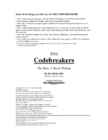
Kennedy escaped capture in the Pacific because the Japanese failed to solve a simple cipher. • How codebreaking determined a presidential election, convicted an underworld syndicate head, won the battle of Midway, led to cruel Allied defeats in North Africa, and broke up a vast Nazi spy ring. • How one American became the world's most famous codebreaker, and another became the world's greatest. • How codes and codebreakers operate today within the secret agencies of the U.S. and Russia. • And incredibly much more. "For many evenings of gripping reading, no better choice can be made than this book." —Christian Science Monitor THE Codebreakers The Story of Secret Writing By DAVID KAHN (abridged by the author)
At first trying to pry him with talk of Desdemona being a temptress, Iago turns to convincing Cassio to drink. At first unwilling, Cassio finally relents and allows himself to drink with Iago and enjoy the festivities. While Cassio becomes increasingly intoxicated, Iago begins to tell Montano of his worries about Casio’s leadership in regards to his drinking problem. Almost immediately, Iago turns to Roderigo and pushes him into a fight with Cassio. When enough other men have stepped into the fight, Iago sends Roderigo to ring the alarm bell, summoning Othello and the soldiers not on night watch. In the fight, Cassio is enraged and stabs Montano in the process. Iago, in a show of reluctance, names Cassio as the instigator of the fight. Othello immediately relieves Cassio of his post and goes back to sleep. Iago then turns to Cassio and tells him that he should speak to Desdemona and beg her to speak on his behalf before Othello.
vivacious woman about whom a future Viceroy of India would say, "Dullness and Mrs. Kipling cannot exist in the same room."[3] Father - John Lockwood Kipling. Lockwood Kipling, a sculptor, an illustrator, museum curator and pottery designer, was the principal and professor of architectural sculpture at the newly- founded Sir Jamsetjee Jeejeebhoy School of Art and Industry in Bombay. Later in life Kipling illustrated many of Rudyard Kipling's books, and other works. Kipling also remained editor of the Journal of Indian Art and Industry, which carried drawing works from the students of the Mayo School. COUPLE named their son after the place they had first met Rudyard Lake. Alice Kipling Fleming - Sister of British author Rudyard Kipling who became a well-known psychic, producing automatic writing under the name "Mrs. Holland." Born June 11, 1868, Alice Kipling was privately educated
Hastings is invited down to Styles, where Cavendish lives, to recuperate. At Styles, the center of attention is Emily Inglethorp, John Cavendish's stepmother. Emily inherited Styles from John's father when he died and runs the household with a firm hand. Hastings describes her as "an energetic, autocratic personality" with a fondness for "playing the Lady Bountiful." She is devoted to charitable causes and is always getting involved(haaratud) in bazaars and other functions. Emily hasn't changed since Hastings last saw her, and there is no question of who is running the show at Styles. Emily Inglethorp's presence and conversation dominate everyone's life at Styles. This domination must upset someone very deeply because soon Emily is found dead from strychnine poisoning. Emily was a forceful person but even so, who would want to kill her? One obvious answer is Emily's current husband, Alfred Inglethorp. He started out being the old
"You Belong To Me" by Mary Higgins Clark This book was written by Mary Higgins Clark in the year 1998. In the Asian Age was written about this book "Clark keeps you reading...very engaging" and the Daily Mirror wrote "Clark plays out her story like a pro that she is...flawless". About Mary Higgins Clark Mary Theresa Eleanor Higgins Clark Conheeney is born in December 24th in the year 1927 in the Bronx, New York. She has wrote twenty-four books and each and every one of them has been a bestseller in the United States and various European countries. Clark began to write at an early age but it was at the year of 1970 she started to write mystery and suspense novels. Her daughter, Carol Higgins Clark, is also a suspense writer and they have wrote some works together. Setting Most of the events of the book take place in New York and during one week time. It is in the middle of October and the timeline is about ten years back. The main characters · Susan Chand
slamming, the footsteps passing the window, the key turning in the lock. She laid aside her sewing, stood up, and went forward to kiss him as he came in. "Hullo darling," she said. "Hullo darling," he answered. She took his coat and hung it in the closer. Then she walked over and made the drinks, a strongish one for him, a weak one for herself; and soon she was back again in her chair with the sewing, and he in the other, opposite, holding the tall glass with both hands, rocking it so the ice cubes tinkled against the side. For her, this was always a blissful time of day. She knew he didn't want to speak much until the first drink was finished, and she, on her side, was content to sit quietly, enjoying his company after the long hours alone in the house. She loved to luxuriate in the presence of this man, and to feel -
Early plays in 1590's were mostly comedies (The Taming of the Shrew, The Merchant of Venice..) Began to focus on tragedy/drama in early 1600's (Romeo and Juliet, Hamlet, Macbeth, Othello..) In 1608 tragedy is replaced with romance Wrote historical plays too (Richard III, Julius Caesar..) Used allegory and methaphores Brought over 1700 words into the English language ,,A fool thinks himself to be wise, but a wise man knows himself to be a fool. " ,,Hell is empty and all the devils are here. " ,,Expectation is the root of all heartache." ,,It is not in the stars to hold our destiny but in ourselves." ,,Words without thoughts never to heaven go." Sir Walter Scott 1771 1832 Suffered polio, which left him with a permanent limp Studied law and history Became interested in Scotland's rural habitants, collected folklore A writer and a poet, a born storyteller and master of dialogue, one of the greatest historical novelists, who especially loved to write about Scotland
Elizabeth also has a new position in the school as the new guidance counselor. Inception A maze. A trap. An enigma wrapped inside an enigma. Call Inception what you will, but overall it's a mind blowing cinematic experience. Written and directed by Christopher Nolan, this visually stunning film takes us on a journey through the dream scape. It's difficult to describe. It's a heist movie. It's a love story. It's a psychological thriller like no other before it. Leonardo DiCaprio plays Dom Cobb. Dom is a professional extractor, paid to invade people's subconscious and steal information that lays nuzzled in their psyche. His team consists of the point man Arthur (Joseph Gordon-Levitt), the architect Ariadne (Ellen Page), and the forger Eames (Tom Hardy). They are hired by Mr. Saito (Ken Watanabe) to infiltrate Robert Fischer's (Cillian Murphy) head to peform an inception to create and plant an idea in his mind
Romeo and Juliet The story concerns two noble families of Verona, the Capulets and the Montagues, that have feuded for generations. The prologue also explains that the lovers' tragic suicides "[bury] their parents' strife." R & J are star-crossed lovers it means, that they can never be happy together and they rather die before they live without each other. The action starts with a street-battle between the two families, started by their servants and put down by the Prince of Verona, Escalus. The Prince declares that the heads of the two families (known simply as "Montague" and "Capulet") will be held personally accountable for any further breach of the peace, and disperses the crowd. Count Paris, a young nobleman, talks to Capulet about marrying his thirteen-year-old daughter, Juliet
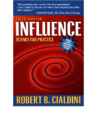
do it, enabled us to make significant changes. His work has enabled us to gain significant competitive differentiation and advantage" -LAURENCE HOF, Vice President, Relationship Consulting, Advanta Corporation "This will help executives make better decisions and use their influence wisely ... Robert Cialdini has had a greater impact on my thinking on this topic than any other scientist." -CHARLES T. MUNGER, Vice Chairman, Berkshire Hathaway, Inc. If you're wondering why of Latin America, the Far East, and Central Europe. you should buy this new edition of Influence: o More neuroscience evidence of how the influence process works is inte-
The Moving Finger Agatha Christie Plot summary: Brother and sister Jerry and Joanna Burton bought a country house in an idyllic English town called Lymstock so that Jerry could recover from injuries received in a wartime plane crash. They had been living in London their whole life and thus were excited but intimidated to go. Lymstock was much like any other English village, no more than 300 people. Those that live there enjoy the peace of rural life and form a union to where it can be difficult for strangers to blend in. Fortunately, it wasn't much of a problem for Jerry and Joanna. They were just getting to know the town's strange members and their characters when an anonymous letter arrived, accusing the two of not being brother and sister, but lovers. The letter
King Æthelberht converted to Christianity and also allowed the missionaries to preach freely, giving them land to found a monastery outside the city walls. *St George He is immortalised in the tale of George and the Dragon. According to this story he saved a maiden in distress from a dragon. His memorial is celebrated on 23 April. St. George is a very popular saint and is the patron saint of England, Georgia, Greece, Russia and many other countries. George was offered gifts of land, money and slaves if he made a sacrifice to the Pagan gods, but he refused. So, he was executed for his refusal. Before the execution George gave his wealth to the poor and after his death, the Christians soon came to honor him as a martyr. *St Andrew He is the patron saint of Scotland. He was a very humble man and to honour the Savior he had himself crucified on the X-shaped cross. It was not a regular cross, because
Because of that he died.( 9 June1870) Oliver Twist (1837-39), Nicholas Nickleby (1838-39), The Old Curiosity Shop and, Barnaby Rudge: A Tale of the Riots of 'Eighty as part of the Master Humphrey's Clock series (1840- 41), A Christmas Carol written in 1843. Hard Times- For These Times. is a novel by Charles Dickens, first published in 1854. The book is a state-of-the-nation novel, which aimed to highlight the social and economic pressures that some people were experiencing. Unlike other such writings at the time, the novel is unusual in that it is not set in London. A Christmas Carol in Prose, Being a Ghost Story of Christmas (commonly known as A Christmas Carol) is a novella by Charles Dickens first published on December 19, 1843 with illustrations by John Leech. The story was an instant success, selling over six thousand copies in one week, and the tale has become one of the most popular and enduring Christmas stories of all time.
So he sets of to London to find a new gardener. In between some interviews he runs into Freddie, whom he had forbid to leave Blandings castle. They have a little chat and then go on in different directions. Later he finds out that Freddie had come to propose the girl from Blandings, Aggie. At one point he goes to the London Gardens and gets into a bit of trouble. There he meets McAllister and they make up with each other. After they have returned to Blandings castle, Lord Emsworth meets with Aggie's father and finds out that he is a millionaire from America, has his own company, and wants to hire Freddie. Of course Lord Emsworth is rejoiced by this fact and agrees to give the young couple his blessing. A few days later is the pumpkin contest and, as you might guess, Lord Emsworth's pumpkin wins. 2) Lord Emsworth act for the best: The second story revolves mostly around
It was believed that a witch often joined a pact with the devil to gain powers to deal with infertility, immense fear for her children's well-being, or revenge against a lover. The long-term result of amalgamation of distinct types of magic-worker into one is the considerable present-day confusion as to what witches actually did, whether they harmed or healed, what role they had in the community, whether they can be identified with the "witches" of other cultures and even whether they existed as anything other than a projection. Present-day beliefs about the witches of history attribute to them elements of the folklore witch, the charmer, the cunning man or wise woman, the diviner and the astrologer. Powers typically attributed to European witches include turning food poisonous or inedible, flying on broomsticks or pitchforks, casting spells, cursing people, making livestock ill and crops fail, and creating fear and local chaos.
Hamlet - The Prince of Denmark, the title character, and the protagonist. About thirty years old at the start of the play, Hamlet is the son of Queen Gertrude and the late King Hamlet, and the nephew of the present king, Claudius. Hamlet is melancholy, bitter, and cynical, full of hatred for his uncle's scheming and disgust for his mother's sexuality. A reflective and thoughtful young man who has studied at the University of Wittenberg, Hamlet is often indecisive and hesitant, but at other times prone to rash and impulsive acts. Hamlet (In-Depth Analysis) Claudius - The King of Denmark, Hamlet's uncle, and the play's antagonist. The villain of the play, Claudius is a calculating, ambitious politician, driven by his sexual appetites and his lust for power, but he occasionally shows signs of guilt and human feeling--his love for Gertrude, for instance, seems sincere. Claudius (In-Depth Analysis) Gertrude - The Queen of Denmark, Hamlet's mother, recently married to Claudius
sense. Teachers kept changing all the time, teaching methods kept changing as well and learning Pushkin by heart does not work wonders with one's speaking skills, really. (Although I still can recite one of his poems...) The point is, I actually really like Russian. I've never been good at it, but I like the language and I really wish I knew it better. I can speak some, but not read much. As soon as the characters stop talking to each other, I'm stuck and can barely understand anything. Most of my Russian skills my ten years younger mates envy come from my year of living in Narva (literally starve or learn!) and talking to a variety of Estonian-Russian roleplayers I know. (But since they are also fluent in English and most in Estonian as well, it turns into a stew of languages very soon.) Chronologically the second language I started to learn was French. That was because of the Descartes Lyceum
Moro" (A Moorish Captain) by Cinthio (Giovanni Battista Giraldi). It was first published in 1565. The main characters of the play are Othello, Desdemona, Cassio and Iago. The play in this book has 91 pages and this book is published in 1996 by Dover Publications. Characters: Major characters: Othello he is the play's protagonist and hero. He has risen to high military prestige in Venice, after defeating the Turks and other enemies in battle. He is well-liked and honored, despite his racial difference. He moves to Cyprus after becoming a general and he marries Desdemona. He falls victim to Iago's plan causing Othello to believe his wife has betrayed him with Cassio, becomes insanely jealous of their relationship and ultimately smothers his wife to death. After he realizes that Iago has tricked him and that Desdemona has always
BOOK REPORT Title & author of the book: 'Anita and Me' by Meera Syal The setting of the book? The story resolves around Meena Syal, the daughter of the only Punjabi family in the Midlands' mining village of Tollington. The novel provides a vision of British childhood in the 1960s, a childhood caught between two cultures, each on the brink of enormous change. Meena is desperate to fit in with the other children in her neighbourhood while forever feeling like an outsider because she is "different". Eventhough the Punjabi family is well respected by the locals, there are still sutations when they have to deal with racism. Plot summary (NB! Use the present tenses) Anita and Me by Meera Syal is the story of a young Punjabi girl growing up in the fictional English village of Tollington in the Midlands in the 1960s. The book follows Meena during her pre-teen years
 annaabi.ee