Leidsid 33 sarnast õppematerjali, mis on seotud failiga "Tolerance and diversity (essee)". Need materjalid aitavad sul teemat sügavamalt mõista.
country, russian, there, speak, them, language, religion, tolerance, different, between, since, differences, estonians, diversity, nationalities, living, obviously, already, quarter, therefore, several, going, discuss, almost, percent, live, east, near, border, often, secondly, aswell, regions, bigger, hear, older, middle, aged, jobs, inquire, bothTallinn English College Topic Estonia Tallinn 2008 1. Introduction Estonia is a small country about the size of Switzerland, or New Hampshire and Massachussetts combined. Estonia is named after the people called "Ests" who lived in the region in the 1 st century AD. The Republic of Estonia is one of the three countries commonly known as the "Baltic States". The other Baltic States are Latvia and Lithuania. 2. Geographical position Estonia is situated in northeastern Europe. Estonia is bounded on the north by
Tallinna Mustamäe Humanitargümnaasium Valeria Jefremenkova ENGLISH AS A GLOBAL LANGUAGE INGLISE KEEL KUI ÜLEMAAILMNE KEEL Research work Supervisor: Jevgenija Kozlova Tallinn 2016 1 Table of Contents СONTENT…………………………………………………………………………………...2 INTRODUCTION…………………………………………………………………………...3
Uusikaupunki, was a relatively static period in Estonian history with few momentous events. This was the time of the crystallization and the culmination of serfdom, when various socio- political and cultural undercurrents were also active, preparing the ground for the industrial society and the national-democratic movement in the second half of the 19th century. The 1710 of the corporations of knights and towns, until Alexander II (18551881), established the relationships between Estonia, Livonia and the Russian Empire. The Baltic Landesstaat reached its full development. The freedom of action in the new provinces was naturally granted to one of the most firm ideological pillars of the tsarist empire -- the Russian orthodox church; though as the Landeskirche in the Estonian and Livonian territories, the Lutheran church long maintained a de facto predominance. The most important organ of Baltic German local government was the Diet, consisting of all
many Estonian American Socialist and Communist organizations. * The 1920s30s: · Establishment of independent Estonia · Tightening of American immigration laws · Estonian immigration to the United States slowed down dramatically 1924 The Estonian quota fixed at 116; even this small annual quota was not used up *After World War II = In the post World War II years, all three Baltic nations maintained consulates in the United States · About 15,000 Estonians came to the United States · This group was strongly anti-Communist and nationalistic 3. Russian colonization of America. What has preserved from this period to the present? The Russian colonization of the Americas covers the period, from 1732 to 1867, when the Tsarist Imperial Russian Empire laid claim to northern Pacific Coast territories in the Americas. The Russians were primarily interested in the abundance of fur-bearing
Estonia. Estonia, officially the Republic of Estonia is a country in Northern Europe. It is the smallest of the three Baltic countries. Estonia has land borders with Latvia (339 km) to the south and Russia (229 km) to the east. It is separated from Finland in the north by the narrow Gulf of Finland and from Sweden in the west by the Baltic Sea. Estonia has been a member of the European Union since May 1, 2004 and of the NATO since March 29, 2004. The area of Estonia is about 45000 square kilometres and the population is about 1.4 million people
Often, religion, politics, and personal motives have fashioned history into what its authors wanted it to be. People have written from a multiplicity of perspectives. It should be one Estonian historical research's greatest priorities to distance itself from this, to seek after holistic, balanced accounts of the past. Early chronicles of Estonian history illustrate this diversity of perspective. Johann Renner, a Baltic German, held his own people in high esteem, deeming them the people of God. He implied this when he wrote that God would save His people from the hand of Gog. He seems to indicate that Gog was the Muscovite people. Perhaps the Muscovite people truly were vicious towards Baltic peoples, but perhaps not. Whatever the case, his biases colored his writing, likely distorting the truth as to how things actually were and how events actually happened.1 The same can be said of chronicles written by German B. Russow, who praised Swedish rule, and D
......................................................................7 10. History..........................................................................................................8 11. Conclusion....................................................................................................9 12. References....................................................................................................10 Introduction I chose finland because there are friendly people and beautiful nature. Finland is bigger than Estonia. There lives over 5 milj. people. Finland capital is Helsingi and there lives about 2 milj. people. Highest top is 1328m. Finland is bordersed with Sweden to the west, Russia to the east and Norway to the north. It is the eight largest city in Europe. Most Finns speak Finnish. The second language is Swedish. Finland is rated the sixth most peaceful country in the World. In Finland there are more than 60000 lakes.
Diana Ostrat Essey How does the United States influence Estonia? The United States of America with it's global economic and political superpower is one of the most influential countries in the world and therefore it’s influence can also be felt in Estonia. Fluctuations in Estonia’s status as an independent country have had significant impact on the amount of influence from other countries, whether it is the language, eating habits or lifestyle. But how has United States influenced Estonia after we gained our independence? Estonia is not economically dependent on the United States as they are not one of our most important trading partners, but as the economics of the United States has a great influence on the world economy, they can still indirectly have an influence on Estonian economy.
Report Purpose The purpose of this report is to give an overview of Estonian population, political factors, technological factors, economic factors and the trends in Estonian economy compared to Germany and to briefly discuss Estonian business environment. Estonian population The total population of Estonia is 1 313 271 according to Statistics Estonia, of which 69.1% are Estonians, 25.1% Russians, 4.9% of which are of different nationalities for example Ukrainians, Belarusians and Finns. Rest are of unknown nationality. 68.5% of population speaks Estonian as a mother language, 29.6% speaks Russian as a mother language and 0.6% Ukrainian. Estonia has only one official language which is Estonian. According to information by the Institute of the Estonian Language there are about 75% of Estonian people who speak Estonian. The most common foreign languages learned by
Indians in everyday conversation. They are still legally categorized by the Canadian Government under the Indian Act as Status Indians. Those who have lost their legal status are called Non-Status Indians. Prime Minister Pierre Trudeau tried to get rid of the Indian Act, but First Nations political groups insisted on keeping it, because it defines their special status. The Inuit are the people who originally lived in the Arctic. Their language is Inuktitut, but it has several dialects the differ considerably from place to place. The Métis, are the group of people who resulted from the mixing of European and Native men and women. The Métis developed a unique culture that included elements of both European and Native ways and artifacts (clothes, tools, means of travel, etc.). They pride themselves on their distinctiveness from both the cultures from which they are descended. 3
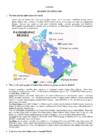
Topic Canada Tallinn English College 2006 1. Introduction If you had to use two words to describe Canada, they might be large and diverse. Canada is the second largest country in the world with a territory of about 10 million square kilometers and it is bordered by three oceans: the Arctic, the Pacific and the Atlantic Oceans. The population of Canada is about 31 million people. About 77% of the people live in cities which lie in a band about 100 miles wide above the border of the United States. The capital of Canada is Ottawa. Other large cities are Montreal, Toronto, Vancouver, Winnipeg and Quebec. 2
Freedom of speech is a wide speared conception. I can understand it in many different ways. For example in my state, Estonia, the freedom is a very important for every human. At least to me it is seemed to be like that. But at school is a little bit sad story with freedom of speech. Some teachers are not used that student expresses her own strong opinion. When another way some teachers are just waitening it. As well as people can not speak along with state public topics and express their opinion. Therefore freedom of speech is debateable. Already from the old times Estonians have been fighting for their own freedom, because they do not like to allow to another country or state, foreign public and foreign language. Estonian public have been fighting with German, Russian and a lot of other states. Estonians has strongly tried to keep alive their own nationality, independent that Estonia is a very small state in
Why should tourists visit Estonia? I have always though of my country as a huge ,,multicultural city". We have so many different cultures from different places put into a little place all together that you could almost say we are a huge city not a country. And that has influenced us in a very remarcable way. Since the time we can remember we have been under Danes, Swedes, Germans, Russians, Polans and other. We have taken their traditions into our daily lives and forgotten ours. But still despite the fact that we bearly know our own language structure or our old traditions,we try to awake them once again. Estonia is one of the worlds wealthiest countries when it comes to forests. Almost half of the country is covered with the divercity of trees
9 Northern Ireland 1,741,600 2.9 United Kingdom 60,587,300 100 Although Britain is quite small in terms of land area (245,000 sq km), it has a large population of nearly 61 million, which ranks the 21st in the world (Britain is the 21st most populous state in the world) and the third largest in the European Union. The size of population is changing very slowly. Natural change is the difference between birth and death rates. It may be a natural increase or a natural decrease. Birth rate the number of babies born per 1,000 persons per year 12 Death rate the number of people who die per 1,000 persons 9.9 Natural increase per 1,000 population 2.1. (USA 5.5, Brazil 12.9, Bangladesh 17,3) The size of population may change mechanically, too through immigration and emigration. 2. Distribution. What does a population distribution map show
Tallinna Inglise Kolledz Canada. The land of diversity. Tallinn 2006 Canada. If you had to use two words to describe Canada, they might be large and diverse. Canada is the second largest country in the world with a territory of about 10 million square kilometers and it is bordered by three oceans: the Arctic, the Pacific and the Atlantic Oceans. The population of Canada is about 31 million people. About 77% of the people live in cities which lie in a band about 100 miles wide above the border of the United States. The capital of Canada is Ottawa. Other large cities are Montreal, Toronto, Vancouver, Winnipeg and Quebec. Canada has two official languages English and French
ESTONIA VS AUSTRALIA Today, I shall compare the Baltic country, Estonia, and the largest country in Oceania, Australia. Largely they are going to be very different but still sharing little similarities. This essay will go in- depth about what makes these two nations so different. First I'm going to write about Estonia, a country within Europe. Estonia is quite small when compared to the other its neighbours with a land of 45.227 square kilometres and a population estimated at 1.3 million. The Estonian people largely speak Estonian but many of them also speak Russian and English, Russian more common as a secondary language. As being Estonian we know that less is always more. Best to be concise and to the point. Talking a lot and taking centre stage is considered rude and disrespectful
My Town I live in Tallinn. It's the capital and main seaport of Estonia. Tallinn is a very beautiful city that lies on the Baltic Sea. It covers 158 square kilometres. The Mayor of Tallinn is Jüri Ratas. The population of our capital is about 400000 people. About 55% of them are Estonian, 37% Russians and the other 8% are from different nations. The people here are mostly engaged in industry- mainly the food industry (23%), trade (16%) and transport and communication (14%). History. Tallinn has a great history. It was first marked on a map of the world by the Arab geographer al-Idrisi in 1154, its name then being Kolyvan. In the 13 th- century chronicle of Henricus de Lettis the town was called Lyndanise. Then it was called Reval for some time and finally Estonians started to call the town Tallinn from
Me and languages. To begin with, language is a congrecation of thoughts and feelings through a system of signals, such as voice sounds, gestures, or written symbols. Communication or language is a process every child learns from birth and during our life we will usually learn many different languages. Due to the fact that both of my parents are Estonians , my mother tongue is Estonian, therefore I can speak and write in it very fluently. I also prefer read the books in Estonian. I know that some people like to do it in some other languages, in English for instance. I am really amused by the Estonian literature. I like to read books and stories from Andrus Kivirähk and F.R. Kreutzwald. English is one of the world most spoken language. You can hear it everywhere, no matter which part of the world are you in. In the third grade of elementary scool I started to
Life in Estonia through the eyes of an economics student With a population of 1 313 271 people, Estonia is one of the least populous member states of the European Union. However, according to the IMF, it is a developed country with an advanced and high-income economy. Estonia follows market economy system which ensures the little government intervention and the determination of prices of goods and services in a free price system. Therefore, economic decisions are guided solely by the aggregate interactions of a country's citizens and businesses. In addition to mentioned afore, Estonia tends to perform favourably in measurements of civil liberties, education, and press freedom.
ESTONIAN BUSINESS ENVIRONMENT Estonia is a country with the population of just a little over 1.3 million people. It has been estimated though, that by the year of 2040 the number will have decreased by 125,000 people. It means that the population of Estonia is decreasing. As young Estonians often like to go study or live abroad, the population is aging as well – young people move away, while older stay there. Many different nationalities live there: besides Estonians there are Russians, Ukrainians, Belarussians, Finnish, Tatars, Latvians, Poles, Lithuanians, Jews, Germans and others. Due to this fact, the most popular languages spoken as a mother language are Estonian, Russian and Ukrainian. Nevertheless, there is still just one official language of Estonia, which is Estonian. Most of the people, approximately 900,000 live in the cities, such as Tallinn, Tartu, Narva. The most common sector that people work in is the service sector.
Are young people living in Estonia patriots of their homeland? To begin with, it would be a good idea to explain who patriots actually are. They are people whose public conducts are regulated by one single motive - the love of their homeland. When speaking of patriotism, already The Constitution of Estonian Rebublic states that the main aim of our country is to assure that our nation, language and culture will be preserved. Many people have argued whether young Estonians are patriots of their homeland or not and there have been many different answers to that question. One the one hand, young Estonians are very supportive and helpful when there is a crisis situation in our country. For example, in case of the disturbances in April 2007, young men where ready to go as voluntaires to protect our country. Also, more an more young people are interested in taking part in the Song and Dance Festivals. Where they can wear our national
Kunda Ühisgümnaasium Tallin Old Town Report Student: Kristin Karu Teacher: Kristi Aron Kunda 2012 The Alexander Nevsky Cathedral The Alexander Nevsky Cathedral is an orthodox cathedral in the Tallinn Old Town,Estonia. It was built to a design by Mikhail Preobrazhensky in a typical Russian Revivalstyle between 1894 and 1900, during the period when the country was part of theRussian Empire. The Alexander Nevsky Cathedral is Tallinn's largest and grandest orthodox cupola cathedral. It is dedicated to Saint Alexander Nevsky who in 1242 won the Battle of the Ice on Lake Peipus, in the territorial waters of present-day Estonia. The late Russian patriarch, Alexis II, started his priestly ministry in the church. Interior of the Cathedral. The Alexander Nevsky Cathedral crowns the hill of Toompea where the Estonian folk hero
Kati-Liis Karu 03.01.2011 The euro in Estonia Joining the European Union in 2004 made people in Estonia think about the changing of currency. We had almost six years to get used to the fact that the Estonian kroon is eventually going to end. In that time there was a lot of discussion about whether we should stick to the kroon or change our money to the euro. Lots of people were afraid that they lose their money during the period of transition - this belief was quite popular among people who still remember the time when the Russian rubles were changed into kroons and did lose much money. Luckily there haven't been any complaints yet. The reason I chose this political concern is its contradictoriness. I myself
How far can we go being tolerant? Tolerance- it is the willingness to accept or tolerate somebody ot something especially opinions or behaviuor that you may not agree with, or people who are not like you. When we speak about tolerance and being tolerant, then of course all of us do not have the same opinion about tolerance. There is saying that there are as many different opinions as people in the world and talking about tolerance is not different. How we tolerate other people and their behaviour depends a lot of how we are raised and educated, where we live and who we connect to When we hear word ,,tolerant" then mostly we connect it with homo sexuals, racism, religion and all kinds of different people(disabled people for example) and how we tolerate those things. Speaking of homo sexuals then for me they are same people as I am and I have nothing against them. I only would not like if homo sexuals would start
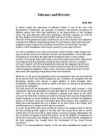
Tolerance and Diversity Janne Susi In today's world, the coexistence of different cultures is one of the most vital developments. Furthermore, the principles of tolerance and peaceful coexistence of different nations have often been underlined by the representatives of the European Union. The same ideas have lately been spreading in the Baltic countries. So, what are the main dangers to the tolerance and friendly coexistence in these countries? There are several phenomena which counteract the successful coexistence and integration of people from different cultural backgrounds. First and foremost, both coexistence and integration require a high level of tolerance from all those involved. Here, the major obstacle is often xenophobia which may be caused by a wide range of factors. As a rule, xenophobia occurs in big, mostly mono-cultural societies, where strangers are
What Pleases Me about Life in Estonia Many peole have said, that they do not like living in Estonia. I am one of them, although many people have tried to persuade me to think otherwise. I have loved on both sides of Europe both on the eastern and on the northern part. But there are, of course, some advantages in living in Estonia, too. The first one is definately my family and friends. It is good to live in a country when you know, that you have your loved ones by your side. They can help you in every situation or even when you have nothing to do and you need some entertainment. Also, when your problems seem to grow over your head and you feel that you need to share them with someone. The second good thing about living in Estonia is the nature. We have many beautiful places in our amazing country the best example are the forests. In many European countries, the
Harold McMillan articulated his now famous “winds of change” sweeping Africa. We had high hopes for Africa, for the Black race, that the insidious imposition of foreign rule on us, the looting of Africa’s natural resources by our colonial masters accorded us would be things of history. That is more than forty years ago. Unfortunately, the promise of independence has not been fulfilled. Today, Africa has become more desolate; there is more starvation, diseases and non-provision of essential services than when we got our independence. There are all kinds of wars in Africa than the rest of world put together. The majority of so-called Africans leaders want to stay in power until the day their bodies are put in the grave. Through buffoonery, utter mismanagement and downright stealing of the wealth of the masses, these leaders have so impoverished Africa that we are now nothing but a beggar continent. We beg for
Edulugude võistlus Success-story competition „Small Town Inhabitants – Educated or Uneducated People“ To begin with, my childhood was quite ordinary, I spent a lot of time in my country home, spending most of my time playing. I have been raised by my mother. As I grew older, I got more and more interested in different things. At one point it occured to me that when I want to be successful in some field, then I really have to educate myself in that filed.When my friends have characterised me then they have mainly mentioned that I am an active person, who has been successful in different fields. I still do not think I am succesful because it is a really complicated definition, but I know that I have succeeded in doing several things. For me the key is my so called success has been
The basic ingredients, when fresh, are so full of flavour that British haven't had to invent sauces to disguise their natural taste. What can compare with fresh pees or new potatoes just boiled and served with butter? Why drown spring lamb in wine or cream and spices, when with just one or two herbs it is absolutely delicious? If you ask foreigners to name some typically English dishes, they will probably say "Fish and chips" then stop. It is disappointing, but true that, there is no tradition in England of eating in restaurants, because the food doesn't lend itself to such preparation. English cooking is found at home. So it is difficult to a good English restaurant with a reasonable prices. In most cities in Britain you'll find Indian, Chinese, French and Italian restaurants. In London you'll also find Indonesian, Mexican, Greek... Cynics will say that this is because English have no "cuisine" themselves, but this is not quite the true. Vocabulary:
Topic Sports Tallinn English College 8b form 2007 1. Introduction For some people sport plays a very important part in their lives. And to some, it is even a way of life. There are different kinds of sports. For instance, there are sports meant for playing indoors, some can be practised only at a certain time of year. There are winter and summer sports also. Skiing, figure-skating, sledding and snowboarding these four most popular are practised during winter. Good examples of summer sports are: swimming, badminton, roller skating and golf. 2. The ancient Olympic Games The first recorded Olympic Games took place in 776. B.C. at Olympia but the city may have functioned as a meeting place for worship and other political practices many years earlier. The city is located in western Greece
How far can we go being tolerant? One of our most valuable and rare qualities is tolerance. It is the ability to see things from the other side, capability to take our companions as equal and bravery to show out all those things. Just like all valuable things are uncommon, tolerance is rare too. It is caused by the fact that comparing to the previous centuries people have changed more self-centered and envious, forgetting others around. Tolerance as a characteristic feature is an acknowledged ideal in today`s modern society. The democratic state is based on tolerance. Over the last few years the attitude against ethnic monorities has been a frequently discussed topic in Estonia. Russians, who settled in Estonia during the USSR occupation are causing economical, racial and religious conflicts between them and Estonians. Although Estonians don't have any particular reason why we don't accept Russians as equals, we are used to
Holidays, Festivals, Cultural events TALLINN - If you're looking for entertainment in Estonia this summer, you are really spoiled for choice. Festivals and events dedicated to the consumption of beer are a lot of fun, but if you want to get the true feel of the country, you need something a little more ethnic. Like a town fair. Just as July becomes August, the seaside town of Haapsalu will host a grand spectacle of rural Estonian entertainment. The White Lady Days is a summer celebration filled with amusement for all the family. Held in and around the remains of the Teutonic-knights-era castles, the fair combines enchanting medieval legends with modern countryside charm to create a comprehensive experience of Estonia beyond the big cities.
Identity as a personal project How could be one identity created? Or is it creating itself? Or, maybe, every child is born with some kind of identity? There are many theories about what identity is and how it is developing, so in this essay I want to discuss A. Giddens´ text and my reflection about his theory. “It's like everyone tells a story about themselves inside their own head. Always. All the time. That story makes you what you are. We build ourselves out of that story.” Patrick Rothfuss When talking about identity, it´s creation is a very important moment. To
 annaabi.ee