Leidsid 33 sarnast õppematerjali, mis on seotud failiga "To Whom It May Concern". Need materjalid aitavad sul teemat sügavamalt mõista.
here, driver, student, spot, drives, good, fast, whom, concern, opportunity, offer, formal, recommendation, secondary, known, years, feel, joined, smart, likes, studies, never, goes, faster, than, allowed, clean, driving, traffic, looks, ahead, qualities, essential, important, drivers, commune, highly, hope, consider, admissionPeter Jones. When the name of the recipient is known, their name and title should be included in their address, e.g. Mr Witkins, Accounts Manager, Rockdell Financial Services, 17 Stockdal Ave. , London. The letter should begin with Dear Mr Witkins, and end with Yours sincerely, John Smith. 2. In semi-formal and informal letters the recipient's address is not included in the letter. In a semi-formal letter showing respect for the recipient with whom you are on friendly terms, begin the letter with Dear Mr/Mrs Smith and end with Love/Regards/Best Wishes/Yours, Anna. 3. In an informal letter, begin with Dear John and end with Love/Regards/Best wishes/Yours, Mike. 4. Remember that it is not necessary to write addresses in the exam. Style in formal and informal letters Formal letters Greeting: Dear Sir/Madam / Mr bobbins, Informal letters
FRANCISCO Nay, answer me: stand, and unfold yourself. BERNARDO Long live the king! FRANCISCO Bernardo? BERNARDO He. FRANCISCO You come most carefully upon your hour. BERNARDO 'Tis now struck twelve; get thee to bed, Francisco. FRANCISCO For this relief much thanks: 'tis bitter cold, And I am sick at heart. BERNARDO 4 Have you had quiet guard? FRANCISCO Not a mouse stirring. BERNARDO Well, good night. If you do meet Horatio and Marcellus, The rivals of my watch, bid them make haste. FRANCISCO I think I hear them. Stand, ho! Who's there? Enter HORATIO and MARCELLUS HORATIO Friends to this ground. MARCELLUS And liegemen to the Dane. FRANCISCO Give you good night. MARCELLUS O, farewell, honest soldier: Who hath relieved you? FRANCISCO Bernardo has my place. Give you good night. Exit MARCELLUS 5 Holla! Bernardo! BERNARDO
follow me!" 2 The Capital Letter The capital letter is also called a big letter or upper- case letter, or sometimes just a capital. A B C D E F G H I J K L M N O P Q R S T U V W X Y Z When do you use a capital letter? 4Use a capital letter for the first letter in a sentence: The dog is barking. Come here! 4Always use a capital letter for the word I : I am eight years old. Tom and I are good friends. 4Use a capital letter for the names of people: Alice, Tom, James, Kim, Snow White 4Use a capital letter for the names of places: National Museum, Bronx Zoo, London, Sacramento 4Use a capital letter for festivals, holidays, days of the week, months of the year: New Year's Day, Christmas, Labor Day, Mother's Day, Sunday, Monday, Friday, January, May, July, October
......................... 1.2 Read the text and strike though words that don't suit. She stood and watched on/the darkening autumn sky. It was cold. So cold, that the little girl could/might not even cry. She was/is scared, but having no other choice, she stood/stands still until it started to rain. Then, finally, a/an older woman spotted the shaking creature, and called her in for/due to a cup of hot chocolate. The little girl had been/was really happy and followed the kind woman. They became good friends and in/at the evening the woman said that/if the girl could stay as long as she wanted/had wanted. And so it was decided that the girl would/will/is going to/was going to stay with her new stepmother. Happy end 1.3 Fill in missing prepositions where necessary. 1) The party was ..... Saturday. 2) What are you doing ..... Tuesday? 3) ..... teachers were not amazed by his pranks. 4) Are you going ..... the ball? 5) ..... piano sounds great, don't you agree?
You do the opposite of my instructions; You've no respect for anything; each one Must have his say; it's perfect pandemonium. DORINE If . . . MADAME PERNELLE You're a servant wench, my girl, and much Too full of gab, and too impertinent And free with your advice on all occasions. DAMIS But . . . MADAME PERNELLE You're a fool, my boy--f, o, o, l Just spells your name. Let grandma tell you that I've said a hundred times to my poor son, Your father, that you'd never come to good Or give him anything but plague and torment. MARIANE I think . . . MADAME PERNELLE O dearie me, his little sister! You're all demureness, butter wouldn't melt In your mouth, one would think to look at you. Still waters, though, they say . . . you know the proverb; And I don't like your doings on the sly. ELMIRE But, mother . . . MADAME PERNELLE Daughter, by your leave, your conduct In everything is altogether wrong; You ought to set a good example for 'em;
and not a victim. As a predator and not a victim, I have decided to confront the truth of my misfortune and when I look in the mirror I see the culprit standing right in front of me – it is me. As the saying goes, truth shall set you free. Truth has set me free. The truth in being a Capitalist Nigger is that it sets you free. Being a Capitalist Nigger puts you in control of every aspect of your life – you are in charge and nobody else. You want your children to have good grades in school? Then practice Capitalist Niggerism because then you will not blame the teachers for failing your children or blame the nationwide testing services for using non-black questions in their testing. You will be in control because you will totally understand that everything that happens to your child at school is a result of the learning environment you have provided him or her at home. You want to succeed in creating wealth, join Wall Street
filled with tears as she talked. The man smoked soundlessly, not even glancing at the girl. "But I'll go again, tomorrow, and bring you twice the money! I promise! So don't punish me, okay?" The man stood up and walked slowly towards the girl. "I promised your mother to take care of you, yet, if you are useless in even collecting money from the rich, I can't help you! This is the end, Heartless! Go to the dorms, pack your things and leave my orphanage at once! You are no longer welcome here!" Heartless tried to protest, but the man hit her, so there she was now lying helplessly on the floor. Suddenly, someone else knocked on the door and two other girls and an older boy came in. They saw Heartless, yet knew that they had no allowance to help her. The man asked them what had they brought and after taking all the money they showed away, he said, "Well, Heartless, you should've done as well as Loveless' s team. Then you'd still be one of us!"
When? Why? 22. Have you ever seen a rehearsal of a show? When? Which show? 23. Have you ever been to a zoo? Which zoo? What animals were there? http://www.abiks.pri.ee 24. Have you ever been to a funfair? Where? 25. Have you ever been to a circus? When? Where? 26. Have you ever seen a circus show on TV? 27. What did you see in the show? (an animal act? clowns? acrobats? jugglers?) 28. Are you good at juggling? What makes you think so? 29. Do you like aerobics? Are you good at it? Do you know anybody who is? 30. Would you like to perform in a circus? 31. Do you know anybody who might become a good clown? What must a clown be good at? 32. Have you ever played sport regularly? What training classes do you go to and how often? What sport would you like to play and why? 33. Have you ever taken part in sport competitions? When, where and what were the results? 34
It replaces the traditional forms of Mrs and Miss. Greetings Good morning/afternoon/evening! 'How are you?' Very often people expect you to say something positive. Here's a breakdown of how you can express how you really are without complaining too much. · Fine, thanks. / On top of the world, thanks. · OK, thanks · Not so bad, thanks. / Can't complain, thanks. · So so, thanks. / So and so, thanks. · Not so good, actually 1 The English alphabet Spelling Work with your partner and spell out first your name and then some names of places. Write down each letter as you hear it, and then say the word. The English alphabet on the phone: You might find the following alphabet (used by international airlines) useful when trying to spell a word on the telephone.
It's a 9 was travelling 2 1 She had completed a physical mixed class of boys and girls. It's 10 was working training regime. difficult to tell what kind of lesson 11 started 2 She hadn't studied basic Nepalese. they're in. Their teacher is handing 12 had lived 3 She had obtained long-term a paper to one student. It could be 13 happened weather forecasts. that they're in a maths lesson. These 14 didn't want 4 She had planned a route to the students aren't wearing uniform. It 15 insisted looks as if one of them is asleep. summit.
in brackets. _ 1 She is in a band and she _________________________________ (record) a CD at the moment. _ 2 She is an actress and often _________________________________ (appear) on television. _ 3 At the moment she _________________________________ (have) a rest because she is tired. _ 4 Mike is a doctor and he _________________________________ (live) in Manchester. _ 5 I _________________________________ (start) work at 8.30 every morning. _ 6 He is a good cook but she _________________________________ (prefer) to eat out. _ 7 English tests _________________________________ (get) more and more interesting. _ 8 They _________________________________ (have) a party because it's her birthday. _ 9 I sometimes _________________________________ (ride) my bicycle to school. 10_ She usually _________________________________ (go) to the gym on Friday evenings.
6. Concentrating on something important can make you lose track of your soap opera. 7. Debunking the bunk is everyone's responsibility. 8. Don't ask me to pay for anyone else's mistakes. I make enough of my own. 9. Even those who possess real magic must beware of being misled by "magical thinking." 10. Everyone knows what shit tastes like. 11. Exclusive occupancy of a private room is a basic human right. 12. Fair compensation for genius is wealth. 13. God's not perfect, so it's a pretty good bet that you're not, either. 14. Good institutions help to overcome human moral inertia. 15. I am not one of your little friends. 16. If a dimension is anywhere it's everywhere. 17. If God's not crazy, why are you? 18. If one makes a promise one shouldn't have made it cannot stand against the obligation to do the right thing. 19. If you odn't give a certain amount of attention to filtering distractions, every distraction is a catastrophe. 20
What would you like to me tell Did you have a party in your yester flat day? When were you here? Articles Rules: 1. Rule: When you have a single, countable English noun, you must always have an article before it. We cannot say "please pass me pen", we must say "please pass me the pen" or "please pass me a pen" or "please pass me your pen". Nouns in English can also be uncountable. Uncountable nouns can be concepts, such as 'life', 'happiness' and so on, or
How can a rich person help a poor one? By giving some money? Well, can smart, or educated people give education to those needing it? Sometimes just taking the time to discuss things with troubled people is a great favor and aid. I don't have much surplus money to give to worthy causes, yet donate my time freely. I don't pretend to be able to educate in general -- but do know enough about plant life in Seattle to be valuable teaching that. I suppose I could share my plant knowledge with a single student, or several, and it wouldn't make much difference to me. The whole role of apprenticeship and master-apprentice needs to be expanded beyond its present confines of carpentry, masonry, electricity, and the like. It is true all of us are genetically capable of only so much; that our upbringing and education can be the same yet we turn out differently because of our genes. Well, how should you or I raise kids? Or if we don't want to be parents, how do we help educate children in general?
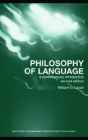
Philosophy of Language Philosophy of Language: a Contemporary Introduction introduces the student to the main issues and theories in twentieth and twenty-first-century phi- losophy of language, focusing specifically on linguistic phenomena. Topics are structured in four parts in the book. Part I, Reference and Referring, includes topics such as Russell's Theory of Descriptions, Donnellan's distinction, problems of anaphora, the description theory of proper names, Searle's cluster theory, and the causalhistorical theory. Part
H-Helen, J - Julia 1.Receiving a money order H: - Hello, I would like to cash a money order. J: - Hello! You should present your identity card. H: - But, you know, I'd like to receive money order for my sister. How do I go about it? J: - Your identity card and letter of attorney, please. H: - Here you are. J: - Well...Unfortunately, I can't cash your money order your signature is not witnessed. H: - Ok. Than, please, I'd like to cash my money order. J: - Take this form and fill it in. May I see your passport? H: - Yes. Please. So...Should I write my full name, my passport number and the sum of money that has been sent to me, right? J: - Certainly. How would you like the money? H: - I prefer one hundred rouble notes, if you don't mind. J: - Here is your money. H: - Thank you
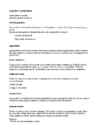
Raudtee 27 43222 Estonia, Püssi November 28 2010 OÜ P6llu Kunn Lammutajate tee 178 Savala, Estonia Dear Mr. /Madam RE: Application for tractor driver Position. I would like to be a tractor driver. I heard from your firm years ago when I was very young. My grandfather also works here; he has worked here for a very long time. So he told me that there is one job as a tractor driver. My name is............... I have graduated nine classes in Lüganuse 1. Keskkool. I didn´t have no threes on my school-leaving certificate. I was a very good student. I learn very fast. I have experiences in this job. In summer 2010 I had a summer job. I mowed in Kiviõli, Jõhvi, Sillamäe and Narva with a John Deere tractor with my grandfather. I am young and strong and I very much like this job. I like big machines on which I could work. I think I will manage well with this job
lb-teens.com First Edition: September 2005 The characters and events portrayed in this book are fictitious. Any similarity to real persons, living or dead, is coincidental and not intended by the author. Library of Congress Cataloging-in-Publication Data Meyer, Stephanie, 1973-- Twilight : a novel / by Stephanie Meyer. -- 1st ed. p. cm. Summary: When seventeen-year-old Bella leaves Phoenix to live with her father in Forks, Washington, she meets an exquisitely handsome boy at school for whom she feels an overwhelming attraction and who she comes to realize is not wholly human. ISBN 0-316-16017-2 [1. Vampires -- Fiction. 2. High schools -- Fiction. 3. Schools -- Fiction. 4. Washington (State) -- Fiction.] I. Title. PZ7.M57188Tw2005 [Fic] --dc22 2004024730 Printed in the United States of America For my big sister, Emily, without whose enthusiasm this story might still be unfinished. But of the tree of the knowledge of good and evil, thou shalt not eat of it:
Chapter 17 Chapter 38 Chapter 58 Chapter 18 Chapter 39 Chapter 59 Chapter 19 Chapter 40 Chapter 60 Chapter 20 Chapter 41 Chapter 61 Chapter 21 Chapter 42 Chapter 1 It is a truth universally acknowledged, that a single man in possession of a good fortune, must be in want of a wife. However little known the feelings or views of such a man may be on his first entering a neighbourhood, this truth is so well fixed in the minds of the surrounding families, that he is considered the rightful property of some one or other of their daughters. "My dear Mr. Bennet," said his lady to him one day, "have you heard that Netherfield Park is let at last?" Mr. Bennet replied that he had not. "But it is," returned she; "for Mrs
• Modal Verbs express our attitudes, opinions and judgements of events. Who’s that knocking on the door? - It’s James. (This is a fact.) - It could/may/might/should/can’t/’ll be James. (These all express our attitude or opinion.) Expressing permission Can, may and be allowed to are used to express permission. Can is more informal and usually spoken. You can borrow my bike, but you can’t have the car. I need it. May I smoke in here? You can’t come in here in those muddy shoes! You’re allowed to get married when you’re 16. Are we allowed to use Power Point at the exam? Expressing obligation Have to, must and should are used to express obligation. Positive negative and interrogative forms of ‘have to’ I You have to We don’t have to work hard to They pass the exam.
again to keep the noise down. between Paul and Joe. 1D Sporting origins page 67 2 She recognised him at once. 2 Phobias can be genetically 3 He's working at his father's shop inherited. 1 1 staunchly / resolutely for the time being. 3 When it comes to politics, 2 By and large 4 They'll be here any moment now. Edward and his dad have a lot in 3 swiftly 5 Everybody makes mistakes once common. 4 loosely in a while. 4 Luke is the spitting image of Matt 5 categorically 6 My brother was still a baby at the Damon. 6 widely time
Education and learning Task 1. Underline the most suitable word or phrase. a) Jack decided to take a course/lesson in hotel management. b) Sheila always got good marks/points in algebra. c) After leaving school, Ann studied/trained as a teacher. d) Peter decided not to go in/enter for the examination. e) My sister learned/taught me how to draw. f) I can't come to the cinema. I have to read/study for a test. g) In history we had to learn a lot of dates by hand/heart. h) I hope your work will improve by the end of course/term. i) Martin failed/missed his maths exam and had to sit it again. j) If you have any questions, raise/rise your hand.
VERB OBJECT She speaks English very well . (NOT She speaks very well English.) Andy likes skiing very much. (NOT Andy likes very much skiing.) 14. Don't use the present perfect have/has seen, have/has gone etc with words that name a finished time. I saw him yesterday. (NOT I have seen him yesterday.) They went to Greece last summer. (NOT They have gone ... last summer.) 15. English (the language) normally has no article. You speak very good English. (NOT You speak a very good English.) 16. After look forward to, we use ing, not an infinitive. I look forward to seeing you. (NOT I look forward to see you.) We're looking forward to going on holiday. (NOT ... to go on holiday.) 17. Information is an uncountable noun. Can you give me some information? (NOT Can you give me an information?) I got a lot of information from the Internet. (NOT I got a lot of informations from the Internet.) 18. Use ing forms after prepositions.
adjective + preposition omadussõna + eessõna proud of, good at, married to adverb particle Some verbs are followed by adverb particles. Examples are: put on, take off, give away, bring up, call in. Sometimes the particle is detached from the verb and put after the object. •He took his boots off. •They called the doctor in. apposition a grammatical construction in which two usually adjacent nouns having the same referent stand in the same syntactical relation to the rest of a sentence (as the poet and Burns in “a biography of the
butter? Why drown spring lamb in wine or cream and spices, when with just one or two herbs it is absolutely delicious? If you ask foreigners to name some typically English dishes, they will probably say "Fish and chips" then stop. It is disappointing, but true that, there is no tradition in England of eating in restaurants, because the food doesn't lend itself to such preparation. English cooking is found at home. So it is difficult to a good English restaurant with a reasonable prices. In most cities in Britain you'll find Indian, Chinese, French and Italian restaurants. In London you'll also find Indonesian, Mexican, Greek... Cynics will say that this is because English have no "cuisine" themselves, but this is not quite the true. Vocabulary: to criticize - tasteless overcooked - ingredient - to invent - sauces - to disguise - spice herb - delicious - disappointing - to lend cuisine British Youth (2)
For and against studying abroad At first it will definitely seem exciting, scary and overwhelming to study and live in another country and far away from all your friends and family back home. This experience will expanded your horizons and make you more independent. Obviously there are both pros and cons to studying abroad, and here is what I think they might be. I believe that there are many advantages that the time abroad will provide you. For instance you will make a lot of friends from all over the world. It is always nice to have a place to stay when you accidentally end up in Japan or Australia for a few days. Being an exchange student is also a fabulous chance for travelling. Getting to know a new country so well is definitely not possible during a holiday or a short visit. Besides living in a new culture
variants of the past tense. From the stylistic point of view they are 2 different models of expression because they carry different stylistic overtones. "Spake" is archaic and therefore is used in elevated style or for the irony in everyday speech, while "spoke" is just the ordinary way of expressing. In syntax the sentence structure may differ and the stylistic effect may be different: "He came in" (neutral) "In he came" (more dynamic). Here we observe inversion different word order it is more powerful. In lexicology we find many examples of synonymic pairs in which the borrowed word carries bookish term and the native word is neutral (e.g. begin - commence, understand comprehend, think cogitate, etc.). "He came home drunk" no extra shades of meaning. "He returned to his residence in a state of intoxication" has extra shade of meaning (irony).
Why should this be so? What can you do, if anything, to bring about or accelerate this inner shift? What is it that characterizes the old egoic state of consciousness, and by what signs is the new emerging consciousness recognized? These and other essential questions will be addressed in this book. More important, this book itself is a transformational device that has come out of the arising new consciousness. The ideas and concepts presented here may be important, but they are secondary. They are no more than signposts pointing toward awakening. As you read, a shift takes place within you. This book’s main purpose is not to add new information or beliefs to your mind or to try to convince you of anything, but to bring about a shift in consciousness; that is to say, to awaken. In that sense, this book is not “interesting”. Interesting means you can keep your distance, play around
but I just thought I'd give you a TV show'. We all laughed and we then started our very first table read. It was all so exciting. At the end of the table read, they surprised me with a big birthday cake, flowers and balloons. It was a moment I'll never forget. That moment happened Feb. 19th, 2009. "The show aired in March of 2010 right after the Kids Choice Awards and we debuted to record numbers for the network. I remember it like it was yesterday. So, here we are, Feb. 2nd and it's almost three years later and we are showing our final episode, titled, `Victori-yes'. The cast and I have had so many incredible memories together and we are so touched by the outpouring of support from all of you. The cast and I really do wish we had a proper finale, but it wasn't to be. So, because we don't have one, I'm going to tell you what I think happens to every cast member. "Tori- Tori gets signed to a record deal and becomes a popstar. She
gorgeous on any day of his life. I might have resented that if he hadn't been the dearest person on earth to me. "I'm not talking about a bender," he insisted. "Just a glass of wine or two. We can hit a happy hour and be in by eight." "I don't know if I'll make it back in time." I gestured at my yoga pants and fitted workout tank. "After I time the walk to work, I'm going to hit the gym." "Walk fast, work out faster." Cary's perfectly executed arched brow made me laugh. I fully expected his million-dollar face to appear on billboards and fashion magazines all over the world one day. No matter his expression, he was a knockout. "How about tomorrow after work?" I offered as a substitute. "If I make it through the day, that'll be worth celebrating." "Deal. I'm breaking in the new kitchen for dinner." "Uh..." Cooking was one of Cary's joys, but it wasn't one of his talents
p. cm. ISBN 0-471-44858-3 (alk. paper) 1. Success—Psychological aspects. I. Title. BF637.S8T634 2003 158.1—dc21 2003006625 Printed in the United States of America. 10 9 8 7 6 5 4 3 2 1 ccc_tracy_fm_i-xviii.qxd 7/7/03 3:22 PM Page v To my wife Barbara, from whom I have learned so much about the importance of love and family. You are my mainstay and my greatest inspiration. ccc_tracy_fm_i-xviii.qxd 7/7/03 3:22 PM Page vi ccc_tracy_fm_i-xviii.qxd 7/7/03 3:22 PM Page vii Foreword If you are ready to leverage yourself to greatness and achieve giant
Central Europe. you should buy this new edition of Influence: o More neuroscience evidence of how the influence process works is inte- Science and Practice, gra ted throughout. For instance, brain imaging research is presented, showing here are 5 good reasons! how the "Expensive = Good" heuristic o Updated coverage of social influence leads people to perceive more costly effects in popular culture, such as the items as better than (identical) less contagion of obesity among the young costly ones. and the contagion of violence in such tragedies as the Virginia Tech and North- o Enhanced coverage of "how to say
Highly recommended." --Dr. Stewart D. Friedman, adviser to Jack Welch and former director of the Work/Life Integration Program at the Wharton School, University of Pennsylvania "It's about time this book was written. It is a long-overdue manifesto for the mobile lifestyle, and Tim Ferriss is the ideal ambassador. This will be huge." --Jack Can eld, cocreator of Chicken Soup for the Soul®, 100+ million copies sold "Stunning and amazing. From mini-retirements to outsourcing your life, it's all here. Whether you're a wage slave or a Fortune 500 CEO, this book will change your life!" --Phil Town, New York Times bestselling author of Rule #1 "The 4-Hour Workweek is a new way of solving a very old problem: just how can we work to live and prevent our lives from being all about work? A world of in nite options awaits those who would read this book and be inspired by it!" --Michael E. Gerber, founder and chairman of E-Myth Worldwide and the world's #1 small business guru
 annaabi.ee