 50 punkti
Autor soovib selle materjali allalaadimise eest saada 50 punkti.
50 punkti
Autor soovib selle materjali allalaadimise eest saada 50 punkti.
 ~ 1 leht
Lehekülgede arv dokumendis
~ 1 leht
Lehekülgede arv dokumendis
 2013-04-18
Kuupäev, millal dokument üles laeti
2013-04-18
Kuupäev, millal dokument üles laeti
 6 laadimist
Kokku alla laetud
6 laadimist
Kokku alla laetud
 0 arvamust
Teiste kasutajate poolt lisatud kommentaarid
0 arvamust
Teiste kasutajate poolt lisatud kommentaarid
 lisetike95
Õppematerjali autor
lisetike95
Õppematerjali autor
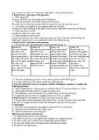
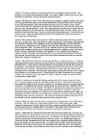
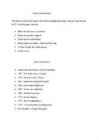
THE CURIOUS INCIDENT OF THE DOG IN THE NIGHT-TIME by MARK HADDON 1. Read Extract 1 and answer the questions: 1.1. What happened? Someone had killed mrs Shears dog named Wellington. 1.2. What do you think Christopher would want to do now? He would want to find a person who killed the dog and also get to know the reason. 1.3. How would you organise an investigation about the incident? I would talk to the owner and to the nabers, find out who would have a reason to kill the dog. 1.4. What would you do first? I would investigate the crime scene. 1.5. What questions could you ask? I would ask if anyone saw or hear something suspicious close to the time when the dog was killed and if anyone knows who would have a reason for killing this dog. 2. Read Extract 2 and answer the questions: 2.1. Write down what Christopher gets to know about the people in: Number 40 Number 44 Number 43 Number 39 The owners brother The lady answering the The guy who o
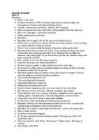
Ameerika Kirjandus 30.01.13 Naturalism · France, Emile Zola · Put down his theory in 1879: Le Roman Experimental, attempt to explain the development of human society throuch biological laws · Outlook is deterministic, pessimistic, fatalistic (fate or biology) · Man as an animal-clever than other beasts, still explainable within the framework · Man is not a free agent, is govern by something · Unable to determine his own faith · Hereditary · Naturalists tried to apply in fiction the processes of natural sciences · Writers task is to record facts, systems of behaviour, living conditions, never revealing any natural unbiased (completely natural) · Point of view: amoral-outside the category of morality, neither good or bad · Naturalist find it absurd to blame the wicked. These criminals are doing what nature, environment, their unconscious tells them to do. Naturalists do not judge their characters, they sim
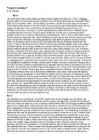
"Anna Karenina" Lev Tolstoi Part 1 The novel opens with a scene introducing Prince Stepan Arkadyevitch Oblonsky, "Stiva", a Moscow aristocrat and civil servant who has been unfaithful to his wife Darya Alexandrovna, nicknamed "Dolly". Dolly has discovered his affair - with the family's governess - and the house and family are in turmoil. Stiva's affair and his reaction to his wife's distress shows an amorous personality that he cannot seem to suppress. In the midst of the turmoil, Stiva reminds the household that his married sister, Anna Arkadyevna Karenina is coming to visit from Saint Petersburg. Meanwhile, Stiva's childhood friend Konstantin Dmitrievich Levin ("Kostya") arrives in Moscow with the aim of proposing to Dolly's youngest sister Princess Ekaterina Alexandrovna Shcherbatskaya, "Kitty". Levin is a passionate, restless but shy aristocratic landowner who, unlike his Moscow friends, chooses to live in the country on his large estate. He discovers that Kitty is also be
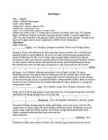
Book Report Title ,,Othello" Author William Shakespeare Genre play, tragedy Setting time between 1489 and 1571 Setting place Venice and Cyprus Topics miscommunication, jealousy, revenge, hatred Othello was written in the 17th century and it is based on the Italian short story "Un Capitano Moro" (A Moorish Captain) by Cinthio (Giovanni Battista Giraldi). It was first published in 1565. The main characters of the play are Othello, Desdemona, Cassio and Iago. The play in this book has 91 pages and this book is published in 1996 by Dover Publications. Characters: Major characters: Othello he is the play's protagonist and hero. He has risen to high military prestige in Venice, after defeating the Turks and other enemies in battle. He is well-liked and honored, despite his racial difference. He moves to Cyprus after becoming a general and he marries Desdemona. He falls victim to Iago's plan causing Othello to bel
Mann and saw his friend Dick, who appeared to be dying, out in the garden. The boys embrace, talk, and say their farewells to each other, and Oliver heads towards the city intent on running away from the Sowerberrys. Chapter 8: Òliver began his walk to London. He had very little food and had to beg for it on his way. He walked for seven days and had very little luck getting food or shelter from people in the towns he went through. He sat with bleeding feet on a doorstep one morning when a curious looking young gentleman around his age began talking to him. His name was Jack Dawkins He befriended Oliver and asked if he was going to London. Oliver told him he was and explained that he did not know where he would be staying. Mr. Dawkins told Oliver he could come with him and with his patronage stay with a gentleman he knew. So Oliver went with Jack and saw the filth of London for the first time in the middle of the night
BOOK REPORT Title of the book: The Catcher in the Rye Author: Jerome David Salinger (January 1, 1919 January 27, 2010) was an American writer who died at the age of 91. He was married three times and has two children. Some of his most notable works are The Catcher in the Rye, Nine Stories and Franny and Zooey. The Catcher in the Rye is by far the most famous and most critiqued book of his, selling over 250,000 copies every year. In total the book has sold over 65 million copies worldwide. The success of The Catcher in the Rye led to public attention: Salinger became reclusive, publishing new work less frequently. Analysis of the book 1. Setting The story starts in the year 1950 when the novel's protagonist and narrator Holden starts telling a story from a hospital about the events of last year's winter. Most of the story takes place in winter of 1949 just over a couple of days in Pennsylvania and New York.
of short stories that treat themes of youth and promise along with despair and age. Novels · This Side of Paradise (1922) · The Beautiful and Damned (1922) · The Great Gatsby (1925) · Tender Is the Night (1934) Short Stories · Bernice Bobs Her Hair (Short Story, 1920) · Head and Shoulders (Short Story, 1920) · The Ice Palace (Short Story, 1920) · May Day (Novelette, 1920) · The Offshore Pirate (Short Story, 1920) · The Curious Case of Benjamin Button (Short Story, 1921) · The Diamond as Big as the Ritz (Novella, 1922) · Winter Dreams (Short Story, 1922) Other · The Vegetable, or From President to Postman (play, 1923) · The Crack-Up (essays, 1945) Winter Dreams by Fitzgerald Dexter Green is a middle-class boy who aspires to be part of the "old money" elite. His father owns the second most profitable grocery store in the town. He starts out as a teenage golf
All Quiet on the Western Front Erich Maria Remarque Character List Paul Bäumer - A young German soldier fighting in the trenches during World War I. Paul is the protagonist and narrator of the novel. He is, at heart, a kind, compas-sionate, and sensitive young man, but the brutal expe-rience of warfare teaches him to detach himself from his feelings. His account of the war is a bitter invective against sentimental, romantic ideals of warfare. Read an in-depth analysis of Paul Bäumer. Stanislaus Katczinsky - A soldier belonging to Paul's company and Paul's best friend in the army. Kat, as he is known, is forty years old at the beginning of the novel and has a family at home. He is a resourceful, inventive man and always finds food, clothing, and blankets whenever he and his friends need them. Albert Kropp - One of Paul's classmates who serves with Paul in the Second Company. An intelligent, speculative young man, Kropp is one of Paul's closest friends during the war. His interest
 annaabi.ee









Kõik kommentaarid