Leidsid 33 sarnast õppematerjali, mis on seotud failiga "Tallinna ilm". Need materjalid aitavad sul teemat sügavamalt mõista.
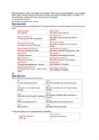
weather, there, cold, things, snow, warm, light, winter, hand, outside, report, keskküla, date, subject, something, interesting, even, lightning, sunny, cloudy, summer, several, positive, lovely, beaches, sand, swim, soft, covers, building, tops, however, might, could, autumn, quite, everywhere, muddy, carry, umbrella, sometimes, nice, changing, otherThe basic ingredients, when fresh, are so full of flavour that British haven't had to invent sauces to disguise their natural taste. What can compare with fresh pees or new potatoes just boiled and served with butter? Why drown spring lamb in wine or cream and spices, when with just one or two herbs it is absolutely delicious? If you ask foreigners to name some typically English dishes, they will probably say "Fish and chips" then stop. It is disappointing, but true that, there is no tradition in England of eating in restaurants, because the food doesn't lend itself to such preparation. English cooking is found at home. So it is difficult to a good English restaurant with a reasonable prices. In most cities in Britain you'll find Indian, Chinese, French and Italian restaurants. In London you'll also find Indonesian, Mexican, Greek... Cynics will say that this is because English have no "cuisine" themselves, but this is not quite the true. Vocabulary:
SCHOOL IS COOL ! The pressure for teens nowadays is unprecedented. Especialy for those who have exams, musicschool or training. Sudenly we find ourselves asking why? why so much pressure, what`s the whole point ? Too many responsibilities are very frustrating. Even some rainy day could make us sad ! It`s easy to study in winter, because nothing is calling us out. In spring only thought is what will i do after school? Weather is warm again and sun can be very foxy! Another disturbing factor is " annoying classmates" . Some people just want to put up a show. They scream , yell ugly words to teachers and impede the schoolwork. Thanks to the yellers, teachers are mad and ofcourse they punish the whole class. This is also very depressing. Just admire teachers!They can give us homework according to their mood. Sometimes opening the daiary and looking at the homework it just seems like teachers want to tease us
Noun In place of noun the pronoun stands, As he and she can clap their hands. The adjective describes a thing, As magic wand or bridal ring. Adjective Most verbs mean action, something done, Verb To read and write, to jump and run. How things are done the adverbs tell, As quickly, slowly, badly, well. ition Adverb Prepos The preposition shows relation, As in the street or at the station. Conjunctions join, in many ways, Sentences, words, or phrase and phrase. The interjection cries out, "Heed!
the soccer team. We will be here for one more week so we can finish up our work. Another reason we are staying longer is because we do not want to miss the Deaf Way conference. First of all, pour a half-cup of milk in the bowl; second, add two eggs; and third, stir the mixture. I admire I. King Jordan because he is the first deaf president of Gallaudet. Besides that, I admire him because he is a great long distance runner. Furthermore, he is a dedicated family man. All in all, there ís not much to dislike about the man, except he is too perfect! Crystal likes camping in the mountains. Also, Crystal is an experienced hiker. Texas School for the Deaf is perfectly located. Moreover, it has a strong academic program. For example, the school has a preschool program where both deaf and hearing children learn together. Words that show CONCLUSION · finally · in conclusion · to conclude · to sum up There were a lot of problems discussed at the meeting
2. Where is prairie, pampas, steppe, and veldt situated? EurasiaSteppe, North America-Prairie, South AmericaPampa, South AfricaVeldt 3. Using the climate diagram describe the climate of the region. Temperate deciduous forest -Well-defined seasons with a distinct winter characterize this forest biome. Moderate climate and a growing season of 140-200 days during 4-6 frost-free months distinguish temperate forests. Temperature varies from -15° C to 25° C. Precipitation (750-1500 mm) is distributed evenly throughout the year. Temperate grassland- Semiarid, continental climates of the middle latitudes typically have between 25 cm and 50 cm of precipitation a year. Much of this falls as snow, serving as reservoir of moisture for the beginning of the growing season
Because she's late for work. __________________________________ 6 She doesn't enjoy/is not enjoying the film. _____________________________________ 7 This milk is tasting/tastes horrible. _____________________________________ 8 The Spice Girls are making/make a new CD at the moment. _____________________________________ 9 I am thinking/think it's a good idea for you to study biology. _____________________________________ 10 We want to go for a walk but it's raining/it rains outside. _____________________________________ Marks: /10 3 Write questions using the correct tense (present simple or present continuous) for these answers. 1 _____________________________________________________________________________________________ Yes, I have a painting by Picasso on my wall.
like love hate want need prefer know realise suppose mean understand believe remember belong contain consist depend seem 4 The following verbs are usually only used in Simple Present (not in the continuous form). state: be, cost, fit, mean, suit Example: We are on holiday. possession: belong, have Example: Sam has a cat. senses: feel, hear, see, smell, taste, touch Example: He feels the cold. feelings: hate, hope, like, love, prefer, regret, want, wish Example: Jane loves pizza. brain work: believe, know, think, understand Example: I believe you. 1. Exercise: make the sentences positive, negative and interrogative: 1 Christine (get up) at seven o'clock. 2 She (go) downstairs. 3 She (have) breakfast early. 4 We (start) work at eight o'clock. 5 I (listen to) the news.
Why? 17. How old were you when you first went to see a puppet show? Do you remember what it was? 18. Who is your favourite actor/actress? 19. What performance or concert would you like to see if it were possible? Why? 20. Have you got a drama club at your school? Are you a member of it? 21. Have you ever worn a costume? When? Why? 22. Have you ever seen a rehearsal of a show? When? Which show? 23. Have you ever been to a zoo? Which zoo? What animals were there? http://www.abiks.pri.ee 24. Have you ever been to a funfair? Where? 25. Have you ever been to a circus? When? Where? 26. Have you ever seen a circus show on TV? 27. What did you see in the show? (an animal act? clowns? acrobats? jugglers?) 28. Are you good at juggling? What makes you think so? 29. Do you like aerobics? Are you good at it? Do you know anybody who is? 30. Would you like to perform in a circus?
Forks. I loved Phoenix. I loved the sun and the blistering heat. I loved the vigorous, sprawling city. "Bella," my mom said to me -- the last of a thousand times -- before I got on the plane. "You don't have to do this." My mom looks like me, except with short hair and laugh lines. I felt a spasm of panic as I stared at her wide, childlike eyes. How could I leave my loving, erratic, harebrained mother to fend for herself? Of course she had Phil now, so the bills would probably get paid, there would be food in the refrigerator, gas in her car, and someone to call when she got lost, but still... "I want to go," I lied. I'd always been a bad liar, but I'd been saying this lie so frequently lately that it sounded almost convincing now. "Tell Charlie I said hi." "I will." "I'll see you soon," she insisted. "You can come home whenever you want -- I'll come right back as soon as you need me." But I could see the sacrifice in her eyes behind the promise. "Don't worry about me," I urged
Topic Health Introduction Good health is very important for us. We should do everything we can to stay healthy. Being in good health means having our body and mind in good working order, free from disease and pain. Ways of keeping health There are many ways for keeping health. To stay healthy we should eat right foot, dress comfortably, spend much time in fresh air, have enough rest, keep ourselves clean and have regular checkups with the doctor and the dentist. A big part of prevention of diseseases is sporting. Poeple need to have phsical exercise. If they can not have it, they will get stressed and they will be infected with dieseases much easier. For example it would be good to run every day for some time. That way one probably
................... ...................................................................................................... ...................................................................................................... ...................................................................................................... ............................................................................................... i) Can Sir Thom be interested only in Anne or is there a slight possibility that he will fall for Mary-Alice instead?* ...................................................................................................... ...................................................................................................... ...................................................................................................... .................................................................................................
1. Key features for all studied biomes. Tundra The main seasons are winter and summer. The tundra is the world's coldest and driest biomes. The average annual temperature is -28° C. Nights can last for weeks when the sun barely rises during some months in the winter, and the temperature can drop to -70° C. During the summer the sun shines almost 24 hours a day. Summer are usually warm. Average summer temperatures range from 3° to 16°C. TaigaTaiga is the Russian word for forest and is the largest biome in the world. It stretches over Eurasia and North America. The taiga is located near the top of the world, just below the tundra biome. The winters in the taiga are very cold with only snowfall. The summers are warm, rainy, and humid. Some of the animals in the taiga hibernate in the winter, some fly south if they can, while some just cooperate with the environment.
) 6. Don't use a present tense after It's time. It's time you went home. (NOT It's time you go home.) It's time we invited Bill and Sonia. (NOT It's time we invite Bill and Sonia.) 7. Use was/were born to give dates of birth. I was born in 1975. (NOT I am born in 1975.) Shakespeare was born in 1564. 8. Police is a plural noun. The police are looking for him. (NOT The police is looking for him.) I called the police, but they were too busy to come. 9. Don't use the to talk about things in general. Books are expensive. (NOT The books are expensive.) I love music. (NOT I love the music.) 10. Use had better, not have better. I think you'd better see the doctor. (NOT I think you have better see the doctor.) We'd better ask John to help us. 11. Use the present progressive am playing, is raining etc to talk about things that are continuing at the time of speaking. I'm playing very badly today. (NOT I play very badly today.) Look! It's raining! (NOT Look! It rains!) 12
Estonian climate in winter-time. In Estonia, winter climate is very variable. Some year, it could be very cold outside, but some year it could be so warm you may wear your autumn clothes in winter. Some year it could snow so much, that you can't even get out of the house, because there's too much snow in front of your door and some year it may not snow for at least half of the winter-time. But no worries, mostly the temperature may go below -30 and because of the cold, students are absent from schools. The absent students mess up the whole classes program, because then it takes more time to study some subjects and teachers have a lot more work to do. I think, that when students skip school because of the bad weather, teachers should put homework and the work that should have been done in classes, on ekool, but not as concise as it would be if stundents have been at school. Then, students can study subjects on their own and if they can't understand
INGLISE KEELE PÕHITÕED C.K 2017 A – AN – SOME Singular: a or an Use some for things you can't count ◦ *a banana *a car *a monkey *a football ◦ *some milk *some water *some coffee ◦ *an egg*an accident *an umbrella *an *some sugar eagle ◦ *some tea *some juice*some money *some butter Plural: some Exercises: 1. http://www.english-4u.de/a_an_some_ex1
Money in our everyday life Money plays a quite important role in our everyday life First of all, nowadays mostly everything circles around money and how much people can afford things. Secondly, every adult has to work so they could get the paycheck at the end of the month they need to pay the bills, buy food and to pay for any other expences. On the other hand, money is not the only thing in the world and money does not give you everything. You can't buy a family and friends. In conclusion, even if people work every day in order to pay for their expences, money is not the only thing in the world that makes people happy and satisfied with their life Advertising on TV Advertising on TV is a very popular way that companies use to advertise their products.
.................................................... 7 Infinitives ............................................................................. 8 Introduction Modal Verbs are can, could, may, might, must, will, would, shall, should, ought to. They are known as modal auxiliary verbs because they ‘help’ another verb, i.e. they are always used with another verb in its base form. e.g. I can swim. Do you think I should go? Characteristics of Modal Verbs • There is no -s in the third person singular: She can ski. He must be tired. It might rain. • They are used to form questions and negatives: Shall we go for a walk? What should I do? He can’t dance. You mustn’t tell lies! • Modal auxiliary verbs don’t usually have past forms. Other expressions are used instead: I had to work hard at school. The prisoner was able to/managed to escape by climbing onto the roof of the prison
rendering professional sevices, and you should consult with a professional where appropriate. Neither the publisher nor author shall be liable for any loss of profit or any other commercial damages, including but not limited to special, incidental, consequential, or other damages. For general information on our other products and services, please contact our Customer Care Department within the United States at (800) 762-2974, outside the United States at (317) 572-3993 or fax (317) 572-4002. Wiley also publishes its books in a variety of electronic formats. Some content that appears in print may not be available in electronic books. For more information about Wiley products, visit our web site at www.wiley.com. Library of Congress Cataloging-in-Publication Data: Tracy, Brian. Change your thinking, change your life : how to unlock your full
23. Means of communication Introduction A few centuries ago people knew only a few kinds of communication. They could speak to each other, they could send their message from one place to another by smoke signals, they used mail. Later on, they also had some newspapers. The first expansion of media was when the radio and television were invented. The second and the biggest boom started in 1960s when the first communication satellite was launched into orbit. There are 4 main media: Newspapers, TV, Radio and the Internet. Today's people take this as an ordinary thing and we don't realise that we nearly can't live without it. Media are very important for us. They give us big amount of information, so big that we can't remember all that things. They help us to understand things and if you have lots of information you are able to make your own decisions. This is connected with education and media are very good teachers. They highly influence us
Table of contents 1. Introduction 2. History 2.1. Early Hospitals 2.2 Recent developments 3. The National Health Service 4. Diseases 5. First Aid 6. Medicine and elements of medical care 7. Doctors 8. Ways of keeping health 9. Conclusion 10.Used materials 1. Introduction The human body is just like a machine with many parts. Each part has a special job, and all the parts work together to keep you alive and healthy. Good health is one of the most important things in life. There are certain things we can do to stay healthy. We should eat a balanced diet that includes the right kinds of food and drink plenty of clean, fresh water. We should exercise regularly, strengthening our muscles and keeping us in shape. Exercise helps the blood circulate around our bodies, cleaning out waste and supplying plenty of oxygen. It is also important what we get enough sleep. The number of hours we sleep we need depend on our age. Young babies sleep
Silicon Valley Could you reproduce Silicon Valley elsewhere, or is there something unique about it? It wouldn't be surprising if it were hard to reproduce in other countries, because you couldn't reproduce it in most of the US either. What does it take to make a silicon valley even here? What it takes is the right people. If you could get the right ten thousand people to move from Silicon Valley to Buffalo, Buffalo would become Silicon Valley. That's a striking departure from the past
2 1 written 8 was trying and working together. They are 4 1 D 3 F 5 G all wearing uniform it's quite an 2 been meaning 9 came 2 A 4 B 6 E old-fashioned-looking uniform, so 3 got 10 grew 5 1 at first hand 5 maiden voyage I would guess that it's a private 4 fell 11 were chatting 2 tuberculosis 6 mine school, but it could be a state 5 seen 12 walked school. It's hard to say. 6 were waiting 13 didn't admit 3 stewardess 7 retirement
My ideal home My homeland is so important to me, that if I could choose any place in the world to live in, I'd still choose Estonia. My perfect home can only be in here, where my family and friends are. In Estonia, where are swmaps and pine-wood, sandy beaches, blue sky and big fileds, where are people who i know and the place where i feel in home My perfect home is located outside of Tallinn, in the midst of nature. It is a two story house with a red roof and the house is surrounded by big white fence. Stepping into the garden, you can notice a cobblestoned road, which takes you to the door. Beside the road are planted little red flowers and the garden is covered with green grass. From afar you can see a sauna house, and it has also a red roof. There you can enjoy the sauna and after that you can sit in the soft sofa, relax and chat with friends in anteroom
.. H: -Ah, yeah, remember him. What is he saying? J: - Oh, well...He is asking to come to him, and, besides, here is the money-order... H: - Oh! Would you like to cash money-order? Have you got your passport with you? J: - Yeah, certainly. H: - Then, they'll cash your money order without fail. J: - Ok, I'll go to that counter and speak to clerk. Wait for me, please! Can you go and by tickets with me after this? H: - Certainly! Discuss the functions of post office H: - There are a lot of functions of post office. Of course, we have friends in different parts of the world, but it's really expensive to call them often. J: - Yes. Some people can use Internet, but not everyone is provided with it. So, then you can send letters... H: - Oh, yeah! It's really convenient! You can send even photos, is spite of the fact that the envelope is heavy. You can just send registered letter! J: - And if you don't know the exact address of addressee, you can send post restante letters
EXCLAMATORY and IMPERATIVE sentences end with an exclamation mark ( ! ) : What a beautiful day! Do your homework at once! Parts of the Sentence The basic parts of the sentence are: THE SUBJECT (WHO? WHAT?) , THE PREDICATE (does, is doing, has done, etc – action/statement), THE OBJECT (WHO/WHAT is the action/statement directed at?) : Marion (who?) has a boy-friend (who?). She (who?) likes to read books (what?). The earth (what?) is a planet (what?). Besides, there are: THE ATTRIBUTE (WHAT?/WHAT KIND?) and THE ADVERBIAL (WHEN? - adverbial modifier of time/WHERE? – adverbial modifier of place/ HOW? – adverbial modifier of manner) Attributes modify nouns and stand in front of them. Adverbials modify verbs and usually stand behind them: This girl has a beautiful smile. This girl smiles beautifully. Attributes are usually adjectives but sometimes nouns as well: This is an interesting (adjective) story. The kitchen ( noun) door is locked.
the rest of the wall Ample- enough, and often more than you need Attic- the room in a house under the roof Bedsit- a room that you rent that is used for both living and sleeping in Brick pillars- Bungalow- a house that is all on one level Caravan- BRITISH a vehicle that people can live and travel in on holiday. Caravans are usually towed (=pulled) by a car. The American word is trailer Carpenter- someone whose job is to make things from wood, or to repair things that are made of wood Cellar- a room under a building, below the level of the ground, usually used for storing things Compatible- ideas or systems that are compatible can exist together Concrete- made of concrete Confession- a spoken or written statement in which you admit that you have committed a crime Conservationist- someone who works to protect the environment from damage or destruction Council- the elected officials who govern a local area such as a city or county: can be
of the writer and of a textbook, that is to show how better to express one's thoughts. Of foreign linguists, it is the french Ch.Balley, G.Marduzeon who in the 20th century made a definite contribution. This happened because of the centuries-old tradition in France of interest in style. The classical works on english stylistics are those by the german scholars: Ph.Aronstein, M.Deutschbein, I.Galperin. In the 50's and 60's of the previous century there was a rapid growth of interest in stylistics throughout the word. In the 70's and 80's, the methods of structural linguistics were very popular in stylistics. Present stylistic studies have become quite systematic. Computer-assisted stylistic analysis appears to be quite promising, e.g the study of cases of disputed authorship (I may claim I have written Othello) which may study the influence of one author to another. Although still somewhat chaotic stylistic is a
say that they can see a strong family coat. 4 mistake for 8 come up with resemblance between my dad and me. I can't see it myself, not facially anyway 3 Well, she would keep driving too 2 1 bring about 5 go ahead although there are certain similarities fast in the town. 2 fall through 6 go down with in our physical build. I also seem to 4 Well, he would keep misbehaving 3 tip off 7 come to have inherited his big feet, unluckily in class. 4 come up with 8 mistake for for me. It was the first thing my parents 5 Well, you would keep eating too noticed when I was born
negative imperative He told me not to do it again. Don't do that again! ask + infinitive imperatives as requests He asked me to give him some money. Please give me some money. When verbs don't follow the rules The verb tenses do not always follow the rules shown above. For example, if the reporting verb is in the present tense, there is no change in the reported sentence. Also, a sentence in direct speech in a present or future tense can remain the same if what is said is still true or relevant. For example: You've invited someone for dinner at your house, and the phone rings. It's them! They say: I'm sorry, but I think I'm going to be a bit late. There's a lot of traffic. After you finish speaking on the phone, you say to someone else: That was Juan. He said he thinks he's going to be late because there's a lot of traffic
ing facts. A philosophical theory of meaning should explain what it is for a string of marks or noises to be meaningful and, more particularly, what it is in virtue of which the string has the distinctive meaning it does. The theory should also explain how it is possible for human beings to produce and to understand meaningful utterances and to do that so effortlessly. A widespread idea about meaning is that words and more complex lin- guistic expressions have their meanings by standing for things in the world. Though commonsensical and at first attractive, this Referential Theory of meaning is fairly easily shown to be inadequate. For one thing, comparatively few words do actually stand for things in the world. For another, if all words were like proper names, serving just to pick out individual things, we would not be able to form grammatical sentences in the first place. Meaning and understanding Not many people know that, in 1931, Adolf Hitler made a visit to the United
Lamb to the Slaughter by Roald Dahl (1916-1990) The room was warm and clean, the curtains drawn, the two table lamps alight - hers and the one by the empty chair opposite. On the sideboard behind her, two tall glasses, soda water, whiskey. Fresh ice cubes in the Thermos bucket. Mary Maloney was waiting for her husband to come him (correction: home) from work. Now and again she would glance up at the clock, but without anxiety, merely to please herself with the thought that each minute gone by made it nearer the time when he would come. There was a
The Weather and Climate 'Funny weather we are having' is a statement of the obvious we have used for generations as a greeting. When the deep cold lasts long and heavy snow and blizzards give us the shivers we replace "funny" with something stronger, such as "terrible", "ghastly". At times like these people ask what is happening to the weather. So we go to the experts, who tell us in language appropriate to the subject, what happened yesterday, what is happening today, and what might happen in the next few years. Weather and climate specialists all over the world have collected a vast quantity of information. They can describe what is happening around us. With satellites they can forecast more accurately what might happen in the immediate future. Their research has produced evidence of why
1. How many public holidays or Red-Letter Days are there in Britain? Name them. 8 public holidays in Britain: two at Christmas, one for the New Year(which was only introduced in the late 1970s) two at Easter and three Bank Holidays. 2. What is the same and what is different about the way Christmas is celebrated in England and Estonia? In England, there's common to sing Carol's and for children, Christmas means pantomimes plays based on fairy tales which combine comedy, dance and song. A
 annaabi.ee