Leidsid 33 sarnast õppematerjali, mis on seotud failiga "Stonehenge kromlehh". Need materjalid aitavad sul teemat sügavamalt mõista.
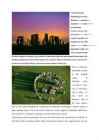
stone, stones, move, stonehenge, built, circle, answer, year, moved, land, miles, wood, half, class, away, days, king, today, england, north, face, east, horizon, there, wales, soil, tons, vertical, wide, thick, origin, debate, ground, took, years, wooden, other, sides, pull, could, month, roman, through, mary, words, mean, hanging, hinges, originallyStonehenge Stonehenge is a prehistoric monument located in the English county of Wiltshire, about 3.2 kilometres (2.0 mi) west of Amesbury and 13 kilometres (8.1 mi) north of Salisbury. One of the most famous prehistoric sites in the world, Stonehenge is composed of earthworks surrounding a circular setting of large standing stones. Archaeologists had believed that the iconic stone monument was erected around 2500 BC, as described in the chronology below. However one recent theory has suggested that the first stones were not erected until 2400-2200 BC,[1] whilst another suggests that bluestones may have been erected at the site as early as 3000 BC (see phase 1 below). The surrounding circular earth bank and ditch, which constitute the earliest phase of the monument, have been dated to about 3100 BC
STONEHENGE Stonehenge is surely Britain's greatest national icon, symbolizing mystery, power and endurance
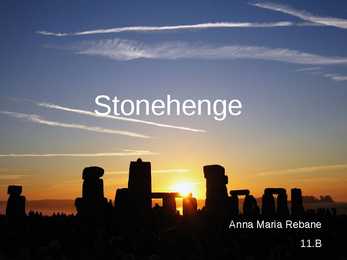
Stonehenge Anna Maria Rebane 11.B Facts about Stonehenge · 5000 year old prehistoric ritual monument · the most famous prehistoric monument in Europe · one of the most ancient and mysterious structures in the world · 3.2 kilometers west of Amesbury and 13 kilometers north of Salisbury · south-western England; in the English county of Wiltshire · built in the late Stone Age (Neolithic) and the Bronze Age The History of Stonehenge · "The Mystery of Stonehenge" · the building began in 3000 BC by semi-nomadic peoples · The first stone to be placed - Heel Stone. · some stones weigh about 45 tons each and are 7m high · the largest stone weights as much as 50 tons · no wheels and no metals · their tools - stones, bones and wood · built in several stages
1) INDIAN ROCK ART: A NATIONAL TREASURE IN DANGER Unrecognized, unprotected, this priceless legacy of primitive art has endured the ravages of nature only to fall victim to wanton destruction by ,,civilized" man. Like the huge stone statues of Easter Island and prehistoric cave paintings of Altamira and Lascaux, North American Indian rock art is surrounded by an atmosphere of mystery. Although examples of rock art exist at some 15000 sites in canyons, deserts, caves and river gorges. Nowadays, however, primitive rock art in the United States has become a new field of scientific study. Klaus F Wellmann wrote two books about rock art. He is a professor of medicine. Rock art represents the history of aboriginal Americans
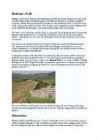
Hadrian's Wall Hadrian's Wall was a stone and turf fortification built by the Roman Empire across the width of Great Britain to prevent military raids by the tribes of Scotland to the north, to improve economic stability and provide peaceful conditions in the Roman province of Britannia to the south, to physically mark the frontier of the Empire, and to separate the unruly Selgovae tribe in the north from the Brigantes in the south and discourage them from uniting. The name is also sometimes used jocularly as a synonym for the border between Scotland and
The City of London History The City of London occupies one square mile in the middle of the capital. It once made up the entire town of London, surrounded by the wall first built by the Romans. The Roman Londinium grew up on the northern side of the "London Bridge" in the past. Products such as olive oil, wines and fruit were brought by ships from different parts of the Roman Empire and unloaded onto wooden quays along the river. In AD 61 the native Celtic Iceni tribe, led by Queen Boudicca, rose up against The Romans. They burnt Londinium to the ground but Roman armies eventually defeated Boudicca. The city was rebuilt and was gradually surrounded with a wall
THE CITY OF LONDON History The City of London occupies one square mile in the middle of the capital. It once made up entire town of London, surrounded by the wall first built by Romans. The Romans also built a bridge over the Thames and there has been one in the same area ever since. The Roman Londinium grew up on the northern side of the bridge. In AD 61 the native Celtic tribe, led by Queen Boudicca, rose up against the Romans. They burnt down Londinium to the ground and killed most of its inhabitants. Roman armies eventually defeated Boudicca and Londinium was rebuilt. At the end of the fourth century AD the Roman Empire began to crumble and the Roman armies
materials, workmanship, or setting (the Committee has stressed that reconstruction is only acceptable if carried out on the basis of complete and detailed documentation of the original artefact and to no extent on conjecture). The criteria of authenticity may apply to Japanese bridges like the Kintaikyo spanning the Nishiki River in Iwakuni or Palladio's bridge over the River Brenta at Bassano a Grappa near Venice (Italy). In the same context, some bridges have been moved when unable to function at their original location. It is not unusual in the USA, for example, to relocate a metal truss bridge to a less travelled road when it can no longer handle the traffic; the same probably holds true for other countries. This is within the functional tradition of some bridge types and should not be viewed as a negative factor in determining the integrity of a relocated structure.
Legend has it that one day, when the Danes were about to lose a bloody battle, the sky suddenly opened and a red flag with a white cross on it dropped down upon them from the heavens. This is allegedly how the Danes obtained their national flag, the Dannebrog in a battle against the Estonians. In the middle of the 14th century Denmark sold its possessions in Estonia to the German Teutonic Order. Toompea became the seat of the German-born gentry. A wall was built to separate the Upper Town and the Lower Town. In 1285 Tallinn joined the Hanseatic league and became a junction of trade between East and West. Tallinn is said to be built on salt, as it was an important trading commodity. In the 16th century Tallinn had a population of about 7,000 8,000 making it one of the biggest cities in northern Europe. In 1629 Sweden took control of the whole of Estonia. Though hard times
Every five years national song and folk dance festivals take place in Tallinn. The yachting regatta of the 1980 Moscow Olympic Games was held at Pirita. History Tallinn means in English "Danish town". The place is believed to have been settled by Finno-Ugric people about 2500 BC. It was first marked on a map of the world by the Arab geographer al-Idrisi in 1154. The Estonians were the first to build a stronghold on the spot of the Toompea Hill, but the real Tallinn was built by the Danes who conquered the north of Estonia in 1219. Legend has it that one day, when the Danes were about to lose a bloody battle, the sky suddenly opened and a red flag with a white cross on it dropped down upon them from the heaven. This is how the Danes obtained their national flag. In 1346 the Danish king sold his Estonian lands to the Teutonic Order, who a year later resold them to the Livonian Order. The Germans renamed Tallinn and called it Reval.
started during the days of the Industrial Revolution * the flag is of Wales bears a Red Dragon (it is not represented on the Union Jack) Northern Ireland: * the capital city is Belfast * 54% of people regard themselves as Protestants and 42% as Roman Catholics * the flag is called the Saint Patrick's Cross 2) History Prehistoric Britain, Roman Britain, Anglo-Saxon, Danish, Norman invasions (...-1066): Britain was part of the European land mass until the end of the last Ice Age. It became an island by about 6000 BC. From about 3000 to 2000 BC the British Isles were inhabited by a group of people called the Iberians. These Stone Age people lived in limestone caves, they used stone axes and fashioned antlers and bones into leather-working tools. Later groups of people from what are now Germany, the Netherlands and Brittany also settled in Briton. During the Bronze Age, they mined tin, gold and copper and made bronze tools
Silicon Valley Could you reproduce Silicon Valley elsewhere, or is there something unique about it? It wouldn't be surprising if it were hard to reproduce in other countries, because you couldn't reproduce it in most of the US either. What does it take to make a silicon valley even here? What it takes is the right people. If you could get the right ten thousand people to move from Silicon Valley to Buffalo, Buffalo would become Silicon Valley. That's a striking departure from the past. Up till a couple decades ago, geography was destiny for cities. All great cities were located on waterways, because cities made money by trade, and water was the only economical way to ship. Now you could make a great city anywhere, if you could get the right people to move there
or Holland Park Flower Show, or even the Wembley Flower Show had events worked out differently. The first Royal Horticultural Society (RHS) Great Spring Flower Show at Chelsea opened in May 1913, although, confusingly, there was another May flower show the Royal International Horticultural Exhibition held at the Royal Hospital in 1912. This one off event was backed but not run by the RHS, which cancelled its own Great Spring Show for that year. The RHS Great Spring Flower Show had normally been based at the Inner Temple in the hart of London, but in 1913 RHS had idea of moving the Show to Holland Park. They thought that the Show was becoming too big for the Inner Temple site. Anyway it stayed in first place. July 1912 the RHS President Sir Trevor Lawrence had met Major General Crutchley Of the Royal Hospital at Chelsea, and the two began to talk about a 14-day reservation of the gardens and a 14-year agreement
Make up your list of 5 top British people. Give your motivation. The Queen, Adele, Elton John, Shakespeare, JK Rowling. 5. Which 5 places attract visitors in Wales and Scotland? Edinburgh, Loch Ness, The Highlands, Snowdonia, Cardiff. 6. Name 6 islands, 5 rivers, 3 lakes, 3 mountains in UK. Isle of Man, Isle of Wight, Isle of Lewis, Island of Mull, Island of Arran, Anglesey Island Severn, Thames, Tweed, Avon, Trent, Dove Ben Nevis, Snowdon, Ben Macdui 7. Stonehenge. Stonehenge was produced by a culture that left no written records. Built on Salisbury Plain, in Wiltshire, England some time between 5,000-4,300 years ago. One of the most famous megaliths in the world, dating from prehistoric times. Stonehenge consists of circles of stone arranged in complex patterns, and their origin is still being explored. Some of the stones come from over 200 miles away in Wales
The United Kingdom The United Kingdom consists of England, Scotland, Wales and North Ireland and it is situated in the Atlantic Ocean near the mainland of Europe. The population of the UK is 58.6 million and area is 244,110 sq km. Britain has a temperate humid climate. Its characteristic features are mild winters, warm summer, no temperature extremes, abundant rain all year round and frequent changes of weather. The mild climate is partly due to the warm Gulf Stream and partly to the south westerly winds. Occasional winds from the east in winter may bring cold and dry weather. The distribution of rainfall is influenced by the Atlantic Stream. The mountainous areas of the north and west have more rain than the lowlands of the south and east. Wales is located on a peninsula in central-west Britain. The entire area of Wales is about 20,779 km²
United States) This installation is permanent, on a much larger scale, and is designed to conceal the library’s car park. Here the public were asked to nominate books that they felt represented Kansas City. The library was founded in 1873 A.D, and is the oldest and the third largest public library in Kansas City area. 6. Ferdinand Cheval Palace a.k.a Ideal Palace (France) Cheval began the building in April 1879. He claimed that he had tripped on a stone and was inspired by its shape. He returned to the same spot the next day and started collecting stones. For the next 33 years, during his daily mail route, Cheval carried stones from his delivery rounds and at home used them to build his Palais idéal, the Ideal Palace. First he carried the stones in his pockets, then a basket and eventually a wheelbarrow. He often worked at night, by the light of an oil lamp. 7.Habitat 67 (Montreal, Canada)
ICE AGE The earth is very old. During its long history there have been many changes in climate. Between one and two million years ago one of these changes took place the great Ice Age began. It grew colder in the Far North. More snow fell in the winter than could melt away in the summer. The snow grew deeper and deeper. It changed to solid ice. As more snow fell, the ice grew thicker. It began to move. Great sheets of moving ice, or glaciers, were formed. The edges of the sheets were pushed outward. At last the ice covered most of what is now Canada. And it spread southward into what is now the United States. The ice was probably a mile deep in places. It moved over hills and valleys, rivers and forests. It moved slowly perhaps only a foot a day. Millions of plants were buried by the ice. Many animals moved south. Among the animals able to stand
My carry-on item was a parka. In the Olympic Peninsula of northwest Washington State, a small town named Forks exists under a near-constant cover of clouds. It rains on this inconsequential town more than any other place in the United States of America. It was from this town and its gloomy, omnipresent shade that my mother escaped with me when I was only a few months old. It was in this town that I'd been compelled to spend a month every summer until I was fourteen. That was the year I finally put my foot down; these past three summers, my dad, Charlie, vacationed with me in California for two weeks instead. It was to Forks that I now exiled myself-- an action that I took with great horror. I detested Forks. I loved Phoenix. I loved the sun and the blistering heat. I loved the vigorous, sprawling city. "Bella," my mom said to me -- the last of a thousand times -- before I got on the plane. "You don't have to do this."
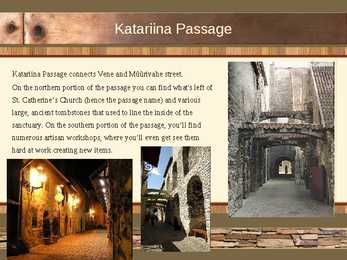
On the northern portion of the passage you can find what's left of St. Catherine's Church (hence the passage name) and various large, ancient tombstones that used to line the inside of the sanctuary. On the southern portion of the passage, you'll find numerous artisan workshops, where you'll even get see them hard at work creating new items. City wall Tallinn's medieval city wall is a sub-facility that was built to protect the lower Tallinn and upper Tallinn (Toompea). The building of the city wall began in 1310th years, and by improving over time it formed the city wall with defensive buildings (towers). It was finished by the end of the 1561. Then it was 2.35-kilometer-long circular wall, which had 27 wall gate, 8 tower gate and 21 other stone fortifications. Many parts of the town wall have survived until today Great Coastal Gate (Suur Rannavärav) and Fat Margaret's
Great Pyramid of Giza The Great Pyramid of Giza (also called the Pyramid of Khufu and the Pyramid of Cheops) is the oldest and largest of the three pyramids in the Giza Necropolis and is the only one of the Seven Wonders of the Ancient World that survives mostly intact. Originally the Great Pyramid was covered by casing stones that formed a smooth outer surface, and what is seen today is the underlying core structure. Some of the casing stones that once covered the structure can still be seen around the base. There have been different scientific and alternative theories regarding the Great Pyramid's construction techniques. Most accepted construction theories are based on the idea that it was built by moving huge stones from a quarry and dragging and lifting them into place. There are three known chambers inside the Great Pyramid. The lowest chamber is cut into the bedrock upon which the pyramid was built and was unfinished
It extends about 2000 km along the coast of Queensland. Made of coral, it is the world’s largest structure created by living organism. . 4 Climate & Time Zones Australia is the driest continent in the world except Antarctica. It has low average rainfalls. About 70 per cent of the country is arid or semi arid and cannot support agriculture. The north part of the country gets about 300 mm of rain a year. Much of the rain soaks into the ground and does not form any rivers or lakes. Monsoon winds bring moist air during summer. This is the time of high rainfall. It’s known as “the wet “season. High temperature also means hat a lot of moisture evaporates or is used by plants. In the southern two thirds of the country the climate is temperate to cool. Winter temperatures can be low but not freezing. There are four seasons. The seasons are the opposite of our seasons. When we
50 000 BC in a milder Ice Age period Britain became habitable again. People from that time were the ancestors of the modern British. 10 000 BC ige age ended and Britain became inhabited by small groups of hunters who probably followed herds of deer. 5000BC Britain became an island and deer died out. 3000BC the Neolithic people came (probably from Spanish peninsula or even North African coast). They may be the forefathers of the people from Cornwall and Wales. The building of Stonehenge started around that time. 2400BC the 'Beaker' people arrived in Britain. They had better metal working skills and they soon became the leaders of the British society. They started building individual graves. 1300BC the farming society became more important than the henge society. 55BC the Romans arrived. The Celts The Celts arrived from central Europe or further east around 700BC. They were tall and had fair or red hair and blue eyes. They knew how to work with iron
Light bulbs are measured in watts. Air conditioners and hot water heaters are measured in BTUs, while energy used by cars is measured in gallons of fuel. They used a spreadsheet to figure out how much energy they consumed for each of their activities. Each of the lights, car miles, games, and other appliances was converted to a common unit of power consumption called kilowatt-hours. The spreadsheet was used to determine how many kilowatt-hours were used during each day, each week, and each year for each energy consumption activity. The spreadsheet converted their energy consumption to show them the amount of money it costs for each energy consumption activity. In the end, they were shocked to see how much money Jules' energy using habits cost compared to Les' habits. USES OF ENERGY The United States is a highly developed and industrialized society. We use a lot of energy - in our homes, in businesses, inindustry, and for traveling between all these different places.
August von Kotzebue, accompanied explorer Adam Johann von Krusenstern on his Journey around the World of 18031806.) Estonian was heard from a theatre stage for the first time. Early in the 19th century city architect Carl Ludwig Engel (helped rebuild Helsinki and also built the palace at 8 Kohtu Street on Toompea) designed a sumptuous hall for the theatre, but it was destroyed in a fire. Another fire devastated the theatre in 1902, after which it moved out from Old Town. The premises came into the possession of the Puppet Theatre in 1955. In 1991, the whole building was given to the theatre. Renovation works took place in 2001-03. 5 17 Lai Street Lai 17, so-called Menshikov House was completed about 1685 in the Dutch Baroque style. The family coat-of-arms on the pediment was added in 1817 by then owner Count Stenbock (Sweden origin Russian brigade leader and estate owner). It belonged to Prince
Captain James Cook set the colonization of Australia into motion by exploring and mapping the fertile eastern coast of Australia, but he was not the first to visit Australia. There is evidence suggesting Aborigines in northern Australia maintained trade with some of the Indonesian islands closest to the coast. Chinese and Arab's may have had contact with the Aborigines in the 15th century. When British people came to live in Australia, they decided that the land was empty, that there were no people living there. This was called "Terra nullius", Latin words for "empty land".Under British law, all land belongs to the king,who is then able to sell it to other people. The sacred sites and other land which had belonged to aboriginal people for thousands of years were simply taken from them. If they did not leave peacefully then the new settlers used force to get them to leave. Many aboriginal people were killed during the settlement of Australia
London History The Romans AD 43- AD 410 The Romans finally invaded Britain in AD 43 from Kent. The Romans lead by Julius Caesar attempted to invade Britain twice before that in 55 and 54 BC but the invasions were unsuccessful. They made their way to the river Thames and sailed up it. The Romans knew it was important to control a crossing point at the river Thames, so they decided to build a settlement on the north bank. Although small settlements had been built on the banks of the Thames, the Romans were the ones who built the first city. They called their city Londinium. The Roman engineers noticed that the point where the swampy river narrowed would make an ideal crossing point, they built London Bridge. Less than 20 years later the native Iceni tribe, led by Queen Boudicca, rose up against the Romans in revenge for mistreatment and burnt Londinium to the ground. The well disciplined Roman army defeated her forces and Londinium was rebuilt
7. How was Protestantism established in England? When and by who? It was established by Henry VIII because he wanted to divorce his first wife. Up until then England was Catholic and divorcing was not allowed for him. He really wanted a new wife, so he declared that England was no longer a part of the Catholic Church and made himself as the head of the new church. It happened in 15 8. What good did the invasion of Romans bring to England? It brought roads and order. They also built the first version of London. 9. What do you know about the Tower of London? It was at first a castle for the king of England, but Henry VIII turned it into a prison. There are Beefeaters, who are the tour guides now but used to be the guards. They keep the royal jewels there. It's one of the most visited sight in London and also one with the most fascinating history. 10. If going back in time was possible, which decade in British history would you choose to live in? Why?
The polity is constitutional monarchy, but in practice, parliamentary democracy. The Head of the government is the Prime minister, who right now is John Howard. People Today Australians are mostly white, but before the first fleet reached Australia in 1788, there were only black people. Most of them live near coasts as the climate there is more fertile and human-friendly. Still there are people who like to live in the country, as there is much land and peace. However, because schools are thousands of kilometers away, children have to learn using special programs on the TV and radio. People living in big cities do not all use cars for moving. Getting to work with a bicycle or with even a sailing boat is not strange in Australia. Aborigines are described in the History topic History Aborigines Anthropologists say that the Aborigines were the first humans in the world. Even the word "aboriginal" means "the first" or "earliest known"
TAJ MAHAL The Taj Mahal is a mausoleum located in Agra, India, built by Mughal Emperor Shah Jahan in memory of his favorite wife, Mumtaz Mahal. The Taj Mahal (also "the Taj") is considered the finest example of Mughal architecture, a style that combines elements from Persian, Ottoman, Indian, and Islamic architectural styles. In 1983, the Taj Mahal became a UNESCO World Heritage Site and was cited as "the jewel of Muslim art in India and one of the universally admired masterpieces of the world's heritage."
I am sitting here and looking at my nephew’s great stereo. It was made in Japan by the Aiwa corporation. In fact, since Africans love music so much you would have anticipated that they would control the production of all products pertaining to music. Yes, we can sing, we can dance. That is just about it. In fact, it has been shown that Black people spend more money on purchasing musical equipment than any other group, but do we produce any these products? The answer is a resounding NO! Do we even have a factory owned by a Black person where these musical products are assembled? The answer is a resounding NO! In fact, Africans consume more Japanese products percentage wise than any other group, yet the Japanese have nothing but scorn for the African. Even two of their former Prime Ministers publicly made the observation that Black people were inferior in intelligence. If they said this in public, you wonder what they were saying in private
3. Relief The USA is situated in the central part of the North American continent. Its western coast is washed by the Pacific Ocean and its eastern coast is washed by the Atlantic Ocean and in the south its coast is washed by the Gulf of Mexico. The coastline is even. There are no big islands belonging to the USA except the Hawaiian Islands which lie halfway the continents of America and Asia. The biggest peninsulas are the Florida Peninsula and Alaska. 4. Land Regions Mountains The Appalachian Mountains are a vast system of North American mountains, partly in Canada, but mostly in the United States, forming a zone, from 100 to 300 miles wide, running from the island of Newfoundland some 150 miles south-westward to central Alabama in the United States. The Rocky Mountains, often called the Rockies, are a broad mountain range in western North America. The Rocky Mountains stretch more than 4800 km. The Rocky Mountain System within
Europe and proclaim the gospel in the most remote areas. The nordic countries appear very early on the Dominic anagenda. To reach Tallinn the friars followed the trade route along the southern coast of the Baltic Sea, and reached Estonia some 750 years ago. The monastery in Tallinn was certainly in existence by1246.Constructed in the gothic style, it exhibits a number of Interesting architectural features,and contains the largest collection of carved stones in Estonia. The site of the monastery in the Old City was carefully chosen in order to facilitate both the ministry of the friars and their business interests.They traded in fish in order to support themselves,but their reason for existing was preaching the word of God. The seal of the monastery bore the words `Order of Preachers". The people, however, knew it as "Blackfriars Monastery' because of the black cloak the friars wore in public over their white habit
The Pennine Chain runs from the north to south, splitting northern England into western and eastern parts. The Lake District in situated in the north-west of England and there are the most beautiful landscapes and the highest peak in England is Scafell Pike (978 m). The warmest part in England is the Peninsula of Cornwall in summer. Scotland Densely / 'densl / tihedasti Scotland features very wild landscapes, large areas of untouched land, mountains and lochs. Scotland can be divided into two parts: the Lowlands and the Northern Highlands. The highest peak in Scotland is Ben Nevis (1343 m) Wales Earthwork / :w:k / mullavall Beacon / 'bi:kn / tuletorn, majakas Peninsula / p'nnsjl / poolsaar Wales is surrounded by the sea on three sides and has two major mountain systems: the Black Mountains and the Brecon Beacons. The rivers offer a wide variety of fish.
 annaabi.ee