They were the ancestors of nowadays indigenous people of Canada. They just searched better for living places and followed their prey and they didn't even know they were on a different continent. The first explorers were Norse seafarers known as Vikings. As they sailed from Iceland to Greenland in AD 985, they were blown far off their course and they saw the coast what must have been Labrador. The forested areas of Canada's coast encouraged further explorations, because their settlement lacked lumber. They established a colony, what they called Vinland on Newfoundland. It died out during the 14th and 15th centuries. 500 years later Europeans started looking for a waterway to Asia, because travelling with spices over land wasn't very safe anymore. The first explorer was Christopher Kolumbus who reached America's shore in 1492, although he thought it was Asia. The next explorer was John Cabot in 1497. He sailed to Newfoundland. The first European who explored further
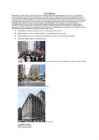
Broadway Broadway is a street in the U.S. state of New York. It is the oldest northsouth main thoroughfare in New York City, dating to the first New Amsterdam settlement. The name Broadway is the English literal translation of the Dutch name, Breede weg. Broadway is known worldwide as the heart of the American theatre industry. One famous stretch near Times Square, where Broadway crosses Seventh Avenue in midtown Manhattan, is the home of many Broadway theatres, housing an ever-changing array of commercial, large- scale plays, particularly musicals. Canyon of Heroes is occasionally used to refer to the section of lower Broadway in the Financial
reached the Great Lakes region but recent investigations have cast serious doubt on it. The Greenland colony died out during the 15th century and the Viking adventures in Canada must have come to an end long before that time. The Colony of New France By 1600 French interest in Canada was renewed because of the beaver pelt trade and the fishing industry. First French colony was established in eastern Canada. Because of the French settlement the French established a claim to the Gulf of St. Lawrence area. An agreement was made between the King of France and a private fur-trading company that if the company brought settlers to New France then they would have a monopoly on the fur trade. Early attempts of colonization failed but the first permanent colony was established by a French nombleman and a mapmaker named Samuel de Champlain. Their first small community located in present-day New Brunswick which was called Acadia
with a net but in baskets let down into the water. The early 1500s saw the start of a rush by other seafaring countries to fish in the coastal waters of Canada. Finally the contest of claims came down to two: England and France. French claims date from explorations by Jacques Cartier (1534) and Samuel de Champlain (1603). Neither Cabot's nor Cartier's explorations left any permanent settlers behind, but after Champlain's trip , in 1604 the French founded the first permanent settlement in what is now Canada. The first city founded by the french was Quebec. New France was generally the name given to the french colonies of Canada and Acadia. British settlements appeared along the Atlantic coast. As the colonies grew, a struggle for control over North America started between England and France. For almost a century Canada was caught up in the struggle for power, until in 1763 England finally gained control over almost all of Canada.
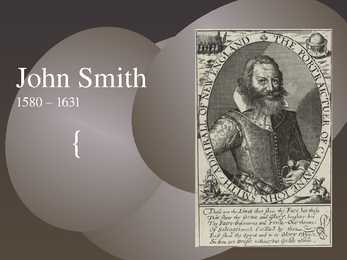
John Smith 1580 1631 { John Smith An outstanding explorer and leader, who played an important role in the history of America Responsible for the settlement and survival of first English colony in the New World English soldier, explorer, colonizer, publicist and an author Led the group of colonists of the first British colony at Jamestown from 16081609 His writings about Virginia and New England have considerable historical and literary merit He never married nor had any children Early Career Born to a freeman farmer family in England After his father's death, only 16, he quit school and started his life as a traveler and adventurer
Puritans became more uncomfortable in England, more and more made the journey across the Atlantic. By 1630, their numbers were such that the Puritans were able to establish the Massachusetts Bay Company and establish Boston, which was to grow as a major port. Despite the privations of 1620, the Puritans founded colonies that thrived and their success depended on fishing, shipbuilding, trade and farming. Unfriendly natives were not the Pilgrims' only problem. December was a bad time to start a settlement, especially when so many of them were too sick to do the hard work which founding the settlement required . The minority who were fit enough erected shelters near the beach at Cape Cod for a start, and then set about reconnoitring the hinterland for sustenance. Had it not been for friendlier native Americans who taught them their skills, the Pilgrims might never have survived. The natives acted as guides through the forests and taught the colonists woodcraft,
* Salvation through faith alone * The Word * Christian utopia * Covenant of grace - John Winthrop (1587-1649) - William Bradford „Of Plymouth Plantation“ (1630) - conflict between the ideal and the real - literacy and plain style • Edward Taylor (1642-1729) - meditative writing deeply grounded in faith • Captivity narrative: *Enemies inside and outside *Satanic darkness outside Puritan settlement *Lived allegory of salvation *The Sovereignty and Goodness of GOD, Together with the Faithfulness of His promises displayed: Being a Narrative of the Captivity and Restauration of Mrs. Mary Rowlandson
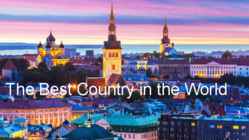
● Area: 45,227 km² ● Population: 1,36 million ● Capital city: Tallinn (405 000 inhabitants) Sport ● Kiiking ● Kelly Sildaru ● Wife carrying Fun facts ● Tallinn is the city of the first Christmas tree ● Free public transport ● The first country to introduce online political voting ● Skype was invited in Estonia ● Estonian education system is the best in Europe ● 75.7% are irreligious ● 16% say that they believe in God Estonian nature History ● Human settlement was around 11 000 years ago ● Has been under Danish, Swedish, German and Russian ruling ● Achieved independence 24th of February 1918 ● Re-independence 20. August 1991 ● Regained its independence without a war ● Baltic Way Baltic Way The Estonian Song and Dance Festival https://youtu.be/ieKfoxVWUSo
Cost convention hinnaleping Dividend dividend, boonus Costvolumeprofit (CVP) analysis hinna Dividend cover dividendi, boonuse kate mahu kasumi analüüs Dividend yield dividendi tootlikkus Credit krediit Drawings joonestused Credit control krediidi jälgimine Creditors laenuandjad E Creditors payment or settlement period laenuandjate makseperiood Earnings intressikasum Cumulative preference shares Earnings per share intressikasum aktsia kogunenud aktsiaeelistus kohta Current assets finantseerimisomand Economic Order Quantity (EOQ) ökonoomiline kvantiteedi käsk Current cost accounting (CCA) jooksev kuluaruanne Equity lihtaktsia
London is one of the largest cities in the world, with an area of 1706,8 km2. It is the capital of England and The United Kingdom. It is in Central Europe. The city lies on the river Thames. London has 7,556,900 inhabitants, which is more than a quarter of the countries in Europe! For one city, London is very special. The beginning of London Before the founding of London, there had already been smaller groups of people in the area. There aren't any records on who they were. The first mayor settlement of London was in 43 AD. Romans came to the banks of the river Thames. They built houses, a port and a bridge over the river (later known as London Bridge). They named the place Londinium. In the year 200 they built a wall around their city. The wall doesn't exist today, but a part of it can be seen near the Museum of London. In the year 61 Londinium was burned down. The houses were made out of wood back then, so this was easy to do. The people, who destroyed the city, were from the Iceni tribe
The History of Estonia 8000 BC traces of first settlement at Pulli 3000 BC Finno-Ugric tribes arrive 1st cent AD Estonians mentioned in written records by Tacitus 1030 first written mention of Tartu 1154 first written mention of Tallinn, map of Estonia 1219 Danish invasion by the Teutonic Order 13th century German invasion by the Livonian Order 1343 St George's Night uprising 15th century serfdom begins to develop 16th century Reformation 1558
wind did not blow, the earth's surface did not shake or sink and the air temperature did not change, then loads would not exist and structure would be unnecessary. This would be so-called the Alice-in- Wonderland world of architecture. But in the real world the engineer's first job is to determine which loads will act on a structure and how strong they might be in extreme cases. This is anything but a simple task. Loads are further divided into environmental loads, thermal, settlement and sesmic loads. Then there are live loads these are the impermanent loads, that may be shifted around and change in value, for instance people, furniture, equipment and other stored goods. In addition, there are dead loads, which are permanently there and support their own weight these are the heavy elements like columns, beams, floors, arches, domes, but also ceiling and inslulation material. Finally, it leaves us with other loads corrosion, fire and loads during construction.
Tallinn History of Tallinn The first traces of human settlement found in Tallinn's city center by archeologists are about 5000 years old. The first fortress was built in 1050, on Toompea. A weather fane, the figure of an old warrior called Old Thomas, was put on the top of the spire of the Tallinn Town Hall in 1530, which became the symbol for the city later on. Tourism Tallinn receives more than 1.5 million visitors annually, and it has been growing steadily since the past decade.
LONDON London is the capital of England and the United Kingdom, the largest metropolitan area in the United Kingdom, and the largest urban zone in the European Union. London is located on the River Thames. The capital of England has been a major settlement for two millennia, its history goes back to its founding by the Romans, who called it Londinium. Since at least the 19th century, the name London has also referred to the metropolis developed around this core. The registered population of London is 7,825,200. However, Estonian's native language is English, many people also speak Cornish. Although, the city operates a system of bus, tube and train and also boats routes to all parts of London and also England, it's still not enough
Tallinn Tallinn, the capital of Estonia Locates in Estonia the biggest lakes: Lake Ülemiste and Lake Harku population about 400 000 people occupies a surface of 159.2 km2 History It is thought that Tallinn is about 4500-5500 years old Click to edit Master text styles The Estonians established a Second level settlement in Toompea Third level The Estonians have been in Fourth level Fifth level a battle with Danes, Russians and Swedes Sightseeing Many interesting museums:
Perhaps best known for the portion that runs through the borough of Manhattan in New York City, it actually runs 21 km through Manhattan and 3.2 km through the Bronx, exiting north from the city to run an additional 29 km through the municipalities of Yonkers, Hasting- On-Hudson, Dobbs Ferry, Irvington and Tarrytown and terminating north of Sleepy Hollow in Westchester County. It is the oldest north–south main thoroughfare in New York City, dating to the first New Amsterdam settlement. The name Broadway is the English literal translation of the Dutch name, Breede weg. Broadway is known widely as the heart of the American theatre industry. Broadway was originally the Wickquasgeck Trail, carved into the brush of Manhattan by its Native American inhabitants. This trail originally snaked through swamps and rocks along the length of Manhattan Island. In the 18th century, Broadway ended at the town commons north of Wall Street, where traffic
Historical facts After the collapse(распад) of the Austro-Hungarian Union in 1918, the Czech Republic became an independent country. Czech Republic nowadays 1999: March 12, Czech Republic becomes a member of NATO. 2004: May 1, Czech Republic joins the European Union (E.U.). Visegrad Visegrad Castle in the Czech Republic was built in the 10th century. According to local legend Visegrad is located in the site of the first settlement, which became later Prague, although to date no evidence of this and was not found. Charles Bridge The most beautiful bridge in the whole world, besides also the oldest in Prague - Charles Bridge was named only in 1870, and his original name was Stone Bridge or Prague. Astronomic clock Beloved landmark of Prague residents and its many
Italy Robi kivi LGA18 Italy, officially known as the Italian Republic (Repubblica Italiana in Italian), is a country in Europe. Italy is situated on a boat-shaped apennine peninsula 800 km in the Mediterranean. In the north form the natural boundary of the Alps. Italy includes Sicily, Sardinia and a number of smaller islands. Rome, a settlement around a ford on the river Ancient Rome Tiber conventionally founded in 753 BC, was ruled for a period of 244 years by a monarchical system, initially with sovereigns of Latin and Sabine origin, later by Etruscan kings. The tradition handed down seven kings: Romulus, Numa Pompilius, Tullus Hostilius, Ancus Marcius, Tarquinius Priscus, Servius Tullius and Tarquinius Superbus
thorough reforms in Estonian economy the people living in villages and small towns are searching for new possibilities for self-realisation and one of the outputs is tourism. This can also be seen in Southern Viljandimaa as there are continuously more establishments providing accommodation, caterers and organisers of active holidays. Many tourism maps have been put beside the road as well as many hiking trails have been built and marked. History of Estonia Human settlement in Estonia became possible 11,00013,000 years ago, when the ice from the last glacial era melted away. The oldest known settlement in Estonia is the Pulli settlement, which was located on the banks of the river Pärnu, near the town of Sindi, in southern Estonia. According to radiocarbon dating, it was settled around 11,000 years ago, at the beginning of the 9th millennium BC. Evidence has been found of hunting and
surrounded by hundreds of islands and islets. To the east of Ireland, separated by the Irish Sea, is the island of Great Britain. Politically, the state Ireland (described as the Republic of Ireland) covers five-sixths of the island, with Northern Ireland, part of the United Kingdom, covering the remainder in the north-east. The first settlements in Ireland date from 8000 BC. By 200 BC Celtic migration and influence had come to dominate the island. Relatively small scale settlement by both the Vikings and Normans in the Middle Ages gave way to complete English domination by the 1600s. Protestant English rule resulted in the marginalisation of the Catholic majority, although in the north-east, Protestants were in the majority. A famine in the mid-1800s caused deaths and emigration. Following a war of independence, Ireland was split into: the independent Irish Free State and Northern Ireland, which remains a part of the United Kingdom. The Free State left the
The Irish Problem "The curse of Cromwell on you" Oliver Cromwell... Detested Roman Catholicism Believed that the Irish could never be trusted Used Irish land as a way to pay 1652 "Cromwellian Settlement" in Munster and and Leinster Was a cruel man: claimed to be acting on God's behalf and expelled about 1000 Catholic priests from Ireland The main reason for this was Cromwell's belief in fundamental Protestantism and hatred of Catholicism A church place for religious people to meet each other Oliver Cromwell Attempts to 'solve' the Irish problem New Model Army Coerce the Irish into obedience export children from Ireland to the sugar plantations in the
wikipedia.org/wiki/File:Michael_Jackson_in_1988.jpg Profile Real name: Michael Joseph Jackson, also known as Michael Joe Jackson. Stage name: Michael Jackson, King of Pop Profession He was an American recording artist, actor, producer, dancer, businessman, and philanthropist. Background Born in 29 August 1958 in Gary, Indiana. The eighth child of the Jackson family. First marriage: Jackson proposed to Presley. The marriage lasted less than two years and ended with an amicable divorce settlement. Second marriage: Jackson married his longtime friend Deborah Jeanne Rowe. The couple divorced in 1999. 3 children Career He debuted on the professional music scene along with his brothers as a member of The Jackson 5 in 1964. He began his solo career in 1971. Jackson's 1982 album Thriller is the best- selling album of all time. Jackson is one of the few artists to have been inducted into the Rock and Roll Hall of Fame twice. 2010, he became the most downloaded artist of all time.
Tallinn The first traces of human settlement found in Tallinn's city center by archeologists are about 5000 years old. In 1050 the first fortress was built on Tallinn Toompea.[3] In 1285 the city became the northernmost member of the Hanseatic League. Medieval Tallinn enjoyed a strategic position at the crossroads of trade between Western and Northern Europe and Russia. On 24 February 1918, the Independence Manifesto was proclaimed in Tallinn, followed by Imperial German occupation and a war of independence with Russia
Parliament. 11. What two disasters took place during Charles II reign? What kind of changes did they bring about? First, in 1664-1666 a plague hit London and southeast-England and secondly, already in 1666 a fire destroyed fifth of the City of London. The new London was built up in remarkebly short time and it was a lot better : it had wider streets, brick and stone houses and better draining. 12. What is the idea of the Act of Settlement? The Act of Settlement was passed by the Parliament in 1701 to make sure that all future monarchs in England were Protestants 13. What was the result of the Glorious Revolution? With the Glorious Revolution, monarchy became constitutional and Parliamentary, the fundamental struggles between Crown and Parliament were largely resolved. Prince William of Netherlands and her wife Mary accepted the Parliament's offer and became king and queen. 14
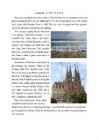
I am talking is Barcelona in Spain. It is a wonderful city. Firstly, there is quit worm, even then when in North European is cold, in summer is the weather even hotter but it the best thing about Barcelona. The secondly Barcelona is located beside the Mediterranean Sea. Water in there is green colour and it is beautiful to look. Architecture in Barcelona is stunning all of the buildings are originals. Many of the buildings date from medieval times, some from as far back as the Roman settlement of Barcelona. The biggest building Barcelona is definitely The Temple Expiatori de la Sagrada Família, often simply called Sagrada Familia is a massive Roman Catholic Church. It has been under construction since 1882, and is still financed by private donations. As of 2007, completion is planned for 2026. These were my favourites' things when I visited Barcelona but these were not only things because the city is a hugely big and large. It was incredible experience in my life and I
London is the capital of both England and the United Kingdom, and the largest metropolitan area in the European Union. An important settlement for two millennia, London's history goes back to its founding by the Romans. Since its foundation, London has been part of many movements and phenomena throughout history, including the English Renaissance, the Industrial Revolution, and the Gothic Revival. The city's core, the ancient City of London, still retains its limited medieval boundaries; but since at least the 19th century, the name "London" has also referred to the whole metropolis that has developed around it
London is the capital of both England and the United Kingdom, and the largest metropolitan area in the European Union. An important settlement for two millennia, London's history goes back to its founding by the Romans. Since its foundation, London has been part of many movements and phenomena throughout history, including the English Renaissance, the Industrial Revolution, and the Gothic Revival.The city's core, the ancient City of London, still retains its limited medieval boundaries; but since at least the 19th century, the name "London" has also referred to the whole metropolis that has developed around it. Today the
Topic London Tallinn English College Tallinn 2007 1. Introduction London is the capital city of the United Kingdom and the largest urban area in England. The ancient City of London, to which the name originally belonged, still maintains its medieval boundaries, but the name "London" has long applied more to the whole metropolis that has grown up around it. London has been an important settlement for over two millenniums. It is also one of the world's leading business, financial and cultural centres and its influence in politics, education, entertainment and even fashion contribute to its status as a major global city. London is a major tourist attraction with four world heritage sites, several royal parks and numerous iconic landmarks such as the Houses of Parliament, Towe Bridge, the Tower of London, Westminster Abbey and the London Eye. 2. History
London London is the UK's largest and most populous metropolitan area and the largest urban zone in the European Union by most measures. In July 2007 it had an official population of 7,556,900 within the boundaries of Greater London, making it the most populous municipality in the European Union. History: The first major settlement was founded by the Romans in 43 AD. Canute took control of the English throne in 1016, controlling the city and country until 1035, when his death resulted in a reversion to Saxon control under his pious stepson Edward the Confessor, who refounded Westminster Abbey and the adjacent Palace of Westminster. By this time, London had become the largest and most prosperous city in England, although the official seat of government was still at Winchester.
To avoid the high costs of building the settlements the King of France made an agreement with a private furtrading company. If the company brought settlers to New France, it would have a monopoly on the fur trade and they would receive all the profits. Early attempts at colonization failed. But in 1604 a French noble man and a map maker named Samuel de Chaplain established the first permanent French settlement in the New World on the coast of presentday New Brunswick. They called the area Acadie. They spent a terrible first winter there so they moved to a more sheltered place on the harbour of Nova Scotia and called it Port Royal. But then France decided that Port Royal was too far from the centre of the fur trade and chose to establish a new French settlement along the St. Lawrence River. The French settlers left Port Royal and returned to France. But some of them stayed to farm
London's 43 universities form the largest concentration of higher education in Europe More than 300 languages are spoken within its boundaries It is the most populous municipality in the European Union London had the largest population of any city in the world from around 1831 to 1925 London contains four World Heritage Sites Kew Gardens the site comprising the Palace of Westminster the historic settlement of the Tower of London Greenwich The London Underground is the oldest underground railway network in the world and the secondmost extensive Buckingham Palace Buckingham Palace is the official residence and office of the British monarch Located in the City of Westminster, the palace is a setting for state occasions and royal hospitality Originally known as Buckingham House, the building which forms the core of
elav linn white-water rafting kärestikusõit(matkamine parvega) within easy access of lähedal port of call vahesadam dash from place to place sööstma immaculate rooms äärmiselt puhtad toad date back to the 5th century pärinema 5st sajandist arrive at the piazza/in a town/country linnaväljakule saabuma misunderstandings arusaamatused catch sb's eye silma torkama, tähelepanu haarama a puzzled look on his face hämmeldunud ilme remains of ancient settlement muistse asunduse säilmed set off teele asuma live out of the suitcase pidevalt reisil olema highlight of my life minu elu kõrghetk mountainous nation mägirahvas gentle slopes lauged mäenõlvad sparse vegetation hõre taimestik self-catering iseteenindav feast pidusöömaaeg literally sõna-sõnalt refund kuluhüvitis rip-off rahaliselt koorima bargain soodusost off the beaten track linnakärast eemal
16. specific performance – to be forced to do smth by the court decision II 1. kahjustatud isik – aggrieved person 2. kahju tekitama – to cause smb damage 3. hagi kohtusse andma – to file a claim with the court 4. seaduslik hüvitus, õiguskaitsevahend - remedy 5. maksujõuetus - insolvency 6. tagaseljaotsus – judgement in default 7. lihtmenetlus – summary proceeding 8. lihtmenetlusotsus – summary judgement 9. poolte kokkulepe - settlement 10. salajased dokumendid – documents covered by privilege 11. tunnistajate ütlused – witness statements 12. kohtukutse - summons 13. asitõendid - evidence 14. kohtuvaidlused - litigations 15. kohtukulud – court costs 16. riigi/tasuta õigusabi (toetus õigusteenuste katteks) – legal aid 17. exceptionally - erakordselt 18. exclusively - üksnes 19. therefore - seega 20. as well - samuti 21
The country is bilingual (English and French) The National Holiday is Independence Day on July 1'st The capital is Ottawa and the largest city is Toronto Basic information Consists of 10 provinces and 3 territories Extends from the Atlantic to the Pacific and northward into the Arctic Ocean Shares land borders with the U.S Is a federal state, governed as a parliamentary democracy and a constitutional monarchy Canada comes from the word kanata, meaning village or settlement History The first inhabitants were the Inuits (Eskimo) First white man in the country John Cabot The French and British colonies settled the Atlantic coast in the late 15th century Later on, thousands of British colonists emigrated to Canada from the American colonies and the British Isles History In 1849 the right of Canada to selfgovern was recognized A gradual process of independence from the UK culminated in the Canada Act
1769, the first documented European visit to San Francisco Bay. Upon independence from Spain in 1821, the area became part of Mexico. Under Mexican rule, the mission system gradually ended and its lands began to be privatized. In 1835, Englishman William Richardson erected the first independent homestead, near a boat anchorage around what is today Portsmouth Square. Together with Alcalde Francisco de Haro, he laid out a street plan for the expanded settlement, and the town, named Yerba Buena, began to attract American settlers. Commodore John D. Sloat claimed California for the United States on July 7, 1846, during the Mexican-American War, and Captain John B. Montgomery arrived to claim Yerba Buena two days later. Yerba Buena was renamed San Francisco on January 30 of the next year, and Mexico officially ceded the territory to the United States at the end of the war. The population of San Francisco was over 800 thousand people in 2010
- the Russian-era government administration building with a facade representing classical styles and opening onto Castle Square - the building of the Riigikogu, which originates from the time of the First Republic of Estonia and is hidden behind the walls of the castle. Beginning Old legend - the hill of Toompea was heaped up, stone by stone, by Linda The earliest buildings confirmed by historical data originate from the 9th century A settlement of tradesmen and artisans began to develop at the foot of Toompea hill Farmers from the neighbouring counties, were the masters In 1219 King Valdemar II of Denmark conquered the stronghold From that time on the stronghold of Toompea belonged to foreign rulers After the subjugation, the Danes immediately set out to fortify it In the following years, the Danish stronghold was repeatedly besieged All attempts ended in failure Timeline
have worked here, but in summer 2000 the Government moved to the Stenbock House According to an old legend, the hill of Toompea was heaped up, stone by stone, by Linda, in mourning for her husband Kalev. The earliest buildings confirmed by historical data originate from the 9th century when ancient Estonians took advantage of the steep escarpment of Toompea and erected here their ancient stronghold of Lindanisa, one of the best-protected strongholds in Estonia. A settlement of tradesmen and artisans began to develop at the foot of Toompea hill. Farmers from the neighbouring counties, mainly from Rävala County, were the masters of Toompea stronghold and used it only in the event of danger. This also explains how in 1219 King Valdemar II of Denmark conquered the stronghold with ease. From that time on the stronghold of Toompea, and about ten years later the whole of Estonia, belonged to foreign rulers until the Republic of Estonia
erinevat ametit,nimelt sotsiaalpedagoogikat ja koolisotsiaaltöötajat.Tõin välja nende erinevused ja proovisin seletada,mis nendeks on. 3 Koolisotsiaaltöö ajalugu Koolisotsiaaltöö sai alguse koolisüsteemist väljaspool ja oli seotud settelmentide liikumisega ,kodanikualgatuslike ühenduste ja elaalgatusliku filantroopiaga.1906.a ühendasid kaks settlement-maja oma jõud ,et maksta kahele nn kodukülastajale kolme oma piirkonnakooli õpilaste kodude külastamise eest.Esimesed külastajad olid õpetajaharidusega inimesed ja nad polnud rahul ,et nad ei kuulnud kooli personali hulka,ning nõudsid endale ametlikku staatust.1913.a saadigi see New Yorgis ja Rochesteris.Alates sellest kuni 1920.aastateni levis kodukülastamine ehk algeline koolisotsiaaltöö ka ida- ja kesklääneosariikidesse.Kodukülastajad said abi eelkõige usuorganisatsioonidelt
picture of a president. Oregon · Oregon is a state in the Pacific Northwest region of the United States. Oregon is located on the Pacific coast between Washington to the north, California to the south, Nevada on the southeast and Idaho to the east. The area was inhabited by many indigenous tribes before the arrival of traders, explorers and settlers. · The Oregon Territory was created in 1848 after American settlement began in earnest in the 1840s. Oregon became a state (33rd) on February 14, 1859. · Oregon enjoys a diverse landscape including a scenic and windswept Pacific coastline, the volcanoes of a rugged and glaciated Cascade Mountain Range, dense evergreen forests, and high desert across much of the eastern portion of the state. · The towering Douglas firs and redwoods along the rainy Western Oregon coast provide
toorainefutuurid. Eriti populaarsed on naftafutuurid (QM), kuid kaubelda saab nii kulla (YG), hõbeda (YS), sealiha (PB), maisi (YC) kui ka nisu (ZW) futuuridega. 3. Futuuride peamised omadused Futuuri peamisteks omadusteks on lepingu aegumine, finantsvõimendus, futuuri kordaja, päeva lõpus toimuv kasumi ja kahjumi ümberhindamine. Aegumine Futuuri peamine omadus on aegumine. See tähendab, et futuurileping kestab mingi kindla ajani ning sellele järgneb kas rahaline (cash settlement) või füüsiline (physical settlement) tasaarveldus. Näiteks LHV vahendusel kaubeldavate futuuride puhul toimub enamasti rahaline tasaarveldus, vaid valuutafutuuride realiseerumisel toimub reaalne vahetustehing. Õnneks ei pea kartma, et naftarongid koduõuele sõitma hakkavad või LHV klient avastab ennast kohustuse eest tarnida järgmisel kuul rongitäis nisu, sest kõikide toorainefutuuride puhul toimub LHV Traderis rahaline tasaarveldus
spectacular scenery. The region boasts mountains as high as 4,500 meters, peninsulas, and one of the largest archipelagos in the world. The climate of the Mediterranean Basin is dominated by cool, wet winters and hot, dry summers, and rainfall ranges from as little as 100 millimeters to as much as 3,000 millimeters. Although much of the hotspot was once covered in evergreen oak forests, deciduous and conifer forests, eight thousand years of human settlement and habitat modification have distinctly altered the characteristic vegetation. Today, the most widespread vegetation type is hard-leafed or sclerophyllus shrublands called maquis or matorral, which include representatives from the plant genera Juniperus, Myrtus, Olea, Phillyrea, Pistacia, and Quercus. This vegetation is similar in appearance to the chaparral vegetation of California and the matorral of Chile
So Cromwell decided to pay them in land. He forcibly moved thousands of Irish from their homes in Munster and Leinster and resettled them in counties Clare, Galway, Mayo and Roscommon. This was by far the poorest land in Ireland and, as well as this, they were not allowed to live within 3 miles of the coast. This strip, called the 'Mile Line' was given to Cromwell's soldiers. In 1652 the newly cleared land in Munster and Leinster was given to Protestants in what was called the 'Cromwellian Settlement'. There was now no part of Ireland where Catholics owned more than ½ of the land. The main reason for this was Cromwell's belief in fundamental Protestantism and hatred of Catholicism. He claimed to be acting on God's behalf and expelled about 1000 Catholic priests from Ireland. ~New Modal Army~ The New Model Army of England was formed in 1645 by the Parliamentarians in the English Civil War, and was disbanded in 1660 after the Restoration. It differed from other armies in
Thylacine AKA the Tasmanian Tiger/Wolf • The Tasmanian Tiger was the largest known carnivorous marsupial of modern times. • Native to continental Australia, Tasmania and New Guinea. • Believed to have become extinct in the 20th century. • Became extremely rare or extinct on the Australian mainland before British settlement of the continent, but it survived to the 1930s on the island of Tasmania. https://www.youtube.com/watch?v=6vqCCI1ZF7o • The thylacine was able to open its jaws to an unusual extent: up to 120 degrees. This capability can be seen in part in David Fleay's short black-and- white film sequence of a captive thylacine from 1933. The jaws were muscular but weak and had 46 teeth. • The thylacine held the title of
Teaviku leidmine ekataloogi ESTER vahendusel 5) Milline eestikeelne väljaanne leidub TLÜ Akadeemilise Raamatukogu teadusraamatukogus, mille pealkirjas on sõna arheoloogia ja mis on ilmunud aastal 2001? Esitage kirje. Kuidas otsingu läbi viite? Liitotsing, märksõna ,,arheoloogia", aasta ,,2001", kataloog ,,TLÜ Akadeemiline Raamatukogu", keel ,,eesti". Kriiska, A. (2001). Stone Age settlement and economic processes in the Estonian coastal area and islands. Helsinki : Helsingin yliopisto, kulttuurien tutkimuksen laitos. 6) Leidke, millistes rollides on Andrus Kivirähk autorina ESTERis. Kuidas otsingu läbi viite? Lihtotsing, autor ,,Kivirähk, Andrus". Sõnade autor, tekstiautor, stsenarist, lavastaja, eessõna autor, koostaja ja järelsõna autor. 7) Leidke helisalvestis Ants Eskolast. Esitage kirje. Kuidas otsingu läbi viite?
The capital of Canada is Ottawa The population of Canada is 36 million Total area is 9,984,670 square kilometres (3,855,100 square miles) The largest city is Toronto Canada Canada is a bilingual country : they speak both English and French The monarch is the Queen of England It's ten provinces and three territories extend Canada's national anthem is `' O Canada '' How Canada got it's name? Canada's name comes from `' kanata, '' the Iroquois-Huron word for `' village '' or `' settlement '' Aboriginal people, First Nations and Inuit Aboriginal Canadians, also known as Indigenous Canadians, are the indigenous people within the boundaries of present - day Canada. The first largest group were the Indians. Nowadays the term `' First Nations `' is used instead of `' Indian '' Some 4,000 years ago another group of people arrived in Canada. They called themselves the Inuit, which means `' the people '' First Nations First Narions were divided into 6 groups : Woodland First
Theatre: combined medieval theatre, morality plays & Roman drama to create Elizabethan tragedy Poetry: Italian influences, sonnet (English: cddc ee) Rulers of England: Henry VII (brings prosperity, repairs economic situation; made alliances); Henry VIII (beginning of English reformation; killed "traitors"; 6 marriages); Mary I (Catholic); Elizabeth I (The Virgin Queen restores order; Religious Settlement; cautious measures in foreign affairs) Authors: Thomas Kyd's "The Spanish Tradegy" (revenge); Christopher Marlowe (moral dramas; blank verse); Ben Jonson (comedies; theory of humors, caricature and satire); Edmund Spenser's "Faerie Queen" (longest, most famous poem; Spenserian stanza) Late Renaissance (until 17th century) humanism a set of ethics about how people should live/act Prose: influence of reformation on liturgical material; King James Bible (translation)
Although Lord High Chamberlain John Dudley, Duke of Northumberland, favoured the succession of his daughter-in-law, Lady Jane Grey, and proclaimed her queen on July 10, the country supported Mary. As a Roman Catholic, Mary began her reign by sweeping away the religious innovations of her father and her brother. Henry VIII had separated England from the Church in Rome; Edward VI had replaced Roman Catholicism with a Protestant settlement. Mary restored the Mass and re-established the authority of the papacy, but, although she handed back Crown property to the Church, Parliament refused to restore Church lands seized by Henry VIII. Even with the help of Mary's cousin, Cardinal Reginald Pole, a return to the state of affairs that existed before the Dissolution of the Monasteries was impossible: there were too many legal and financial intricacies.
Their babies are born from eggs but drink milk from their mothers. There are more than 800 kinds of birds in Australia. The emu is a flightless bird. It is up to two metres tall and can run very fast. The first people to inhabit Australia were the ancestors of the Aborigines, who arrived over 40,000 years ago. The first Europeans to sight the Australian continent were the Dutch in 1606. They called what they had found New Holland, but made no attempt at settlement. In 1770, James Cook sailed there, mapping the east coast of Australia, which he named New South Wales and claimed for Britain. Britain started sending its convicts to the place now called Sydney, and they established the colony of New South Wales. This day is celebrated as Australia's national day, Australia day. Most of the people there are of British origin, with a culture and outlook similar to the UK and USA.
There is a wide range of courts and tribunals that hear disputes at international level and which have their headquarters on European territory. However, these courts do not come under the auspices of the European Union. They are: · the courts of other European organisations, in particular the European Court of Human Rights and the EFTA Court (European Free Trade Association); · the courts created under the auspices of the United Nations; · the independent dispute settlement bodies of the United Nations. 5. GERMAN CIVIL CODE German Civil Code, German Bürgerliches Gesetzbuch, the body of codified private law that went into effect in the German empire in 1900. Though it has been modified, it remains in effect. The code grew out of a desire for a truly national law that would override the often conflicting customs and codes of the various German territories. The code is divided into five parts. The first is general, covering concepts of personal rights and
It typically loiters in the water or basks in the sun through much of the day, usually preferring to hunt at night. It is, however, capable of moving with astonishing speed when required. Adult male saltwater crocodiles are typically 5 metres long, weigh around 680 kg. Females are much smaller than males, with typical female body lengths in the range of 2.53 metres. Many plant and animal species became extinct soon after human settlement, including the Australian megafauna; others have become extinct since European settlement. 7. Population There are about 20 million Australians but more than 50 per cent of the country is practically empty. Nearly all Australians live in the southeast of the continent and in the southwestern part of Western Australia. In these parts the soil and climate is suitable for farming. 50% of Australians live in the biggest cities, 20% in other towns and 30% in farms and stations
 annaabi.ee