Leidsid 33 sarnast õppematerjali, mis on seotud failiga "Schools kill creativity". Need materjalid aitavad sul teemat sügavamalt mõista.
thing, there, them, subjects, kids, wrong, still, could, study, year, cause, agree, robinson, going, says, mean, talent, other, university, ways, years, schools, speech, others, mostly, wants, prepare, something, those, really, than, look, away, talented, anything, taught, important, math, languages, enough, work, teachers, different, even, class, growChange Your Thinking, Change Your Life shows you how to dis- cover your extraordinary inner resources and tap your incredible powers.You will learn how to attract into your life all the people and resources you need to achieve any goal you can set for yourself. You will absolutely amaze yourself as you start to achieve new and better results by employing these concepts and ideas in every- thing you do. These are the same concepts used by all big-time win- ners, self-made millionaires, and leaders in every field. In this book, you will learn a step-by-step process to great suc- cess that you will eventually implement, easily and effortlessly. This strategy for success is so logical, so inviting, and ultimately so fulfill- ing and omni-beneficial that it is virtually a breakthrough in per- sonal performance.
Harold McMillan articulated his now famous “winds of change” sweeping Africa. We had high hopes for Africa, for the Black race, that the insidious imposition of foreign rule on us, the looting of Africa’s natural resources by our colonial masters accorded us would be things of history. That is more than forty years ago. Unfortunately, the promise of independence has not been fulfilled. Today, Africa has become more desolate; there is more starvation, diseases and non-provision of essential services than when we got our independence. There are all kinds of wars in Africa than the rest of world put together. The majority of so-called Africans leaders want to stay in power until the day their bodies are put in the grave. Through buffoonery, utter mismanagement and downright stealing of the wealth of the masses, these leaders have so impoverished Africa that we are now nothing but a beggar continent. We beg for
It is intertwined with curiosity. An ideal education affords numerous and varied opportunities for students to touch, see, smell, listen, hear; to spark their curiosity. When I was a child the things that pleased me were largely other than the plants which have earned me a living as an adult. For example, I collected postage stamps, played basketball, was fond of listening to music, played all manner of games, but dealt only in a neutral, uninspired fashion with plants. The one thing that was constant and of supreme importance was my love of reading. I don't recall why, but by an early age, say age 9, I was a phenomenal reader of books, a habit that persisted all the way until college. Reading expands one's mind immensely. It fires the imagination, demonstrates grammar, teaches vocabulary, informs, challenges, helps one relax. In some cases it forces the mind to concentrate, as to understand. It can help build a moral or ethical framework, and help oneself
My languages I love different languages. I mean, I really, really love different languages. I also believe and have been told that I pick them up rather easily. That might be true, although I did not pick any Greek up in Greece but that might have been because they spoke so damn fast that I could not tell if it was a word or an entire sentence. The first foreign language I learned was Russian. Considering I was ten when Estonia became a Republic, it makes sense. We began studying Russian in first grade, though it was simplified – "koška" instead of "kot", "medvešonok" instead of "medved", "saichik" etc. Did not make much sense and we mostly played some games in Russian (Tare-tareke etc). Learned as much playing outside, since we had Estonian-Russian kids around as well
6 have/'ve known interested and it looks as though shipwrecked three times. 7 walked they are working hard. Most of She was lucky because she survived 8 have you phoned them are looking at the experiment each of the three disasters. 2 1 written 8 was trying and working together. They are 4 1 D 3 F 5 G all wearing uniform it's quite an 2 been meaning 9 came
for the time being. 3 When it comes to politics, 2 By and large 4 They'll be here any moment now. Edward and his dad have a lot in 3 swiftly 5 Everybody makes mistakes once common. 4 loosely in a while. 4 Luke is the spitting image of Matt 5 categorically 6 My brother was still a baby at the Damon. 6 widely time. 5 Personality-wise, I take after my 7 resolutely / staunchly mum. 8 strictly 5 unaffected inappropriate 9 gravely
ELT Methodology (FLGR.01.041) 27.12.2012 Home Assignments. I Youtube clips: · A vision of K-12 students I personally think that Estonian learners are also digital learners. They spend more time at the computers or laptops or iPads etc. than read books or move outside. And another thing is that teachers are less capable in using technological appliances. But the latter mentioned fact is an advantage for us teachers as well. It gives us an opportunity to provide our students to experience success. They can help and assist us if we need some technological help. Another thing is that in schools, in classes generally students are not allowed to use their appliances, so it means they have to communicate verbally as well. I
.............................. 3 Making offers........................................................................ 5 Making requests ................................................................... 6 Expressing possibility/probability......................................... 7 Asking about possibilities ..................................................... 7 Infinitives ............................................................................. 8 Introduction Modal Verbs are can, could, may, might, must, will, would, shall, should, ought to. They are known as modal auxiliary verbs because they ‘help’ another verb, i.e. they are always used with another verb in its base form. e.g. I can swim. Do you think I should go? Characteristics of Modal Verbs • There is no -s in the third person singular: She can ski. He must be tired. It might rain. • They are used to form questions and negatives: Shall we go for a walk? What should I do?
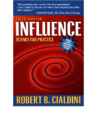
ads and the subliminal presentation o Twice as many Reader's Reports- first-person accounts in which readers of odors. of previous editions describe how e Increased coverage of how compliance they've seen a principle work on principles work in other cultures. or for them. Reader's Reports have New insights are derived from the become the most popular feature of research findings, sayings, and customs the book. Boston. New York • San Francisco Mexico City • Montreal • Toronto • London • Madrid • Munich • Paris Hong Kong • Singapore • Tokyo • Cape Town • Sydney Acquisitions Editor: Michelle Limoges Editorial Assistant: Christina Manfroni Executive Marketing Manager: Wendy Gordon
_____________________________________ 5 Why does she run/is she running? Because she's late for work. __________________________________ 6 She doesn't enjoy/is not enjoying the film. _____________________________________ 7 This milk is tasting/tastes horrible. _____________________________________ 8 The Spice Girls are making/make a new CD at the moment. _____________________________________ 9 I am thinking/think it's a good idea for you to study biology. _____________________________________ 10 We want to go for a walk but it's raining/it rains outside. _____________________________________ Marks: /10 3 Write questions using the correct tense (present simple or present continuous) for these answers. 1 _____________________________________________________________________________________________
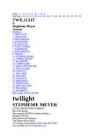
Washington, she meets an exquisitely handsome boy at school for whom she feels an overwhelming attraction and who she comes to realize is not wholly human. ISBN 0-316-16017-2 [1. Vampires -- Fiction. 2. High schools -- Fiction. 3. Schools -- Fiction. 4. Washington (State) -- Fiction.] I. Title. PZ7.M57188Tw2005 [Fic] --dc22 2004024730 Printed in the United States of America For my big sister, Emily, without whose enthusiasm this story might still be unfinished. But of the tree of the knowledge of good and evil, thou shalt not eat of it: for in the day that thou eatest thereof thou shalt surely die. Genesis 2:17 PREFACE I'd never given much thought to how I would die -- though I'd had reason enough in the last few months -- but even if I had, I would not have imagined it like this. I stared without breathing across the long room, into the dark eyes of the hunter, and he looked pleasantly back at me.
To begin with, my childhood was quite ordinary, I spent a lot of time in my country home, spending most of my time playing. I have been raised by my mother. As I grew older, I got more and more interested in different things. At one point it occured to me that when I want to be successful in some field, then I really have to educate myself in that filed.When my friends have characterised me then they have mainly mentioned that I am an active person, who has been successful in different fields. I still do not think I am succesful because it is a really complicated definition, but I know that I have succeeded in doing several things. For me the key is my so called success has been that when dealing with a particular thing I have tried to delve into the subject as deep as possible. Firstly, when we are talking about success and asking the question who is a succesful person, we have to understand that success means various things for different persons. The main question is
(NOT You speak a very good English.) 16. After look forward to, we use ing, not an infinitive. I look forward to seeing you. (NOT I look forward to see you.) We're looking forward to going on holiday. (NOT ... to go on holiday.) 17. Information is an uncountable noun. Can you give me some information? (NOT Can you give me an information?) I got a lot of information from the Internet. (NOT I got a lot of informations from the Internet.) 18. Use ing forms after prepositions. I drove there without stopping. (NOT I drove there without to stop.) Wash your hands before eating. (NOT Wash your hands before to eat.) 19. Use this, not that, for things that are close. Come here and look at this paper. (NOT Come here and look at that paper.) How long have you been in this country? (NOT How long have you been in that country?) 20. Use a plural noun after one and a half. We waited one and a half hours. (NOT We waited one and a half hour.) A mile is about one and a half kilometres
..............................................36 The Peace that Passes All Understanding................................................37 Chapter Three The Core of Ego – 39 Complaining and Resentment..................................................................40 Reactivity and Grievances.......................................................................42 Being Right, Making Wrong....................................................................43 In Defense of an Illusion..........................................................................44 Truth: Relative or Absolute?....................................................................45 The Ego Is Not Personal..........................................................................46 War Is a Mind-set.....................................................................................48
A woman who would please her husband's eyes Alone, wants no such wealth of fineries. CLEANTE But, madam, after all . . . MADAME PERNELLE Sir, as for you, The lady's brother, I esteem you highly, Love and respect you. But, sir, all the same, If I were in my son's, her husband's, place, I'd urgently entreat you not to come Within our doors. You preach a way of living That decent people cannot tolerate. I'm rather frank with you; but that's my way-- I don't mince matters, when I mean a thing. DAMIS Mr. Tartuffe, your friend, is mighty lucky . . . MADAME PERNELLE He is a holy man, and must be heeded; I can't endure, with any show of patience, To hear a scatterbrains like you attack him. DAMIS What! Shall I let a bigot criticaster Come and usurp a tyrant's power here? And shall we never dare amuse ourselves Till this fine gentleman deigns to consent? DORINE If we must hark to him, and heed his maxims, There's not a thing we do but what's a crime;
· And when you begin to miss me, dont forget it was you who let me go. · There is an end to things no matter how much we want to hold into them. · Otsisin keset seda pimedust, sind ja loodetud vabadust,kui mu käed su poole, tegid alguse loole, printsessist ja printsist, ühest kaunist kandist, kus oleme meie kaks, kus lõbutseme, kuni otsas jaks. Sa ei pea muinasmaad looma, sa ei pea tähti taevast tooma. Ole vaid minu kõrval, kui tõuseb päike. Ole vaid mu kõrval kui mind piinab meeleheide. Ole mu kõrval, kui kumab kuu, kui su nime
as books the way we understand the word today. Centuries went before paper replaced parchment and papyri. In the 15 th century Johann Gutenberg invented a mechanical process of duplicating texts, which we today call book printing. The first book was printed between 1444 and 1446, so these years can be considered as the beginning years of book printing. His most important preserved printings are the 40 copies of the Bible. By the end of the 15 th century there were about 1000 print-shops in Europe already. The oldest Estonian book dates back to 1535. Libraries form a vital part of education. They make available-through books, films, recordings and other media- knowledge that has been accumulated through the ages. People in all walks of life use libraries to get information for their work. Libraries also play an important role in preserving people's cultural heritage.
Apart from the fact that I now have a lot of free time in my hands, I also have a lot of homework to do. I discovered that I’m really lacking the studying skill and despite my hatred towards school I really need it to make sure I understand the topics. The hardest part of home schooling is that I need to discipline myself and make sure all my homework is completed and sent to teachers. I have never liked studying from home and now with days passing and me still in home it feels like a prison. Luckily I still somehow manage to deal with the stress that comes from studying and all those due dates that I have now. This virus is slowly breaking my spirit. I realized that today when I just didn’t care about anything anymore. Weeks have become dull and weekends are extra boring for me. Usually I look forward to every week because I have so much to do. There are people I love and hobbies I enjoy
My earth, my sky, my sea you're everything to me! You're my light in the darkness you're my peace and happiness. You're ma hope and you put my above you are my forever love. 3. Love is an energy, love is a mystery love is meant to be true. Love is a part of me, love is the harmony love is going to be me and you. Love is patient, love is kind. It always protects, always trusts, always hopes. That what you are (name)...My love! 4. There's only 1 thing 2 do 3 words 4 you. I LOVE YOU! 5. I wrote you're name in the sky the wind blew it away. I wrote you're name in the sand but the waves washed it away. When I wrote you're name in my heart and forever it will stay. 6. I miss you as soon as I wake up. I miss you when I'm about to sleep. I wish you're always here next to me. 7. When I text you, I miss you. When I don't text you it means
man of large fortune from the north of England; that he came down on Monday in a chaise and four to see the place, and was so much delighted with it, that he agreed with Mr. Morris immediately; that he is to take possession before Michaelmas, and some of his servants are to be in the house by the end of next week." "What is his name?" "Bingley." "Is he married or single?" "Oh! Single, my dear, to be sure! A single man of large fortune; four or five thousand a year. What a fine thing for our girls!" "How so? How can it affect them?" "My dear Mr. Bennet," replied his wife, "how can you be so tiresome! You must know that I am thinking of his marrying one of them." "Is that his design in settling here?" "Design! Nonsense, how can you talk so! But it is very likely that he may fall in love with one of them, and therefore you must visit him as soon as he comes." "I see no occasion for that. You and the girls may go, or you may send them by
interrupted by another action Present Perfect A: He has spoken. · putting emphasis on the already, ever, N: He has not spoken. result just, never, not Q: Has he spoken? yet, so far, till · action that is still going on now, up to now · action that stopped recently · finished action that has an influence on the present action that has taken place once, never or several times before the moment of speaking
Estonian public have been fighting with German, Russian and a lot of other states. Estonians has strongly tried to keep alive their own nationality, independent that Estonia is a very small state in comparison with other states. Thanks to the Tartu peace treaty, liberty war, finally public achieved to their state a freedom. Republic gives to people feeling that they are free inside and outside to express their own opinion on many subjects. Anyway if I live in Republic I should have to be a chance to express my opinion. There is still a place, where I can not do this. That place is unfortunately my home, what does not makes the homely feeling in me. When I was just a little girl, my mother died and everything in my life changed. My father separated me from my sister and brother. I had to go to live in his family and accept with a stepmother and their kids. To me was verboten to say my opinion about something
.......................................................................... ...................................................................................................... ...................................................................................................... ...................................................................................................... ............................................................................. d) What could be Mary-Alice's reply? ...................................................................................................... ...................................................................................................... ...................................................................................................... ...................................................................................................... ..............................
Challenges of children`s “participation”: A Case Study of active citizenship in Cadle Primary School Gerli Orumaa – 662974 9th of May 2014 Word Count: 8,800 `Submitted in partial fulfilment of the requirements for the degree of B.A. International Relations` Table of Contents Abstract 3 Introduction 4 Chapter 1: Citizenship, Children`s Rights and Participation: from the UN to the UK 6
Silicon Valley Could you reproduce Silicon Valley elsewhere, or is there something unique about it? It wouldn't be surprising if it were hard to reproduce in other countries, because you couldn't reproduce it in most of the US either. What does it take to make a silicon valley even here? What it takes is the right people. If you could get the right ten thousand people to move from Silicon Valley to Buffalo, Buffalo would become Silicon Valley. That's a striking departure from the past. Up till a couple decades ago, geography was destiny for cities. All great cities were located on waterways, because cities made money by trade, and water was the only economical way to ship. Now you could make a great city anywhere, if you could get the right people to move there
Copyright ©2007 by Saddleback Educational Publishing. All rights reserved. No part of this book may be reproduced in any form or by any means, electronic or mechanical, including photocopying, recording, or by any information storage and retrieval system, without the written permission of the publisher. ISBN 1-59905-201-6 Printed in the United States of America 13 12 11 10 09 08 07 9 8 7 6 5 4 3 2 1 Introduction Grammar is a very old field of study. Did you know that the sentence was first divided into subject and verb by Plato, the famed philosopher from ancient Greece? That was about 2,400 years ago! Ever since then, students all over the world have found it worthwhile to study the structure of words and sentences. Why? Because skill in speaking and writing is the hallmark of all educated people. Lesson by lesson, this book provides basic instruction in the eight parts of speech--nouns, pronouns, verbs,
The basic ingredients, when fresh, are so full of flavour that British haven't had to invent sauces to disguise their natural taste. What can compare with fresh pees or new potatoes just boiled and served with butter? Why drown spring lamb in wine or cream and spices, when with just one or two herbs it is absolutely delicious? If you ask foreigners to name some typically English dishes, they will probably say "Fish and chips" then stop. It is disappointing, but true that, there is no tradition in England of eating in restaurants, because the food doesn't lend itself to such preparation. English cooking is found at home. So it is difficult to a good English restaurant with a reasonable prices. In most cities in Britain you'll find Indian, Chinese, French and Italian restaurants. In London you'll also find Indonesian, Mexican, Greek... Cynics will say that this is because English have no "cuisine" themselves, but this is not quite the true. Vocabulary:
Shakespeare was born and raised in Stratford-upon-Avon. At the age of 18 he married Anne Hathaway, who bore him three children: Susanna, and twins Hamnet and Judith. Between 1585 and 1592 he began a successful career in London as an actor, writer, and part owner of the playing company the Lord Chamberlain's Men, later known as the King's Men. He ap- pears to have retired to Stratford around 1613, where he died three years later. Few records of Shakespeare's private life survive, and there has been considerable speculation about such matters as his sexuality, religious beliefs, and whether the works attributed to him were written by others. Shakespeare produced most of his known work between 1590 and 1613. His early plays were mainly comedies and histories, genres he raised to the peak of sophistication and artistry by the end of the sixteenth century. Next he wrote mainly tragedies until about 1608, including Hamlet, King Lear, and Macbeth, con-
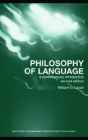
and Speech Acts, introduces the basic concepts of linguistic pragmatics, includes a detailed discussion of the problem of indirect force and surveys approaches to metaphor. Part IV, new to this edition, examines the four theories of metaphor. Features of Philosophy of Language include: · new chapters on Frege and puzzles, inferentialism, illocutionary theories of meaning, and relevance theory · chapter overviews and summaries · clear supportive examples · study questions · annotated further reading · glossary Praise for the First Edition: "This exceptional text fulfils two essential criteria of a good introduc- tory textbook in the philosophy of language: it covers a broad range of topics well, all of which are the basis of current active research, and does so in an accurate manner accessible to undergraduate students." Mike Harnish, University of Arizona ". .
university play a role in contributing to a succesful outcome? Kaisa Kamenik In Mike Nichols 1967 cult film „The Graduate“, Dustin Hoffman character Benjamin Braddock, who has just graduated from college, is facing basically same questions as posed in the title of this essay. Everyone is asking what is he going to do with his life now, but he is very uncomfortable aswering them and at that point he doesn’t care as well. Being a third year history student in University of Tartu, I am wondering over the same questions and find myself often thinking what is expected of me after graduating and how has university played a role in my development for almost three years now. When asked what is the main purpose of university, most people would say that it is preparing students for different proffessions, which would later be the driving force of the country. But I think it is more complicated than that
11. Exclusive occupancy of a private room is a basic human right. 12. Fair compensation for genius is wealth. 13. God's not perfect, so it's a pretty good bet that you're not, either. 14. Good institutions help to overcome human moral inertia. 15. I am not one of your little friends. 16. If a dimension is anywhere it's everywhere. 17. If God's not crazy, why are you? 18. If one makes a promise one shouldn't have made it cannot stand against the obligation to do the right thing. 19. If you odn't give a certain amount of attention to filtering distractions, every distraction is a catastrophe. 20. If you don't know what your duty is, your duty is to find out. 21. If you're not an animal, then you must be a vegetable. 22. If you want to get along you have to get along with those who don't want to get along. 23. If you whine whenever anybody messes with your crutches you can't claim not to be crippled. 24. I hate an unfair fight, so I need to be ganged up on. 25
Adverbs and Adverbial Phrases Table of Contents Adverbs and Adverbial Phrases ........................................................... 2 Types of Adverbs ..................................................................................... 2 Position of Adverbs.................................................................................. 4 Yet, still, already ....................................................................................... 6 Adverbs and Adverbial Phrases An adverb describes a verb, an adjective, another adverb or a whole sentence. Adverbs can be divided according to the information that they give. Types of Adverbs 1. Some adverbs tell us how somebody does something or how something happens. These are called Adverbs of Manner. Please speak quietly. Tom drove carefully along the narrow road. 2
Yours sincerely, Lee Jones 5. ... I would appreciate a reply at your earliest convenience. I look forward to meeting you to discuss employment opportunities. Yours faithfully, Nicole Porter Paragraph Plan for Letters · salutation · Paragraph 1 reasons for writing · Paragraphs 2, 3 development · Final paragraph closing remarks · Name · Letters are divided into two categories, formal and informal. There are various types of formal and informal letters . · It is important to think about the person who you are writing to before you begin writing a letter. If the wrong style is used, the letter will look impolite, silly or odd. For example, if you used formal language to write to a close friend, the letter would look odd, or if you used informal language to write a letter to a company, the letter would look impolite.
 annaabi.ee