Leidsid 33 sarnast õppematerjali, mis on seotud failiga "’Anita and Me’ by Meera Syal". Need materjalid aitavad sul teemat sügavamalt mõista.
anita, other, racism, indian, them, parents, even, feel, village, english, seem, land, round, find, between, year, mother, friend, king, cultures, while, there, work, part, hand, ways, place, seems, though, little, older, live, come, able, childhood, caught, children, feeling, england, blonde, quite, understand, left, gang, visit, tries, belong, friends(teach right from wrong) or ecclesiastical (biblical subject). Middle ages – English becomes a literary language. Geoffrey Chaucer (1343–1400) – Father of English literature, The Canterbury Tales in English, increased the prestige of the language, provided a standardised form. The Canterbury Tales: frame story. Majority in verse, some prose. Intended to contain 124 stories, only finished 24. Story: a pilgrimage to Canterbury Cathedral, where archbishop Thomas Becket had been murdered
Ameerika Kirjandus 30.01.13 Naturalism · France, Emile Zola · Put down his theory in 1879: Le Roman Experimental, attempt to explain the development of human society throuch biological laws · Outlook is deterministic, pessimistic, fatalistic (fate or biology) · Man as an animal-clever than other beasts, still explainable within the framework · Man is not a free agent, is govern by something · Unable to determine his own faith · Hereditary · Naturalists tried to apply in fiction the processes of natural sciences · Writers task is to record facts, systems of behaviour, living conditions, never revealing any natural unbiased (completely natural) · Point of view: amoral-outside the category of morality, neither good or bad
The making of a new nation. The Enlightenment in America. The emergence of the notion of the American Dream. The great Enlighteners: Crèvecoeur, Jefferson, Paine, Franklin. The American Enlightenment is the intellectual thriving period in the United States in the midtolate 18th century (17151789), especially as it relates to American Revolution on the one hand and the European Enlightenment on the other. Influenced by the scientific revolution of the 17th century and the humanist period during the Renaissance, the Enlightenment took scientific reasoning and applied it to human nature, society, and religion. American Enlightenment a gradual but powerful awakening that established the ideals of democracy, liberty, and religious tolerance in the people of America.
the Russian peasant. Stiva stays with Levin on his country estate when he makes a sale of a plot of land, to provide funds for his expensive city lifestyle. Levin is upset at the poor deal he makes with the buyer and his lack of understanding of the rural lifestyle. Levin pays Dolly a visit, and she attempts understand what happened between him and Kitty and to explain Kitty's behaviour to him. Levin is very agitated by Dolly's talk about Kitty, and he begins to feel distant from her as he perceives her behaviour towards her children as false. Levin resolves to forget Kitty and contemplates the possibility of marriage to a peasant woman. However, a chance sighting of Kitty in her carriage as she travels to Dolly's house makes Levin realise he still loves her. In St. Petersburg, Karenin exasperates Anna by refusing to separate from her. He insists that their relationship remain as it was and threatens to take away their son Seryozha if she
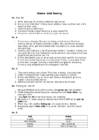
Home and family Ex. 3 p. 31 a. When she was 15. Emma's behavior got worse. b. It's very hard for them it they have suddely leave and live out in the world on their own. c. Caroline was a real friend. d. She has friends, a boyfriend and a busy social life. e. I have to treat her like an adult and give her space. Ex. 4 1. Emma was unhappy. She was smoking and drinking. She kept missing school and getting terrible fights. She stayed out at night, wen clubs, often got into trouble with the police and even started taking drugs. 2
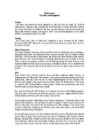
Chekov Lady and the Lapdog Reid about Chekov: The characters in Chekhov's plays are never fully "known" as a writer, he seems to delight in maintaining a sense of indeterminacy, and unknowability, about them. The bare facts are always laughably inadequate to the complexity of "real" people. Anton Pavlovich Chekhov was born on 29 January (New Style), 1860, in Taganrog, a small port on the Sea of Azov, in southern Russia. As the son of a grocer and grandson of a serf, Chekhov was a first-generation intellectual. His modest background and upbringing are crucial to his development as a writer. Chekhov always felt that he missed out on childhood. It was a
Book report "To Kill a Mockingbird" Author The book was written by Nelle Harper Lee. She was born on April 28, 1926 in Monroeville, Alabama. She attended the local Huntington College and later studied law at the University of Alabama. She has won the Pulitzer Prize for that book and many other literary awards. Lee began to write "To Kill a Mockingbird" in the 1950s in New York and published it in 1960. Setting The action takes place in Maycomb, Alabama, a town invented by the author. Between 19331935. Maycomb is a quiet little town and many people there seem to be narrow-minded. Main Characters The main characters are Scout, Atticus and Jem. Scout is a little girl, she is intelligent, thoughtful and brave. She definitely seems boy-like because she isn't afraid to fight with boys
we today call book printing. The first book was printed between 1444 and 1446, so these years can be considered as the beginning years of book printing. His most important preserved printings are the 40 copies of the Bible. By the end of the 15 th century there were about 1000 print-shops in Europe already. The oldest Estonian book dates back to 1535. Libraries form a vital part of education. They make available-through books, films, recordings and other media- knowledge that has been accumulated through the ages. People in all walks of life use libraries to get information for their work. Libraries also play an important role in preserving people's cultural heritage. For example, some libraries have rare books, authors' and composers' manuscripts or works by artists. Today's libraries differ very much from the ones from the past - not only in the contents and services, but also in physical layout and atmosphere. Library derives
The Project Gutenberg EBook of Pride and Prejudice, by Jane Austen This eBook is for the use of anyone anywhere at no cost and with almost no restrictions whatsoever. You may copy it, give it away or re-use it under the terms of the Project Gutenberg License included with this eBook or online at www.gutenberg.org Title: Pride and Prejudice Author: Jane Austen Release Date: August 26, 2008 [EBook #1342] [Last updated: August 11, 2011] Language: English Character set encoding: ASCII *** START OF THIS PROJECT GUTENBERG EBOOK PRIDE AND PREJUDICE *** Produced by Anonymous Volunteers, and David Widger PRIDE AND PREJUDICE By Jane Austen Contents Chapter 1 Chapter 22 Chapter 2 Chapter 23 Chapter 43 Chapter 3 Chapter 24 Chapter 44
5 (possible answers) she was my age and apart from the 1 1 go ahead 5 come to eighties hairstyle we're the spitting 1 Well, you will go to bed late every night. 2 fall through 6 bring about image of each other! Some people 2 Well, you will refuse to wear a 3 tip off 7 go down with say that they can see a strong family coat. 4 mistake for 8 come up with resemblance between my dad and me.
The woman, without a word of who she was, died and left her new born boy, Oliver, to the drunken nurse that stood by. Chapter2: The State gave Oliver to Mrs. Mann who housed a number of orphaned children. Mrs. Mann took a large portion of the money given to her by the authorities for each child's food so Oliver grew up small and malnourished. On his ninth birthday, the town beadle, Mr. Bumble, came to collect Oliver and take him to the board for an interview. They told him he was to live with other wards of the state to become educated and learn a trade. Oliver did not mind this, but soon after he arrived, the state decided to implement a plan that would save money by feeding the people very little. After a time on this diet, the boys at the table chose Oliver to go ask the head cook for more gruel. Oliver did this, and was taken away. A flyer was then posted that said the state would give five pounds for someone to take young Oliver off their hands.
AGATHA CHRISTIE Agatha Christie was born Agatha May Clarissa Miller in Devon, in England in 1890, the youngest of three children. Her father died, when she was a child. At sixteen she was sent to school in Paris where she studied singing and piano. Christie was an accomplished pianist but her stage fright and shyness prevented her from pursuing a career in music. She never attended school. Dame Agatha Christie was an English crime writer of novels, short stories and plays. She also wrote romances under the name Mary Westmacott, but is best remembered for her 80 detective novels and her successful West End theatre plays. On the Christmas Eve in 1914, Agatha married an aviator, Archibald Christie. their daughter, Rosalind, was born in 1919. On discovering extramarital affair, she divorced him in 1928. In the same year Christie's beloved mother died.
They say it's unimaginable, boring, tasteless, it's chips with everything and totally overcooked vegetables. The basic ingredients, when fresh, are so full of flavour that British haven't had to invent sauces to disguise their natural taste. What can compare with fresh pees or new potatoes just boiled and served with butter? Why drown spring lamb in wine or cream and spices, when with just one or two herbs it is absolutely delicious? If you ask foreigners to name some typically English dishes, they will probably say "Fish and chips" then stop. It is disappointing, but true that, there is no tradition in England of eating in restaurants, because the food doesn't lend itself to such preparation. English cooking is found at home. So it is difficult to a good English restaurant with a reasonable prices. In most cities in Britain you'll find Indian, Chinese, French and Italian restaurants. In London you'll also find Indonesian, Mexican, Greek..
slamming, the footsteps passing the window, the key turning in the lock. She laid aside her sewing, stood up, and went forward to kiss him as he came in. "Hullo darling," she said. "Hullo darling," he answered. She took his coat and hung it in the closer. Then she walked over and made the drinks, a strongish one for him, a weak one for herself; and soon she was back again in her chair with the sewing, and he in the other, opposite, holding the tall glass with both hands, rocking it so the ice cubes tinkled against the side. For her, this was always a blissful time of day. She knew he didn't want to speak much until the first drink was finished, and she, on her side, was content to sit quietly, enjoying his company after the long hours alone in the house. She loved to luxuriate in the presence of this man, and to feel -
boundless, the word count of housing posts can stretch into the thousands, and some do -- and schooled in a culture of idealism that's uniquely 21st century, those in search of shared housing and compatible mates are crafting come-ons that are as far removed from, say, "female nonsmoker wanted" as a business card is from a doctoral thesis. Consider the efforts of Ms. Berger, 28, and Ms. Hazard, 24, who advertised eloquently for roommates before even settling on a house: "Some of the things we like are: permaculture, living sustainably, gardening, dancing, hula hooping, yoga, herbalism, making music, active listening, non-violent communication ..." they wrote, in part. The idea, they said last week, was that the relationships would be more important than the real estate. What they hoped to put together was a kind of family, but without sibling rivalry or parents, of course; the thought was that everyone would do the dishes without grumbling
http://www.tandfonline.com/loi/rmps20 When `we' are `the other'. Travel books on Romania as exercises in intercultural communication a Rodica Dimitriu a Department of English , Alexandru Ioan Cuza University of Iaþi , Romania Published online: 06 Aug 2012. To cite this article: Rodica Dimitriu (2012) When `we' are `the other'. Travel books on Romania as exercises in intercultural communication, Perspectives: Studies in Translatology, 20:3, 313-327, DOI: 10.1080/0907676X.2012.702400 To link to this article: http://dx.doi.org/10.1080/0907676X.2012.702400 PLEASE SCROLL DOWN FOR ARTICLE
a stigma (59) - (in Christian tradition) marks corresponding to those left on Christ's body by the Crucifixion, said to have been impressed by divine favour on the bodies of St Francis of Assisi and others. S Leopolda is explaining how stigmata appears on Marie palm. mealy (60) - Lacking healthy coloring; pale. S Marie couldn't help what she did. She had already smiled in a saint's mealy forgiveness. to throb (66) - pulsate steadily. S Nector couldn't help but feel how bad Marie's hand hurt and throb. to hibernate (72) - spend the winter in a dormant state. S Lulu thinks that Rushes Bear eats as though she had hibernated all winter. to lounge (76) - lie, sit, or stand in a relaxed or lazy way. S Cats were lounging, sprinting etc. on every warm log. mica (79) - a shiny silicate mineral with a layered structure, found as minute scales in granite and other rocks, or as crystals. It is used as a thermal or electrical insulator
Monroe in 1946, she did not legally change her name until February 23, 1956.[11] Her mother was Gladys Pearl (Monroe) Baker.[12] Her family is believed to have been Anglo-Spanish originally; and possibly related to the Sepulvedas. [13] For many years it was believed Gladys' second husband Martin Edward Mortenson (18971981) was Monroe's father. His name was listed on her birth certificate. [14] Foster homes Mentally unstable and unable to care for Monroe, Gladys placed her with foster parents Albert and Ida Bolender of Hawthorne, California, where she lived until she was seven.[15] In her autobiography My Story, Monroe states she believed Albert was a woman. One day, Gladys announced she bought a house. A few months after they had moved in, Gladys suffered a breakdown. In My Story, Monroe recalls her mother "screaming and laughing" as she was forcibly removed to the State Hospital in Norwalk. According to My Sister Marilyn, Gladys's brother,
Sõmerpalu 2012 Contents Introduction I wrote my research paper on the president of the United States and his family, because I wanted to know more about Barack Hussein Obama, his wife Michelle Obama and his daughters Malia and Natasha. I think that I now know much more about the President of the United States and I think that I should know, because in the future I would like to travel to and one day maybe even move to the United States of America. I think that Barack Obama is the most hated president in the United States history because of his racial. Barack Hussein Obama Barack Hussein (born on August 4, 1961) is the 44th and current President of the United States. He is the first African American to hold the office. In January 2005, Obama was sworn in as a U.S. Senator in the state of Illinois. He would hold this office until November 2008,
.........................................................................46 War Is a Mind-set.....................................................................................48 Do You Want Peace or Drama? ...............................................................49 Beyond Ego: Your True Identity .............................................................50 All Structures are Unstable.......................................................................51 The Ego's Need to Feel Superior..............................................................52 Ego and Fame...........................................................................................52 Chapter Four Role-Playing: The Many Faces of the Ego - 54 Villain, Victim, Lover...............................................................................55 Letting Go of Self-Definitions..................................................................56
But it is used with a suitable irony; and, after all, this long tale, though it may deal with folk in frock coats, furbelows, and a gilt- edged period, is not devoid of the essential heat of conflict. Discounting for the gigantic stature and blood-thirstiness of old days, as they have come down to us in fairy-tale and legend, the folk of the old Sagas were Forsytes, assuredly, in their possessive instincts, and as little proof against the inroads of beauty and passion as Swithin, Soames, or even Young Jolyon. And if heroic figures, in days that never were, seem to startle out from their surroundings in fashion unbecoming to a Forsyte of the Victorian era, we may be sure that tribal instinct was even then the prime force, and that "family" and the sense of home and property counted as they do to this day, for all the recent efforts to "talk them out." So many people have written and claimed that their families were the originals of the Forsytes that
6 have/'ve known interested and it looks as though shipwrecked three times. 7 walked they are working hard. Most of She was lucky because she survived 8 have you phoned them are looking at the experiment each of the three disasters. 2 1 written 8 was trying and working together. They are 4 1 D 3 F 5 G all wearing uniform it's quite an 2 been meaning 9 came
The Moving Finger Agatha Christie The Moving Finger Agatha Christie Plot summary: Brother and sister Jerry and Joanna Burton bought a country house in an idyllic English town called Lymstock so that Jerry could recover from injuries received in a wartime plane crash. They had been living in London their whole life and thus were excited but intimidated to go. Lymstock was much like any other English village, no more than 300 people. Those that live there enjoy the peace of rural life and form a union to where it can be difficult for strangers to blend in. Fortunately, it wasn't much of a problem for Jerry and Joanna.
probably been to add legitimacy to the already-existing trends towards greater psychological introspection and towards more prominent and franker discussions of sexuality. Main characteristic features of Modernism: Characteristics of Modernism Formal characteristics(11) · Open Form · Free verse · Discontinuous narrative · Juxtaposition (kõrvutamine) · Intertextuality · Classical allusions(vihje) · Borrowings from other cultures and languages · Unconventional(ebaharilik) use of metaphor · Metanarrative · Fragmentation · Multiple narrative points of view (parallax) Thematic characteristics(8) · Breakdown of social norms and cultural sureties(veendumus) · Dislocation(nihestus) of meaning and sense from its normal context · Valorization of the despairing individual in the face of an unmanageable future · Disillusionment (silmade avamine, illusioone purustama)
(1960) and M.A. (1964) in comparative literature Married and has two daughters. Has written over 50 books. Main Characters COL. WILLIAM LUDLOW - Idealistic, formalistic, rational, stong willed, so principled that he left his job because of unethical behavor in the army, it's almost obsessive to him that Indians get treated properly; wrote a book to the government objecting to their policy. TRISTAN LUDLOW - Adventurer and smuggler who loves his freedom so much that he lives like an indian, his long hairs and horse riding symbolize his independence, too self-confident, takes risks, when Sammuel is killed he tries to escape his feelings of guilt by sailing the sea's ALFRED LUDLOW - Macho; power hungry, the indian says he was older and looked even more older than the other ones, humiliates his other brothers in public(bully). Main Characters SAMUEL LUDLOW - He's the kamikaze son; self sacrificially loyal, naive need
friends, he is prone to petty cruelty toward Cohn. Jake Barnes The key events in the formation of Jake's character occur long before the novel's action begins. As a soldier in World War I, Jake is wounded. Although he does not say so directly, there are numerous moments in the novel when he implies that, as a result of his injury, he has lost the ability to have sex. Jake's narration is characterized by subtlety and implication. He prefers to hint at things rather than state them outright, especially when they concern the war or his injury. Early in the novel, for example one must read the text very closely to grasp the true nature of Jake's wound; it is only later, when Jake goes fishing with Bill, that he speaks more openly about his impotence. Jake's physical malady has profound psychological consequences. He seems quite insecure about his masculinity. The fact that Brett, the love of his life, refuses to enter into a relationship with him compounds this problem
Tests Superstar 1 Luke Prodromou Test 1 Name____________________ Class_______ Use your English 1 Complete these sentences using the correct form (present simple or present continuous) of the verb in brackets. _ 1 She is in a band and she _________________________________ (record) a CD at the moment. _ 2 She is an actress and often _________________________________ (appear) on television. _ 3 At the moment she _________________________________ (have) a rest because she is tired. _ 4 Mike is a doctor and he _________________________________ (live) in Manchester.
two children -- one male child and one female child. Jonas' mother has an important job with the Department of Justice, and his father has a job as a Nurturer, taking care of newborns. Jonas has one younger sister, Lily. His family seems ideal. Each morning, they discuss their dreams that they had the previous night; during the evening meal, they share feelings about the events of the day, comforting and supporting each other according to the rules of the community. 2. What is the family's nightly ritual? It is a required ritual in which all family members have to tell how they were feeling that day. 3. Why had Lily been angry? Lily goes first by explaining the anger that she felt today when someone from a visiting group of Sevens, or seven-year-olds, did not obey the rules about waiting in line. She compares the boy to an animal, but she is not exactly sure what an animal is, and she recalls that she made a
It was believed that a witch often joined a pact with the devil to gain powers to deal with infertility, immense fear for her children's well-being, or revenge against a lover. The long-term result of amalgamation of distinct types of magic-worker into one is the considerable present-day confusion as to what witches actually did, whether they harmed or healed, what role they had in the community, whether they can be identified with the "witches" of other cultures and even whether they existed as anything other than a projection. Present-day beliefs about the witches of history attribute to them elements of the folklore witch, the charmer, the cunning man or wise woman, the diviner and the astrologer. Powers typically attributed to European witches include turning food poisonous or inedible, flying on broomsticks or pitchforks, casting spells, cursing people, making livestock ill and crops fail, and creating fear and local chaos.
Catherine Morland My name is Catherine Morland. I would like to tell you a bit about myself. To begin with, I am seventeen years old and grew up in a countryside in a small town named Fullerton with my parents and nine siblings. As a child I was interested in many things like drawing, sports and music. I was very lively and cheerful, enjoyed cricket, horse riding and just hated cleanliness and restriction. As I grew up, I chose reading over sports and all of the wild games I used to like. Undoubtedly, I would now describe myself with the word naivety. I am very naïve and do not notice the most obvious things happening around me. I really hope that it
Philip Larkin poetry analysis For my poetry analysis paper I chose Philip Larkin's works, because he was the first British poet whose works I read. I think that his poems are interesting. They reveal much about Larkin's life and about the social issues in the 20th century. Larkin is also considered to be one of the greatest English poets in the 20th century. I think that Larkin was quite interested in politics. For example his poem ´´Talking in Bed´´ begins with the lines /Talking in bed ought to be easiest, Lying together there goes back so far/. At first it gives the reader an idea that he is talking about two lovers, but actually he is talking about England and USA. He describes the darkness that is creeping up. In my opinion he is talking about USA, which is beginning to creep up on England or on Europe. And
8 immigrantide arv the number of immigrants 2 Complete the sentences with the names of countries, nationalities, and languages. 1 The capital of Norway is Oslo. 2 Kevin lives in Chicago. He is American. 3 Michail comes from Moscow. He speaks Russian. 4 What nationality are you? I´m Estonian. 5 The descendants of the Africans brought to America are called settlers. 6 Uwe´s grandparents live in Germany. They speak German. 7 Michael comes from Australia. He speaks Australian English. 8 Eve lives in Ireland. She speaks English and Irish. 3 Write the sentences in reported speech. 1 Martin said, "We´re going on a class trip tomorrow." Martin said they were going on a class trip the next day. 2 Mary said to us, "I bought a book on big cats yesterday." Mary told us she had bought a book on big cats the day before. 3 Ben said to Brian, "You can wait for me here." Ben told Brian he could wait for him there. 4 Dad said, "I´ll finish work early today."
Drunkards, she used to urge to join her at the church, called her the Jesus Belle. She was loved by men and attracted attention, many of drunkards stopped in the street when Jeanette’s mother walked past and raised their hats to her. She was very religious person. Louie considered church as her family more than her own family. “My mother stood up and said she believed this was right: that women had specific circumstances for their ministry, that the Sunday School was one of them, the Sisterhood another, but the message belonged to the men.” She believed that praying could solve all the problems and people like her were meant to be separated from others. She did not have many friends because people did not understand her, not even Jeanette. But Jeanette looked up to her because she had had always an answer, knowledge why did things happen. Louie saw the world in two categories: friends and enemies. “She had never heard of mixed feelings
 annaabi.ee