Leidsid 33 sarnast õppematerjali, mis on seotud failiga "Progress test 3 (unit 3) VASTUSED 10.klassile". Need materjalid aitavad sul teemat sügavamalt mõista.
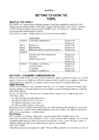
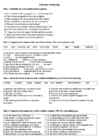
words, case, fill, correct, complete, bold, given, change, university, unless, settle, really, store, pack, hand, forget, unit, here, missing, cold, dates, mountain, things, situated, held, these, setting, circle, included, sure, touch, five, including, doesn, gets, might, could, restored, package, extend, unforgettable, havenTests Superstar 1 Luke Prodromou Test 1 Name____________________ Class_______ Use your English 1 Complete these sentences using the correct form (present simple or present continuous) of the verb in brackets. _ 1 She is in a band and she _________________________________ (record) a CD at the moment. _ 2 She is an actress and often _________________________________ (appear) on television. _ 3 At the moment she _________________________________ (have) a rest because she is tired. _ 4 Mike is a doctor and he _________________________________ (live) in Manchester. _ 5 I _________________________________ (start) work at 8
publisher. ISBN 1-59905-201-6 Printed in the United States of America 13 12 11 10 09 08 07 9 8 7 6 5 4 3 2 1 Introduction Grammar is a very old field of study. Did you know that the sentence was first divided into subject and verb by Plato, the famed philosopher from ancient Greece? That was about 2,400 years ago! Ever since then, students all over the world have found it worthwhile to study the structure of words and sentences. Why? Because skill in speaking and writing is the hallmark of all educated people. Lesson by lesson, this book provides basic instruction in the eight parts of speech--nouns, pronouns, verbs, adjectives, adverbs, prepositions, conjunctions, and interjections--as well as the standard patterns of English sentences. All students of English, be they native speakers or those who are studying English as a second language, will profit from the fundamental introduction and review of
· What is the salutation in a friendly letter? · How would you end extracts 1,2,3 ? · How would you begin the extracts 4 and 5? 1. Dear Mr Miller, I received your kind invitation to the reception. Unfortunately, owing to other commitments. I will be unable to attend ... 2. Dear Ralph, l just got your invitation to the company's event. l `m afraid I can't make it because I've a/ready made plans which l can "t change ... 3. Dear Sirs, I am writing to complain about the poor quality of the items which I received from your company. I have no other alternative but to cancel the order which 1 placed earlier this week ... 4. ... thus, I recommend that you accept this advice on the matter. I am pure that the suggestion offered is the best solution. Please let me know if this was helpful. Yours sincerely, Lee Jones 5. ... I would appreciate a reply at your earliest convenience
1 KLM 9 ENIRO 2 FARWEK 10 SAUREX 3 TALLEGG 11 MIZDE 4 VESITERM 12 LADA 5 STOW 13 SCHWUNG 6 KALEV 14 MAIASMOKK 7 YAMAHA 15 ISKU 8 ESTRAVEL 2 Affirmative tense Use Signal Words Negative/Questions · action in the present taking always, Present Simple A: He speaks. place once, never or several every ..., N: He does not speak. normally, often, Q: Does he speak? times seldom,
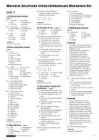
1C Worst Britons page 5 altitude. 3 Students' own descriptions 1 1 poll 5 commentators 3 Tick: belong, know, imagine, think, 2 public 6 celebrities understand Challenge! 3 Prime Minister 7 figures Students' own answers 4 votes Photocopiable © Oxford University Press 1 Maturita Solutions Upper-Intermediate Workbook Key 1G Magazine article page 10 1 1 Introduction: C 2 Background information: A 3 Main events: D 4 Conclusion: B 2 1 One afternoon, at the time, when I finally reached safety, after that day 2 and fast! The rock was now more than a kilometre out to sea! After that day, I always checked
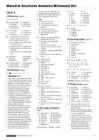
4 come up with 8 mistake for for me. It was the first thing my parents 5 Well, you would keep eating too noticed when I was born! 3 1 Laura was offered a place at much. Personality-wise, I've got a lot of my Manchester University but she dad's traits in me. We're both quite bubbly and friendly (or so people 1C The origins of English turned it down. page 5 2 Whilst some people are in favour say), and we share quite a laid-back
symbols (such as letters, morse etc) For example: Estonian, English. Linguistics → The scientific study of human natural language. Broadly, there are three aspects to the study which are Pragmatics (studies the use of language → interested in the gap between the sentence’s meaning and the speaker’s meaning). Semantics (concerned with the meaning of the language aspects and the way they change, also how objects and language and thinking and language are related). Syntax (concerned with the rules [grammar] and how sentences and words are formed). Synchronic approach to language → A focus in language study on how language exists in one moment in time, not at how this language came to be the way it is now. Example Estonian in the 21st century. Diachronic approach to language → A focus in language study on how a language has changed over some period of time
In your test booklet, there are four sentences. You must choose the sentence that is closest in meaning to the one you heard. YOU WILL HEAR: To get to the post office, cross the street, go three blocks, and you'll see it right on the corner. YOU WILL SEE: (A) The post office is right on the corner. (B) The post office is at the next corner. (C) The post office has a cross near it. (D) The post office is three blocks away. The correct choice is, which most closely gives the same meaning as the sentence you heard. It is important for you to know that if similar sounding words or the same words appear in an answer choice, that answer choice is seldom correct. Short Dialogs Part B contains short dialogs followed by a question about what the people said in their conversation. Generally, key information is found in the second speaker's sentence. You will need
Golden Grammar rules 1. Don't use an with own. Sue needs her own room. (NOT Sue needs an own room.) I'd like a phone line of my own. (NOT ... an own phone line.) 2. Use or rather to correct yourself. She's German or rather, Austrian. (NOT She's German or better, Austrian.) I'll see you on Friday or rather, Saturday. 3. Use the simple present play(s), rain(s) etc to talk about habits and repeated actions. I play tennis every Saturday. (NOT I am playing tennis every Saturday.) It usually rains a lot in November. 4. Use will ..., not the present, for offers and promises. I'll cook you supper this evening. (NOT I cook you supper this evening.)
c) After leaving school, Ann studied/trained as a teacher. d) Peter decided not to go in/enter for the examination. e) My sister learned/taught me how to draw. f) I can't come to the cinema. I have to read/study for a test. g) In history we had to learn a lot of dates by hand/heart. h) I hope your work will improve by the end of course/term. i) Martin failed/missed his maths exam and had to sit it again. j) If you have any questions, raise/rise your hand. Task 2. Complete each sentence with a word from the box. Use each word once only. cheat copy memorise pay revise concentrate divide pass punish underline a) Our teachers used to punish us by making us stay behind after school. b) If you…….twenty-seven by nine, the answer is three. c) Try to……. the most important rules. d) It is difficult to …….attention in a noisy classroom. e) Pauline tried her best to …….the end of year examinations.
Hussy! I'll warm your ears in proper shape! March, trollop, march! SCENE II CLEANTE, DORINE CLEANTE I won't escort her down, For fear she might fall foul of me again; The good old lady . . . DORINE Bless us! What a pity She shouldn't hear the way you speak of her! She'd surely tell you you're too "good" by half, And that she's not so "old" as all that, neither! CLEANTE How she got angry with us all for nothing! And how she seems possessed with her Tartuffe! DORINE Her case is nothing, though, beside her son's! To see him, you would say he's ten times worse! His conduct in our late unpleasantness [1] Had won him much esteem, and proved his courage In service of his king; but now he's like A man besotted, since he's been so taken With this Tartuffe. He calls him brother, loves him A hundred times as much as mother, son, Daughter, and wife. He tells him all his secrets And lets him guide his acts, and rule his conscience. He fondles and embraces him; a sweetheart
.. (7 win) lots of prizes. She ... even ... (8 be) on TV. Kelly ... (9 break) her arm twice while doing a jump on the ice, but she's OK now. Last year she ... (10 travel) to Canada to practise in a training camp. I'm sure sometime in the future she ... (11 win) an Olympic medal. By that time, I ... (12 be) a famous author and she ... (13 ask) me to write a book about her way to the top. That's why I ... (14 start) taking notes of her and my other classmates' results. 3. Complete the exercise with the verbs in the past simple, the past continuous, or the past perfect tense. Do you remember? I went I was / we were going I had gone I couldn't wait for the first day of school to show off the new bike which I ... (1 get) as a birthday present. As I ... --- 5 (2 want) to look cool riding up to the front steps, I ... (3 put) on my new skirt. When I ... (4 reach) the school, I ... (5 make) a big mistake and ... (6 smile) at my friends instead of watching where I was going
Comment on examples (from where the example is taken how it is used explain all). NB! Comments everywhere. You have right to: · Supervisor discusses and specifies the topic with you; · Supervisor gives a tutorial where the supervisor sets general directions for your paper and recommends a book (source) for your study; · Supervisor reads your rough sketch (and if necessary checks faults); BUT! Supervisor does not have to correct your language. The talk at the defense: a kind supervisor gets together with you and makes together your talk. As you start reading literature do not trust every word you see. Often we need a second opinion (usually of your Supervisor or ask a more competent person). Where to get second opinion use our audience, or if writing on literature Maailmakirjanduse õppetool. Bibliography: the sources you have sited in your work: -term paper 10-15 sources (1 page),
5 Which invention made the rockets even more powerful and where did it lead to? 6 How did the Germans use rockets in the World War II? 7 Speak about the first steps in conquering the space. 8 How long have people explored the Mars and which invention enhanced the exploration? 9 Find the main points about the Mars One mission. 10 What is the difference between a cosmonaut, astronaut and taikonaut? 11 Explain the difference between the words corps and corpse? How do you pronounce these words? 12 Translate the italicized expressions and bold words in the text. Make sure that your translation is appropriate! 13 Derivation is the process of forming a new word from an existing word, often by adding a prefix or suffix. For example, from the word HAPPY we can derive the following words: happen, happily, happiness, unhappy, unhappiness.
Phone: [p] A phone is actual pronunciation of a phoneme. A phone is represented between brackets Allophone: e.g. pin spin Phoneme: /p/ - /iz/ `houses' /s/ voicless `cats' /z/ `boys' /t/ `learned' /id/ `wanted' A phoneme is the smallest unit of the sound system of a language. If two sounds have the same phoneme, they are treated equally. A phoneme is represented between slashes. Morphology: is the study of word formations and the internal structure of words Morphemes: the smallest units of language that have their own meaning or grammatical function. cat, cat/s, laugh/ed, un/able, sheep Free morphemes: cat, laugh, eat, red Bound morphemes: prefixes: pre- prejudge dis- dislike suffixes: -ist typist infixes attached within another morpheme. Infixation is common in languages of Southeast Asia and the Philippines, and it is also found in some Native American languages.
f) When Harry saw his girlfriend dancing with Paul he felt jealous/selfish/sentimental. g) I don't like people who are noisy and aggressive/courageous/sociable. h) Thanks for bringing us a present. It was very adorable/grateful/thoughtful of you. i) Teresa never gets angry with the children. She is very brave/patient/pleasant. j) Tom always pays for everyone when we go out. He's so cheerful/generous/honest. 2. Match the words in the box with the descriptions (a-l). Use each word once only. bad-tempered determined lazy reliable cheerful frank mean selfish considerate honest punctual sympathetic a) You always arrive on time e) You don't think about the needs of others i) You think about the needs of b) You are always happy f) You have a strong wish to get what you others
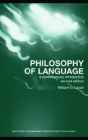
· clear supportive examples · study questions · annotated further reading · glossary Praise for the First Edition: "This exceptional text fulfils two essential criteria of a good introduc- tory textbook in the philosophy of language: it covers a broad range of topics well, all of which are the basis of current active research, and does so in an accurate manner accessible to undergraduate students." Mike Harnish, University of Arizona ". . . an excellent textbook for teaching. The examples throughout are delightful and students will love them." Edwin Mares, Victoria University of Wellington William G. Lycan is William Rand Kenan Professor of Philosophy at the University of North Carolina. He is the author of over 150 articles as well as seven books. Routledge Contemporary Introductions to Philosophy Series Editor: Paul K. Moser Loyola University of Chicago
H-Helen, J - Julia 1.Receiving a money order H: - Hello, I would like to cash a money order. J: - Hello! You should present your identity card. H: - But, you know, I'd like to receive money order for my sister. How do I go about it? J: - Your identity card and letter of attorney, please. H: - Here you are. J: - Well...Unfortunately, I can't cash your money order your signature is not witnessed. H: - Ok. Than, please, I'd like to cash my money order. J: - Take this form and fill it in. May I see your passport? H: - Yes. Please. So...Should I write my full name, my passport number and the sum of money that has been sent to me, right? J: - Certainly. How would you like the money? H: - I prefer one hundred rouble notes, if you don't mind. J: - Here is your money. H: - Thank you Getting a post-restante. H: - Hi, Julia! What are you doing here? J: - I'm getting post restante letter from Boris... H: -Ah, yeah, remember him. What is he saying? J: - Oh, well..
ccc_tracy_fm_i-xviii.qxd 7/7/03 3:22 PM Page iii CHANGE YOUR THINKING, CHANGE YOUR LIFE How to Unlock Your Full Potential for Success and Achievement B R I A N T R AC Y JOHN WILEY & SONS, INC. ccc_tracy_fm_i-xviii.qxd 7/7/03 3:22 PM Page i CHANGE YOUR THINKING, CHANGE YOUR LIFE ccc_tracy_fm_i-xviii.qxd 7/7/03 3:22 PM Page ii ccc_tracy_fm_i-xviii.qxd 7/7/03 3:22 PM Page iii CHANGE YOUR THINKING, CHANGE YOUR LIFE How to Unlock Your Full Potential for Success and Achievement B R I A N T R AC Y JOHN WILEY & SONS, INC. ccc_tracy_fm_i-xviii.qxd 7/7/03 3:22 PM Page iv
v=XiQvG-fvzLM Kids lesson (direct method) Language is primarily speech Reading skills are developed through practice with speaking Realia is used to convey the meaning Demonstration instead of translation or explanation Complete sentences instead of vocabulary lists The purpose of language learning is communication Pronunciation Self correction The goals of the teacher are communication, demonstration instead of translation (the teacher used pictures and pointed to yourself....), they studied complete sentences. It is a teacher-centred method. (T. was the leader, asked questions). The teacher and students were sociable and easy-going. Students´ presentations were approved for several times. When an error occurred the teacher encouraged students to correct it themselves. No native language was used. · Traditional: audio-lingual method http://www.youtube.com/watch?v=Mqd7OdJoLn0 Audiolingual method Communicative language use Automatic use (habit formation)
so much noise. I can't hear myself think! f) Darling, I love you so much! I wish we are / had been / would be / could be together always! g) I'm sorry I missed your birthday party. I really wish I come / came / had come / would come. h) I like my new boss but I wish she gave / would give / could give me some more responsibility. i) Having a lovely time in Brighton. I wish you are / were / had been here. j) This car was a complete waste of money. If only I didn't buy /hadn't bought it. 2.- 3.- 4.- Choose the most suitable verb form in each sentence. a) A cheque is all right, but I'd rather you pay / paid me cash. b) Imagine you live / lived in New York. How would you feel? c) If only I have / had / would have a screwdriver with me. d) If you want to catch the last train, it's time you leave / left. e) I'd rather you don't / didn't tell anyone about our conversation. f) I've got a terrible headache
................................................................ 14. Michael: "I am going to read a book this week." Michael.......................................................................................................................................... ............ 15. Lisa: "Tim went to the stadium an hour ago." Lisa................................................................................................................................................ ............ 4. Put in the correct phrases and form a conditional sentence (type I, II, III). 1. If we meet at 9:30, we ...........................................................plenty of time.(HAVE) 2. I ................................................................ the office if I was/were you.(CALL) 3. The zookeeper would have punished her with a fine if she .................................. the animals.(FEED) 4. The door will unlock if you ............................ the green button.(PRESS) 5. If Mel ...................
Media and advertising 1. Complete the collocations in each sentence with an appropriate word from the box. broadcast bulletin coverage forecast media brochure campaign edition manual novel a) Read the instruction ..manual. before using your new word-processor. b) 'David Copperfield' is an autobiographical ……………. c) What did it say on the weather …………….? d) This is a party political……………. on behalf of the Democratic Party.
scratching than records. 6. People looking for meaning in today's confusing modern world often immerse themselves in new age philosophy. MAKE, HOLD, HAVE, DO 1. do experimental work 2. make advances in one's field 3. have a successful mission 4. make an important discovery 5. make an important observation 6. do ground-breaking research 7. have a life changing experience 8. have evidence of sth 9. hold a demonstration 10. make a change for the better 11. do a scientific project 12. hold and international conference AMBIGUOUS WORDS 1. A lot of technological changes have happened in recent years. 2. Operate the machinery carefully. 3. The company offers a range of word processing packages. 4. The company's motto reflects the owners' policy. 5. One of the company's major concerns is to make the product sell in lots of markets. 6. All files are stored in cabinets 7
University of Pennsylvania "It's about time this book was written. It is a long-overdue manifesto for the mobile lifestyle, and Tim Ferriss is the ideal ambassador. This will be huge." --Jack Can eld, cocreator of Chicken Soup for the Soul®, 100+ million copies sold "Stunning and amazing. From mini-retirements to outsourcing your life, it's all here. Whether you're a wage slave or a Fortune 500 CEO, this book will change your life!" --Phil Town, New York Times bestselling author of Rule #1 "The 4-Hour Workweek is a new way of solving a very old problem: just how can we work to live and prevent our lives from being all about work? A world of in nite options awaits those who would read this book and be inspired by it!" --Michael E. Gerber, founder and chairman of E-Myth Worldwide and the world's #1 small business guru "Timothy has packed more lives into his 29 years than Steve Jobs has in his 51." --Tom
species. Humans would increasingly be drawn to and fascinated by them. As the consciousness of human beings developed, flowers were most likely the first thing they came to value that had no utilitarian purpose for them, that is to say, was not linked in some way to survival. They provided inspiration to countless artists, poets, and mystics. Jesus tells us to contemplate the flowers and learn from then how to live. The Buddha is said to have given a “silent sermon” once during which he held up a flower and gazed at it. After a while, one of those present, a monk called Mahakasyapa, began to smile. He is said to have been the only one who had understood the sermon. According to legend, that smile (that is to say, realization) was handed down by twenty- eight successive masters and much later became the origin of Zen. Seeing beauty in a flower could awaken humans, however briefly, to
ISBN 0-316-16017-2 [1. Vampires -- Fiction. 2. High schools -- Fiction. 3. Schools -- Fiction. 4. Washington (State) -- Fiction.] I. Title. PZ7.M57188Tw2005 [Fic] --dc22 2004024730 Printed in the United States of America For my big sister, Emily, without whose enthusiasm this story might still be unfinished. But of the tree of the knowledge of good and evil, thou shalt not eat of it: for in the day that thou eatest thereof thou shalt surely die. Genesis 2:17 PREFACE I'd never given much thought to how I would die -- though I'd had reason enough in the last few months -- but even if I had, I would not have imagined it like this. I stared without breathing across the long room, into the dark eyes of the hunter, and he looked pleasantly back at me. Surely it was a good way to die, in the place of someone else, someone I loved. Noble, even. That ought to count for something. I knew that if I'd never gone to Forks, I wouldn't be facing death now. But, terrified as I was, I
Hyperbole STYLE AND STYLISTICS FGI 1081 Stylistics (I. Ladusseva) 2 The term "style" is polysemantic (has many meanings): a Latin word "stilus" originally meant a writing instrument used by ancient people. Already in classical Latin the meaning was extended to denote the manner of expressing one's ideas in written or oral form. The precise definition was given by Jonathan Swift, who defined style as "proper words in proper places". In present day English the word "style" is used in about a dozen of principle meanings: 1. the characteristic manner in which a writer expresses his/her ideas (e.g. style of Byron). 2. the manner of expressing ideas, characteristic of a literary movement or period (e.g. symbolism, romanticism, renaissance). 3. the use of language typical of a literary genre (e.g
ball! Can you imagine?! A ball with Sir Thom! What an honour... I bet Emily Woodcut will be envious. What about you, Mary? Have you made plans for the summer? I'd really like to introduce you to him after all, you are the governor's daughter. Then his opinion of me will raise even higher, right? So what do you think? Would you like to pay a visit to Cherry village this summer? Can't wait to your letter! Best wishes, Anne C. Questions: a) Under what branch of literacy the given text goes to? ...................................................................................................... ............................................................ b) Who is the storyteller? ...................................................................................................... ............................................................. c) Describe her character with tree sentences. ..........................................
· drop off(3) - stop and give something to someone Would you drop this off at the post office? · drop out - cease to participate After two laps, the runner dropped out. Some particles can be separated from the verb so that a noun and pronoun can be inserted, and some particles can't be separated from the verb. In addition, some phrases are intransitive, meaning they cannot take a direct object. · Separable add up (meaning: to add) Correct: She added up the total on her calculator. Correct: She added it up on her calculator. · Inseparable get around (meaning: to evade) Correct: She always gets around the rules. Incorrect: She always gets the rules around (This construction makes no sense in English.) · Intransitive catch on (meaning: to understand) Correct: After I explained the math problem, she began to catch on.
d) David fell down the steps and twisted his ankle/heel/toe. e) Everyone admired Lucy because she was tall and skinny/slim/thin. f) I've been digging the garden and now my back aches/pains/injuries. g) Whenever I travel by boat I start feeling hurt/sick/sore. h) The doctor can't say what is wrong with you until she cures/examines/recovers you. i) Use this thermometer and take his fever/heat/temperature. j) I seem to have caught/infected/taken a cold. 2) Replace the words in italics with one of the words from the box. Use each word once only. Agony, body, breath, look, stomachache, beard, brains, heart, spine, tongue a) Janet fell from her horse and injured her backbone b) I had a very bad toothache, and was in great pain all night c) The police discovered the dead person buried in the garden d) One thing you can say about Ann, she has certainly got intelligence. e) They have a new house right in the centre of the countryside.
d) Please help/serve/wait yourself to salads from the salad bar. e) Waiter, can I see the catalogue/directory/menu, please? f) This fish is not what I called/commanded/ordered. g) This dish/plate/serving is a speciality of our restaurant. h) Have you tried the crude/raw/undercooked fish at the new Japanese restaurant? i) Paul never eats meat, he's a vegetable/vegetarian/vegetation. j) Have you decided what to have for your main course/food/helping? Task 2. Complete each sentence (a-j) with a suitable ending (1-10). Use each ending once. a) Dinner's nearly ready. Can you lay ...6… 1. up if you dry and put the dishes away. b) There's some meat in the fridge. Just warm 2. it up in the microwave oven for a few minutes. c) Keep an eye on the milk or it might boil 3. coffee you made for me this morning. d) Jack likes his steak rare but I prefer mine well 4
I must You mustn’t (S)he do that! should We shouldn’t They Note: • Don’t have to = needn’t; mustn’t = be forbidden • Have to has all the forms that must doesn’t have. I had to work until midnight last night. (Past) You’ll have to study hard when you go to university. (Future) She’s a millionaire. She’s never had to do any work. (Present Perfect) I hate having to get up early. (-ing form) If you were a policeman, you would have to wear a uniform. (Infinitive) Question • Must I ...? is possible, but question forms with have to are more common. Do I have to do what you say, or can I do what I want? • Should I/she/we ...? is possible. We often use Do you think ...? Should I try to eat less?
 annaabi.ee