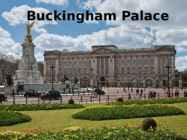
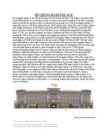
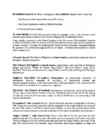
of Westminster, the palace is a setting for state occasions and royal hospitality. Buckingham Palace: • was built in 1705 for Duke of Buckingham and is originally known as Buckingham House. • George III bought Buckingham House in 1761 for his wife Queen Charlotte to use as a comfortable family home close to St James's Palace, where many court functions were held. Buckingham House became known as The Queen's House. • During the 19th century it was enlarged, principally by architects John Nash and Edward Blore, forming three wings around a central courtyard. Before reconstruction Nowadays • Buckingham Palace has 775 rooms. These include 19 State rooms, 52 Royal and guest bedrooms, 188 staff bedrooms, 92 offices and 78 bathrooms. In measurements, the building is 108 metres long across the front, and 24 metres high. • The Palace is very much a working building and the centrepiece of Britain's constitutional monarchy
CAR Hallo,my name is ... .I speek the car. Motor car or car is a wheeled motor vehicle used for transporting passengers, which also carries its own engine or motor. Most definitions of the term specify that automobiles are designed to run primarily on roads, to have seating for one to eight people, to typically have four wheels, and to be constructed principally for the transport of people rather than goods. The term motorcar has also been used in the context of electrified rail systems to denote a car which functions as a small locomotive but also provides space for passengers and baggage. These locomotive cars were often used on suburban routes by both interurban and intercity railroad systems. There are approximately 600 million passenger cars worldwide (roughly one car per eleven people)
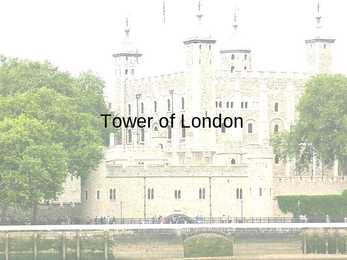
Every evening, the warders participate in the Ceremony of the Keys as the Tower is secured for the night. History The Tower of London was founded in 1078 by William the Conqueror. In the 12th century, King Richard the Lionheart enclosed the White Tower with a curtain wall and had a moat dug around it. The fortification was completed in 1280 by Edward I, who built the outer curtain wall. The Tower today is principally a tourist attraction. Besides the buildings themselves, the British Crown Jewels and a remnant of the wall of the Roman fortress are on display. Primary Functions The tower's primary function was a fortress, a royal palace, and a prison for high status and royal prisoners. It has also served as a place of execution and torture, an armoury, a treasury, a zoo, the Royal Mint, a public records office, an observatory, and since 1303, the home of
fennel and lemon. Pizza is an oven-baked, flat, round bread typically topped with a tomato sauce, cheese and various toppings. The modern pizza was invented in Naples, Italy. PIZZA Click to edit Master text styles Second level Third level Fourth level Fifth level DRINKS Principally wine Limoncello Gassosa (sweetened carbonated water) Chinotto (traditional Italian cola made with the chinotto fruit) Crodino (non-alcoholic aperitif distributed by the Campari Group) EATING PLACES Theres a lot of pizzerias, kebabs, pizza restaurantes, restaurante. For example: L'Etoile d'Or (Catania, Italy), Gusta Pizza (Florence, Italy), Madonnina del Pescatore (Senigallia, Italy), La Ciau del Tornavento (Treiso, Italy), La Rosetta (Rome), Masseria Barbera (Puglia, Italy)
The Buckingham palace is originally known as the Buckingham House. The building which forms the core of today's palace was a large townhouse. It was built for the Duke of Buckingham in 1703 on a site which had been in private ownership for at least 150 years. It was subsequently acquired by George the third in 1761 as a private residence for Queen Charlotte and known as The Queen's House. During the 19th century it was enlarged, principally by architects John Nash and Edward Blore, forming three wings around a central courtyard. Buckingham Palace finally became the official royal palace of the British monarch on the accession of Queen Victoria in 1837. The last major structural additions were made in the late 19th and early 20th centuries.Buckingham Palace is 108 metres long across the front, 120 metres deep (including the quadrangle) and 24 metres high.
The importance of "home" British people have little deeprooted attachment to their house as an object, or to the land on which it stands. It is the abstract idea of "home" which is important, not the building. This will be sold when the time and price is right. The houses themselves are just investments. Another is the fact that it is extremely rare for people to commission the building of their own houses. This notion of houses principally as investment leads to a strange approach toward house prices. Individuality and conformity Flats are not unpopular just because they do not give enough privacy. It is also that they do not allow enough scope for the expression of individuality. Not everything about housing in Britain displays individuality. Most houses are built one at a time. Instead, whole streets, even neighborhoods, are built at the same time and same design.
This period was also marked by an English policy of plantation which led to the arrival of thousands of English and Scottish Protestant settlers. As the military and political defeat of Gaelic Ireland became more clear in the early seventeenth century, the role of religion as a new division in Ireland became more pronounced. From this period on, sectarian conflict became a recurrent theme in Irish history. The overthrow, in 1613, of the Catholic majority in the Irish parliament was realised principally through the creation of numerous new boroughs, all of which were Protestant-dominated. By the end of the seventeenth century all Catholics, representing some 85% of Ireland's population then, were banned from the Irish parliament. Political power rested entirely in the hands of a British settler-colonial, and more specifically Anglican, minority while the Catholic population suffered severe political and economic privations. In
COPIES Copies of the print are in many Western collections, including the Metropolitan Museum of Art in New York City, the British Museum in London, The Art Institute of Chicago, and in Claude Monet's house in Giverny, France. Ukiyo-e art Ukiyo-e (?, lit. Pictures of the Floating World) is a Japanese print technique, which was very popular during the Edo period. The technique of printing from blocks of wood was introduced to Japan in the 8th century from China and was used principally for the illustration of Buddhist texts.[2] From the 17th century the technique began to be used for the illustration of poems and romances.[2] It was this period that really saw the rise of the style known as ukiyo-e. Description This impression is of the yoko-e type, in landscape, and was produced to the ban size, 25 centimetres high by 37 wide . The landscape consists of three elements: the sea whipped up by a storm, three boats and a mountain. The
recommends closure and opening of acquis chapters. After all acquis chapters are closed and the candidate country complies with all the accession requirements, the membership is granted upon the unanimous decision of the memberstates. However, the ENP is a policy without a "uniform acquis" and offers its partners a "privileged partnership" "sharing everything with the Union but institutions" , based on "mutual commitment to common values principally within the fields of the rule of law, good governance, the respect for human rights, including minority rights, the promotion of good neighbourly relations, and the principles of market economy and sustainable development" Despite the organizational and procedural similarities, the enlargement policy, i.e. the candidate status, and the ENP differ greatly on their incentives and implementation strategies. The main difference of the ENP is its exclusion of membership as the ultimate incentive
It is 3.9m long, weighs 300 kg and beats every 2 seconds. The clockwork mechanism in a room below weighs 5 tons. · Buckingham Palace is the official London residence of the British monarch. Originally known as, the building which forms the core of today's palace was a large townhouse built for the Duke of Buckingham in 1703 on a site which had been in private ownership for at least 150 years. During the 19th century it was enlarged, principally by architects John Nash and Edward Blore, forming three wings around a central courtyard. Buckingham Palace finally became the official royal palace of the British monarch on the accession of Queen Victoria in 1837. · Harrods is London's most famous department store, is named after Charles Henry Harrod, who opened a family grocers shop on the site in 1849
-- + -- emphatic affirmation + + + +? -- + -- Helping verbs: modals and auxiliaries: Auxiliary verbs are generally divided into two subclasses: the modal auxiliaries, which show no inflectional forms, and the primary auxiliaries (be, have, do) which realise a full set of inflectional forms in the auxiliary function. · The distinction between modals and auxiliaries is principally morphological. e.g. can, *cans, *canning be, been, being, is, are, was, were · The auxiliaries make different contributions to the verb phrase: be aspect, voice; have aspect; do `semantically empty', negation, interrogation = do-support · The modals express modality (dynamic, deontic, epistemic modality). · Modal and auxiliary subcategorisation Category Items Subcategorises for Examples
This area is relatively low-lying, although even here hills such as the Ochils and Campsie Fells are rarely far from view. comprises ancient rocks from the Cambrian and Precambrian which were uplifted during the later Caledonian Orogeny. It is interspersed with igneous intrusions of a more recent age, the remnants of which have formed mountain massifs such as the Cairngorms and Skye Cuillins. A significant exception to the above are the fossil-bearing beds of Old Red Sandstones found principally along the Moray Firth coast. The Highlands are generally mountainous and the highest elevations in the British Isles are found here. Scotland has over 790 islands, divided into four main groups: Shetland, Orkney, and the Inner Hebrides and Outer Hebrides. There are numerous bodies of freshwater including Loch Lomond and Loch Ness. Some parts of the coastline consist of machair, a low lying dune pasture land.
94 years, female: 83.02 years (2012 est.) Health expenditures: 11.7% of GDP (2009) Education expenditures: 5.9% of GDP (2007) (Central Intelligence Agency, 2012, ISSN 15538133). 2.1.4 Economic Overview Finland has a highly industrialized; largely freemarket economy with per capita output roughly that of Austria, Belgium, the Netherlands, and Sweden. Trade is important with exports accounting for over one third of GDP in recent years. Finland is strongly competitive in manufacturing principally the wood, metals, engineering, telecommunications, and electronics industries. Finland excels in hightech exports such as mobile phones. Except for timber and several minerals, Finland depends on imports of raw materials, energy, and some components for manufactured goods. Because of the climate, agricultural development is limited to maintaining selfsufficiency in basic products. Forestry, an important export earner, provides a secondary occupation for the rural population
performances, sports challenges, stunts, and open-air markets. Vice-chancellor The Chancellor of the High Court is the head of the Chancery Division of the High Court of Justice of England and Wales The Russell Group is a self-selected association of twenty-four public research universities situated in the United Kingdom. The group is headquartered in London and was established in 1994 to represent its members' interests, principally to government and parliament; nineteen smaller British research universities formed the 1994 Group in response, which has since dissolved. In 2010, Russell Group members received approximately two-thirds of all university research grant and contract income in the United Kingdom. [1] The group is widely perceived as representing the best universities in the country.[2] Parliamentary democracy The UK is a parliamentary democracy: government is voted
also coming from Marrakesh in 1147 after the second period of Taifa. Al-Andalus was divided into different districts called Kura. Gharb Al-Andalus at its largest was constituted of ten kuras, each with a distinct capital and governor. The main cities of the period were Beja, Silves, Alcácer do Sal, Santarém, Lisbon and Coimbra. The Muslim population of the region consisted mainly of Arabs, Berbers and Latin converts to Islam. The Arabs were principally noblemen coming from Yemen, though they were only few in numbers they constituted the elite of the population. The Berbers were originally from the Atlas mountains and Rif mountains of North Africa and were essentially nomads. The Muslim conquerors, few in number, stayed largely in the Algarve region, and in general south of the Tagus. RECONQUISTA During the Reconquista period, Christians reconquered the Iberian Peninsula from the Muslim and Moorish domination
To date, two RENCs – Primar Stavanger, based in Norway and IC-ENC, based in the United Kingdom, are in operation. However, it has to be noted, that the WEND concept has not been fully adopted through all ENC producing nations yet. A number of nations are still distributing their ENCs individually (e.g. Japan Hydrographic Office, Australian Hydrographic Office, USA - NOAA) either through chart data suppliers or directly. Principally, WEND focuses on the supply and distribution of ENCs by facilitating the establishment of services intended to satisfy the SOLAS carriage requirement for up-to- date charts. Within this primary purpose, ENCs are to be distributed in the encapsulation described in the S-57 Standard. However, such “plain” S-57 encapsulated ENCs may become easily subject to unauthorised amendment or illegal copying.
Hurst reminded his sister-in-law of the card-table--but in vain. She had obtained private intelligence that Mr. Darcy did not wish for cards; and Mr. Hurst soon found even his open petition rejected. She assured him that no one intended to play, and the silence of the whole party on the subject seemed to justify her. Mr. Hurst had therefore nothing to do, but to stretch himself on one of the sofas and go to sleep. Darcy took up a book; Miss Bingley did the same; and Mrs. Hurst, principally occupied in playing with her bracelets and rings, joined now and then in her brother's conversation with Miss Bennet. Miss Bingley's attention was quite as much engaged in watching Mr. Darcy's progress through his book, as in reading her own; and she was perpetually either making some inquiry, or looking at his page. She could not win him, however, to any conversation; he merely answered her question, and read on. At length, quite exhausted by the attempt to be
advanced nation (Germany), they took up the task of choosing what parts of Marx's thought might serve to clarify social conditions that Marx himself had never seen. Mõjutajad: Max Weber, Sigmund Freud. Their emphasis on the "critical" component of theory was derived significantly from their attempt to overcome the limits of positivism, crude materialism, and phenomenology by returning to Kant's critical philosophy and its successors in German idealism, principally Hegel's philosophy, with its emphasis on negation and contradiction as inherent properties of reality. Major theorists include: Max Horkheimer; Theodor W. Adorno; Walter Benjamin; Herbert Marcuse; Erich Fromm, Jürgen Habermas Herbert Marcuse (July 19, 1898 July 29, 1979) was a German-Jewish philosopher, political theorist and sociologist, and a member of the Frankfurt School. His best known works are Eros and Civilization, One-Dimensional Man
The thematic development was also extremely important as the essential attribute of symphonism. Ilves used recitative expression to make his music perceptible. Speaking about artistic values, he emphasised that they depend on the ideal. The ideal is the Absolute, the Creator. If we do not feel Him in the music, it remains vague. The starting point of evaluation is therefore detecting the presence of the Divine in the work. The same perspective has been shared principally by all great composers, from Palestrina to Bach, from the Viennese classics to Sibelius and others. Religion is the source of wisdom for the composer. In connection with this he appreciated Medieval and Renaissance art and architecture. Ilves was not very interested in modern music, declaring that it offered him nothing. The present day life contributes altogether very little to one’s spiritual development, he asserted.
are characterized by the ability to compile virtual models of buildings by using machine-readable parametric objects. BIM Handbook authors have also stated that BIM enables more integrated design and construction, resulting in better project outcomes. Therefore, it is expected to provide the foundation for leaner processes. 50 4.1.1 What BIM is not Most people associate BIM principally with 3D10 modelling, but this is a misconception. It is a buzz word and therefore should be explained. Instead of giving a definition, the authors of the BIM Handbook describe products that do not utilize BIM technology. With these tools it is possible to create the following kinds of models (Eastman, Teicholz, Sacks, Liston, 2008): Models that contain 3D data, but no object attributes: These are models that are great for visualization, but have no intelligence at the object level
Sechrist, 8(Jost, 2001). This tendency applies not only to adults but to children as well. Health re- searchers have found, for example, that a school-based antismoking program had lasting effects only when it used same-age peer leaders as teachers (Murray, Leup- ker, Johnson, 8( Mittlemark, 1984). Another study found that children who saw a film depicting a child's positive visit to the dentist lowered their own dental anxi- eties principally when they were the same age as the child in the film (Melamed, Yurcheson, Fleece, Hutcherson, 8( Hawes, 1978). I wish I had known about this sec- ond study when, a few years before it was published, I was trying to reduce a dif- ferent kind of anxiety in my son, Chris. I live in Arizona where backyard swimming pools abound. Regrettably, each year, several young children drown after falling into an unattended pool. I was de-
We have already encountered a special case of this problem in chapters 2 and 3, the Problem of Substitutivity for definite descriptions and for proper names. Any theory of meaning must offer some explanation of substitutivity failures. So the phrase "Whatever semantics Davidson gives for sentences like . . . " is not innocent. It will be hard work for Davidson to solve that problem given his format for a theory of mean- ing. (Davidson does address the problem of intensionality here and there, principally in Davidson (1968). His solution is, roughly, to treat intensional sentences as making tacit reference to the very words that occur in them. We shall look at a quite different approach in the next chapter.) 122 Theories of meaning Objection 5 It is all very simple to write a truth rule for a sentence-compounding word like "and". After all, "and" is what logicians call a truth-functional connective: the truth-value of "A and B" is strictly determined by the truth-values of its
somewhat tougher and drier meat. The Odor and Flavor samples were thawed after storage times of 2 to 3 days at −20°C so the relationship between There is no evidence that freezing and freezing rates and storage life was not inves- thawing has any effect on meat flavor. tigated. Sacks et al. (1993) found that after However, meat flavor can alter during frozen 2.5 months, drip loss from mutton samples storage. This is principally caused by lipid frozen using cryogenics was >2% less than (fat) oxidation, also referred to as oxidative in those using air freezing. rancidity, which results in unacceptable “off” These results are scientifically very inter- or “rancid” flavors. The importance of lipid esting; however, in industrial practice most oxidation in frozen meat may be illustrated
moderate exposure (30 minutes per day, ve days a week, for four weeks) to 900 megahertz (MHz) radio frequency (RF) electro-magnetic elds (EMF), which is what most GSM cell phones produce. Then, the epiphany. In the "related articles" pane next to one such study, I noticed research focusing on the e ects of cell phone radiation on sperm. One click opened Pandora's box, but let's cover basics before we look at what I found. There are principally three things an MD will first look at when evaluating sperm: 1. Count: How many swimmers do we have total? 2. Morphology: How many swimmers have the proper tadpole-like shape? 3. Motility: How many of them can actually swim forward, which is the right direction? If the sperm is misshapen or can't move, it doesn't matter how many you have. If you have great swimmers but not enough to survive the kamikaze one-way trip, you are equally screwed.
 annaabi.ee