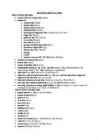
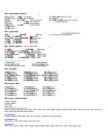
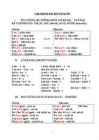
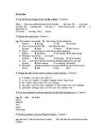
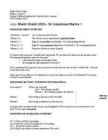
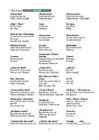
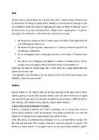
PRONOUNS Object form Possessive Subject form Possessive Reflexive Pronouns Osastav asesõna Omastav Nimetav asesõna Omastav Enesekohased asesõnad Keda? Asesõna + nimisõna Kes? Nimisõna + verb+asesõna Mida? Kelle? Mis? Kelle? (ennast, ise)
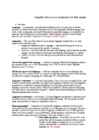
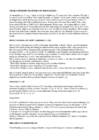
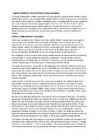
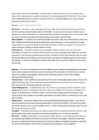
anybody/anyone, anything, each, everybody/everyone, everything, few, many, nobody, none, one, several, some, somebody/someone. Examples: 1) Each has his own thoughts. 2) All have arrived. Relative pronouns A relative pronoun is a pronoun that introduces a relative clause. There are five relative pronouns: who, whom, whose, which, that* Examples: 1) The car which hit me was yellow. 2) Mrs Pratt, who is very kind, is my teacher. Possesive pronouns We use possessive pronouns to refer to a specific person/people or thing/things belonging to a person/people. We use possessive pronouns depending on: number person gender Singular mine, yours, his, hers Plural ours, yours, theirs Examples: 1) Look at these pictures. Mine is the big one. 2) Here is your car. Ours is over there, where we left it. Reciprocal pronouns We use reciprocal pronouns when each of two or more subjects is acting in the same way towards the other.
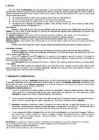
invariable. You use one or the other, depending on the first letter of the word following the article, for pronunciation reasons. Use a when the next word starts with a consonant, or before words starting in u and eu when they sound like you. Use an when the next word starts with a vowel (a,e,i,o,u) or with a mute h. The indefinite article is used to refer to something for the first time or to refer to a particular member of a group or class. movement verb position verb possessive determiner In English grammar, a possessive determiner is a type of function word used in front of a noun to express possession or belonging (as in "my phone"). The possessive determiners in English are my, your, his, her, its, our, and their. As Lobeck and Denham point out, there's some overlap between possessive determiners and possessive pronouns. The basic difference, they say, "is that pronouns replace full noun phrases.
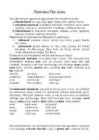
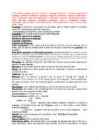
numeral arvsõna, numeraal one, ninety-eight, tenth pronoun asesõna, An item used to substitute for the reference to entities They are in the kitchen. pronoomen which lexical noun phrases indicate. The main sub- Your boxes of photos have been classification include personal (he, you), possessive delivered. Mine will arrive (his, yours), reflexive (himself, yourselves), reciprocal tomorrow. (each other, one another), relative (who, which, that), interrogative (who, what, which), demonstrative (this, that, those), and indefinite (some, none).
· activities (horse) · days (Monday) · months (July) · holidays (Christmas) · colours (red) · drinks (Coke) · meals (lunch) · names of counties (Spain: the Nederlands, the Vatican) · cities (Paris but: the Hague) · streets (Regent Street but: the High Street) · squares (Trafalgar Square) · parks (Hyde Park) · stations (Victoria Station) · individual mountains (Mount Etna) · Islands (Malta) · lakes (Lake Victoria) · continents (Asia) · possessive adjectives e.g. This is her bag. · pubs, restaurants, shops, banks and hotels which have the name of their gounder and end in s or 's. (Tim's Café but: The Flying Dragon
Also the whereabouts of the word in a sentence For example: Kim is an engine driver. → Engine could mean either happy or a mechanical object. Kim seems engine 3) A formal test → With nouns we can test if it contains morphemes which makes word a noun. For example: Noun can have a plural ending s Noun can have a possessive form. Boys’ Nouns usually go with determiners: an apple, a ball, the red car We can determine an adjective if it has a degree of comparison. For example: most beautiful, smaller. 4) A morphological test → What are the different forms a word can have. 5) A function test → What work does the word perform in a phrase or sentence. 2.3 Grammatical categories Grammatical categories divide into
connotes the heroic and that there is little heroism in these pages. But it is used with a suitable irony; and, after all, this long tale, though it may deal with folk in frock coats, furbelows, and a gilt- edged period, is not devoid of the essential heat of conflict. Discounting for the gigantic stature and blood-thirstiness of old days, as they have come down to us in fairy-tale and legend, the folk of the old Sagas were Forsytes, assuredly, in their possessive instincts, and as little proof against the inroads of beauty and passion as Swithin, Soames, or even Young Jolyon. And if heroic figures, in days that never were, seem to startle out from their surroundings in fashion unbecoming to a Forsyte of the Victorian era, we may be sure that tribal instinct was even then the prime force, and that "family" and the sense of home and property counted as they do to this day, for all the recent efforts to "talk them out."
misses, wash-washes, mix-mixes, go-goes, do-does. -ies consonant +-y a country countries, a diary- diaries, a boy boys, a dictionary dictionaries, try tries, play-plaies. -ves lõpulistele f, -fe a leaf leaves , a wolf wolves, a knife knives, a life lives Irregular nouns a man men, a woman women, a child children, a person people, a sheep sheep, a tooth feet, a mouse mice, a goose geese Pronouns Personal : Possessive possessive Object adjective: pronouns: pronouns: I my mine I me wait for me You your yours you-you I love you He his his me-him she isn't in love with him
He/ She/ It has (got) tal/ sellel on He/ she/ it had tal/ sel oli We have (got) meil on We had meil oli You have (got) teil on You had teil oli They have (got) nendel on They had neil oli 1 IV. THERE IS, THERE ARE There is kasutame ainsuse korral. NT. There is a girl. There are kasutame mitmuse korral. NT. There are girls. (mitu) V. OMASTAV KÄÄNE (POSSESSIVE CASE) Vastab küsimusele kelle oma? Father ´ s car Judy ´ s book Mari-Liis ´ s pens (Andres ´ s; Denis ` s; James ` s) Girls ´ hats Children ´ s toys Goose´ s feathers VI. OMADUSSÕNA VÕRDLUSASTMED (COMPARISONS) ALGVÕRRE KESKVÕRRE ÜLIVÕRRE small smaller THE smallest nice nicer The nicest big bigger the biggest
This is governed by certain factors. You can tell when to use the strong or weak declension: An adjective would be declined weak if: 1.It was always declined weak (like most ordinal numbers, and all comparative adjectives) 2.It was preceded by the definitive article ("se/so/æt" and all its declined forms), either of the demonstratives ("se/so/æt" and all its declined forms and "es/is/os" and all its declined forms), or any possessive personal pronoun except for the third person possessive pronouns ("his/hire/heora") - unless the adjective was one of the few adjectives that were always declined strong, like er - "second" 3.It was used in a nickname and came after the personal name it modified (for more info see: Old English/Titles and Nicknames In all other cases, the adjective was declined strong, including if it came after a linking verb: ·I eom grat - "I am great" · wihta wron ftta - "The creatures were fat"). CHARACTERISTIC FEATURES OF MIDDLE ENGLISH
a radio radios 6) erandlikult esineb mõnede f- ja fe-lõpuliste sõnade mitmuse vormis muutus, kus f läheb v-ks, millele lisandub lõpp -es a leaf leaves a thief thievesk a half halves a shelf shelves a knife knives a wife wives teiste f(e)-lõpuliste sõnade mitmuse lõpul on -s a roof roofs a chief chiefs a safe safes OMASTAV KÄÄNE Inglise keeles on nimisõnadel ainult üks käändelõpugamkääne omastav kääne (the genitive / possessive case). Ainsuses olevatel nimisõnadel on omastava käände lõpuks ülakoma + s (´s) Mary´s brother Mary vend Byron´s poems Byroni luuletused the cat´s tail kassi saba Mitmuse omastava käände moodustamiseks liidetakse s-lõpulistele mitmuses olevatele nimisõnadele ainult ülakoma (´) : my parents´ friend mu vanemate sõber the boys´ rackets poiste raketid Kui mitmuses oleval nimisõnal puudub lõpp -s, siis moodustatakse selle
CITATION FORM The citation form of the lexeme is the form that is employed to refer to the lexeme; it is also the form that is used for the alphabetical listing of lexemes in a conventional dictionary. In English, the citation form of a noun is the singular: e.g., mouse rather than mice. For multi-word lexemes which contain possessive adjectives or reflexive pronouns, the citation form uses a form of the indefinite pronoun one: e.g., do one's best, perjure oneself. In many languages, the citation form of a verb is the infinitive: French aller, German gehen, Spanish ir. In English it usually is the full infinitive (to go) although alphabetized without 'to' (go); the present tense is used for some defective verbs (shall, can, and must have only the one form). In
.......me. 15) Are you interested........literature? 16) It depends........the weather. 17) Do you agree........me? 7. Translate using the Modal Verbs. ( 5 points ) 1) Kas sa oskad malet mängida?( oskus ) 2) See on saladus. Sa ei tohi seda kellelegi rääkida.( keeld ) 3) Me peame kiirustama.( käsk ) 4) Kate peaks vähem maiustusi sööma.( soovitus ) 5) Kas ma tohin sinuga kaasa tulla?( luba ) 8. Complete these sentences by adding suitable Personal and Possessive Pronouns. ( 5 points ) e.g. Mary and I do our homework together. 1) If you can`t ski, we will teach........ 2) How will you spend........holiday? 3) She put on.......hat and left the room. 4) Robin works during........holidays to earn money. 5) "Hands up!" shouted the masked man and they all put........hands up. 6) In the evening the boys watched TV with........parents. 7) Before going to the cinema Mary washed........hair. 8) May I borrow........book
Victor begins by telling of his childhood. Born into a wealthy family in Geneva, he is encouraged to seek a greater understanding of the world around him through science. He grows up in a safe environment, surrounded by loving family and friends. When he is around 4 years old, his parents adopt Elizabeth Lavenza, an orphan whose mother has just died (she is Victor's biological cousin in the first edition, but an adopted child with no blood relation in the 1831 edition). Victor has a possessive infatuation with Elizabeth. He has two younger brothers: Ernest and William. As a young boy, Victor is obsessed with studying outdated theories of science that focus on achieving natural wonders. He plans to attend the University of Ingolstadt in Germany. Weeks before his planned departure, his mother dies of scarlet fever. At university, he excels at chemistry and other sciences, and develops a secret technique to imbue inanimate bodies with life.
I do understand that this is just a fantasy novel and not everything has to be deeply realistic and thoroughly explained, but I simply can't understand the dynamics of their relationship. Which is worse, the book makes young girls long for that kind of a creepy, overprotective and somewhat abusive partnership. It sends out a message, that it's perfectly fine, even romantic, to have a boy secretly watch you in your sleep for two months and that it's okay to feel dependant on or possessive about another person a person, who they have nothing in common with and have really nothing to talk about, besides their feelings for each other and the fact that he might turn batsh#t and eat her any second. And she, instead of running at the door, or at least acknowledgning the irresponsibility for her own life, carries on marvelling over his bronze hair, marble skin, sweet breath, sculpted chest and every other part of his finely toned body, that is repeatedly described in purple prose
that serve to mark the function of an NP relative to the construction containing it. Distinctions of case mark the structural and semantic functions of noun phrases within sentences. Common Case and Genitive Case Plain and Genitive case Forms: boy boys boy's boys' child child's children children's Semantic functions of 's: We can use sentential or phrasal analogues to present the different meanings. 1) possessive genitive: the boy's car 2) partitive genitive: the man's head, the baby's eyes 3) subjective genitive: the boy's application 4) objective genitive: the thief's arrest 5) genitive of origin: the student's letter 6) local or locative genitive: the butcher's (shop) 7) genitive of measure: an hour's walk, ten days' absence 8) descriptive or classifying genitive: a man's voice 4. Pronouns: pronoun subclasses!; categories of case, number, person, gender (be ready to
Kshatriyas, kings are publicly & privately devoted to God. Ie sweeping the road in front of Jagannatha's cart is an act of demonstrating publicly being a servant of God. King says: everything belongs to God, I am only caretaker, servant. Everybody else follows his example. When we say that everything belongs to God, it does not mean that we have no responsibilities or that we don't have property. Idea is that there has to be the evolution of consciousness by which people don't come possessive or greedy for accumulating land but understanding thing is the proper broader picture. In Vedic society Krishna's will was taught by brahmanas and implemented by kshatriyas. This way the whole society lived according to Isavasya principle. GOD BRAHMANA KSHATRIYA VAISHYA
What is a Sentence? 139 6 Determiners 71 Kinds of Sentences 140 The Imperative 141 The Articles 71 The Subject and the Object 143 Demonstrative Determiners 73 Direct and Indirect Objects 144 Interrogative Determiners 74 Positive and Negative Sentences146 Possessive Determiners 75 Questions 147 7 Verbs and Tenses 79 14 Punctuation 150 The Simple Present Tense 80 Period 150 Am, Is and Are 83 Comma 151 The Present Progressive Tense 89 Exclamation Point 152 Have and Has 93 Question Mark 152
ape) · Negative connotations are enhanced by constant epithets and empathic constructions (you filthy swine! You lazy dog!) · Transposition may occur within different parts of speech. Adjectives when used as nouns are expressive and often colloquial (my sweet, lovely) · Abstract nouns may start functioning as personal (old oddity--odd person, he's a disgrace to his family) · The possessive case when applied to concrete object makes the noun more prominent (Hollywood's studios) · The suffix `s may be added to a phrase or a sentence the result being humour or colloquial touch. (She is the boy I used to go with's mother) · The ending of the plural may be added to a sentence with the same effect (one I'm-sorry-for-you is worse than twenty I-told-you-sos) · Abstract nouns when used in the plural become expressive (Life is full of the
Formation of Plural Nouns 1. If a singular noun ends in a vowel, just add -s to make it plural: la casa las casas 2. If a singular noun ends in a consonant, a vowel with an accent, or y, add -es to make it plural: el papel los papeles 3. Singular nouns that end in -z change the z to c and add -es to form the plural: la luz las luces 4. A few nouns that have an accent in the singular will lose it in the plural: el lápiz los lápices 20. Possessive Adjectives Initial Forms Terminal Forms singular plural singular plural my mi mis mío / mía míos / mías your tu tus tuyo / tuya tuyos / tuyas your/his/her/it su sus suyo / suya suyos / suyas s
hand in hand · Sex-important theme · I want men and women to thig sex, fully, completely, honestly, and cleanly Instinctive man vs. spiritual woman. Lawrence's women. Lawrence's contradictions: frankness, conflict, disharmony, destruction of manhood, possessiveness of a woman in love. Fascination of a well-born, intelligent woman for a physical, passionately laboring man. Lawrence's personal experiences found peegeldust in his novels. Spiritual, possessive girlfriend. Unsettled life: poor health, stormy relationship with Frieda, German wife of old professor, enlightened him on some ideas of Freud Sons and Lovers. Oedipus complex and the formation of the artist. Largely autobiographical-with claims to universiality. Study of a man having an Oedipus complex. The tragedy of thousand of young men in England.Modernist /freudian .Bildung: not so much in intellectual/aesthetic/social growth: in trying to fitgh the ond of mother's love
e.g You impudent pup!, You filthy swine!, You lazy dog! 7 Sometimes, adjectives are used as nouns and then they become expressive and often colloquial. e.g Listen, my sweet, come on, lovely. Abstract nouns may be used for concrete objects and then these nouns become emotional. e.g the old oddity instead of an odd old person, the litte eccentricity =>eccentric child The possessive case may be added to a phrase or sentence, the result is quite humorous. e.g She is the best boy I used to go to with's mother. Who is she? He is the niece I told you about's husband. The ending of the plural ('s) may be added to a sentence and the effect is colloquial. e.g ,,I'm sorry for you" is worse twenty I told you so's. Abstract nouns used in the plural They become expressive when used. E.g She confronted the injustices, the meanness of our company. 2 Article
sacred, and he respects and admires Jake for his genuine enthusiasm about it. Montoya takes a paternal interest in the gifted young bullfighter Pedro Romero and seeks to protect him from the corrupting influences of tourists and fame. Frances Clyne - Cohn's girlfriend at the beginning of the novel. A manipulative status-seeker, Frances was highly domineering early in their relationship and persuaded Cohn to move to Paris. As her looks begin to fade, she becomes increasingly possessive and jealous. Count Mippipopolous - A wealthy Greek count and a veteran of seven wars and four revolutions. Count Mippipopolous becomes infatuated with Brett, but, unlike most of Brett's lovers, he does not subject her to jealous, controlling behavior. Amid the careless, amoral pleasure-seeking crowd that constitutes Jake's social circle, the count stands out as a stable, sane person. Like Pedro Romero, he serves as a foil for Jake and his friends.
Kasutamine Alusekääne I like icecream. They go to school five days a week. Sihitisekääne · Otse või kaudsihitis Susy would like to see you today. Give me a kiss! Call them and ask what is going on. · Eessõnade järel Everything depends on me. Listen to us! 2. Omastavad asesõnad (possessive pronouns) Isikulised asesõnad Omadussõnaline vorm Nimisõnaline vorm Ainsus my minu mine minu (oma) I your sinu yours sinu/Teie (oma) you his tema (m) his tema (m, oma) he
I kissed him back as if I could eat him alive. My skin was damp and too sensitive, my breasts heavy and tender. My clit throbbed for attention, pounding along with my raging heartbeat. I was vaguely aware of movement, and then the couch was against my back. Cross was levered over me with one knee on the cushion and the other foot on the floor. His left arm supported his torso while his right hand gripped the back of my knee, sliding upward along my thigh in a firmly possessive glide. His breath hissed out when he reached the point where my garter clipped to the top of my silk stocking. He tore his gaze away from mine and looked down, pushing my skirt higher to bare me from the waist down. "Jesus, Eva." A low rumble vibrated in his chest, the primitive sound sending goose bumps racing across my skin. "Your boss is damned lucky he's gay." In a daze, I watched Cross's body lower to mine, my legs sliding apart to accommodate the width of his hips
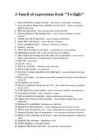
to people become emotionally coloured and often offensive: donkey, duck, mule, snake, wolf, angel, devil, etc. Negative colouring is made stronger by constant epithets and emphatic constructions (e.g. "You filthy swine", "You lazy dog"). Adjectives when used as nouns become colloquial (e.g. "come on, lovely (noun)"). When abstract nouns begin to stand for people they become emotional (metonymy) (e.g. "The little eccentricity." an eccentric child). Possessive case the suffix apostrophe "`s" may be added to a phrase or sentence and the result is humor or colloquial touch. The ending of the plural may be added to the sentence with the same effect. Abstract nouns when used with the plural become very expressive. ARTICLES: the article with a proper name ads a colloquial touch (e.g. "He was engaged to a Mrs. Haggard."). Indefinite article: - with a family name creates evaluative meaning (e.g. "I do not claim to be a Caruso.").
Transposition may occur within different parts of speech. Adjectives when used as nouns become colloquial (e.g. "Listen, my sweat (noun)", "come on, lovely (noun)"). When abstract nouns begin to function as personal (stand for people) they become emotional (dealing with metonymy) (e.g. "The old oddity." an old odd person; "The little eccentricity." an eccentric child; "He is a disgrace to his family." he is a disgraceful son). Possessive case the suffix apostrophe "`s" may be added to a phrase or sentence and the result is humor or colloquial touch (e.g. "She is the boy I used to go with`s mother." "He is the niece I told you about`s husband."). The ending of the plural may be added to the sentence FGI 1081 Stylistics (I. Ladusseva) 7 with the same effect (e.g. "One I-sorry-for-you is worth twenty souls ..."). Abstract nouns
child. You are bigger, stronger, know more, can do more. If that dimension is all you know, you will feel superior to your child, if only unconsciously. And you will make your child feel inferior, if only unconsciously. There is no equality between you and your child because there is only form in your relationship, and in form, you are of course not equal. You may love your child, but your live will be human only, that is to say, conditional, possessive, intermittent. Only beyond form, in Being, are you equal, and only When you find the formless dimension in yourself can there be true love in that relationship. The Presence that you are, the timeless I Am, recognizes itself in another, and the other, the child in this case, feels loved, that is to say, recognized. To love is to recognize yourself in another. The other's “otherness” then stands revealed as an illusion pertaining to the purely human realm, the realm of form
ringer"; "dead march"; "dead eye"; "dead end"; "dead head"; "dead assets"; "dead heat"; "dead bolt"; "dead language"; "dead wrong"; "dead drunk"; "dead tired"; "dead boring"; "dead set (on)"; "the dead of winter." e Prepositions such as "in," "on" and "of" notoriously have no constant meaning from context to context. (Lakoff and Johnson (1980) make this point trenchantly.) f It occurs to me that even affixes and case markers are thus polysemous. The possessive in particular denotes seemingly countless different rela- tionships, only some of them expressible as "ownership" in any sense at all. Metaphor 189 It is true that we are making very fine distinctions here. Someone might well deny that all the foregoing word uses actually differ in meaning, and it may be suggested that some of the differences are only of tone or of connota- tion
 annaabi.ee