Leidsid 33 sarnast õppematerjali, mis on seotud failiga "Nobody can win a war". Need materjalid aitavad sul teemat sügavamalt mõista.
fight, them, matter, reason, cannot, part, something, command, wars, nature, stand, olari, simson, nobody, historically, hook, place, know, along, warrior, enough, greedy, others, force, begin, peoples, goes, powerful, move, never, millions, facthave remained rare and isolated phenomena, since conditions were most likely not yet favorable for a widespread flowering to occur. One day, however, a critical threshold was reached, and suddenly there would have been an explosion of color and scent all over the planet – if a perceiving consciousness had been there to witness it. Much later, those delicate and fragrant beings we call flowers would come to play an essential part in the evolution of consciousness of another species. Humans would increasingly be drawn to and fascinated by them. As the consciousness of human beings developed, flowers were most likely the first thing they came to value that had no utilitarian purpose for them, that is to say, was not linked in some way to survival. They provided inspiration to countless artists, poets, and mystics. Jesus tells us to contemplate the flowers and learn from then how to live
1. A generalist is ignorant from the point of view of a specialist and a specialist is stupid from the point of view of a generalist. 2. All great stupidity is created by geniuses. 3. All stereotypes are true; the fact that you recognize a slur proves that it isn't. 4. Anything you're afraid is true is true. 5. Before most people get to the point of being able to tell their ass from a hole in the ground they're already assholes and it's too late. 6. Concentrating on something important can make you lose track of your soap opera. 7. Debunking the bunk is everyone's responsibility. 8. Don't ask me to pay for anyone else's mistakes. I make enough of my own. 9. Even those who possess real magic must beware of being misled by "magical thinking." 10. Everyone knows what shit tastes like. 11. Exclusive occupancy of a private room is a basic human right. 12. Fair compensation for genius is wealth. 13. God's not perfect, so it's a pretty good bet that you're not, either. 14
· And when you begin to miss me, dont forget it was you who let me go. · There is an end to things no matter how much we want to hold into them. · Otsisin keset seda pimedust, sind ja loodetud vabadust,kui mu käed su poole, tegid alguse loole, printsessist ja printsist, ühest kaunist kandist, kus oleme meie kaks, kus lõbutseme, kuni otsas jaks. Sa ei pea muinasmaad looma, sa ei pea tähti taevast tooma. Ole vaid minu kõrval, kui tõuseb päike. Ole vaid mu kõrval kui mind piinab meeleheide. Ole mu kõrval, kui kumab kuu, kui su nime
Ameerika Kirjandus 30.01.13 Naturalism · France, Emile Zola · Put down his theory in 1879: Le Roman Experimental, attempt to explain the development of human society throuch biological laws · Outlook is deterministic, pessimistic, fatalistic (fate or biology) · Man as an animal-clever than other beasts, still explainable within the framework · Man is not a free agent, is govern by something · Unable to determine his own faith · Hereditary · Naturalists tried to apply in fiction the processes of natural sciences · Writers task is to record facts, systems of behaviour, living conditions, never revealing any natural unbiased (completely natural) · Point of view: amoral-outside the category of morality, neither good or bad · Naturalist find it absurd to blame the wicked. These criminals are doing what nature,
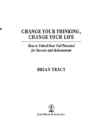
CHANGE YOUR LIFE How to Unlock Your Full Potential for Success and Achievement B R I A N T R AC Y JOHN WILEY & SONS, INC. ccc_tracy_fm_i-xviii.qxd 7/7/03 3:22 PM Page iv Copyright © 2003 by Brian Tracy. All rights reserved. Published by John Wiley & Sons, Inc., Hoboken, New Jersey. Published simultaneously in Canada. No part of this publication may be reproduced, stored in a retrieval system, or transmitted in any form or by any means, electronic, mechanical, photocopying, recording, scanning, or otherwise, except as permitted under Section 107 or 108 of the 1976 United States Copyright Act, without either the prior written permission of the Publisher, or authorization through payment of the appropriate per-copy fee to the Copyright Clearance Center, Inc., 222 Rosewood Drive,
We had high hopes for Africa, for the Black race, that the insidious imposition of foreign rule on us, the looting of Africa’s natural resources by our colonial masters accorded us would be things of history. That is more than forty years ago. Unfortunately, the promise of independence has not been fulfilled. Today, Africa has become more desolate; there is more starvation, diseases and non-provision of essential services than when we got our independence. There are all kinds of wars in Africa than the rest of world put together. The majority of so-called Africans leaders want to stay in power until the day their bodies are put in the grave. Through buffoonery, utter mismanagement and downright stealing of the wealth of the masses, these leaders have so impoverished Africa that we are now nothing but a beggar continent. We beg for everything; we are more dependent on our colonial masters than when we received our independence from them
If you have created something, then try to be open minded Teacher: O'Mahony V.PG 11A 09.03.2009 This written essay here is talking about my thoughts and facts of life, what is around us. First I thought that why is always easier to create something but to destroy is much harder. Exactly there have been so many wars in history. Everybody wanted to own a lot of countries and others had to fight for their created country. Also they started to teach young people to kill and protect their country with killing enemies. Also government tried to keep a low profile, if there were some wars in state. These are my thoughts of creating and keeping something. In the old times were many wars. Some states predominated over other weaker countries or states. Weaker countries had created their own and loved country and they wanted to live like that for a long time
In some cases it forces the mind to concentrate, as to understand. It can help build a moral or ethical framework, and help oneself form an individual worldview. Even an untraveled child, sitting at home, can be transported by a book into any place or time. Fantasy and facts weave together, but the result is almost an unmitigated improvement. If a bookworm grows up to be antisocial or worse, it is not because of too much reading, but because something else was lacking in the education or caregiving. Hands-on learning is another factor difficult to overrate. Imagine trying to learn to draw from listening to a lecture. You must draw, draw, draw, and with time and tutoring, will improve. This is a truism, just like saying "reading is valuable." I imagine nobody complains about children spending too much time working. If anything the contrary complaint rings loudly
kinds of work and leisure. This happened whether the railway functioned in a tropical or a northern environment, and is quite independent of the freight or content of the railway medium. The airplane, on the other hand, by accelerating the rate of transportation, tends to dissolve the railway form of city, politics, and association, quite independently of what the airplane is used for. Let us return to the electric light. Whether the light is being used for brain surgery or night baseball is a matter of indifference. It could be argued that these activities are in some way the "content" of the electric light, since they could not exist without the electric light. This fact merely underlines the point that "the medium is the message" because it is the medium that shapes and controls the scale and form of human association and action. The content or uses of such media are as diverse as they are ineffectual in shaping the form of human association.
ads and the subliminal presentation o Twice as many Reader's Reports- first-person accounts in which readers of odors. of previous editions describe how e Increased coverage of how compliance they've seen a principle work on principles work in other cultures. or for them. Reader's Reports have New insights are derived from the become the most popular feature of research findings, sayings, and customs the book. Boston. New York • San Francisco Mexico City • Montreal • Toronto • London • Madrid • Munich • Paris Hong Kong • Singapore • Tokyo • Cape Town • Sydney Acquisitions Editor: Michelle Limoges Editorial Assistant: Christina Manfroni Executive Marketing Manager: Wendy Gordon
You are extravagant; and it offends me, To see you always decked out like a princess. A woman who would please her husband's eyes Alone, wants no such wealth of fineries. CLEANTE But, madam, after all . . . MADAME PERNELLE Sir, as for you, The lady's brother, I esteem you highly, Love and respect you. But, sir, all the same, If I were in my son's, her husband's, place, I'd urgently entreat you not to come Within our doors. You preach a way of living That decent people cannot tolerate. I'm rather frank with you; but that's my way-- I don't mince matters, when I mean a thing. DAMIS Mr. Tartuffe, your friend, is mighty lucky . . . MADAME PERNELLE He is a holy man, and must be heeded; I can't endure, with any show of patience, To hear a scatterbrains like you attack him. DAMIS What! Shall I let a bigot criticaster Come and usurp a tyrant's power here? And shall we never dare amuse ourselves Till this fine gentleman deigns to consent? DORINE
No other species has ever wielded such power, and no species could. The technology behind the atomic bomb only exists because of a cooperative hive mind: hundreds of scientists and engineers working together. The same unique intelligence and cooperation also underlies more positive advances, such as modern medicine. But is that all that defines us? In recent years, many traits once believed to be uniquely human, from morality to culture, have been found in the animal kingdom (see part one in this two-part series). So, what exactly makes us special? The list might be smaller than it once was, but there are some traits of ours that no other creature on Earth can match. No animal can get close to the devastation humans can cause (Credit: Thinkstock) No animal can get close to the devastation humans can cause (Credit: Thinkstock) Ever since we learned to write, we have documented how special we are. The philosopher Aristotle marked out our differences over 2,000 years ago
something about orientation in zero gravity and that knowledge helped him a lot later. Most of the time passes in Battle School, which is composed of army barracks with rows of bunk beds; dining halls one for soldiers and one for commanders, with scoreboards decorating both; the game room, with various video games for the children to play; battlerooms, where the children have practice and battles in zero gravity; and a gym with shower rooms, where Ender and Bonzo fight. There is also an area for teachers' quarters, which the children never go to, but it is presumably in this vicinity where the conversations between Graff and other adults takes place. After Battle School he returns to Earth before going to Command School. There in the wilderness is a large house, overlooking lakes on either side. Although there are wasps that Ender says will sting without provocation, the setting is peaceful, allowing Ender the mental recovery and relaxation he needs.
a British colony, it would be the American Enlightenment. Broadly, the Enlightenment was an intellectual movement that changed the fundamental perspective of the masses, urging them to foster skepticism and apply scientific principles in matters of religion and morality. Its chief values were: Liberty, Democracy, Republicanism, Religious Tolerance. The movement gained momentum with the publication of landmark texts like Thomas Paine's The Age of Reason, and the Jefferson Bible, but the most influential thinker was undoubtedly John Locke, whose ideas spread to the colonies and across Europe. Main Ideas of the American Enlightenment: The Enlightenment caused a shift in the cultural and social attitudes of the people, bringing in some new and radical ideas. Republicanism: The doctrine of republicanism asserts a system of a government that is elected by the people of the nation
Because of certain int conventions that require the states to have more or less unified traffic signs. States apply international regulations to national regulations and they have to be in accordance with each other, the states can always specify these regulations. Therefore, PIL regulates people indirectly. Another unique feature: domestic law sources have a clear pyramid (top to bottom: constitution, laws, individual contracts, they cannot contradict each other) and all sources are written. In PIL there is no such hierarchy, but there are primary sources (all are equally important) and secondary sources and all are not written. Primary sources: written documents (int treaties, conventions, declarations etc), international customary law (legally binding), fundamental principles (legally binding). PIL= system of (legally binding) norms and principles, written or customary, regulates the
After suffering a light wound, Kemmerich contracts gangrene, and his leg has to be amputated. His death, in Chapter Two, marks the reader's first encounter with the meaninglessness of death and the cheapness of life in the war. Joseph Behm - The first of Paul's classmates to die in the war. Behm did not want to enlist, but he caved under the pressure of the schoolmaster, Kantorek. His ugly, painful death shatters his classmates' trust in the authorities who convinced them to take part in the war. Detering - One of Paul's close friends in the Second Company. Detering is a young man with a wife and a farm at home; he is constantly homesick for his farm and family. Gérard Duval - A French soldier whom Paul kills in No Man's Land. Duval is a printer with a wife and child at home. He is the first person that Paul kills in hand-to-hand combat, one of Paul's most traumatic experiences in the war. Leer - One of Paul's classmates and close friends during the war
40% casualty rate amongst J soldiers, 25% in Red Army. Why higher? Banal explanation, not conspiratorial answer usually right. Drafting begins after debacle after Winter War in Finland (win war at huge losses). Known that war will be on mainland. Mainly European Russia call-up. Js still in former Pale, European Russia. At front during first months and year of war w/o much training. Wehrmacht greatest fight force to time. Doesn't matter if great fighter, won't make it past first few months. Red Army gets better, more proficient, conscription beyond Urals, industrialization. Photography, first few months of war = Europeans. Then you see more Caucasians, East Asians. Not many more j recruits after 1 st year. 4 March 2014 Memorialization of Holocaust. Last week, rise of pop anti-Semitism. Causes? Nazi occ did something, efficiently disseminated targeted anti-Semitism in local langs. Tatars couldn't read Ger, but Tat and Russ
Our lives are fulfilled with lies we enter to our or someone else's mind. A lot of it is connected to people's constant need of power and control. "Animal Farm" is a book that reverberates that kind of human nature through politics, dictatorship and power, but in nowadays' World this kind of behaviour occurs also in our everyday life, not only politics. First of all humans are in a constant need of power. The essence of the power does not even matter as long as they have some kind of control. It could be control over some group, over a person and his mind, actions and thoughts or just over a certain situation where we want to gain a higher role so everything could be under their command. People are willing to do everything to get others under their control. In "Animal Farm" Napoleon's first act to gain his leadership was the betrayal of his fellow leader and friend Snowball. Napoleon and Snowball did not agree on their views of leading
Mantra 15.-18. Prayers to Ishvara to reveal Himself If I want to obey someone, I should know this person. We can know the Ishvara by the spiritual vision. Developing the spiritual vision has two parts: · cultivating the proper knowledge & then · developing the right disposition of the heart Yet to understand the Supreme Lord is not just an intellectual exercise, we have to offer both the head & the heart to the Lord. This is part of our endeavor, but ultimately it is up to the Supreme Lord to reveal Himself. So we pray to Him to reveal Himself. ISOPANISAD SECTION 1 OVERVIEW (INVO-MANTRA 3) Invo-mantra 1 What is the principle? Invo - Everything is perfect. Mantra 1 Everything belongs to the Ishvara Ishavasya
"Anna Karenina" Lev Tolstoi Part 1 The novel opens with a scene introducing Prince Stepan Arkadyevitch Oblonsky, "Stiva", a Moscow aristocrat and civil servant who has been unfaithful to his wife Darya Alexandrovna, nicknamed "Dolly". Dolly has discovered his affair - with the family's governess - and the house and family are in turmoil. Stiva's affair and his reaction to his wife's distress shows an amorous personality that he cannot seem to suppress. In the midst of the turmoil, Stiva reminds the household that his married sister, Anna Arkadyevna Karenina is coming to visit from Saint Petersburg. Meanwhile, Stiva's childhood friend Konstantin Dmitrievich Levin ("Kostya") arrives in Moscow with the aim of proposing to Dolly's youngest sister Princess Ekaterina Alexandrovna Shcherbatskaya, "Kitty". Levin is a passionate, restless
Philosophy of Language Philosophy of Language: a Contemporary Introduction introduces the student to the main issues and theories in twentieth and twenty-first-century phi- losophy of language, focusing specifically on linguistic phenomena. Topics are structured in four parts in the book. Part I, Reference and Referring, includes topics such as Russell's Theory of Descriptions, Donnellan's distinction, problems of anaphora, the description theory of proper names, Searle's cluster theory, and the causalhistorical theory. Part II, Theories of Meaning, surveys the competing theories of linguistic mean- ing and compares their various advantages and liabilities. Part III, Pragmatics and Speech Acts, introduces the basic concepts of linguistic pragmatics,
and four to see the place, and was so much delighted with it, that he agreed with Mr. Morris immediately; that he is to take possession before Michaelmas, and some of his servants are to be in the house by the end of next week." "What is his name?" "Bingley." "Is he married or single?" "Oh! Single, my dear, to be sure! A single man of large fortune; four or five thousand a year. What a fine thing for our girls!" "How so? How can it affect them?" "My dear Mr. Bennet," replied his wife, "how can you be so tiresome! You must know that I am thinking of his marrying one of them." "Is that his design in settling here?" "Design! Nonsense, how can you talk so! But it is very likely that he may fall in love with one of them, and therefore you must visit him as soon as he comes." "I see no occasion for that. You and the girls may go, or you may send them by
in church people it may easily be in somoone who is always ready to help othersand share their burden. Drug dealers does not care if somoone dies because of their drugs, they just care about money and power. Usually those people can not be cured, there is no help for them they just lust for money. One person who wishes good for everyone is not enough because there is not much that he can do alone, he needs strong assistance. But If that person still does help others no matter of the difficulty then it is clear that he/she has a good inside of herself/himself. God is good and wishes the best for everyone, but it does not happen because of the devil, because his mission is to keep everything equal even if it doesn't seem like there are equal amount of good and bad people in world. It seems like there are a lot of theese kind of people who just doesn't care of others misfortune. They seem like neutral in the fight of good and
Color-- -1- -2- -3- -4- -5- -6- -7- -8- -9- Text Size-- 10-- 11-- 12-- 13-- 14-- 15-- 16-- 17-- 18-- 19-- 20-- 21-- 22-- 23-- 24 TWILIGHT By Stephenie Meyer Contents PREFACE 1. FIRST SIGHT 2. OPEN BOOK 3. PHENOMENON 4. INVITATIONS 5. BLOOD TYPE 6. SCARY STORIES 7. NIGHTMARE 8. PORT ANGELES 9. THEORY 10. INTERROGATIONS 11. COMPLICATIONS 12. BALANCING 13. CONFESSIONS 14. MIND OVER MATTER 15. THE CULLENS 16. CARLISLE 17. THE GAME 18. THE HUNT 19. GOODBYES 20. IMPATIENCE 21. PHONE CALL 22. HIDE-AND-SEEK 23. THE ANGEL 24. AN IMPASSE EPILOGUE: AN OCCASION twilight STEPHENIE MEYER LITTLE, BROWN AND COMPANY New York Boston Text copyright © 2005 by Stephenie Meyer All rights reserved. Little, Brown and Company Time Warner Book Group 1271 Avenue of the Americas, New York, NY 10020 Visit our Web site at www.lb-teens.com First Edition: September 2005
what?" and ,,Who will decide over it?". It is not exactly like that but it is quite close to the trough, to begin with. The first question includes material amenity's, and dividing rights and liberties.(Wolff, 1996) What is power? It is ability to influence others to do something they otherwise would not. Also, others can be affected with threats and force. (Kilp, 2010) Political power includes also right to force the others and to punish them if they disobey. Who should have that kind of power? Actually the political power is quite mysterious by itself. If someone has legitimate political power over me then he or she has a right to force me to do things that they want.(Wolff, 1996) But how can other person have rights to tell me what I have to do? It feels insulting if someone says to me what I have to do especially if he or she thinks that he or she has a right to punish me if I disobey. But of course there is a different view
Maturita Solutions Advanced Workbook Key stand bananas and coffee! It's a bit 3 1 to 8 of Unit 1 uncanny really. Is it something she's 2 about 9 century passed on to me genetically, or is it 3 like 10 assumed / 1A Memories page 3 learned behaviour? Who knows? 4 of thought / 1 See exercise 2 2 5
Vocabulary: to criticize - tasteless overcooked - ingredient - to invent - sauces - to disguise - spice herb - delicious - disappointing - to lend cuisine British Youth (2) Most 18 and 19 year-olds in Britain are quite independent people. English people say that children grow up more quickly now. Relationships within the British family are different now. Children have more freedom to make their own decisions. For example, children aged 13 may be employed part time in Great Britain. Age 15 is legally a "young person" not a "child". Age 16 is a school leaving age. They can leave home, drive a moped, marry with "parents' consent" buy beer. Age 17 can drive a car. Age 18 can vote, get married, drink in pubs. Education is a very important part in the life of British youth. One can't become an independent person without it. When time comes to enter a college a young Englishman chooses one far away from home. It is a necessary part of becoming adult.
But now last times I have become much more lazier than I were. Maybe it is because of that I have not everything all right at home and it disturbes my studying at school. It is difficult to concentrate to my lessons at school and even at home. It takes me that I have no mood to learn and I start to keep aside from studies. But it is against the rules at school, because it is school duty to go orderly in lessons, listen to the lessons subjects and to do my homework. Along with school rules goes offcourse listening to the teachers talk too. Students are obliged to listen to the teachers talk correctly with attention in lesson. To say something against teacher's words is verboten at school. Same way is verboten to say them badly or abuse them, because to this may follow a punishment. Under the punishment belongs at school a comment, reproof or written explanation about the behaviour. I have got comments mostly from one teacher. It was exactly my ninth manual
Always keep moving fowards no matter what happens in life! There is never such thing as “I can’t move on, I am hurt, I am feeling depressed”, there just isn’t. Motivation isn’t something what just comes by a random chance. It is something what needs to be understood and observed with feelings and emotions. Motivation comes from the past incidents what I have had and have been through with. I know what I have been thorugh with and how hard the times can get in life but then I can’t just give up my life, I can’t surrender my body to drugs or alcohol in order to forget or ignore the problems. I have to have another view to life. A view that is full of positive energy, good vibes, happy feelings and fantastic emotions.
He was fed up with the penal laws where offenders met corporate punishment and together with Cesario Beccaria he stood up to torture, corporal punishment, and the death penalty. He resisted against irrational moral emotions as the instigation for ethical conduct, saying only reasonable grounds could justify the moral decisions of individuals and legislators. And now his theory of is the one that is known for justifying torture (Verplaetse, 2008). Since 9/11 and the following fight against terrorism it became clear that the Bush administration thought of torture as something justifiable while it goes against all possible agreed upon treaties and conventions. One could indeed possibly think of situations that could serve as an exception to the prohibition of torture but these hypothetical situations can hardly relate to real situations. The ticking bomb argument looks at the hypothetical case where a leader of a state
contrast with, and thereby accentuate, those of another character) for Jake and his friends in that he carries himself with dignity and confidence at all times. Moreover, his passion for bullfighting gives his life meaning and purpose. In a world of amorality and corrupted masculinity, Romero remains a figure of honesty, purity, and strength. Montoya - The owner of a Pamplona inn and a bullfighting expert. Montoya sees bullfighting as something sacred, and he respects and admires Jake for his genuine enthusiasm about it. Montoya takes a paternal interest in the gifted young bullfighter Pedro Romero and seeks to protect him from the corrupting influences of tourists and fame. Frances Clyne - Cohn's girlfriend at the beginning of the novel. A manipulative status-seeker, Frances was highly domineering early in their relationship and persuaded Cohn to move to Paris. As her looks begin to
1. What is the object of philosophical study? The object of philosophical study is being itself on an abstract level. Everything and nothing can be or exist. Things like colour, nature, material things like a table just are, but the meaning of being in be-ing in itself is unclear. Non Material things can also be or exist. If something is, then it is a being. But what exactly is this IS that we can see or on the opposite can not see? Therefore this is one of the fundamental questions of philosophy. 2. Can you reject solipsism? Solipsism (solus ipse) means nothing exists, therefore everything is an illusion outside of our own minds
Facebook and it seem to be talking to you personally, maybe this is no coincidence ?. Mr Warren and Mr Brandies in their essey wrote about gossiping, nowdays we use gossiping to, but in more ,,convenient" ways. If I say ,,convenient" I think all this political campaigns in our news, online or on TV, are full with constant stream of memes, links and rumors about political leaders and candidates, mixt with truth and lies. With those gimmicks they can focus our minds to choose ,,wizely", to choose THEM in the next elections. They also introduced that gossip is becoming a trade, this is no longer talked behind closed doors and resource of the idle but jornalism can make gossip an industry. Its in peoples nature to satisfy ther curiosity with gossip about other people sexual relations in the news columns of the daily papers. Journalists are hired to present stories that news consumers want, and if they don't, their business may collapse
 annaabi.ee