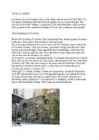
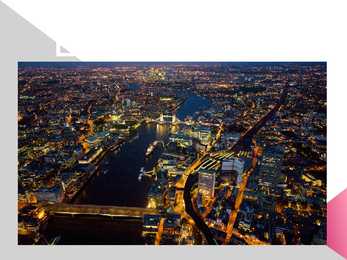
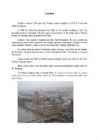
London has 7,556,900 inhabitants, which is more than a quarter of the countries in Europe! For one city, London is very special. The beginning of London Before the founding of London, there had already been smaller groups of people in the area. There aren't any records on who they were. The first mayor settlement of London was in 43 AD. Romans came to the banks of the river Thames. They built houses, a port and a bridge over the river (later known as London Bridge). They named the place Londinium. In the year 200 they built a wall around their city. The wall doesn't exist today, but a part of it can be seen near the Museum of London. In the year 61 Londinium was burned down. The houses were made out of wood back then, so this was easy to do. The people, who destroyed the city, were from the Iceni tribe. The tribe was located to the north-east of Londinium. They had bad relations with the Romans, which is why they burned down the place. London was rebuilt in the year 100.
London for almost 1,000 years. There are several royal palaces in the capital. St James's Palace was built by King Henry VIII in the 16th century. Since 1837 the monarch has lived in Buckingham Palace LONDON'S EARLY HISTORY The Romans invaded England in 43 AD. They landed in Kent, made their way to the River Thames and sailed up it. Then they settled in a place on the north bank, where the river was not to wide. This settlement was called Londinium. A bridge was later built across the Thames. Roman London Tribes in England fought the Romans. The Iceni tribe, led by Queen Boudicca, burned down Londinium in 61 AD. The Romans later defeated the tribes and restored Londinium. It became the capital of Roman Brittan. A Basilica, forum and fort were built, plus a wall around the city. The Romans ruled until 410. Medieval London After Edward came King Harold in1066. Later that year he was defeated by William, Norman duke
LONDON The history of the town is very closely linked with the history of the country itself. The name probably comes from the celtic words Llyn, which means a lake, and Dun, which means a fort or a strong place. Although the site was not important during the Celtic period (400 BC 43 AD) During the Roman occupation Londinium, as it was called then, was not influential politically, but was, however an important crossing point for the romans over the river Thames. Londinium was at a very good place, so it soon became a trading centre. In AD 61 the city was devastated by Boudicca, who led a revolt againt the Roman conquest of Britain. The city was burned down and its inhabitants massacred. London was rapidly rebuilt, becoming the capital of the province Britannia. AD 122 Roman walls were built around it as a Around AD 400 the Anglo-Saxons invaded Britain. They destroyed the roman towns and formed many kingdoms that were hostile to one another
London London is the capital of England and of the United Kingdom. It`s one of the most populated cities in the world. More than 7 million people live in London today. London is situated in south-eastern England on the River Thames. The Romans started to build a town on the River Thames about 2000 years ago. They called their town Londinium and that`s where the name London comes from. London is made up of two ancient cities that are now joined together - the city of London and the city of Westminster. London is famous for it`s parks. Hyde Park is one of the largest and nicest of them . In summer you can walk in the park have a picnic or rent a small boat and go fishing. Hyde Park is also a place for big rock concerts - the Beatles, the Rolling Stones, Queen, the Red Hot Chilli Peppers and the Foo Fighters
LONDON London is the capital of England and the United Kingdom, the largest metropolitan area in the United Kingdom, and the largest urban zone in the European Union. London is located on the River Thames. The capital of England has been a major settlement for two millennia, its history goes back to its founding by the Romans, who called it Londinium. Since at least the 19th century, the name London has also referred to the metropolis developed around this core. The registered population of London is 7,825,200. However, Estonian's native language is English, many people also speak Cornish. Although, the city operates a system of bus, tube and train and also boats routes to all parts of London and also England, it's still not enough. Along the River Thames are House of Parlament, Westminster and many other places. There are many
LONDON KRISTINA KASEMÄGI CONTENTS • GENERAL • HISTORY • CLIMATE • THINGS TO SEE • THINGS TO DO GENERAL o London is the capital city of England and the United Kingdom. o It’s situated in the South East of England with population of 14 million people. HISTORY oLondon is one of the oldest cities in the world, and it was founded by the Romans in 40 A.D. and called Londinium. CLIMATE • London has a temperate marine climate like much of the British Isles, so the city rarely sees extremely high or low temperatures. THINGS TO SEE o THE TOWER OF LONDON o THE LONDON EYE o TOWER BRIDGE o BIG BEN o THE HOUSES OF PARLIAMENT 1 o ST JAMES’S PARK THE TOWER OF LONDON THE LONDON EYE TOWER BRIDGE BIG BEN, THE HOUSE PARLIAMENT 1 AND FAMOUS RED DOUBLE DECKER BUS ST JAMES’S PARK THINGS TO DO IN LONDON You can:
London There were some people living on the banks of the Thames, when the Romans came to England in 43 AD. But we don't know much about them. The Romans built houses, a port and a bridge over the river and named the place Londinium. The bridge which was built by the Romans was later known as London Bridge and it was built in stone in 1176. London soon became the largest city in England and by the time of the Norman Conquest in 1066 it had become the most important city in Britain. It grew area and population until September 1666, when the Great fire destroyed four fifths of the wooden buildings in the City. The fire began in the kitchen of the King's baker in Pudding Lane and lasted for five days
London There were some people living on the banks of the Thames when the Romans came to England in 43 AD. But we don't know much about them. London first called Londinium . In 200 they built a wall around their city, a part of which can still be seen near the Museum of London . London Bridge was built in stone in 1176. It was London's only bridge until 1729. Now there are about twenty bridges . London soon became the largest city in England and by the time of the Norman Conquest in 1066 it had become the most important city in Britain
THE CITY OF LONDON History The City of London occupies one square mile in the middle of the capital. It once made up entire town of London, surrounded by the wall first built by Romans. The Romans also built a bridge over the Thames and there has been one in the same area ever since. The Roman Londinium grew up on the northern side of the bridge. In AD 61 the native Celtic tribe, led by Queen Boudicca, rose up against the Romans. They burnt down Londinium to the ground and killed most of its inhabitants. Roman armies eventually defeated Boudicca and Londinium was rebuilt. At the end of the fourth century AD the Roman Empire began to crumble and the Roman armies were recalled from Britain to defend Rome itself. Once they had left, tribes such as Angles, Saxons and Jutes invaded and settled in from Holland, Germany and Denmark. Together they are known as Anglo-Saxons. They were farming people who preferred living outside towns. For
The history of London There were some people living on the banks of the Thames when the Romans came to England in 43 AD. The Romans built houses, a port and a bridge over the river and named the place Londinium. The bridge which was built by the Romans was later known as London Bridge and it was built in stone in 1176. It was London's only bridge until 1729. Now there are about twenty bridges crossing the river within London. London soon became the largest city in England and by the time of the Norman Conquest in 1066 it had become the most important city in Britain. It grew in area and population until September 1666, when the Great Fire destroyed four fifths of the
Brent 29.Haringey 13. Ealing 30.Enfield 14. Hounslow 31.Barnet 15. Richmond 32.Harrow 16. Kingston 33.Hillingdon 17. Merton Details of London London is the capital city of England and the United Kingdom Located on the River Thames Romans called it Londinium Since at least the 19th century has this town called London The mayor of London is Boris Johnsonc, since 4 May 2008 London is a leading global city And also London has been described as a world cultural capital London has the third most international visitors in the world London's 43 universities form the largest concentration of higher education in Europe More than 300 languages are spoken within its boundaries It is the most populous municipality in the European Union
London - The City and Beyond The statue of a bronze dragon on Fleet Street is the entrance to the City of London. This is where the Romans founded Londinium almost two thousand years ago. The City covers about 2,6 square km (1 square mile) and is often called the Square Mile. Today, the City of London is one of the world's most important business and financial centres, with over 500 banks. Over 400 000 people work within the Square Mile during weekdays and it is a crowded and noisy place. The Barbican Centre is a very big complex of buildings, towers, garages and walkways. It was built in the 70s and most Londoners don't like the way it looks
1) London was definitely not an important place during the Celtic period. It was just a mosquito-infested swamp. 2) London became a trading centre during the Roman occupation. It was an important crossing point for the Romans over the river Thames. Market forces began to operate. With troops stationed and ships calling, merchants will inevitably set up shops. 3) The Celtic warrior queen Boudicca and her tribesmen fought against the Roman conquest and devastated Londinium. The city was burned down and its inhabitants massacred. 4) London was rapidly rebuilt and in AD 122 the Roman walls were built around it as a defence. 5) The Romans left Britain early in the 5th century because they had to cope with troubles elsewhere in the Empire. 6) Around AD 400 the Germanic tribes invaded Britain. 7) London fell into ruins because the Anglo-Saxons destroyed the Roman towns and formed many kingdoms that were hostile to one another.
The Romans lead by Julius Caesar attempted to invade Britain twice before that in 55 and 54 BC but the invasions were unsuccessful. They made their way to the river Thames and sailed up it. The Romans knew it was important to control a crossing point at the river Thames, so they decided to build a settlement on the north bank. Although small settlements had been built on the banks of the Thames, the Romans were the ones who built the first city. They called their city Londinium. The Roman engineers noticed that the point where the swampy river narrowed would make an ideal crossing point, they built London Bridge. Less than 20 years later the native Iceni tribe, led by Queen Boudicca, rose up against the Romans in revenge for mistreatment and burnt Londinium to the ground. The well disciplined Roman army defeated her forces and Londinium was rebuilt. By AD 100 it had also become the capital of the Roman province. A
1: When was London founded, and by whom? London, England was founded in A.D. 43 by the Romans 2: What was its original name? Londinium 3: What happened to London in 61 AD? 61 AD Boadicea, the queen of a tribe of Britons, led a rebellion against the Romans 4: What was the population of London in the second century AD? Around 60,000 5: What happened in 851 AD? 6: What did Alfred the Great do? He defended Anglo-Saxon England from Viking raids, formulated a code of laws, and fostered a rebirth of religious and scholarly activity. His reign exhibits military skill and
Roman Britain 1.Ülesanne 1.Roman empire exited,more then 400 years ago. 2.Colchester was the capital of Britannia for some time,soon London or Londinium became the capital 3. Romans speaked Latin. 4. Roman rules Britannia. 5. Julius Ceasar ,Hadrian 6. Romans rules Britain before the Vikings. 2.Ülesanne a–2 b–5 c- 1 d-3 e–4 3.Ülesanne 1–d 2–g 3- i 4–h 5–j 6–a 7–b 8–f 4.Ülesanne 55- Julius Ceasar first came to Britain in the year 55 BC (before Christ ).
London London is almost 2,000 years old. Romans came to England in 43 AD. It was first called Londinium. In 1666 the Great Fire destroyed four fifths of the wooden buildings in the City including St Paul`s Cathedral. The fire began in the kitchen of the King`s baker Thomas Farriner in Pudding Lane and lasted for five days. London is the capital of England and the United Kingdom. By now London has swallowed up many of the small towns and villages that once surrounded it. London is on the same latitude as Warsaw. London is a city were more than 7 million inhabitants live.
gold. How long did the Romans stay in Britain? The Romans remained in Britain from 43 AD to 410 AD. That is almost four hundred years (four centuries). Why did the Romans leave Britain? Their homes in Italy were being attacked by fierce tribes and every soldier was needed. The River Thames was quick way to transport goods between Britain and the Continent. The Romans saw this and built the town of Londinium around the river's main crossing point. The Romans gave britain: Language The language we used today was developed from the Romans. The Romans spoke and wrote in Latin and many of our words are based on Latin words. The Calendar the calendar we use today is more than 2,000 years old? It was started by Julius Caesar, a Roman ruler. It is based on the movement of the earth around the sun, and so is called the 'solar calendar.' The solar calendar
rejoicing and crisis. ST.PAUL'S CATHEDRAL: St Paul's Cathedral is the Anglican cathedral on Ludgate Hill in the City of London and the seat of the Bishop of London. The present building dates from the 17th century and is generally reckoned to be London's fifth St Paul's Cathedral, not counting every major medieval reconstruction as a new cathedral. The cathedral sits on the highest point of the City of London, which originated as the Roman trading post of Londinium situated on the River Thames. The cathedral is one of London's most visited sights. THE NATIONAL GALLERY: The National Gallery in London, founded in 1824, houses a rich collection of over 2,300 paintings dating from the mid-13th century to 1900 in its home on Trafalgar Square. The gallery is a non-departmental public body; its collection belongs to the public of the United Kingdom and entry to the main collection (though not some special exhibitions) is free of charge.
The City of London History The City of London occupies one square mile in the middle of the capital. It once made up the entire town of London, surrounded by the wall first built by the Romans. The Roman Londinium grew up on the northern side of the "London Bridge" in the past. Products such as olive oil, wines and fruit were brought by ships from different parts of the Roman Empire and unloaded onto wooden quays along the river. In AD 61 the native Celtic Iceni tribe, led by Queen Boudicca, rose up against The Romans. They burnt Londinium to the ground but Roman armies eventually defeated Boudicca. The city was rebuilt and was gradually surrounded with a wall
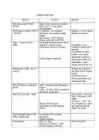
LONDON HISTORY PERIOD EVENTS PEOPLE The Celtic period (400 BC Name: Celtic words (Llyn (a lake) + AD 43) Dun (a fort or strong place) ) Not important The Roman occupation (AD 43 Londinium not important Boadicea a revolt against - AD 410) politically. An important trading the Roman conquest centre. Devastation AD 61. Rebuilt. Roman walls built in AD 200. Anglo Saxons (AD 400 Destroyed the Roman towns. Many 1066) kingdoms. London in ruins. King Egbert one Flourishing
vaid tegeles parema meelega näitlemise, kirjanduse, spordiga ja muude kirgede rahuldamisega Välispoliitiline olukord ei olnud just kõige parem probleeme oli Britannias, Armeenias ja Juudamaal Britannia Ülestõus roomlaste vastu Icen'i kuninganna oli vihane enda ja tütarde halva kohtlemise pärast. Lühikese ajaga hävitati ja põletati maatasa roomlaste linnad Camulodunum, Verulamium ja Londinium Tapeti oletatavasti ligi 70 000 roomlast. Nero võimu langus Nero suhted senatiga hakkasid halvenema 65. aastal tekkis esimene vandenõu Nero vastu, mida juhtis senaator Gaius Calpurnius Piso Keiser taheti tappa sama aasta aprillis Cerese auks korraldatavate mängude ajal ja uue valitseja pidi valima senat. Nero võimu langus Senati vandenõu luhtus liiga palju inimesi teadsid sellest, osalised reetsid end.
Snow occurs sometimes in winter but rarely settles more than a few millimetres deep. History The origin of London may be dated around the beginning of the 1st century AD, when a Celtic tribe settled near a fordable point of the Thames. L achieved real importance following the Roman conquest under Claudius (43AD). The Romans build a bridge, somewhat east of the present city. This bridge soon was part of a trade road and attracted more and more traders. Soon the flourishing city Londinium came into existence. The Romans rebuilt the town into a centre of great importance. After the Romans withdrew from Britain in the Picts, Scots, Jutes, Angles and Saxons invaded London. It started to expand again under the Saxon kings. London was described as a commercial centre into which goods from all parts of the world flew by land and sea. King Alfred the Great repopulated and fortified the city. Edward the Confessor started to
Kristi . 8a. klass LONDON History .... There were some people living on the banks of the Thames when the Romans came to England in 43 AD . The Romans built houses , a port and a bridge over the river and named the place Londinium. In September 1666 , when the Great Fire destroyed four fifts of the wooden buildings . The fire began in the kitchen of the King ´s baker in Pudding Lane and lasted for five days . London . London is an exiting city . The population of London is about seven million people and it is made up of the people of very many nationalities . There are nine piers where you can get a boat and enjoy numerous sights like .... The Tower of London Click to edit Master text styles
o The Celts are best known for their art- many bronze objects with elaborate designs; brooches; pins; mirrors; Celtic stone crosses o The Celts had 3 social orders: warriors, druids(priests) ordinary people 2) The Romans o (55 BC-Caesar) 43 AD- 410 AD- Claudius o From present-day Italy o Southern Britain became Britannia and was ruled by a roman governor o The Romans built over 20 towns: Colchester, Londinium, Winchester etc. They were good engineers and built roads and villas that had central heating, glass windows and mosaic floors o 122 AD- Hadrian's Wall; 138 AD- Antonine Wall o Druids(celtic priests) were banned and Britain was influenced by christianity 3) The Germanic Invasions I. The Anglo-Saxons o 5th century- 1066
London is the biggest city in Britain and in Europe.From Estonia the easiest and. the fastest way to travel there woulb be by plane. Sights are Big Ben, House of parliament, the tower, tower bridge, buckingham palace.. London was the first city in the world to have an underground railway, known as the 'Tube'. is the business and financial heart of the United Kingdom. It was the original Roman settlement (ancient Londinium),.Also Buckingham Palace, the official London residence of the Queen and the Royal family are located there too. 25. Longer discussion point British Educational System: write as much as you can, why is it like it is nowadays, what has influenced it, what is it like, advantages and disadvantages, your own views, etc. Formal eduxation since Middle ages. Iin public schools it costs £3ooo+per term, there are 3 in a school year. Schools have uniforms
London is made up of two ancient cities which are now joined together: the City of London, known simply as ´the City` which is the business and financial heart of the United Kingdom, and the City of Westminister, where the Parlament and most of the government offices are located. Also the Buckingham Palace, the official London residence of Queen and the Royal family are located there too. London was founded by the Romans in AD 43 and was called Londinium. In AD 61 the town was burnt down and when it was rebuilt by the Romans it was surrounded by a wall. When William the Conqueror conquered England in 1066 he made London his base. He built the Tower of London and was crowned in Westminster Abbey. During the Tudor period London became an important economic and financial centre. 1666 was the Great Fire of London, which destroyed most of the city, after the fire many buildings were built in a much safer way. During the Victorian
Külastuskohtad ja vaatamisväärsused London · 12. sajandi alguses sai London Inglismaa pealinnaks. · Rahvaste Ühenduse keskus. London on Moskva järel Euroopa suurim linn, Rotterdami järel Euroopa suurim sadamalinn ning New Yorgi järel maailma tähtsaim rahandus- ja kaubanduskeskus. · Londoni rajasid Thamesi jõe alamjooksule ca 2000 aastat tagasi roomlased. · Londinium · Pimedal ajal jäeti linn maha. Londoni taastati 886. aastal. · Linna laastasid 1665. aasta katk, kus suri pool elanikkonnast ja 1666. aasta suur tulekahju, kus oli kannatanuid ainult 9. · 2012. aastal toimusid Londonis 2012. aasta suveolümpiamängud. Londonis on olümpiamänge toimunud veel aastatel 1908 ja 1948. · Londoni metroo (London Underground) on maailma vanim metroo. See avati 1863.
city. London is a major tourist attraction with four world heritage sites, several royal parks and numerous iconic landmarks such as the Houses of Parliament, Towe Bridge, the Tower of London, Westminster Abbey and the London Eye. 2. History Although there is some evidence of a permanent settlement before the Romans came in 43 A.D., it is more accepted by historians that the Romans were the first. The settlement was called Londinium. The first London lasted for just seventeen years, for around AD 61, a tribe of Celts led by Queen Boudica stormed London, burning it to the ground. The next heavily-planned London prospered and surpassed Colchester (another major city at the time) as the capital of the Roman province of Britannia. At its height in the 2nd century, Roman London had a population of about 60,000. However, by the 3 rd century, the city fell into a decline due to trouble in the
In about 500 BC came the people whose homeland was near the Rhine River. These were the Celts. The Roman invasion began in 43AD. The Romans were highly organized conquerors. They built good roads, baths and bridges. The Romans stayed in the British Isles up to the 5th century. The remarkable thing about the Romans is that, despite their long occupation of Britain, they left very little behind. Most of the villas and temples the impressive network of roads and the cities they founded, including Londinium, 4 were soon destroyed. The next invaders were the Anglo-Saxons. They came from nowadays Germany, Holland and Denmark. In 1066 the last successful invasion was made by French-speaking Normans. French became the language of the ruling class, Latin was the written language. By the 14th century, however, English began to replace both French and Latin, but the English
Suurbritannia ja Põhja-Iirimaa Ühendkuningriigi piirkond Iirimaa saare kirdeosas. Hõlmab enamiku ajaloolisest Ulsterist. Pealinnad London on Suurbritannia pealinn ja Rahvaste Ühenduse keskus. London on Moskva järel Euroopa suurim linn, Rotterdami järel Euroopa suurim sadamalinn ning New Yorgi järel maailma tähtsaim rahandus- ja kaubanduskeskus. Londoni rajasid Thamesi jõe alamjooksule ca 2000 aastat tagasi roomlased. London (Londinium) oli 1.-5. sajandil roomlaste Britannia-valduste keskus. Pimedal ajal jäeti linn maha. Londoni taastas Alfred Suur 886. aastal. 12. sajandi alguses sai London Inglismaa pealinnaks. 17. sajandist 20. sajandi alguseni oli London üks maailma tähtsamaid linnu. Linna laastasid 1665. aasta katk ja 1666. aasta suur tulekahju. 19. sajandil ja 20. sajandi alguses koondus Londoni paljude maade revolutsioonilise meelsusega pagulasi. Elanikke: 7 517 700 (2005), Pindala: 1579 km²
sunnismaised talupojad pärisorjad; võimalus linna pageda, muidu maa-alalt ei tohtinud lahkuda 5. Suurbritannia rahvad indoeurooplased piktid keldid 10.-6.saj eKr üle kogu Lääne-Euroopa, Lõuna-Euroopa ja Kesk-Euroopa belgid sisseränne kuni 1.saj pKr katuvellaunid 1.saj I pool rauatootmine, keldi sepad rauast ümbrisega ader, adranuga, raudvikat, käsikivi 43 roomlased Caesar uus provints Britannia (Londinium) 60-61 belgide, keltide suur ülestõus (ebaõnnestus) Hadrianuse vall 2.saj (asevalitseja Agricola käsul) Antoniuse vall 100km põhjapool (keiser Antonius Pius) 5.saj Anglosaksid: angled, jüüdid, friisid, saksid iiri, gaeli e soti, mänksi, kõmri e uelsi, korni ja bretooni keeled 9.saj tõusis esile Wessexi kuningriik 829 Wessexi kuningas Egbert Inglise kuningriik ristiusustamine 6.-7.saj II pool (Iiri mungad) 8
Britanniasse asusid ka gallialasi, kelle seas oli juhtiv osa katuvellaunidel. Nende käigus ühendas 1.s I poolel pKr oma võimu alla mitu Kagu-Inglismaa hõimu. Keltide majanduslik edukus tulenes rauatootmiselt ja seppade osavuselt. Nende relvad olid väga hinnatud. 43. aastal maabusid rooma väed briti rannikule. Vastuastunud katuvellaunide vägi purustati ning rooma riik sai endale provintsi Britannia. Võeti tagasi Camulodunom, Londinium ja teised rooma keskused. Rooma kaitse piirdus muldvalli ja tornidega. 5.s keskpaigast algas germaani hõimude massiline sissetung Britanniasse. Anglid, saksid ja jüüdid lähtusid Saksamaa põhjarannikult ja Jüütimaalt, friisid Põhjamere rannikult. Sinna elama jäänud germaani hõime nim anglosaksideks. Osad keldid rändasid tänu survele tagasi mandrile, nende asulat nim Bretagne'ks. Kujunesid uued keeled: iiri, gaeli, mänksi, kõmri, korni ja bretooni keel.
Next time they came in 43 A.D. and their leader was Emperor Claudius. Romans brought a lot with them. Their brought paved roads, the sites of important cities, the seeds of Christianity, the Roman law, Roman baths, language and advanced civilization. They also built Hadrian's Wall in 122 A.D. Romans occupied Britain for four centuries. The Roman way of life all vanished after the invasions from Northern Europe by the Angles, Saxons and Jutes from the 5th century onwards. They ruined Londinium, but they were easily turned into Christianity and religion became more and more important. The Vikings, who came in the 9th century, first raided England to plunder it, but then they decided to stay. In the 10th century England fell under Danish Rule, with King Canute finally managing to unite the Anglo-Saxons and Danes at the beginning of 11th century. Medieval England After defeating the Anglo-Saxon King Harold at the Battle of Hastings in 1066,
aastal Boudicca juhtimisel üles. Ülestõus levis suurel alal, v.a Walesis. Roomlased eesotsas Suetonius Paulinusega olid veel Walesis, polnud Anglesey saare vallutamiselt tagasi jõudnud. Boudicca suundus Camulodunumi peale, linn langes ülestõusnute kätte, garnison pidas pooleldi valmis saanud Jupiteri templis vastu, kuid kahe päeva pärast vallutasid britid selle tormijooksuga. Linn rüüstati julmalt, druiidide viha tõttu toimusid ka suured inimohverdused. Londinium tehti maatasa. Pauliniusel oli aega koguda kokku väeüksused, mis olid purustamata jäänud (u 10 000 leegionäri ja abivägi), kellest osad olid britid. Boudicca otsustas anda avamaalahingu, ta kihutas sõjavankrid ümber sõjalaagrite ja pidas raevukaid kõnesid. Otsustava lahingu täpne asukoht pole teada, see on kusagil Inglismaa ja Walesi piiri peal. Paulinius ründas kiilukujuliselt, ajas britid lahinguväljalt minema. Brittide
edasiste vallutuste tugiliinina rajati risti läbi saare kaks suurejoonelist kindlustustesüsteemi: 120 km pikkune 17 kindluse ja 80 väravaga Hadrianuse vall Solway lahest kuni Tyne`i suudmeni (ehitamist alustati 121 pKr) ja sellest veelgi põhjapoole 63 km pikkune Antoniuse vall Sotimaa piirile, Forthi jõe suudmest kuni Clyde`i suudmeni (ehitamist alustati 142 pKr). Roomlaste tugipunktideks vallutatud provintsis olid linnad (nt Londinium hilisem London) ning maale rajatud villad (maamõisad). Vaatamata ligi 4.sajandit kestnud valitsemisajale oli rooma kultuuri mõju keltidele väike (nt keldid ei võtnud üle ladina keelt). Aastal 410, kui Lääne- Rooma riik oli langenud barbarirahvaste rünnakute alla, kutsuti viimased roomlaste leegionid Britanniast ära. · Anglosakside riikide kujunemine: Suure rahvasterände ajal 5.saj algas Põhjamere rannikualadelt ning Jüüti
rünnakute tagasilöömiseks ning edasiste vallutuste tugiliinina rajati risti läbi saare kaks suurejoonelist kindlustustesüsteemi: 120 km pikkune 17 kindluse ja 80 väravaga Hadrianuse vall Solway lahest kuni Tyne`i suudmeni (ehitamist alustati 121 pKr) ja sellest veelgi põhjapoole 63 km pikkune Antoniuse vall Sotimaa piirile, Forthi jõe suudmest kuni Clyde`i suudmeni (ehitamist alustati 142 pKr). Roomlaste tugipunktideks vallutatud provintsis olid linnad (nt Londinium hilisem London) ning maale rajatud villad (maamõisad). Vaatamata ligi 4.sajandit kestnud valitsemisajale oli rooma kultuuri mõju keltidele väike (nt keldid ei võtnud üle ladina keelt). Aastal 410, kui Lääne-Rooma riik oli langenud barbarirahvaste rünnakute alla, kutsuti viimased roomlaste leegionid Britanniast ära. 1.3. Anglosakside riikide kujunemine: Suure rahvasterände ajal 5
Rahvastikupüramiid: http://www.miksike.ee/documents/main/referaadid/suurbritannia1.htm Suurlinnad London London on Inglismaa ja Ühendkuningriigi pealinn ja Rahvaste Ühenduse keskus London on Moskva järel Euroopa suurim linn, Rotterdami järel Euroopa suurim sadamalinn ning New Yorgi järel maailma tähtsaim rahandus- ja kaubanduskeskus. Londoni rajasid Thamesi jõe alamjooksule ca 2000 aastat tagasi roomlased. London (Londinium) oli 1.-5. sajandil roomlaste Britannia-valduste keskus. Pimedal ajal jäeti linn maha. Londoni taastas Alfred Suur 886. aastal. 12. sajandi alguses sai London Inglismaa pealinnaks. 17. sajandist 20. sajandi alguseni oli London üks maailma tähtsamaid linnu. Linna laastasid 1665. aasta katk ja 1666. aasta suur tulekahju. 19. sajandil ja 20. sajandi alguses koondus Londoni paljude maade revolutsioonilise meelsusega pagulasi. Vaatamisväärsused: 1.Westminster Abbey
tegi juba Julius Caesar. Kaks katset aastatel 55 – 54 eKr, millega jäädavalt püsima Inglismaale ei jäädud. Invasioon algusega 43 p.Kr. ja selle raskused; Keiser Claudiuse ajal üritati uuesti vallutada. Rooma oli ülekaalus, aga tegemist oli paljude hõimudega, kellega tuli pidevalt võidelda, mistõttu pidev väga suur sõjaline kohalolek oli Britannias roomlaste poolt vältimatu. Ebastabiilne olukord jäi püsima kogu Rooma perioodi jooksul Nimetused Britannia ja Londinium; Britannia - termin on Rooma võimu järelkaja. London – juba 43. aastal kui Rooma väed tulid, hakati rajama asustus - ja tugipunkti Londiniumi. Vägede välja viies jäi asula küll mahajäetuks, kuid 6.sajandil kerkis sinna anglosaksi asundus ja nimi püsis. Londiniumist sai London. Rooma leegionite lahkumine 407.-410. a. Rooma võim püsis 410 a-ni. 407 oli Rooma SB-st oma vägesid juba ära kutsuma hakanud. 410 kutsuti lõpuks kõik väed ära, mistõttu seal enam
 annaabi.ee