Leidsid 33 sarnast õppematerjali, mis on seotud failiga "Kõne "Learning in itself is not as important as personality and character"". Need materjalid aitavad sul teemat sügavamalt mõista.
important, personality, smart, learning, itself, character, talk, individual, knowledge, doesn, thing, real, going, really, first, sure, there, nothing, clever, intelligent, rich, powerful, matter, unique, good, impression, left, original, gonna, them, anymore, skills, interview, talking, someone, affairs, wants, prominent, open· One thing common about butterflies and love: when you hold too tight, it gets hurt. When too loose, they fly away. · Too much expectations will kill you. But, no expectations will lead you pathetic and helpless. · Teacher: "Children in the dark make mistakes". Student: "mistakes in the dark make children" · don't promise me anything, just show me that you really do. · Missing you is good but having you is better and loving you is the best ever. · Everyone's smart...... till they fall in love. · We're not afraid to try again. We're just afraid of getting hurt for the same reason. · The point of "LIE" is not about getting caught or not. It's about how much that person worth the truth or not. · By feeling sad all the time, you've wasted your precious time to be happy. · I've no idea how some people could take relationship too easily. They make up, break up, regret, then fucked up.
1. A generalist is ignorant from the point of view of a specialist and a specialist is stupid from the point of view of a generalist. 2. All great stupidity is created by geniuses. 3. All stereotypes are true; the fact that you recognize a slur proves that it isn't. 4. Anything you're afraid is true is true. 5. Before most people get to the point of being able to tell their ass from a hole in the ground they're already assholes and it's too late. 6. Concentrating on something important can make you lose track of your soap opera. 7. Debunking the bunk is everyone's responsibility. 8. Don't ask me to pay for anyone else's mistakes. I make enough of my own. 9. Even those who possess real magic must beware of being misled by "magical thinking." 10. Everyone knows what shit tastes like. 11. Exclusive occupancy of a private room is a basic human right. 12. Fair compensation for genius is wealth. 13. God's not perfect, so it's a pretty good bet that you're not, either. 14
Since then, I have given more than two thousand talks and seminars as long as four days in length, in 24 countries, to a total of more than two mil- lion participants. Most of them were also skeptical when they first heard these ideas of optimism and possibility, until they learned what you are going to learn in the pages ahead. It changed their lives, as it will change yours. ■ THE GREAT PRINCIPLE Perhaps the most important mental and spiritual principle ever dis- covered is that you become what you think about most of the time. Your outer world is very much a mirror image of your inner world. What is going on outside of you is a reflection of what is going in inside of you. You can tell the inner condition of a person by looking at the outer conditions of his or her life. And it cannot be otherwise. ■ THOUGHTS ARE THINGS
Education Education is so multifaceted that it is difficult for me to know where to begin discussing it, or how to prioritize the many factors. Relaying my own experience is easy: I had a standard classroom approach, supplemented by inordinate reading. In only the briefest and least memorable instances did I receive any individual tutoring. Education is commonly thought of as the job of schools. Adults cry "educate our children!" Everyone has opinions about the best way to do the job. It is of urgent importance, and all the numerous factors are much studied, debated, and new (or old) ideas continually tested or retested. Some people say "it's as simple as . . . " and then name their pet peeve or passion. My view is not of an education specialist, but of one who loves sharing what I learn, and owes much to educators
.................................................................81 Emotions and the Ego................................................................................83 The Duck with a Human Mind..................................................................85 Carrying the Past.......................................................................................85 Individual and Collective...........................................................................87 How the Pain-Body Renews Itself.............................................................89 How the Pain-body Feeds on Your Thoughts............................................90 How the pain-Body Feeds on Drama.........................................................91 Dense Pain-bodies......................................................................................93 Entertainment, the Media, and the Pain-Body...........................................94 The Collective Female Pain-body...............................
And to reproduce that you need those people. Universities The exciting thing is, all you need are the people. If you could attract a critical mass of nerds and investors to live somewhere, you could reproduce Silicon Valley. And both groups are highly mobile. They'll go where life is good. So what makes a place good to them? What nerds like is other nerds. Smart people will go wherever other smart people are. And in particular, to great universities. In theory there could be other ways to attract them, but so far universities seem to be indispensable. Within the US, there are no technology hubs without first-rate universities-- or at least, first-rate computer science departments. So if you want to make a silicon valley, you not only need a university, but one of the top handful in the world
Another approach is to simply start writing and see where you end up. Record as much information as you can recall, such as schools attended, courses taken, jobs held, research projects undertaken. Work on taking yourself deeper into the introspection process by tackling more specific topics. Here are some questions you might want to consider: What am I like? How do my friends characterize me? What are my personality traits? Have I ever experienced a moment of epiphany? Why is (some color) my favorite color? Why is (some movie) my favorite movie? How have my favorites influenced my life? What have I done? What are my major accomplishments? Why do I consider them accomplishments? What extra curricular activities have I participated in? Have I strived hard for something and achieved it? Why did I succeed? Have I strived hard for something and failed to achieve it? Why did I fail?
.. is 1 1 8 a 15 the that ... 4 1 F 3 T 5 T 7 T 2 the 9 16 the Another disadvantage is that ... 2 F 4 F 6 F 8 T 3 a 10 17 the Another important point is that ... 4 the 11 18 Challenge! 5 a 12 a 19 the Students' own answers Transcript 6 the 13 the 20 the S1 = student 1, S2 = student 2 7 the 14 2E Verb patterns page 16 S1Well, I suppose the most obvious
6 Part Beginners Guitar Course - Part One A FREE Mini Course Brought to You by Jamorama The Ultimate Guitar Learning Kit YOU HAVE CONFIRMED YOUR SUBSCRIPTION TO THE JAMORAMA NEWSLETTER AND THE FREE 6 PART GUITAR MINI COURSE! Hi there and welcome to Part One of the Beginners Mini- Course on Learning How to Play the Guitar. This mini- course gives you a taste of what's covered in Jamorama - The Ultimate Guitar Learning Kit! Ben Edwards - In this course you will learn powerful tips and skills to get you Creator of playing the guitar with the fluency and accuracy of a Jamorama professional, and by the end of it you will be able to play a full song by yourself. In my mini-course, this is what you'll learn: Part One--Introduction to the Guitar and How to Play Chords · Getting into Position
Dear listeners, most of us here today are soon going to make the biggest and most important step of our lives so far. We are going to start a completely new and different life after graduation. The emphasis therefore should be on the word "life". The real thing, it's coming, it's going to hit us and it's going to hit us hard. Nothing is going to be the same. Life will never ever be as simple, carefree and easygoing again. To me, the expression "life is hard" has never meant anything. I have always been more of a "life is beautiful"-type
uncompetitive equipment. Still I remained selfconfident and full of determination. Time passed and I had enough money to buy a bit better camera and from this point, things started to go uphills. By the present moment I have achieved good results in different competitions and I am working as a photographer for two youth magazines. I have managed to buy myselt contemporary equipment what professional photographers would be very proud. At the moment photography has compensated itself fully. The best thing about it is that I am really good at something and people respect me because of that. I am proud that I had enough determination in the past that I did not give up my hobby. Another well-known statement that I have heard is that small town inhabitants haven’t seen the world. As we know, travelling broadens the mind. I agree that in a small town it is often harder to find the right resources for going abroad. Some years ago I felt this kind of situation very clearly. I
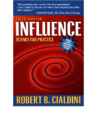
References 235 Index 254 Credits 260 About the Author Robert B. Cialdini is Regents' Professor of Psychology at Arizona State University, where he has also been named Graduate Distinguished Research Professor. He received undergraduate, graduate, and post- graduate training in psychology from the University of Wisconsin, the University of North Carolina, and Columbia University, respectively. He is past president of the Society of Personality and Social Psychology. He attributes his long-standing interest in the in- tricacies of social influence to the fact that he was raised in an entirely Italian family, in a predominantly Polish neighborhood, in a historically German city (Milwaukee), in an otherwise rural state. Preface The initial version of Influence was designed for the popular reader, and as such, an attempt was made to write it in an engaging style
taste. What can compare with fresh pees or new potatoes just boiled and served with butter? Why drown spring lamb in wine or cream and spices, when with just one or two herbs it is absolutely delicious? If you ask foreigners to name some typically English dishes, they will probably say "Fish and chips" then stop. It is disappointing, but true that, there is no tradition in England of eating in restaurants, because the food doesn't lend itself to such preparation. English cooking is found at home. So it is difficult to a good English restaurant with a reasonable prices. In most cities in Britain you'll find Indian, Chinese, French and Italian restaurants. In London you'll also find Indonesian, Mexican, Greek... Cynics will say that this is because English have no "cuisine" themselves, but this is not quite the true. Vocabulary: to criticize - tasteless overcooked - ingredient - to invent - sauces - to disguise - spice
They can help and assist us if we need some technological help. Another thing is that in schools, in classes generally students are not allowed to use their appliances, so it means they have to communicate verbally as well. I think that teachers should be creative to blend so-called digital learning/teaching with old-fashioned learning/teaching. · Sir Ken Robinson: Do schools kill creativity? Sir Ken Robinson claims in the clip that " creativity in education is as important as literacy, we should treat it with the same status." I totally agree with all what he said. We have very strict education systems that don't allow a room for mistakes and they categorize people based on their achievements in exams. There is nothing like potentials, creativeness, possibilities or even 2nd chances. Families put high expectations on academic achievements and they always compare their kids with other's kids. A minority in
Identity as a personal project How could be one identity created? Or is it creating itself? Or, maybe, every child is born with some kind of identity? There are many theories about what identity is and how it is developing, so in this essay I want to discuss A. Giddens´ text and my reflection about his theory. “It's like everyone tells a story about themselves inside their own head. Always. All the time. That story makes you what you are. We build ourselves out of that story.” Patrick Rothfuss
In my free time I watch TV and read. 3 ____________________________________________________________________________________________ I'm reading a book by Charles Dickens. 4 ____________________________________________________________________________________________ She works in a bank. 5 ____________________________________________________________________________________________ No, he isn't learning to play a musical instrument. 6 ____________________________________________________________________________________________ My birthday is on 8 August. 7 ___________________________________________________________________________________________ They usually go to bed at about midnight. 2 Macmillan Publishers Limited 2001. This sheet may be photocopied for use in class.
Blandings " "I know, guv'nor, but the fact is " 10) Lord Emsworth laid a trembling hand upon his shoulder. "McAllister, I will raise your salary." The beard twitched. "Dash it, I'll double it!" The eyebrows flickered. "McAllister ... Angus ... " said Lord Emsworth in a low voice. "Come back! The pumpkin needs you." Lord Emsworth is the protagonist in the book. His full title is Clarence Threepwood, 9th Earl of Emsworth, and Viscount Bosham. His character is kind, but a bit absent- minded. Throughout the book many of the actions and situations are related with him, some more, some less. He most likes being alone and either walking in the garden or reading a book in the library. Also, he does not stand one bit his son Freddie staying at the castle and is willing to do much to get rid of him. Throughout the book, he often gets into funny situations (Quotes 1,2). Also, he often drifts away from the topic on
I look forward to meeting you to discuss employment opportunities. Yours faithfully, Nicole Porter Paragraph Plan for Letters · salutation · Paragraph 1 reasons for writing · Paragraphs 2, 3 development · Final paragraph closing remarks · Name · Letters are divided into two categories, formal and informal. There are various types of formal and informal letters . · It is important to think about the person who you are writing to before you begin writing a letter. If the wrong style is used, the letter will look impolite, silly or odd. For example, if you used formal language to write to a close friend, the letter would look odd, or if you used informal language to write a letter to a company, the letter would look impolite. · There are certain characteristics which allow us to distinguish between formal and informal letters. These are:
"Anna Karenina" Lev Tolstoi Part 1 The novel opens with a scene introducing Prince Stepan Arkadyevitch Oblonsky, "Stiva", a Moscow aristocrat and civil servant who has been unfaithful to his wife Darya Alexandrovna, nicknamed "Dolly". Dolly has discovered his affair - with the family's governess - and the house and family are in turmoil. Stiva's affair and his reaction to his wife's distress shows an amorous personality that he cannot seem to suppress. In the midst of the turmoil, Stiva reminds the household that his married sister, Anna Arkadyevna Karenina is coming to visit from Saint Petersburg. Meanwhile, Stiva's childhood friend Konstantin Dmitrievich Levin ("Kostya") arrives in Moscow with the aim of proposing to Dolly's youngest sister Princess Ekaterina Alexandrovna Shcherbatskaya, "Kitty". Levin is a passionate, restless
Golden Grammar rules 1. Don't use an with own. Sue needs her own room. (NOT Sue needs an own room.) I'd like a phone line of my own. (NOT ... an own phone line.) 2. Use or rather to correct yourself. She's German or rather, Austrian. (NOT She's German or better, Austrian.) I'll see you on Friday or rather, Saturday. 3. Use the simple present play(s), rain(s) etc to talk about habits and repeated actions. I play tennis every Saturday. (NOT I am playing tennis every Saturday.) It usually rains a lot in November. 4. Use will ..., not the present, for offers and promises. I'll cook you supper this evening. (NOT I cook you supper this evening.) I promise I'll phone you tomorrow. (NOT I promise I phone you tomorrow.) 5. Don't drop prepositions with passive verbs. I don't like to be shouted at. (NOT I don't like to be shouted.)
Washington, she meets an exquisitely handsome boy at school for whom she feels an overwhelming attraction and who she comes to realize is not wholly human. ISBN 0-316-16017-2 [1. Vampires -- Fiction. 2. High schools -- Fiction. 3. Schools -- Fiction. 4. Washington (State) -- Fiction.] I. Title. PZ7.M57188Tw2005 [Fic] --dc22 2004024730 Printed in the United States of America For my big sister, Emily, without whose enthusiasm this story might still be unfinished. But of the tree of the knowledge of good and evil, thou shalt not eat of it: for in the day that thou eatest thereof thou shalt surely die. Genesis 2:17 PREFACE I'd never given much thought to how I would die -- though I'd had reason enough in the last few months -- but even if I had, I would not have imagined it like this. I stared without breathing across the long room, into the dark eyes of the hunter, and he looked pleasantly back at me. Surely it was a good way to die, in the place of someone else, someone I loved
free. Being a Capitalist Nigger puts you in control of every aspect of your life – you are in charge and nobody else. You want your children to have good grades in school? Then practice Capitalist Niggerism because then you will not blame the teachers for failing your children or blame the nationwide testing services for using non-black questions in their testing. You will be in control because you will totally understand that everything that happens to your child at school is a result of the learning environment you have provided him or her at home. You want to succeed in creating wealth, join Wall Street. Don’t make excuses that Blacks don’t know how to invest their money. Go after the Caucasians. Use their guilt to your advantage. Another important point which I raised in this book concern the long study I have conducted regarding the economic behaviour of East Indians and Pakistanis. It is an economic doctrine I have christened the
Only in the darkness you are available see the stars. If you end up with boring, miserable life because you listened to your mom, your dad, your teacher, your priest, or some gut on television telling you how to do your shit, then you DESERVE it. - Frank Zappa *It's better to be absolutely ridiculous than absolutely boring. - Marilyn Monroe *I love the feeling when you smile at me, or even just look at me, because I know that I've crossed your mind. Even just for a second - Anonymous You know, one day you look at the person and you see something more than you did the night before. Like a switch has been flicked somewhere. And the person who was just a friend is suddenly the only person you can ever imagine yourself with. Me? I'm scared of everything. I'm scared of what I feel, of what I've said, of who I am, but most of all I'm scared of walking out of this room and never feeling the
low-fat bacon. 3 tolerate extreme Rosie Well, I won't be eating it. 4 disapprove of Leo Why not? What's the big fuss 5 long run about GM food? 6 to disagree Rosie It's unknown territory. We don't know enough about what effects it may have on the human body. You 4 know, they talk about how GM food 1 h 2 e 3 d 4 a could affect our digestion, cause 5 b 6 c 7 f 8 g allergies, that sort of thing. 5 1 unfriendly Leo There's a lot of controversy around it, but no actual evidence to 2 incorrect prove that GM food does us any harm. 3 completely Rosie I don't agree with that 4 totally argument, I'm afraid
People and Behaviour 1. Underline the most suitable word or phrase. a) Please don't push. It's very bad-tempered/rude/unsympathetic. b) Jack hates spending money. He's rather frank/greedy/mean. c) Our teacher is very proud/strict/tolerant and won't let us talk in class. d) Helen never does her homework. She is rather gentle/lazy'/reliable. e) I didn't talk to anyone at the party because I felt ambitious/lonely/shy. f) When Harry saw his girlfriend dancing with Paul he felt jealous/selfish/sentimental. g) I don't like people who are noisy and aggressive/courageous/sociable. h) Thanks for bringing us a present. It was very adorable/grateful/thoughtful of you. i) Teresa never gets angry with the children. She is very brave/patient/pleasant. j) Tom always pays for everyone when we go out. He's so cheerful/generous/honest. 2
Shoes to his feet, or clothing worth six farthings, And who so far forgets his place, as now To censure everything, and rule the roost! MADAME PERNELLE Eh! Mercy sakes alive! Things would go better If all were governed by his pious orders. DORINE He passes for a saint in your opinion. In fact, he's nothing but a hypocrite. MADAME PERNELLE Just listen to her tongue! DORINE I wouldn't trust him, Nor yet his Lawrence, without bonds and surety. MADAME PERNELLE I don't know what the servant's character May be; but I can guarantee the master A holy man. You hate him and reject him Because he tells home truths to all of you. 'Tis sin alone that moves his heart to anger, And heaven's interest is his only motive. DORINE Of course. But why, especially of late, Can he let nobody come near the house? Is heaven offended at a civil call That he should make so great a fuss about it? I'll tell you, if you like, just what I think; (Pointing to Elmire) Upon my word, he's jealous of our mistress.
smoke signals, they used mail. Later on, they also had some newspapers. The first expansion of media was when the radio and television were invented. The second and the biggest boom started in 1960s when the first communication satellite was launched into orbit. There are 4 main media: Newspapers, TV, Radio and the Internet. Today's people take this as an ordinary thing and we don't realise that we nearly can't live without it. Media are very important for us. They give us big amount of information, so big that we can't remember all that things. They help us to understand things and if you have lots of information you are able to make your own decisions. This is connected with education and media are very good teachers. They highly influence us. They can help other people making charities... News aren't always true, they are not objective or says just half true.
Performing the presentation Introducing yourself and your talk Greeting, name, position, opening formalities Good morning, ladies and gentlemen. Good afternoon, everyone. Good morning. My name's (...). I'm the new Finance Manager. Good morning. Let me start by saying just a few words about my own background. I started out in... Welcome to Standard Electronics. I know I've met some of you, but just for the benefit of those I haven't, my name's (...). It's very nice to see you all here today. I'm very pleased to be here. I'm glad you could all make it.
Much of this is due to the effects of TV, which of course shows the same sort of `soap operas' in all parts of the globe. Words and body language If a child is to believe the parents who say that it's healthy to go to bed early, it usually doesn't make much sense unless the parents express it with both words and body language. Otherwise, the child may get the impression that it is only good for the parents that the child is put to bed early. It is important to remember that, although body language does give you an additional channel of communication, which sometimes contradicts the spoken word, it should be interpreted with care. For one thing, body language can be affected by particular habits of the speaker. Apart from individual differences, there are also differences between geographical regions, as well as between cultural groups. For example, in Greece, you nod your head for 'no', and shake your head for 'yes'.
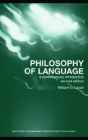
understand meaningful utterances and to do that so effortlessly. A widespread idea about meaning is that words and more complex lin- guistic expressions have their meanings by standing for things in the world. Though commonsensical and at first attractive, this Referential Theory of meaning is fairly easily shown to be inadequate. For one thing, comparatively few words do actually stand for things in the world. For another, if all words were like proper names, serving just to pick out individual things, we would not be able to form grammatical sentences in the first place. Meaning and understanding Not many people know that, in 1931, Adolf Hitler made a visit to the United States, in the course of which he did some sightseeing, had a brief affair with a lady named Maxine in Keokuk, Iowa, tried peyote (which caused him to hal- lucinate hordes of frogs and toads wearing little boots and singing the Horst Wessel Lied), infiltrated a munitions plant near Detroit, met secretly with
Acknowledgments My deepest gratitude to my editor, Hilary Sares, who really dug into this story and made me work for it. Basically, she kicked my ass. By not pulling her punches or letting me shortchange the details, she made me work harder and because of that, this story is a much, much better book. BARED TO YOU wouldn't be what it is without you, Hilary. Thank you so much! To Martha Trachtenberg, copy editor extraordinaire. This book is an important one for me and she treated it that way. Thank you, Martha! To Victoria Colotta, for all her hard work on the interior design and typesetting. She took my plain text and made it gorgeous. Thank you, Victoria! To Tera Kleinfelter, who read the first half of Bared to You and told me she loved it. Thank you, Tera! To all girls who were at Cross Creek at some point in your adolescence: May all your dreams come true. You deserve it.
wake woke woken wear wore worn win won won write wrote written 8 MODULE 2 Making phone calls Answering the phone · Good morning. Can I help you? · Hello. ABC Helpline. (your name) · Good afternoon. ABC Helpline. Jane speaking. How can I help you? Asking to speak to someone on the telephone · Could I talk to ..., please? · Can I speak to ..., please? · I'm trying to get hold of ... · I'm trying to contact .... · I'm trying to get in touch with ..... · Would/Could you put me through to ..., please Asking for identification on the telephone · Who's calling, please? · Who shall I say is calling? · Yes, certainly. Could I have your name, please? · Could I have your name again, please? · Would you spell that for me, please?
Its in peoples nature to satisfy ther curiosity with gossip about other people sexual relations in the news columns of the daily papers. Journalists are hired to present stories that news consumers want, and if they don't, their business may collapse. This has caused the necessity to protect men and women from the invasion to his or her privacy that can harm subject mentally and give distress, far greater than bodily injury. The solitude and privacy is more and more essential to the individual. They look into several case law about breach of trust, confidence and an implied contract. For example in the famous case of Prince Albert v. Strange, Queen Victoria and Prince Albert made sketches as a hobby and showed them to friends and gave them as presents. Strange had accsess to some of the sketches and used them for own porposes. The court held that this action is prohibited and invasion to privacy. Case of Yovatt v. Winyard, I J. & W
 annaabi.ee