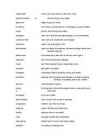
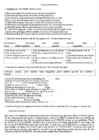
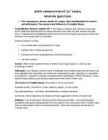
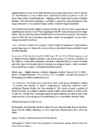
secretive keeping one's thoughts and feelings to oneself, keeping feelings, knowledge, plans, etc. hidden decisive make decisions quickly caring thinking about what other people need or want and trying to help them unreliable not to be trusted self-confident sure of one's own power to succeed imaginative creative, can find out things outgoing openly friendly and responsive helpful willing to help or be useful rude strongly impolite and unpleasant easy-going doesn't worry much or get angry easily stubborn not willing to change mind cooperative Willing to work together selfish caring only about yourself and not about other people
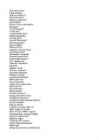
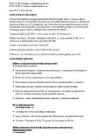
Self-centred enesekeskne Reserved tagasihoidlik Mean õel Sensitive tundlik Secretive salalik Intelligent intelligentne Careful hoolas Polite viisakas Rude ebaviisakas Responsible vastutusvõimeline Quick-tempered äkiline Generous helde, lahke (kind) Determined tahtejõuline Funny naljakas Unreliable ebausaldusväärne Self-confident enesekindel Caring hooliv Imaginative kujutlusvõimeline Outgoing vastutulelik, lahke Helpful abivalmis Easy-going muretu Stubborn kangekaelne Cooperative koostegutsev Selfish isekas Disorganised lohakas Forgetful unustaja Active aktiivne Loyal lojaalne, usaldatav
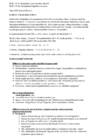
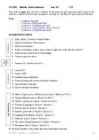
Adventure-seiklus Crime-kuritegu Detective-detektiiv* Ghost-kummitus* Historical-ajalooline* Horror-õudus* Science fiction-ulmekirjandus Spy-spioon Travel-reisimine* Boring-igav* Complicated-keeruline Educational-haridus Exciting-põnev Fantastic-fantastiline* Fascinating-paeluv Funny-naljakas* Hilarious-lõbus Imaginative-kujutlusvõime Interesting-huvitav* Outstanding-väljapaistev Romantic-romantiline* Scary-õudne/hirmutav* Case- tagaajamine Violently- vägivaldselt Cab-takso Slippers- sussid Test tube- katseklaas Astonished-üllatunud Whisper-sosistama Convinced-veendunud Mutter-podisema Destroy-hävitama Rather nervous-üpris närvis Watch-käekell* Rush-kiirustama Horrid-kohutav Eccentric-ekstsentrik Passing cab-mööduv takso Gentelman-härrasmees* Incredibly excited-uskumatult põnevil
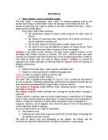
21.ingenious, enthusiastic- leidlik, innukas 22.positive, good-humoured- positiivne, hea tujuline 23.humorous, good-natured- humoorikas, hea loomuline 24.hard-working, diligent, industrious- töökas, usin, äärmiselt töökas 25.helpful, loyal- abivalmis, lojaalne=truu 26 kind, nice,polite- lahke, kena, viisakan 27.patient, reliable- rahulik, usaldusväärne 28.sociable, tactful- hea suhtleja, taktitundeline 29.wise, witty- tark, vaimukas 30.courageous, punctual- julge, vapper 31.grateful, imaginative- tänulik, ette kujutlusvõimeline 32. trustful- usaldav 1.a man of character- tugeva iseloomuga inimene 2.be characteristic to smb- olema kellelegi iseloomulik 3.a person with good upbringing- hea kasvatusega inimene 4. a review of character- kirjalik iseloomustus Negative traits of character 1.agressive, dishonest- 2.ambitious, lazy- 3.arrogant, proud- 4.pompous, boastful- 5.selfish, self-centered- 6.snobbish, narrow-minded- 7.petty, mean- 8
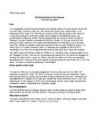
Philip Saksing 8a The Adventures of Tom Sawyer Raamatuvastamine Plot: The imaginative and mischievous twelve-year-old boy named Thomas Sawyer lives with his Aunt Polly, his half-brother, Sid, also known as Sidney, and cousin Mary, in the Mississippi River town of St. Petersburg, Missouri. After playing hooky from school on Friday and dirtying his clothes in a fight, Tom is made to whitewash the fence as punishment on Saturday. At first, Tom is disappointed by having to forfeit his day off. However, he soon cleverly persuades his friends to trade him a large marble for the
i/ smile a lot // feeling, showing, or Shy /a/ not say a lot // nervous and causing pleasure or satisfaction (õnnelik) uncomfortable with other people (häbelik) Honest /n.st/ never tell lies // telling the truth Sociable /s..bl/ talk to everybody // or able to be trusted and not likely to steal, cheat, or Sociable people like to meet and spend time with lie (aus) other people (seltskondlik) Imaginative /mæd..n.tv/ able to think of new Stubborn /stb.n/ never change his/her mind // ideas // new, original, and clever (hea kujutlus never listens to other people when they give her võimega) advice //A stubborn person is determined to do what he or she wants and refuses to do anything else: Independent /n.dpen
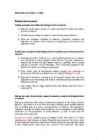
Literal translation is translating directly from source language into target language b. Which types of words are more/less literal? More literal: objects and movements Less literal: qualities and ways of moving c. What are the two views of translation that the author brings out? Explain. 1) A process of explanation, interpretation, reformulating ideas and words. 2) Impossible due to other definitions 2. Expressive function a. Name the three expressive text types. - Serious imaginative literature; Authoritative statements; Autobiographies, essays, personal correspondence. b. Why is it difficult to translate an expressive text? - Because of the used dialect may get lost in the translation. c. What constitutes the personal component in an expressive text? - original metaphors, unusual collocations d. What is at the heart of the expressive (‘väljenduslik’) function of language? - The personal components e. Explain the nature of ‘Authoritative statements’.
Percy Bysshe Shelley (1792 1822) : is critically regarded among the finest lyric poets in the English language. Major works: "Frankenstein" and " Mont Blanc" John Keats (1795 1821): was an English poet who became one of the key figures of the Romantic movement. Work: "Ode to a Nightingale", "Women , wine and snuff" and " I stood tiptoe upon a little hill" Romantic age and the age of Reason. Differences. Writers turned toward what they taught are more daring, individual and imaginative approach to both literature and life. The Romantic writers understood the greatness of the writers of the Age of Reason, but they felt the need to strike out new directions. They tended to believe that the Augustan dedication to common sense and experience, reasonableness and tradition had resulted in a limitation of vision. Writers of The age of Reason tended to regard evil as basic part of human nature Romantic writers generally saw humanity as naturally good.
Plot Overview An imaginative and mischievous boy named Tom Sawyer lives with his Aunt Polly and his half-brother, Sid, in the Mississippi River town of St. Petersburg, Missouri. After playing hooky from school on Friday and dirtying his clothes in a fight, Tom is made to whitewash the fence as punishment on Saturday. At first, Tom is disappointed by having to forfeit his day off. However, he soon cleverly persuades his friends to trade him small treasures for the privilege of doing his work. He trades these treasures for tickets given out in Sunday school for memorizing Bible verses and uses the tickets to claim a Bible as a prize. He loses much of his glory, however, when, in response to a question to show off his knowledge, he incorrectly answers that the first two disciples were David and Goliath. Tom falls in love with Becky Thatcher, a new girl in town, and persuades her to get “engaged” to him. Their romance collapses when she le...
Acting career of Kate Winslet In 1991, she started her career on television by co-starring in Dark Season, a children's science fiction serial on the BBC. Subsequently, she appeared in the made-for-TV `Anglo-Saxon Attitudes' in 1992. Then once again for the BBC, she did an episode of the medical drama `Casualty' (1993). In the year 1994, her film career took flight with appreciation when she starred in `Heavenly Creatures' as Juliet Hulme to play the role of an imaginative teen. Another successful movie `Sense and Sensibility' made her famous all over, particularly in the UK. As soon as the Titanic was out in 1997, Winslet became a prominent actress world- wide. The movie was an enormous hit at the box-office which further went on to win 11 Academy Awards. For each of her movies, Kate has received positive reviews which also made her called critics' darling. Regardless of Titanic's success, she has sustained making
enthusiasm with rational skepticism, lucidity with willful surrender to lyric emotions. "Beylisme," as he understood it, meant cultivating a private sensibility while developing the art of hiding and protecting it. Charterhouse of Parma is Stendhal's other masterpiece. It fuses elements of Renaissance chronicles, fictional and historical sources, recent historical events (the Napoleonic regime in Italy, the Battle of Waterloo, the Austrian occupation of Milan), and an imaginative, almost dreamlike transposition of contemporary reality into fictional terms. The novel is set mainly in the court of Parma, Italy, in the early 19th century. Fabrice del Dongo, a young aristocrat and ardent admirer of Napoleon, goes to Paris to join the French army and is present at the Battle of Waterloo. He returns thereafter to Parma and enters the church for worldly advantage under the sponsorship of his aunt, the Duchess de
a wax apple, but it goes farther. Artist refines nature, showing not what happened but what should happened in a world free from accident. The artist does not imitate servilely (), he recreates reality and presents it to us in a fashion in which we see its essence more clearly. The artist's imitation is more than a copy of what is apparent to every eye, his imitation is in some measure a creation. It is imaginative and interpretive, it reflects a special view of reality THE IMITATIVE THEORY The theory often includes the notion that art gives us not only pleasure but knowledge, insight into the nature of reality Art finishes knowledge, its value depends partly on its truth. THE EXPRESSIVE THEORY The artist is not essentially an imitator but a man who expresses his feelings. William Wordsworth: " Poetry is a spontaneous overflow
h) Is my homework all right? 7 No, don't bother, I'll do it. i) Do you think I should order the tickets in advance? 8 Why don't you mind your own business! j) Did you enjoy the concert? 9 Never mind, cheer up! 10 No, it's not worth it. 5. Match each word or phrase from the box with a suitable description (a-j). co-operative determined helpful obedient realistic dependable embarrassed imaginative quarrelsome tolerant a) If you this, you face up to facts realistic f) If you are this, people can count on you b) If you are this, you might make up stories g) If you are this, you keep falling out with other people c) If you are this, you carry out instructions h) If you are this, you might put yourself out for someone d) If you are this, you don't give up easily else
d) You say exactly what you think g) You are unkind, or not willing to spend k) You understand the feelings of money others h) You easily become angry with others 1) You try to avoid work if you can 3.Complete each sentence with a word from the box. Use each word once only. ambitious greedy polite sociable brave imaginative proud stubborn grateful kind snobbish tolerant a) I think I'll stay here on my own, I'm not feeling very ……………. today. b) Diana wants to get to the top in her company. She is very……………. c) It's not ……………. to stare at people and say nothing! d) I think you have to be very……………. to write a novel. e) Thank you for helping me. It was very ……………. of you. f) Peter refuses to change his mind, although he is wrong. He's so ……………
century was the time when suffragettes started their movements and women freedom was a big issue. This painting has been called the last great Pre Raphaelite painting and is indeed one of Hunt`s finest works. John Everett Millais (1826-96) He entered the Royal academy Schools at 11 and was very successful there. He would have probably had a great academic career if he hadn't joined the brotherhood. He wasn't as imaginative as Rossetti and as intellectual as Hunt but he was technically gifted. His painting are said to be the most memorable of the brotherhood. A genial, easy-going man, Millais enjoyed his success, claiming to be the highest-paid artist in history. He was the first painter to be created a baronet (1885) and was made President of the Royal Academy months before his death. "Christ in the House of his Parents" (1850) - the holy family with radical realism. Very brown colours
Also, athletes don't have to perform nude, although the original idea of the games was to honour the human body. Each Olympic Games has an opening ceremony during which the sports stadium is filled with music, singing, dancing and fireworks. A closing ceremony in the same spirit takes place on the last day of the Games. The opening and closing ceremonies are an invitation to discover the culture of the country hosting the Games. Although most of the ceremony is creative and imaginative, there are some very strict rituals that have to be followed. Summer games: In the Summer Games, athletes compete in a wide variety of competitions on the track, on the road, on grass, in the water, on the water, in the open air and indoors. The Winter Games feature sports practised on snow and ice, both indoors and outdoors. Many new events have been added, such as basketball, baseball and beach volleyball. The Summer Games are held in various months and last for 16 days
· (1929) A Farewell to Arms Science fiction Science fiction is a broad genre of fiction that often involves speculations based on current or future science or technology. Science fiction is found in books, art, television, films, games, theatre, and other media. In organizational or marketing contexts, science fiction can be synonymous with the broader definition of speculative fiction, encompassing creative works incorporating imaginative elements not found in contemporary reality; this includes fantasy, horror, and related genres. Science fiction differs from fantasy in that, within the context of the story, its imaginary elements are largely possible within scientifically established or scientifically postulated laws of nature (though some elements in a story might still be pure imaginative speculation). Exploring the consequences of such differences is the traditional purpose of science fiction,
· Test development Adventuresome--shy revisions of the 16PF Tough minded--tender-minded widely used in selection and clinical work Trusting--suspicious · Comments Imaginative--practical can be reduced to fewer, broader dimensions Shrewd--forthright 16 factors seldom found in factor analyses Guilt-prone--resilient Radical--conservative Group-dependent--self-sufficient
KORDAMISKÜSIMUSED Kuidas on mõiste ’kirjandus’ tähendus ajalooliselt muutunud (mõiste ’ilukirjandus’ eristamine, selle roll kirjandusteaduse arengus? (Vt ka videolõiku, kus Terry Eagleton seda nihet selgitab). Enne 1800. → kirjandus = kirjutised, kirja pandud teadmised al 18. saj lõpust → Kirjandus kui väljamõeldis/fiktsioon (imaginative writing, belles lettres) Kirjanduse otstarve: Enne > head näited retooriliste vahendite kasutamisest Praegu > tõlgendamine, mida kirjandus meile õpetab maailma kohta 4 põhisuunda kirjanduse kui mõiste määratluses. Milline neist tundub Sulle endale kõige olulisem? Miks? Vt ka lõiku intervjuust Ben Okriga, kus ta kõneleb kirjanikuks olemisest. Kas Okri hinnang kattub mõne kirjandusteaduses levinud kirjanduse põhimääratlusega? Mille poolest see neist erineb?
Salmagundi Papers (1807-1808), a serial publication, later reissued as a book, which depicted life in New York in the first decade of the cent. This was followed by A History of New York (1809), a satirical attack on the upper class old Dutch families of New York. Irving's early works were very heavily influenced by neo-classical satirists such as Alexander Pope and Jonathan Swift. After he met Sir Walter Scott and became familiar with imaginative German lit, a new romantic note became evident in works such as The Sketch Book (1819-1820), which includes Rip Van Winkle, The Legend of Sleepy Hollow and Bracebridge Hall (1822). Irving was the first Am writer to win the respect of British lit critics. (also the first internationally famous author from the USA) James Fenimore Cooper was perhaps the most popular writer of the period. He drew inspiration for his five volume series of Leatherstocking Tales (1823-1841)
A trite metaphor is commonly used in speech (e.g. "a ray of hope"). A trite metaphor may become original if the writer prolongs it. Genuine metaphors are the fruit of author's imagination. Simple metaphors are based on a single image (e.g. "He felt ice water flowing in his veins"). A sustained (developed) metaphor is when you have several metaphors contributing to the same image (rivulet - streams - river). The function of metaphor is to stress an important feature in an imaginative (!) way. 2. Metonymy lexical and contextual meanings are based on the contiguity (): one word is used instead of some other word because the thing they stand for occurs very closely in reality. In metonymy transfer of meaning is very logical (!) (e.g. "a cup" means `to drink'; "a hand" a worker; "the grave" death; etc.). Types of association: a characteristic feature standing instead of his possessor (e.g. "petticoats in business")
Goes back to the beginnning of his story, well before his birth, 1915. Exact events, dates, places, famous people (Indira Gandi).HM combines history and the presend, creates a distance. Magical elements: challenge reliability of history, existence of reality Postcolonial situation and Postcolonial trauma. Postcolonial situation · People have been colonized: politically, socially, economically, culturally · Develop imaginative and linguistic forms of articulating that exploitation · To gain a more incisive historical grasp of their situation · Woman and marginalized ethnic groups · Silent, their speech is ignored · Enchanched meaning through literary representation-empowerment · Courage to act on shaed, collective experiences Postcolonial trauma · Disability · Metaphor for devastating effect of colonialism of the psyches of the colonized
Päripäeva lugemine (reading with the grain) > tõlgendus, mis lähtub sellest, mida tekst (mitte tingimata autor) pakub Vastukarva lugemine (reading against the grain) > tõlgendus, mis ei ole kooskõlas teksti poolt pakutavate ideede ja väärtustega Kirjanduse mõiste muutumine ajalooliselt. Kirjanduse mõiste tänapäevases kasutuses 2 sajandit vana Enne 1800. kirjandus = kirjutised, kirja pandud teadmised Kirjandus kui väljamõeldis/fiktsioon (imaginative writing, belles lettres), al. 18. saj lõpust See, mida määratleti kirjandusena 18. saj lõpust alates ei kattu sellega, mida me määratleme kirjandusena tänapäeval. Kirjanduse määratlemine on eri kultuurides erinev, eeskätt lääne kultuur vs mittelääne kultuurid. Võib väita, et kirjandus on tekstide kogum, mida mingi ühiskondlik grupp sellena määratleb. (Mille alusel mingi grupp midagi kirjandusena määratleb?) Kuidas määratleda kirjandust (4 põhitüüpi)?
Päripäeva lugemine (reading with the grain) > tõlgendus, mis lähtub sellest, mida tekst (mitte tingimata autor) pakub Vastukarva lugemine (reading against the grain) > tõlgendus, mis ei ole kooskõlas teksti poolt pakutavate ideede ja väärtustega Kirjanduse mõiste muutumine ajalooliselt. Kirjanduse mõiste tänapäevases kasutuses 2 sajandit vana Enne 1800. → kirjandus = kirjutised, kirja pandud teadmised Kirjandus kui väljamõeldis/fiktsioon (imaginative writing, belles lettres), al. 18. saj lõpust See, mida määratleti kirjandusena 18. saj lõpust alates ei kattu sellega, mida me määratleme kirjandusena tänapäeval. Kirjanduse määratlemine on eri kultuurides erinev, eeskätt lääne kultuur vs mittelääne kultuurid. Võib väita, et kirjandus on tekstide kogum, mida mingi ühiskondlik grupp sellena määratleb. (Mille alusel mingi grupp midagi kirjandusena määratleb?) Kuidas määratleda kirjandust (4 põhitüüpi)?
or something a tad stronger, you can savour everything from a three-course lunch, to seafood and champagne, to a sandwich in front of the bandstand AND enjoy music. New themes ran through the gardens and the displays, with environmental concerns reflected in the number of wildflower gardens, as well as gardens designed for water conservation and wildlife. 13 Chelsea quality means that all the displays are imaginative as well as flawless because the competition to get in is fierce, and the standards are high. One rose grower told us that the trick is to have all blooms reach their absolute peak on the Monday of the show. Any part of the display that wilts, fades, drops leaves, etc., cannot be altered or removed once the exhibits are completed on Sunday before judging on Monday. So everything is carefully timed, packed, planted, and tended to reach perfection. Display
7) wrote in the new genres of fantasy and dystopia. The feminist literature of the 1960s and 70s often resorted to radicalism and the previous female victim was turned into a terrorist; by the 1980s and onward this changed and feminist literature became more imaginative and complex; a return to common values can also be viewed, though there are few new ideas, instead mostly old ideas revisited. Angela Carter (1940-‐1992) – Bristol in the 1960s, in the middle of the atmosphere of rebellion. Bricolage – instance of intertextuality, i.e
g. "Our family rivulet joined other streams and the stream was the river pouring into the church."). Metaphor is expressed by all notional parts of speech: nouns (e.g. "the eyes are the windows of the soul"), verbs (e.g. "the time was bleeding away"), adjectives (e.g. "the word was tipsy"), adverbs (e.g. "the wind was blowing sadly"). The function of metaphor is to stress an important feature in an imaginative (!) way. 2. Metonymy lexical and contextual meanings are based on the contiguity: one word is used instead of some other word because the thing they stand for occurs very closely in reality. In metonymy transfer of meaning is very logical (!) (e.g. "the crown" stands for king or queen; "a cup" means `to drink'; "a hand" a worker; "the cradle" infancy; "the grave" death; etc.). Typical types of association:
(the neck of a bottle; face freezes) · Trite metaphor is commonly used in speech (a ray of hope) · If some changes are introduced, a trite metaphor may become original or genuine (the radio vomited) · Sustained metaphor is the one that is made up by several metaphors that cluster round the same image (stuffed blackbird singing a soundless lyric on a lifeless reed) The function of metaphor is to stress an important feature in an imaginative way. Metonymy--(Greek-Changing of names) one word is used instead of other because the things they denote are closely connected in reality. It is fairly logical. · Transferring meaning is logical. (The Crown, Cradle) · In metonymy, a characteristical feature can be used instead of its owner (petticoat-women) · The container may stand for the thing it contains (the room-people in it) · The instrument may stand for the action (the whip)
The first device is the Newsreels, then the second is simply biographies and the third the camera eye. 69 newsreels, these are collages of real newspaper headlines. News story fragments, snatches of song lyrics, political speeches of that times and even advertisement. Mass culture and popular conscousness of that time is given. They also present the panorama of events. 27 biographies in the trilogy, these are very imaginative of famous public figures, people who shaped or represented the major social forces of that time, people who made history. Eugene Debs-one of the greates leiva movements, Valentino-major hollywood star, thomas edison, president wilson and many more. Finally there are 51 camera eye sections, these are mostly fragments of stream of concsiousness, which present the authors view point. They show the viewpoint of disturbed artist. His reaction to the changing world, this is the most intimate and
The next person who heard it had to retell it to someone else and so on until up to 7 people. When people were retelling he noticed how each participant's memory of the story changed. Some characteristics were that the story became shorter; it remained coherent and became more conventional. According to Bartlett, people reconstruct the past by trying to fit it into existing schemas. This can be explained as people's efforts after meaning. Bartlett realized that memory is an imaginative reconstruction of experience, which is exactly what modern research supports. Discuss the use of technology in investigating cognitive processes. Neuro-imaging techniques allow researchers to obtain images of brain functioning and structures. There are a number of techniques that are continually being developed to perform advanced research. PET (scanning glucose consumption and blood flow) is used to detect tumors or memory disorders due to Alzheimer's
However, Farr disagrees with this analysis, saying that Dickinson's "relentlessly measuring mind ... deflates the airy elevation of the Transcendental". Apart from the major themes discussed below, Dickinson's poetry frequently uses humor, puns, irony and satire.Flowers and gardens Farr notes that Dickinson's "poems and letters almost wholly concern flowers" and that allusions to gardens often refer to an "imaginative realm ... wherein flowers [are] often emblems for actions and emotions". She associates some flowers, like gentians and anemones, with youth and humility; others with prudence and insight. Her poems were often sent to friends with accompanying letters and nosegays. Farr notes that one of Dickinson's earlier poems, written about 1859, appears to "conflate her poetry itself with the posies": "My nosegays are for Captives / Dim long expectant eyes / Fingers denied the plucking, /
1 Sirp ja Vasar 21 Febr. 1969. be felt to a certain extent in both symphonies, where seriousness, concentration and sincere cordial lyricism governs. The First Symphony1 (1963) is the more dramatic. The tonality of the strenuous main theme is not fixed: Example 105. The subsidiary theme is close to the spirit of folk music: Example 106. The development process, based on the main theme is very imaginative. In the second movement lyrical meditation is overwhelming; the spirit of the previous movement is still penetrating here, bringing passionate restlessness. In the third movement (Rondo) a heroic trumpet solo conjures an image of a battle scene. Colourful episodes are gripping. The composer is avoiding a clear tonal functionality plane. It is extended tonality with a tonal centre on F. Tempos and rhythms are shifting, creating a singular plasticity
"Hey, Dad, welcome home." "Thanks." He hung up his gun belt and stepped out of his boots as I bustled about the kitchen. As far as I was aware, he'd never shot the gun on the job. But he kept it ready. When I came here as a child, he would always remove the bullets as soon as he walked in the door. I guess he considered me old enough now not to shoot myself by accident, and not depressed enough to shoot myself on purpose. "What's for dinner?" he asked warily. My mother was an imaginative cook, and her experiments weren't always edible. I was surprised, and sad, that he seemed to remember that far back. "Steak and potatoes," I answered, and he looked relieved. He seemed to feel awkward standing in the kitchen doing nothing; he lumbered into the living room to watch TV while I worked. We were both more comfortable that way. I made a salad while the steaks cooked, and set the table. I called him in when dinner was ready, and he sniffed appreciatively as he walked into the room.
creed, the heroic form can be warped and used with great effect for ill intention. In the p o s t - H i t l e r period the idea of hero has been given a rest as the cul ture re-evaluates itself. Dispassionate, cold-blooded anti-heroes are more in keeping with the current German spirit. A tone of unsentimental realism is more popular at present, although there will always be a strain of romanticism and love of fantasy. Germans can enjoy imaginative hero tales from other cultures but don't seem com fortable with home-grown romantic heroes for the time being. XX PREFACE THE HERO A S W A R R I O R More generally, the Hero's Journey has been criticized as an embodiment of a male- dominated warrior culture. Critics say it is a propaganda device invented to encourage
a death warrant for the highest enemy commander. The question was: Should it be executed? It was not an easy one to answer. Nimitz wrestled with the pros and cons. If Yamamoto were shot down, would a better man be appointed to succeed him? Commander Layton, the fleet intelligence officer, set out the arguments, most of which Nimitz well knew. Yamamoto, 59, was the dominant figure of the Japanese Navy. A prophet of air power, aggressive and determined, he devised bold, imaginative plans and executed them under strong leadership. He was the Shogi (Japanese chess) champion of his navy, and in the 1920s had enjoyed matching wits with Americans at poker, which he played very well indeed. He has lost two fingers of his right hand in battle, and he manipulated the cards with the remaining three in so wizardly a manner that he distracted his opponents. American intelligence rated him as "Exceptionally able, forceful, and quick-thinking." His men idolized him.
 annaabi.ee