Leidsid 33 sarnast õppematerjali, mis on seotud failiga "I Love English 7 Unit 2 Test". Need materjalid aitavad sul teemat sügavamalt mõista.
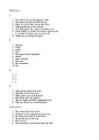
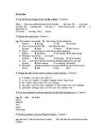
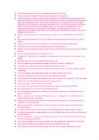
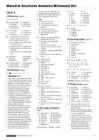
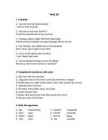
chance, tommy, raise, pullnswer, questions, unit, translate, focus, learning, words, team, books, goal, kirjandit, finally, gave, essey, üldteadmised, unfortunately, knowledge, quite, possible, improve, memory, skills, verb, suitable, tense, teacherngry, little, läte, even, raised, voice, first, shout, remember, best, look, exercise, student, findTEST Unit 2 1 1. Ann tried to focus on learning new words. 2. The chances are that our tearm will win. 3. Make use of your free time and read books. 4. What goal did you set for yourself? 5. Amy finally gave me a chance to read her essay. 6. Unfortunately, my general knowledge is quite limited. 7. It`s possible to improve your memory skills. 8. Where you successful in the quiz? 2 1. had been 2. raised 3. puffed 4. said 5. did I punish / have I punished 6. sobbed 7. shout / shouted 8. tear / tore 9. don`t remember 10. did 3 1. b 2. c 3. b 4. a 4 1. What did the student have to do? 2. Why didn`t he buy the book?
* visuaalne info on pandud kahekordsete ümarsulgude vahele. I Love English 6 töövihik sobib inglise keele õpetamiseks 8. klassis Töövihik vastab riiklikule õppekavale Retsenseerinud Piret Kärtner, Viive Latt, Ingrit Tera Toimetanud Viiu Menning, Nicola Fyfe, Tiina Helekivi Kujundanud ja küljendanud Eve Kurm Tehniliselt toimetanud Andero Kurm Illustreerinud Ülle Meister Esikaas: Boswell and Dr. Johnson (foto Scanpix). Vaata Unit 20. Autoriõigus: Mare Jõul, Ülle Kurm, 2009 Kirjastus Studium, 2009 Kõik õigused on kaitstud. Ilma autoriõiguse omaniku eelneva kirjaliku loata pole lubatud ühtki selle töövihiku osa paljundada ei elektroonilisel, mehaanilisel ega muul viisil. Töövihik on kooskõlas 2009. a uuendatud õppekomplektiga I Love English 6. Tartu, 2014 ISBN 978-9949-436-59-0 Kirjastus Studium Riia 15b, Tartu 51010 www.studium.ee Trükitud OÜ Greif trükikojas Lohkva, Luunja vald Tartumaa 62207
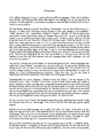
publisher. ISBN 1-59905-201-6 Printed in the United States of America 13 12 11 10 09 08 07 9 8 7 6 5 4 3 2 1 Introduction Grammar is a very old field of study. Did you know that the sentence was first divided into subject and verb by Plato, the famed philosopher from ancient Greece? That was about 2,400 years ago! Ever since then, students all over the world have found it worthwhile to study the structure of words and sentences. Why? Because skill in speaking and writing is the hallmark of all educated people. Lesson by lesson, this book provides basic instruction in the eight parts of speech--nouns, pronouns, verbs, adjectives, adverbs, prepositions, conjunctions, and interjections--as well as the standard patterns of English sentences. All students of English, be they native speakers or those who are studying English as a second language, will profit from the fundamental introduction and review of
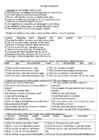
Education and learning Task 1. Underline the most suitable word or phrase. a) Jack decided to take a course/lesson in hotel management. b) Sheila always got good marks/points in algebra. c) After leaving school, Ann studied/trained as a teacher. d) Peter decided not to go in/enter for the examination. e) My sister learned/taught me how to draw. f) I can't come to the cinema. I have to read/study for a test. g) In history we had to learn a lot of dates by hand/heart.
_____________________________________ 8 The Spice Girls are making/make a new CD at the moment. _____________________________________ 9 I am thinking/think it's a good idea for you to study biology. _____________________________________ 10 We want to go for a walk but it's raining/it rains outside. _____________________________________ Marks: /10 3 Write questions using the correct tense (present simple or present continuous) for these answers. 1 _____________________________________________________________________________________________ Yes, I have a painting by Picasso on my wall. 2 _____________________________________________________________________________________________ In my free time I watch TV and read. 3 ____________________________________________________________________________________________
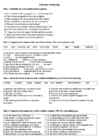
1 KLM 9 ENIRO 2 FARWEK 10 SAUREX 3 TALLEGG 11 MIZDE 4 VESITERM 12 LADA 5 STOW 13 SCHWUNG 6 KALEV 14 MAIASMOKK 7 YAMAHA 15 ISKU 8 ESTRAVEL 2 Affirmative tense Use Signal Words Negative/Questions · action in the present taking always, Present Simple A: He speaks. place once, never or several every ..., N: He does not speak. normally, often, Q: Does he speak? times seldom,
3) Why don`t you let her........her story? A finish B to finish C finishing D have finished 4) Tim........in a cafe at present, but he has already applied for a new job A work B have worked C is working D worked 5) My father........already worked for two years before he went to University. A was B had C has D is 3. Change the order of the words to make a correct sentence. ( 5 points ) 1) I wonder / can / you / me / help / if 2) a / my / to / written / I / mother / already / letter / long / have 3) the / watch / often / they / TV / in / evening 4) the / gave / my / for / this / umbrella / is / that / Sally / me / my / birthday 5) particular / nothing / have / at / tell / you / to / moment / the 4. Give the comparative and the superlative of the following adjectives: ( 5 points ) e.g
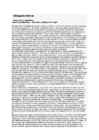
Letters Letters FORMAL, INFORMAL, TRANSACTIONAL TASK 1 Read the extracts and answer the questions. · Where are the extracts from? · What is the purpose of each letter? · How do they differ? · Which extracts are examples of formal letters? · How is the reader addressed in a formal letter? · What are the closing remarks for formal letters? · What is the salutation in a friendly letter? · How would you end extracts 1,2,3 ? · How would you begin the extracts 4 and 5? 1. Dear Mr Miller,
listening by reading the statements them to buy other stuff. protection by certain people. They carefully and underlining any key S1But how often does that happen? are a part of street culture, like words. Play the recording twice. Just think about the convenience of fashion and music. It's very difficult shopping online. Another advantage Writing to change because it's engulfed is that you don't have to queue to · Read through and discuss the task the whole world. And I know I can't pay, like you often do in shops
First, you liked what they said, and your fondest wish was for them to be true for you. But your second response was probably one of skepticism and disbelief. Even though you deeply xiii ccc_tracy_fm_i-xviii.qxd 7/7/03 3:23 PM Page xiv xiv ➤ INTRODUCTION desire to live a wonderfully healthy, happy, prosperous life, when you read those words, your doubts and fears arose immediately to remind you of reasons why these dreams and goals may not be pos- sible for you. Well, join the crowd! This is exactly how I felt many years ago. Even though I wanted to be a big success in life, I was unskilled, uneducated, and unem- ployed. I had no idea what I could do to improve my situation. I felt trapped between big ideas on the one hand and limited resources
The rest of the morning passed in about the same fashion. My Trigonometry teacher, Mr. Varner, who I would have hated anyway just because of the subject he taught, was the only one who made me stand in front of the class and introduce myself. I stammered, blushed, and tripped over my own boots on the way to my seat. After two classes, I started to recognize several of the faces in each class. There was always someone braver than the others who would introduce themselves and ask me questions about how I was liking Forks. I tried to be diplomatic, but mostly I just lied a lot. At least I never needed the map. One girl sat next to me in both Trig and Spanish, and she walked with me to the cafeteria for lunch. She was tiny, several inches shorter than my five feet four inches, but her wildly curly dark hair made up a lot of the difference between our heights. I couldn't remember her name, so I smiled and nodded as she prattled about teachers and classes. I didn't try to keep up.
Kordamine inglise keele eksamiks A 1.1 Read the text and answer the questions below. Dear Mary-Alice, It's been ages since I last wrote to you, isn't it weird? Yes, so it is, but, I do have a certain reason. Do you remember Sir Thom of the Minquettes'? That fine young man with fascinating blue eyes... Oh, my sweet Mary, you will never guess what happened yesterday! It was about seven o'clock in the evening when Lillian called me out for a walk you know I can't say `no' to my little sis. Anyway we went to the forest near the Swan Lake and, believe
Types of Sentences ..................................................................................2 Parts of the Sentence ..............................................................................2 Word Order in Affirmative Sentences ...................................................3 Position of Adverbs of Frequency .........................................................5 Word Order in Negative Sentences......................................................6 Word Order in General Questions.........................................................7 Word Order in Special Questions ..........................................................8 Word Order in Subject Questions ..........................................................9 Types of Sentences There are four basic types of sentences in English. AFFIRMATIVE and NEGATIVE sentences both end with a full stop ( ) : . I live in Tallinn. I do not live in Tallinn. I never watch soap operas.
ours theirs Differences between TELL and SAY TELL is always TELL SAY is SAY followed by a immediately personal direct followed by a object or noun clause. someone's name. She said (that) Harry told me she was (that) he was hungry. hungry. He said (that) Harry told Sarah he was feeling (that) he was tired. cold. Reporting special questions Direct Speech Indirect Speech "What did you do Tell me what you had yesterday?" done yesterday. "When will you come Tell me when you would home?" come home. "Who won the game?" Tell me who had won the game. Read the sentences and write them in the indirect form. 1. Nancy asked her mother, "What is the weather going to be, rainy or sunny?" 2
10 9 8 7 6 54 32 1 RRD-VA 12 11 10 09 08 Credits appear on page 260, which constitutes an extension of the copyright page. Contents Preface ix Introduction xi CHAPTER 1 Weapons of Influence 1 Click, Whirr 2 Betting the Shortcut Odds 6 The Profiteers 10 Jujitsu 12 Summary 16 Study Questions 16 CHAPTER 2 Reciprocation: The Old Give and Take ... and Take 18 How the Rule Works 22 The Rule Is Overpowering 23 Politics 26 The Not-So-Free Sample 28 The Rule Enforces Uninvited Debts 31 The Rule Can Trigger Unequal Exchanges 33 Reciprocal Concessions 35 Rejection-Then-Retreat 37
"The 4-Hour Workweek is an absolute necessity for those adventurous souls who want to live life to its fullest. Buy it and read it before you sacri ce any more!" --John Lusk, group product manager at Microsoft World Headquarters "If you want to live your dreams now, and not in 20 or 30 years, buy this book!" --Laura Roden, chairman of the Silicon Valley Association of Startup Entrepreneurs and a lecturer in Corporate Finance at San Jose State University "With this kind of time management and focus on the important things in life, people should be able to get 15 times as much done in a normal workweek." --Tim Draper, founder of Draper Fisher Jurvetson, financiers to innovators including Hotmail, Skype, and Overture.com "Tim has done what most people only dream of doing. I can't believe he is going to let his secrets out of the bag. This book is a must read!" --Stephen Key, top inventor and team designer of Teddy Ruxpin and Lazer Tag and a consultant to the television show American
Why did I fail? What was the most difficult time of my life? How did my perspective of life change due to that difficult time? Where do I want to go? What would I most like to be doing right now? Where would I like to be? Who would I most like to be with? What are my dreams for the future? What do I intend to do to achieve these dreams? What will I be doing ten years from now? How does this university fit in my plans for the future? You can also brainstorm using the following questions: What might help the evaluating committee in understanding me better? What distinguishes me from other applicants? What are my career aims? What skills do I possess that would improve your chances for success in this field? What has stimulated my interest in this field of study? Why should an admissions committee be interested in me? Why am I interested in this field? 1
(win) 3 I can´t go out because I haven´t done my homework yet. (not do) 4 Somebody has broken the lock. I can´t get in. (break) 5 Next year Mary will spend two weeks in Liverpool. (spend) 6 I usually have a cup of tea and sandwich before I go to school. (have; go) 7 Jane is American. (be) She comes from Huston. (come) She has lived there all her life. (live) 8 I have known my next-door neighbour for a year but I haven´t talked to his wife yet. (know; not talk) 3 Make up questions and answer them. 1 lesson / sit / you / in / English / where / do / your? Where do your sit in your English lesson? I sit near the window, 2 feel / centre / do / how / attention / of / when / are / you / the / you? How do you feel when you are the centre of attention? I blush when i am the centre of attention. 3 year / are / this / students / any / class / new / in / there / your? Are there any new students in your class this year? No, there aren´t any new students in my class this year.
· A broken heart can hurt but it's the memories that kill you. · Every girl deserves to be treated with respect and not to be lied to or cheated on. · Remember, you need to open your eyes before opening your mouth! · When people start telling you you've changed, it's actually because you've just stopped living life THEIR way. · In life, shit happens, so forget about the past, and make the best of the future! · If you don't understand my silence, how do you understand my words? · Karma exists, good or bad. Karma comes in any ways. It may not come today but it WILL someday. · A man falls in love through his eyes, a woman through her ears. · All men are idiots... But I'm in love with their king. · Boy, if you're looking for perfection, you've got the wrong girl. Go get yourself a Barbie. · If you really love me, you have to love all things about me. · All I really need is somebody who will listen to my bullshit, call me out on my bullshit, & love me
f) I don't believe… spending a lot of money on b) Do you like chocolate cake? I am very fond… it. clothes. c) Young David has got … trouble as usual. g) You look a bit fed… Is anything the matter? d) Are you laughing… me? Do I look funny? h) I'm very keen… classical music, actually. e) That was a terrible thing to do! I'm extremely cross… i) In reply to Jack's questions, Sue shook … head. you! j) Cheer …! Try laughing for a change. 8. Decide which answer (A, B, C or D) best fits each space. Noisy neighbours Julie always thought of herself as an easy going and (1) person, who put up with people's differences. She hardly ever became (2) about anything, and believed that if you treated people well, they would (3) with you. That is, until Alex and Harry moved in next door
I knew I was interested in writing and photography . Then came the question, how could I combine them. I examined the theme thoroughly and to my suprise there have always been many nationwide competitions for students and the prize sometimes has been a journey to somewhere. I rememember clearly that the first prize that I got for an essay was a backpack and the first journey that I won was to Brussels. To this day, thanks to these competitions, I have had the chance to visit about ten foreign countries and many of them even twice. Herewith I just want to say that nothing is impossible. The main thing is the desire to gain something. When you have found a goal, then you just have to start working for it! Big city schools have always been preferred to small schools. Even so, it is unfair to say that schools which are situated in big towns are giving better education than the ones in small towns. Mostly,
http:// THE PLURAL www.english-4u.de/plural_ex6. htm Singular + s parrot – parrots apple – apples girl – girls Words ending with y if a consonant is written before. ----> ies lolly – lollies story – stories strawberry – strawberries but: boy – boys toy - toys bay - bays Words ending with ch, x, s, sh, o ----> es
kid everybody called Vene-Russ and we spent a lot of time playing mean tricks on him. Well, there's that. And I also learned a lot of Russian from my mother's lover who was a Russian military officer and pretty much my father figure at the time. I tried to teach him Estonian and learned some Russian instead. My Russian studies in school have always been very hectic and making very little sense. Teachers kept changing all the time, teaching methods kept changing as well and learning Pushkin by heart does not work wonders with one's speaking skills, really. (Although I still can recite one of his poems...) The point is, I actually really like Russian. I've never been good at it, but I like the language and I really wish I knew it better. I can speak some, but not read much. As soon as the characters stop talking to each other, I'm stuck and can barely understand anything. Most of my Russian skills my
Performing the presentation Introducing yourself and your talk Greeting, name, position, opening formalities Good morning, ladies and gentlemen. Good afternoon, everyone. Good morning. My name's (...). I'm the new Finance Manager. Good morning. Let me start by saying just a few words about my own background. I started out in... Welcome to Standard Electronics. I know I've met some of you, but just for the benefit of those I haven't, my name's (...). It's very nice to see you all here today. I'm very pleased to be here. I'm glad you could all make it. Thanks for inviting me. Thank you (all) for coming. Title/Subject I'd like to talk (to you) today about ... I'm going to present the recent ... explain our position on ...
and rather disorientated. It must feel · Use of English: Encourage the students to read the whole text around 1700 BC, followed, about 700 lonely and pretty overwhelming to go years later, by the Phoenician system. to a country where everything feels first to grasp the overall meaning. Remind them to focus on At this point the alphabet as we know unfamiliar, including the language. it today was almost in its final form. He's probably feeling anxious about grammatical correctness within the The final touch was added by the early finding a job and somewhere to live. whole article.
31 Believe so much in him, that he is young And with a larger tether may he walk Than may be given you: in few, Ophelia, Do not believe his vows; for they are brokers, Not of that dye which their investments show, But mere implorators of unholy suits, Breathing like sanctified and pious bawds, The better to beguile. This is for all: I would not, in plain terms, from this time forth, Have you so slander any moment leisure, As to give words or talk with the Lord Hamlet. Look to't, I charge you: come your ways. OPHELIA I shall obey, my lord. Exeunt 32 SCENE IV. The platform. Enter HAMLET, HORATIO, and MARCELLUS HAMLET The air bites shrewdly; it is very cold. HORATIO It is a nipping and an eager air. HAMLET What hour now? HORATIO I think it lacks of twelve. HAMLET No, it is struck. HORATIO Indeed
Test 16 1 Translate. 1 Mul olid varemalt pikad juuksed. I used to have long hair. 2 Kas see on teie kooli direktor? Is that the head teacher of your school? 3 Peaaegu igaüks räägib võõrkeelt aktsendiga. Almost everyone speaks a foreign language with an accent. 4 Ära muretse, sinu inglise keel on suurepärane. Don´t worry, your English is excellent. 5 Ma ei suuda taluda valju muusikat. I can´t stand loud music. 6 Kas sa tahaksid töötada ruumis või väljas? Would you like to work indoors or outdoors
taking place in front of us. It was impossible. He was just so there . Right there. All perfect and gorgeous and smelling divine. My thoughts ran away from me, fantasizing about how hard his body might be beneath the suit, how it might feel against me, how well-endowed-or not-he might be... When the car reached the lobby, I almost moaned in relief. I waited impatiently as the elevator emptied and the first chance I got, I took a step forward. His hand settled firmly at the small of my back and he walked out beside me, steering me. The sensation of his touch on such a vulnerable place rippled through me. We reached the turnstiles and his hand fell away, leaving me feeling oddly bereft. I glanced at him, trying to read him, but although he was looking at me, his face gave nothing away. "Eva!" The sight of Cary lounging casually against a marble column in the lobby shifted everything.
18. Are any elective subjects taught in basic school? 19. Can all students enter secondary school? 20. Is secondary school compulsory or can students leave after basic school? http://www.abiks.pri.ee 21. Do students have to pay to go to gymnasium? 22. Are there any private schools in Estonia? How much does one year of schooling in a private school cost? 23. When do children start learning foreign languages? 24. How many languages do they learn in elementary school? Basic school? Gymnasium? 25. What sort facilities are there at your school? Are they used only by students or also by the public? 26. Do you think uniforms should be worn at school? 27. Should there be some exams at the end of each schoolyear? 28. In England children enter school at the age of 5. Do you think Estonian children might also enter at that age? 29
...........................................................................10 Artikkel a, an.................................................................................................................10 Otsekõne Direct speech..............................................................................................11 Kaudkõne Reported speech........................................................................................11 Kaudküsimused Reported questions..........................................................................12 Passiiv Passive voice .................................................................................................12 Loendatavad nimisõnad Countable nouns.................................................................12 Loendamatud nimisõnad Uncountable nouns............................................................13 Mitmuse moodustamine............................................
Prefiksid ehk eesliited 8 Sufiksid ehk järelliited 9 Artikkel the pärisnimedega 10 Artikkel the geograafiliste nimedega 10 Artikkel a, an 10 Muu 11 Otsekõne Direct speech 11 Kaudkõne Reported speech 11 Kaudküsimused Reported questions 12 Passiiv Passive voice 12 Loendatavad nimisõnad Countable nouns 12 Loendamatud nimisõnad Uncountable nouns. 13 Mitmuse moodustamine 13 Siduvad asesõnad 14 Omastav kääne 14 Käskiv kõneviis 15 Omadussõnad 15
launch, things began to happen quickly. Less than a month later it was followed by `Sputnik 2' which carried a dog Laika into orbit. The USA sent its first satellite, `Explorer 1', into space early the next year. The next step, putting a man in space followed in 1961 when the Russian pilot called Yuri Gagarin orbited the Earth in `Vostok 1'. In 1961, President Kennedy announced that America would begin a programme to put a man on the Moon. Use the Internet to get answers to the following questions: 1 When did the first man take the first steps on the Moon? What was the name of the first man on the Moon and what did he say? Was he walking on the Moon alone? 2 How many Apollo missions were registered? What number mission was the first/last to land on the Moon? How many Apollo missions landed on the Moon? 3 What do you know about the following people: Harrison Schmitt; Alan Shephard; Eugene Cernan?
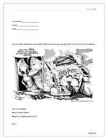
Date:_______________________ Do you often read books voluntarily? What books do you usually read? Discuss it with your neighbor. Ask your neighbor: Who is Harry Potter? What's so magical about him? Part I 1/9/2013 Page |2 Reading: Read through the text, look up unknown words by J. K. Rowling In 1990, a British woman in her mid-twenties called Joanne Rowling was on a train in England when she suddenly had an idea for a story she could write. She had enjoyed writing ever since she was a young girl, but there was something about the main character in this story that seemed especially exciting. He was a thin, black-haired boy who wore glasses. He was also a wizard, but didn't yet know about his
 annaabi.ee