 50 punkti
Autor soovib selle materjali allalaadimise eest saada 50 punkti.
50 punkti
Autor soovib selle materjali allalaadimise eest saada 50 punkti.
 ~ 11 lehte
Lehekülgede arv dokumendis
~ 11 lehte
Lehekülgede arv dokumendis
 2018-12-05
Kuupäev, millal dokument üles laeti
2018-12-05
Kuupäev, millal dokument üles laeti
 2 laadimist
Kokku alla laetud
2 laadimist
Kokku alla laetud
 0 arvamust
Teiste kasutajate poolt lisatud kommentaarid
0 arvamust
Teiste kasutajate poolt lisatud kommentaarid
 ZTA
Õppematerjali autor
ZTA
Õppematerjali autor
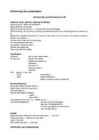
Greeting, name, position, opening formalities Good morning, ladies and gentlemen. Good afternoon, everyone. Good morning. My name's (...). I'm the new Finance Manager. Good morning. Let me start by saying just a few words about my own background. I started out in... Welcome to Standard Electronics. I know I've met some of you, but just for the benefit of those I haven't, my name's (...). It's very nice to see you all here today. I'm very pleased to be here. I'm glad you could all make it. Thanks for inviting me. Thank you (all) for coming. Title/Subject I'd like to talk (to you) today about ... I'm going to present the recent ... explain our position on ... introduce ... brief you on ... inform you about ... describe ... The subject of my talk focus presentation
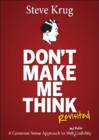
Don’t Make Me Think, Revisited A Common Sense Approach to Web Usability Steve Krug Don’t Make Me Think, Revisited A Common Sense Approach to Web Usability Copyright © 2014 Steve Krug New Riderswww.newriders.com To report errors, please send a note [email protected] New Riders is an imprint of Peachpit, a division of Pearson Education. Editor: Elisabeth Bayle Project Editor: Nancy Davis Production Editor: Lisa Brazieal Copy Editor: Barbara Flanagan Interior Design and Composition: Romney Lange Illustrations by Mark Matcho and Mimi Heft
6 IV Summarising teachingenglish.org.uk articles about teaching writing. 1. the article: Making Writing Communicative In real life we write e-mails, notes, covering letters, reports, curriculums and etc. The main questions that has put up in the article are: 1) Why do writing tasks in the English classroom lack a communication purpose and a target audience? 2) How to make the writing more communicative? Writing is difficult for students because it involves physical effort and it takes a lot of time. At the same time it is time-consuming and complicated task for teachers as well. Teachers have to address both errors and the content. And another point is that it is difficult to evaluate this competence. We need to give learners tasks that are intellectually satisfying, especially when writing. We need materials that provide
How can you practice and learn good eye contact? The only way to cultivate good eye contact is to practice doing it each and every time you speak. Here are some tricks for doing that: · Be aggressive. When speaking, pick out a specific pair of eyes in the audience and bore right into them, for just a few seconds. Then move over to another set; do the same, and on and on. · Don't allow your eyes to jump around helterskelter. Do it with purpose. Look left. Make a statement. Look center. Make a statement. Look right. Make a statement. Look at eyes in the back of the room. Make a statement. · Each time your eyes move, pretend to yourself that you are talking only to that individual. A number of skillful business speakers have said that with these techniques they have been able to recapture the attention of a temporarily disinterested listener. When experienced speakers spot
· What are the closing remarks for formal letters? · What is the salutation in a friendly letter? · How would you end extracts 1,2,3 ? · How would you begin the extracts 4 and 5? 1. Dear Mr Miller, I received your kind invitation to the reception. Unfortunately, owing to other commitments. I will be unable to attend ... 2. Dear Ralph, l just got your invitation to the company's event. l `m afraid I can't make it because I've a/ready made plans which l can "t change ... 3. Dear Sirs, I am writing to complain about the poor quality of the items which I received from your company. I have no other alternative but to cancel the order which 1 placed earlier this week ... 4. ... thus, I recommend that you accept this advice on the matter. I am pure that the suggestion offered is the best solution. Please let me know if this was helpful. Yours sincerely, Lee Jones 5. ..
report body. One last thing to consider when setting design requirements is that they must be tested by you. If you do not (or cannot) test a requirement using a virtual prototype (computer model) or physical prototype, then that requirement cannot be on your list of core design requirements. For example, do not use the design requirement, “can withstand a half-mile drop test,” unless you are going to either make an analytical model or empirically test out of a C-130. For examples of problem definition sections, read a U.S. patent. A well written patent generally has an excellent description of the problem to be solved, the prior art and why the prior art does no adequately solve the problem. Design Description In this part you describe what your solution is and how it works. You must describe your design in sufficient detail that the reader understands exactly what you did
FGI 1811 Proseminar I. Ladusseva 1 10.09.2002 At the defense aspects that are considered are: - your own contribution (whether it is there and is sufficient) - theory (you should have at least 6-10 connected pages discussing the state of the art) - mechanics (the layout of the paper: font size 12, double space, etc.) - answering questions - performance (pronounce distinctly, make good impression, no language mistakes, etc.) - extra linguistic part (how you stand, how you speak, etc.). Will be checked student's ability to classify, to describe material, to draw conclusions (e.g. you give an example and then comment on it). Internet sources: it is nice to have some Internet sources to show your sophistication, but not too many of them, because they are not very reliable. As you start reading sources do it systematically:
perfect option. They were also used to take family photos or portraits, but it worked a little bit differently than it does nowadays. For example, you had to stay still for a long time for it not to turn out foggy. The camera was also used to capture historical events. Nowadays you can use a camera for everything; you don’t have to wait for it to focus or anything. You just need to press the button and its ready to go. You can take photos of people, make videos or art. Some people use cameras only for collecting purposes. Today the photography is worn out for countless carried away about this art and up to those who want to have only a recollection. Nowadays the chambers, they record audio, video, are better in resolution, offer incredible functions, are submersible to more of 3 meters of depth 5 Inventor of the photographic camera (CARLA) POWER inventor de la cámara: The first publication about camera obscura was made in 1521.
 annaabi.ee










Kõik kommentaarid