Leidsid 33 sarnast õppematerjali, mis on seotud failiga "For and against capital punishment". Need materjalid aitavad sul teemat sügavamalt mõista.
death, than, murder, never, feel, something, nothing, penalty, feeling, again, live, crime, best, other, even, commit, bank, addition, could, legal, agree, killing, killer, publik, itself, causes, strong, forget, experienced, haunting, depths, leave, case, others, safe, decrease, away, hard, close, misused, seems, revenge, hand, cannot, someoneLaw-makers breaking the law: torture as a justified interrogation technique? 1 Introduction It was Jeremy Bentham who thought of a famous method to give ethics a rational basis. He was fed up with the penal laws where offenders met corporate punishment and together with Cesario Beccaria he stood up to torture, corporal punishment, and the death penalty. He resisted against irrational moral emotions as the instigation for ethical conduct, saying only reasonable grounds could justify the moral decisions of individuals and legislators. And now his theory of is the one that is known for justifying torture (Verplaetse, 2008). Since 9/11 and the following fight against terrorism it became clear that the Bush administration thought of torture as something justifiable while it goes against all possible agreed upon treaties and conventions
.........................................................................46 War Is a Mind-set.....................................................................................48 Do You Want Peace or Drama? ...............................................................49 Beyond Ego: Your True Identity .............................................................50 All Structures are Unstable.......................................................................51 The Ego's Need to Feel Superior..............................................................52 Ego and Fame...........................................................................................52 Chapter Four Role-Playing: The Many Faces of the Ego - 54 Villain, Victim, Lover...............................................................................55 Letting Go of Self-Definitions..................................................................56
Before the war, Himmelstoss was a postman. He is a petty, power-hungry little man who torments Paul and his friends during their training. After he experiences the horrors of trench warfare, however, he tries to make amends with them. Read an in-depth analysis of Corporal Himmelstoss. Franz Kemmerich - One of Paul's classmates and comrades in the war. After suffering a light wound, Kemmerich contracts gangrene, and his leg has to be amputated. His death, in Chapter Two, marks the reader's first encounter with the meaninglessness of death and the cheapness of life in the war. Joseph Behm - The first of Paul's classmates to die in the war. Behm did not want to enlist, but he caved under the pressure of the schoolmaster, Kantorek. His ugly, painful death shatters his classmates' trust in the authorities who convinced them to take part in the war. Detering - One of Paul's close friends in the Second Company. Detering is a young man with
Capital Punishment Should (not) Be Abolished Capital punishment or the death penalty is the killing of the person as the punishment for offence. To get the capital punishment, you need to do a very serious crime, like homicide, or even more serious than that. The pros of a capital punishment are that if the person gets that punishment, he or she will never get a chance to do something that cruel again. Sometimes the criminals, who get a prison sentence, do something illegal again, after that punishment. Second pro is that it's cheaper for the country to kill the person, than to pay for his/her food and clothes for the rest of his/her life in the prison. Although the killing of the person also needs money, it's still way cheaper than to pay for at least 40 years for all the life needs in prison. The main con of the capital punishment is that if the person actually didn't commit the crime, he or she was punished for, will die as innocent. Nobody can
suspension (kõrvaldamine) - form of punisment that people recieve for violating rules and regulations Civil Action (tsiviilhagi) - lawsuit between two private parties prosecution (süüdistus) - the institution and carrying on of legal proceeding against a person injury (vigastus) - an act or event that causes someone/something no longer to be fully healthy claim (nõudeõigus) - to apply for compensation or to inherit something prison (vangla) - residence for incaretaking criminals majority (enamus) - greater amount of the group public opinion (avalik arvamus) - collective opinion of many people on same issue, problem etc. Seperation of Power (võimude lahusus) - division of responsibilites into distinct branches to limit any branch from excersising the core functions of another (legislative, executive, judicial)
In Deism, there is no interference by a deity, and man controls his own destiny. These ideas stirred the masses into action, as the people dreamed of carving their own futures. Adopted by the Founding Fathers, Enlightenment ideals became the vision for modernday America, where these ideologies are deeply rooted in the nation. The Enlightenment was important America because it provided the philosophical basis of the American Revolution. The Revolution was more than just a protest against English authority; as it turned out, the American Revolution provided a blueprint for the organization of a democratic society. And while imperfectly done, for it did not address the terrible problem of slavery, the American Revolution was an enlightened concept of government whose most profound documents may have been the American Declaration of Independence and United States Constitution. To feel the full impact of the Enlightenment
TOPICS For the PRELIM Year 1 Put down 10-12 relevant terms and retell about: 1. Prescriptive and descriptive law Prescriptive law – prescribe how people ought to behave Descriptive law – describes the way people or natural phenomena behave Break the law – do something illegal Penalty – punishment Government – system by which a state or community is controlled Law – the system of rules System of courts – all judicial institutions Enforce – to make people obey the law Authority – a group of people with official responsibility for a particular area of activity /the moral or legal right or ability to control Prescribe – to tell someone what they must have or do, or to make a rule of something Impose
Ameerika Kirjandus 30.01.13 Naturalism · France, Emile Zola · Put down his theory in 1879: Le Roman Experimental, attempt to explain the development of human society throuch biological laws · Outlook is deterministic, pessimistic, fatalistic (fate or biology) · Man as an animal-clever than other beasts, still explainable within the framework · Man is not a free agent, is govern by something · Unable to determine his own faith · Hereditary · Naturalists tried to apply in fiction the processes of natural sciences · Writers task is to record facts, systems of behaviour, living conditions, never revealing any natural unbiased (completely natural) · Point of view: amoral-outside the category of morality, neither good or bad · Naturalist find it absurd to blame the wicked. These criminals are doing what nature,
Vronsky did not love her and that he did not intend to propose marriage to her, and that she refused and hurt Levin, whom she cares for, in vain. A specialist doctor advises that Kitty should go abroad to a health spa to recover. Dolly speaks to Kitty and understand that she is suffering because of Vronsky and Levin. Kitty, humiliated by Vronsky and tormented by her rejection of Levin, upsets her sister by referring to Stiva's infidelity and says she could never love a man who betrayed her. In St. Petersburg, Anna begins to spend more time with the fashionable socialite and gossip Princess Betsy and her circle, in order to meet Vronsky, Betsy's cousin. Vronsky continues to pursue Anna. Although Anna initially tries to reject him, she eventually succumbs to his attentions. Karenin warns Anna of the impropriety of paying too much attention to Vronsky in public, which is becoming a subject of society gossip. He is concerned about his
päike. Ole vaid mu kõrval kui mind piinab meeleheide. Ole mu kõrval, kui kumab kuu, kui su nime hüüab mu suu, ära tõota mulle, et armastad mind, kui ei ole valmis ohverdama end. Luba, et printsess jääb printsiga, kuni nad veel siin ilmas elavad. Unustame hetkeks kõik muu me, tunnetame üksteise kiireid südamelööke, kas tunned, kuidas süda jätab lööke vahele, see kõik on midagi uut, meile kahele. · Women are stronger than men, because they can walk in a 12 cm stilettos without showing the pain. · Men would kill to protect women they love. Men were born because of women. Women.. We're special · It doesn't matter where, when, or how did we met. What matters is the fact that we did. · Loving someone so much doesn't always mean they're right one for us. · Wishes are for lazy people who can't get up and make their dreams come true on their own. Make it happen!
either from Britain or France. It was especially a poignant time for Africa, as then British Prime Minister Harold McMillan articulated his now famous “winds of change” sweeping Africa. We had high hopes for Africa, for the Black race, that the insidious imposition of foreign rule on us, the looting of Africa’s natural resources by our colonial masters accorded us would be things of history. That is more than forty years ago. Unfortunately, the promise of independence has not been fulfilled. Today, Africa has become more desolate; there is more starvation, diseases and non-provision of essential services than when we got our independence. There are all kinds of wars in Africa than the rest of world put together. The majority of so-called Africans leaders want to stay in power until the day their bodies are put in the grave
Lõhikesi vorme ei kasutata! (don't) 150 sõna Teema "should mery-killing be punished?" HOMEWORK Terms to explain: Nation - a country, especially when thought of as a large group of people living in one area with their own government, language, traditions, etc: Stranger someone whom you do not know Citizen - a person who is a member of a particular country and who has rights and obligations because of being born there or because of being given them Penalty - a punishment for doing something that is against a law Government - the group of people who officially control a country System of courts - a set of connected positions which operate together to ensure ... ? To commit a crime to do sth that is forbidden by law Corruption - illegal, immoral or dishonest behaviour, especially by people in positions of power Fine (trahv) - an amount of money that has to be paid as a punishment for not obeying a rule or law
Mr. Bingley may like you the best of the party." "My dear, you flatter me. I certainly have had my share of beauty, but I do not pretend to be anything extraordinary now. When a woman has five grown-up daughters, she ought to give over thinking of her own beauty." "In such cases, a woman has not often much beauty to think of." "But, my dear, you must indeed go and see Mr. Bingley when he comes into the neighbourhood." "It is more than I engage for, I assure you." "But consider your daughters. Only think what an establishment it would be for one of them. Sir William and Lady Lucas are determined to go, merely on that account, for in general, you know, they visit no newcomers. Indeed you must go, for it will be impossible for us to visit him if you do not." "You are over-scrupulous, surely. I dare say Mr. Bingley will be very glad to see you;
children—Christina, Michael, David, and Catherine—for their sup- port and patience during the long hours away from them to finish this book. xi ccc_tracy_fm_i-xviii.qxd 7/7/03 3:23 PM Page xii ccc_tracy_fm_i-xviii.qxd 7/7/03 3:23 PM Page xiii Introduction There is nothing on earth that you cannot have once you have mentally accepted the fact that you can have it. —Robert Collier ■ THE TRUTH ABOUT YOU You are a thoroughly good person.You deserve a wonderful life, full of success, happiness, joy, and excitement. You are entitled to have happy relationships, excellent health, meaningful work, and finan-
Only in the darkness you are available see the stars. If you end up with boring, miserable life because you listened to your mom, your dad, your teacher, your priest, or some gut on television telling you how to do your shit, then you DESERVE it. - Frank Zappa *It's better to be absolutely ridiculous than absolutely boring. - Marilyn Monroe *I love the feeling when you smile at me, or even just look at me, because I know that I've crossed your mind. Even just for a second - Anonymous You know, one day you look at the person and you see something more than you did the night before. Like a switch has been flicked somewhere. And the person who was just a friend is suddenly the only person you can ever imagine yourself with. Me? I'm scared of everything. I'm scared of what I feel, of what I've said, of who I am, but most of
William Shakespeare (baptised 26 April 1564 – died 23 April 1616) was an English poet and playwright, widely regarded as the greatest writer in the English language and the world's pre-eminent dramatist. He is often called England's national poet and the "Bard of Avon" (or simply "The Bard"). His surviv- ing works consist of 38 plays, 154 sonnets, two long narrative poems, and several other poems. His plays have been trans- lated into every major living language, and are performed more often than those of any other playwright. Shakespeare was born and raised in Stratford-upon-Avon. At the age of 18 he married Anne Hathaway, who bore him three children: Susanna, and twins Hamnet and Judith. Between 1585 and 1592 he began a successful career in London as an actor, writer, and part owner of the playing company the Lord Chamberlain's Men, later known as the King's Men. He ap- pears to have retired to Stratford around 1613, where he died three years later
magazines, newspapers, disc and cassette tape recordings, films and videos, computerized databases, maps etc. In addition to ordinary books libraries may have large-print books and Braille books for people with impaired vision. There are different kinds of libraries to meet the needs of people: university, research, school, medical, government libraries and other libraries. Public libraries serve a wider range of people than other libraries. They may range from big city libraries to small village libraries. Big city libraries' materials are usually organized into subject areas, such as history, science, sports, fiction etc. There may be specials sections also for children. Almost every library has a special reading room with comfortable furniture for the readers and the students can work on independent study projects. School libraries. School libraries are part of the education system. It supports
Maturita Solutions Advanced Workbook Key stand bananas and coffee! It's a bit 3 1 to 8 of Unit 1 uncanny really. Is it something she's 2 about 9 century passed on to me genetically, or is it 3 like 10 assumed / 1A Memories page 3 learned behaviour? Who knows? 4 of thought / 1 See exercise 2 2 5
1. A generalist is ignorant from the point of view of a specialist and a specialist is stupid from the point of view of a generalist. 2. All great stupidity is created by geniuses. 3. All stereotypes are true; the fact that you recognize a slur proves that it isn't. 4. Anything you're afraid is true is true. 5. Before most people get to the point of being able to tell their ass from a hole in the ground they're already assholes and it's too late. 6. Concentrating on something important can make you lose track of your soap opera. 7. Debunking the bunk is everyone's responsibility. 8. Don't ask me to pay for anyone else's mistakes. I make enough of my own. 9. Even those who possess real magic must beware of being misled by "magical thinking." 10. Everyone knows what shit tastes like. 11. Exclusive occupancy of a private room is a basic human right. 12. Fair compensation for genius is wealth. 13. God's not perfect, so it's a pretty good bet that you're not, either. 14
do it, enabled us to make significant changes. His work has enabled us to gain significant competitive differentiation and advantage" -LAURENCE HOF, Vice President, Relationship Consulting, Advanta Corporation "This will help executives make better decisions and use their influence wisely ... Robert Cialdini has had a greater impact on my thinking on this topic than any other scientist." -CHARLES T. MUNGER, Vice Chairman, Berkshire Hathaway, Inc. If you're wondering why of Latin America, the Far East, and Central Europe. you should buy this new edition of Influence: o More neuroscience evidence of how the influence process works is inte-
This is one of the most controversial topics today. People are either favour or against it. Firstly capital punishment saves money compared to the alternative of life in prison because criminals deserve to die, not stay in jail and live comfortable life. Also when a killer stays in prison he takes up space in already over crowed prisons. Secondly it might prevent the fact that people who have killed someone before, would probably to it again. Because killer`s point of view does not change. Finally it would reassure the people close to the victim it would not happen again. Also it gives them the feeling that the death has been avenged. A family will feel less pain if the killer dies. In my opinion capital punishment should not be abolished, because if someone has committed a major crime such as rape, torture or murder deserves basically the same. I think we should use this policy: an eye for an eye tooth for a tooth.
There is a big argument in society should capital punishment be abolished or not? Some people think that some criminals should just spend their whole life in prison and suffer there instead of capital punishment. I think that they deserve capital punishment. Why? If they spend their whole life in prison, it means, they will have three free meals in a day and they can also watch tv, study, work, don't have to pay taxes and some of the prisons look more nicer than someone's ordinary home and who pays for their free living? We do. I also think that some of the criminal are kind of mentally ill and they will never feel guilty of what they did and some are even proud of it if they have murdered or tortured somebody's daughter or son and and all they get for punishment is carefree life? No. It's my opinion that they should be treated same as way as they treated someone else and in many cases it means capital punishment.
literature. As the neat columns of men begin to crumble, so too do the soldiers' nerves, minds, and capacity for rational thought and moral judgment. Henry's shooting of the engineer for refusing to help free the car from the mud shocks the reader for two reasons: first, the violent outburst seems at odds with Henry's coolly detached character; second, the incident occurs in a setting that robs it of its moral import --the complicity of Henry's fellow soldiers legitimizes the killing. The murder of the engineer seems justifiable because it is an inevitable by-product of the spiraling violence and disorder of the war. Nevertheless, the novel cannot be said to condemn the war; A Farewell to Arms is hardly the work of a pacifist. Instead, just as the innocent engineer's death is an inevitability of war, so is war the inevitable outcome of a cruel, senseless world. Hemingway suggests that war is nothing more than the dark,
to deal with the constitutive theory. Northern Cyprus is recognized only by 2-3 countries, and then no-one considers it as an independent state. How many states should recognize? In an unofficial doctrine it says half of the countries. But usually when countries start recognizing the process goes quickly and soon most countries recognize. E.g. Kosowa, a lot of countries recognize it, but it's still less than half; also Taiwan which is officially under China, but recognized by several countries. Another example: Western Sahara. Situations A > B ; On the territory of one country another country is established (e.g. Soviet Union over Russian Empire, but still not a very good example) (recognition needed) A + B > C; Two or more different countries merge into third new country (recognition needed). E.g
Capital Punishment Should be Abolished Evidence suggests that the death penalty does not deter people from committing crimes. It is a cruel and cold blooded form of punishment and there have been instances where innocent people were sentenced to death and later found to be innocent. Why is it wrong? Capital punishment is a barbarous survival from a less enlightened and refined age; it is incongruous and incompatible with our present standard of civilization and humanity. It has been abolished by many states and countries, and we must look forward to the day when all the governments will follow this. It's a murder. The first question that comes to mind is, is it ethically acceptable to kill someone
[Instructor] [Class] [Date] ABOUT SERIAL KILLERS INTRODUCTION Let's play a quick game of catchphrase - guess the word. My phrase is two words, and describes a person. Charles Manson. Ted Bundy. Jack the Ripper. Serial killer - serial meaning "arranged in a straight line or succession" (1) and killer meaning "one who kills, or any agent used to neutralize the active property of anything." We tend to have a morbid interest in people who commit murder. Today, I'd like to explain what distinguishes serial killing from mass murders, how long serial killing has been around, and highlight some of the psychological traits common to serial killers. BODY I. Serial killing vs mass murders Now at a glance serial killing and mass murder seems basically the same: one person kills many other people. The distinction between the two is notable: mass murder happens when one person murders multiple people at one specific place and one specific time
You do the opposite of my instructions; You've no respect for anything; each one Must have his say; it's perfect pandemonium. DORINE If . . . MADAME PERNELLE You're a servant wench, my girl, and much Too full of gab, and too impertinent And free with your advice on all occasions. DAMIS But . . . MADAME PERNELLE You're a fool, my boy--f, o, o, l Just spells your name. Let grandma tell you that I've said a hundred times to my poor son, Your father, that you'd never come to good Or give him anything but plague and torment. MARIANE I think . . . MADAME PERNELLE O dearie me, his little sister! You're all demureness, butter wouldn't melt In your mouth, one would think to look at you. Still waters, though, they say . . . you know the proverb; And I don't like your doings on the sly. ELMIRE But, mother . . . MADAME PERNELLE Daughter, by your leave, your conduct In everything is altogether wrong; You ought to set a good example for 'em;
Some of the ways to bully other people are by: calling you names, making things up to get you into trouble, hitting, pinching, biting and pushing, taking things away from you, damaging your belongings, stealing your money, taking your friends away from you. Now, to talk about why people bully someone there are many aspects. Some bullies do it to get attention or to make other people afraid of them. Others might be jealous of the person they are bullying. It makes bully feel, stronger, smarter, or better than the person he or she is bullying. Some people think that it's one of the best ways to keep others from bullying himself. What is even worse, some bullies may not even understand how wrong their behaviour is and how it makes the person being bullied feel. Some young people are bullied for no particular reason, but sometimes it's because they are different in some way. It could be the colour of their skin, their financial condition, the
witchcraft has sometimes been used to distinguish between bad witchcraft and good witchcraft, with the latter often involving healing. Human misfortune was often blamed on a supernatural entity or a known person in the community. Reasons for accusations of witchcraft fall into four general categories: · A person was caught in the act of positive or negative sorcery · A well-meaning sorcerer or healer lost their clients' or the authorities' trust · A person did nothing more than gain the enmity of their neighbours · A person was reputed to be a witch and surrounded with an aura of witch-beliefs Éva Pócs in turn identifies three varieties of witch in popular belief: · The "neighbourhood witch" or "social witch": a witch who curses a neighbour following some conflict. · The "magical" or "sorcerer" witch: either a professional healer, sorcerer, seer or midwife, or a
ISBN 0-316-16017-2 [1. Vampires -- Fiction. 2. High schools -- Fiction. 3. Schools -- Fiction. 4. Washington (State) -- Fiction.] I. Title. PZ7.M57188Tw2005 [Fic] --dc22 2004024730 Printed in the United States of America For my big sister, Emily, without whose enthusiasm this story might still be unfinished. But of the tree of the knowledge of good and evil, thou shalt not eat of it: for in the day that thou eatest thereof thou shalt surely die. Genesis 2:17 PREFACE I'd never given much thought to how I would die -- though I'd had reason enough in the last few months -- but even if I had, I would not have imagined it like this. I stared without breathing across the long room, into the dark eyes of the hunter, and he looked pleasantly back at me. Surely it was a good way to die, in the place of someone else, someone I loved. Noble, even. That ought to count for something. I knew that if I'd never gone to Forks, I wouldn't be facing death now
The villain of the play, Claudius is a calculating, ambitious politician, driven by his sexual appetites and his lust for power, but he occasionally shows signs of guilt and human feeling--his love for Gertrude, for instance, seems sincere. Claudius (In-Depth Analysis) Gertrude - The Queen of Denmark, Hamlet's mother, recently married to Claudius. Gertrude loves Hamlet deeply, but she is a shallow, weak woman who seeks affection and status more urgently than moral rectitude or truth. Gertrude (In-Depth Analysis) Polonius - The Lord Chamberlain of Claudius's court, a pompous, conniving old man. Polonius is the father of Laertes and Ophelia. Horatio - Hamlet's close friend, who studied with the prince at the university in Wittenberg. Horatio is loyal and helpful to Hamlet throughout the play. After Hamlet's death, Horatio remains alive to tell Hamlet's story. Ophelia - Polonius's daughter, a beautiful young woman with whom Hamlet has been in love
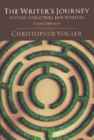
and W r i t e r s Retreat " T h i s is a book about the stories we write, and perhaps more importantly, the stories we live. It is the most influential work I have yet encountered on the art, nature, and the very purpose of storytelling." — Bruce Joel Rubin, Screenwriter, Ghost, Jacob's Ladder " T h i s book should come w i t h a warning: You're going to learn about more than just writing movies—you're going to learn about life! The Writer's Journey is the perfect m a n u a l for developing, pitching and writing stories with universal human themes that will forever captivate a global audience. It's the secret weapon I hope every writer finds out about." — Jeff Arch, Screenwriter, Sleepless in Seattle "Vogler was the genius behind The Writer's Journey, which should be on the shelf
It is also possible to be so ultra-sensitive that the result is disadvantageous. I expect no argument in asserting that a normal sensitivity is a healthy, indispensable ingredient for optimal education. Sensitivity can be heightened or blunted by education. It is intertwined with curiosity. An ideal education affords numerous and varied opportunities for students to touch, see, smell, listen, hear; to spark their curiosity. When I was a child the things that pleased me were largely other than the plants which have earned me a living as an adult. For example, I collected postage stamps, played basketball, was fond of listening to music, played all manner of games, but dealt only in a neutral, uninspired fashion with plants. The one thing that was constant and of supreme importance was my love of reading. I don't recall why, but by an early age, say age 9, I was a phenomenal reader of books, a habit that persisted all the way until college. Reading expands one's mind immensely
 annaabi.ee